
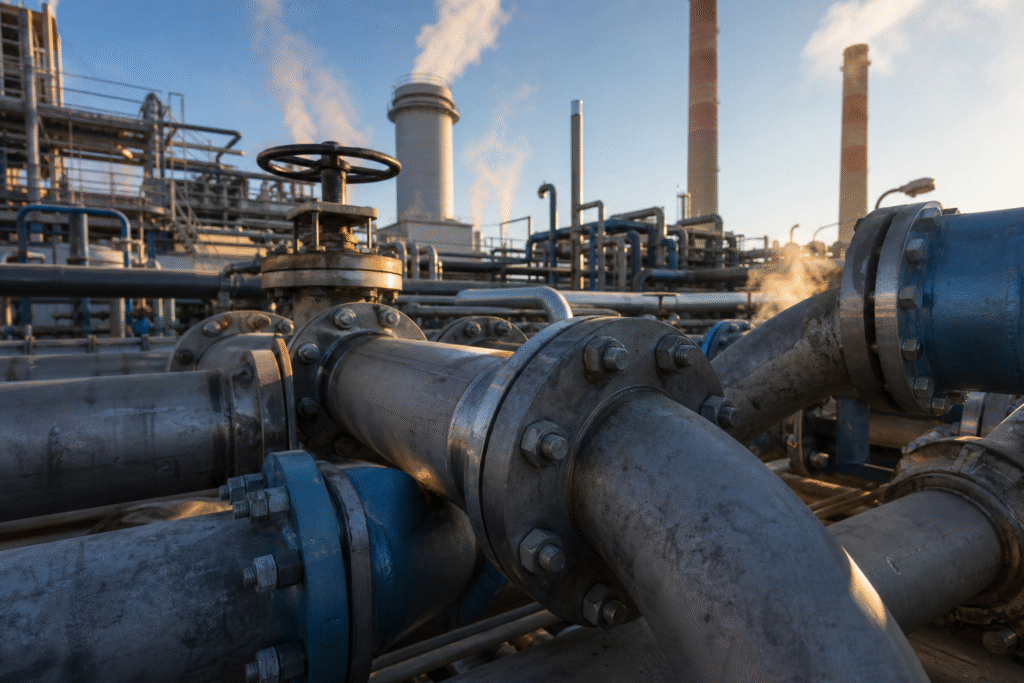
Hướng dẫn mua sắm và chứng nhận mặt bích thép không gỉ
Thị trường mặt bích ống thép không gỉ tiếp tục mở rộng khi các dự án công nghiệp đòi hỏi tuổi thọ dài hơn, kiểm soát rò rỉ chặt chẽ hơn, và chống ăn mòn mạnh hơn. Theo nghiên cứu của Grand View (2024), thị trường mặt bích công nghiệp toàn cầu được định giá ở mức $5.8 tỷ trong 2023 và dự kiến sẽ đạt $7.2 tỷ bởi 2030, which makes stainless steel pipe flange sourcing a strategic procurement decision rather than a routine purchase.
Dành cho kỹ sư và người mua, thách thức phổ biến nhất là không tìm thấy mặt bích. It is choosing the right material grade, lớp áp lực, đối mặt, and standard for a specific pipe system without increasing lifecycle cost.
Why the Stainless Steel Pipe Flange Market Keeps Growing in Industrial Projects
Industrial demand remains strong across upstream, giữa dòng, tinh chế, quyền lực, khử muối, and EPC construction. Theo Statista (2024), ngành dầu khí chiếm khoảng 35% tiêu thụ mặt bích toàn cầu, which explains why pressure integrity and compliance dominate purchase specifications.
Manufacturing concentration also shapes lead times and pricing. Theo IBISWorld (2024), Châu Á - Thái Bình Dương chiếm hơn 45% sản xuất mặt bích toàn cầu, với Trung Quốc là nhà sản xuất lớn nhất, giving buyers access to high-volume capacity and broader grade availability.
These numbers matter because flange supply is no longer evaluated on unit price alone. Procurement teams now compare traceability, mill test documentation, độ chính xác gia công, Khả năng PMI, Và EN 10204 3.1 documentation before issuing a purchase order.
The Hidden Advantages of stainless steel pipe flange systems become clear when lifecycle performance is measured against replacement frequency and unplanned shutdown risk. Stainless materials such as 304, 316, 316L, 904L, 2205, Và 2507 often reduce corrosion-related maintenance in aggressive media, especially where chloride exposure or cyclic temperature changes occur.
Theo Mordor Intelligence (2024), global investment in water treatment and desalination piping systems is rising steadily as municipalities and industrial users upgrade corrosion-resistant infrastructure. Kết quả là, Mặt bích thép không gỉ, phụ kiện, and valves are specified more often in coastal, hóa chất, and high-purity installations.
SASA FLANGE supports this demand with manufacturing coverage across stainless steel flanges, mặt bích thép carbon, mặt bích hợp kim, và phụ kiện đường ống. Với ISO 9001:2015 và chứng nhận PED 2014/68/EU, the company supplies projects requiring ASME B16.5, ANSI B16.47, ASME B16.9, DIN, JIS, GOST, và VN 1092 Tuân thủ.
Dành cho người mua B2B, availability across grades is equally important. Sản xuất mặt bích tại 304, 316, 316L, 904L, 2205, 2507 and other premium grades allows better alignment between media chemistry, nhiệt độ thiết kế, and budget target.
Theo Nghiên cứu thị trường Tương lai (2024), industrial stainless components are seeing above-average growth in sectors that prioritize asset longevity and lower total maintenance cost. Vì thế, a flange is no longer treated as a simple connector. It is treated as a reliability component inside the larger pressure boundary.
That change affects vendor evaluation. Buyers increasingly favor manufacturers with advanced CNC machining, in-house inspection, and broad export experience, especially when custom bores, mẫu khoan, and non-standard dimensions are required.
Dành cho các nhóm dự án so sánh các nhà cung cấp, detailed technical support matters as much as production capacity. You can review manufacturing support and project communication options through SASA FLANGE and discuss custom requirements directly via their contact team.
So sánh kỹ thuật các loại mặt bích ống thép không gỉ, Nguyên vật liệu, và Ưu điểm tiềm ẩn
The most common stainless steel pipe flange materials remain ASTM A182 F304, F304L, F316, và F316L. Tuy nhiên, more demanding applications often move toward 904L, hai mặt 2205, siêu song công 2507, or nickel alloys when chloride stress corrosion cracking or sour service becomes a concern.
Như Tiến sĩ. James Holloway, Kỹ sư vật liệu và tư vấn ăn mòn, tiểu bang: “The right flange grade is selected by process chemistry first, then by pressure class and fabrication method, not by material price alone.” That principle helps procurement teams avoid the common mistake of overbuying for mild service or under-specifying for corrosive duty.
Theo thực hành vật liệu của ASTM và ASME, lower-carbon grades such as 304L and 316L are widely preferred where welding is required and post-weld corrosion must be minimized (ASTM, 2024; ASME, 2024). Ngược lại, higher-performance duplex grades can deliver superior strength-to-weight ratio, which may reduce section thickness in some engineered systems.
Theo hướng dẫn ăn mòn của NACE, chloride-bearing and sour environments require careful control of hardness, hoá học, and fabrication route when materials are selected for pressure equipment (NACE, 2024). Vì thế, material selection should always consider media composition, nhiệt độ hoạt động, and potential crevice corrosion zones around bolting and gasket interfaces.
Như Michael Trent, Kỹ sư đường ống cao cấp, tiểu bang: “Most flange failures do not start at the flange body. They start with poor grade selection, poor facing compatibility, or weak installation control.” This observation is especially relevant for gasket seating and bolt load management in raised-face and RTJ assemblies.
Các loại và công dụng mặt bích ống thép không gỉ phổ biến bao gồm::
- Mặt bích cổ hàn: Ưu tiên cho áp suất cao, đạp xe nhiệt, and critical service because its tapered hub reduces stress concentration.
- Mặt bích trượt: Most common in lower-pressure utility systems where easier alignment and lower machining cost matter.
- Mặt bích mù: Dùng để đóng cuối dòng, pressure test systems, hoặc cho phép các điểm mở rộng trong tương lai.
- Mặt bích hàn ổ cắm: Suitable for small-bore high-pressure lines where a smooth bore and compact connection are needed.
- Mặt bích ren: Applied where welding is restricted, although vibration-heavy service may require additional evaluation.
- Mặt bích khớp nối: Useful in systems requiring frequent dismantling and rotational alignment with stub ends.
Facing selection is equally critical. Raised face remains the Most Common option under ASME B16.5, while ring type joint flanges are favored in higher-pressure hydrocarbon service due to stronger sealing performance.
Typical technical selection points include:
- Các lớp áp lực: 150, 300, 400, 600, 900, 1500, 2500.
- Phạm vi kích thước: thông thường 1/2 inch đến 24 inch dưới ASME B16.5, with larger diameters under B16.47.
- Tiêu chuẩn vật liệu: ASTM A182 for forged alloy and stainless flanges, ASTM A240 for plate material, ASTM A403 for stainless fittings.
- Face types: RF, FF, RTJ, lưỡi và rãnh, nam và nữ.
- Điều tra: PMI, kiểm tra chiều, hydrotest where applicable, kiểm tra độ cứng, kiểm tra ferrite, Và EN 10204 3.1 chứng nhận.
One of the Hidden Advantages of stainless material is cleanliness in process handling. Stainless grades are widely used in food, dược phẩm, nước siêu tinh khiết, and clean utility systems because they support surface finish control and contamination resistance.
According to ISO-related manufacturing quality benchmarks, tighter process control directly improves dimensional consistency and repeatability in sealing surfaces (ISO, 2024). That is important because gasket seating stress depends on flange flatness, hoàn thành, and bolt-up uniformity.
SASA FLANGE cung cấp kích thước tùy chỉnh từ 1/2 inch đến 60 inch với giá cả cạnh tranh trực tiếp tại nhà máy, which is relevant for EPC contractors and stockists managing mixed standard and project-specific orders. Được hỗ trợ bởi gia công CNC tiên tiến và kiểm tra chất lượng toàn diện, the company supports both standard B16.5 items and custom drilling or facing requirements.
For buyers evaluating suppliers, it is useful to confirm whether the manufacturer can supply matching elbows, áo thun, bộ giảm tốc, and caps in the same project package. That reduces inspection complexity and often shortens procurement cycles through consolidated logistics.
You can explore broader product categories at SASA FLANGE các sản phẩm or send RFQs with grade, lớp học, tiêu chuẩn, and quantity details through trang liên hệ. Ngoài ra, integrated sourcing becomes more valuable when shutdown schedules leave little room for supplier coordination delays.
Stainless Steel Pipe Flange Standards, Sự tuân thủ, and Certification Requirements
Industrial buyers should never evaluate flanges without checking the governing standard first. ASME B16.5 bao gồm kích thước, dung sai, xếp hạng nhiệt độ áp suất, đánh dấu, and testing for flanges and flanged fittings up to NPS 24, trong khi ASME B16.47 giải quyết đường kính lớn hơn.
Material compliance usually starts with ASTM. ASTM A182 is the core standard for forged or rolled alloy and stainless steel pipe flanges, phụ kiện giả mạo, và van cho dịch vụ nhiệt độ cao, trong khi ASTM A240 applies to chromium and chromium-nickel stainless plate, tờ giấy, và dải.
Các dự án châu Âu thường yêu cầu EN 1092-1 and PED compliance. Ngoài ra, nhiều người mua yêu cầu EN 10204 3.1 material certificates for positive traceability and audit readiness.
For international engineering projects, the following standards are frequently referenced:
- ASME B16.5: Pipe flange dimensions and ratings up to NPS 24.
- ASME B16.47: Mặt bích thép đường kính lớn.
- ASME B16.9: Phụ kiện hàn mông rèn do nhà máy sản xuất.
- ASTM A182: Vật liệu mặt bích không gỉ và hợp kim rèn.
- EN 1092-1: European flanges with PN designations.
- DIN và JIS: Regional flange systems for equipment and replacement markets.
- NACE MR0175: Materials guidance for sour service applications.
There is also a practical distinction between dimensional standards and material standards. ASME B16.5 defines geometry and ratings, trong khi ASTM A182 defines what the forged stainless material must be.
When projects involve export to Europe, PED 2014/68/EU becomes a major commercial and technical requirement. Vì thế, supplier qualification should include not only production capability but also document control, marking discipline, and quality-system traceability.
Theo khuôn khổ PED của Ủy ban Châu Âu, pressure equipment manufacturers and component suppliers must demonstrate conformity to applicable safety requirements for covered equipment categories (PED, 2024). That is why certified documentation packages can influence bid acceptance as much as the flange price itself.
Như Laura Chen, Nhà phân tích thị trường công nghiệp, tiểu bang: “In current bidding cycles, documentation quality increasingly separates approved vendors from low-cost vendors.” This trend is clear in petrochemical and power projects where third-party inspection and final dossier submission are mandatory.
SASA FLANGE củng cố niềm tin tuân thủ thông qua ISO 9001:2015, PED 2014/68/EU, và AD 2000 thông tin xác thực. Phục vụ 50+ các quốc gia trên khắp dầu mỏ & Khí đốt, hóa dầu, Quyền lực, và ngành hàng hải, the company aligns production with purchaser specifications, tiêu chuẩn chiều, và yêu cầu kiểm tra.
For buyers seeking an authoritative source on flange rules, the ASME code library remains essential, and official references are available at ASME.org. Tuy nhiên, practical purchasing still requires checking drawing revision, đối mặt với kết thúc, vật liệu bắt vít, and gasket compatibility before approval.
In contrast with generic online catalog listings, compliant flange procurement needs a full package. That package includes standard reference, lớp vật liệu, kích cỡ, lớp áp lực, đối mặt, truy xuất nguồn gốc số nhiệt, and acceptance criteria for testing and certification.
Cách chọn mặt bích ống thép không gỉ cho dầu, Khí đốt, Quyền lực, Hàng hải, và hệ thống nước
To Choose the correct stainless steel pipe flange, engineers should begin with process media and design code. Sau đó, they should verify pressure class, trợ cấp ăn mòn, loại đệm, bolt load requirement, và hạn chế cài đặt.
Oil and gas projects typically prioritize pressure containment, sour service resistance, và truy xuất nguồn gốc. Theo Statista (2024), this sector uses roughly 35% sản lượng mặt bích toàn cầu, so standardization around ASME classes and ASTM grades is common for both greenfield and MRO demand.
Chemical processing often requires stronger resistance to acids, clorua, and cyclic thermal conditions. Vì thế, 316L, 904L, hai mặt 2205, or nickel alloys may be selected depending on chloride level, độ pH, và nhiệt độ hoạt động.
Power generation systems demand mechanical reliability under steam, ngưng tụ, and thermal fatigue conditions. Trong các ứng dụng này, weld neck flanges are often preferred because they distribute stress more efficiently under pressure and vibration.
Marine and shipbuilding environments introduce saline exposure and external corrosion risk. Kết quả là, stainless grades with stronger pitting resistance or duplex structures are often chosen for ballast, nước biển, and deck utility systems.
Water treatment and desalination projects increasingly specify stainless and duplex flange assemblies for pumps, trượt, membranes, và dây chuyền định lượng hóa chất. Theo Nghiên cứu thị trường Tương lai (2024), corrosion-resistant piping components are seeing accelerated demand in water infrastructure upgrades, especially in coastal regions.
Buyers should review the following selection criteria before ordering:
- Hóa truyền thông, bao gồm clorua, hợp chất lưu huỳnh, và chất tẩy rửa.
- Design temperature and pressure class.
- Applicable dimensional and material standards.
- Required face type and gasket compatibility.
- Welding method and post-fabrication corrosion risk.
- Phạm vi kiểm tra, including PMI and EN 10204 3.1.
- thời gian dẫn, bao bì, và yêu cầu đánh dấu xuất khẩu.
Common application examples include:
- Upstream skid package: ASTM A182 Mặt bích cổ hàn F316L, Lớp học 600, RF face.
- Desalination line: song công 2205 slip-on flange with corrosion-focused material verification.
- Power condensate service: ASTM A182 F304L blind flange for maintenance isolation.
- Chemical dosing unit: 904L threaded or socket weld flange for compact corrosion-resistant assemblies.
SASA FLANGE supports custom manufacturing for project buyers who need non-standard bores, bề mặt hoàn thiện đặc biệt, and mixed-material packages including elbows, áo thun, bộ giảm tốc, và mũ. That flexibility is valuable when an EPC package combines ASME, DIN, and EN requirements in one shipment.
Hơn thế nữa, supplier responsiveness affects project risk. A capable flange vendor should confirm quotation details such as wall thickness interface, lịch khoan, kiểu khoan, đánh dấu, and packing method before order release.
Đối với các dự án được thiết kế, the most Common error is requesting only size and class without specifying the pipe schedule bore. That omission can create field mismatch, làm lại, and unnecessary delay during installation.
For tailored quotation support, buyers can reach SASA FLANGE with RFQ data including standard, vật liệu, lớp áp lực, phạm vi kích thước, and destination market. Hơn nữa, early technical alignment usually shortens approval time and reduces costly revision rounds.
Triển vọng tương lai đối với việc mua sắm mặt bích ống thép không gỉ và các khuyến nghị mua chiến lược
Triển vọng thị trường vẫn tích cực khi năng lượng, Nước, hóa chất, and infrastructure projects continue to invest in durable piping systems. Theo nghiên cứu của Grand View (2024), thị trường mặt bích công nghiệp dự kiến sẽ đạt $7.2 tỷ bởi 2030, reflecting steady long-term purchasing demand.
Đồng thời, buyers face more complexity in sourcing. Material volatility, certification scrutiny, and regional logistics shifts mean that approved vendor strategy matters more than spot-price buying.
Theo IBISWorld (2024), Asia-Pacific controls over 45% sản xuất mặt bích toàn cầu, so procurement teams should evaluate not only manufacturing price but also export reliability, documentation accuracy, and production scheduling discipline. Vì thế, supplier selection should combine technical qualification with supply-chain resilience.
Nhìn về phía trước, the Most Intriguing trend is the move toward lifecycle-based sourcing. Buyers increasingly compare corrosion resistance, khoảng thời gian bảo trì, and downtime risk rather than focusing on initial purchase price alone.
Khuyến nghị chiến lược cho các nhóm mua sắm bao gồm:
- Standardize approved grades for repeat applications to reduce engineering time.
- Request full technical quotations with standard, lớp học, khoan, và các chi tiết đối diện.
- Qualify vendors that can supply both flanges and matching fittings.
- Xác minh ISO 9001:2015, PED, and inspection document capability before tender award.
- Use duplex or higher-alloy grades selectively where corrosion cost exceeds material premium.
Ngoài ra, project buyers should keep a clear approved-vendor list for MRO and shutdown planning. That approach improves response speed when replacement flanges are needed urgently for critical Pipe systems.
SASA FLANGE remains relevant in this environment because it combines broad grade coverage, sản xuất tùy chỉnh, and international compliance support. Dành cho người mua so sánh các nhà sản xuất mặt bích, a detailed inquiry through SASA FLANGE liên hệ can help clarify specification fit, yêu cầu chứng nhận, and commercial lead time before final sourcing decisions are made.
Câu hỏi thường gặp
Các loại mặt bích thép không gỉ khác nhau là gì?
●Các loại mặt bích inox chính là cổ hàn, trượt trên, mù, ổ cắm hàn, xâu chuỗi, và khớp nối, Và ASME B16.5 remains the most common dimensional standard for sizes up to NPS 24.
●Each type suits a different service condition because weld neck flanges handle pressure and thermal cycling well, while slip-on flanges are often chosen for easier fit-up in lower-pressure systems.
●For most engineered projects, buyers should match flange type to pressure class, phơi nhiễm ăn mòn, phong cách đệm, and pipe schedule, and working with established manufacturers like SASA FLANGE helps ensure correct specification review.
Cái nào tốt hơn 304 hoặc 420 thép không gỉ?
●Đối với hầu hết các ứng dụng mặt bích ống thép không gỉ, 304 thường tốt hơn 420 because it offers stronger corrosion resistance and is widely used under ASTM A182 thông số mặt bích.
●Cấp 420 has higher hardness and wear potential after heat treatment, but it is less common for industrial flanges because corrosion performance is generally more limited than 304 in wet or chemical service.
●Procurement teams should choose 304 for general industrial piping and move to 316 or duplex when chloride resistance becomes critical, especially when vendor support from companies such as SASA FLANGE is available for material selection.
Ngành nào sử dụng inox nhiều nhất?
●Oil and gas is one of the largest flange-consuming sectors, và theo Statista (2024), nó chiếm khoảng 35% tiêu thụ mặt bích toàn cầu.
●Tuy nhiên, stainless steel use is also very strong in chemical processing, xử lý nước, hàng hải, chế biến thực phẩm, and pharmaceutical systems because corrosion resistance and hygiene matter in those industries.
●If a project needs long service life, truy xuất nguồn gốc, and compliance with ASME or EN requirements, buyers should source from qualified flange manufacturers that can provide full documentation and application guidance.
Ba loại mặt bích là gì?
●The three most common flange types in industrial piping are weld neck flange, mặt bích trượt, và mặt bích mù, although many systems also use socket weld, xâu chuỗi, và các phiên bản khớp nối.
●Weld neck flanges are preferred for high-pressure service, slip-on flanges are common in utility lines, and blind flanges are used to close or isolate line ends for maintenance and testing.
●Để lựa chọn đáng tin cậy, engineers should confirm pressure class, đối mặt, lớp vật liệu, and bore schedule before purchasing, especially when ordering for replacement parts or shutdown inventory.
Điều gì ảnh hưởng đến giá mặt bích ống thép không gỉ?
●Giá mặt bích ống thép không gỉ phụ thuộc chủ yếu vào loại vật liệu, kích cỡ, lớp áp lực, kiểu khuôn mặt, phạm vi chứng nhận, and whether the order includes custom machining or third-party inspection.
●Theo nghiên cứu của Grand View (2024), thị trường mặt bích công nghiệp đạt $5.8 tỷ trong 2023, and that scale reflects how raw material cost and compliance requirements continue to shape market pricing.
●Buyers should request quotations with complete technical data, including ASTM grade, Lớp ASME, kích cỡ, khoan, và yêu cầu về tài liệu, because incomplete RFQs often lead to inaccurate pricing and procurement delays.
Làm cách nào để chọn nhà sản xuất mặt bích hoặc nhà cung cấp mặt bích cho các dự án công nghiệp?
●A reliable flange manufacturer should offer compliant production to ASME, ASTM, DIN, or EN standards together with ISO 9001:2015 quality control and full traceability documentation.
●Theo IBISWorld (2024), Châu Á-Thái Bình Dương sản xuất hơn 45% của mặt bích toàn cầu, so buyers should evaluate supplier capability by inspection systems, kinh nghiệm xuất khẩu, chất lượng gia công, and communication speed rather than by price alone.
●Đối với các dự án yêu cầu kích thước tùy chỉnh, lớp cao cấp, and coordinated flange-and-fitting supply, working with proven manufacturers like SASA FLANGE improves technical alignment and reduces sourcing risk.
bài viết liên quan
Mặt bích hoàn thiện: Giải thích về răng cưa đồng tâm và xoắn ốc
Các răng cưa đồng tâm và xoắn ốc đều được gia công hoàn thiện mặt bích…
song công 2205 so với mặt bích 316L: Bạn nên chọn chất liệu nào?
Trả lời nhanh: song công 2205 mặt bích thường là ứng cử viên mạnh hơn…

Định nghĩa mặt bích lỗ, Chi tiết và tổng quan về mặt bích ASME B16.36: Dữ liệu thị trường, Hướng dẫn lựa chọn và thông tin chi tiết về tuân thủ
Thị trường mặt bích công nghiệp toàn cầu được định giá ở mức $5.8 tỷ…

Hướng dẫn thị trường mặt bích xử lý màu đen: Nguyên vật liệu, 3.5″ Khả năng tương thích, và dữ liệu tìm nguồn cung ứng B2B cho mặt bích bồn rửa nhà bếp
Nhu cầu mặt bích xử lý màu đen đang tăng lên khi người mua đồ đạc nhà bếp…