
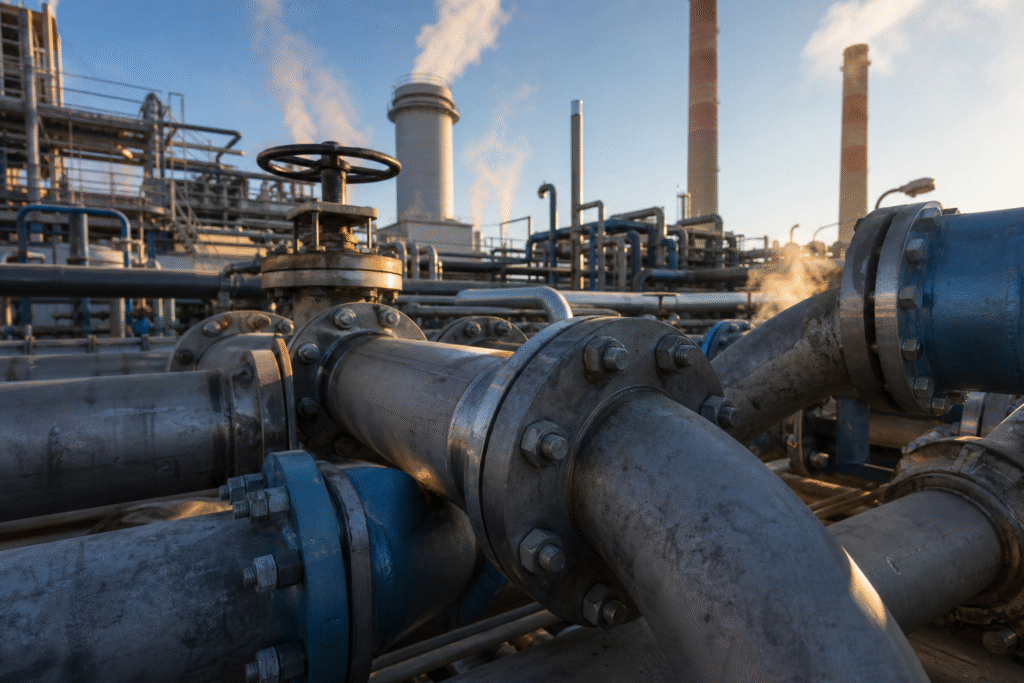
คู่มือการรับรองและจัดซื้อหน้าแปลนสแตนเลส
ตลาดหน้าแปลนท่อสแตนเลสยังคงขยายตัวอย่างต่อเนื่องเนื่องจากโครงการอุตสาหกรรมต้องการอายุการใช้งานที่ยาวนานขึ้น, การควบคุมการรั่วไหลที่เข้มงวดยิ่งขึ้น, และทนต่อการกัดกร่อนได้ดีขึ้น. จากการวิจัยของแกรนด์วิว (2024), ตลาดหน้าแปลนอุตสาหกรรมทั่วโลกมีมูลค่าอยู่ที่ $5.8 พันล้านใน 2023 และคาดว่าจะไปถึง $7.2 พันล้านโดย 2030, which makes stainless steel pipe flange sourcing a strategic procurement decision rather than a routine purchase.
สำหรับวิศวกรและผู้ซื้อ, ความท้าทายที่พบบ่อยที่สุดคือการค้นหาหน้าแปลน. It is choosing the right material grade, ระดับความดัน, หันหน้าไปทาง, and standard for a specific pipe system without increasing lifecycle cost.
Why the Stainless Steel Pipe Flange Market Keeps Growing in Industrial Projects
Industrial demand remains strong across upstream, กลางน้ำ, การกลั่น, พลัง, การแยกเกลือออกจากน้ำ, and EPC construction. ตามสถิติของสตาติสต้า (2024), อุตสาหกรรมน้ำมันและก๊าซมีสัดส่วนประมาณ 35% ของการบริโภคหน้าแปลนทั่วโลก, which explains why pressure integrity and compliance dominate purchase specifications.
Manufacturing concentration also shapes lead times and pricing. อ้างอิงจาก IBISWorld (2024), บัญชีเอเชียแปซิฟิกมีมากกว่า 45% ของการผลิตหน้าแปลนทั่วโลก, โดยจีนเป็นผู้ผลิตรายใหญ่ที่สุด, giving buyers access to high-volume capacity and broader grade availability.
These numbers matter because flange supply is no longer evaluated on unit price alone. Procurement teams now compare traceability, mill test documentation, ความแม่นยำของเครื่องจักร, ความสามารถของพีเอ็มไอ, และ EN 10204 3.1 documentation before issuing a purchase order.
The Hidden Advantages of stainless steel pipe flange systems become clear when lifecycle performance is measured against replacement frequency and unplanned shutdown risk. Stainless materials such as 304, 316, 316ล, 904ล, 2205, และ 2507 often reduce corrosion-related maintenance in aggressive media, especially where chloride exposure or cyclic temperature changes occur.
ตามข้อมูลของ Mordor Intelligence (2024), global investment in water treatment and desalination piping systems is rising steadily as municipalities and industrial users upgrade corrosion-resistant infrastructure. ส่งผลให้, หน้าแปลนสแตนเลส, ฟิตติ้ง, and valves are specified more often in coastal, เคมี, and high-purity installations.
SASA FLANGE supports this demand with manufacturing coverage across stainless steel flanges, หน้าแปลนเหล็กคาร์บอน, หน้าแปลนโลหะผสม, และอุปกรณ์ท่อ. กับ ISO 9001:2015 และการรับรอง PED 2014/68/EU, the company supplies projects requiring ASME B16.5, ANSI B16.47, ASME B16.9, DIN, JIS, GOST, และภาษาอังกฤษ 1092 การปฏิบัติตาม.
สำหรับผู้ซื้อ B2B, availability across grades is equally important. การผลิตหน้าแปลนใน 304, 316, 316ล, 904ล, 2205, 2507 and other premium grades allows better alignment between media chemistry, อุณหภูมิการออกแบบ, and budget target.
ตามการวิจัยตลาดอนาคต (2024), industrial stainless components are seeing above-average growth in sectors that prioritize asset longevity and lower total maintenance cost. ดังนั้น, a flange is no longer treated as a simple connector. It is treated as a reliability component inside the larger pressure boundary.
That change affects vendor evaluation. Buyers increasingly favor manufacturers with advanced CNC machining, in-house inspection, and broad export experience, especially when custom bores, รูปแบบการเจาะ, and non-standard dimensions are required.
For project teams comparing suppliers, detailed technical support matters as much as production capacity. You can review manufacturing support and project communication options through SASA FLANGE and discuss custom requirements directly via their contact team.
Technical Comparison of Stainless Steel Pipe Flange Types, วัสดุ, และข้อดีที่ซ่อนอยู่
The most common stainless steel pipe flange materials remain ASTM A182 F304, F304L, F316, และเอฟ316แอล. อย่างไรก็ตาม, more demanding applications often move toward 904L, ดูเพล็กซ์ 2205, ซูเปอร์ดูเพล็กซ์ 2507, or nickel alloys when chloride stress corrosion cracking or sour service becomes a concern.
ในฐานะดร. เจมส์ ฮอลโลเวย์, วิศวกรวัสดุและที่ปรึกษาด้านการกัดกร่อน, รัฐ: “The right flange grade is selected by process chemistry first, then by pressure class and fabrication method, not by material price alone.” That principle helps procurement teams avoid the common mistake of overbuying for mild service or under-specifying for corrosive duty.
ตามแนวทางปฏิบัติของวัสดุ ASTM และ ASME, lower-carbon grades such as 304L and 316L are widely preferred where welding is required and post-weld corrosion must be minimized (ASTM, 2024; ASME, 2024). ในทางตรงกันข้าม, higher-performance duplex grades can deliver superior strength-to-weight ratio, which may reduce section thickness in some engineered systems.
ตามแนวทางการกัดกร่อนของ NACE, chloride-bearing and sour environments require careful control of hardness, เคมี, and fabrication route when materials are selected for pressure equipment (เนซ, 2024). ดังนั้น, material selection should always consider media composition, อุณหภูมิในการทำงาน, and potential crevice corrosion zones around bolting and gasket interfaces.
ดังเช่นไมเคิล เทรนท์, วิศวกรท่ออาวุโส, รัฐ: “Most flange failures do not start at the flange body. They start with poor grade selection, poor facing compatibility, or weak installation control.” This observation is especially relevant for gasket seating and bolt load management in raised-face and RTJ assemblies.
ประเภทและการใช้งานหน้าแปลนท่อสแตนเลสทั่วไปมีดังต่อไปนี้:
- หน้าแปลนคอเชื่อม: เหมาะสำหรับแรงดันสูง, การปั่นจักรยานด้วยความร้อน, and critical service because its tapered hub reduces stress concentration.
- หน้าแปลนสลิปออน: Most common in lower-pressure utility systems where easier alignment and lower machining cost matter.
- หน้าแปลนตาบอด: ใช้เพื่อปิดปลายบรรทัด, pressure test systems, หรืออนุญาตให้มีจุดขยายในอนาคต.
- หน้าแปลนเชื่อมซ็อกเก็ต: Suitable for small-bore high-pressure lines where a smooth bore and compact connection are needed.
- หน้าแปลนเกลียว: Applied where welding is restricted, although vibration-heavy service may require additional evaluation.
- หน้าแปลนร่วมตัก: Useful in systems requiring frequent dismantling and rotational alignment with stub ends.
Facing selection is equally critical. Raised face remains the Most Common option under ASME B16.5, while ring type joint flanges are favored in higher-pressure hydrocarbon service due to stronger sealing performance.
Typical technical selection points include:
- ชั้นเรียนความดัน: 150, 300, 400, 600, 900, 1500, 2500.
- ช่วงขนาด: โดยทั่วไป 1/2 นิ้วถึง 24 นิ้วใต้ ASME B16.5, with larger diameters under B16.47.
- มาตรฐานวัสดุ: ASTM A182 for forged alloy and stainless flanges, ASTM A240 for plate material, ASTM A403 for stainless fittings.
- Face types: รฟ, เอฟเอฟ, RTJ, ลิ้นและร่อง, ชายและหญิง.
- การตรวจสอบ: พีเอ็มไอ, การตรวจสอบมิติ, hydrotest where applicable, การทดสอบความแข็ง, การตรวจสอบเฟอร์ไรต์, และ EN 10204 3.1 การรับรอง.
One of the Hidden Advantages of stainless material is cleanliness in process handling. Stainless grades are widely used in food, ยา, น้ำบริสุทธิ์พิเศษ, and clean utility systems because they support surface finish control and contamination resistance.
According to ISO-related manufacturing quality benchmarks, tighter process control directly improves dimensional consistency and repeatability in sealing surfaces (ISO, 2024). That is important because gasket seating stress depends on flange flatness, เสร็จ, and bolt-up uniformity.
SASA FLANGE เสนอขนาดที่กำหนดเองจาก 1/2 นิ้วถึง 60 นิ้วด้วยราคาที่แข่งขันได้จากโรงงานโดยตรง, which is relevant for EPC contractors and stockists managing mixed standard and project-specific orders. ได้รับการสนับสนุนจากเครื่องจักร CNC ขั้นสูงและการทดสอบคุณภาพที่ครอบคลุม, the company supports both standard B16.5 items and custom drilling or facing requirements.
สำหรับผู้ซื้อประเมินซัพพลายเออร์, it is useful to confirm whether the manufacturer can supply matching elbows, เสื้อยืด, ตัวลด, and caps in the same project package. That reduces inspection complexity and often shortens procurement cycles through consolidated logistics.
You can explore broader product categories at SASA FLANGE สินค้า or send RFQs with grade, ระดับ, มาตรฐาน, and quantity details through หน้าการติดต่อ. นอกจากนี้, integrated sourcing becomes more valuable when shutdown schedules leave little room for supplier coordination delays.
Stainless Steel Pipe Flange Standards, การปฏิบัติตาม, and Certification Requirements
Industrial buyers should never evaluate flanges without checking the governing standard first. ASME B16.5 ครอบคลุมมิติข้อมูล, ความคลาดเคลื่อน, การจัดอันดับความดันอุณหภูมิ, การทำเครื่องหมาย, and testing for flanges and flanged fittings up to NPS 24, ในขณะที่ ASME B16.47 จัดการกับเส้นผ่านศูนย์กลางที่ใหญ่กว่า.
Material compliance usually starts with ASTM. ASTM A182 is the core standard for forged or rolled alloy and stainless steel pipe flanges, อุปกรณ์ปลอมแปลง, และวาล์วสำหรับการบริการที่อุณหภูมิสูง, ในขณะที่ ASTM A240 ใช้กับแผ่นสเตนเลสโครเมียมและโครเมียม-นิกเกิล, แผ่น, และเปลื้องผ้า.
โครงการในยุโรปมักต้องมี EN 1092-1 and PED compliance. นอกจากนี้, ผู้ซื้อจำนวนมากร้องขอ EN 10204 3.1 material certificates for positive traceability and audit readiness.
For international engineering projects, the following standards are frequently referenced:
- ASME B16.5: Pipe flange dimensions and ratings up to NPS 24.
- ASME B16.47: หน้าแปลนเหล็กเส้นผ่านศูนย์กลางขนาดใหญ่.
- ASME B16.9: อุปกรณ์เชื่อมชนดัดที่ทำจากโรงงาน.
- ASTM A182: วัสดุหน้าแปลนสแตนเลสและโลหะผสมปลอมแปลง.
- EN 1092-1: European flanges with PN designations.
- ดินและ JIS: Regional flange systems for equipment and replacement markets.
- NACE MR0175: Materials guidance for sour service applications.
There is also a practical distinction between dimensional standards and material standards. ASME B16.5 defines geometry and ratings, ในขณะที่ ASTM A182 defines what the forged stainless material must be.
When projects involve export to Europe, PED 2014/68/EU becomes a major commercial and technical requirement. ดังนั้น, supplier qualification should include not only production capability but also document control, marking discipline, and quality-system traceability.
ตามกรอบ PED ของคณะกรรมาธิการยุโรป, pressure equipment manufacturers and component suppliers must demonstrate conformity to applicable safety requirements for covered equipment categories (พีอีดี, 2024). That is why certified documentation packages can influence bid acceptance as much as the flange price itself.
ดังลอร่า เฉิน, นักวิเคราะห์ตลาดอุตสาหกรรม, รัฐ: “In current bidding cycles, documentation quality increasingly separates approved vendors from low-cost vendors.” This trend is clear in petrochemical and power projects where third-party inspection and final dossier submission are mandatory.
SASA FLANGE เสริมสร้างความมั่นใจในการปฏิบัติตามกฎระเบียบผ่าน ISO 9001:2015, พีอีดี 2014/68/สหภาพยุโรป, และโฆษณา 2000 ข้อมูลรับรอง. เสิร์ฟ 50+ ประเทศทั่วน้ำมัน & แก๊ส, ปิโตรเคมี, พลัง, และอุตสาหกรรมทางทะเล, the company aligns production with purchaser specifications, มาตรฐานมิติ, และข้อกำหนดในการตรวจสอบ.
For buyers seeking an authoritative source on flange rules, the ASME code library remains essential, and official references are available at ASME.org. อย่างไรก็ตาม, practical purchasing still requires checking drawing revision, หันหน้าไปทางจบ, วัสดุสลักเกลียว, and gasket compatibility before approval.
In contrast with generic online catalog listings, compliant flange procurement needs a full package. That package includes standard reference, เกรดวัสดุ, ขนาด, ระดับความดัน, หันหน้าไปทาง, การติดตามหมายเลขความร้อน, and acceptance criteria for testing and certification.
วิธีการเลือกหน้าแปลนท่อสแตนเลสสำหรับน้ำมัน, แก๊ส, พลัง, มารีน, และระบบน้ำ
To Choose the correct stainless steel pipe flange, engineers should begin with process media and design code. หลังจากนั้น, they should verify pressure class, ค่าเผื่อการกัดกร่อน, ประเภทปะเก็น, bolt load requirement, และข้อจำกัดในการติดตั้ง.
Oil and gas projects typically prioritize pressure containment, sour service resistance, และการตรวจสอบย้อนกลับ. ตามสถิติของสตาติสต้า (2024), this sector uses roughly 35% ของเอาต์พุตหน้าแปลนทั่วโลก, so standardization around ASME classes and ASTM grades is common for both greenfield and MRO demand.
Chemical processing often requires stronger resistance to acids, คลอไรด์, and cyclic thermal conditions. ดังนั้น, 316ล, 904ล, ดูเพล็กซ์ 2205, or nickel alloys may be selected depending on chloride level, ค่า pH, และอุณหภูมิในการทำงาน.
Power generation systems demand mechanical reliability under steam, คอนเดนเสท, and thermal fatigue conditions. ในแอปพลิเคชันเหล่านี้, weld neck flanges are often preferred because they distribute stress more efficiently under pressure and vibration.
Marine and shipbuilding environments introduce saline exposure and external corrosion risk. ส่งผลให้, stainless grades with stronger pitting resistance or duplex structures are often chosen for ballast, น้ำทะเล, and deck utility systems.
Water treatment and desalination projects increasingly specify stainless and duplex flange assemblies for pumps, ลื่นไถล, membranes, และสายจ่ายสารเคมี. ตามการวิจัยตลาดอนาคต (2024), corrosion-resistant piping components are seeing accelerated demand in water infrastructure upgrades, especially in coastal regions.
Buyers should review the following selection criteria before ordering:
- สื่อเคมี, รวมถึงคลอไรด์, สารประกอบกำมะถัน, และสารทำความสะอาด.
- Design temperature and pressure class.
- Applicable dimensional and material standards.
- Required face type and gasket compatibility.
- Welding method and post-fabrication corrosion risk.
- ขอบเขตการตรวจสอบ, including PMI and EN 10204 3.1.
- เวลานำ, บรรจุภัณฑ์, และข้อกำหนดการทำเครื่องหมายการส่งออก.
Common application examples include:
- Upstream skid package: ASTM A182 หน้าแปลนคอเชื่อม F316L, ระดับ 600, RF face.
- Desalination line: ดูเพล็กซ์ 2205 slip-on flange with corrosion-focused material verification.
- Power condensate service: ASTM A182 F304L blind flange for maintenance isolation.
- Chemical dosing unit: 904L threaded or socket weld flange for compact corrosion-resistant assemblies.
SASA FLANGE supports custom manufacturing for project buyers who need non-standard bores, การเคลือบผิวแบบพิเศษ, and mixed-material packages including elbows, เสื้อยืด, ตัวลด, และหมวกแก๊ป. That flexibility is valuable when an EPC package combines ASME, DIN, and EN requirements in one shipment.
นอกจากนี้, supplier responsiveness affects project risk. A capable flange vendor should confirm quotation details such as wall thickness interface, ตารางเจาะ, รูปแบบการเจาะ, การทำเครื่องหมาย, and packing method before order release.
สำหรับโครงการวิศวกรรม, the most Common error is requesting only size and class without specifying the pipe schedule bore. That omission can create field mismatch, ทำงานซ้ำ, and unnecessary delay during installation.
For tailored quotation support, buyers can reach SASA FLANGE with RFQ data including standard, วัสดุ, ระดับความดัน, ช่วงขนาด, and destination market. นอกจากนี้, early technical alignment usually shortens approval time and reduces costly revision rounds.
แนวโน้มในอนาคตสำหรับการจัดหาหน้าแปลนท่อสแตนเลสและคำแนะนำในการซื้อเชิงกลยุทธ์
แนวโน้มตลาดยังคงเป็นบวกในด้านพลังงาน, น้ำ, เคมี, and infrastructure projects continue to invest in durable piping systems. จากการวิจัยของแกรนด์วิว (2024), คาดว่าจะถึงตลาดหน้าแปลนอุตสาหกรรม $7.2 พันล้านโดย 2030, reflecting steady long-term purchasing demand.
ในเวลาเดียวกัน, buyers face more complexity in sourcing. Material volatility, certification scrutiny, and regional logistics shifts mean that approved vendor strategy matters more than spot-price buying.
อ้างอิงจาก IBISWorld (2024), Asia-Pacific controls over 45% ของการผลิตหน้าแปลนทั่วโลก, so procurement teams should evaluate not only manufacturing price but also export reliability, ความถูกต้องของเอกสาร, and production scheduling discipline. ดังนั้น, supplier selection should combine technical qualification with supply-chain resilience.
มองไปข้างหน้า, the Most Intriguing trend is the move toward lifecycle-based sourcing. Buyers increasingly compare corrosion resistance, ช่วงเวลาการบำรุงรักษา, and downtime risk rather than focusing on initial purchase price alone.
คำแนะนำเชิงกลยุทธ์สำหรับทีมจัดซื้อ ได้แก่:
- Standardize approved grades for repeat applications to reduce engineering time.
- Request full technical quotations with standard, ระดับ, เบื่อ, และเผชิญรายละเอียด.
- Qualify vendors that can supply both flanges and matching fittings.
- ตรวจสอบ ISO 9001:2015, พีอีดี, and inspection document capability before tender award.
- Use duplex or higher-alloy grades selectively where corrosion cost exceeds material premium.
นอกจากนี้, project buyers should keep a clear approved-vendor list for MRO and shutdown planning. That approach improves response speed when replacement flanges are needed urgently for critical Pipe systems.
SASA FLANGE remains relevant in this environment because it combines broad grade coverage, การผลิตที่กำหนดเอง, และการสนับสนุนการปฏิบัติตามกฎระเบียบระหว่างประเทศ. สำหรับผู้ซื้อเปรียบเทียบผู้ผลิตหน้าแปลน, a detailed inquiry through SASA FLANGE ติดต่อ can help clarify specification fit, ข้อกำหนดการรับรอง, and commercial lead time before final sourcing decisions are made.
คำถามที่พบบ่อย
หน้าแปลนสแตนเลสมีกี่ประเภท??
●ประเภทหน้าแปลนสแตนเลสหลักคือคอเชื่อม, ลื่นบน, ตาบอด, เชื่อมซ็อกเก็ต, เกลียว, และข้อต่อตัก, และ ASME B16.5 remains the most common dimensional standard for sizes up to NPS 24.
●Each type suits a different service condition because weld neck flanges handle pressure and thermal cycling well, while slip-on flanges are often chosen for easier fit-up in lower-pressure systems.
●For most engineered projects, ผู้ซื้อควรจับคู่ประเภทหน้าแปลนกับระดับแรงดัน, การสัมผัสการกัดกร่อน, สไตล์ปะเก็น, และตารางการเดินท่อ, and working with established manufacturers like SASA FLANGE helps ensure correct specification review.
ซึ่งจะดีกว่า 304 หรือ 420 สแตนเลส?
●สำหรับการใช้งานหน้าแปลนท่อสแตนเลสส่วนใหญ่, 304 มักจะดีกว่า 420 because it offers stronger corrosion resistance and is widely used under ASTM A182 ข้อมูลจำเพาะของหน้าแปลน.
●ระดับ 420 has higher hardness and wear potential after heat treatment, but it is less common for industrial flanges because corrosion performance is generally more limited than 304 in wet or chemical service.
●Procurement teams should choose 304 for general industrial piping and move to 316 or duplex when chloride resistance becomes critical, especially when vendor support from companies such as SASA FLANGE is available for material selection.
อุตสาหกรรมใดใช้เหล็กกล้าไร้สนิมมากที่สุด?
●Oil and gas is one of the largest flange-consuming sectors, และตาม Statista (2024), มันคิดเป็นประมาณ 35% ของการบริโภคหน้าแปลนทั่วโลก.
●อย่างไรก็ตาม, stainless steel use is also very strong in chemical processing, การบำบัดน้ำ, ทะเล, การแปรรูปอาหาร, and pharmaceutical systems because corrosion resistance and hygiene matter in those industries.
●If a project needs long service life, การตรวจสอบย้อนกลับ, and compliance with ASME or EN requirements, buyers should source from qualified flange manufacturers that can provide full documentation and application guidance.
หน้าแปลนสามประเภทคืออะไร?
●The three most common flange types in industrial piping are weld neck flange, หน้าแปลนสลิปออน, และหน้าแปลนตาบอด, although many systems also use socket weld, เกลียว, และรุ่นข้อต่อตัก.
●Weld neck flanges are preferred for high-pressure service, slip-on flanges are common in utility lines, and blind flanges are used to close or isolate line ends for maintenance and testing.
●เพื่อการเลือกที่เชื่อถือได้, engineers should confirm pressure class, หันหน้าไปทาง, เกรดวัสดุ, and bore schedule before purchasing, especially when ordering for replacement parts or shutdown inventory.
สิ่งที่ส่งผลต่อราคาหน้าแปลนท่อสแตนเลส?
●ราคาหน้าแปลนท่อสแตนเลสขึ้นอยู่กับเกรดวัสดุเป็นหลัก, ขนาด, ระดับความดัน, ประเภทใบหน้า, ขอบเขตการรับรอง, and whether the order includes custom machining or third-party inspection.
●จากการวิจัยของแกรนด์วิว (2024), ถึงตลาดหน้าแปลนอุตสาหกรรมแล้ว $5.8 พันล้านใน 2023, and that scale reflects how raw material cost and compliance requirements continue to shape market pricing.
●Buyers should request quotations with complete technical data, including ASTM grade, ชั้นเรียน ASME, ขนาด, เบื่อ, และข้อกำหนดด้านเอกสาร, because incomplete RFQs often lead to inaccurate pricing and procurement delays.
ฉันจะเลือกผู้ผลิตหน้าแปลนหรือผู้จำหน่ายหน้าแปลนสำหรับโครงการอุตสาหกรรมได้อย่างไร?
●A reliable flange manufacturer should offer compliant production to ASME, ASTM, DIN, or EN standards together with ISO 9001:2015 quality control and full traceability documentation.
●อ้างอิงจาก IBISWorld (2024), การผลิตในภูมิภาคเอเชียแปซิฟิกสิ้นสุดลง 45% ของหน้าแปลนทั่วโลก, so buyers should evaluate supplier capability by inspection systems, ประสบการณ์การส่งออก, คุณภาพเครื่องจักร, and communication speed rather than by price alone.
●สำหรับโครงการที่ต้องการขนาดที่กำหนดเอง, เกรดพรีเมี่ยม, and coordinated flange-and-fitting supply, working with proven manufacturers like SASA FLANGE improves technical alignment and reduces sourcing risk.
โพสต์ที่เกี่ยวข้อง
หน้าแปลนเสร็จสิ้น: อธิบาย Serrations แบบศูนย์กลางและแบบเกลียว
ฟันปลาแบบศูนย์กลางและแบบเกลียวมีทั้งการตกแต่งผิวหน้าแปลนด้วยเครื่องจักร…
ดูเพล็กซ์ 2205 เทียบกับหน้าแปลน 316L: คุณควรเลือกวัสดุใด?
ตอบด่วน: ดูเพล็กซ์ 2205 หน้าแปลนมักจะเป็นตัวเลือกที่แข็งแกร่งกว่า…

คำจำกัดความหน้าแปลนปาก, รายละเอียดและภาพรวมหน้าแปลน ASME B16.36: ข้อมูลการตลาด, คู่มือการคัดเลือกและข้อมูลเชิงลึกด้านการปฏิบัติตามข้อกำหนด
ตลาดหน้าแปลนอุตสาหกรรมทั่วโลกมีมูลค่าอยู่ที่ $5.8 พันล้าน…

คู่มือการตลาดหน้าแปลนการกำจัดสีดำ: วัสดุ, 3.5″ ความเข้ากันได้, และการจัดหาข้อมูล B2B สำหรับหน้าแปลนอ่างล้างจาน
ความต้องการหน้าแปลนกำจัดสีดำเพิ่มขึ้นเนื่องจากผู้ซื้ออุปกรณ์ติดตั้งในครัว…