
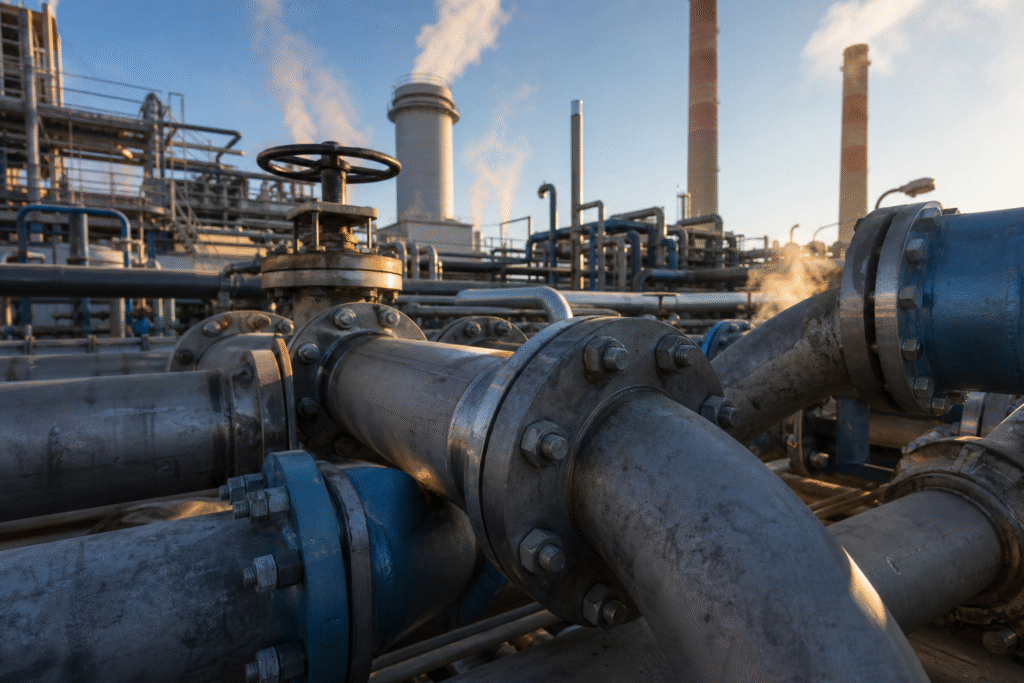
Руководство по сертификации и закупкам фланцев из нержавеющей стали
Рынок фланцев для труб из нержавеющей стали продолжает расширяться, поскольку промышленные проекты требуют более длительного срока службы., более строгий контроль утечек, и более сильная коррозионная стойкость. По данным исследования Grand View (2024), мировой рынок промышленных фланцев оценивался в $5.8 миллиард в 2023 и, по прогнозам, достигнет $7.2 миллиард на 2030, which makes stainless steel pipe flange sourcing a strategic procurement decision rather than a routine purchase.
Для инженеров и покупателей, самая распространенная проблема – не найти фланцы. It is choosing the right material grade, класс давления, лицом к лицу, and standard for a specific pipe system without increasing lifecycle cost.
Why the Stainless Steel Pipe Flange Market Keeps Growing in Industrial Projects
Industrial demand remains strong across upstream, на середине течения, переработка, власть, опреснение, and EPC construction. По данным Статистики (2024), на долю нефтегазовой отрасли приходится около 35% мирового потребления фланцев, which explains why pressure integrity and compliance dominate purchase specifications.
Manufacturing concentration also shapes lead times and pricing. По данным IBISWorld (2024), На долю Азиатско-Тихоокеанского региона приходится более 45% мирового производства фланцев, при этом Китай является крупнейшим производителем, giving buyers access to high-volume capacity and broader grade availability.
These numbers matter because flange supply is no longer evaluated on unit price alone. Procurement teams now compare traceability, mill test documentation, точность обработки, Возможности PMI, и EN 10204 3.1 documentation before issuing a purchase order.
The Hidden Advantages of stainless steel pipe flange systems become clear when lifecycle performance is measured against replacement frequency and unplanned shutdown risk. Stainless materials such as 304, 316, 316л, 904л, 2205, и 2507 often reduce corrosion-related maintenance in aggressive media, especially where chloride exposure or cyclic temperature changes occur.
По данным Мордорской разведки (2024), global investment in water treatment and desalination piping systems is rising steadily as municipalities and industrial users upgrade corrosion-resistant infrastructure. Как результат, Фланцы из нержавеющей стали, арматура, and valves are specified more often in coastal, химический, and high-purity installations.
SASA FLANGE supports this demand with manufacturing coverage across stainless steel flanges, фланцы из углеродистой стали, фланцы из сплава, и трубопроводная арматура. С ISO 9001:2015 и сертификаты PED 2014/68/ЕС., the company supplies projects requiring ASME B16.5, АНСИ Б16.47, ASME B16.9, DIN, JIS, ГОСТ, и RU 1092 согласие.
Для B2B-покупателей, availability across grades is equally important. Изготовление фланцев в 304, 316, 316л, 904л, 2205, 2507 and other premium grades allows better alignment between media chemistry, расчетная температура, and budget target.
По данным Market Research Future (2024), industrial stainless components are seeing above-average growth in sectors that prioritize asset longevity and lower total maintenance cost. Поэтому, a flange is no longer treated as a simple connector. It is treated as a reliability component inside the larger pressure boundary.
That change affects vendor evaluation. Buyers increasingly favor manufacturers with advanced CNC machining, in-house inspection, and broad export experience, especially when custom bores, схемы сверления, and non-standard dimensions are required.
Для проектных команд, сравнивающих поставщиков, detailed technical support matters as much as production capacity. You can review manufacturing support and project communication options through SASA FLANGE and discuss custom requirements directly via their contact team.
Техническое сравнение типов фланцев для труб из нержавеющей стали, Материалы, и скрытые преимущества
The most common stainless steel pipe flange materials remain ASTM A182 F304, F304L, Ф316, и F316L. Однако, more demanding applications often move toward 904L, дуплекс 2205, супер дуплекс 2507, or nickel alloys when chloride stress corrosion cracking or sour service becomes a concern.
Как доктор. Джеймс Холлоуэй, Инженер по материалам и консультант по коррозии, государства: «The right flange grade is selected by process chemistry first, then by pressure class and fabrication method, not by material price alone.» That principle helps procurement teams avoid the common mistake of overbuying for mild service or under-specifying for corrosive duty.
В соответствии с практикой материалов ASTM и ASME., lower-carbon grades such as 304L and 316L are widely preferred where welding is required and post-weld corrosion must be minimized (ASTM, 2024; ASME, 2024). В отличие, higher-performance duplex grades can deliver superior strength-to-weight ratio, which may reduce section thickness in some engineered systems.
Согласно руководству по коррозии NACE, chloride-bearing and sour environments require careful control of hardness, химия, and fabrication route when materials are selected for pressure equipment (КДЕС, 2024). Поэтому, material selection should always consider media composition, рабочая температура, and potential crevice corrosion zones around bolting and gasket interfaces.
В роли Майкла Трента, Старший инженер по трубопроводам, государства: «Most flange failures do not start at the flange body. They start with poor grade selection, poor facing compatibility, or weak installation control.» This observation is especially relevant for gasket seating and bolt load management in raised-face and RTJ assemblies.
Обычные типы и применение фланцев для труб из нержавеющей стали включают следующее::
- Приварной фланец с шейкой: Предпочтительно для высокого давления., термоциклирование, and critical service because its tapered hub reduces stress concentration.
- Накидной фланец: Most common in lower-pressure utility systems where easier alignment and lower machining cost matter.
- Глухой фланец: Используется для закрытия концов строки, pressure test systems, or allow future expansion points.
- Фланец под приварку враструб: Suitable for small-bore high-pressure lines where a smooth bore and compact connection are needed.
- Резьбовой фланец: Applied where welding is restricted, although vibration-heavy service may require additional evaluation.
- Фланец внахлестку: Useful in systems requiring frequent dismantling and rotational alignment with stub ends.
Facing selection is equally critical. Raised face remains the Most Common option under ASME B16.5, while ring type joint flanges are favored in higher-pressure hydrocarbon service due to stronger sealing performance.
Typical technical selection points include:
- Классы давления: 150, 300, 400, 600, 900, 1500, 2500.
- Диапазон размеров: обычно 1/2 дюйм до 24 на дюйм ниже ASME B16.5, with larger diameters under B16.47.
- Стандарты материалов: ASTM A182 for forged alloy and stainless flanges, ASTM A240 for plate material, ASTM A403 for stainless fittings.
- Face types: РФ, ФФ, РТЖ, язычок и паз, male and female.
- Инспекция: PMI, проверка размеров, hydrotest where applicable, испытание на твердость, ферритовые проверки, и EN 10204 3.1 сертификация.
One of the Hidden Advantages of stainless material is cleanliness in process handling. Stainless grades are widely used in food, фармацевтический, сверхчистая вода, and clean utility systems because they support surface finish control and contamination resistance.
According to ISO-related manufacturing quality benchmarks, tighter process control directly improves dimensional consistency and repeatability in sealing surfaces (ISO, 2024). That is important because gasket seating stress depends on flange flatness, заканчивать, and bolt-up uniformity.
SASA FLANGE предлагает нестандартные размеры от 1/2 дюйм до 60 дюйм с конкурентоспособными ценами напрямую с завода, which is relevant for EPC contractors and stockists managing mixed standard and project-specific orders. Благодаря передовой обработке с ЧПУ и всестороннему тестированию качества., the company supports both standard B16.5 items and custom drilling or facing requirements.
For buyers evaluating suppliers, it is useful to confirm whether the manufacturer can supply matching elbows, тройники, редукторы, and caps in the same project package. That reduces inspection complexity and often shortens procurement cycles through consolidated logistics.
You can explore broader product categories at SASA FLANGE продукты or send RFQs with grade, сорт, стандартный, and quantity details through страница контактов. Кроме того, integrated sourcing becomes more valuable when shutdown schedules leave little room for supplier coordination delays.
Stainless Steel Pipe Flange Standards, Согласие, and Certification Requirements
Industrial buyers should never evaluate flanges without checking the governing standard first. ASME B16.5 охватывает размеры, допуски, номинальные значения давления и температуры, маркировка, and testing for flanges and flanged fittings up to NPS 24, пока ASME B16.47 подходит для больших диаметров.
Material compliance usually starts with ASTM. ASTM A182 is the core standard for forged or rolled alloy and stainless steel pipe flanges, кованые фитинги, и клапаны для работы при высоких температурах, пока ASTM A240 applies to chromium and chromium-nickel stainless plate, лист, и раздеться.
Европейские проекты часто требуют EN 1092-1 and PED compliance. Кроме того, many buyers request EN 10204 3.1 material certificates for positive traceability and audit readiness.
For international engineering projects, the following standards are frequently referenced:
- ASME B16.5: Pipe flange dimensions and ratings up to NPS 24.
- ASME B16.47: Стальные фланцы большого диаметра.
- ASME B16.9: Кованые фитинги для стыковой сварки заводского изготовления..
- ASTM A182: Фланцевые материалы из кованой нержавеющей стали и сплавов..
- EN 1092-1: European flanges with PN designations.
- DIN и JIS: Regional flange systems for equipment and replacement markets.
- NACE MR0175: Materials guidance for sour service applications.
There is also a practical distinction between dimensional standards and material standards. ASME B16.5 defines geometry and ratings, пока ASTM A182 defines what the forged stainless material must be.
When projects involve export to Europe, PED 2014/68/EU becomes a major commercial and technical requirement. Поэтому, supplier qualification should include not only production capability but also document control, marking discipline, and quality-system traceability.
В соответствии с рамками PED Европейской комиссии, pressure equipment manufacturers and component suppliers must demonstrate conformity to applicable safety requirements for covered equipment categories (ПЭД, 2024). That is why certified documentation packages can influence bid acceptance as much as the flange price itself.
В роли Лоры Чен, Аналитик промышленного рынка, государства: «In current bidding cycles, documentation quality increasingly separates approved vendors from low-cost vendors.» This trend is clear in petrochemical and power projects where third-party inspection and final dossier submission are mandatory.
SASA FLANGE strengthens compliance confidence through ISO 9001:2015, ПЭД 2014/68/ЕС, и АД 2000 реквизиты для входа. Обслуживание 50+ страны по нефти & Газ, нефтехимическая, Власть, и морская промышленность, the company aligns production with purchaser specifications, стандарты размеров, и требования к проверке.
For buyers seeking an authoritative source on flange rules, the ASME code library remains essential, and official references are available at ASME.org. Однако, practical purchasing still requires checking drawing revision, облицовочная отделка, болтовой материал, and gasket compatibility before approval.
In contrast with generic online catalog listings, compliant flange procurement needs a full package. That package includes standard reference, сорт материала, размер, класс давления, лицом к лицу, отслеживание номера плавки, and acceptance criteria for testing and certification.
Как выбрать фланец трубы из нержавеющей стали для масла, Газ, Власть, Морской, и водные системы
To Choose the correct stainless steel pipe flange, engineers should begin with process media and design code. После этого, they should verify pressure class, допуск на коррозию, тип прокладки, bolt load requirement, и ограничения по установке.
Oil and gas projects typically prioritize pressure containment, sour service resistance, и отслеживаемость. По данным Статистики (2024), this sector uses roughly 35% глобальной производительности фланцев, so standardization around ASME classes and ASTM grades is common for both greenfield and MRO demand.
Chemical processing often requires stronger resistance to acids, хлориды, and cyclic thermal conditions. Поэтому, 316л, 904л, дуплекс 2205, or nickel alloys may be selected depending on chloride level, рН, и рабочая температура.
Power generation systems demand mechanical reliability under steam, конденсат, and thermal fatigue conditions. В этих приложениях, weld neck flanges are often preferred because they distribute stress more efficiently under pressure and vibration.
Marine and shipbuilding environments introduce saline exposure and external corrosion risk. Как результат, stainless grades with stronger pitting resistance or duplex structures are often chosen for ballast, морская вода, and deck utility systems.
Water treatment and desalination projects increasingly specify stainless and duplex flange assemblies for pumps, полозья, membranes, и линии дозирования химикатов. По данным Market Research Future (2024), corrosion-resistant piping components are seeing accelerated demand in water infrastructure upgrades, especially in coastal regions.
Buyers should review the following selection criteria before ordering:
- Медиахимия, в том числе хлориды, соединения серы, and cleaning agents.
- Design temperature and pressure class.
- Applicable dimensional and material standards.
- Required face type and gasket compatibility.
- Welding method and post-fabrication corrosion risk.
- Объем проверки, including PMI and EN 10204 3.1.
- Время выполнения, упаковка, and export marking requirements.
Common application examples include:
- Upstream skid package: ASTM A182 Фланец приварной шейки F316L, Сорт 600, RF face.
- Desalination line: Дуплекс 2205 slip-on flange with corrosion-focused material verification.
- Power condensate service: ASTM A182 F304L blind flange for maintenance isolation.
- Chemical dosing unit: 904L threaded or socket weld flange for compact corrosion-resistant assemblies.
SASA FLANGE supports custom manufacturing for project buyers who need non-standard bores, специальная отделка облицовки, and mixed-material packages including elbows, тройники, редукторы, и шапки. That flexibility is valuable when an EPC package combines ASME, DIN, and EN requirements in one shipment.
Более того, supplier responsiveness affects project risk. A capable flange vendor should confirm quotation details such as wall thickness interface, график бурения, схема сверления, маркировка, and packing method before order release.
Для инженерных проектов, the most Common error is requesting only size and class without specifying the pipe schedule bore. That omission can create field mismatch, переделка, and unnecessary delay during installation.
For tailored quotation support, buyers can reach SASA FLANGE with RFQ data including standard, материал, класс давления, диапазон размеров, and destination market. Более того, early technical alignment usually shortens approval time and reduces costly revision rounds.
Будущие перспективы закупок фланцев для труб из нержавеющей стали и рекомендации по стратегическим закупкам
Перспективы рынка остаются позитивными, поскольку энергетика, вода, химический, and infrastructure projects continue to invest in durable piping systems. По данным исследования Grand View (2024), Ожидается, что рынок промышленных фланцев достигнет $7.2 миллиард на 2030, reflecting steady long-term purchasing demand.
В то же время, buyers face more complexity in sourcing. Material volatility, certification scrutiny, and regional logistics shifts mean that approved vendor strategy matters more than spot-price buying.
По данным IBISWorld (2024), Asia-Pacific controls over 45% мирового производства фланцев, so procurement teams should evaluate not only manufacturing price but also export reliability, documentation accuracy, and production scheduling discipline. Поэтому, supplier selection should combine technical qualification with supply-chain resilience.
Заглядывая в будущее, the Most Intriguing trend is the move toward lifecycle-based sourcing. Buyers increasingly compare corrosion resistance, интервалы технического обслуживания, and downtime risk rather than focusing on initial purchase price alone.
Стратегические рекомендации для групп по закупкам включают::
- Standardize approved grades for repeat applications to reduce engineering time.
- Request full technical quotations with standard, сорт, бурить, и детали облицовки.
- Qualify vendors that can supply both flanges and matching fittings.
- Проверять ISO 9001:2015, ПЭД, and inspection document capability before tender award.
- Use duplex or higher-alloy grades selectively where corrosion cost exceeds material premium.
Кроме того, project buyers should keep a clear approved-vendor list for MRO and shutdown planning. That approach improves response speed when replacement flanges are needed urgently for critical Pipe systems.
SASA FLANGE remains relevant in this environment because it combines broad grade coverage, изготовление на заказ, and international compliance support. For buyers comparing flange manufacturers, a detailed inquiry through SASA FLANGE контакт can help clarify specification fit, сертификационные требования, and commercial lead time before final sourcing decisions are made.
Часто задаваемые вопросы
Какие существуют типы фланцев из нержавеющей стали??
●Основными типами фланцев из нержавеющей стали являются приварные шейки., без шнуровки, слепой, раструбная сварка, резьбовой, и коленный сустав, и ASME B16.5 remains the most common dimensional standard for sizes up to NPS 24.
●Each type suits a different service condition because weld neck flanges handle pressure and thermal cycling well, while slip-on flanges are often chosen for easier fit-up in lower-pressure systems.
●For most engineered projects, buyers should match flange type to pressure class, воздействие коррозии, стиль прокладки, and pipe schedule, and working with established manufacturers like SASA FLANGE helps ensure correct specification review.
Что лучше 304 или 420 нержавеющая сталь?
●Для большинства случаев применения фланцев труб из нержавеющей стали., 304 обычно лучше, чем 420 because it offers stronger corrosion resistance and is widely used under ASTM A182 характеристики фланца.
●Оценка 420 has higher hardness and wear potential after heat treatment, but it is less common for industrial flanges because corrosion performance is generally more limited than 304 in wet or chemical service.
●Procurement teams should choose 304 for general industrial piping and move to 316 or duplex when chloride resistance becomes critical, especially when vendor support from companies such as SASA FLANGE is available for material selection.
В какой отрасли промышленности больше всего используется нержавеющая сталь?
●Oil and gas is one of the largest flange-consuming sectors, и по данным Statista (2024), это составляет примерно 35% мирового потребления фланцев.
●Однако, stainless steel use is also very strong in chemical processing, очистка воды, морской, пищевая промышленность, and pharmaceutical systems because corrosion resistance and hygiene matter in those industries.
●If a project needs long service life, прослеживаемость, and compliance with ASME or EN requirements, buyers should source from qualified flange manufacturers that can provide full documentation and application guidance.
Какие три типа фланцев существуют??
●The three most common flange types in industrial piping are weld neck flange, накидной фланец, и глухой фланец, although many systems also use socket weld, резьбовой, и версии с коленчатым соединением.
●Weld neck flanges are preferred for high-pressure service, slip-on flanges are common in utility lines, and blind flanges are used to close or isolate line ends for maintenance and testing.
●Для надежного выбора, engineers should confirm pressure class, лицом к лицу, сорт материала, and bore schedule before purchasing, especially when ordering for replacement parts or shutdown inventory.
Что влияет на цену фланца трубы из нержавеющей стали?
●Цена фланца для труб из нержавеющей стали зависит в основном от марки материала., размер, класс давления, тип лица, область сертификации, and whether the order includes custom machining or third-party inspection.
●По данным исследования Grand View (2024), рынок промышленных фланцев достиг $5.8 миллиард в 2023, and that scale reflects how raw material cost and compliance requirements continue to shape market pricing.
●Buyers should request quotations with complete technical data, including ASTM grade, ASME class, размер, бурить, и требования к документации, because incomplete RFQs often lead to inaccurate pricing and procurement delays.
How do I choose a flange manufacturer or flange vendor for industrial projects?
●A reliable flange manufacturer should offer compliant production to ASME, ASTM, DIN, or EN standards together with ISO 9001:2015 quality control and full traceability documentation.
●По данным IBISWorld (2024), Азиатско-Тихоокеанский регион производит более 45% глобальных фланцев, so buyers should evaluate supplier capability by inspection systems, опыт экспорта, качество обработки, and communication speed rather than by price alone.
●Для проектов, требующих нестандартных размеров, premium grades, and coordinated flange-and-fitting supply, working with proven manufacturers like SASA FLANGE improves technical alignment and reduces sourcing risk.
Связанные Посты
Отделка торцевой поверхности фланца: Объяснение концентрических и спиральных зубцов
Концентрические и спиральные зубцы представляют собой обработанную поверхность фланца.…
Дуплекс 2205 по сравнению с фланцами 316L: Какой материал выбрать?
Быстрый ответ: Дуплекс 2205 flanges are usually the stronger candidate…

Определение фланца с диафрагмой, Подробности и обзор фланцев ASME B16.36: Рыночные данные, Руководство по выбору и анализ соответствия требованиям
Мировой рынок промышленных фланцев оценивался в $5.8 миллиард…

Руководство по рынку черных сливных фланцев: Материалы, 3.5″ Совместимость, и данные о поставщиках B2B для фланцев для кухонной мойки
Спрос на черные фланцы для утилизации растет благодаря покупателям кухонной техники…