
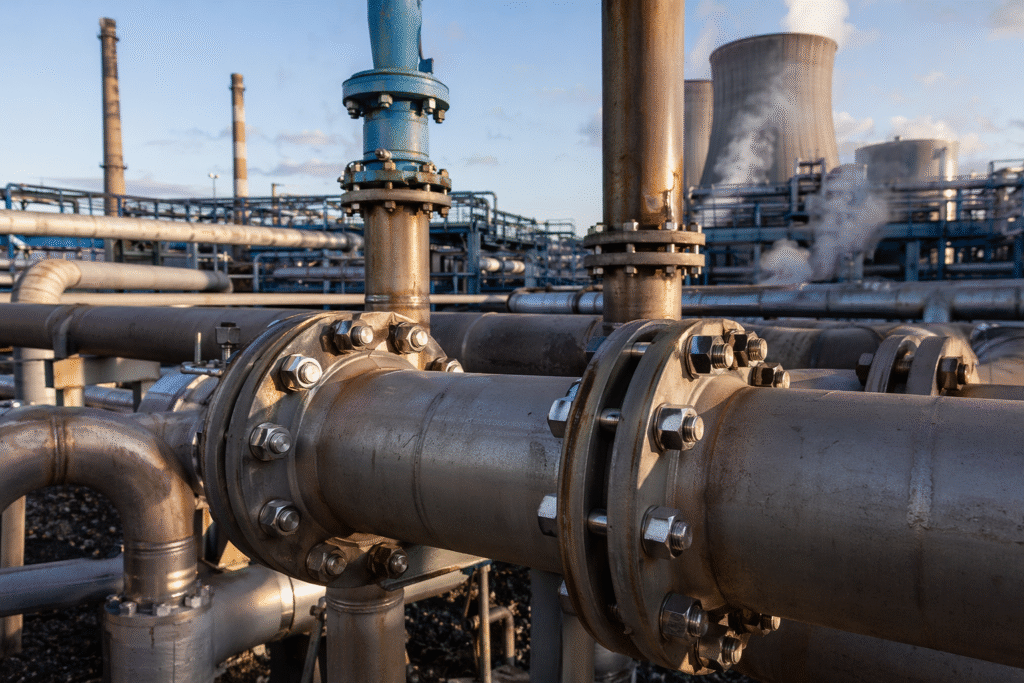
Данные о рынке фланцев для труб из нержавеющей стали: Скрытые преимущества, Типы, Использование, и как выбрать наиболее распространенные варианты
По данным исследования Grand View (2024), мировой рынок промышленных фланцев оценивался в $5.8 миллиард в 2023 и, по прогнозам, достигнет $7.2 миллиард на 2030. That growth explains why the stainless steel pipe flange remains a priority component for engineers and buyers who need corrosion resistance, pressure integrity, and long service life.
For procurement teams, the most intriguing question is not whether to use stainless steel, but which grade, тип фланца, and standard deliver the best lifecycle value. Более того, the hidden advantages of stainless steel pipe flange solutions often appear in reduced maintenance, better cleanliness, and stronger performance under aggressive service conditions.
Industrial Demand for Stainless Steel Pipe Flange Solutions Is Rising Worldwide
По данным IBISWorld (2024), На долю Азиатско-Тихоокеанского региона приходится более 45% мирового производства фланцев, при этом Китай является крупнейшим производителем. Therefore, sourcing strategy now depends not only on price, but also on supplier qualification, metallurgical control, and export compliance.
По данным Статистики (2024), на долю нефтегазовой отрасли приходится около 35% мирового потребления фланцев. На практике, that means stainless steel pipe flange demand stays closely tied to upstream, midstream, переработка, LNG, and process plant investment cycles.
Additionally, corrosion-related losses continue to shape material selection. NACE has estimated that global corrosion costs exceed $2.5 trillion annually, which equals roughly 3% к 4% of global GDP (КДЕС, 2023). Как результат, many end users move from carbon steel to 304, 316, дуплекс, or nickel alloy flanges in critical lines.
Stainless steel flanges support leak-tight bolted joints in piping systems that carry fluids, gases, пар, and chemicals. They also simplify inspection, maintenance, and line modification compared with fully welded systems. That serviceability remains one of the most common reasons buyers choose a flange instead of a permanent connection.
In regulated sectors, documentation matters as much as metallurgy. Buyers often require mill test certificates, прослеживаемость тепла, PMI, hydrostatic or dimensional verification, и EN 10204 3.1 inspection documents before approving shipment. Therefore, supplier quality systems directly affect project risk.
As SASA FLANGE operates with ISO 9001:2015, ПЭД 2014/68/ЕС, and AD 2000 credentials, the company aligns with procurement expectations for traceable industrial components. Manufacturing flanges in 304, 316, 316л, 904л, 2205, 2507, А105, A182, Инконель, Монель, Хастеллой, and Titanium, it serves demanding applications across oil and gas, нефтехимический, власть, морской, and water treatment sectors.
Another market shift involves total cost of ownership rather than unit price alone. Stainless steel usually costs more upfront than carbon steel, but it often lowers replacement frequency and downtime in chloride, humid, or chemically aggressive environments. Более того, stainless grades help support hygiene and contamination control in food, фармацевтика, and ultrapure water lines.
Mordor Intelligence (2024) reports continued growth in global water and wastewater infrastructure investment, which supports rising demand for corrosion-resistant piping components. Likewise, shipbuilding and offshore projects increasingly specify 316L, дуплекс, and super duplex materials where seawater exposure accelerates attack on lower-grade metals.
For buyers evaluating suppliers, manufacturing breadth is increasingly important. A qualified source should offer weld neck, без шнуровки, слепой, раструбная сварка, резьбовой, коленный сустав, and reducing flange configurations, plus related elbows, тройники, редукторы, and caps. That integrated supply model reduces lead-time friction and documentation gaps.
Благодаря передовой обработке с ЧПУ и всестороннему тестированию качества., SASA FLANGE предлагает нестандартные размеры от 1/2 дюйм до 60 дюйм с конкурентоспособными ценами напрямую с завода. Serving 50+ страны, the company supports both standardized and project-specific requirements under ANSI B16.5, ANSI B16.47, ASME B16.9, DIN, JIS, ГОСТ, и RU 1092 frameworks.
Типы фланцев для труб из нержавеющей стали, Скрытые преимущества, and Technical Selection Factors
The most common stainless steel flange types each solve a different piping problem. Однако, selection errors still occur when teams focus only on flange price instead of bore alignment, cyclic loading, corrosion allowance, and installation method.
Как доктор. James Patel, Senior Materials Engineer, государства: «A flange joint succeeds when metallurgy, класс давления, облицовочная отделка, gasket compatibility, and bolting are selected as one system rather than as separate items.» That principle is especially important for stainless steel pipe flange assemblies in high-temperature and chloride-rich service.
ASME B16.5 covers pipe flanges and flanged fittings in NPS 1/2 через 24, пока ASME B16.47 addresses larger diameters up to NPS 60 (ASME, 2023). Therefore, engineers must confirm both dimensional standard and pressure-temperature rating before issuing a purchase order.
Согласно АСТМ, A182 is the core forged material specification for alloy and stainless steel pipe flanges, арматура, клапаны, и детали для работы при высоких температурах (ASTM, 2023). Кроме того, ASTM A240 commonly governs plate products used to manufacture some stainless components, especially where plate flange production is specified.
The most common stainless steel grades for industrial flange use include:
- 304 and 304L for general corrosion resistance and good weldability.
- 316 and 316L for enhanced pitting resistance due to molybdenum content.
- 321 и 347 for stabilized performance in elevated temperature service.
- 904L for stronger resistance in certain sulfuric and chloride environments.
- 2205 duplex and 2507 super duplex for high strength and chloride stress corrosion resistance.
Each material offers hidden advantages beyond simple corrosion resistance. Например, duplex grades provide higher strength, which can reduce wall thickness in some applications. Тем временем, 316L remains one of the most common choices for marine, химический, and offshore systems because it balances cost, доступность, and corrosion performance.
Flange type selection should match the process duty. A weld neck flange performs well in severe service because its tapered hub distributes stress more smoothly into the pipe wall. By contrast, a slip-on flange can reduce fabrication cost in lower-pressure lines, although its fatigue resistance is generally lower than weld neck designs.
Blind flanges isolate line ends, vessel nozzles, and future expansion points. Threaded flanges simplify installation where welding is restricted, while socket weld flanges often suit small-bore high-pressure piping. Lap joint flanges support frequent dismantling and alignment flexibility, especially when paired with stub ends.
Typical selection criteria include:
- Pressure class such as Class 150, 300, 600, 900, 1500, или 2500.
- Pipe schedule and bore alignment, including Schedule 10S, 40С, and 80S.
- Facing type such as RF, ФФ, РТЖ, tongue and groove, or male and female.
- Operating temperature, design pressure, and thermal cycling severity.
- Fluid chemistry, уровень хлоридов, pH, erosion risk, and contamination sensitivity.
- Inspection requirements including PMI, ПТ, ЮТ, ferrite testing, и EN 10204 3.1 documents.
По данным Market Research Future (2024), process industry automation and plant modernization continue to increase replacement demand for high-integrity components. Как результат, buyers increasingly ask for precision-machined flange faces and tighter dimensional consistency to reduce site fit-up problems.
As Laura Chen, Industrial Piping Analyst, государства: «The most overlooked advantage of stainless steel flanges is lifecycle stability, because fewer corrosion failures directly improve uptime and maintenance planning.» That view aligns with the hidden advantages procurement teams seek when comparing stainless and carbon steel options.
On the manufacturing side, dimensional accuracy matters as much as raw material grade. Poor flatness, off-center bores, or incorrect drilling can create gasket stress imbalance and leak risk. Therefore, reliable suppliers use calibrated gauges, PMI verification, hardness checks, and final visual inspection before dispatch.
SASA FLANGE supports custom machining, multiple facing types, and a broad portfolio of stainless steel flanges and fittings for project packages. Offering weld neck, без шнуровки, слепой, резьбовой, раструбная сварка, коленный сустав, and reducing flange designs, the company helps buyers consolidate sourcing while maintaining technical compliance.
For many buyers, the most intriguing buying decision is whether premium metallurgy is justified. In most corrosive or maintenance-sensitive plants, the answer is yes. The hidden advantages include fewer shutdowns, lower replacement frequency, and better reliability under variable process conditions.
Стандарты, Согласие, and Quality Assurance for Stainless Steel Flanges
Standards compliance determines interchangeability, безопасность, and acceptance in EPC and end-user projects. Следовательно, every stainless steel pipe flange specification should identify the required dimensional standard, material standard, inspection level, and certification package.
Key standards and frameworks include:
- ASME B16.5 for flanges and flanged fittings up to NPS 24.
- ASME B16.47 for large diameter steel flanges from NPS 26 к 60.
- ASTM A182 for forged or rolled alloy and stainless steel flanges.
- ASME B16.9 for factory-made wrought buttwelding fittings.
- EN 1092 for European flange dimensions and pressure classes.
- DIN and JIS standards for region-specific industrial installations.
- NACE MR0175 for sulfide stress cracking resistance in sour service.
Pressure-temperature ratings should never be assumed across standards. ASME Class ratings differ from PN designations in EN and DIN systems, and drilling patterns are not always interchangeable. Therefore, procurement documents must specify the exact governing standard to avoid site mismatch.
The PED 2014/68/EU framework adds another compliance layer for equipment supplied into the European market. Более того, quality systems such as ISO 9001:2015 support process discipline across material receiving, механическая обработка, прослеживаемость, nonconformance handling, and final release.
For reference, buyers often compare requirements in this simplified format:
- ASME projects usually specify Class ratings, RF or RTJ faces, and ASTM material grades.
- EN projects usually specify PN ratings, EN material numbers, и EN 10204 certification language.
- Oil and gas projects may add NACE MR0175, low-temperature testing, and stricter traceability controls.
- Marine projects may require DNV or owner-specific corrosion and certification criteria.
According to ISO (2023), certified quality management systems improve consistency in controlled manufacturing environments by standardizing inspection, documentation, and corrective action. In flange production, that means better repeatability in drilling, bore machining, bevel geometry, and marking accuracy.
Material traceability is especially important for stainless steel grades that appear similar visually but differ in corrosion performance. Например, 304 и 316 may look alike, yet 316 contains molybdenum and generally performs better in chloride service. Как результат, PMI and heat number tracking reduce costly substitution risks.
Surface finish and flange face quality also affect sealing reliability. ASME and gasket manufacturers specify serration ranges for raised face joints because surface roughness directly influences gasket seating. Therefore, face finishing should be verified rather than assumed.
In severe service, supplementary tests often strengthen confidence:
- Positive Material Identification for grade verification.
- Liquid Penetrant Testing for surface discontinuities.
- Ultrasonic Testing for internal integrity in critical forgings.
- Hardness testing where service or client specifications require it.
- Ferrite measurement for duplex and certain weld-related applications.
С ISO 9001:2015 и сертификаты PED 2014/68/ЕС., SASA FLANGE aligns with the expectations of global EPC contractors and industrial distributors. The company also supports EN 10204 3.1 documentation, проверка размеров, and project-specific testing protocols for buyers who need dependable compliance records.
Authoritative standards should always be checked at source before final engineering release. Buyers can review current requirements directly through ASME and ASTM publications. That step reduces revision errors and supports stronger specification control during tendering.
How to Choose the Most Common Stainless Steel Pipe Flange for Real Applications
Application-based selection helps engineers choose the most common and cost-effective flange without sacrificing reliability. Однако, each industry imposes different corrosion, давление, температура, and inspection demands.
In oil and gas, stainless steel pipe flange selection often depends on chlorides, sour service, класс давления, and maintenance accessibility. For offshore topside and produced water systems, 316л, 2205, и 2507 are frequently evaluated because corrosion failures can trigger major downtime. По данным Статистики (2024), oil and gas represents about 35% мирового потребления фланцев, so this sector heavily influences preferred flange designs.
In petrochemical and chemical processing, media compatibility drives material choice. 304L may work well in moderate service, while 316L or 904L often performs better in chloride-bearing or acidic lines. Where temperature remains high for long periods, stabilized or heat-resistant grades such as 321, 347, or specific nickel alloys may be more suitable.
Power generation systems often combine elevated temperature with cyclic load. Therefore, weld neck flange designs are usually preferred on critical steam or high-energy lines because they provide better stress distribution. ASTM A182 grades and precise bore matching are essential to protect weld integrity and flow continuity.
Marine and shipbuilding applications demand stronger resistance to salt spray, splash zones, and seawater handling systems. In these environments, 316L remains common, but duplex and super duplex grades often deliver longer life where pitting and crevice corrosion risks are high. DNV or owner specifications may also apply.
Water treatment plants increasingly specify stainless steel flanges and fittings where corrosion, чистота, and low maintenance matter. According to Mordor Intelligence (2024), wastewater infrastructure spending continues to expand globally, which supports growing demand for durable, traceable flange systems.
When evaluating flange types, buyers should compare these practical uses:
- Weld neck flange for high pressure, высокая температура, and cyclic service.
- Slip-on flange for moderate duty and economical fabrication.
- Blind flange for line termination, isolation, and test points.
- Threaded flange for non-welded small-bore service.
- Socket weld flange for compact high-pressure small-diameter lines.
- Lap joint flange for systems requiring frequent dismantling.
- Reducing flange where line size transition is needed within the flange connection.
Procurement managers should also evaluate commercial factors early in the sourcing cycle:
- Available sizes such as 2 дюйм, 4 дюйм, and larger custom dimensions.
- Pressure class availability and matching bolting requirements.
- Lead time for standard versus custom forged items.
- Documentation package including MTC, 3.1, ПЭД, and PMI reports.
- Export packing, маркировка, and traceability controls.
As Mark Ellison, Piping Consultant, государства: «The strongest flange is not simply the thickest one, but the one correctly matched to load case, metallurgy, лицом к лицу, gasket, and bolt set.» That advice is especially useful when buyers compare weld neck, слепой, and RTJ designs for demanding process lines.
Custom manufacturing becomes valuable when project drawings include nonstandard bores, special facing, or dual standard compliance. Предлагаем индивидуальные размеры от 1/2 дюйм до 60 дюйм, SASA FLANGE supports these project-driven requirements with advanced CNC machining and broad material capability. That flexibility helps EPC buyers reduce supplier fragmentation.
For teams comparing suppliers, a structured RFQ should include standard, размер, расписание, сорт, face type, материал, тестирование, and document requirements. Кроме того, buyers should request any special heat treatment, КДЕС, or coating instructions at inquiry stage. Early clarity improves quotation accuracy and delivery performance.
The most common buying mistake is selecting stainless only by grade number. Instead, engineers should choose the complete flange system around process chemistry, класс давления, gasket style, and lifecycle cost. That disciplined approach reveals the hidden advantages of high-quality stainless steel flanges in long-term plant performance.
Перспективы на будущее, Strategic Buying Recommendations, and Supplier Evaluation
The industrial flange market is expanding steadily, but buyer expectations are becoming more technical. По данным исследования Grand View (2024), the market is projected to grow from $5.8 миллиард в 2023 к $7.2 миллиард на 2030. Therefore, suppliers that combine traceable quality with flexible manufacturing will gain the strongest position.
Procurement teams should expect three major trends. Первый, corrosion-resistant materials will continue gaining share in aggressive environments. Второй, project owners will demand stronger documentation and compliance visibility. Третий, shorter lead times and integrated supply of flanges plus fittings will become more valuable.
Strategically, buyers should follow a few clear practices:
- Standardize approved materials by service condition rather than by habit.
- Specify ASME, ASTM, DIN, or EN requirements clearly in every RFQ.
- Verify testing scope before order placement, not after production.
- Assess lifecycle cost, not only unit purchase price.
- Consolidate sourcing where flange and fitting compatibility matters.
Более того, supplier evaluation should include production capability, export experience, certification status, and responsiveness to technical clarification. A capable partner can often prevent costly mismatches before they reach site. That value becomes significant in shutdown work and EPC schedules where delays are expensive.
For buyers seeking stainless steel pipe flange solutions across the most common and specialized applications, the right source should combine engineering support, standards compliance, and flexible manufacturing. С ISO 9001:2015 и сертификаты PED 2014/68/ЕС., broad grade coverage, and experience serving 50+ страны, SASA FLANGE remains a practical option for industrial projects that require reliable flanges and fittings. For technical support or RFQ review, buyers can connect through SASA FLANGE and align specification, материал, and lead-time requirements early in the sourcing process.
Часто задаваемые вопросы
What are stainless steel flanges used for?
●Stainless steel flanges are used to connect pipes, клапаны, насосы, and vessels in systems that require corrosion resistance, механическая прочность, and easy maintenance access.
●По данным Статистики (2024), oil and gas accounts for approximately 35% мирового потребления фланцев, which shows how critical flange joints are in high-value industrial piping networks.
●They are most common in oil and gas, нефтехимический, морской, очистка воды, food processing, and power generation because they simplify inspection and replacement compared with permanent welded-only assemblies.
●Engineers typically choose flange assemblies when they need bolted joints with defined pressure classes, controlled gasket sealing, and compatibility with standards such as ASME B16.5 or EN 1092.
●For projects requiring traceable stainless steel flanges and fittings, работа с известными производителями, такими как SASA FLANGE helps ensure proper material documentation and dimensional compliance.
What flanges are made of stainless steel?
●Many flange designs are made of stainless steel, включая приварную шейку, без шнуровки, слепой, резьбовой, раструбная сварка, коленный сустав, and reducing flange configurations.
●ASTM A182 is the primary forged material standard for stainless steel flanges in industrial service, пока ASME B16.5 and B16.47 define dimensions and pressure classes for many common products.
●Common grades include 304, 304л, 316, 316л, 321, 347, 904л, 2205, и 2507, with grade selection depending on chlorides, температура, давление, and required mechanical strength.
●Blind and weld neck designs are often preferred in severe service, while slip-on and threaded options may suit less demanding or easier-installation environments.
●For buyers comparing stainless steel flange types across multiple standards, a qualified supplier should offer both standard and custom-machined options with EN 10204 3.1 documentation.
Do they make stainless steel pipe fittings?
●Да, manufacturers produce stainless steel pipe fittings such as elbows, тройники, редукторы, and caps to match flange materials and maintain corrosion resistance through the full piping system.
●ASME B16.9 covers many factory-made wrought buttwelding fittings, and coordinated sourcing of flanges plus fittings often improves compatibility and project documentation control.
●По данным исследования Grand View (2024), industrial flange demand is rising toward $7.2 миллиард на 2030, and that same infrastructure growth supports continued demand for matched stainless steel piping components.
●Using mixed materials can create corrosion and maintenance risks, so engineers often prefer matching or metallurgically compatible flange and fitting grades in aggressive service.
●For projects needing stainless steel flanges and fittings from one source, suppliers such as SASA FLANGE can simplify procurement and reduce lead-time coordination issues.
What is the strongest type of piping flange?
●The weld neck flange is widely considered the strongest standard piping flange for high-pressure and high-temperature service because its tapered hub distributes stress effectively into the pipe.
●ASME B16.5 class ratings range from 150 к 2500, but actual strength depends on flange type, сорт материала, толщина стенки, запирание, gasket design, and operating temperature.
●Blind flanges can also handle severe service at line ends, while ring type joint configurations often improve sealing reliability in critical oil and gas applications.
●As piping consultants often note, the strongest flange is the one correctly matched to the load case and service environment rather than the thickest or most expensive option.
●For demanding systems, engineers should review bore match, лицом к лицу, класс давления, и ASTM A182 material requirements before final selection.
What are the different types of stainless steel flanges?
●Основными типами фланцев из нержавеющей стали являются приварные шейки., без шнуровки, слепой, резьбовой, раструбная сварка, коленный сустав, and reducing flanges.
●Each type serves a different use case, with weld neck favored for severe cyclic duty and slip-on often chosen for economical fabrication in moderate-pressure systems.
●Согласно ASME (2023), dimensional requirements for many of these designs are standardized under B16.5 and B16.47, which supports interchangeability when specifications are written correctly.
●Face types such as raised face, плоское лицо, and RTJ also affect sealing performance, so buyers should evaluate the complete connection rather than flange geometry alone.
●For the most common project work, engineers should confirm standard, сорт, лицом к лицу, and material grade before comparing supplier pricing.
How do I choose the most common stainless steel pipe flange size and grade?
●You should choose stainless steel pipe flange size and grade by matching NPS size, pipe schedule, класс давления, process chemistry, and temperature to the project specification.
●Common buyer searches include 2 inch and 4 inch stainless steel pipe flange sizes, but correct selection also requires bore accuracy, bolt pattern confirmation, and gasket compatibility.
●По данным IBISWorld (2024), Asia-Pacific represents over 45% мирового производства фланцев, so buyers have broad sourcing options but must still verify compliance and traceability carefully.
●Grades such as 304L and 316L cover many standard services, пока 2205, 2507, 904л, and nickel alloys may be better for chlorides, sour service, or highly corrosive media.
●For projects with custom dimensions or strict documentation requirements, working with an experienced manufacturer helps avoid installation mismatch and rework.
Связанные Посты
Определение фланца с диафрагмой, Подробности и обзор фланцев ASME B16.36: Рыночные данные, Руководство по выбору и анализ соответствия требованиям
Мировой рынок промышленных фланцев оценивался в $5.8 миллиард…
Руководство по рынку черных сливных фланцев: Материалы, 3.5″ Совместимость, и данные о поставщиках B2B для фланцев для кухонной мойки
Спрос на черные фланцы для утилизации растет благодаря покупателям кухонной техники…
Руководство по типам фланцев: 2024 Данные, Стандарты, и лучшие практики выбора промышленных трубопроводов
Мировой рынок типов фланцев продолжает расширяться по мере…
3 дюймовый фланец Руководство по покупке: Рыночные данные, Размеры, Номинальное давление, и выбор резьбовых фланцев
The 3 дюймовый фланец остается важнейшим компонентом промышленного…