
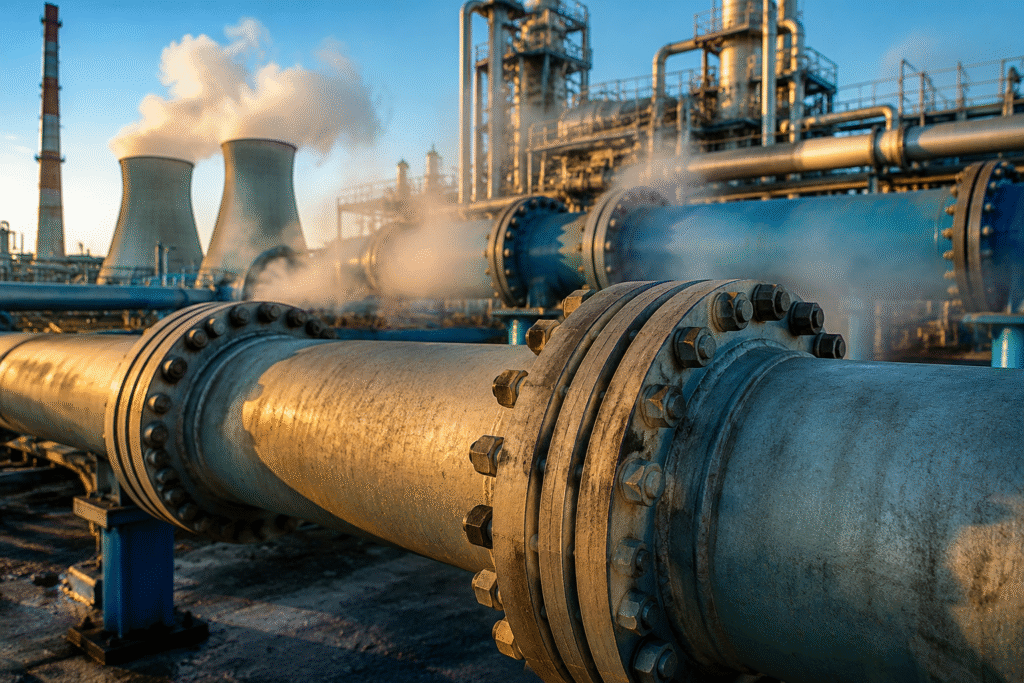
Markt für Edelstahl-Rohrflansche soll bis 2019 7,2 Milliarden US-Dollar erreichen 2030: Versteckte Vorteile, Typen, Verwendungsmöglichkeiten, und wie man Industrieflansche auswählt
Laut Grand View Research (2024), Der globale Markt für Industrieflansche wurde mit bewertet $5.8 Milliarden in 2023 und wird voraussichtlich erreicht werden $7.2 Milliarden von 2030. That growth explains why the stainless steel pipe flange remains a critical component in the industrial pipe world, where buyers must balance corrosion resistance, Druckklasse, Lebenszykluskosten, und Standardkonformität.
Für Ingenieure und Beschaffungsteams, understanding the hidden advantages, Typen, verwendet, and how to choose flanges is now a strategic purchasing task. Darüber hinaus, buyers want suppliers that combine technical depth with certified manufacturing, fast documentation, and stable quality across global projects.
Market Drivers Shaping the Stainless Steel Pipe Flange World
Der Markt für Industrieflansche wächst aufgrund der Energie, Wasser, and process industries continue to invest in resilient piping infrastructure. Laut Statista (2024), auf die Öl- und Gasindustrie entfallen ca 35% des weltweiten Flanschverbrauchs, which makes upstream, Mittelstrom, and refining projects major demand centers.
Regional manufacturing concentration also matters for global sourcing decisions. Laut IBISWorld (2024), Der asiatisch-pazifische Raum macht mehr als aus 45% der weltweiten Flanschproduktion, wobei China der größte Hersteller ist, therefore buyers increasingly evaluate factory capability, Rückverfolgbarkeit, and export experience before placing orders.
This demand trend favors manufacturers with broad material coverage and international certifications. SASA FLANGE, unterstützt von ISO 9001:2015 und PED 2014/68/EU-Zertifizierungen, liefert Edelstahlflansche, Flansche aus Kohlenstoffstahl, Flansche aus Legierung, und Rohrverbindungsstücke für Öl & Gas, Petrochemie, Leistung, Marine, Wasseraufbereitung, und Bausektor.
In today’s procurement environment, cost alone is not enough. Buyers also compare EN 10204 3.1 Dokumentation, PMI-Verfügbarkeit, Wärmebehandlungskontrolle, Maßtoleranz, and machining consistency across slip on, Hals schweißen, blind, Muffenschweißen, Überlappungsgelenk, und Gewindeflansche.
Laut Mordor-Geheimdienst (2024), industrial process upgrades and maintenance demand are increasing aftermarket purchases across refining and power sectors. Infolge, replacement flanges, individuelles Bohren, and mixed-grade project packages are becoming more common than single-SKU orders.
That shift rewards suppliers that offer flexibility rather than commodity-only supply. Durch https://sasaflange.com/about-us/, Käufer können eine Bewertung abgeben SASA FLANGE’s manufacturing background and export orientation, which are especially relevant for EPC contractors and OEMs managing multi-standard projects.
Another important trend is material upgrading in corrosive service. Laut Market Research Future (2024), corrosion-resistant alloy demand in process industries is rising as operators target longer maintenance intervals and lower total installed cost.
daher, Edelstahlsorten wie z 304, 316, 316L, 904L, Duplex 2205, und Super-Duplex 2507 are no longer niche choices in many applications. They are increasingly selected where chloride exposure, aggressive media, or temperature cycling would shorten the service life of lower-grade materials.
As Mark Reynolds, Leitender Rohrleitungsingenieur, Staaten: “A flange selection error often appears inexpensive at purchase, but it becomes expensive during shutdown, leakage investigation, and replacement.” That perspective reflects a core industrial reality: lifecycle performance usually outweighs the unit price difference between standard and upgraded stainless grades.
Aus diesem Grund, a qualified stainless steel pipe flange supplier must deliver more than products. It must deliver standards compliance, dimensional reliability, metallurgische Konsistenz, and practical application guidance across the full industrial pipe world.
Understanding Stainless Steel Pipe Flange Types, Bewertungen, und versteckte Vorteile
When buyers search for intriguing stainless steel flange types, they usually want straightforward selection logic. In der Praxis, the best approach is to match flange design, Materialqualität, Druckstufe, Verblendungstyp, and operating environment to the actual service conditions.
Zu den gebräuchlichsten Flanschtypen für Edelstahlrohre gehören Vorschweißflansche, reinschlüpfen, blind, mit Gewinde, Muffenschweißen, und Überlappungsgelenkkonstruktionen. Each type solves a different mechanical or maintenance problem, therefore understanding geometry is just as important as understanding chemistry.
Entsprechend ASME B16.5, standard flange dimensions and pressure-temperature ratings are defined for NPS 1/2 durch 24. Für größere Durchmesser, ASME B16.47 gilt, which is especially relevant for transmission pipelines, storage terminals, and large-bore process systems (ASME, 2023).
Slip on flanges remain popular because they are economical and easier to align during fabrication. Jedoch, weld neck flanges are generally preferred for high-pressure, hohe Temperatur, zyklisch, or critical service because the tapered hub reduces stress concentration at the weld transition.
Blind flanges are used to isolate, überprüfen, or future-expand a piping system. Threaded flanges can be useful in lower-pressure service where welding is impractical, while socket weld flanges are often used on smaller bore, Hochdruckleitungen.
Als Dr. Elaine Porter, Materialwissenschaftler, Staaten: “The hidden advantages of stainless steel flanges are not only corrosion resistance but also predictable fabrication behavior and strong performance in hygienic or cyclic environments.” That is especially true for 304/304L and 316/316L, which remain the most widely specified grades for general industrial service.
From a material standpoint, 304 and 304L offer good corrosion resistance and weldability for many water, Essen, HVAC, und allgemeine Industriesysteme. Im Gegensatz, 316 and 316L include molybdenum, which improves resistance in chloride-containing and more aggressive chemical environments.
Higher alloy choices support more demanding applications. Zum Beispiel, 904L improves resistance in sulfuric and reducing media, während duplex 2205 delivers stronger mechanical properties and better chloride stress corrosion cracking resistance than austenitic 304 in many services.
- 304/304L: Allgemeine Korrosionsbeständigkeit, good formability, common for water, Essen, und leichter chemischer Service.
- 316/316L: Better pitting resistance in chlorides, suitable for marine, Off-Shore-, and chemical applications.
- 904L: Enhanced resistance to strong corrosives, often selected for severe chemical duty.
- 2205 Duplex: Höhere Festigkeit, strong chloride resistance, often chosen for offshore and process systems.
- 2507 Super-Duplex: Very high pitting and crevice corrosion resistance for aggressive chloride service.
Stärke, Jedoch, is not the only variable. Pressure class selection must align with actual design conditions, wie Klasse 150, 300, 600, 900, 1500, oder 2500 under ASME systems.
Facing type also matters because sealing integrity depends on gasket compatibility and assembly practice. Erhöhtes Gesicht, flaches Gesicht, and ring type joint configurations each serve different operating and maintenance requirements.
- Erhöhtes Gesicht: The most common industrial configuration for standard process piping.
- Flaches Gesicht: Often used with cast iron equipment or where low bolt stress is required.
- RTJ: Preferred for high-pressure and critical sealing duty, insbesondere in Öl- und Gassystemen.
Gemäß NACE-Leitfaden, material performance in sour or chloride-rich service must be evaluated against cracking and corrosion risks rather than nominal strength alone (NACE, 2023). daher, the strongest type of piping flange in practice depends on both design form and alloy suitability.
Manufacturing quality remains equally important. Unterstützt durch fortschrittliche CNC-Bearbeitung und umfassende Qualitätsprüfungen, SASA FLANGE bietet maßgeschneiderte Größen ab 1/2" bis 60" across stainless, Duplex, Nickellegierung, Titan, and forged carbon steel grades.
Für Käufer, die Edelstahlflansche vergleichen 2 inch items, 4 Zoll-Edelstahlrohrflanschprodukte, or large-diameter project packages, dimensional repeatability reduces installation delays. Darüber hinaus, consistent drilling, Verkleidungsende, and bevel preparation improve field fit-up and welding productivity.
Entsprechend ASTM A182, forged stainless and alloy flanges must meet defined chemical and mechanical requirements for pressure service (ASTM, 2023). That is why professional buyers routinely request MTCs, PMI, hardness data, hydrotest records when applicable, and full traceability from heat number to finished flange.
ASME, ASTM, DIN, und EN-Normen, die die Konformität von Edelstahlrohrflanschen regeln
Compliance is central to industrial procurement because a stainless steel pipe flange is only as reliable as its standard conformity. In globalen Projekten, buyers often need ASME dimensional compliance, ASTM material compliance, and EN or DIN alternatives for European or mixed-standard installations.
The most common standards framework includes ASME B16.5 Und ASME B16.47 for dimensions and ratings, ASME B16.9 für Stumpfschweißfittings, ASTM A182 für geschmiedete Flansche, Und ASTM A240 for plate products used in some flange-related components. Zusätzlich, EN 1092 and DIN flange systems remain common in Europe, Wasseraufbereitung, Marine, and equipment export projects.
Gemäß der Druckgeräterichtlinie, pressure-retaining components entering many EU-regulated applications must satisfy documented conformity procedures (PED 2014/68/EU). daher, certificate package quality can be as important as machining quality for cross-border procurement.
The following comparison helps engineers and buyers map common standards:
- ASME B16.5: Rohrflansche und Flanschverbindungen, NPS 1/2 Zu 24, pressure classes and dimensions.
- ASME B16.47: Stahlflansche mit großem Durchmesser, NPS 26 Zu 60.
- ASTM A182: Forged or rolled alloy and stainless steel flange material specification.
- ASME B16.9: Werkseitig hergestellte, geschmiedete Stumpfschweißbeschläge, relevant when flanges and fittings are sourced together.
- EN 1092-1: European flange specification widely used in industrial and utility systems.
- DIN / JIS / GOST: Regional dimensional systems required in specific legacy or export markets.
Material certification should also reflect the intended service. For corrosive oil and gas conditions, buyers may request NACE MR0175 Ausrichtung, while offshore projects can add DNV or NORSOK expectations depending on end use.
As Peter Holm, Global Piping Market Analyst, Staaten: “The difference between approved and rejected flanges is often documentation discipline, not machining capability.” That is a useful reminder for EPC and procurement teams managing multi-country compliance requirements.
Reputable manufacturers support this process with EN 10204 3.1 Prüfbescheinigungen, Rückverfolgbarkeit der Herdenzahl, Sichtprüfung, Maßprüfung, and optional PMI or third-party witness testing. Mit ISO 9001:2015, PED 2014/68/EU, und AD 2000 Anmeldeinformationen, SASA FLANGE supports buyers who need documented quality assurance rather than generic supply.
For technical review, buyers can also cross-check requirements directly with the official ASME resource. That extra step is useful when projects involve mixed ratings, unusual facing combinations, or client-specific purchase specifications.
Zusätzlich, integrated sourcing can reduce procurement complexity. Durch https://sasaflange.com/products/, buyers can source stainless steel flanges and fittings together, which helps maintain material consistency across elbows, T-Shirts, Reduzierstücke, Kappen, und Flanschbaugruppen.
In praktischer Hinsicht, compliance protects installation schedules. If bolt holes, Flanschdicke, Verkleidungsende, or bevel geometry deviate from standard tolerances, field correction becomes expensive and may delay hydrotesting or commissioning.
That is why experienced buyers do not treat standards as paperwork only. They treat ASME, ASTM, DIN, and EN alignment as a direct control on leakage risk, rework cost, and project approval timelines.
So wählen Sie Flansche für Öl aus, Gas, Chemisch, Leistung, und maritime Nutzungen
Choosing the correct stainless steel pipe flange starts with service data rather than catalog convenience. Engineers should first define fluid chemistry, Auslegungsdruck, Betriebstemperatur, zyklische Belastung, insulation conditions, and required maintenance access.
For oil and gas uses, weld neck and RTJ flanges are commonly preferred in higher pressure service. Laut Statista (2024), Öl und Gas machen etwa aus 35% des weltweiten Flanschverbrauchs, therefore this sector strongly influences preferred designs, documentation practices, und Materialaufwertungen.
Für petrochemische und chemische Anlagen, 316L, 904L, Duplex 2205, or nickel alloys may be necessary depending on chlorides, Säuren, und Reinigungszyklen. In diesen Diensten, corrosion allowance alone is not enough; alloy selection and gasket compatibility must work together.
Zur Stromerzeugung, thermal cycling and pressure fluctuation often favor forged flanges with strong dimensional control and consistent metallurgy. Engineers also pay close attention to high-temperature grade selection, Bolzenkraftsicherung, and shutdown maintenance intervals.
For shipbuilding and marine projects, chloride exposure makes alloy selection especially important. daher, 316/316L and duplex grades are often chosen where atmospheric salt, Meerwasserspritzer, or deck process exposure can accelerate corrosion.
- Öl & Gas: Favor weld neck or RTJ flanges for pressure integrity and cyclic service.
- Chemische Verarbeitung: Prioritize corrosion resistance, PMI, und Dichtungskompatibilität.
- Kraftwerke: Evaluate temperature cycles, Druckklasse, and forged quality consistency.
- Marine: Select chloride-resistant grades such as 316L or duplex materials.
- Wasseraufbereitung: Korrosionsbeständigkeit ausbalancieren, Budget, und lange Serviceintervalle.
Procurement teams should also evaluate these selection criteria before issuing a PO:
- Anwendbarer Standard: ASME B16.5, B16.47, EN 1092, DIN, JIS, oder GOST.
- Materialqualität: 304, 304L, 316, 316L, 904L, 2205, 2507, A105, A182, or CRA alloys.
- Pressure class and schedule compatibility with mating pipe.
- Verblendungstyp: RF, FF, oder RTJ.
- Inspektionsumfang: EN 10204 3.1, PMI, Härte, NTE, third-party witness.
- Beschichtung, Markierung, and export packing requirements.
- Vorlaufzeit, batch consistency, and partial shipment planning.
Price evaluation should be equally practical. Stainless steel pipe flange price depends on alloy cost, Schmiederoute, Bearbeitungskomplexität, Druckklasse, Menge, Testumfang, and current nickel or molybdenum market conditions.
According to World Bank metals trend reporting summarized by industry analysts in 2024, alloy surcharges can shift stainless component pricing materially over short periods. Infolge, project buyers often request validity windows on quotations and separate line items for testing or special documentation.
SASA FLANGE supports this procurement model with custom manufacturing capability, breite Materialabdeckung, and factory-direct supply. Portion 50+ Länder in ganz Öl & Gas, Petrochemie, Leistung, und Marineindustrie, the company can support standard and non-standard drilling, gegenüber, and material combinations through https://sasaflange.com/contact-us/.
Zum Beispiel, a buyer sourcing stainless steel flanges and fittings for a desalination skid may specify 316L or duplex 2205 Flansche, ASME B16.5 Abmessungen, ASME B16.9 Beschläge, EN 10204 3.1 Zertifikate, und PMI. Im Gegensatz, a utility water package may prioritize 304L slip on flanges with moderate pressure class and shorter lead time.
These distinctions show why choosing flanges is not just a catalog exercise. It is an engineering and commercial decision that directly affects installability, Zuverlässigkeit, and total ownership cost.
Zukunftsaussichten für die Beschaffung von Edelstahlrohrflanschen und strategische Kaufempfehlungen
The future of the stainless steel pipe flange market looks favorable because infrastructure replacement, Projekte zur Energiewende, Offshore-Upgrades, and water treatment expansion all support demand. Laut Grand View Research (2024), Es wird erwartet, dass der Markt steigen wird $5.8 Milliarden in 2023 Zu $7.2 Milliarden von 2030, indicating a sustained procurement pipeline.
Gleichzeitig, buyers will face tighter technical and commercial expectations. Documentation quality, corrosion-resistant alloy sourcing, and supplier responsiveness are becoming more important as projects globalize and quality audits become stricter.
Laut IBISWorld (2024), Der asiatisch-pazifische Raum trägt bereits mehr als bei 45% der weltweiten Flanschproduktion, so supplier qualification in the region will remain a strategic purchasing priority. Jedoch, the best sourcing outcomes will come from manufacturers that combine price competitiveness with real engineering support and export documentation discipline.
Für B2B-Käufer, several actions are recommended. Erste, standardize your approved flange specifications by service category, because that reduces engineering ambiguity and speeds RFQ comparison.
Zweite, request full traceability and certificate requirements early in the RFQ process. Dritte, compare suppliers not only on price but also on CNC capability, Materialverfügbarkeit, Toleranzkontrolle, and response time for custom items.
Vierte, align flanges and fittings procurement where possible. That approach improves consistency across the industrial pipe package and can reduce inspection complexity, logistics fragmentation, and project risk.
Endlich, work with manufacturers that can support both standard and custom production in stainless, Duplex, und Legierungssorten. Für Projekte, die eine zertifizierte Lieferung erfordern, premium materials, und reaktionsschnelle technische Kommunikation, Käufer können sich mit ihnen verbinden SASA FLANGE to discuss specifications, Lieferzeiten, and documentation needs in a more targeted way.
Häufig gestellte Fragen
Wofür werden Edelstahlflansche verwendet??
●Zur Rohrverbindung werden Edelstahlflansche verwendet, Ventile, Pumps, und Druckgeräte in Systemen, die Festigkeit erfordern, Korrosionsbeständigkeit, and leak-controlled assembly.
●Laut Statista (2024), Öl und Gas machen ca. aus 35% des weltweiten Flanschverbrauchs, which shows how critical flanges are in high-demand industrial service.
●Sie werden häufig in petrochemischen Anlagen eingesetzt, Meeressysteme, water treatment lines, Lebensmittelverarbeitungsanlagen, and power stations because stainless grades such as 304L and 316L offer strong durability and good fabrication performance.
●Engineers select them to simplify maintenance, Demontage ermöglichen, and match standardized pressure classes under ASME B16.5 oder EN 1092-1 Anforderungen.
●For projects requiring corrosion-resistant materials and documented quality, Zusammenarbeit mit etablierten Herstellern wie SASA FLANGE trägt dazu bei, die Rückverfolgbarkeit sicherzustellen, proper standards compliance, and suitable grade selection.
Welche Flansche bestehen aus Edelstahl??
●Zu den gängigen Flanschtypen aus Edelstahl gehört der Schweißhals, reinschlüpfen, blind, mit Gewinde, Muffenschweißen, und Überlappungsflansche in Qualitäten wie z 304, 304L, 316, 316L, 904L, 2205, Und 2507.
●Entsprechend ASME B16.5 (2023), these flange forms are standardized by size, gegenüber, and pressure-temperature rating for a wide range of industrial applications.
●Slip on flanges are often chosen for easier alignment and lower cost, while weld neck flanges are preferred for higher stress, Temperatur, and pressure service.
●Blind flanges isolate sections for testing or maintenance, and threaded flanges support specific non-welded service conditions in smaller or lower-pressure lines.
●For industrial buyers sourcing stainless steel flanges and fittings together, selecting a supplier with broad product coverage improves consistency across the complete piping package.
Stellen sie Rohrverbindungsstücke aus Edelstahl her??
●Ja, Hersteller produzieren Rohrverbindungsstücke aus Edelstahl, wie z. B. Winkelstücke, T-Shirts, Reduzierstücke, and caps to match stainless steel piping and flange systems.
●ASME B16.9 defines dimensional requirements for factory-made buttwelding fittings, which is why engineers often source fittings and flanges under a coordinated specification set (ASME, 2023).
●Typical materials include 304, 304L, 316, 316L, 904L, Duplex 2205, und Super-Duplex 2507 je nach Korrosionsrisiko, strength needs, und Betriebstemperatur.
●Using matching metallurgy across flanges and fittings reduces galvanic mismatch concerns and simplifies welding procedures, Inspektion, und Materialrückverfolgbarkeit.
●For projects with custom wall thickness, gemischte Standards, oder EN 10204 3.1 certificate requirements, experienced manufacturers like SASA FLANGE can provide more reliable package support.
Was ist die stärkste Art von Rohrleitungsflansch??
●In many pressure applications, the weld neck flange is considered the strongest standard piping flange because its tapered hub distributes stress more effectively than flat-hub designs.
●According to ASME design practice and ASTM A182 Materialspezifikationen, strength depends not only on flange type but also on alloy grade, Druckklasse, und Servicezustand.
●Zum Beispiel, a weld neck flange in duplex 2205 oder Super-Duplex 2507 can outperform a lower-grade flange in chloride-rich service where corrosion affects long-term reliability.
●Jedoch, the strongest practical choice is the flange that matches the full service envelope, inklusive Druck, Temperatur, Korrosionseinwirkung, Ermüdungsbelastung, and gasket system.
●Engineers should evaluate flange geometry and material together rather than assuming the highest nominal alloy or pressure class always provides the best field performance.
Was ist der ASME-Code für Edelstahlflansche??
●Die wichtigsten ASME-Standards für Edelstahlflansche sind ASME B16.5 für NPS 1/2 Zu 24 Und ASME B16.47 for larger diameters from NPS 26 Zu 60.
●Materialanforderungen werden üblicherweise durch spezifiziert ASTM A182 für geschmiedete Edelstahlflansche, which works alongside ASME dimensional and rating requirements.
●Laut ASME (2023), buyers should also confirm pressure class, Verblendungstyp, langweilig, and bolt drilling because code compliance involves more than just nominal size.
●In mixed-standard projects, EN 1092-1 or DIN requirements may apply instead of or in addition to ASME, especially in European or equipment-export applications.
●Für kritische Aufträge, procurement teams should request MTCs, EN 10204 3.1 Zertifikate, and clear marking to verify full compliance before shipment and installation.
Wie wähle ich zwischen 304 Und 316 Edelstahl-Rohrflanschqualitäten?
●304 stainless steel pipe flange grades are usually selected for general service, während 316 grades are preferred when chloride exposure or more aggressive corrosion conditions are present.
●According to materials guidance widely used across industry, 316 includes molybdenum, which improves pitting and crevice corrosion resistance compared with 304 in many marine and chemical environments.
●304 or 304L often offers a more economical solution for water systems, Lebensmittelverarbeitung, HVAC, and general industrial pipe applications with moderate corrosion demand.
●316 or 316L is commonly recommended for offshore systems, Küstenanlagen, Prozesskufen, and chemical services where longer service life justifies the higher alloy cost.
●For projects that require exact grade selection based on media, Temperatur, und Druckklasse, a qualified supplier can review the specification and recommend the most cost-effective compliant option.
Verwandte Beiträge
Flanschoberflächenfinish: Konzentrische vs. spiralförmige Verzahnungen erklärt
Konzentrische und spiralförmige Verzahnungen sind beide bearbeitete Flanschflächenoberflächen…
Duplex 2205 vs. 316L-Flansche: Welches Material sollten Sie wählen??
Schnelle Antwort: Duplex 2205 Flansche sind normalerweise der stärkere Kandidat…

Definition des Öffnungsflansches, Details und Übersicht über ASME B16.36-Flansche: Marktdaten, Auswahlhilfe und Compliance-Einblicke
Der globale Markt für Industrieflansche wurde mit bewertet $5.8 Milliarde…

Marktführer für schwarze Entsorgungsflansche: Materialien, 3.5″ Kompatibilität, und B2B-Beschaffungsdaten für Küchenspülenflansche
Die Nachfrage nach schwarzen Entsorgungsflanschen steigt bei Käufern von Küchenarmaturen…