
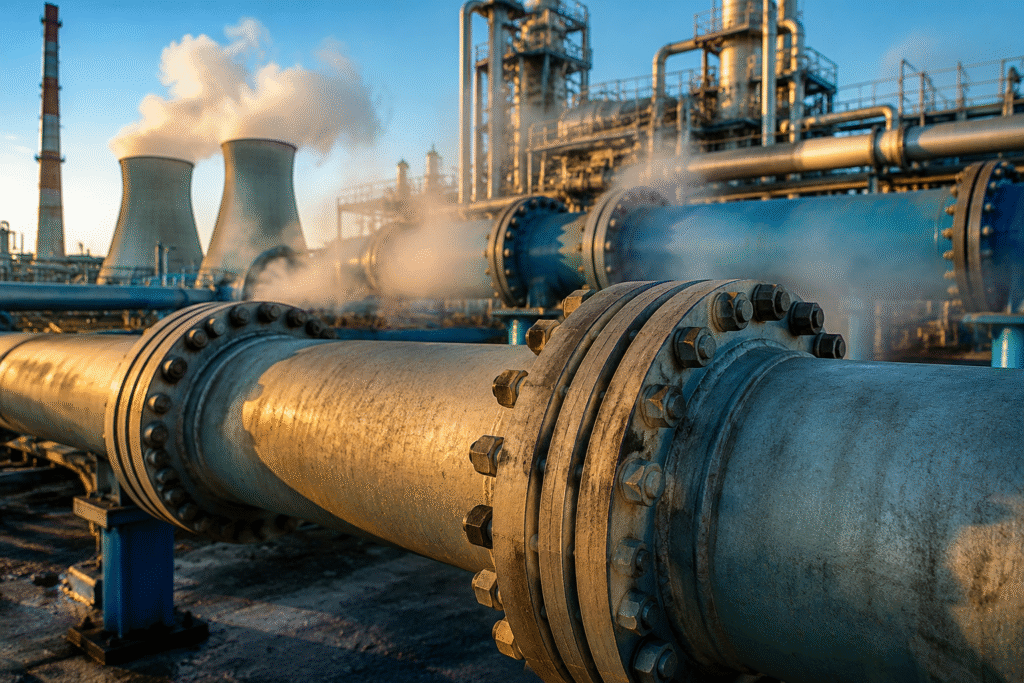
Рынок фланцев для труб из нержавеющей стали достигнет $7,2 млрд. 2030: Скрытые преимущества, Типы, Использование, и как выбрать промышленные фланцы
По данным исследования Grand View (2024), мировой рынок промышленных фланцев оценивался в $5.8 миллиард в 2023 и, по прогнозам, достигнет $7.2 миллиард на 2030. That growth explains why the stainless steel pipe flange remains a critical component in the industrial pipe world, where buyers must balance corrosion resistance, класс давления, стоимость жизненного цикла, и соответствие стандартам.
Для инженеров и отделов закупок, understanding the hidden advantages, типы, использует, and how to choose flanges is now a strategic purchasing task. Более того, buyers want suppliers that combine technical depth with certified manufacturing, fast documentation, and stable quality across global projects.
Market Drivers Shaping the Stainless Steel Pipe Flange World
Рынок промышленных фланцев расширяется, поскольку энергетика, вода, and process industries continue to invest in resilient piping infrastructure. По данным Статистики (2024), на долю нефтегазовой отрасли приходится около 35% мирового потребления фланцев, which makes upstream, на середине течения, and refining projects major demand centers.
Regional manufacturing concentration also matters for global sourcing decisions. По данным IBISWorld (2024), На долю Азиатско-Тихоокеанского региона приходится более 45% мирового производства фланцев, при этом Китай является крупнейшим производителем, therefore buyers increasingly evaluate factory capability, прослеживаемость, and export experience before placing orders.
This demand trend favors manufacturers with broad material coverage and international certifications. SASA FLANGE, при поддержке ISO 9001:2015 и сертификаты PED 2014/68/ЕС., поставляет фланцы из нержавеющей стали, фланцы из углеродистой стали, фланцы из сплава, и фитинги для нефти & Газ, нефтехимическая, Власть, Морской, Очистка воды, и строительного сектора.
In today’s procurement environment, cost alone is not enough. Buyers also compare EN 10204 3.1 документация, Наличие PMI, контроль термообработки, размерный допуск, and machining consistency across slip on, приварная шейка, слепой, раструбная сварка, коленный сустав, и резьбовые фланцы.
По данным Мордорской разведки (2024), industrial process upgrades and maintenance demand are increasing aftermarket purchases across refining and power sectors. Как результат, replacement flanges, индивидуальное бурение, and mixed-grade project packages are becoming more common than single-SKU orders.
That shift rewards suppliers that offer flexibility rather than commodity-only supply. Через https://sasaflange.com/about-us/, покупатели могут просмотреть SASA FLANGE’s manufacturing background and export orientation, which are especially relevant for EPC contractors and OEMs managing multi-standard projects.
Another important trend is material upgrading in corrosive service. По данным Market Research Future (2024), corrosion-resistant alloy demand in process industries is rising as operators target longer maintenance intervals and lower total installed cost.
Поэтому, stainless grades such as 304, 316, 316л, 904л, дуплекс 2205, и супер дуплекс 2507 are no longer niche choices in many applications. They are increasingly selected where chloride exposure, aggressive media, or temperature cycling would shorten the service life of lower-grade materials.
As Mark Reynolds, Старший инженер по трубопроводам, государства: «A flange selection error often appears inexpensive at purchase, but it becomes expensive during shutdown, leakage investigation, and replacement.» That perspective reflects a core industrial reality: lifecycle performance usually outweighs the unit price difference between standard and upgraded stainless grades.
По этой причине, a qualified stainless steel pipe flange supplier must deliver more than products. It must deliver standards compliance, dimensional reliability, metallurgical consistency, and practical application guidance across the full industrial pipe world.
Understanding Stainless Steel Pipe Flange Types, Рейтинги, и скрытые преимущества
When buyers search for intriguing stainless steel flange types, they usually want straightforward selection logic. На практике, the best approach is to match flange design, сорт материала, номинальное давление, тип облицовки, and operating environment to the actual service conditions.
The most common stainless steel pipe flange types include weld neck, надеть, слепой, резьбовой, раструбная сварка, и конструкции коленчатых соединений. Each type solves a different mechanical or maintenance problem, therefore understanding geometry is just as important as understanding chemistry.
В соответствии с ASME B16.5, standard flange dimensions and pressure-temperature ratings are defined for NPS 1/2 через 24. Для больших диаметров, ASME B16.47 применяется, which is especially relevant for transmission pipelines, storage terminals, and large-bore process systems (ASME, 2023).
Slip on flanges remain popular because they are economical and easier to align during fabrication. Однако, weld neck flanges are generally preferred for high-pressure, высокотемпературный, циклический, or critical service because the tapered hub reduces stress concentration at the weld transition.
Blind flanges are used to isolate, проверять, or future-expand a piping system. Threaded flanges can be useful in lower-pressure service where welding is impractical, while socket weld flanges are often used on smaller bore, линии высокого давления.
Как доктор. Элейн Портер, Материаловед, государства: «The hidden advantages of stainless steel flanges are not only corrosion resistance but also predictable fabrication behavior and strong performance in hygienic or cyclic environments.» That is especially true for 304/304L and 316/316L, which remain the most widely specified grades for general industrial service.
From a material standpoint, 304 and 304L offer good corrosion resistance and weldability for many water, еда, ОВиК, и общепромышленные системы. В отличие, 316 and 316L include molybdenum, which improves resistance in chloride-containing and more aggressive chemical environments.
Higher alloy choices support more demanding applications. Например, 904L improves resistance in sulfuric and reducing media, в режиме дуплекса 2205 delivers stronger mechanical properties and better chloride stress corrosion cracking resistance than austenitic 304 in many services.
- 304/304л: Общая коррозионная стойкость, good formability, common for water, еда, и легкая химическая служба.
- 316/316л: Better pitting resistance in chlorides, suitable for marine, оффшорный, and chemical applications.
- 904л: Enhanced resistance to strong corrosives, often selected for severe chemical duty.
- 2205 дуплекс: Более высокая прочность, strong chloride resistance, often chosen for offshore and process systems.
- 2507 супер дуплекс: Very high pitting and crevice corrosion resistance for aggressive chloride service.
Сила, однако, is not the only variable. Pressure class selection must align with actual design conditions, например Класс 150, 300, 600, 900, 1500, или 2500 under ASME systems.
Facing type also matters because sealing integrity depends on gasket compatibility and assembly practice. Поднятое лицо, плоское лицо, and ring type joint configurations each serve different operating and maintenance requirements.
- Поднятое лицо: The most common industrial configuration for standard process piping.
- Плоское Лицо: Often used with cast iron equipment or where low bolt stress is required.
- РТЖ: Preferred for high-pressure and critical sealing duty, especially in oil and gas systems.
Согласно руководству NACE, material performance in sour or chloride-rich service must be evaluated against cracking and corrosion risks rather than nominal strength alone (КДЕС, 2023). Поэтому, the strongest type of piping flange in practice depends on both design form and alloy suitability.
Manufacturing quality remains equally important. Благодаря передовой обработке с ЧПУ и всестороннему тестированию качества., SASA FLANGE предлагает нестандартные размеры от 1/2" до 60" across stainless, дуплекс, никелевый сплав, титан, and forged carbon steel grades.
Для покупателей, сравнивающих фланец из нержавеющей стали 2 inch items, 4 дюймовые фланцы для труб из нержавеющей стали, or large-diameter project packages, dimensional repeatability reduces installation delays. Более того, consistent drilling, облицовочная отделка, and bevel preparation improve field fit-up and welding productivity.
В соответствии с ASTM A182, forged stainless and alloy flanges must meet defined chemical and mechanical requirements for pressure service (ASTM, 2023). That is why professional buyers routinely request MTCs, PMI, hardness data, hydrotest records when applicable, and full traceability from heat number to finished flange.
ASME, ASTM, DIN, и стандарты EN, регулирующие соответствие фланцев труб из нержавеющей стали
Compliance is central to industrial procurement because a stainless steel pipe flange is only as reliable as its standard conformity. В глобальных проектах, buyers often need ASME dimensional compliance, ASTM material compliance, and EN or DIN alternatives for European or mixed-standard installations.
The most common standards framework includes ASME B16.5 и ASME B16.47 for dimensions and ratings, ASME B16.9 для фитингов под стыковую сварку, ASTM A182 для кованых фланцев, и ASTM A240 for plate products used in some flange-related components. Кроме того, EN 1092 and DIN flange systems remain common in Europe, очистка воды, морской, and equipment export projects.
Согласно Директиве по оборудованию, работающему под давлением, pressure-retaining components entering many EU-regulated applications must satisfy documented conformity procedures (ПЭД 2014/68/ЕС). Поэтому, certificate package quality can be as important as machining quality for cross-border procurement.
The following comparison helps engineers and buyers map common standards:
- ASME B16.5: Фланцы труб и фланцевые фитинги, НПС 1/2 к 24, pressure classes and dimensions.
- ASME B16.47: Стальные фланцы большого диаметра, НПС 26 к 60.
- ASTM A182: Forged or rolled alloy and stainless steel flange material specification.
- ASME B16.9: Кованые фитинги для стыковой сварки заводского изготовления., relevant when flanges and fittings are sourced together.
- EN 1092-1: European flange specification widely used in industrial and utility systems.
- DIN / JIS / ГОСТ: Regional dimensional systems required in specific legacy or export markets.
Material certification should also reflect the intended service. For corrosive oil and gas conditions, покупатели могут запросить NACE MR0175 выравнивание, while offshore projects can add DNV or NORSOK expectations depending on end use.
As Peter Holm, Аналитик мирового рынка трубопроводов, государства: «The difference between approved and rejected flanges is often documentation discipline, not machining capability.» That is a useful reminder for EPC and procurement teams managing multi-country compliance requirements.
Reputable manufacturers support this process with EN 10204 3.1 сертификаты проверки, отслеживание номера плавки, визуальный осмотр, проверка размеров, and optional PMI or third-party witness testing. С ISO 9001:2015, ПЭД 2014/68/ЕС, и АД 2000 реквизиты для входа, SASA FLANGE supports buyers who need documented quality assurance rather than generic supply.
Для технической проверки, buyers can also cross-check requirements directly with the official ASME resource. That extra step is useful when projects involve mixed ratings, unusual facing combinations, or client-specific purchase specifications.
Кроме того, integrated sourcing can reduce procurement complexity. Через https://sasaflange.com/products/, buyers can source stainless steel flanges and fittings together, which helps maintain material consistency across elbows, тройники, редукторы, кепки, и фланцевые сборки.
В практическом плане, compliance protects installation schedules. If bolt holes, толщина фланца, облицовочная отделка, or bevel geometry deviate from standard tolerances, field correction becomes expensive and may delay hydrotesting or commissioning.
That is why experienced buyers do not treat standards as paperwork only. They treat ASME, ASTM, DIN, and EN alignment as a direct control on leakage risk, rework cost, and project approval timelines.
Как выбрать фланцы для масла, Газ, Химическая, Власть, и морское использование
Choosing the correct stainless steel pipe flange starts with service data rather than catalog convenience. Engineers should first define fluid chemistry, расчетное давление, рабочая температура, циклическая нагрузка, insulation conditions, and required maintenance access.
For oil and gas uses, weld neck and RTJ flanges are commonly preferred in higher pressure service. По данным Статистики (2024), на долю нефти и газа приходится около 35% мирового потребления фланцев, therefore this sector strongly influences preferred designs, documentation practices, и улучшение материалов.
Для нефтехимических и химических предприятий, 316л, 904л, дуплекс 2205, or nickel alloys may be necessary depending on chlorides, кислоты, and cleaning cycles. In these services, corrosion allowance alone is not enough; alloy selection and gasket compatibility must work together.
Для производства электроэнергии, thermal cycling and pressure fluctuation often favor forged flanges with strong dimensional control and consistent metallurgy. Engineers also pay close attention to high-temperature grade selection, удержание нагрузки на болт, and shutdown maintenance intervals.
For shipbuilding and marine projects, chloride exposure makes alloy selection especially important. Поэтому, 316/316L and duplex grades are often chosen where atmospheric salt, всплеск морской воды, or deck process exposure can accelerate corrosion.
- Масло & Газ: Favor weld neck or RTJ flanges for pressure integrity and cyclic service.
- Химическая обработка: Prioritize corrosion resistance, PMI, и совместимость прокладок.
- Электростанции: Evaluate temperature cycles, класс давления, and forged quality consistency.
- Морской: Select chloride-resistant grades such as 316L or duplex materials.
- Очистка воды: Баланс коррозионной стойкости, бюджет, и длительные межсервисные интервалы.
Procurement teams should also evaluate these selection criteria before issuing a PO:
- Применимый стандарт: ASME B16.5, Б16.47, EN 1092, DIN, JIS, или ГОСТ.
- Марка материала: 304, 304л, 316, 316л, 904л, 2205, 2507, А105, А182, or CRA alloys.
- Pressure class and schedule compatibility with mating pipe.
- Тип облицовки: РФ, ФФ, или РТДЖ.
- Объем проверки: EN 10204 3.1, PMI, твердость, ОСП, third-party witness.
- Покрытие, маркировка, и требования к экспортной упаковке.
- Время выполнения, batch consistency, and partial shipment planning.
Price evaluation should be equally practical. Stainless steel pipe flange price depends on alloy cost, маршрут ковки, сложность обработки, класс давления, количество, объем тестирования, and current nickel or molybdenum market conditions.
According to World Bank metals trend reporting summarized by industry analysts in 2024, alloy surcharges can shift stainless component pricing materially over short periods. Как результат, project buyers often request validity windows on quotations and separate line items for testing or special documentation.
SASA FLANGE supports this procurement model with custom manufacturing capability, широкий охват материала, and factory-direct supply. Обслуживание 50+ страны по нефти & Газ, нефтехимическая, Власть, и морская промышленность, the company can support standard and non-standard drilling, лицом к лицу, and material combinations through https://sasaflange.com/contact-us/.
Например, a buyer sourcing stainless steel flanges and fittings for a desalination skid may specify 316L or duplex 2205 фланцы, ASME B16.5 размеры, ASME B16.9 арматура, EN 10204 3.1 сертификаты, и PMI. В отличие, a utility water package may prioritize 304L slip on flanges with moderate pressure class and shorter lead time.
These distinctions show why choosing flanges is not just a catalog exercise. It is an engineering and commercial decision that directly affects installability, надежность, and total ownership cost.
Будущие перспективы закупок фланцев для труб из нержавеющей стали и рекомендации по стратегическим закупкам
The future of the stainless steel pipe flange market looks favorable because infrastructure replacement, проекты энергетического перехода, offshore upgrades, and water treatment expansion all support demand. По данным исследования Grand View (2024), Ожидается, что рынок вырастет с $5.8 миллиард в 2023 к $7.2 миллиард на 2030, indicating a sustained procurement pipeline.
В то же время, buyers will face tighter technical and commercial expectations. Documentation quality, corrosion-resistant alloy sourcing, and supplier responsiveness are becoming more important as projects globalize and quality audits become stricter.
По данным IBISWorld (2024), Азиатско-Тихоокеанский регион уже вносит более 45% мирового производства фланцев, so supplier qualification in the region will remain a strategic purchasing priority. Однако, the best sourcing outcomes will come from manufacturers that combine price competitiveness with real engineering support and export documentation discipline.
Для B2B-покупателей, several actions are recommended. Первый, standardize your approved flange specifications by service category, because that reduces engineering ambiguity and speeds RFQ comparison.
Второй, request full traceability and certificate requirements early in the RFQ process. Третий, compare suppliers not only on price but also on CNC capability, доступность материала, контроль допуска, and response time for custom items.
Четвертый, align flanges and fittings procurement where possible. That approach improves consistency across the industrial pipe package and can reduce inspection complexity, logistics fragmentation, and project risk.
Окончательно, work with manufacturers that can support both standard and custom production in stainless, дуплекс, и марки сплавов. Для проектов, требующих сертифицированных поставок, premium materials, и оперативное инженерное общение, покупатели могут связаться с SASA FLANGE to discuss specifications, сроки выполнения, and documentation needs in a more targeted way.
Часто задаваемые вопросы
Для чего используются фланцы из нержавеющей стали?
●Для соединения труб используются фланцы из нержавеющей стали., клапаны, насосы, и оборудование, работающее под давлением, в системах, требующих прочности, коррозионная стойкость, and leak-controlled assembly.
●По данным Статистики (2024), на нефть и газ приходится около 35% мирового потребления фланцев, which shows how critical flanges are in high-demand industrial service.
●They are widely used in petrochemical plants, морские системы, water treatment lines, предприятия пищевой промышленности, and power stations because stainless grades such as 304L and 316L offer strong durability and good fabrication performance.
●Engineers select them to simplify maintenance, разрешить разборку, and match standardized pressure classes under ASME B16.5 или RU 1092-1 требования.
●For projects requiring corrosion-resistant materials and documented quality, работа с известными производителями, такими как SASA FLANGE helps ensure traceability, proper standards compliance, and suitable grade selection.
Какие фланцы делают из нержавейки?
●Распространенные типы фланцев из нержавеющей стали включают приварную шейку., надеть, слепой, резьбовой, раструбная сварка, and lap joint flanges in grades such as 304, 304л, 316, 316л, 904л, 2205, и 2507.
●В соответствии с ASME B16.5 (2023), these flange forms are standardized by size, лицом к лицу, and pressure-temperature rating for a wide range of industrial applications.
●Slip on flanges are often chosen for easier alignment and lower cost, while weld neck flanges are preferred for higher stress, температура, and pressure service.
●Blind flanges isolate sections for testing or maintenance, and threaded flanges support specific non-welded service conditions in smaller or lower-pressure lines.
●For industrial buyers sourcing stainless steel flanges and fittings together, selecting a supplier with broad product coverage improves consistency across the complete piping package.
Делают ли они фитинги для труб из нержавеющей стали??
●Да, производители производят фитинги для труб из нержавеющей стали, такие как колена, тройники, редукторы, и заглушки, подходящие для систем труб и фланцев из нержавеющей стали..
●ASME B16.9 defines dimensional requirements for factory-made buttwelding fittings, which is why engineers often source fittings and flanges under a coordinated specification set (ASME, 2023).
●Typical materials include 304, 304л, 316, 316л, 904л, дуплекс 2205, и супер дуплекс 2507 depending on corrosion risk, strength needs, и рабочая температура.
●Using matching metallurgy across flanges and fittings reduces galvanic mismatch concerns and simplifies welding procedures, инспекция, и отслеживание материалов.
●For projects with custom wall thickness, смешанные стандарты, или EN 10204 3.1 требования к сертификату, experienced manufacturers like SASA FLANGE can provide more reliable package support.
Какой тип фланца трубопровода самый прочный?
●In many pressure applications, the weld neck flange is considered the strongest standard piping flange because its tapered hub distributes stress more effectively than flat-hub designs.
●According to ASME design practice and ASTM A182 характеристики материала, strength depends not only on flange type but also on alloy grade, класс давления, and service condition.
●Например, a weld neck flange in duplex 2205 или супердуплекс 2507 can outperform a lower-grade flange in chloride-rich service where corrosion affects long-term reliability.
●Однако, the strongest practical choice is the flange that matches the full service envelope, включая давление, температура, воздействие коррозии, усталостная нагрузка, and gasket system.
●Engineers should evaluate flange geometry and material together rather than assuming the highest nominal alloy or pressure class always provides the best field performance.
Что такое код ASME для фланцев из нержавеющей стали??
●The main ASME standards for stainless steel flanges are ASME B16.5 для АПЛ 1/2 к 24 и ASME B16.47 for larger diameters from NPS 26 к 60.
●Material requirements are commonly specified through ASTM A182 для кованых фланцев из нержавеющей стали, which works alongside ASME dimensional and rating requirements.
●Согласно ASME (2023), buyers should also confirm pressure class, тип облицовки, бурить, and bolt drilling because code compliance involves more than just nominal size.
●In mixed-standard projects, EN 1092-1 or DIN requirements may apply instead of or in addition to ASME, especially in European or equipment-export applications.
●Для критических заказов, procurement teams should request MTCs, EN 10204 3.1 сертификаты, and clear marking to verify full compliance before shipment and installation.
Как мне выбрать между 304 и 316 Марки фланцев труб из нержавеющей стали?
●304 stainless steel pipe flange grades are usually selected for general service, пока 316 grades are preferred when chloride exposure or more aggressive corrosion conditions are present.
●According to materials guidance widely used across industry, 316 includes molybdenum, which improves pitting and crevice corrosion resistance compared with 304 in many marine and chemical environments.
●304 or 304L often offers a more economical solution for water systems, пищевая промышленность, ОВиК, and general industrial pipe applications with moderate corrosion demand.
●316 or 316L is commonly recommended for offshore systems, Береговые сооружения, технологические агрегаты, and chemical services where longer service life justifies the higher alloy cost.
●For projects that require exact grade selection based on media, температура, и класс давления, a qualified supplier can review the specification and recommend the most cost-effective compliant option.
Связанные Посты
Отделка торцевой поверхности фланца: Объяснение концентрических и спиральных зубцов
Концентрические и спиральные зубцы представляют собой обработанную поверхность фланца.…
Дуплекс 2205 по сравнению с фланцами 316L: Какой материал выбрать?
Быстрый ответ: Дуплекс 2205 flanges are usually the stronger candidate…

Определение фланца с диафрагмой, Подробности и обзор фланцев ASME B16.36: Рыночные данные, Руководство по выбору и анализ соответствия требованиям
Мировой рынок промышленных фланцев оценивался в $5.8 миллиард…

Руководство по рынку черных сливных фланцев: Материалы, 3.5″ Совместимость, и данные о поставщиках B2B для фланцев для кухонной мойки
Спрос на черные фланцы для утилизации растет благодаря покупателям кухонной техники…