
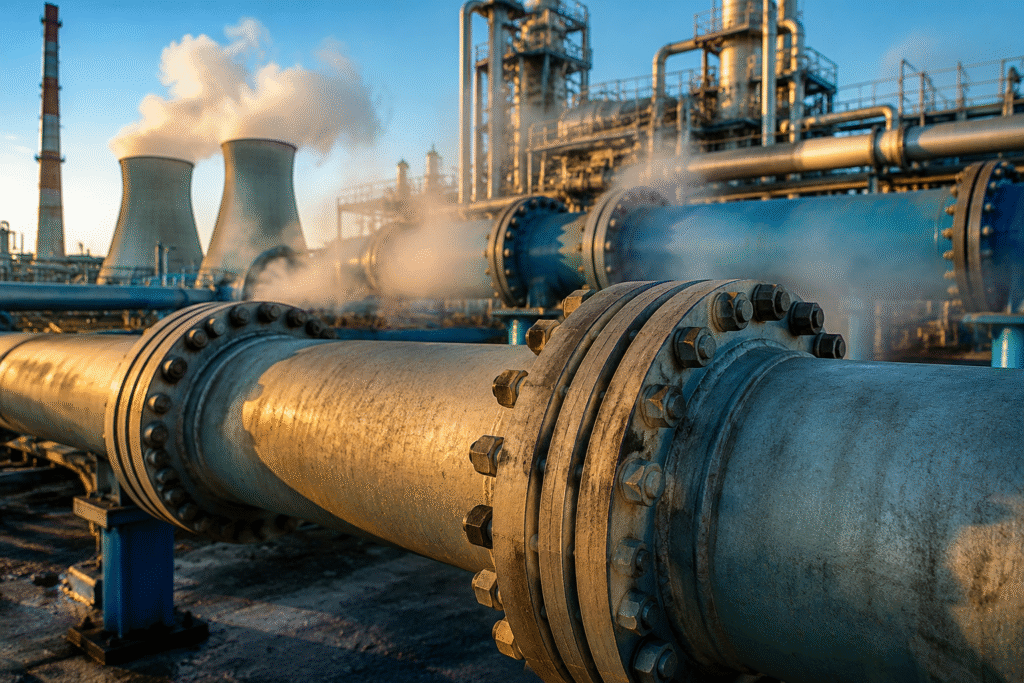
ステンレス鋼管フランジ市場、72億ドルに達する見通し 2030: 隠れた利点, 種類, 用途, 工業用フランジの選び方と選び方
グランドビューリサーチによると (2024), 世界の工業用フランジ市場は次のように評価されました。 $5.8 億で 2023 に達すると予測されています $7.2 10億まで 2030. That growth explains why the stainless steel pipe flange remains a critical component in the industrial pipe world, where buyers must balance corrosion resistance, 圧力クラス, ライフサイクルコスト, 規格への準拠.
エンジニアと調達チーム向け, 隠れた利点を理解する, 種類, 用途, and how to choose flanges is now a strategic purchasing task. さらに, buyers want suppliers that combine technical depth with certified manufacturing, fast documentation, and stable quality across global projects.
Market Drivers Shaping the Stainless Steel Pipe Flange World
産業用フランジ市場はエネルギーの影響で拡大しています, 水, and process industries continue to invest in resilient piping infrastructure. 統計局によると (2024), 石油・ガス産業が約 35% 世界のフランジ消費量の, which makes upstream, 中流, and refining projects major demand centers.
Regional manufacturing concentration also matters for global sourcing decisions. IBISWorldによると (2024), アジア太平洋地域が占める割合は超過 45% 世界のフランジ生産量の, 中国が最大の製造国である, therefore buyers increasingly evaluate factory capability, トレーサビリティ, and export experience before placing orders.
This demand trend favors manufacturers with broad material coverage and international certifications. SASA FLANGE, に支えられた ISO 9001:2015 および PED 2014/68/EU 認証, ステンレス鋼フランジを供給します, 炭素鋼フランジ, 合金フランジ, およびオイル用配管継手 & ガス, 石油化学, 力, 海兵隊, 水処理, および建設部門.
In today’s procurement environment, cost alone is not enough. Buyers also compare EN 10204 3.1 ドキュメント, PMIの利用可能性, 熱処理制御, 寸法公差, and machining consistency across slip on, ウェルドネック, 盲目, ソケット溶接, ラップジョイント, およびネジ付きフランジ.
モルドール情報局によると (2024), industrial process upgrades and maintenance demand are increasing aftermarket purchases across refining and power sectors. 結果として, replacement flanges, カスタム穴あけ, and mixed-grade project packages are becoming more common than single-SKU orders.
That shift rewards suppliers that offer flexibility rather than commodity-only supply. を通して https://sasaflange.com/about-us/, 購入者はレビューできる SASA FLANGE’s manufacturing background and export orientation, which are especially relevant for EPC contractors and OEMs managing multi-standard projects.
Another important trend is material upgrading in corrosive service. マーケットリサーチの将来によると (2024), corrosion-resistant alloy demand in process industries is rising as operators target longer maintenance intervals and lower total installed cost.
したがって, ステンレスグレードなど 304, 316, 316l, 904l, デュプレックス 2205, そしてスーパーデュプレックス 2507 are no longer niche choices in many applications. They are increasingly selected where chloride exposure, aggressive media, or temperature cycling would shorten the service life of lower-grade materials.
As Mark Reynolds, 上級配管エンジニア, 州: “A flange selection error often appears inexpensive at purchase, but it becomes expensive during shutdown, leakage investigation, and replacement.” That perspective reflects a core industrial reality: lifecycle performance usually outweighs the unit price difference between standard and upgraded stainless grades.
このため, a qualified stainless steel pipe flange supplier must deliver more than products. It must deliver standards compliance, dimensional reliability, 冶金学的一貫性, and practical application guidance across the full industrial pipe world.
Understanding Stainless Steel Pipe Flange Types, 評価, と隠れた利点
When buyers search for intriguing stainless steel flange types, they usually want straightforward selection logic. 実際に, the best approach is to match flange design, 材質グレード, 圧力定格, 対面タイプ, and operating environment to the actual service conditions.
The most common stainless steel pipe flange types include weld neck, スリップオン, 盲目, ねじ切りされた, ソケット溶接, およびラップジョイントの設計. Each type solves a different mechanical or maintenance problem, therefore understanding geometry is just as important as understanding chemistry.
によると ASME B16.5, standard flange dimensions and pressure-temperature ratings are defined for NPS 1/2 を通して 24. より大きな直径の場合, ASME B16.47 当てはまる, which is especially relevant for transmission pipelines, storage terminals, and large-bore process systems (ASME, 2023).
Slip on flanges remain popular because they are economical and easier to align during fabrication. しかし, weld neck flanges are generally preferred for high-pressure, 高温, 周期的な, or critical service because the tapered hub reduces stress concentration at the weld transition.
Blind flanges are used to isolate, 検査する, or future-expand a piping system. Threaded flanges can be useful in lower-pressure service where welding is impractical, while socket weld flanges are often used on smaller bore, 高圧ライン.
博士として. エレイン・ポーター, 材料科学者, 州: “The hidden advantages of stainless steel flanges are not only corrosion resistance but also predictable fabrication behavior and strong performance in hygienic or cyclic environments.” That is especially true for 304/304L and 316/316L, which remain the most widely specified grades for general industrial service.
From a material standpoint, 304 and 304L offer good corrosion resistance and weldability for many water, 食べ物, 空調設備, and general industrial systems. 対照的に, 316 and 316L include molybdenum, which improves resistance in chloride-containing and more aggressive chemical environments.
Higher alloy choices support more demanding applications. 例えば, 904L improves resistance in sulfuric and reducing media, 両面印刷中 2205 delivers stronger mechanical properties and better chloride stress corrosion cracking resistance than austenitic 304 in many services.
- 304/304l: 一般耐食性, 良好な成形性, common for water, 食べ物, および軽化学サービス.
- 316/316l: Better pitting resistance in chlorides, suitable for marine, オフショア, and chemical applications.
- 904l: Enhanced resistance to strong corrosives, often selected for severe chemical duty.
- 2205 デュプレックス: より高い強度, strong chloride resistance, often chosen for offshore and process systems.
- 2507 スーパーデュプレックス: Very high pitting and crevice corrosion resistance for aggressive chloride service.
強さ, しかし, is not the only variable. Pressure class selection must align with actual design conditions, クラスなど 150, 300, 600, 900, 1500, または 2500 under ASME systems.
Facing type also matters because sealing integrity depends on gasket compatibility and assembly practice. 盛り上がった顔, 平らな面, and ring type joint configurations each serve different operating and maintenance requirements.
- 盛り上がった顔: The most common industrial configuration for standard process piping.
- 平面: Often used with cast iron equipment or where low bolt stress is required.
- RTJ: Preferred for high-pressure and critical sealing duty, 特に石油およびガスシステムにおいて.
NACE ガイダンスによると, material performance in sour or chloride-rich service must be evaluated against cracking and corrosion risks rather than nominal strength alone (ネイス, 2023). したがって, the strongest type of piping flange in practice depends on both design form and alloy suitability.
Manufacturing quality remains equally important. 高度な CNC 加工と包括的な品質テストに裏付けられています, SASA FLANGE 1/2からのカスタムサイズを提供します" 60まで" across stainless, デュプレックス, ニッケル合金, チタン, and forged carbon steel grades.
For buyers comparing stainless steel flange 2 inch items, 4 インチステンレス鋼管フランジ製品, or large-diameter project packages, dimensional repeatability reduces installation delays. さらに, consistent drilling, フェーシング仕上げ, and bevel preparation improve field fit-up and welding productivity.
によると ASTM A182, forged stainless and alloy flanges must meet defined chemical and mechanical requirements for pressure service (ASTM, 2023). That is why professional buyers routinely request MTCs, PMI, hardness data, hydrotest records when applicable, and full traceability from heat number to finished flange.
ASME, ASTM, DIN, およびステンレス鋼管フランジの準拠を管理する EN 規格
Compliance is central to industrial procurement because a stainless steel pipe flange is only as reliable as its standard conformity. グローバルプロジェクトでは, buyers often need ASME dimensional compliance, ASTM material compliance, and EN or DIN alternatives for European or mixed-standard installations.
The most common standards framework includes ASME B16.5 そして ASME B16.47 for dimensions and ratings, ASME B16.9 突合せ溶接継手用, ASTM A182 鍛造フランジ用, そして ASTM A240 for plate products used in some flange-related components. 加えて, EN 1092 and DIN flange systems remain common in Europe, 水処理, 海洋, and equipment export projects.
圧力機器指令による, pressure-retaining components entering many EU-regulated applications must satisfy documented conformity procedures (PED 2014/68/EU). したがって, certificate package quality can be as important as machining quality for cross-border procurement.
The following comparison helps engineers and buyers map common standards:
- ASME B16.5: 管フランジおよびフランジ付き継手, NPS 1/2 に 24, pressure classes and dimensions.
- ASME B16.47: 大径スチールフランジ, NPS 26 に 60.
- ASTM A182: Forged or rolled alloy and stainless steel flange material specification.
- ASME B16.9: 工場製鍛突合せ溶接継手, relevant when flanges and fittings are sourced together.
- EN 1092-1: European flange specification widely used in industrial and utility systems.
- DIN / JIS / ゴスト: Regional dimensional systems required in specific legacy or export markets.
Material certification should also reflect the intended service. For corrosive oil and gas conditions, buyers may request NACE MR0175 アライメント, while offshore projects can add DNV or NORSOK expectations depending on end use.
As Peter Holm, グローバル配管市場アナリスト, 州: “The difference between approved and rejected flanges is often documentation discipline, not machining capability.” That is a useful reminder for EPC and procurement teams managing multi-country compliance requirements.
Reputable manufacturers support this process with EN 10204 3.1 検査証明書, 熱数トレーサビリティ, 目視検査, 寸法検査, and optional PMI or third-party witness testing. と ISO 9001:2015, PED 2014/68/EU, とAD 2000 資格, SASA FLANGE supports buyers who need documented quality assurance rather than generic supply.
For technical review, buyers can also cross-check requirements directly with the official ASME resource. That extra step is useful when projects involve mixed ratings, unusual facing combinations, or client-specific purchase specifications.
さらに, integrated sourcing can reduce procurement complexity. を通して https://sasaflange.com/products/, buyers can source stainless steel flanges and fittings together, which helps maintain material consistency across elbows, ティー, 減速機, キャップ, およびフランジアセンブリ.
実務的には, compliance protects installation schedules. If bolt holes, フランジの厚さ, フェーシング仕上げ, or bevel geometry deviate from standard tolerances, field correction becomes expensive and may delay hydrotesting or commissioning.
That is why experienced buyers do not treat standards as paperwork only. They treat ASME, ASTM, DIN, and EN alignment as a direct control on leakage risk, rework cost, and project approval timelines.
オイル用フランジの選び方, ガス, 化学薬品, 力, および海洋用途
Choosing the correct stainless steel pipe flange starts with service data rather than catalog convenience. Engineers should first define fluid chemistry, 設計圧力, 動作温度, 周期負荷, insulation conditions, and required maintenance access.
For oil and gas uses, weld neck and RTJ flanges are commonly preferred in higher pressure service. 統計局によると (2024), 石油とガスは約 35% 世界のフランジ消費量の, therefore this sector strongly influences preferred designs, documentation practices, and material upgrades.
石油化学・化学プラント向け, 316l, 904l, デュプレックス 2205, or nickel alloys may be necessary depending on chlorides, 酸, および洗浄サイクル. これらのサービスでは, corrosion allowance alone is not enough; alloy selection and gasket compatibility must work together.
発電用, thermal cycling and pressure fluctuation often favor forged flanges with strong dimensional control and consistent metallurgy. Engineers also pay close attention to high-temperature grade selection, ボルトの荷重保持, and shutdown maintenance intervals.
For shipbuilding and marine projects, chloride exposure makes alloy selection especially important. したがって, 316/316L and duplex grades are often chosen where atmospheric salt, 海水のしぶき, or deck process exposure can accelerate corrosion.
- 油 & ガス: Favor weld neck or RTJ flanges for pressure integrity and cyclic service.
- 化学処理: Prioritize corrosion resistance, PMI, ガスケットの互換性.
- 発電所: Evaluate temperature cycles, 圧力クラス, and forged quality consistency.
- 海兵隊: Select chloride-resistant grades such as 316L or duplex materials.
- 水処理: Balance corrosion resistance, 予算, 長いサービス間隔.
Procurement teams should also evaluate these selection criteria before issuing a PO:
- 適用規格: ASME B16.5, B16.47, EN 1092, DIN, JIS, またはGOST.
- 材質グレード: 304, 304l, 316, 316l, 904l, 2205, 2507, A105, A182, or CRA alloys.
- Pressure class and schedule compatibility with mating pipe.
- フェーシングタイプ: RF, FF, またはRTJ.
- 検査範囲: EN 10204 3.1, PMI, 硬度, 臨死体験, third-party witness.
- コーティング, マーキング, and export packing requirements.
- リードタイム, batch consistency, and partial shipment planning.
Price evaluation should be equally practical. Stainless steel pipe flange price depends on alloy cost, 鍛造ルート, 加工の複雑さ, 圧力クラス, 量, テスト範囲, and current nickel or molybdenum market conditions.
According to World Bank metals trend reporting summarized by industry analysts in 2024, alloy surcharges can shift stainless component pricing materially over short periods. 結果として, project buyers often request validity windows on quotations and separate line items for testing or special documentation.
SASA FLANGE supports this procurement model with custom manufacturing capability, 幅広い材料範囲, and factory-direct supply. 給仕 50+ 石油を巡る国々 & ガス, 石油化学, 力, 海洋産業, the company can support standard and non-standard drilling, 直面している, and material combinations through https://sasaflange.com/contact-us/.
例えば, a buyer sourcing stainless steel flanges and fittings for a desalination skid may specify 316L or duplex 2205 フランジ, ASME B16.5 寸法, ASME B16.9 継手, EN 10204 3.1 証明書, とPMI. 対照的に, a utility water package may prioritize 304L slip on flanges with moderate pressure class and shorter lead time.
These distinctions show why choosing flanges is not just a catalog exercise. It is an engineering and commercial decision that directly affects installability, 信頼性, and total ownership cost.
ステンレス鋼管フランジ調達の今後の見通しと戦略的な購入の提案
The future of the stainless steel pipe flange market looks favorable because infrastructure replacement, エネルギー転換プロジェクト, オフショアアップグレード, and water treatment expansion all support demand. グランドビューリサーチによると (2024), 市場は~から上昇すると予想される $5.8 億で 2023 に $7.2 10億まで 2030, indicating a sustained procurement pipeline.
同時に, buyers will face tighter technical and commercial expectations. Documentation quality, corrosion-resistant alloy sourcing, and supplier responsiveness are becoming more important as projects globalize and quality audits become stricter.
IBISWorldによると (2024), アジア太平洋地域はすでに以上の貢献をしています 45% 世界のフランジ生産量の, so supplier qualification in the region will remain a strategic purchasing priority. しかし, the best sourcing outcomes will come from manufacturers that combine price competitiveness with real engineering support and export documentation discipline.
B2Bバイヤー向け, several actions are recommended. 初め, standardize your approved flange specifications by service category, because that reduces engineering ambiguity and speeds RFQ comparison.
2番, request full traceability and certificate requirements early in the RFQ process. 三番目, compare suppliers not only on price but also on CNC capability, 材料の入手可能性, 公差制御, and response time for custom items.
4番目, align flanges and fittings procurement where possible. That approach improves consistency across the industrial pipe package and can reduce inspection complexity, logistics fragmentation, and project risk.
ついに, work with manufacturers that can support both standard and custom production in stainless, デュプレックス, および合金グレード. 認定された供給が必要なプロジェクト向け, premium materials, 応答性の高いエンジニアリングコミュニケーション, 購入者は次の人とつながることができます SASA FLANGE to discuss specifications, リードタイム, and documentation needs in a more targeted way.
よくある質問
ステンレス鋼フランジは何に使用されますか?
●パイプの接続にはステンレス製のフランジが使用されます, バルブ, パンプス, 強度を必要とするシステムの圧力機器や, 耐食性, and leak-controlled assembly.
●統計局によると (2024), 石油とガスが約 35% 世界のフランジ消費量の, which shows how critical flanges are in high-demand industrial service.
●石油化学プラントで広く使用されています, 海洋システム, 水処理ライン, 食品加工施設, and power stations because stainless grades such as 304L and 316L offer strong durability and good fabrication performance.
●Engineers select them to simplify maintenance, allow disassembly, and match standardized pressure classes under ASME B16.5 またはEN 1092-1 要件.
●For projects requiring corrosion-resistant materials and documented quality, のような確立されたメーカーと協力する SASA FLANGE helps ensure traceability, proper standards compliance, and suitable grade selection.
ステンレス鋼製のフランジは何ですか?
●一般的なステンレス鋼フランジ タイプには溶接ネックが含まれます, スリップオン, 盲目, ねじ切りされた, ソケット溶接, and lap joint flanges in grades such as 304, 304l, 316, 316l, 904l, 2205, そして 2507.
●によると ASME B16.5 (2023), these flange forms are standardized by size, 直面している, and pressure-temperature rating for a wide range of industrial applications.
●Slip on flanges are often chosen for easier alignment and lower cost, while weld neck flanges are preferred for higher stress, 温度, and pressure service.
●Blind flanges isolate sections for testing or maintenance, and threaded flanges support specific non-welded service conditions in smaller or lower-pressure lines.
●For industrial buyers sourcing stainless steel flanges and fittings together, selecting a supplier with broad product coverage improves consistency across the complete piping package.
ステンレス鋼の管継手を製造していますか?
●はい, メーカーはエルボなどのステンレス鋼管継手を製造しています, ティー, 減速機, and caps to match stainless steel piping and flange systems.
●ASME B16.9 defines dimensional requirements for factory-made buttwelding fittings, which is why engineers often source fittings and flanges under a coordinated specification set (ASME, 2023).
●Typical materials include 304, 304l, 316, 316l, 904l, デュプレックス 2205, そしてスーパーデュプレックス 2507 depending on corrosion risk, strength needs, および動作温度.
●Using matching metallurgy across flanges and fittings reduces galvanic mismatch concerns and simplifies welding procedures, 検査, および材料のトレーサビリティ.
●For projects with custom wall thickness, 混合規格, または EN 10204 3.1 証明書の要件, experienced manufacturers like SASA FLANGE can provide more reliable package support.
配管フランジの中で最も強度が高いのは何ですか?
●In many pressure applications, the weld neck flange is considered the strongest standard piping flange because its tapered hub distributes stress more effectively than flat-hub designs.
●According to ASME design practice and ASTM A182 材質仕様, strength depends not only on flange type but also on alloy grade, 圧力クラス, and service condition.
●例えば, a weld neck flange in duplex 2205 またはスーパーデュプレックス 2507 can outperform a lower-grade flange in chloride-rich service where corrosion affects long-term reliability.
●しかし, the strongest practical choice is the flange that matches the full service envelope, プレッシャーも含めて, 温度, 腐食にさらされる, 疲労荷重, and gasket system.
●Engineers should evaluate flange geometry and material together rather than assuming the highest nominal alloy or pressure class always provides the best field performance.
ステンレス鋼フランジの ASME コードとは何ですか?
●ステンレス鋼フランジの主な ASME 規格は次のとおりです。 ASME B16.5 NPS向け 1/2 に 24 そして ASME B16.47 for larger diameters from NPS 26 に 60.
●材料要件は通常、次の方法で指定されます。 ASTM A182 鍛造ステンレス鋼フランジ用, which works alongside ASME dimensional and rating requirements.
●ASMEによると (2023), buyers should also confirm pressure class, 対面タイプ, ボア, and bolt drilling because code compliance involves more than just nominal size.
●In mixed-standard projects, EN 1092-1 or DIN requirements may apply instead of or in addition to ASME, especially in European or equipment-export applications.
●重要な注文の場合, procurement teams should request MTCs, EN 10204 3.1 証明書, and clear marking to verify full compliance before shipment and installation.
どちらかを選択するにはどうすればよいですか 304 そして 316 ステンレス鋼管フランジのグレード?
●304 stainless steel pipe flange grades are usually selected for general service, その間 316 grades are preferred when chloride exposure or more aggressive corrosion conditions are present.
●According to materials guidance widely used across industry, 316 includes molybdenum, which improves pitting and crevice corrosion resistance compared with 304 in many marine and chemical environments.
●304 or 304L often offers a more economical solution for water systems, 食品加工, 空調設備, and general industrial pipe applications with moderate corrosion demand.
●316 or 316L is commonly recommended for offshore systems, 沿岸施設, プロセススキッド, and chemical services where longer service life justifies the higher alloy cost.
●For projects that require exact grade selection based on media, 温度, 圧力クラス, a qualified supplier can review the specification and recommend the most cost-effective compliant option.
関連投稿

オリフィスフランジの定義, 詳細と ASME B16.36 フランジの概要: 市場データ, 選択ガイドとコンプライアンスに関する洞察
世界の工業用フランジ市場は次のように評価されました。 $5.8 十億…

ブラックディスポフランジ市場ガイド: 材料, 3.5″ 互換性, キッチン シンク フランジの B2B 調達データ
キッチン設備の購入者として黒色の使い捨てフランジの需要が高まっています…