
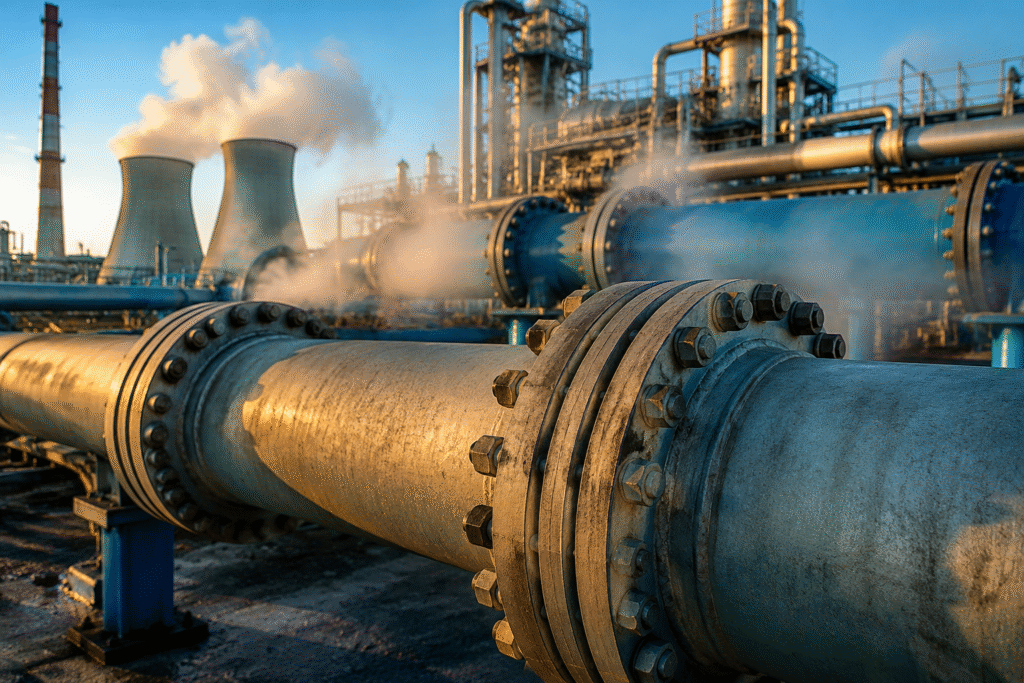
Stainless Steel Pipe Flange Market to Reach $7.2B by 2030: Hidden Advantages, Types, Uses, and How to Choose Industrial Flanges
According to Grand View Research (2024), the global industrial flange market was valued at $5.8 billion in 2023 and is projected to reach $7.2 billion by 2030. That growth explains why the stainless steel pipe flange remains a critical component in the industrial pipe world, where buyers must balance corrosion resistance, pressure class, lifecycle cost, and standard compliance.
For engineers and procurement teams, understanding the hidden advantages, types, uses, and how to choose flanges is now a strategic purchasing task. Moreover, buyers want suppliers that combine technical depth with certified manufacturing, fast documentation, and stable quality across global projects.
Market Drivers Shaping the Stainless Steel Pipe Flange World
The industrial flange market is expanding because energy, water, and process industries continue to invest in resilient piping infrastructure. According to Statista (2024), the oil and gas industry accounts for approximately 35% of global flange consumption, which makes upstream, midstream, and refining projects major demand centers.
Regional manufacturing concentration also matters for global sourcing decisions. According to IBISWorld (2024), Asia-Pacific accounts for over 45% of global flange production, with China being the largest manufacturer, therefore buyers increasingly evaluate factory capability, traceability, and export experience before placing orders.
This demand trend favors manufacturers with broad material coverage and international certifications. SASA FLANGE, backed by ISO 9001:2015 and PED 2014/68/EU certifications, supplies stainless steel flanges, carbon steel flanges, alloy flanges, and pipe fittings for Oil & Gas, Petrochemical, Power, Marine, Water Treatment, and Construction sectors.
In today’s procurement environment, cost alone is not enough. Buyers also compare EN 10204 3.1 documentation, PMI availability, heat treatment control, dimensional tolerance, and machining consistency across slip on, weld neck, blind, socket weld, lap joint, and threaded flanges.
According to Mordor Intelligence (2024), industrial process upgrades and maintenance demand are increasing aftermarket purchases across refining and power sectors. As a result, replacement flanges, custom drilling, and mixed-grade project packages are becoming more common than single-SKU orders.
That shift rewards suppliers that offer flexibility rather than commodity-only supply. Through https://sasaflange.com/about-us/, buyers can review SASA FLANGE’s manufacturing background and export orientation, which are especially relevant for EPC contractors and OEMs managing multi-standard projects.
Another important trend is material upgrading in corrosive service. According to Market Research Future (2024), corrosion-resistant alloy demand in process industries is rising as operators target longer maintenance intervals and lower total installed cost.
Therefore, stainless grades such as 304, 316, 316L, 904L, duplex 2205, and super duplex 2507 are no longer niche choices in many applications. They are increasingly selected where chloride exposure, aggressive media, or temperature cycling would shorten the service life of lower-grade materials.
As Mark Reynolds, Senior Piping Engineer, states: “A flange selection error often appears inexpensive at purchase, but it becomes expensive during shutdown, leakage investigation, and replacement.” That perspective reflects a core industrial reality: lifecycle performance usually outweighs the unit price difference between standard and upgraded stainless grades.
For this reason, a qualified stainless steel pipe flange supplier must deliver more than products. It must deliver standards compliance, dimensional reliability, metallurgical consistency, and practical application guidance across the full industrial pipe world.
Understanding Stainless Steel Pipe Flange Types, Ratings, and Hidden Advantages
When buyers search for intriguing stainless steel flange types, they usually want straightforward selection logic. In practice, the best approach is to match flange design, material grade, pressure rating, facing type, and operating environment to the actual service conditions.
The most common stainless steel pipe flange types include weld neck, slip on, blind, threaded, socket weld, and lap joint designs. Each type solves a different mechanical or maintenance problem, therefore understanding geometry is just as important as understanding chemistry.
According to ASME B16.5, standard flange dimensions and pressure-temperature ratings are defined for NPS 1/2 through 24. For larger diameters, ASME B16.47 applies, which is especially relevant for transmission pipelines, storage terminals, and large-bore process systems (ASME, 2023).
Slip on flanges remain popular because they are economical and easier to align during fabrication. However, weld neck flanges are generally preferred for high-pressure, high-temperature, cyclic, or critical service because the tapered hub reduces stress concentration at the weld transition.
Blind flanges are used to isolate, inspect, or future-expand a piping system. Threaded flanges can be useful in lower-pressure service where welding is impractical, while socket weld flanges are often used on smaller bore, high-pressure lines.
As Dr. Elaine Porter, Materials Scientist, states: “The hidden advantages of stainless steel flanges are not only corrosion resistance but also predictable fabrication behavior and strong performance in hygienic or cyclic environments.” That is especially true for 304/304L and 316/316L, which remain the most widely specified grades for general industrial service.
From a material standpoint, 304 and 304L offer good corrosion resistance and weldability for many water, food, HVAC, and general industrial systems. In contrast, 316 and 316L include molybdenum, which improves resistance in chloride-containing and more aggressive chemical environments.
Higher alloy choices support more demanding applications. For example, 904L improves resistance in sulfuric and reducing media, while duplex 2205 delivers stronger mechanical properties and better chloride stress corrosion cracking resistance than austenitic 304 in many services.
- 304/304L: General corrosion resistance, good formability, common for water, food, and light chemical service.
- 316/316L: Better pitting resistance in chlorides, suitable for marine, offshore, and chemical applications.
- 904L: Enhanced resistance to strong corrosives, often selected for severe chemical duty.
- 2205 duplex: Higher strength, strong chloride resistance, often chosen for offshore and process systems.
- 2507 super duplex: Very high pitting and crevice corrosion resistance for aggressive chloride service.
Strength, however, is not the only variable. Pressure class selection must align with actual design conditions, such as Class 150, 300, 600, 900, 1500, or 2500 under ASME systems.
Facing type also matters because sealing integrity depends on gasket compatibility and assembly practice. Raised face, flat face, and ring type joint configurations each serve different operating and maintenance requirements.
- Raised Face: The most common industrial configuration for standard process piping.
- Flat Face: Often used with cast iron equipment or where low bolt stress is required.
- RTJ: Preferred for high-pressure and critical sealing duty, especially in oil and gas systems.
According to NACE guidance, material performance in sour or chloride-rich service must be evaluated against cracking and corrosion risks rather than nominal strength alone (NACE, 2023). Therefore, the strongest type of piping flange in practice depends on both design form and alloy suitability.
Manufacturing quality remains equally important. Backed by advanced CNC machining and comprehensive quality testing, SASA FLANGE offers custom sizes from 1/2" to 60" across stainless, duplex, nickel alloy, titanium, and forged carbon steel grades.
For buyers comparing stainless steel flange 2 inch items, 4 inch stainless steel pipe flange products, or large-diameter project packages, dimensional repeatability reduces installation delays. Moreover, consistent drilling, facing finish, and bevel preparation improve field fit-up and welding productivity.
According to ASTM A182, forged stainless and alloy flanges must meet defined chemical and mechanical requirements for pressure service (ASTM, 2023). That is why professional buyers routinely request MTCs, PMI, hardness data, hydrotest records when applicable, and full traceability from heat number to finished flange.
ASME, ASTM, DIN, and EN Standards That Govern Stainless Steel Pipe Flange Compliance
Compliance is central to industrial procurement because a stainless steel pipe flange is only as reliable as its standard conformity. In global projects, buyers often need ASME dimensional compliance, ASTM material compliance, and EN or DIN alternatives for European or mixed-standard installations.
The most common standards framework includes ASME B16.5 and ASME B16.47 for dimensions and ratings, ASME B16.9 for butt weld fittings, ASTM A182 for forged flanges, and ASTM A240 for plate products used in some flange-related components. In addition, EN 1092 and DIN flange systems remain common in Europe, water treatment, marine, and equipment export projects.
According to the Pressure Equipment Directive, pressure-retaining components entering many EU-regulated applications must satisfy documented conformity procedures (PED 2014/68/EU). Therefore, certificate package quality can be as important as machining quality for cross-border procurement.
The following comparison helps engineers and buyers map common standards:
- ASME B16.5: Pipe flanges and flanged fittings, NPS 1/2 to 24, pressure classes and dimensions.
- ASME B16.47: Large diameter steel flanges, NPS 26 to 60.
- ASTM A182: Forged or rolled alloy and stainless steel flange material specification.
- ASME B16.9: Factory-made wrought buttwelding fittings, relevant when flanges and fittings are sourced together.
- EN 1092-1: European flange specification widely used in industrial and utility systems.
- DIN / JIS / GOST: Regional dimensional systems required in specific legacy or export markets.
Material certification should also reflect the intended service. For corrosive oil and gas conditions, buyers may request NACE MR0175 alignment, while offshore projects can add DNV or NORSOK expectations depending on end use.
As Peter Holm, Global Piping Market Analyst, states: “The difference between approved and rejected flanges is often documentation discipline, not machining capability.” That is a useful reminder for EPC and procurement teams managing multi-country compliance requirements.
Reputable manufacturers support this process with EN 10204 3.1 inspection certificates, heat number traceability, visual inspection, dimensional inspection, and optional PMI or third-party witness testing. With ISO 9001:2015, PED 2014/68/EU, and AD 2000 credentials, SASA FLANGE supports buyers who need documented quality assurance rather than generic supply.
For technical review, buyers can also cross-check requirements directly with the official ASME resource. That extra step is useful when projects involve mixed ratings, unusual facing combinations, or client-specific purchase specifications.
Additionally, integrated sourcing can reduce procurement complexity. Through https://sasaflange.com/products/, buyers can source stainless steel flanges and fittings together, which helps maintain material consistency across elbows, tees, reducers, caps, and flange assemblies.
In practical terms, compliance protects installation schedules. If bolt holes, flange thickness, facing finish, or bevel geometry deviate from standard tolerances, field correction becomes expensive and may delay hydrotesting or commissioning.
That is why experienced buyers do not treat standards as paperwork only. They treat ASME, ASTM, DIN, and EN alignment as a direct control on leakage risk, rework cost, and project approval timelines.
How to Choose Flanges for Oil, Gas, Chemical, Power, and Marine Uses
Choosing the correct stainless steel pipe flange starts with service data rather than catalog convenience. Engineers should first define fluid chemistry, design pressure, operating temperature, cyclic load, insulation conditions, and required maintenance access.
For oil and gas uses, weld neck and RTJ flanges are commonly preferred in higher pressure service. According to Statista (2024), oil and gas accounts for about 35% of global flange consumption, therefore this sector strongly influences preferred designs, documentation practices, and material upgrades.
For petrochemical and chemical plants, 316L, 904L, duplex 2205, or nickel alloys may be necessary depending on chlorides, acids, and cleaning cycles. In these services, corrosion allowance alone is not enough; alloy selection and gasket compatibility must work together.
For power generation, thermal cycling and pressure fluctuation often favor forged flanges with strong dimensional control and consistent metallurgy. Engineers also pay close attention to high-temperature grade selection, bolt load retention, and shutdown maintenance intervals.
For shipbuilding and marine projects, chloride exposure makes alloy selection especially important. Therefore, 316/316L and duplex grades are often chosen where atmospheric salt, seawater splash, or deck process exposure can accelerate corrosion.
- Oil & Gas: Favor weld neck or RTJ flanges for pressure integrity and cyclic service.
- Chemical Processing: Prioritize corrosion resistance, PMI, and gasket compatibility.
- Power Plants: Evaluate temperature cycles, pressure class, and forged quality consistency.
- Marine: Select chloride-resistant grades such as 316L or duplex materials.
- Water Treatment: Balance corrosion resistance, budget, and long service intervals.
Procurement teams should also evaluate these selection criteria before issuing a PO:
- Applicable standard: ASME B16.5, B16.47, EN 1092, DIN, JIS, or GOST.
- Material grade: 304, 304L, 316, 316L, 904L, 2205, 2507, A105, A182, or CRA alloys.
- Pressure class and schedule compatibility with mating pipe.
- Facing type: RF, FF, or RTJ.
- Inspection scope: EN 10204 3.1, PMI, hardness, NDE, third-party witness.
- Coating, marking, and export packing requirements.
- Lead time, batch consistency, and partial shipment planning.
Price evaluation should be equally practical. Stainless steel pipe flange price depends on alloy cost, forging route, machining complexity, pressure class, quantity, testing scope, and current nickel or molybdenum market conditions.
According to World Bank metals trend reporting summarized by industry analysts in 2024, alloy surcharges can shift stainless component pricing materially over short periods. As a result, project buyers often request validity windows on quotations and separate line items for testing or special documentation.
SASA FLANGE supports this procurement model with custom manufacturing capability, broad material coverage, and factory-direct supply. Serving 50+ countries across Oil & Gas, Petrochemical, Power, and Marine industries, the company can support standard and non-standard drilling, facing, and material combinations through https://sasaflange.com/contact-us/.
For example, a buyer sourcing stainless steel flanges and fittings for a desalination skid may specify 316L or duplex 2205 flanges, ASME B16.5 dimensions, ASME B16.9 fittings, EN 10204 3.1 certificates, and PMI. In contrast, a utility water package may prioritize 304L slip on flanges with moderate pressure class and shorter lead time.
These distinctions show why choosing flanges is not just a catalog exercise. It is an engineering and commercial decision that directly affects installability, reliability, and total ownership cost.
Future Outlook for Stainless Steel Pipe Flange Procurement and Strategic Buying Recommendations
The future of the stainless steel pipe flange market looks favorable because infrastructure replacement, energy transition projects, offshore upgrades, and water treatment expansion all support demand. According to Grand View Research (2024), the market is expected to rise from $5.8 billion in 2023 to $7.2 billion by 2030, indicating a sustained procurement pipeline.
At the same time, buyers will face tighter technical and commercial expectations. Documentation quality, corrosion-resistant alloy sourcing, and supplier responsiveness are becoming more important as projects globalize and quality audits become stricter.
According to IBISWorld (2024), Asia-Pacific already contributes more than 45% of global flange production, so supplier qualification in the region will remain a strategic purchasing priority. However, the best sourcing outcomes will come from manufacturers that combine price competitiveness with real engineering support and export documentation discipline.
For B2B buyers, several actions are recommended. First, standardize your approved flange specifications by service category, because that reduces engineering ambiguity and speeds RFQ comparison.
Second, request full traceability and certificate requirements early in the RFQ process. Third, compare suppliers not only on price but also on CNC capability, material availability, tolerance control, and response time for custom items.
Fourth, align flanges and fittings procurement where possible. That approach improves consistency across the industrial pipe package and can reduce inspection complexity, logistics fragmentation, and project risk.
Finally, work with manufacturers that can support both standard and custom production in stainless, duplex, and alloy grades. For projects requiring certified supply, premium materials, and responsive engineering communication, buyers can connect with SASA FLANGE to discuss specifications, lead times, and documentation needs in a more targeted way.
Frequently Asked Questions
What are stainless steel flanges used for?
●Stainless steel flanges are used to connect pipe, valves, pumps, and pressure equipment in systems that require strength, corrosion resistance, and leak-controlled assembly.
●According to Statista (2024), oil and gas accounts for approximately 35% of global flange consumption, which shows how critical flanges are in high-demand industrial service.
●They are widely used in petrochemical plants, marine systems, water treatment lines, food processing facilities, and power stations because stainless grades such as 304L and 316L offer strong durability and good fabrication performance.
●Engineers select them to simplify maintenance, allow disassembly, and match standardized pressure classes under ASME B16.5 or EN 1092-1 requirements.
●For projects requiring corrosion-resistant materials and documented quality, working with established manufacturers like SASA FLANGE helps ensure traceability, proper standards compliance, and suitable grade selection.
What flanges are made of stainless steel?
●Common stainless steel flange types include weld neck, slip on, blind, threaded, socket weld, and lap joint flanges in grades such as 304, 304L, 316, 316L, 904L, 2205, and 2507.
●According to ASME B16.5 (2023), these flange forms are standardized by size, facing, and pressure-temperature rating for a wide range of industrial applications.
●Slip on flanges are often chosen for easier alignment and lower cost, while weld neck flanges are preferred for higher stress, temperature, and pressure service.
●Blind flanges isolate sections for testing or maintenance, and threaded flanges support specific non-welded service conditions in smaller or lower-pressure lines.
●For industrial buyers sourcing stainless steel flanges and fittings together, selecting a supplier with broad product coverage improves consistency across the complete piping package.
Do they make stainless steel pipe fittings?
●Yes, manufacturers produce stainless steel pipe fittings such as elbows, tees, reducers, and caps to match stainless steel piping and flange systems.
●ASME B16.9 defines dimensional requirements for factory-made buttwelding fittings, which is why engineers often source fittings and flanges under a coordinated specification set (ASME, 2023).
●Typical materials include 304, 304L, 316, 316L, 904L, duplex 2205, and super duplex 2507 depending on corrosion risk, strength needs, and operating temperature.
●Using matching metallurgy across flanges and fittings reduces galvanic mismatch concerns and simplifies welding procedures, inspection, and material traceability.
●For projects with custom wall thickness, mixed standards, or EN 10204 3.1 certificate requirements, experienced manufacturers like SASA FLANGE can provide more reliable package support.
What is the strongest type of piping flange?
●In many pressure applications, the weld neck flange is considered the strongest standard piping flange because its tapered hub distributes stress more effectively than flat-hub designs.
●According to ASME design practice and ASTM A182 material specifications, strength depends not only on flange type but also on alloy grade, pressure class, and service condition.
●For example, a weld neck flange in duplex 2205 or super duplex 2507 can outperform a lower-grade flange in chloride-rich service where corrosion affects long-term reliability.
●However, the strongest practical choice is the flange that matches the full service envelope, including pressure, temperature, corrosion exposure, fatigue loading, and gasket system.
●Engineers should evaluate flange geometry and material together rather than assuming the highest nominal alloy or pressure class always provides the best field performance.
What is the ASME Code for stainless steel flanges?
●The main ASME standards for stainless steel flanges are ASME B16.5 for NPS 1/2 to 24 and ASME B16.47 for larger diameters from NPS 26 to 60.
●Material requirements are commonly specified through ASTM A182 for forged stainless steel flanges, which works alongside ASME dimensional and rating requirements.
●According to ASME (2023), buyers should also confirm pressure class, facing type, bore, and bolt drilling because code compliance involves more than just nominal size.
●In mixed-standard projects, EN 1092-1 or DIN requirements may apply instead of or in addition to ASME, especially in European or equipment-export applications.
●For critical orders, procurement teams should request MTCs, EN 10204 3.1 certificates, and clear marking to verify full compliance before shipment and installation.
How do I choose between 304 and 316 stainless steel pipe flange grades?
●304 stainless steel pipe flange grades are usually selected for general service, while 316 grades are preferred when chloride exposure or more aggressive corrosion conditions are present.
●According to materials guidance widely used across industry, 316 includes molybdenum, which improves pitting and crevice corrosion resistance compared with 304 in many marine and chemical environments.
●304 or 304L often offers a more economical solution for water systems, food processing, HVAC, and general industrial pipe applications with moderate corrosion demand.
●316 or 316L is commonly recommended for offshore systems, coastal installations, process skids, and chemical services where longer service life justifies the higher alloy cost.
●For projects that require exact grade selection based on media, temperature, and pressure class, a qualified supplier can review the specification and recommend the most cost-effective compliant option.
Related Posts
Orifice Flange Definition, Details and ASME B16.36 Flanges Overview: Market Data, Selection Guide and Compliance Insights
The global industrial flange market was valued at $5.8 billion…
Black Disposal Flange Market Guide: Materials, 3.5″ Compatibility, and B2B Sourcing Data for Kitchen Sink Flanges
Black disposal flange demand is rising as Kitchen fixture buyers…
Flange Types Guide: 2024 Data, Standards, and Best Selection Practices for Industrial Piping
The global market for flange types continues to expand as…
3 inch flange Buying Guide: Market Data, Dimensions, Pressure Ratings, and Threaded Flanges Selection
The 3 inch flange remains a critical component in industrial…