
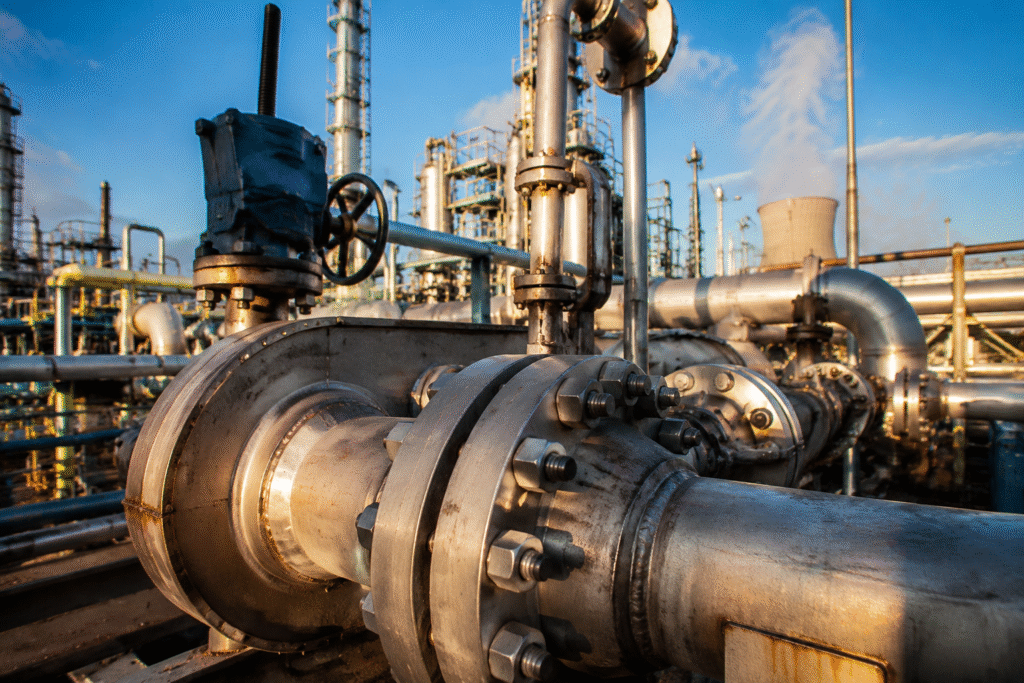
Marktführer für Edelstahlrohrflansche: 7 Datengestützte Vorteile, Typen, Verwendungsmöglichkeiten, und Auswahleinblicke
Laut Grand View Research (2024), Der globale Markt für Industrieflansche wurde mit bewertet $5.8 Milliarden in 2023 und wird voraussichtlich erreicht werden $7.2 Milliarden von 2030. That growth highlights why the stainless steel pipe flange remains a critical component for engineers and buyers seeking durability, Korrosionsbeständigkeit, und langfristiger Lebenszykluswert.
In vielen Projekten, the hidden advantages of stainless steel pipe flange selection go beyond simple connection strength. Intriguing improvements in reliability, maintainability, and compliance often appear when buyers match flange material, Druckklasse, and face type to the service environment.
Nachfrage nach Edelstahlrohrflanschen, Market Growth, and Procurement Trends
The industrial piping market continues to expand because energy, Wasser, and process plants need safer and more standardized joints. Laut IBISWorld (2024), Der asiatisch-pazifische Raum macht mehr als aus 45% der weltweiten Flanschproduktion, wobei China der größte Hersteller ist.
Diese regionale Konzentration ist für Beschaffungsteams wichtig. Es wirkt sich auf die Durchlaufzeiten aus, raw material availability, and factory-direct pricing for stainless steel flanges and fittings.
Oil and gas remains the largest end-use segment for many flange manufacturers. Laut Statista (2024), auf die Öl- und Gasindustrie entfallen ca 35% des weltweiten Flanschverbrauchs.
Jedoch, Petrochemie, Stromerzeugung, Marine, and water treatment sectors also drive steady demand. These industries require stainless, Kohlenstoffstahl, and alloy flange products built to ASME, ASTM, DIN, JIS, GOST, und EN-Normen.
Material selection increasingly shapes total project cost. Stainless steel grades such as 304, 316, 316L, 904L, 2205, Und 2507 often reduce maintenance frequency in corrosive service.
Laut Mordor-Geheimdienst (2024), industrial asset owners are placing greater emphasis on lifecycle cost rather than only upfront purchase price. daher, procurement managers now compare not just stainless steel pipe flange price, but also corrosion allowance, inspection intervals, und Austauschzyklen.
Als Dr. Helen Morris, Materials Engineering Analyst, Staaten: “In corrosive piping systems, a higher-grade stainless flange often costs less over the equipment life because downtime and replacement expenses decline significantly.” That view aligns with current owner-operator purchasing behavior in offshore, chemisch, and desalination projects.
Standards compliance also influences sourcing decisions. Buyers increasingly ask for EN 10204 3.1 Materialprüfzeugnisse, PMI, Maßprüfung, Hydrotest-Aufzeichnungen, and traceability documentation.
This is where established manufacturers gain an advantage. SASA FLANGE dient 50+ Länder in ganz Öl & Gas, Petrochemie, Leistung, und Marineindustrie, while supporting custom sizes from 1/2" bis 60" mit wettbewerbsfähigen Direktpreisen ab Werk.
Mit ISO 9001:2015 und PED 2014/68/EU-Zertifizierungen, SASA FLANGE aligns with the documentation and quality expectations common in regulated international projects. Zusätzlich, buyers benefit from access to stainless steel flanges, Flansche aus Kohlenstoffstahl, Flansche aus Legierung, and pipe fittings from one source.
The competitor content reviewed focuses heavily on grade listings, which are useful but incomplete for procurement. Im Gegensatz, a stronger buying framework considers flange type, service media, Dichtungskompatibilität, Druckstufe, and inspection requirements together.
That integrated approach reveals the versatility of stainless steel pipe flange solutions. It also helps buyers choose the right flange for high-pressure steam, Chloride, saurer Service, or clean process systems.
Technical Advantages of Stainless Steel Pipe Flange Materials, Typen, and Uses
The most important technical benefit of a stainless steel pipe flange is corrosion resistance combined with predictable mechanical performance. Yet the exact advantage depends on grade chemistry, Herstellungsweg, and the intended pipe schedule and design code.
Gemäß ASTM- und ASME-Materialpraktiken, Geschmiedete Edelstahlflansche werden üblicherweise verwendet ASTM A182 Qualitäten wie F304, F304L, F316, F316L, F51, und F53. These grades support a wide range of applications, from hygienic water lines to chloride-rich offshore systems.
Als David Kerr, Leitender Rohrleitungsingenieur, Staaten: “The best flange is not the most expensive grade, but the grade that matches the medium, Temperatur, Druckklasse, and inspection philosophy of the plant.” That principle is essential when buyers compare 304 gegen 316 or duplex versus austenitic stainless options.
For many general industrial systems, 304 and 304L remain the most common stainless choices. They offer good weldability, reliable toughness, and broad availability for slip on, Hals schweißen, blind, mit Gewinde, and socket weld flange designs.
Where chlorides or aggressive chemicals are present, 316 and 316L usually outperform 304 because molybdenum improves pitting resistance. According to NACE guidance and common process industry practice, 316L often becomes the preferred selection for coastal, Marine, and chemical duty.
Duplex grades such as 2205 und Super-Duplex 2507 provide higher strength and improved resistance to stress corrosion cracking. Laut Market Research Future (2024), demand for duplex stainless components is rising as offshore and desalination investments increase globally.
The hidden advantages of duplex stainless are especially intriguing for weight-sensitive projects. Higher strength can allow wall-thickness optimization in connected piping systems, which may reduce total installed weight.
- 304/304L: Cost-effective for general corrosion resistance, Wassersysteme, Lebensmittelverarbeitung, und milde Chemikalien.
- 316/316L: Bessere Chloridbeständigkeit für die Schifffahrt, chemisch, and pharmaceutical service.
- 904L: Excellent resistance in strong acids and high-corrosion environments.
- 2205: High strength and good chloride resistance for offshore and process plants.
- 2507: Superior pitting and crevice corrosion resistance for severe seawater exposure.
Flange type matters just as much as alloy grade. An incorrect type can create stress concentration, alignment difficulty, or sealing problems even when the material is correct.
- Vorschweißflansch: Am besten für hohen Druck geeignet, Temperaturwechsel, und kritischer Einsatz, da die konische Nabe die Spannungsverteilung verbessert.
- Aufsteckflansch: Easier alignment and lower cost, often used in lower-pressure utility lines.
- Blindflansch: Wird zum Isolieren verwendet, beenden, or future-proof a line for expansion.
- Gewindeflansch: Nützlich, wenn das Schweißen eingeschränkt ist, though pressure and vibration limits must be considered.
- Muffenschweißflansch: Geeignet für Hochdruckleitungen mit kleinerem Durchmesser.
Entsprechend ASME B16.5 Und ASME B16.47, Flanschabmessungen, Bohren, facings, and pressure-temperature ratings must meet standardized requirements for safe interchangeability. Buyers should verify class ratings such as 150, 300, 600, 900, 1500, Und 2500 against operating conditions and material limits.
Face finish and gasket compatibility also affect performance. Erhöhtes Gesicht, flaches Gesicht, RTJ, and tongue-and-groove options each support different sealing philosophies.
Zum Beispiel, an RTJ flange may be preferred in high-pressure hydrocarbon lines. Im Gegensatz, raised face configurations are common in general refinery and chemical plant service.
According to ISO-oriented maintenance studies summarized by industry analysts, leakage incidents in bolted joints often trace back to improper assembly, misapplied gasket selection, or inadequate bolt load rather than flange metallurgy alone. daher, flange selection must connect design, Installation, und Wartungspraktiken.
Unterstützt durch fortschrittliche CNC-Bearbeitung und umfassende Qualitätsprüfungen, SASA FLANGE stellt Flansche her 304, 316, 904L, 2205, 2507 und andere Premiumqualitäten. Das Unternehmen liefert auch Ellenbogen, T-Shirts, Reduzierstücke, and caps for full piping package coordination.
For buyers comparing flange manufacturers or seeking a flange vendor for custom requirements, production flexibility matters. SASA FLANGE supports ANSI B16.5, ANSI B16.47, ASME B16.9, DIN, JIS, GOST, und EN 1092 dimensional systems, which helps multinational EPC and MRO teams simplify sourcing.
Standards, Zertifizierungen, und Konformität für Edelstahlflansche
Industrial buyers rarely approve a stainless steel pipe flange based on appearance or material grade alone. They require standards compliance, Rückverfolgbarkeit, and testing records that prove the flange meets project and regulatory requirements.
The most commonly referenced dimensional standard for NPS 1/2 durch 24 Ist ASME B16.5. Für größere Durchmesser, ASME B16.47 Series A and Series B often govern flange dimensions and drilling patterns.
Ebenso wichtig sind Materialstandards. ASTM A182 Typischerweise deckt dies geschmiedete oder gewalzte Rohrflansche aus Legierung und Edelstahl ab, geschmiedete Beschläge, und Ventile für den Hochtemperaturbetrieb.
Europäische Projekte erfordern oft EN 1092 Flanschabmessungen und DGRL-Konformität. In der Zwischenzeit, marine and offshore applications may also request DNV, NORWEGEN, or client-specific requirements depending on vessel class or regional regulation.
- ASME B16.5: Abmessungen, Toleranzen, Druck-Temperatur-Werte, Markierung, und Prüfung für Flansche bis NPS 24.
- ASME B16.47: Stahlflansche mit großem Durchmesser für NPS 26 Zu 60.
- ASTM A182: Forged stainless and alloy flange material specification.
- EN 1092: Europäische Flanschmaßnorm.
- NACE MR0175: Material considerations for sour service environments.
- EN 10204 3.1: Inspection certificate for traceable material and test data.
According to ASME and ASTM practice, markings must identify material, Druckklasse, Größe, Hitzezahl, and manufacturer. This information enables downstream traceability during installation, audit, or failure analysis.
When corrosion cracking risks exist, buyers should also evaluate NACE MR0175 compatibility and service limitations. This is particularly relevant in upstream oil and gas lines carrying H2S-containing fluids.
A practical compliance checklist helps procurement teams avoid costly reorders and site delays. It also supports quality alignment between engineering, purchasing, and QA departments.
- Confirm dimensional standard: ASME B16.5, B16.47, DIN, JIS, oder EN 1092.
- Confirm material grade: ASTM A182 F304/F316/F51/F53 or approved equivalent.
- Confirm pressure class and flange facing: RF, FF, oder RTJ.
- Dokumentation bestätigen: EN 10204 3.1, PMI, Härte, und dimensionale Berichte.
- Confirm regulatory compliance: PED 2014/68/EU, ANZEIGE 2000, and client approvals if required.
ASME publishes the core flange dimensional and rating standards used by most international projects. daher, referencing current editions during design review is essential for interchangeability and compliance.
Mit ISO 9001:2015, PED 2014/68/EU, und AD 2000 Zertifizierungen, SASA FLANGE supports projects that need documented manufacturing control. That capability is especially valuable when buyers need custom machining, Premium-Legierungen, or multi-standard export supply.
Zusätzlich, the company’s quality workflow supports inspection needs common in engineering procurement. These include raw material verification, Maßkontrollen, visual examination, and material certification review.
The result is lower documentation risk for international buyers. Darüber hinaus, it improves confidence when a stainless steel flange 2 Zoll, 4 Zoll-Rohrflansch aus Edelstahl, or large-diameter custom flange must integrate with existing line classes.
Anwendungsleitfaden: So wählen Sie Edelstahl-Rohrflanschlösungen nach Branche aus
Every industry uses stainless steel pipe flange products differently because service conditions vary widely. Temperatur, Chloride, Druckwechsel, Abschalthäufigkeit, and cleaning chemicals all influence the correct selection.
Bei Öl und Gas, welded joints must perform under vibration, pressure fluctuation, und korrosive Medien. daher, weld neck flange designs in 316L, 2205, oder 2507 often become preferred options for higher-integrity systems.
Laut Statista (2024), Öl und Gas machen etwa aus 35% des weltweiten Flanschverbrauchs. That demand explains why many buyers ask for API flanges, sour-service compatibility, and project-specific traceability packages.
In petrochemischen Anlagen, Die Medienkompatibilität bestimmt die Materialauswahl. 316L suits many process lines, while 904L or nickel alloys such as Inconel, Monel, and Hastelloy may be required for more aggressive service.
Power generation systems place strong emphasis on pressure-temperature rating. High-pressure steam lines typically favor forged weld neck flanges with strict dimensional and material control.
Shipbuilding and marine environments create persistent chloride exposure. In those applications, 316L, Duplex 2205, und Super-Duplex 2507 often provide stronger long-term durability than standard 304.
Water treatment and desalination plants present a similar challenge. Pitting and crevice corrosion can accelerate quickly if the alloy is underspecified.
- Öl & Gas: Prioritize pressure class, NACE-Anforderungen, vibration resistance, and RTJ or weld neck options.
- Petrochemie: Match alloy to acids, Lösungsmittel, and temperature profile.
- Stromerzeugung: Verify thermal cycling resistance, Klassenwertung, und Schweißqualität.
- Marine: Focus on chloride resistance, crevice corrosion resistance, and coating compatibility.
- Wasseraufbereitung: Evaluate pitting resistance equivalent number and long-term maintenance cost.
Buyers also ask practical questions about types and uses. Should they choose slip on or weld neck, threaded or socket weld, Dichtleiste oder Ringverbindung.
The answer depends on the piping code, Wartungszugang, and consequence of leakage. For lower-pressure utility service, a stainless steel slip on flange may be sufficient and economical.
For critical hydrocarbon duty, Jedoch, engineers generally prefer weld neck or RTJ configurations. Infolge, the flange becomes part of a broader mechanical integrity strategy rather than a standalone commodity item.
Custom manufacturing often decides whether a supplier can support real project conditions. SASA FLANGE bietet maßgeschneiderte Größen ab 1/2" bis 60", multiple facing options, and material coverage from standard stainless to titanium and high-performance nickel alloys.
That range helps EPC contractors consolidate purchases across line classes. It also reduces coordination risk when flanges and fittings must align with elbows, T-Shirts, Reduzierstücke, and caps in the same material family.
When buyers compare flange vendor options, they should assess more than unit price. Lead time stability, technische Unterstützung, Dokumentationsqualität, and export packing can affect total project performance more than small purchase price differences.
As Mark Feldman, Industrial Supply Consultant, Staaten: “The strongest flange supplier is the one that prevents field problems before shipment through correct standard matching, Dokumentation, and machining accuracy.” That advice is highly relevant for multinational projects with strict inspection gates.
Future Outlook for Stainless Steel Pipe Flange Supply and Strategic Buying Recommendations
Die Aussichten für die Nachfrage nach Edelstahlrohrflanschen bleiben aufgrund der Infrastruktur positiv, process industry modernization, and energy transition projects continue to expand. Laut Grand View Research (2024), Es wird erwartet, dass der Markt weiter wächst $5.8 Milliarden in 2023 Zu $7.2 Milliarden von 2030.
Gleichzeitig, buyers face greater complexity. They must manage alloy volatility, freight risk, and tighter project documentation expectations.
Laut IBISWorld (2024), Asia-Pacific controls over 45% der weltweiten Flanschproduktion. daher, supplier selection should include manufacturing capability, Qualitätssysteme, und Kommunikationsreaktionsfähigkeit, not just geographic origin.
Procurement teams can improve outcomes with several straightforward actions. Erste, standardize approved material and dimensional specifications before requesting quotations.
Zweite, compare lifecycle cost rather than only stainless steel pipe flange price. A lower-cost flange can become expensive if corrosion, Leckage, or documentation gaps delay commissioning.
Dritte, request complete technical quotation details. These should include material grade, Standard, Klasse, gegenüber, Inspektionsumfang, Zertifikatstyp, und Lieferplan.
Vierte, qualify suppliers that can handle both standard and custom work. That flexibility matters when projects need unusual bores, große Durchmesser, or mixed-standard requirements.
For companies seeking a reliable flange manufacturers partner, SASA FLANGE combines broad material capability, Standardabdeckung, and export-oriented quality control. Infolge, engineers and buyers can source stainless steel pipe flange products with stronger confidence in compliance, Leistung, und Lieferung.
Häufig gestellte Fragen
Welche verschiedenen Arten von Edelstahlflanschen gibt es??
●Die wichtigsten Edelstahlflanschtypen sind Vorschweißflansche, reinschlüpfen, blind, mit Gewinde, Muffenschweißen, und Überlappungsgelenk, Und ASME B16.5 defines the most common dimensional requirements for many of these designs.
●Vorschweißflansche eignen sich für Hochdruck- und Hochtemperaturanwendungen, while slip on flanges are often chosen for easier fit-up and lower fabrication cost in utility piping.
●Laut Grand View Research (2024), der globale Markt für Industrieflansche erreicht $5.8 Milliarden in 2023, which shows how broad the demand is for multiple flange configurations across industries.
●Für kritischen Service, engineers also compare face types such as raised face, flaches Gesicht, and ring type joint because the sealing surface affects gasket performance and leak resistance.
●For projects requiring exact standard matching and material traceability, Zusammenarbeit mit etablierten Herstellern wie SASA FLANGE helps ensure the correct type, Klasse, and material are supplied.
Welche drei Arten von Flanschen gibt es??
●Die drei Flanschtypen, auf die in grundlegenden Industriediskussionen am häufigsten Bezug genommen wird, sind Schweißhalsflansche, reinschlüpfen, and blind flanges because they cover many piping connection and isolation needs.
●Weld neck flanges provide the highest structural integrity for demanding service, slip on flanges offer easier alignment for general applications, and blind flanges close or isolate pipe ends for maintenance or future expansion.
●Gemäß ASME-Praxis, each type can be manufactured in pressure classes such as 150, 300, 600, und höher, so the flange type alone does not determine pressure capability.
●In practical selection, engineers also check material grade, Korrosionszuschlag, gegenüber, Schraubenlast, and gasket compatibility before final approval.
●For projects that require both common and custom flange types, Partnerschaft mit SASA FLANGE can simplify sourcing and documentation control.
Flanschgrößen für Edelstahlrohre: what sizes are available and how do buyers choose?
●Stainless steel pipe flange sizes commonly start at 1/2 Zoll und kann bis zu verlängert werden 60 Zoll, mit ASME B16.5 usually covering smaller standard sizes and ASME B16.47 covering larger diameters.
●Buyers choose size by matching nominal pipe size, Rohrplan, bore requirement, und passender Komponentenstandard, because even a small mismatch can prevent proper assembly.
●Laut IBISWorld (2024), Der asiatisch-pazifische Raum macht mehr als aus 45% der weltweiten Flanschproduktion, so buyers have broad sourcing options but must verify dimensional standard consistency carefully.
●A 4 inch stainless steel pipe flange may look simple to specify, yet engineers still need to confirm pressure class, gegenüber, Materialqualität, and bore tolerance before purchase.
●For mixed-standard projects or custom machined bores, etablierte Anbieter mögen SASA FLANGE can help align flange size details with the full piping package.
Stainless steel pipe flange price: what affects cost?
●Der Preis für Edelstahlrohrflansche hängt hauptsächlich von der Legierungssorte ab, Größe, Druckklasse, forging weight, Bearbeitungskomplexität, Testanforderungen, und Bestellmenge.
●Zum Beispiel, a 316L or duplex 2205 flange generally costs more than a 304 flange because alloy content and corrosion performance are higher, while RTJ machining and EN 10204 3.1 documentation can add further cost.
●Laut Mordor-Geheimdienst (2024), industrial buyers are increasingly prioritizing lifecycle cost over purchase price alone, which means corrosion resistance and service life often justify a higher initial price.
●Freight, export packing, and lead time urgency can also materially affect the final landed cost, especially for large-diameter or project-specific flanges.
●For buyers who need transparent quotations with technical clarity, working with manufacturers such as SASA FLANGE helps compare price against compliance, Qualität, and delivery value.
What is a stainless steel slip on flange used for?
●A stainless steel slip on flange is used for piping systems where easier alignment and lower fabrication cost are important, especially in moderate-pressure utility or process lines.
●The pipe slips into the flange bore and is fillet welded, which simplifies installation compared with a weld neck flange but generally provides lower fatigue resistance in severe service.
●Laut Statista (2024), Öl und Gas machen ca. aus 35% des weltweiten Flanschverbrauchs, yet many utility and secondary systems within those plants still use slip on flanges where service conditions permit.
●Engineers should verify pressure class, Schweißqualität, Korrosionsumgebung, and code acceptance before choosing this type, because it is not ideal for every application.
●For buyers evaluating whether slip on is the right flange type, a qualified supplier like SASA FLANGE can review specifications and recommend suitable material and standard combinations.
How do I choose among flange manufacturers or a flange vendor?
●The best way to choose among flange manufacturers is to compare standards coverage, quality certifications, material capability, Testumfang, Exporterfahrung, und technische Reaktionsfähigkeit.
●A strong flange vendor should supply documentation such as EN 10204 3.1 Zertifikate, dimensionale Berichte, Aufzeichnungen zur Rückverfolgbarkeit, and compliance with standards like ASME B16.5, ASTM A182, und EN 1092.
●Laut Grand View Research (2024), Der Markt für Industrieflansche wird voraussichtlich an Bedeutung gewinnen $7.2 Milliarden von 2030, so competitive supply options will grow, but technical inconsistency will remain a major buyer risk.
●Experts generally recommend reviewing lead times, CNC-Bearbeitungsfähigkeit, custom size support, and previous industry experience in oil and gas, Petrochemie, Leistung, oder Marinedienst.
●For projects that require a dependable combination of material range, Zertifizierungen, and custom manufacturing, buyers often shortlist established suppliers such as SASA FLANGE.
Verwandte Beiträge
Flanschoberflächenfinish: Konzentrische vs. spiralförmige Verzahnungen erklärt
Konzentrische und spiralförmige Verzahnungen sind beide bearbeitete Flanschflächenoberflächen…
Duplex 2205 vs. 316L-Flansche: Welches Material sollten Sie wählen??
Schnelle Antwort: Duplex 2205 Flansche sind normalerweise der stärkere Kandidat…

Definition des Öffnungsflansches, Details und Übersicht über ASME B16.36-Flansche: Marktdaten, Auswahlhilfe und Compliance-Einblicke
Der globale Markt für Industrieflansche wurde mit bewertet $5.8 Milliarde…

Marktführer für schwarze Entsorgungsflansche: Materialien, 3.5″ Kompatibilität, und B2B-Beschaffungsdaten für Küchenspülenflansche
Die Nachfrage nach schwarzen Entsorgungsflanschen steigt bei Käufern von Küchenarmaturen…