
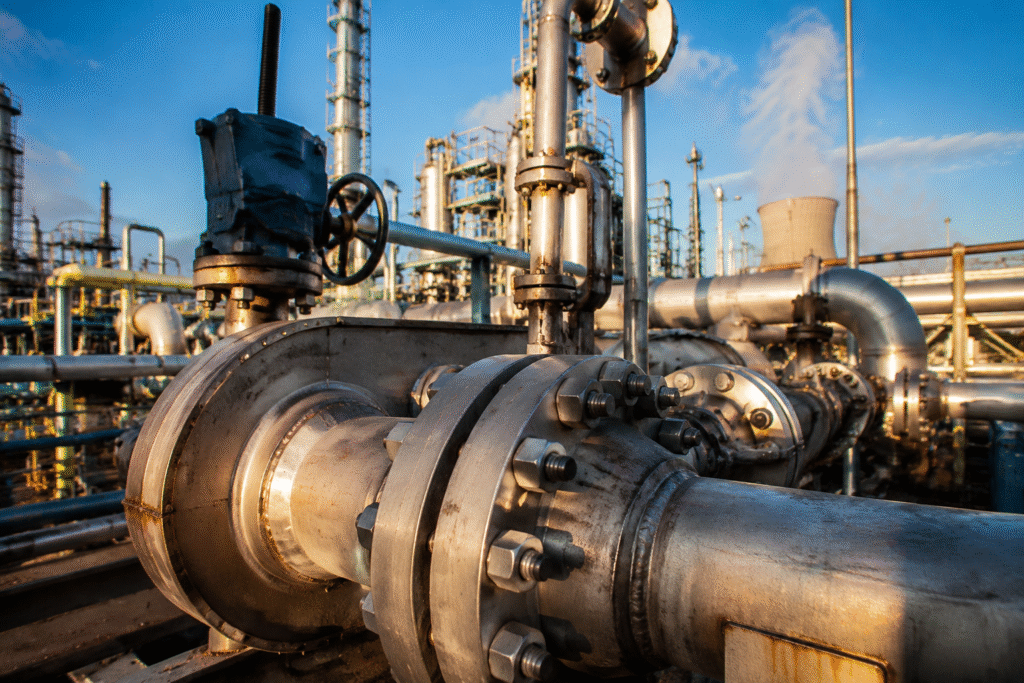
คู่มือการตลาดหน้าแปลนท่อสแตนเลส: 7 ข้อดีที่ได้รับการสนับสนุนจากข้อมูล, ประเภท, การใช้งาน, และข้อมูลเชิงลึกในการคัดเลือก
จากการวิจัยของแกรนด์วิว (2024), ตลาดหน้าแปลนอุตสาหกรรมทั่วโลกมีมูลค่าอยู่ที่ $5.8 พันล้านใน 2023 และคาดว่าจะไปถึง $7.2 พันล้านโดย 2030. That growth highlights why the stainless steel pipe flange remains a critical component for engineers and buyers seeking durability, ความต้านทานการกัดกร่อน, และมูลค่าวงจรชีวิตระยะยาว.
ในหลายโครงการ, the hidden advantages of stainless steel pipe flange selection go beyond simple connection strength. Intriguing improvements in reliability, การบำรุงรักษา, and compliance often appear when buyers match flange material, ระดับความดัน, and face type to the service environment.
ความต้องการแปลนท่อสแตนเลส, การเติบโตของตลาด, และแนวโน้มการจัดซื้อจัดจ้าง
The industrial piping market continues to expand because energy, น้ำ, and process plants need safer and more standardized joints. อ้างอิงจาก IBISWorld (2024), บัญชีเอเชียแปซิฟิกมีมากกว่า 45% ของการผลิตหน้าแปลนทั่วโลก, โดยจีนเป็นผู้ผลิตรายใหญ่ที่สุด.
การกระจุกตัวในระดับภูมิภาคมีความสำคัญต่อทีมจัดซื้อ. มันส่งผลต่อระยะเวลารอคอย, raw material availability, and factory-direct pricing for stainless steel flanges and fittings.
Oil and gas remains the largest end-use segment for many flange manufacturers. ตามสถิติของสตาติสต้า (2024), อุตสาหกรรมน้ำมันและก๊าซมีสัดส่วนประมาณ 35% ของการบริโภคหน้าแปลนทั่วโลก.
อย่างไรก็ตาม, ปิโตรเคมี, การผลิตกระแสไฟฟ้า, ทะเล, and water treatment sectors also drive steady demand. These industries require stainless, เหล็กกล้าคาร์บอน, and alloy flange products built to ASME, ASTM, DIN, JIS, GOST, และมาตรฐาน EN.
Material selection increasingly shapes total project cost. Stainless steel grades such as 304, 316, 316ล, 904ล, 2205, และ 2507 often reduce maintenance frequency in corrosive service.
ตามข้อมูลของ Mordor Intelligence (2024), industrial asset owners are placing greater emphasis on lifecycle cost rather than only upfront purchase price. ดังนั้น, procurement managers now compare not just stainless steel pipe flange price, but also corrosion allowance, inspection intervals, และรอบการเปลี่ยน.
ในฐานะดร. เฮเลน มอร์ริส, Materials Engineering Analyst, รัฐ: “In corrosive piping systems, a higher-grade stainless flange often costs less over the equipment life because downtime and replacement expenses decline significantly.” That view aligns with current owner-operator purchasing behavior in offshore, เคมี, and desalination projects.
Standards compliance also influences sourcing decisions. Buyers increasingly ask for EN 10204 3.1 ใบรับรองการทดสอบวัสดุ, พีเอ็มไอ, การตรวจสอบมิติ, บันทึกการทดสอบไฮโดรเทส, and traceability documentation.
This is where established manufacturers gain an advantage. SASA FLANGE ทำหน้าที่ 50+ ประเทศทั่วน้ำมัน & แก๊ส, ปิโตรเคมี, พลัง, และอุตสาหกรรมทางทะเล, while supporting custom sizes from 1/2" ถึง 60" ด้วยราคาที่แข่งขันได้จากโรงงานโดยตรง.
กับ ISO 9001:2015 และการรับรอง PED 2014/68/EU, SASA FLANGE aligns with the documentation and quality expectations common in regulated international projects. นอกจากนี้, buyers benefit from access to stainless steel flanges, หน้าแปลนเหล็กคาร์บอน, หน้าแปลนโลหะผสม, and pipe fittings from one source.
The competitor content reviewed focuses heavily on grade listings, which are useful but incomplete for procurement. ในทางตรงกันข้าม, a stronger buying framework considers flange type, service media, ความเข้ากันได้ของปะเก็น, ระดับความดัน, and inspection requirements together.
That integrated approach reveals the versatility of stainless steel pipe flange solutions. It also helps buyers choose the right flange for high-pressure steam, คลอไรด์, บริการเปรี้ยว, or clean process systems.
Technical Advantages of Stainless Steel Pipe Flange Materials, ประเภท, and Uses
The most important technical benefit of a stainless steel pipe flange is corrosion resistance combined with predictable mechanical performance. Yet the exact advantage depends on grade chemistry, เส้นทางการผลิต, and the intended pipe schedule and design code.
ตามแนวทางปฏิบัติของวัสดุ ASTM และ ASME, หน้าแปลนสแตนเลสปลอมแปลงที่ใช้กันทั่วไป ASTM A182 เกรดเช่น F304, F304L, F316, F316L, F51, และ F53. These grades support a wide range of applications, from hygienic water lines to chloride-rich offshore systems.
ดังเช่นเดวิด เคอร์, วิศวกรท่ออาวุโส, รัฐ: “The best flange is not the most expensive grade, but the grade that matches the medium, อุณหภูมิ, ระดับความดัน, และปรัชญาการตรวจสอบของโรงงาน” That principle is essential when buyers compare 304 เทียบกับ 316 or duplex versus austenitic stainless options.
For many general industrial systems, 304 and 304L remain the most common stainless choices. They offer good weldability, reliable toughness, and broad availability for slip on, คอเชื่อม, ตาบอด, เกลียว, and socket weld flange designs.
Where chlorides or aggressive chemicals are present, 316 and 316L usually outperform 304 because molybdenum improves pitting resistance. ตามคำแนะนำของ NACE และแนวปฏิบัติในอุตสาหกรรมกระบวนการทั่วไป, 316L often becomes the preferred selection for coastal, ทะเล, and chemical duty.
เกรดดูเพล็กซ์ เช่น 2205 และซูเปอร์ดูเพล็กซ์ 2507 provide higher strength and improved resistance to stress corrosion cracking. ตามการวิจัยตลาดอนาคต (2024), demand for duplex stainless components is rising as offshore and desalination investments increase globally.
The hidden advantages of duplex stainless are especially intriguing for weight-sensitive projects. Higher strength can allow wall-thickness optimization in connected piping systems, which may reduce total installed weight.
- 304/304ล: Cost-effective for general corrosion resistance, ระบบน้ำ, การแปรรูปอาหาร, และสารเคมีอ่อนๆ.
- 316/316ล: ต้านทานคลอไรด์ได้ดีขึ้นสำหรับการเดินเรือ, เคมี, and pharmaceutical service.
- 904ล: Excellent resistance in strong acids and high-corrosion environments.
- 2205: High strength and good chloride resistance for offshore and process plants.
- 2507: Superior pitting and crevice corrosion resistance for severe seawater exposure.
Flange type matters just as much as alloy grade. An incorrect type can create stress concentration, alignment difficulty, or sealing problems even when the material is correct.
- หน้าแปลนคอเชื่อม: ดีที่สุดสำหรับแรงดันสูง, การปั่นจักรยานด้วยความร้อน, และบริการที่สำคัญเนื่องจากฮับแบบเรียวช่วยเพิ่มการกระจายความเครียด.
- สลิปบนหน้าแปลน: Easier alignment and lower cost, often used in lower-pressure utility lines.
- หน้าแปลนตาบอด: ใช้เพื่อแยก, ยุติ, or future-proof a line for expansion.
- หน้าแปลนเกลียว: มีประโยชน์ในกรณีที่จำกัดการเชื่อม, though pressure and vibration limits must be considered.
- หน้าแปลนเชื่อมซ็อกเก็ต: เหมาะสำหรับท่อแรงดันสูงที่มีรูขนาดเล็ก.
ตาม ASME B16.5 และ ASME B16.47, ขนาดหน้าแปลน, การขุดเจาะ, หันหน้าไปทาง, and pressure-temperature ratings must meet standardized requirements for safe interchangeability. Buyers should verify class ratings such as 150, 300, 600, 900, 1500, และ 2500 against operating conditions and material limits.
Face finish and gasket compatibility also affect performance. เงยหน้าขึ้น, หน้าแบน, RTJ, and tongue-and-groove options each support different sealing philosophies.
ตัวอย่างเช่น, an RTJ flange may be preferred in high-pressure hydrocarbon lines. ในทางตรงกันข้าม, raised face configurations are common in general refinery and chemical plant service.
According to ISO-oriented maintenance studies summarized by industry analysts, leakage incidents in bolted joints often trace back to improper assembly, misapplied gasket selection, or inadequate bolt load rather than flange metallurgy alone. ดังนั้น, flange selection must connect design, การติดตั้ง, และแนวทางปฏิบัติในการบำรุงรักษา.
ได้รับการสนับสนุนจากเครื่องจักร CNC ขั้นสูงและการทดสอบคุณภาพที่ครอบคลุม, SASA FLANGE ผลิตหน้าแปลนใน 304, 316, 904ล, 2205, 2507 และเกรดพรีเมี่ยมอื่นๆ. ทางบริษัทยังจัดหาข้อศอกให้อีกด้วย, เสื้อยืด, ตัวลด, and caps for full piping package coordination.
For buyers comparing flange manufacturers or seeking a flange vendor for custom requirements, production flexibility matters. SASA FLANGE supports ANSI B16.5, ANSI B16.47, ASME B16.9, DIN, JIS, GOST, และภาษาอังกฤษ 1092 dimensional systems, which helps multinational EPC and MRO teams simplify sourcing.
มาตรฐาน, การรับรอง, และการปฏิบัติตามข้อกำหนดสำหรับหน้าแปลนสแตนเลส
Industrial buyers rarely approve a stainless steel pipe flange based on appearance or material grade alone. They require standards compliance, การตรวจสอบย้อนกลับ, and testing records that prove the flange meets project and regulatory requirements.
The most commonly referenced dimensional standard for NPS 1/2 ผ่าน 24 เป็น ASME B16.5. สำหรับเส้นผ่านศูนย์กลางที่ใหญ่ขึ้น, ASME B16.47 Series A and Series B often govern flange dimensions and drilling patterns.
มาตรฐานวัสดุก็มีความสำคัญไม่แพ้กัน. ASTM A182 โดยทั่วไปจะครอบคลุมถึงโลหะผสมปลอมแปลงหรือรีดและหน้าแปลนท่อสแตนเลส, อุปกรณ์ปลอมแปลง, และวาล์วสำหรับการบริการที่อุณหภูมิสูง.
โครงการในยุโรปมักต้องมี EN 1092 ขนาดหน้าแปลนและการปฏิบัติตาม PED. ขณะเดียวกัน, marine and offshore applications may also request DNV, นอร์เวย์, or client-specific requirements depending on vessel class or regional regulation.
- ASME B16.5: ขนาด, ความคลาดเคลื่อน, การจัดอันดับความดันอุณหภูมิ, การทำเครื่องหมาย, และการทดสอบหน้าแปลนจนถึง NPS 24.
- ASME B16.47: หน้าแปลนเหล็กเส้นผ่านศูนย์กลางขนาดใหญ่สำหรับ NPS 26 ถึง 60.
- ASTM A182: Forged stainless and alloy flange material specification.
- EN 1092: มาตรฐานมิติหน้าแปลนยุโรป.
- NACE MR0175: Material considerations for sour service environments.
- EN 10204 3.1: Inspection certificate for traceable material and test data.
According to ASME and ASTM practice, markings must identify material, ระดับความดัน, ขนาด, หมายเลขความร้อน, and manufacturer. This information enables downstream traceability during installation, audit, or failure analysis.
When corrosion cracking risks exist, buyers should also evaluate NACE MR0175 compatibility and service limitations. This is particularly relevant in upstream oil and gas lines carrying H2S-containing fluids.
A practical compliance checklist helps procurement teams avoid costly reorders and site delays. It also supports quality alignment between engineering, purchasing, and QA departments.
- Confirm dimensional standard: ASME B16.5, บ16.47, DIN, JIS, หรือภาษาอังกฤษ 1092.
- ยืนยันเกรดวัสดุ: ASTM A182 F304/F316/F51/F53 or approved equivalent.
- Confirm pressure class and flange facing: รฟ, เอฟเอฟ, หรือ RTJ.
- ยืนยันเอกสาร: EN 10204 3.1, พีเอ็มไอ, ความแข็ง, และรายงานมิติ.
- Confirm regulatory compliance: พีอีดี 2014/68/สหภาพยุโรป, ค.ศ 2000, and client approvals if required.
ASME publishes the core flange dimensional and rating standards used by most international projects. ดังนั้น, referencing current editions during design review is essential for interchangeability and compliance.
กับ ISO 9001:2015, พีอีดี 2014/68/สหภาพยุโรป, และโฆษณา 2000 การรับรอง, SASA FLANGE supports projects that need documented manufacturing control. That capability is especially valuable when buyers need custom machining, โลหะผสมพรีเมี่ยม, or multi-standard export supply.
นอกจากนี้, the company’s quality workflow supports inspection needs common in engineering procurement. These include raw material verification, การตรวจสอบมิติ, visual examination, and material certification review.
The result is lower documentation risk for international buyers. นอกจากนี้, it improves confidence when a stainless steel flange 2 นิ้ว, 4 หน้าแปลนท่อสแตนเลสนิ้ว, or large-diameter custom flange must integrate with existing line classes.
คู่มือการสมัคร: วิธีการเลือกโซลูชั่นหน้าแปลนท่อสแตนเลสตามอุตสาหกรรม
Every industry uses stainless steel pipe flange products differently because service conditions vary widely. อุณหภูมิ, คลอไรด์, การปั่นจักรยานด้วยแรงดัน, ความถี่ในการปิดเครื่อง, and cleaning chemicals all influence the correct selection.
ในน้ำมันและก๊าซ, welded joints must perform under vibration, ความผันผวนของความดัน, และสื่อที่มีฤทธิ์กัดกร่อน. ดังนั้น, weld neck flange designs in 316L, 2205, หรือ 2507 often become preferred options for higher-integrity systems.
ตามสถิติของสตาติสต้า (2024), น้ำมันและก๊าซเป็นตัวแทนของ 35% ของการบริโภคหน้าแปลนทั่วโลก. That demand explains why many buyers ask for API flanges, sour-service compatibility, and project-specific traceability packages.
ในโรงงานปิโตรเคมี, ความเข้ากันได้ของสื่อทำให้เกิดการเลือกใช้วัสดุ. 316L suits many process lines, while 904L or nickel alloys such as Inconel, โมเนล, and Hastelloy may be required for more aggressive service.
Power generation systems place strong emphasis on pressure-temperature rating. High-pressure steam lines typically favor forged weld neck flanges with strict dimensional and material control.
Shipbuilding and marine environments create persistent chloride exposure. ในแอปพลิเคชันเหล่านั้น, 316ล, ดูเพล็กซ์ 2205, และซูเปอร์ดูเพล็กซ์ 2507 often provide stronger long-term durability than standard 304.
Water treatment and desalination plants present a similar challenge. Pitting and crevice corrosion can accelerate quickly if the alloy is underspecified.
- น้ำมัน & แก๊ส: Prioritize pressure class, ข้อกำหนดของ NACE, vibration resistance, and RTJ or weld neck options.
- ปิโตรเคมี: Match alloy to acids, ตัวทำละลาย, and temperature profile.
- การผลิตไฟฟ้า: Verify thermal cycling resistance, การจัดอันดับชั้นเรียน, และคุณภาพการเชื่อม.
- มารีน: Focus on chloride resistance, crevice corrosion resistance, and coating compatibility.
- การบำบัดน้ำ: Evaluate pitting resistance equivalent number and long-term maintenance cost.
Buyers also ask practical questions about types and uses. Should they choose slip on or weld neck, threaded or socket weld, ข้อต่อแบบยกหน้าหรือแบบวงแหวน.
The answer depends on the piping code, การเข้าถึงการบำรุงรักษา, and consequence of leakage. For lower-pressure utility service, a stainless steel slip on flange may be sufficient and economical.
For critical hydrocarbon duty, อย่างไรก็ตาม, engineers generally prefer weld neck or RTJ configurations. ส่งผลให้, the flange becomes part of a broader mechanical integrity strategy rather than a standalone commodity item.
Custom manufacturing often decides whether a supplier can support real project conditions. SASA FLANGE เสนอขนาดที่กำหนดเองตั้งแต่ 1/2" ถึง 60", multiple facing options, and material coverage from standard stainless to titanium and high-performance nickel alloys.
That range helps EPC contractors consolidate purchases across line classes. It also reduces coordination risk when flanges and fittings must align with elbows, เสื้อยืด, ตัวลด, and caps in the same material family.
When buyers compare flange vendor options, they should assess more than unit price. Lead time stability, การสนับสนุนด้านเทคนิค, คุณภาพเอกสาร, and export packing can affect total project performance more than small purchase price differences.
ดังเช่นมาร์ค เฟลด์แมน, Industrial Supply Consultant, รัฐ: “The strongest flange supplier is the one that prevents field problems before shipment through correct standard matching, เอกสารประกอบ, and machining accuracy.” That advice is highly relevant for multinational projects with strict inspection gates.
แนวโน้มในอนาคตสำหรับการจัดหาหน้าแปลนท่อสแตนเลสและคำแนะนำในการซื้อเชิงกลยุทธ์
แนวโน้มความต้องการหน้าแปลนท่อสแตนเลสยังคงเป็นบวกเนื่องจากโครงสร้างพื้นฐาน, process industry modernization, and energy transition projects continue to expand. จากการวิจัยของแกรนด์วิว (2024), คาดว่าตลาดจะเติบโตจาก $5.8 พันล้านใน 2023 ถึง $7.2 พันล้านโดย 2030.
ในเวลาเดียวกัน, buyers face greater complexity. They must manage alloy volatility, freight risk, and tighter project documentation expectations.
อ้างอิงจาก IBISWorld (2024), Asia-Pacific controls over 45% ของการผลิตหน้าแปลนทั่วโลก. ดังนั้น, supplier selection should include manufacturing capability, ระบบคุณภาพ, and communication responsiveness, not just geographic origin.
Procurement teams can improve outcomes with several straightforward actions. อันดับแรก, standardize approved material and dimensional specifications before requesting quotations.
ที่สอง, compare lifecycle cost rather than only stainless steel pipe flange price. A lower-cost flange can become expensive if corrosion, การรั่วไหล, or documentation gaps delay commissioning.
ที่สาม, request complete technical quotation details. These should include material grade, มาตรฐาน, ระดับ, หันหน้าไปทาง, ขอบเขตการตรวจสอบ, ประเภทใบรับรอง, และกำหนดการส่งมอบ.
ที่สี่, qualify suppliers that can handle both standard and custom work. That flexibility matters when projects need unusual bores, เส้นผ่านศูนย์กลางใหญ่, or mixed-standard requirements.
For companies seeking a reliable flange manufacturers partner, SASA FLANGE combines broad material capability, ครอบคลุมมาตรฐาน, and export-oriented quality control. ส่งผลให้, engineers and buyers can source stainless steel pipe flange products with stronger confidence in compliance, ผลงาน, และการจัดส่ง.
คำถามที่พบบ่อย
หน้าแปลนสแตนเลสมีกี่ประเภท??
●ประเภทหน้าแปลนสแตนเลสหลักคือคอเชื่อม, ลื่นบน, ตาบอด, เกลียว, เชื่อมซ็อกเก็ต, และข้อต่อตัก, และ ASME B16.5 defines the most common dimensional requirements for many of these designs.
●Weld neck flanges suit high-pressure and high-temperature service, while slip on flanges are often chosen for easier fit-up and lower fabrication cost in utility piping.
●จากการวิจัยของแกรนด์วิว (2024), ถึงตลาดหน้าแปลนอุตสาหกรรมทั่วโลกแล้ว $5.8 พันล้านใน 2023, which shows how broad the demand is for multiple flange configurations across industries.
●สำหรับการบริการที่สำคัญ, engineers also compare face types such as raised face, หน้าแบน, and ring type joint because the sealing surface affects gasket performance and leak resistance.
●For projects requiring exact standard matching and material traceability, ทำงานร่วมกับผู้ผลิตที่จัดตั้งขึ้นเช่น SASA FLANGE helps ensure the correct type, ระดับ, and material are supplied.
หน้าแปลนสามประเภทคืออะไร?
●The three flange types most commonly referenced in basic industrial discussions are weld neck, ลื่นบน, and blind flanges because they cover many piping connection and isolation needs.
●Weld neck flanges provide the highest structural integrity for demanding service, slip on flanges offer easier alignment for general applications, and blind flanges close or isolate pipe ends for maintenance or future expansion.
●ตามแนวทางปฏิบัติของ ASME, each type can be manufactured in pressure classes such as 150, 300, 600, และสูงกว่า, so the flange type alone does not determine pressure capability.
●In practical selection, engineers also check material grade, ค่าเผื่อการกัดกร่อน, หันหน้าไปทาง, โหลดโบลต์, and gasket compatibility before final approval.
●For projects that require both common and custom flange types, ร่วมมือกับ SASA FLANGE สามารถลดความซับซ้อนในการจัดหาและการควบคุมเอกสาร.
ขนาดหน้าแปลนท่อสแตนเลส: what sizes are available and how do buyers choose?
●ขนาดหน้าแปลนท่อสแตนเลสโดยทั่วไปเริ่มต้นที่ 1/2 นิ้วและสามารถขยายออกไปได้ 60 นิ้ว, กับ ASME B16.5 usually covering smaller standard sizes and ASME B16.47 covering larger diameters.
●Buyers choose size by matching nominal pipe size, กำหนดการท่อ, bore requirement, และมาตรฐานส่วนประกอบการผสมพันธุ์, because even a small mismatch can prevent proper assembly.
●อ้างอิงจาก IBISWorld (2024), บัญชีเอเชียแปซิฟิกมีมากกว่า 45% ของการผลิตหน้าแปลนทั่วโลก, so buyers have broad sourcing options but must verify dimensional standard consistency carefully.
●ก 4 inch stainless steel pipe flange may look simple to specify, yet engineers still need to confirm pressure class, หันหน้าไปทาง, เกรดวัสดุ, and bore tolerance before purchase.
●For mixed-standard projects or custom machined bores, ซัพพลายเออร์ที่จัดตั้งขึ้นเช่น SASA FLANGE can help align flange size details with the full piping package.
Stainless steel pipe flange price: what affects cost?
●ราคาหน้าแปลนท่อสแตนเลสขึ้นอยู่กับเกรดโลหะผสมเป็นหลัก, ขนาด, ระดับความดัน, forging weight, ความซับซ้อนของเครื่องจักร, ข้อกำหนดการทดสอบ, และปริมาณการสั่งซื้อ.
●ตัวอย่างเช่น, a 316L or duplex 2205 flange generally costs more than a 304 flange because alloy content and corrosion performance are higher, while RTJ machining and EN 10204 3.1 documentation can add further cost.
●ตามข้อมูลของ Mordor Intelligence (2024), industrial buyers are increasingly prioritizing lifecycle cost over purchase price alone, which means corrosion resistance and service life often justify a higher initial price.
●Freight, บรรจุส่งออก, and lead time urgency can also materially affect the final landed cost, especially for large-diameter or project-specific flanges.
●For buyers who need transparent quotations with technical clarity, working with manufacturers such as SASA FLANGE helps compare price against compliance, คุณภาพ, and delivery value.
What is a stainless steel slip on flange used for?
●A stainless steel slip on flange is used for piping systems where easier alignment and lower fabrication cost are important, especially in moderate-pressure utility or process lines.
●The pipe slips into the flange bore and is fillet welded, which simplifies installation compared with a weld neck flange but generally provides lower fatigue resistance in severe service.
●ตามสถิติของสตาติสต้า (2024), น้ำมันและก๊าซคิดเป็นประมาณ 35% ของการบริโภคหน้าแปลนทั่วโลก, yet many utility and secondary systems within those plants still use slip on flanges where service conditions permit.
●Engineers should verify pressure class, คุณภาพการเชื่อม, สภาพแวดล้อมการกัดกร่อน, and code acceptance before choosing this type, because it is not ideal for every application.
●For buyers evaluating whether slip on is the right flange type, a qualified supplier like SASA FLANGE can review specifications and recommend suitable material and standard combinations.
How do I choose among flange manufacturers or a flange vendor?
●The best way to choose among flange manufacturers is to compare standards coverage, quality certifications, material capability, ขอบเขตการทดสอบ, ประสบการณ์การส่งออก, และการตอบสนองทางเทคนิค.
●A strong flange vendor should supply documentation such as EN 10204 3.1 ใบรับรอง, รายงานมิติ, บันทึกการตรวจสอบย้อนกลับ, and compliance with standards like ASME B16.5, ASTM A182, และภาษาอังกฤษ 1092.
●จากการวิจัยของแกรนด์วิว (2024), ตลาดหน้าแปลนอุตสาหกรรมคาดว่าจะเข้าถึงได้ $7.2 พันล้านโดย 2030, so competitive supply options will grow, but technical inconsistency will remain a major buyer risk.
●Experts generally recommend reviewing lead times, ความสามารถในการตัดเฉือน CNC, custom size support, and previous industry experience in oil and gas, ปิโตรเคมี, พลัง, or marine service.
●For projects that require a dependable combination of material range, การรับรอง, and custom manufacturing, buyers often shortlist established suppliers such as SASA FLANGE.
โพสต์ที่เกี่ยวข้อง
หน้าแปลนเสร็จสิ้น: อธิบาย Serrations แบบศูนย์กลางและแบบเกลียว
ฟันปลาแบบศูนย์กลางและแบบเกลียวมีทั้งการตกแต่งผิวหน้าแปลนด้วยเครื่องจักร…
ดูเพล็กซ์ 2205 เทียบกับหน้าแปลน 316L: คุณควรเลือกวัสดุใด?
ตอบด่วน: ดูเพล็กซ์ 2205 หน้าแปลนมักจะเป็นตัวเลือกที่แข็งแกร่งกว่า…

คำจำกัดความหน้าแปลนปาก, รายละเอียดและภาพรวมหน้าแปลน ASME B16.36: ข้อมูลการตลาด, คู่มือการคัดเลือกและข้อมูลเชิงลึกด้านการปฏิบัติตามข้อกำหนด
ตลาดหน้าแปลนอุตสาหกรรมทั่วโลกมีมูลค่าอยู่ที่ $5.8 พันล้าน…

คู่มือการตลาดหน้าแปลนการกำจัดสีดำ: วัสดุ, 3.5″ ความเข้ากันได้, และการจัดหาข้อมูล B2B สำหรับหน้าแปลนอ่างล้างจาน
ความต้องการหน้าแปลนกำจัดสีดำเพิ่มขึ้นเนื่องจากผู้ซื้ออุปกรณ์ติดตั้งในครัว…