
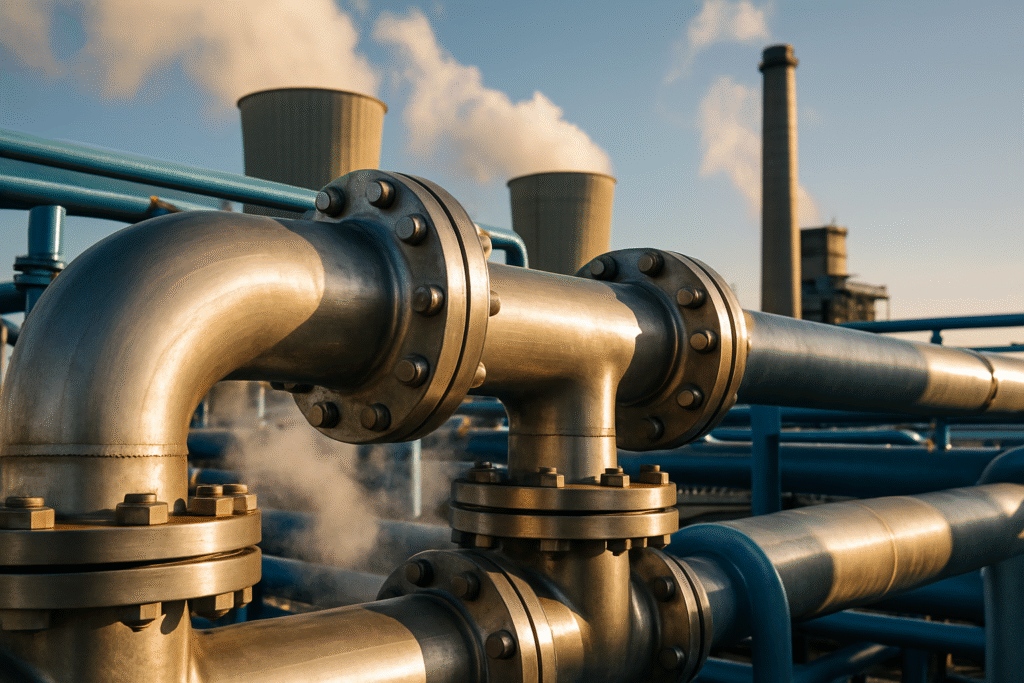
ตลาดหน้าแปลนท่อสแตนเลส 2024: ข้อดีที่ซ่อนอยู่, ประเภท, การใช้งาน, และวิธีการเลือกหน้าแปลนแบบต่างๆ
จากการวิจัยของแกรนด์วิว (2024), ตลาดหน้าแปลนอุตสาหกรรมทั่วโลกมีมูลค่าอยู่ที่ $5.8 พันล้านใน 2023 และคาดว่าจะไปถึง $7.2 พันล้านโดย 2030. That growth is one reason the stainless steel pipe flange remains a critical component for industrial use, especially where reliability, ความต้านทานการกัดกร่อน, and code compliance drive procurement decisions.
สำหรับวิศวกรและผู้ซื้อ, the hidden advantages of stainless steel pipe flange selection go beyond corrosion performance alone. Different flange types, คลาสความดัน, โลหะผสม, and manufacturing controls directly affect lifecycle cost, ความเสี่ยงในการปิดระบบ, and long-term pipe system safety.
Why the Stainless Steel Pipe Flange Market Keeps Expanding Across Industrial Sectors
Industrial demand for stainless steel pipe flange products continues to rise because operators need longer service life in aggressive media. ตามสถิติของสตาติสต้า (2024), อุตสาหกรรมน้ำมันและก๊าซมีสัดส่วนประมาณ 35% ของการบริโภคหน้าแปลนทั่วโลก, which shows how strongly energy projects shape flange demand.
นอกจากนี้, regional manufacturing concentration matters for sourcing strategy. อ้างอิงจาก IBISWorld (2024), บัญชีเอเชียแปซิฟิกมีมากกว่า 45% ของการผลิตหน้าแปลนทั่วโลก, โดยจีนเป็นผู้ผลิตรายใหญ่ที่สุด.
That production scale gives buyers wider access to ASTM A182 forged stainless grades, larger size ranges, and shorter replenishment cycles. อย่างไรก็ตาม, procurement teams still need to verify traceability, การควบคุมการบำบัดความร้อน, การทดสอบ PMI, and dimensional compliance against ASME B16.5, ASME B16.47, DIN, JIS, GOST, และภาษาอังกฤษ 1092 ความต้องการ.
The stainless steel pipe flange is widely specified in Oil & แก๊ส, ปิโตรเคมี, ทะเล, การบำบัดน้ำ, and power generation because stainless grades perform well in humid, คลอไรด์แบริ่ง, and cyclic-temperature environments. ในทางตรงกันข้าม, lower-cost carbon steel options may require coating systems, more frequent maintenance, or replacement in corrosive duty.
ตามข้อมูลของ Mordor Intelligence (2024), industrial processing investments in energy, โครงสร้างพื้นฐานด้านน้ำ, and chemicals continue to support steady demand for corrosion-resistant piping components. ดังนั้น, buyers increasingly compare total installed cost rather than only initial flange price.
As material engineer Dr. เฮเลน มอร์ริส, ผู้เชี่ยวชาญด้านการกัดกร่อน, รัฐ: “The most economical flange is rarely the cheapest forged piece; it is the component that minimizes leakage risk, maintenance exposure, and unplanned shutdown over the asset life.” That view is especially relevant when comparing 304, 316ล, 904ล, ดูเพล็กซ์ 2205, และซูเปอร์ดูเพล็กซ์ 2507 for different media.
ในแง่การปฏิบัติ, different flanges serve different mechanical and maintenance priorities. Weld neck flange designs handle severe cyclic service well, slip-on flanges support less critical systems economically, and blind flanges isolate lines safely during testing or maintenance.
Buyers also look beyond material to supplier capability. SASA FLANGE, เสิร์ฟ 50+ ประเทศทั่วน้ำมัน & แก๊ส, ปิโตรเคมี, พลัง, และอุตสาหกรรมทางทะเล, supports projects requiring forged stainless steel flanges, หน้าแปลนโลหะผสม, and matching pipe fittings in standards such as ANSI B16.5, ANSI B16.47, ASME B16.9, DIN, JIS, GOST, และภาษาอังกฤษ 1092.
กับ ISO 9001:2015 และการรับรอง PED 2014/68/EU, manufacturers can better align with documentation-heavy projects in Europe and export markets. นอกจากนี้, EN 10204 3.1 ใบรับรองวัสดุ, บันทึกการทดสอบอุทกสถิต, รายงานของพีเอ็มไอ, and dimensional inspection reports help reduce approval delays.
จากมุมมองของการจัดหา, the hidden advantages of a high-quality stainless steel pipe flange include reduced corrosion allowance, more predictable maintenance planning, stronger resale value of plant assets, and easier compliance with owner specifications. ส่งผลให้, technical procurement teams increasingly prioritize qualified suppliers over spot-price vendors.
เจาะลึกทางเทคนิค: Intriguing Stainless Steel Pipe Flange Advantages, ประเภท, และการเลือกใช้วัสดุ
The stainless steel pipe flange family includes many forged and plate-based configurations, each suited to different pipe layouts and pressure classes. ตาม ASME B16.5, ขนาดหน้าแปลน, หันหน้าไปทางประเภท, การขุดเจาะ, and pressure-temperature ratings must match the designated class and material group (ASME, 2023).
In engineering practice, material choice usually begins with media, ความเข้มข้นของคลอไรด์, อุณหภูมิในการทำงาน, and expected maintenance interval. อย่างไรก็ตาม, designers must also consider gasket compatibility, โหลดโบลต์, external vibration, and whether the joint will be disassembled frequently.
As piping consultant James Ortega, วิศวกรท่ออาวุโส, รัฐ: “Most flange failures begin with a mismatch between service conditions and selection assumptions, not with the forging itself.” ดังนั้น, the best way to choose different flanges is to align alloy, หันหน้าไปทาง, ระดับ, and connection type with the actual process envelope.
Common stainless steel grades used in a stainless steel pipe flange include 304, 304ล, 316, 316ล, 321, 347, 904ล, ดูเพล็กซ์ 2205, และซูเปอร์ดูเพล็กซ์ 2507. ASTM A182 covers many forged or rolled alloy and stainless steel pipe flanges, อุปกรณ์ปลอมแปลง, วาล์ว, และชิ้นส่วนสำหรับงานบริการที่อุณหภูมิสูง (ASTM, 2024).
Among these grades, 304 and 304L are popular for general industrial use because they balance cost, ความสามารถในการขึ้นรูป, และความต้านทานการกัดกร่อน. ในทางตรงกันข้าม, 316 และ 316L รวมถึงโมลิบดีนัม, which improves pitting resistance in chloride-bearing environments.
For higher chloride content or sour service, duplex and super duplex alloys often provide better strength-to-weight ratio and stronger resistance to stress corrosion cracking. NACE MR0175 และ ISO 15156 should guide material acceptance for H2S-containing environments where sulfide stress cracking risks increase (เนซ, 2023).
- 304/304ล: general utility systems, mild chemical service, การแปรรูปอาหาร, and indoor water lines.
- 316/316ล: ทะเล, ชายฝั่งทะเล, ยา, and chloride-exposed piping.
- 904ล: stronger resistance in sulfuric and aggressive chemical environments.
- 2205 ดูเพล็กซ์: higher strength and improved chloride stress corrosion cracking resistance.
- 2507 ซูเปอร์ดูเพล็กซ์: severe offshore and high-salinity applications.
Different flange types also influence fatigue performance and assembly efficiency. The most common types include weld neck, ลื่นบน, ตาบอด, เชื่อมซ็อกเก็ต, เกลียว, และหน้าแปลนข้อต่อตัก.
- หน้าแปลนคอเชื่อม: เหมาะสำหรับแรงดันสูง, อุณหภูมิสูง, และบริการแบบวนรอบ.
- หน้าแปลนสลิปออน: easier alignment and lower fabrication cost for moderate duty.
- หน้าแปลนตาบอด: used for line blanking, การทดสอบ, และการแยกการบำรุงรักษา.
- หน้าแปลนเชื่อมซ็อกเก็ต: พบได้ทั่วไปในบ่อขนาดเล็ก, ระบบแรงดันสูง.
- หน้าแปลนเกลียว: useful where welding is impractical or restricted.
- หน้าแปลนร่วมตัก: supports systems requiring frequent dismantling.
ตามการวิจัยตลาดอนาคต (2024), corrosion-resistant alloys are gaining share in process industries because operators seek longer maintenance intervals and lower leak probability. นอกจากนี้, alloy upgrades can reduce replacement frequency in lines exposed to seawater, สารกัดกร่อน, or mixed chemical streams.
Pressure class is another key variable. ใน ASME B16.5 ระบบ, การให้คะแนนทั่วไปรวมถึงคลาส 150, 300, 600, 900, 1500, และ 2500, while larger diameters may fall under ASME B16.47 Series A or B depending on project specification.
Procurement managers should not assess price by diameter alone. ก 4 หน้าแปลนท่อสแตนเลสขนาดนิ้วในคลาส 316L 300, RF finish, กับ EN 10204 3.1 certification and PMI testing, differs significantly in cost from a 304 slip-on flange of the same nominal size.
ได้รับการสนับสนุนจากเครื่องจักร CNC ขั้นสูงและการทดสอบคุณภาพที่ครอบคลุม, SASA FLANGE ผลิตหน้าแปลนใน 304, 316, 316ล, 904ล, 2205, 2507, A105, A182, อินโคเนล, โมเนล, ฮาสเตลลอย, และไทเทเนียม. That range helps EPC contractors consolidate sourcing across both corrosion-resistant and high-temperature alloy systems.
ในหลายโครงการ, buyers also need elbows, เสื้อยืด, ตัวลด, and caps from the same source to avoid dimensional mismatch. เนื่องจาก ASME B16.9 governs many butt weld fitting dimensions, pairing flanges and fittings from a supplier familiar with the same tolerances simplifies fit-up on site.
ตามมาตรฐานไอเอสโอ (2023), quality management discipline lowers nonconformance risk when production, การตรวจสอบ, and documentation follow controlled procedures. เพราะเหตุนี้, a certified system such as ISO 9001:2015 often matters as much as nominal material grade.
Another hidden advantage of the stainless steel pipe flange is cleanliness. Stainless surfaces are easier to maintain in pharmaceutical, อาหาร, น้ำบริสุทธิ์พิเศษ, and high-spec process systems where contamination control matters.
ในฐานะนักโลหะวิทยา ดร. Aaron Patel, นักวิทยาศาสตร์วัสดุ, รัฐ: “Selecting a stainless flange is an exercise in balancing chemistry, โลหะวิทยา, การออกแบบแรงดัน, and fabrication practicality.” That is why experienced manufacturers evaluate not just different flanges, but the whole piping envelope.
มาตรฐาน, การทดสอบ, and Compliance Requirements for Stainless Steel Pipe Flange Procurement
Compliance is often the difference between a smooth project release and a delayed shipment. For a stainless steel pipe flange, the most referenced standards include ASME B16.5, ASME B16.47, ASTM A182, ASTM A240, EN 1092-1, มาตรฐานดินแดง, and project-specific specifications from API, นอร์เวย์, ดีเอ็นวี, or end users.
ASME B16.5 ครอบคลุมหน้าแปลนและอุปกรณ์หน้าแปลนสำหรับ NPS 1/2 ผ่าน 24. ASME B16.47 applies to larger steel flanges from NPS 26 ผ่าน 60, depending on series and pressure class (ASME, 2023).
ASTM A182 addresses forged or rolled alloy and stainless steel components for high-temperature service. ASTM A240, ในทางตรงกันข้าม, is usually referenced for chromium and chromium-nickel stainless plate, แผ่น, and strip used for vessels and general applications (ASTM, 2024).
โครงการในยุโรปอาจต้องมี EN 1092-1 dimensional compliance and PED 2014/68/EU documentation. ดังนั้น, manufacturers supplying to EU-regulated pressure equipment markets must maintain material traceability and conformity assessment records carefully.
- มาตรฐานมิติ: ASME B16.5, ASME B16.47, EN 1092-1, DIN, JIS, GOST.
- มาตรฐานวัสดุ: ASTM A182, ASTM A240, ASTM A276, customer-approved MDS.
- Testing and documentation: พีเอ็มไอ, ความแข็ง, ไฮโดรทดสอบ, ตรวจสอบเฟอร์ไรต์, intergranular corrosion test, EN 10204 3.1.
- Service-specific requirements: NACE MR0175, ISO 15156, พีอีดี 2014/68/สหภาพยุโรป, ค.ศ 2000.
Below is a practical comparison used by many buyers during technical review.
| มาตรฐาน | Main Focus | การใช้งานทั่วไป |
|---|---|---|
| ASME B16.5 | ขนาด, การให้คะแนน, หันหน้าไปทาง | กรมอุทยานฯ 1/2 ถึง 24 ท่อกระบวนการ |
| ASME B16.47 | Large diameter flange dimensions | กรมอุทยานฯ 26 ถึง 60 ท่อ |
| ASTM A182 | วัสดุสแตนเลสและโลหะผสมปลอมแปลง | Forged flange procurement |
| EN 1092-1 | ขนาดหน้าแปลนยุโรปและพิกัด PN | EU projects and PED scope |
| NACE MR0175 | Sour service material suitability | H2S-containing environments |
ตามข้อมูลของ DNV (2023), offshore and marine projects increasingly demand stricter documentation, การตรวจสอบย้อนกลับ, and corrosion-resistance validation due to lifecycle safety requirements. นอกจากนี้, many owners request positive material identification for all critical alloy flanges before installation.
When buyers compare different flanges, they should verify both manufacturing and inspection scope. A compliant flange should meet dimensional tolerances, หันหน้าไปทางจบ, bolt-hole alignment, กฎการทำเครื่องหมาย, and required test frequency.
กับ ISO 9001:2015, พีอีดี 2014/68/สหภาพยุโรป, และโฆษณา 2000 ข้อมูลรับรอง, SASA FLANGE supports projects that require controlled quality systems and export documentation. การผลิตหน้าแปลนใน 304, 316, 904ล, 2205, 2507 และเกรดพรีเมี่ยมอื่นๆ, the company serves buyers who need certified materials for energy, น้ำ, ทะเล, และบริการเคมีภัณฑ์.
สำหรับการใช้งานที่สำคัญ, documentation should include heat number traceability, raw material certificates, รายงานการตรวจสอบมิติ, และ EN 10204 3.1 ใบรับรอง. นอกจากนี้, สภาพพื้นผิว, ฟันเลื่อยเสร็จสิ้น, and flange facing type must match gasket design to ensure leak-tight assembly.
Buyers should also confirm whether the supplier can produce custom sizes from 1/2 นิ้วถึง 60 นิ้ว, การเจาะที่ไม่ได้มาตรฐาน, and special alloy combinations. That flexibility is valuable when revamps must interface with legacy DIN, แอนซี่, and mixed-spec piping systems.
For formal code reference, engineers can review current requirements at ASME. That step is helpful when project documents cite the latest edition rather than a generic standard name.
คู่มือการสมัคร: How to Choose Different Flanges for Oil, แก๊ส, เคมี, พลัง, และระบบทางทะเล
Choosing the right stainless steel pipe flange starts with service conditions rather than catalog habit. Engineers should define pressure, อุณหภูมิ, เคมีของไหล, ค่าเผื่อการกัดกร่อน, ความถี่ในการบำรุงรักษา, and installation method before selecting a type.
ในน้ำมัน & แก๊ส, flange selection often prioritizes pressure containment, ความเหมาะสมในการให้บริการเปรี้ยว, และประสิทธิภาพความเหนื่อยล้า. ดังนั้น, weld neck designs in ASTM A182 F316L, F51, or higher-alloy materials are common in upstream, กลางน้ำ, and refinery process units.
ตามสถิติของสตาติสต้า (2024), ประมาณ 35% การบริโภคหน้าแปลนทั่วโลกมาจากน้ำมันและก๊าซ. That share explains why API-aligned project documentation, mill traceability, and NACE compatibility frequently shape purchasing requirements.
ในการแปรรูปปิโตรเคมีและเคมี, the hidden advantages of stainless and duplex flanges appear in corrosive media handling. 316L may suit moderate chloride and solvent service, ในขณะที่ 904L, ฮาสเตลลอย, or duplex alloys are often chosen for stronger acid or mixed-chemistry exposure.
Power generation applications focus on thermal cycling, บริการอบไอน้ำ, และความน่าเชื่อถือในการปิดเครื่อง. ส่งผลให้, engineers often specify forged flange materials with stable mechanical properties and verified heat treatment records.
Marine and shipbuilding systems need strong pitting resistance in saline environments. ดังนั้น, 316ล, 2205 ดูเพล็กซ์, และ 2507 super duplex often outperform standard materials in seawater-adjacent pipe systems, เส้นบัลลาสต์, and deck utility services.
- For corrosive water lines, prioritize 316L or duplex over 304 where chlorides are elevated.
- For high-pressure cyclic service, choose weld neck over slip-on whenever design permits.
- For shutdown blinds and hydrotest points, specify blind flanges with correct facing and bolt load.
- For small-bore high-pressure service, evaluate socket weld flanges carefully.
- สำหรับระบบที่ต้องการการบำรุงรักษาสูง, lap joint assemblies may simplify dismantling.
Procurement teams should also compare fabrication and field installation cost. Although slip-on flanges can reduce initial machining and fit-up complexity, weld neck flanges often provide better long-term performance in demanding service.
Different flange faces affect gasket choice and leak integrity. ใบหน้าที่ยกขึ้นเป็นเรื่องปกติในโรงงานแปรรูป, ring type joint is used in higher-pressure critical service, and flat face appears in certain low-pressure or cast equipment connections.
When buyers ask how to choose a pipe flange for industrial use, these criteria usually matter most.
- เกรดวัสดุและความต้านทานการกัดกร่อน.
- ระดับความดันและระดับอุณหภูมิ.
- Flange type and connection method.
- Applicable standards and project approvals.
- ขอบเขตการทดสอบ, ใบรับรอง, และการตรวจสอบย้อนกลับ.
- เวลานำ, ขั้นต่ำ, and logistics capability.
เสนอขนาดที่กำหนดเองจาก 1/2 นิ้วถึง 60 นิ้วด้วยราคาที่แข่งขันได้จากโรงงานโดยตรง, SASA FLANGE supports standard and custom production for EPC contractors and distributors. นอกจากนี้, บริษัทจัดหาข้อศอกให้, เสื้อยืด, ตัวลด, and caps to simplify package procurement for complete pipe systems.
ตัวอย่างเช่น, a water treatment plant may use 304L slip-on flanges in non-chlorinated utility lines, while specifying 316L or duplex flanges in higher-chloride process areas. ในทำนองเดียวกัน, an offshore skid may require 2205 หน้าแปลนคอเชื่อม, ASME B16.5 ระดับ 600, NACE-compliant, กับ EN 10204 3.1 และบันทึก PMI.
If your project requires mixed materials, การเจาะแบบกำหนดเอง, or rapid technical review, กำลังติดต่อ SASA FLANGE early can shorten approval cycles. Early supplier engagement also helps avoid mismatches between pipe schedule, มิติของการเจาะ, and flange hub geometry.
Future Outlook for Stainless Steel Pipe Flange Sourcing and Strategic Recommendations for Buyers
The outlook for stainless steel pipe flange demand remains positive because industrial operators continue investing in resilience, การควบคุมการกัดกร่อน, and longer asset life. จากการวิจัยของแกรนด์วิว (2024), ตลาดคาดว่าจะเติบโตจาก $5.8 พันล้านใน 2023 ถึง $7.2 พันล้านโดย 2030.
That trend is reinforced by infrastructure modernization, water treatment expansion, and energy transition projects that still require robust pipe connections. นอกจากนี้, stricter leakage prevention and documentation expectations favor qualified manufacturers with established testing systems.
อ้างอิงจาก IBISWorld (2024), Asia-Pacific maintains over 45% ของการผลิตหน้าแปลนทั่วโลก, so supply chain strategy should combine cost advantage with quality verification. ดังนั้น, buyers should prequalify suppliers based on certification, alloy capability, ทรัพยากรการตรวจสอบ, และประสบการณ์การส่งออก.
อย่างมีกลยุทธ์, B2B buyers should standardize flange selection logic across sites. A clear matrix for media, อุณหภูมิ, ระดับความดัน, and approved materials reduces engineering variation and simplifies inventory planning.
They should also request lifecycle-based comparisons instead of unit-price-only quotes. ในหลายกรณี, the hidden advantages of upgraded stainless or duplex flanges include fewer failures, lower coating cost, and reduced downtime exposure.
Recommended actions for procurement and engineering teams include the following.
- Create an approved materials list tied to service conditions and standards.
- จำเป็นต้อง EN 10204 3.1 certificates and PMI for critical alloys.
- Confirm dimensional standard, หันหน้าไปทางประเภท, และกำหนดเวลาความเข้ากันได้ก่อนที่จะออก PO.
- Review supplier capability for both flanges and matching ASME B16.9 ฟิตติ้ง.
- Assess total cost across maintenance, ทดแทน, and outage risk.
For buyers evaluating different flanges, a capable manufacturing partner should offer metallurgical depth, ความแม่นยำของเครื่องจักร, and documentation discipline. That is why many global projects prefer suppliers that can combine stainless, ดูเพล็กซ์, โลหะผสมนิกเกิล, and custom flange production under one controlled system.
For upcoming tenders involving stainless steel flanges and fittings, early technical coordination with an experienced manufacturer can improve bid accuracy and delivery confidence. For projects requiring certified materials, มิติข้อมูลที่กำหนดเอง, หรือเอกสารพร้อมส่งออก, ทำงานกับ SASA FLANGE เป็นขั้นตอนต่อไปที่ใช้งานได้จริง.
คำถามที่พบบ่อย
หน้าแปลนสแตนเลสใช้ทำอะไร?
●หน้าแปลนสแตนเลสใช้สำหรับเชื่อมต่อท่อ, วาล์ว, ปั๊ม, และอุปกรณ์แรงดันในระบบที่ต้องการความต้านทานการกัดกร่อน, ความสามารถในการให้บริการ, and pressure-tight sealing.
●ตามสถิติของสตาติสต้า (2024), น้ำมันและก๊าซคิดเป็นประมาณ 35% ของการบริโภคหน้าแปลนทั่วโลก, which shows how common these components are in critical process lines.
●มีการใช้กันอย่างแพร่หลายในโรงงานปิโตรเคมี, ท่อทางทะเล, ลื่นไถลบำบัดน้ำ, ระบบแปรรูปอาหาร, and power generation units because grades such as 304, 316ล, และ 2205 handle moisture, สารเคมี, and temperature changes better than many coated carbon steel options.
●Common use points include pump suction and discharge nozzles, การเชื่อมต่อถัง, สาขาเครื่องดนตรี, ส่วนหัวของยูทิลิตี้, and removable spool joints where maintenance access matters.
●Engineers usually select the flange by matching material, ระดับความดัน, หันหน้าไปทาง, and type to the process fluid and piping code, เช่น ASME B16.5 หรือภาษาอังกฤษ 1092-1.
●For projects requiring corrosion-resistant forged flanges with EN 10204 3.1 เอกสารประกอบ, ทำงานร่วมกับผู้ผลิตที่จัดตั้งขึ้นเช่น SASA FLANGE helps ensure dimensional consistency and traceability.
พวกเขาทำข้อต่อท่อสแตนเลสหรือไม่?
●ใช่, manufacturers make stainless steel pipe fittings such as elbows, เสื้อยืด, ตัวลด, หมวกแก๊ป, ข้อต่อ, and stub ends for both welded and threaded piping systems.
●ตาม ASME B16.9, many butt weld fittings follow standardized dimensions that help maintain fit-up consistency across process piping systems (ASME, 2023).
●These fittings are commonly produced in grades like 304, 304ล, 316, 316ล, 904ล, 2205, และ 2507, depending on corrosion level, ความดัน, อุณหภูมิ, และข้อกำหนดของเจ้าของ.
●ในทางปฏิบัติ, buyers often source flanges and fittings together because mixed suppliers can create tolerance conflicts, weld-end mismatch, or documentation gaps during inspection and site assembly.
●Industries such as petrochemical, ทะเล, ยา, and water treatment typically require stainless fittings where corrosion control, สุขอนามัย, or long service life matter more than the lowest initial purchase price.
●For buyers who need coordinated supply of stainless steel flanges and fittings under one quality system, ผู้ผลิตชอบ SASA FLANGE can simplify procurement and inspection planning.
หน้าแปลนท่อชนิดใดที่แข็งแรงที่สุด?
●The weld neck flange is generally considered the strongest type of piping flange for high-pressure, อุณหภูมิสูง, และบริการแบบวนรอบ.
●Its tapered hub improves stress distribution between the flange and pipe, which is why it is widely specified in refinery units, ลื่นไถลนอกชายฝั่ง, and power plant systems where vibration or pressure cycling is severe.
●ASME B16.5 includes weld neck flanges across multiple pressure classes, รวมถึงคลาสด้วย 150 ผ่าน 2500, and that range supports both moderate and very demanding process conditions.
●Blind flanges can also be very robust for line closure, but they serve a different function because they isolate the end of a piping run rather than connect two piping components.
●Strength still depends on more than flange style because material grade, ความหนาของผนัง, โหลดโบลต์, หันหน้าไปทางประเภท, การเลือกปะเก็น, and operating temperature all affect joint integrity.
●สำหรับการใช้งานที่สำคัญ, engineers should verify design conditions and choose forged code-compliant products from experienced suppliers such as SASA FLANGE.
What is the difference between MS flange and SS flange?
●The main difference is that an MS flange is made from mild steel, while an SS flange is made from stainless steel with chromium-based corrosion resistance.
●Stainless steel typically contains at least 10.5% โครเมียม, which forms a passive film that helps protect the surface in wet or chemically active environments (ASTM, 2024).
●MS flanges usually cost less at the start, but they often need painting, ชุบสังกะสี, or other corrosion protection in outdoor or process service where rusting can occur quickly.
●SS flanges such as 304 or 316L cost more initially, yet they often deliver lower lifecycle cost in marine, เคมี, ถูกสุขลักษณะ, and water-treatment systems because they need less maintenance and replacement.
●Another practical difference is cleanliness because stainless steel is often preferred where contamination control, ความทนทานต่อการชะล้าง, or aesthetic appearance matters.
●For buyers comparing lifecycle performance instead of unit price alone, ซัพพลายเออร์ที่จัดตั้งขึ้นเช่น SASA FLANGE can help evaluate the right option by media, ระดับความดัน, และมาตรฐานโครงการ.
What is the ASME code for stainless steel flanges?
●The most common ASME dimensional code for stainless steel flanges is ASME B16.5, while large-diameter steel flanges are commonly covered by ASME B16.47.
●ASME B16.5 applies to NPS 1/2 ผ่าน 24 and defines dimensions, การจัดอันดับความดันอุณหภูมิ, หันหน้าไปทาง, ความคลาดเคลื่อน, and marking for many flanged connections (ASME, 2023).
●Material itself is usually specified separately under ASTM standards, และ ASTM A182 is one of the most common specifications for forged stainless steel pipe flanges and forged fittings.
●That means a complete purchase order often references both a dimensional standard and a material standard, เช่น ASME B16.5 plus ASTM A182 F316L.
●European projects may instead reference EN 1092-1, and mixed-standard systems must be reviewed carefully because bolt patterns, ความหนา, and pressure ratings may differ.
●For technical procurement, it is best to confirm the latest code edition and project note set with a qualified flange manufacturer before finalizing production.
ฉันจะเลือกหน้าแปลนท่อสแตนเลสที่เหมาะสมได้อย่างไร?
●You should choose the right stainless steel pipe flange by matching material grade, ประเภทหน้าแปลน, ระดับความดัน, หันหน้าไปทาง, and inspection scope to the actual process conditions.
●จากการวิจัยของแกรนด์วิว (2024), คาดว่าจะถึงตลาดหน้าแปลนอุตสาหกรรม $7.2 พันล้านโดย 2030, which reflects how much industrial spending depends on reliable and application-specific flange selection.
●ตัวอย่างเช่น, 304 อาจเหมาะกับบริการสาธารณูปโภคทั่วไป, 316L is often preferred for chloride exposure, และ 2205 หรือ 2507 may be better for offshore or high-salinity systems where stronger corrosion resistance is required.
●Weld neck flanges are usually chosen for high-pressure or cyclic service, while slip-on and threaded designs may suit less severe duties or installation constraints.
●Buyers should also review ASME B16.5 หรือภาษาอังกฤษ 1092-1 การปฏิบัติตาม, ขอ EN 10204 3.1 ใบรับรอง, and confirm pipe schedule compatibility to avoid fit-up errors in fabrication.
●For projects with custom dimensions, โลหะผสมพิเศษ, or strict documentation requirements, experienced suppliers like SASA FLANGE can provide practical selection support.
โพสต์ที่เกี่ยวข้อง
หน้าแปลนเสร็จสิ้น: อธิบาย Serrations แบบศูนย์กลางและแบบเกลียว
ฟันปลาแบบศูนย์กลางและแบบเกลียวมีทั้งการตกแต่งผิวหน้าแปลนด้วยเครื่องจักร…
ดูเพล็กซ์ 2205 เทียบกับหน้าแปลน 316L: คุณควรเลือกวัสดุใด?
ตอบด่วน: ดูเพล็กซ์ 2205 หน้าแปลนมักจะเป็นตัวเลือกที่แข็งแกร่งกว่า…

คำจำกัดความหน้าแปลนปาก, รายละเอียดและภาพรวมหน้าแปลน ASME B16.36: ข้อมูลการตลาด, คู่มือการคัดเลือกและข้อมูลเชิงลึกด้านการปฏิบัติตามข้อกำหนด
ตลาดหน้าแปลนอุตสาหกรรมทั่วโลกมีมูลค่าอยู่ที่ $5.8 พันล้าน…

คู่มือการตลาดหน้าแปลนการกำจัดสีดำ: วัสดุ, 3.5″ ความเข้ากันได้, และการจัดหาข้อมูล B2B สำหรับหน้าแปลนอ่างล้างจาน
ความต้องการหน้าแปลนกำจัดสีดำเพิ่มขึ้นเนื่องจากผู้ซื้ออุปกรณ์ติดตั้งในครัว…