
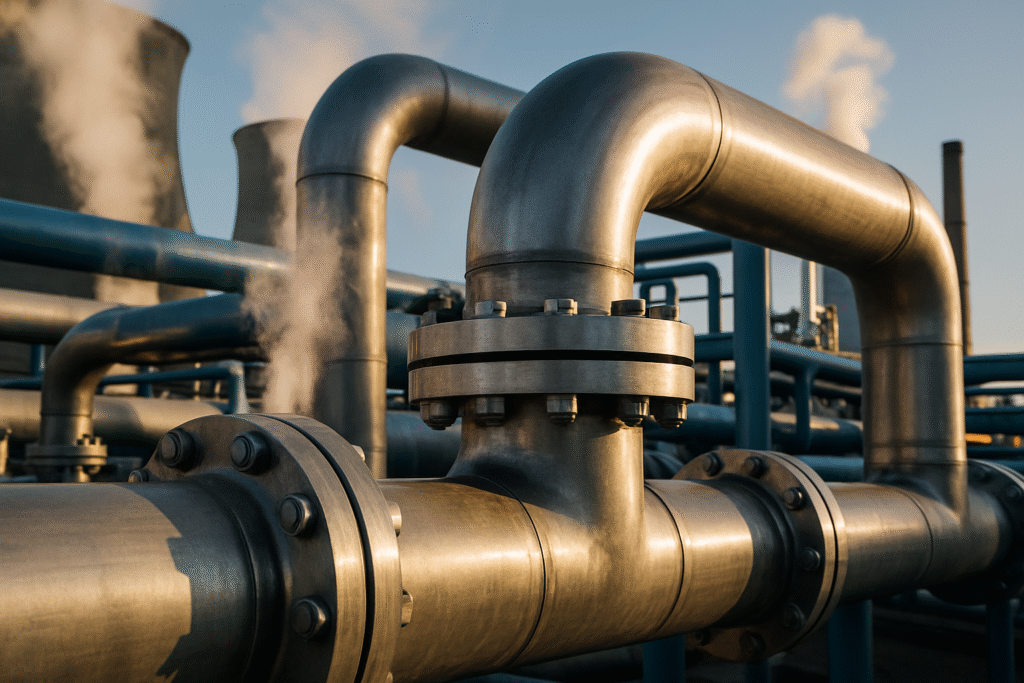
ステンレス鋼管フランジ市場、72億ドルに達する見通し 2030: 隠れた利点, 種類, 用途, と選び方
グランドビューリサーチによると (2024), 世界の工業用フランジ市場は次のように評価されました。 $5.8 億で 2023 に達すると予測されています $7.2 10億まで 2030. That growth explains why the stainless steel pipe flange has become a strategic procurement item for EPC contractors, プラントエンジニア, and industrial distributors seeking corrosion resistance, 圧力の完全性, そして長寿命.
石油の購入者向け & ガス, 石油化学, 力, 海洋, そして水処理, the hidden advantages of stainless steel pipe flange selection often appear in lifecycle cost rather than initial purchase price. したがって, understanding flange materials, 圧力クラス, 標準, and application-specific uses is essential before you choose a pipe flange for critical service.
Industrial Demand for Stainless Steel Pipe Flange Is Rising Across Global Projects
IBISWorldによると (2024), アジア太平洋地域が占める割合は超過 45% 世界のフランジ生産量の, 中国が最大の製造国である. 結果として, procurement teams increasingly source from qualified Chinese manufacturers that combine scale, トレーサビリティ, および輸出コンプライアンス.
統計局によると (2024), 石油・ガス産業が約 35% 世界のフランジ消費量の. さらに, refinery upgrades, LNG基地, オフショアプラットフォーム, and pipeline rehabilitation projects continue to drive demand for forged and machined stainless flanges in ASTM and ASME grades.
Market expansion also reflects stricter operating conditions. 腐食, 塩化物への曝露, サワーサービス, 熱サイクル, and pressure pulsation all push end users toward stainless, デュプレックス, ニッケル合金, and other engineered flange materials.
モルドール情報局によると (2024), industrial process equipment investment in emerging markets continues to rise alongside chemical, 脱塩, and energy infrastructure spending. その結果, procurement managers now evaluate flanges not only by unit cost, but also by compliance, 冶金, 配送の信頼性.
この環境では, stainless steel pipe flange sourcing has become a technical buying process. Buyers want dimensional accuracy, EN 10204 3.1 ドキュメント, PMI機能, 静水圧または空気圧試験のサポート, and full conformity to ASME B16.5, ASME B16.47, DIN, JIS, ゴスト, とEN 1092 要件.
ASME specifies the dimensional and pressure-temperature framework that underpins most industrial flange systems, especially in North America and export projects. You can review core requirements directly at ASME.org, which remains an essential reference for engineering validation.
SASA FLANGE operates in this exact procurement space. と ISO 9001:2015 および PED 2014/68/EU 認証, 同社はステンレス鋼フランジを供給しています, 炭素鋼フランジ, 合金フランジ, and pipe fittings for demanding industrial services in more than 50 国.
さらに, SASA FLANGE manufactures in 304, 316, 316l, 904l, 2205, 2507, A105, A182, インコネル, モネル, ハステロイ, とチタン. 高度な CNC 加工と包括的な品質テストに裏付けられています, it supports custom sizes from 1/2" 60まで" for global project and MRO requirements.
B2Bバイヤー向け, this matters because late-stage flange failure can be expensive. マーケットリサーチの将来によると (2024), maintenance and replacement costs in industrial piping systems can consume a significant share of total plant operating expenditure, particularly in corrosive processing environments.
デヴィッド・ヒューズ役, 上級配管エンジニア, 州: “フランジは単なるコネクタではありません; それは圧力境界です, a maintenance interface, and a reliability decision.” That perspective explains why experienced buyers compare material grade, フェーシング仕上げ, ボルト締め荷重, and gasket compatibility before issuing a purchase order.
When procurement teams evaluate experienced manufacturers, they also look for application knowledge. 一般的なトレーダーとは対照的に, technically competent producers can recommend whether a weld neck, スリップオン, 盲目, ねじ切りされた, ソケット溶接, ラップジョイント, or reducing flange is the correct choice for pressure class, schedule number, and service media.
Stainless Steel Pipe Flange Hidden Advantages, 種類, および技術的な選択要素
The most intriguing aspect of a stainless steel pipe flange is not simply corrosion resistance. Its hidden advantages include lower contamination risk, better appearance retention, reliable cleanability, strong mechanical performance, and reduced maintenance frequency in wet or aggressive environments.
According to ASTM and ASME material practices, forged stainless flanges commonly use ASTM A182 F304などのグレード, F304L, F316, F316L, F321, F347, and duplex variants where specified. These grades support a wide range of temperature and corrosion conditions, although exact selection depends on media composition, 圧力クラス, and welding procedure requirements.
腐食サービスに関する NACE ガイダンスによる, chloride stress corrosion cracking and sulfide-related damage remain central risks in plant metallurgy decisions (ネイス, 2023). したがって, 316/316l, 904l, 2205, または 2507 may outperform 304 in seawater, 酸っぱい, or chloride-bearing applications.
博士として. エレナ・マルコビッチ, 材料科学者, 州: “The right stainless flange grade is chosen by environment, not habit; モリブデン, nickel balance, and duplex structure can dramatically improve field life.” That is why experienced engineers compare not only price, but pitting resistance, 溶接性, and crevice corrosion behavior.
For most industrial buyers, the main flange types include the following.
- Weld neck flange for high-pressure and high-temperature service with superior stress distribution.
- Slip on flange for moderate service where easier alignment and lower initial cost are priorities.
- Blind flange for system isolation, メンテナンスによるシャットダウン, そして圧力試験.
- 小穴用ソケットウェルドフランジ, 高圧システム.
- Threaded flange for non-welded connections in low to medium pressure service.
- Lap joint flange for systems requiring frequent dismantling and alignment flexibility.
- Reducing flange for transitions between larger and smaller piping sizes.
Each type serves different uses. 例えば, a weld neck stainless steel pipe flange suits thermal cycling and severe service, while a threaded pipe flange may fit utility lines where field welding is restricted.
The decision matrix usually starts with five variables.
- 材料グレードなど 304, 316l, 904l, 2205, または 2507.
- Pressure-temperature class such as Class 150, 300, 600, 900, 1500, または 2500.
- Pipe schedule compatibility such as SCH 10, SCH 40, SCH 80, またはXS.
- RFなどのフェーシングタイプ, FF, RTJ, 舌と溝, あるいは男性と女性.
- Applicable code such as ASME B16.5, ASME B16.47, DIN, またはEN 1092.
によると ASME B16.5, フランジ寸法, 公差, 掘削, フェーシング, and pressure classes must be controlled to ensure interchangeability and sealing integrity (ASME, 2020). したがって, dimensional conformity is not optional; it directly affects gasket compression, ボルト応力, 漏れ性能.
ASTM A182 governs many forged or rolled alloy and stainless steel pipe flange materials for high-temperature service (ASTM, 2023). その間, ASTM A240 often applies to plate products that may feed some flange or fitting manufacturing routes, especially for flat or fabricated components.
Procurement managers often ask whether 304 または 316 is better. 実際に, 304 offers excellent general corrosion resistance and cost efficiency, while 316/316L adds molybdenum for stronger resistance in chloride-containing environments and many chemical services.
しかし, the hidden advantages of duplex grades deserve equal attention. 二重 2205 combines higher strength with improved resistance to chloride pitting and stress corrosion cracking, そしてスーパーデュプレックス 2507 provides even greater corrosion performance for offshore, 脱塩, and marine process systems.
オフショア システムに関する DNV ガイダンスによると, material selection strongly influences lifecycle integrity where chloride loading, 振動, and cyclic operating conditions are high (DNV, 2023). したがって, a lower-cost flange can become the more expensive option if corrosion allowance, replacement labor, and downtime are considered.
で SASA FLANGE, buyers can source stainless steel pipe flange products in multiple grades and configurations through its product portfolio. The company supports forged flanges and related fittings, 肘も含めて, ティー, 減速機, そしてキャップ, which helps EPC and distributor customers consolidate supply chains.
Lead time and consistency also shape buying decisions. According to industry procurement benchmarks summarized by IBISWorld (2024), delayed mechanical components can disrupt construction schedules and increase indirect project cost by multiples of the original component value.
そのため, engineers should request these documents during technical review.
- 材料試験証明書 EN 10204 3.1.
- Heat number traceability and positive material identification.
- 寸法検査記録.
- NDE or supplementary test reports if required.
- PED, 広告 2000, or project-specific compliance statements.
These requirements are especially important when buying stainless steel flanges and fittings for regulated systems. さらに, where sour service or corrosive media are present, buyers should align purchase specifications with NACE MR0175 or project metallurgy rules.
ASME, ASTM, DIN, and EN Standards That Define Stainless Steel Pipe Flange Compliance
Standards compliance separates commodity supply from project-grade supply. 工業用配管において, the flange must match not only the pipe size, but also the code basis, 圧力クラス, 材料規格, 対面ジオメトリ, および検査要件.
The most frequently referenced standards include ASME B16.5 NPS向け 1/2 を通して 24 そして ASME B16.47 より大きな直径用. ヨーロッパのプロジェクトでは, EN 1092 often governs pressure classes, 寸法, and drilling patterns, while DIN legacy references may still appear in older facilities.
ASTM 規格は材料化学と機械的特性を定義します. For stainless steel pipe flange manufacturing, ASTM A182 is especially relevant for forged grades, そして ASTM A240 may apply for plate-based materials used in associated components.
ISO品質管理原則に基づく, manufacturing control and traceability reduce variation and support repeatable conformance in industrial components (ISO, 2015). その結果, ISO 9001:2015 certification remains a meaningful screening criterion for procurement teams.
The following comparison helps engineers align common standards.
- ASME B16.5: flange dimensions and pressure-temperature ratings for common industrial sizes.
- ASME B16.47: large diameter flange dimensions for major pipeline and plant systems.
- ASME B16.9: dimensions for butt weld fittings such as elbows and reducers.
- ASTM A182: forged or rolled alloy and stainless steel flange material requirements.
- EN 1092: European flange dimensions and PN classifications.
- NACE MR0175: 厳しいサービス環境のための重要なガイダンス.
Pressure class and pressure rating are often misunderstood. クラス 150 stainless steel pipe flange does not mean 150 psi in all conditions, because allowable pressure decreases as temperature rises, and exact values depend on material group and code tables.
Facing finish also deserves attention. Raised face flanges remain standard in many process lines, while ring type joint flanges are preferred for higher pressure and more critical sealing applications.
画像代替テキストの推奨: stainless steel pipe flange dimensions and ASME standard forged flange inspection. This visual should show dimensional verification, flange facings, and CNC-machined sealing surfaces in a clean industrial setting.
SASA FLANGE ~を通じてコンプライアンスの信頼を強化します ISO 9001:2015, PED 2014/68/EU, とAD 2000 資格. For export-oriented buyers, those certifications support qualification for projects that demand documented quality management and pressure equipment conformity.
さらに, the company manufactures to ANSI B16.5, ANSI B16.47, ASME B16.9, DIN, JIS, ゴスト, とEN 1092. That range is useful for contractors managing mixed-specification projects, brownfield replacements, or multinational plant expansions.
As Mark Feldman, 産業市場アナリスト, 州: “In flange procurement, nonconforming dimensions create hidden cost faster than material price ever saves.” したがって, buyers should verify drilling patterns, bore dimensions, セレーション仕上げ, and facing type against approved drawings and standards before shipment.
For projects requiring special inspection, buyers can also request hardness testing, PMI, ferrite checks where applicable, および第三者証人検査. These steps are common in offshore, 化学薬品, 発電, and marine contracts where failure risk is high.
画像代替テキストの推奨: stainless steel pipe flange manufacturing with CNC machining, PMIテスト, and export packing for industrial piping systems. This image should communicate quality assurance and factory-direct production capability.
適切なオイル用ステンレス鋼管フランジの選び方, ガス, 化学薬品, 力, および海洋サービス
To choose the correct stainless steel pipe flange, engineers should start with service conditions rather than catalog preference. メディア構成, 動作温度, pressure transients, maintenance philosophy, and corrosion allowance all affect the final specification.
石油およびガスシステム用, 316/316l, デュプレックス 2205, そしてスーパーデュプレックス 2507 often appear where chlorides, 海水, or aggressive fluids are present. 統計局によると (2024), セクターは約を表します 35% 世界のフランジ消費量の, so oil and gas specifications strongly shape market demand.
石油化学・化学プラントにおいて, buyers should evaluate corrosion by acid, caustic, solvent, and chloride exposure. 結果として, 904l, ニッケル合金, or higher-performance stainless grades may be justified despite higher upfront cost.
Power generation introduces another challenge: 熱疲労. High-temperature systems may require material grades and flange types that better handle expansion, 循環ロード, and steam service, especially in superheated or high-pressure circuits.
Marine and shipbuilding applications demand strong resistance to salt spray, seawater contamination, and galvanic interaction. したがって, 316l, 2205, または 2507 often provide stronger lifecycle economics than standard 304 in deck, バラスト, 脱塩, and cooling-water service.
Water treatment and desalination projects add constant chloride exposure and cleaning cycles. これらのシステムでは, the hidden advantages of molybdenum-bearing and duplex stainless flanges become especially important for long-term sealing reliability.
Engineers can use this practical selection checklist.
- Confirm service media, 塩化物濃度, pH, and operating temperature range.
- Match flange type to process duty, メンテナンスアクセス, and welding preference.
- Verify pressure class against design pressure and code temperature derating.
- Align bore and schedule with mating pipe to avoid flow disruption.
- Specify facing type based on gasket style and leakage tolerance.
- Request test certificates, トレーサビリティ, and required compliance documents.
- Review packaging and export protection for stainless surface quality.
Dimension questions are equally important. あ 4 インチステンレス鋼管フランジ, 例えば, may differ by ASME class, スケジュールボア, 対面スタイル, and drilling pattern, so a nominal size alone is never enough for quotation or production.
Price should be evaluated carefully. Stainless steel pipe flange price varies by alloy content, 鍛造ルート, 加工の複雑さ, テスト範囲, そして量, and freight can materially influence landed cost for urgent project deliveries.
Custom manufacturing can reduce these risks. を通して 直接の技術相談, SASA FLANGE supports custom sizes from 1/2" 60インチまで, multiple material grades, and project-driven machining requirements for EPC, 卸売業者, and OEM buyers.
That capability is valuable when standard catalog options do not match project drawings. 例えば, reducing flanges, nonstandard bores, 特殊な表面仕上げ, or mixed packages of flanges and fittings can simplify procurement and shorten coordination cycles.
SASA FLANGE also serves buyers needing elbows, ティー, 減速機, and caps in matched metallurgy. This integrated supply approach helps maintain consistency across complete piping packages for construction and maintenance projects.
When buyers compare suppliers, they should review these commercial points as closely as technical points.
- Minimum order quantity and lot flexibility.
- Production capacity and realistic lead times.
- Export experience and packaging standards.
- Third-party inspection support.
- After-sales response for documentation and claims.
For projects requiring certified stainless steel flanges and fittings, 一緒に働く SASA FLANGE can reduce technical ambiguity. Its mix of material range, 標準の適用範囲, and inspection capability supports both distributor resale and end-user project procurement.
Future Outlook for Stainless Steel Pipe Flange Buyers and Strategic Procurement Recommendations
グランドビューリサーチによると (2024), 産業用フランジ市場は、 $5.8 億で 2023 に $7.2 10億まで 2030. That trajectory signals sustained demand from energy transition projects, 水インフラ, LNG, 化学処理, and industrial maintenance programs.
IBISWorldによると (2024), Asia-Pacific already contributes more than 45% 世界のフランジ生産量の. したがって, buyers who build structured sourcing relationships in the region can improve cost competitiveness while still maintaining quality, コンプライアンス, and delivery control.
しかし, strategic sourcing should not focus on price alone. 対照的に, the strongest procurement outcomes come from balancing metallurgy, standards conformity, document quality, inventory planning, and supplier communication.
Three recommendations stand out for B2B buyers. 初め, standardize approved material and flange specifications by service category to reduce engineering rework and quote variability.
2番, prequalify suppliers with ISO 9001:2015, PED, and traceability capability before the urgent project phase begins. 三番目, consolidate flanges and fittings where possible to reduce logistics complexity, document gaps, and mismatch risk across the piping package.
Digital procurement is also changing how industrial buyers evaluate suppliers. Buyers increasingly expect quick quotation turnaround, dimensional clarity, material substitutions only with approval, and full document support before shipment release.
結果として, suppliers that combine technical depth with responsive communication will gain share. For companies planning current or upcoming projects in stainless, デュプレックス, ニッケル合金, or mixed-material piping systems, early engagement with experienced manufacturers such as SASA FLANGE can improve specification accuracy and total project efficiency.
よくある質問
ステンレス鋼フランジは何に使用されますか?
●パイプの接続にはステンレス製のフランジが使用されます, バルブ, パンプス, 耐食性が必要なシステムの圧力機器など, 洗浄性, and secure disassembly for maintenance.
●統計局によると (2024), 石油・ガス産業だけで約 35% 世界のフランジ消費量の, which shows how essential flange connections are in critical process infrastructure.
●Common uses include chemical transfer lines, 海洋配管, 蒸気システム, food and beverage process lines, marine services, and water treatment plants where carbon steel may corrode too quickly.
●Engineers typically choose a stainless steel pipe flange when media, 温度, hygiene requirements, or lifecycle economics justify a premium material over painted or galvanized alternatives.
●For projects requiring traceable materials and standards compliance, のような確立されたメーカーと協力する SASA FLANGE helps ensure dimensional accuracy, EN 10204 3.1 ドキュメント, and reliable quality control.
違いは何ですか 304 そして 316 ステンレス鋼管フランジ材質?
●The main difference is that 316 および 316L にはモリブデンが含まれています, which improves resistance to chlorides, many chemicals, and aggressive process conditions compared with 304 と304L.
●ASTM A182 commonly covers both F304/F304L and F316/F316L forged flange grades, and engineers often specify 316L for marine, 沿岸, and chemical duties where pitting resistance is more important.
●NACE ガイダンスによると (2023), chloride-bearing environments require careful material selection because localized corrosion can accelerate quickly in unsuitable grades.
●実務的には, 304 is often the economical choice for general industrial service, while 316L is preferred for seawater splash zones, process chemicals, and more corrosive cleaning cycles.
●For buyers comparing lifecycle value rather than unit price, requesting technical guidance from SASA FLANGE can help match grade selection to actual operating conditions.
ステンレス製フランジの主な種類は何ですか?
●最も一般的なステンレス鋼フランジのタイプは溶接ネックです。, スリップオン, 盲目, ソケット溶接, ねじ切りされた, ラップジョイント, フランジの縮小, and each type serves a different pressure, メンテナンス, or fabrication need.
●ASME B16.5 defines the dimensional framework for many of these flange types across common pressure classes such as Class 150, 300, 600, 900, 1500, そして 2500.
●Weld neck flanges are preferred for high-pressure and high-temperature service, while slip on flanges are often selected for easier fabrication and lower initial cost in moderate conditions.
●Blind flanges isolate lines for testing or maintenance, threaded flanges avoid welding in some services, and reducing flanges simplify transitions between different pipe sizes.
●When specifying a flange type, engineers should also confirm facing style, ボアスケジュール, ガスケットの互換性, and code basis before purchase.
How are stainless steel flange dimensions determined?
●Stainless steel flange dimensions are determined by the governing standard, 呼びパイプサイズ, 圧力クラス, 対面タイプ, and pipe schedule rather than by nominal size alone.
●例えば, ある 4 inch stainless steel pipe flange built to ASME B16.5 クラス 150 has different thickness, bolt-hole pattern, and bore dimensions than a 4 インチクラス 600 フランジ.
●EN 1092 and DIN systems use different dimensional conventions and pressure designations, so buyers must confirm whether the project requires ASME, EN, DIN, JIS, or another standard.
●Dimension errors can create gasket seating problems, ボルトのズレ, and expensive field delays, which is why inspection reports and approved drawings are important for project supply.
●For replacement or custom applications, などのメーカー SASA FLANGE can help verify exact dimensions before production begins.
気温は何度になるでしょうか 304 stainless steel withstand in flange applications?
●304 stainless steel can withstand elevated temperatures in many services, but exact allowable conditions depend on code rules, 圧力クラス, メディア, and whether continuous or cyclic exposure is involved.
●ASME pressure-temperature ratings, not generic internet values, should be used to evaluate whether a 304 stainless steel pipe flange is suitable for a given operating condition.
●In higher-temperature systems, engineers may consider stabilized or high-temperature grades such as 321, 347, or other specified materials when sensitization, スケーリング, or creep-related concerns exist.
●博士として. エレナ・マルコビッチ, 材料科学者, メモ: “Temperature selection must include both oxidation resistance and what the process fluid does to the metal over time.”
●The safest recommendation is to review design temperature against ASME and ASTM material tables before ordering, especially for steam, 炉, or thermal cycling service.
How do buyers choose between stainless steel flanges and fittings from different suppliers?
●Buyers should compare suppliers on technical compliance, manufacturing capability, ドキュメントの品質, 配送の信頼性, and total landed cost rather than on piece price alone.
●グランドビューリサーチによると (2024), 産業用フランジ市場は次の規模に達すると予想されます $7.2 10億まで 2030, so supplier competition is strong but quality variation remains significant.
●ステンレス鋼製フランジおよび継手用, engineers should request ISO 9001:2015 資格, EN 10204 3.1 証明書, traceability records, 寸法検査, and confirmation of standards such as ASME B16.5, ASME B16.47, そして ASME B16.9.
●Suppliers that can provide both flanges and related elbows, ティー, 減速機, and caps in matching metallurgy often reduce procurement complexity and mismatch risk across a project package.
●For critical industrial orders, などの老舗メーカー SASA FLANGE offer an advantage through broad material coverage, 輸出経験, and project-oriented technical support.
関連投稿

オリフィスフランジの定義, 詳細と ASME B16.36 フランジの概要: 市場データ, 選択ガイドとコンプライアンスに関する洞察
世界の工業用フランジ市場は次のように評価されました。 $5.8 十億…

ブラックディスポフランジ市場ガイド: 材料, 3.5″ 互換性, キッチン シンク フランジの B2B 調達データ
キッチン設備の購入者として黒色の使い捨てフランジの需要が高まっています…