
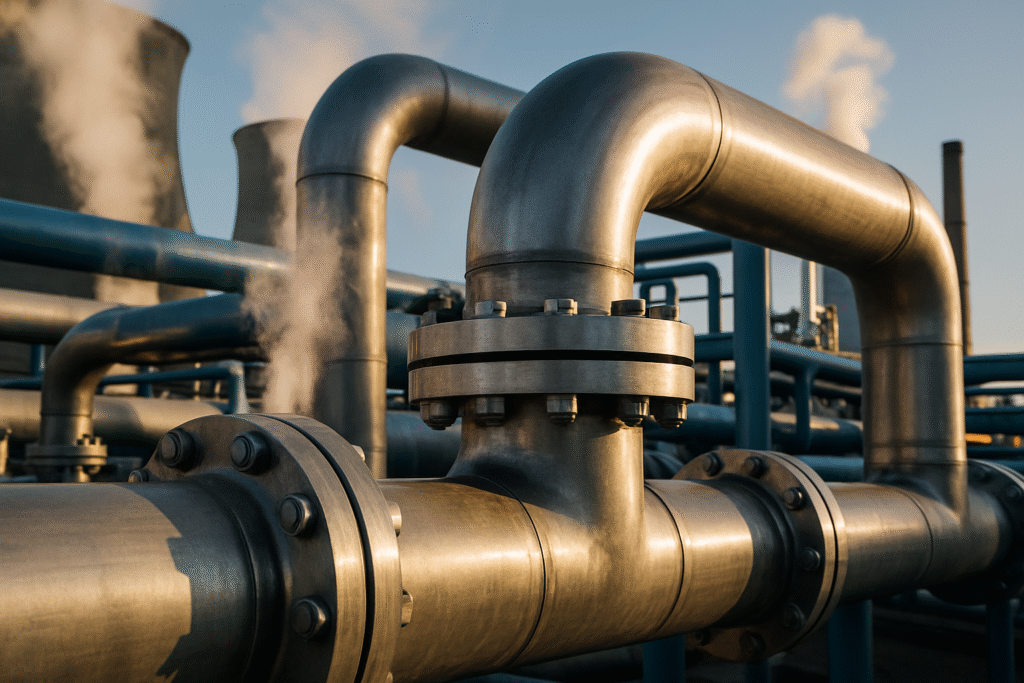
Рынок фланцев для труб из нержавеющей стали достигнет $7,2 млрд. 2030: Скрытые преимущества, Типы, Использование, и как выбрать
По данным исследования Grand View (2024), мировой рынок промышленных фланцев оценивался в $5.8 миллиард в 2023 и, по прогнозам, достигнет $7.2 миллиард на 2030. That growth explains why the stainless steel pipe flange has become a strategic procurement item for EPC contractors, инженеры завода, and industrial distributors seeking corrosion resistance, целостность давления, и длительный срок службы.
For buyers in Oil & Газ, нефтехимический, власть, морской, и очистка воды, the hidden advantages of stainless steel pipe flange selection often appear in lifecycle cost rather than initial purchase price. Поэтому, understanding flange materials, классы давления, стандарты, and application-specific uses is essential before you choose a pipe flange for critical service.
Industrial Demand for Stainless Steel Pipe Flange Is Rising Across Global Projects
По данным IBISWorld (2024), На долю Азиатско-Тихоокеанского региона приходится более 45% мирового производства фланцев, при этом Китай является крупнейшим производителем. Как результат, procurement teams increasingly source from qualified Chinese manufacturers that combine scale, прослеживаемость, и соблюдение экспортных требований.
По данным Статистики (2024), на долю нефтегазовой отрасли приходится около 35% мирового потребления фланцев. Более того, модернизация нефтеперерабатывающего завода, Терминалы СПГ, морские платформы, and pipeline rehabilitation projects continue to drive demand for forged and machined stainless flanges in ASTM and ASME grades.
Market expansion also reflects stricter operating conditions. Коррозия, воздействие хлоридов, кислое обслуживание, термоциклирование, and pressure pulsation all push end users toward stainless, дуплекс, никелевый сплав, and other engineered flange materials.
По данным Мордорской разведки (2024), industrial process equipment investment in emerging markets continues to rise alongside chemical, опреснение, and energy infrastructure spending. Следовательно, procurement managers now evaluate flanges not only by unit cost, but also by compliance, металлургия, и надежность доставки.
В этой среде, stainless steel pipe flange sourcing has become a technical buying process. Buyers want dimensional accuracy, EN 10204 3.1 документация, Возможности PMI, hydrostatic or pneumatic test support, and full conformity to ASME B16.5, ASME B16.47, DIN, JIS, ГОСТ, и RU 1092 требования.
ASME specifies the dimensional and pressure-temperature framework that underpins most industrial flange systems, especially in North America and export projects. You can review core requirements directly at ASME.org, which remains an essential reference for engineering validation.
SASA FLANGE operates in this exact procurement space. С ISO 9001:2015 и сертификаты PED 2014/68/ЕС., компания поставляет фланцы из нержавеющей стали, фланцы из углеродистой стали, фланцы из сплава, and pipe fittings for demanding industrial services in more than 50 страны.
Кроме того, SASA FLANGE производит в 304, 316, 316л, 904л, 2205, 2507, А105, А182, Инконель, Монель, Хастеллой, и Титан. Благодаря передовой обработке с ЧПУ и всестороннему тестированию качества., it supports custom sizes from 1/2" до 60" for global project and MRO requirements.
Для B2B-покупателей, this matters because late-stage flange failure can be expensive. По данным Market Research Future (2024), maintenance and replacement costs in industrial piping systems can consume a significant share of total plant operating expenditure, particularly in corrosive processing environments.
Как Дэвид Хьюз, Старший инженер по трубопроводам, государства: «A flange is never just a connector; это граница давления, a maintenance interface, and a reliability decision.» That perspective explains why experienced buyers compare material grade, облицовочная отделка, нагрузка на болты, and gasket compatibility before issuing a purchase order.
When procurement teams evaluate experienced manufacturers, they also look for application knowledge. В отличие от обычных трейдеров, technically competent producers can recommend whether a weld neck, надеть, слепой, резьбовой, раструбная сварка, коленный сустав, or reducing flange is the correct choice for pressure class, schedule number, and service media.
Stainless Steel Pipe Flange Hidden Advantages, Типы, и технические факторы выбора
The most intriguing aspect of a stainless steel pipe flange is not simply corrosion resistance. Its hidden advantages include lower contamination risk, better appearance retention, reliable cleanability, strong mechanical performance, and reduced maintenance frequency in wet or aggressive environments.
According to ASTM and ASME material practices, forged stainless flanges commonly use ASTM A182 такие марки, как F304, F304L, Ф316, F316L, Ф321, Ф347, and duplex variants where specified. These grades support a wide range of temperature and corrosion conditions, although exact selection depends on media composition, класс давления, and welding procedure requirements.
В соответствии с руководством NACE по работе в коррозионно-активных средах., chloride stress corrosion cracking and sulfide-related damage remain central risks in plant metallurgy decisions (КДЕС, 2023). Поэтому, 316/316л, 904л, 2205, или 2507 may outperform 304 в морской воде, кислый, or chloride-bearing applications.
Как доктор. Елена Маркович, Материаловед, государства: «The right stainless flange grade is chosen by environment, не привычка; молибден, nickel balance, and duplex structure can dramatically improve field life.» That is why experienced engineers compare not only price, but pitting resistance, свариваемость, and crevice corrosion behavior.
For most industrial buyers, the main flange types include the following.
- Weld neck flange for high-pressure and high-temperature service with superior stress distribution.
- Slip on flange for moderate service where easier alignment and lower initial cost are priorities.
- Blind flange for system isolation, maintenance shutdowns, и испытания под давлением.
- Фланец под приварку враструб для малого диаметра, системы высокого давления.
- Threaded flange for non-welded connections in low to medium pressure service.
- Фланец с нахлесточным соединением для систем, требующих частого демонтажа и гибкости выравнивания..
- Reducing flange for transitions between larger and smaller piping sizes.
Each type serves different uses. Например, a weld neck stainless steel pipe flange suits thermal cycling and severe service, while a threaded pipe flange may fit utility lines where field welding is restricted.
The decision matrix usually starts with five variables.
- Марка материала, такая как 304, 316л, 904л, 2205, или 2507.
- Pressure-temperature class such as Class 150, 300, 600, 900, 1500, или 2500.
- Pipe schedule compatibility such as SCH 10, СЧ 40, СЧ 80, or XS.
- Тип облицовки типа RF, ФФ, РТЖ, язычок и паз, или мужчина и женщина.
- Applicable code such as ASME B16.5, ASME B16.47, DIN, или RU 1092.
В соответствии с ASME B16.5, размеры фланца, допуски, бурение, облицовка, and pressure classes must be controlled to ensure interchangeability and sealing integrity (ASME, 2020). Поэтому, dimensional conformity is not optional; it directly affects gasket compression, напряжение болта, and leak performance.
ASTM A182 governs many forged or rolled alloy and stainless steel pipe flange materials for high-temperature service (ASTM, 2023). Тем временем, ASTM A240 often applies to plate products that may feed some flange or fitting manufacturing routes, especially for flat or fabricated components.
Procurement managers often ask whether 304 или 316 is better. На практике, 304 offers excellent general corrosion resistance and cost efficiency, while 316/316L adds molybdenum for stronger resistance in chloride-containing environments and many chemical services.
Однако, the hidden advantages of duplex grades deserve equal attention. Дуплекс 2205 combines higher strength with improved resistance to chloride pitting and stress corrosion cracking, и супер дуплекс 2507 provides even greater corrosion performance for offshore, опреснение, and marine process systems.
Согласно руководству DNV для морских систем, material selection strongly influences lifecycle integrity where chloride loading, вибрация, and cyclic operating conditions are high (ДНВ, 2023). Поэтому, a lower-cost flange can become the more expensive option if corrosion allowance, replacement labor, and downtime are considered.
В SASA FLANGE, buyers can source stainless steel pipe flange products in multiple grades and configurations through its product portfolio. The company supports forged flanges and related fittings, включая локти, тройники, редукторы, и шапки, which helps EPC and distributor customers consolidate supply chains.
Lead time and consistency also shape buying decisions. According to industry procurement benchmarks summarized by IBISWorld (2024), delayed mechanical components can disrupt construction schedules and increase indirect project cost by multiples of the original component value.
По этой причине, engineers should request these documents during technical review.
- Сертификаты испытаний материалов EN 10204 3.1.
- Heat number traceability and positive material identification.
- Протоколы контроля размеров.
- NDE or supplementary test reports if required.
- ПЭД, ОБЪЯВЛЕНИЕ 2000, or project-specific compliance statements.
These requirements are especially important when buying stainless steel flanges and fittings for regulated systems. Более того, where sour service or corrosive media are present, buyers should align purchase specifications with NACE MR0175 or project metallurgy rules.
ASME, ASTM, DIN, and EN Standards That Define Stainless Steel Pipe Flange Compliance
Standards compliance separates commodity supply from project-grade supply. В промышленных трубопроводах, the flange must match not only the pipe size, but also the code basis, класс давления, стандарт материала, облицовочная геометрия, и требования к проверке.
The most frequently referenced standards include ASME B16.5 для АПЛ 1/2 через 24 и ASME B16.47 для больших диаметров. В европейских проектах, EN 1092 often governs pressure classes, размеры, and drilling patterns, while DIN legacy references may still appear in older facilities.
Стандарты ASTM определяют химический состав и механические свойства материалов.. For stainless steel pipe flange manufacturing, ASTM A182 is especially relevant for forged grades, и ASTM A240 may apply for plate-based materials used in associated components.
В соответствии с принципами управления качеством ISO, manufacturing control and traceability reduce variation and support repeatable conformance in industrial components (ISO, 2015). Следовательно, ISO 9001:2015 certification remains a meaningful screening criterion for procurement teams.
The following comparison helps engineers align common standards.
- ASME B16.5: flange dimensions and pressure-temperature ratings for common industrial sizes.
- ASME B16.47: large diameter flange dimensions for major pipeline and plant systems.
- ASME B16.9: dimensions for butt weld fittings such as elbows and reducers.
- ASTM A182: forged or rolled alloy and stainless steel flange material requirements.
- EN 1092: European flange dimensions and PN classifications.
- NACE MR0175: руководство по материалам для кислых условий эксплуатации.
Pressure class and pressure rating are often misunderstood. Класс 150 stainless steel pipe flange does not mean 150 psi in all conditions, because allowable pressure decreases as temperature rises, and exact values depend on material group and code tables.
Facing finish also deserves attention. Raised face flanges remain standard in many process lines, while ring type joint flanges are preferred for higher pressure and more critical sealing applications.
Рекомендация для альтернативного текста изображения: stainless steel pipe flange dimensions and ASME standard forged flange inspection. This visual should show dimensional verification, flange facings, and CNC-machined sealing surfaces in a clean industrial setting.
SASA FLANGE strengthens compliance confidence through ISO 9001:2015, ПЭД 2014/68/ЕС, и АД 2000 реквизиты для входа. For export-oriented buyers, those certifications support qualification for projects that demand documented quality management and pressure equipment conformity.
Кроме того, the company manufactures to ANSI B16.5, АНСИ Б16.47, ASME B16.9, DIN, JIS, ГОСТ, и RU 1092. That range is useful for contractors managing mixed-specification projects, brownfield replacements, or multinational plant expansions.
As Mark Feldman, Аналитик промышленного рынка, государства: «In flange procurement, nonconforming dimensions create hidden cost faster than material price ever saves.» Поэтому, buyers should verify drilling patterns, bore dimensions, serration finish, and facing type against approved drawings and standards before shipment.
For projects requiring special inspection, buyers can also request hardness testing, PMI, ferrite checks where applicable, and third-party witness inspection. These steps are common in offshore, химический, производство электроэнергии, and marine contracts where failure risk is high.
Рекомендация для альтернативного текста изображения: stainless steel pipe flange manufacturing with CNC machining, Тестирование PMI, and export packing for industrial piping systems. This image should communicate quality assurance and factory-direct production capability.
Как правильно выбрать фланец для трубы из нержавеющей стали для масла, Газ, Химическая, Власть, и морская служба
To choose the correct stainless steel pipe flange, engineers should start with service conditions rather than catalog preference. Медиа-композиция, рабочая температура, pressure transients, maintenance philosophy, and corrosion allowance all affect the final specification.
Для нефтегазовых систем, 316/316л, дуплекс 2205, и супер дуплекс 2507 often appear where chlorides, морская вода, or aggressive fluids are present. По данным Статистики (2024), сектор представляет около 35% мирового потребления фланцев, so oil and gas specifications strongly shape market demand.
На нефтехимических и химических предприятиях, buyers should evaluate corrosion by acid, caustic, solvent, and chloride exposure. Как результат, 904л, никелевые сплавы, or higher-performance stainless grades may be justified despite higher upfront cost.
Power generation introduces another challenge: термическая усталость. High-temperature systems may require material grades and flange types that better handle expansion, циклическая загрузка, and steam service, especially in superheated or high-pressure circuits.
Marine and shipbuilding applications demand strong resistance to salt spray, seawater contamination, and galvanic interaction. Поэтому, 316л, 2205, или 2507 often provide stronger lifecycle economics than standard 304 in deck, балласт, опреснение, and cooling-water service.
Water treatment and desalination projects add constant chloride exposure and cleaning cycles. В этих системах, the hidden advantages of molybdenum-bearing and duplex stainless flanges become especially important for long-term sealing reliability.
Engineers can use this practical selection checklist.
- Confirm service media, уровень хлоридов, рН, and operating temperature range.
- Match flange type to process duty, доступ для обслуживания, and welding preference.
- Verify pressure class against design pressure and code temperature derating.
- Align bore and schedule with mating pipe to avoid flow disruption.
- Specify facing type based on gasket style and leakage tolerance.
- Request test certificates, прослеживаемость, и необходимые документы соответствия.
- Review packaging and export protection for stainless surface quality.
Dimension questions are equally important. А 4 дюймовый фланец трубы из нержавеющей стали, например, may differ by ASME class, график скучный, стиль облицовки, and drilling pattern, so a nominal size alone is never enough for quotation or production.
Цену следует оценивать внимательно. Stainless steel pipe flange price varies by alloy content, маршрут ковки, сложность обработки, объем тестирования, и количество, and freight can materially influence landed cost for urgent project deliveries.
Custom manufacturing can reduce these risks. Через прямая техническая консультация, SASA FLANGE supports custom sizes from 1/2" до 60", multiple material grades, and project-driven machining requirements for EPC, распределитель, and OEM buyers.
That capability is valuable when standard catalog options do not match project drawings. Например, reducing flanges, nonstandard bores, специальная отделка облицовки, or mixed packages of flanges and fittings can simplify procurement and shorten coordination cycles.
SASA FLANGE also serves buyers needing elbows, тройники, редукторы, and caps in matched metallurgy. This integrated supply approach helps maintain consistency across complete piping packages for construction and maintenance projects.
When buyers compare suppliers, they should review these commercial points as closely as technical points.
- Minimum order quantity and lot flexibility.
- Production capacity and realistic lead times.
- Export experience and packaging standards.
- Third-party inspection support.
- After-sales response for documentation and claims.
For projects requiring certified stainless steel flanges and fittings, работаю с SASA FLANGE can reduce technical ambiguity. Its mix of material range, покрытие стандартов, and inspection capability supports both distributor resale and end-user project procurement.
Future Outlook for Stainless Steel Pipe Flange Buyers and Strategic Procurement Recommendations
По данным исследования Grand View (2024), Ожидается, что рынок промышленных фланцев вырастет с $5.8 миллиард в 2023 к $7.2 миллиард на 2030. That trajectory signals sustained demand from energy transition projects, водная инфраструктура, СПГ, химическая обработка, and industrial maintenance programs.
По данным IBISWorld (2024), Азиатско-Тихоокеанский регион уже вносит более 45% мирового производства фланцев. Поэтому, buyers who build structured sourcing relationships in the region can improve cost competitiveness while still maintaining quality, согласие, and delivery control.
Однако, strategic sourcing should not focus on price alone. В отличие, the strongest procurement outcomes come from balancing metallurgy, standards conformity, document quality, inventory planning, and supplier communication.
Three recommendations stand out for B2B buyers. Первый, standardize approved material and flange specifications by service category to reduce engineering rework and quote variability.
Второй, prequalify suppliers with ISO 9001:2015, ПЭД, and traceability capability before the urgent project phase begins. Третий, consolidate flanges and fittings where possible to reduce logistics complexity, document gaps, and mismatch risk across the piping package.
Digital procurement is also changing how industrial buyers evaluate suppliers. Buyers increasingly expect quick quotation turnaround, dimensional clarity, material substitutions only with approval, and full document support before shipment release.
Как результат, suppliers that combine technical depth with responsive communication will gain share. For companies planning current or upcoming projects in stainless, дуплекс, никелевый сплав, or mixed-material piping systems, early engagement with experienced manufacturers such as SASA FLANGE can improve specification accuracy and total project efficiency.
Часто задаваемые вопросы
Для чего используются фланцы из нержавеющей стали?
●Фланцы из нержавеющей стали используются для соединения труб., клапаны, насосы, and pressure equipment in systems that require corrosion resistance, очищаемость, and secure disassembly for maintenance.
●По данным Статистики (2024), только на долю нефтегазовой отрасли приходится около 35% мирового потребления фланцев, which shows how essential flange connections are in critical process infrastructure.
●Common uses include chemical transfer lines, морской трубопровод, паровые системы, food and beverage process lines, marine services, and water treatment plants where carbon steel may corrode too quickly.
●Engineers typically choose a stainless steel pipe flange when media, температура, hygiene requirements, or lifecycle economics justify a premium material over painted or galvanized alternatives.
●For projects requiring traceable materials and standards compliance, работа с известными производителями, такими как SASA FLANGE helps ensure dimensional accuracy, EN 10204 3.1 документация, and reliable quality control.
В чем разница между 304 и 316 Материалы фланцев труб из нержавеющей стали?
●The main difference is that 316 и 316L содержат молибден, which improves resistance to chlorides, many chemicals, and aggressive process conditions compared with 304 и 304Л.
●ASTM A182 commonly covers both F304/F304L and F316/F316L forged flange grades, and engineers often specify 316L for marine, прибрежный, and chemical duties where pitting resistance is more important.
●Согласно руководству NACE (2023), chloride-bearing environments require careful material selection because localized corrosion can accelerate quickly in unsuitable grades.
●В практическом плане, 304 is often the economical choice for general industrial service, while 316L is preferred for seawater splash zones, process chemicals, and more corrosive cleaning cycles.
●For buyers comparing lifecycle value rather than unit price, requesting technical guidance from SASA FLANGE can help match grade selection to actual operating conditions.
Каковы основные типы фланцев из нержавеющей стали??
●Наиболее распространенными типами фланцев из нержавеющей стали являются приварные шейки., надеть, слепой, раструбная сварка, резьбовой, коленный сустав, и редукционные фланцы, and each type serves a different pressure, обслуживание, or fabrication need.
●ASME B16.5 defines the dimensional framework for many of these flange types across common pressure classes such as Class 150, 300, 600, 900, 1500, и 2500.
●Weld neck flanges are preferred for high-pressure and high-temperature service, while slip on flanges are often selected for easier fabrication and lower initial cost in moderate conditions.
●Blind flanges isolate lines for testing or maintenance, threaded flanges avoid welding in some services, and reducing flanges simplify transitions between different pipe sizes.
●When specifying a flange type, engineers should also confirm facing style, график бурения, совместимость прокладок, and code basis before purchase.
How are stainless steel flange dimensions determined?
●Stainless steel flange dimensions are determined by the governing standard, nominal pipe size, класс давления, тип облицовки, and pipe schedule rather than by nominal size alone.
●Например, а 4 inch stainless steel pipe flange built to ASME B16.5 Сорт 150 has different thickness, bolt-hole pattern, and bore dimensions than a 4 дюймовый класс 600 фланец.
●EN 1092 and DIN systems use different dimensional conventions and pressure designations, so buyers must confirm whether the project requires ASME, EN, DIN, JIS, or another standard.
●Dimension errors can create gasket seating problems, смещение болта, and expensive field delays, which is why inspection reports and approved drawings are important for project supply.
●For replacement or custom applications, производители, такие как SASA FLANGE can help verify exact dimensions before production begins.
Какая температура будет 304 stainless steel withstand in flange applications?
●304 stainless steel can withstand elevated temperatures in many services, but exact allowable conditions depend on code rules, класс давления, СМИ, and whether continuous or cyclic exposure is involved.
●ASME pressure-temperature ratings, not generic internet values, should be used to evaluate whether a 304 stainless steel pipe flange is suitable for a given operating condition.
●In higher-temperature systems, engineers may consider stabilized or high-temperature grades such as 321, 347, or other specified materials when sensitization, масштабирование, or creep-related concerns exist.
●Как доктор. Елена Маркович, Материаловед, примечания: «Temperature selection must include both oxidation resistance and what the process fluid does to the metal over time.»
●The safest recommendation is to review design temperature against ASME and ASTM material tables before ordering, especially for steam, печь, or thermal cycling service.
How do buyers choose between stainless steel flanges and fittings from different suppliers?
●Buyers should compare suppliers on technical compliance, manufacturing capability, качество документации, надежность доставки, and total landed cost rather than on piece price alone.
●По данным исследования Grand View (2024), Ожидается, что рынок промышленных фланцев достигнет $7.2 миллиард на 2030, so supplier competition is strong but quality variation remains significant.
●Для фланцев и фитингов из нержавеющей стали, engineers should request ISO 9001:2015 реквизиты для входа, EN 10204 3.1 сертификаты, traceability records, проверка размеров, and confirmation of standards such as ASME B16.5, ASME B16.47, и ASME B16.9.
●Suppliers that can provide both flanges and related elbows, тройники, редукторы, and caps in matching metallurgy often reduce procurement complexity and mismatch risk across a project package.
●For critical industrial orders, признанные производители, такие как SASA FLANGE offer an advantage through broad material coverage, опыт экспорта, and project-oriented technical support.
Связанные Посты
Отделка торцевой поверхности фланца: Объяснение концентрических и спиральных зубцов
Концентрические и спиральные зубцы представляют собой обработанную поверхность фланца.…
Дуплекс 2205 по сравнению с фланцами 316L: Какой материал выбрать?
Быстрый ответ: Дуплекс 2205 flanges are usually the stronger candidate…

Определение фланца с диафрагмой, Подробности и обзор фланцев ASME B16.36: Рыночные данные, Руководство по выбору и анализ соответствия требованиям
Мировой рынок промышленных фланцев оценивался в $5.8 миллиард…

Руководство по рынку черных сливных фланцев: Материалы, 3.5″ Совместимость, и данные о поставщиках B2B для фланцев для кухонной мойки
Спрос на черные фланцы для утилизации растет благодаря покупателям кухонной техники…