
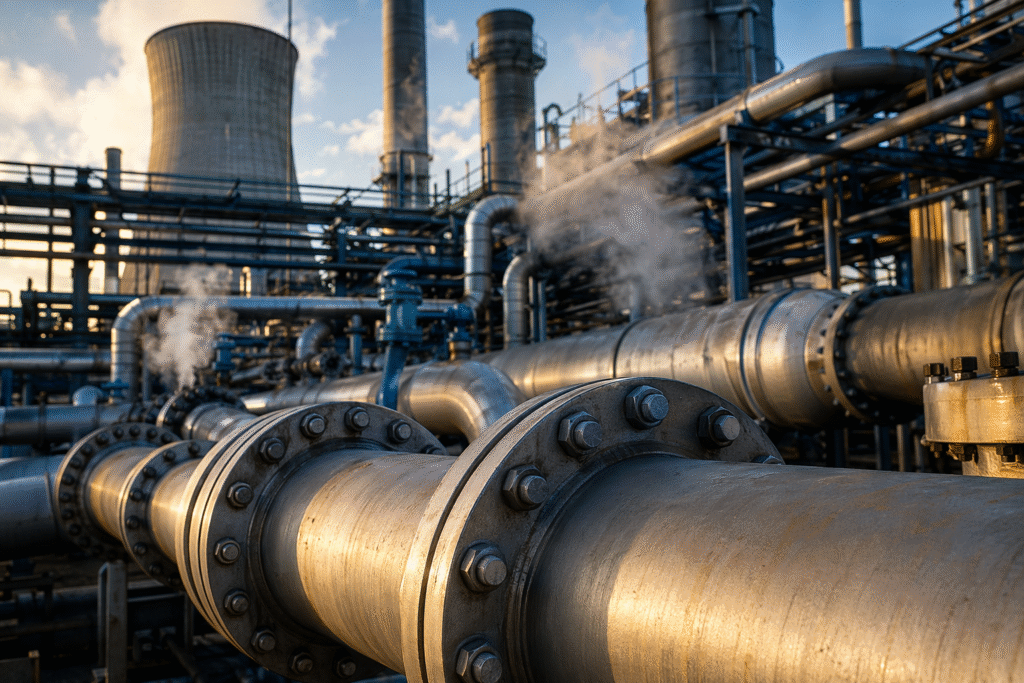
オイル用ステンレス鋼フランジ, ガス, 化学および海洋サービス
産業事業者が耐食性を優先するため、ステンレス鋼管フランジの需要は増加し続けています, ライフサイクル価値, とコンプライアンス. グランドビューリサーチによると (2024), 世界の工業用フランジ市場は次のように評価されました。 $5.8 億で 2023 に達すると予測されています $7.2 10億まで 2030.
That growth reflects a simple procurement reality. Buyers need flanges that perform under pressure, 温度サイクル, and aggressive media while meeting ASME, ASTM, DIN, およびEN要件.
エンジニア向け, 買い手, and EPC teams, this guide explains the intriguing and often hidden advantages of stainless steel pipe flange products. It also compares types, 用途, 材料, and selection criteria so you can choose flanges with greater confidence.
Why Stainless Steel Pipe Flange Demand Keeps Expanding in Global Industry
IBISWorldによると (2024), アジア太平洋地域が占める割合は超過 45% 世界のフランジ生産量の, 中国が最大の製造国である. したがって, sourcing strategies now focus not only on price, but also on traceability, 規格準拠, 加工の一貫性.
統計局によると (2024), 石油・ガス産業が約 35% 世界のフランジ消費量の. さらに, 石油化学, 発電, 海洋, and water treatment projects continue to specify stainless grades where corrosion risk and maintenance costs are high.
実際に, stainless steel pipe flange products deliver value far beyond initial material cost. They reduce unplanned shutdowns, support longer inspection intervals, and improve sealing reliability in piping systems.
結果として, procurement teams increasingly compare total installed cost rather than only unit price. That approach often favors 304, 316, 316l, デュプレックス, and high-alloy flange solutions over lower-grade alternatives.
モルドール情報局によると (2024), global process industry investment remains strong in refinery upgrades, LNG infrastructure, and industrial water systems. Each of these sectors relies on standardized flange connections for maintenance access, modular assembly, 安全な圧力封じ込め.
さらに, pressure class requirements continue to shape buying decisions. 多くのプロジェクトで, buyers specify Class 150, 300, 600, 900, 1500, または 2500 flanges under ASME B16.5, while larger diameters may require ASME B16.47 Series A or B.
The hidden advantages of stainless steel pipe flange systems often appear after years of operation. These include better resistance to pitting, improved cleanability, 汚染リスクの低減, and stronger long-term performance in chloride-bearing environments.
博士として. ヘレン・モリス, 材料エンジニアおよび腐食コンサルタント, 州: “ライフサイクルコスト分析において, ステンレスフランジは、多くの場合、ダウンタイム時にコーティングされた炭素鋼よりも優れたパフォーマンスを発揮します, メンテナンスの手間, メディアの互換性も十分に考慮されています。” この洞察は、漏れが安全性と生産性の損失を引き起こす連続プロセスプラントに特に当てはまります。.
SASA FLANGE ステンレス鋼フランジでこの需要に応えます, 炭素鋼フランジ, 合金フランジ, とパイプ継手 304, 316, 316l, 904l, 2205, 2507, A105, A182, インコネル, モネル, ハステロイ, とチタン. と ISO 9001:2015 および PED 2014/68/EU 認証, 同社は、工場からの直接供給と国際的に認められた品質文書を求めるバイヤーをサポートしています。.
グローバルサプライヤーを比較するチーム向け, 製造能力は冶金と同じくらい重要です. 高度な CNC 加工と包括的な品質テストに裏付けられています, SASA FLANGE からのカスタム サイズをサポートします 1/2 インチから 60 オイル用インチ & ガス, 石油化学, 力, 海兵隊, および建設プロジェクト.
さらに, 経験豊富なサプライヤーはフランジ面を位置合わせできます, 圧力定格, RFQ 段階の初期のプロジェクト要件を含む検査文書. これにより、規格の不一致によって生じる遅延が軽減されます, 不完全なMTC, または寸法公差が不明瞭.
購入者は、次の重要性が高まっていることにも注意する必要があります。 EN 10204 3.1 ヨーロッパへの輸出のための文書化と PED トレーサビリティ. 対照的に, upstream oil and gas projects may place more weight on sour service compatibility, material heat traceability, そして NACE MR0175 considerations.
ステンレス鋼管フランジの種類, 材料, と実際のサービスの隠れた利点
A stainless steel pipe flange is not a single commodity item. It is a pressure-retaining component whose geometry, 直面している, 冶金, and dimensional standard directly affect system integrity.
マーケットリサーチの将来によると (2024), industrial demand for corrosion-resistant alloys is growing steadily due to stricter reliability and safety requirements. したがって, stainless flanges and fittings remain a strategic category in both greenfield and brownfield investments.
ジェームズ・ポーター役, 上級配管エンジニア, 州: “The best flange selection is rarely the cheapest piece price. It is the component that matches pressure class, 腐食代, ガスケットの設計, and maintenance reality.”
From a technical standpoint, buyers typically evaluate stainless steel pipe flange options by alloy family, 圧力クラス, 対面タイプ, bore compatibility, そして接続を終了します. さらに, they compare whether welding, ねじ切り, or lap-joint assembly best suits the piping layout.
The most common stainless grades include 304 そして 316 families. しかし, severe service may require 316L, 904l, 2205 デュプレックス, 2507 スーパーデュプレックス, or nickel alloys when chlorides, 酸, or elevated temperatures are present.
- 304 ステンレス鋼フランジ: good general corrosion resistance and attractive cost-performance balance.
- 316 and 316L stainless steel flange: improved resistance to chlorides and chemical media because of molybdenum content.
- 904Lフランジ: suited to highly corrosive environments such as sulfuric acid service.
- 2205 二重フランジ: higher strength and better chloride stress corrosion cracking resistance than austenitic grades.
- 2507 スーパーデュプレックスフランジ: preferred for offshore, 海水, 積極的な化学サービス.
Material selection should also consider welding performance. Low-carbon grades such as 304L and 316L reduce sensitization risk after welding, which matters in fabricated spool systems and field installations.
In terms of geometry, several flange types dominate industrial piping. Each one addresses a different balance of pressure integrity, 設置の利便性, and total system cost.
- ウェルドネックフランジ: best for severe pressure and temperature duty because the tapered hub reduces stress concentration.
- スリップオンフランジ: easier to align and often lower in fabrication cost, but generally less robust than weld neck in cyclic service.
- ブラインドフランジ: used to close line ends, ノズル, または将来の拡張ポイント.
- ソケットウェルドフランジ: common in small-bore, 高圧システム.
- ねじ付きフランジ: 溶接が現実的でない場合に役立ちます, especially in low-pressure utility service.
- 重ね継手フランジ: suitable for systems needing frequent dismantling and alignment flexibility.
によると ASME B16.5, 圧力と温度の定格は材料グループとクラスによって異なります. したがって, クラス 300 stainless steel pipe flange does not simply mean one universal pressure value across all temperatures.
Facing configuration is equally important. 盛り上がった顔, 平らな面, and ring type joint designs must match the mating flange and gasket system to avoid leakage or flange damage.
例えば, RF flanges are widely used in process piping. RTJフランジ, しかし, are preferred in higher-pressure and critical service because the metal ring gasket can provide superior sealing under demanding conditions.
Procurement managers often ask about hidden advantages beyond corrosion resistance. One advantage is lower contamination risk in clean service, including food processing, pharmaceutical utility systems, and high-purity water lines.
Another advantage is durability under washdown and marine exposure. Stainless steel pipe flange products also maintain appearance better than coated carbon steel, which supports visible installations and corrosive outdoor service.
According to ASTM and ASME material specifications, forged stainless flanges are often supplied under ASTM A182 with dimensions governed by ASME B16.5 または ASME B16.47. 加えて, butt weld fittings commonly follow ASME B16.9, which helps buyers align elbows, ティー, 減速機, フランジの材質とスケジュールを備えたキャップ.
仕様を明確にするため, 購入者は注文する前にこれらのパラメータを確認する必要があります:
- 材料グレードと二重認証, 316/316Lなど.
- 標準および圧力クラス, のような ASME B16.5 クラス 300.
- フェーシングタイプ, RFなどの, FF, またはRTJ.
- パイプのスケジュールとボアの一致, SCHなど 40 またはSCH 80.
- ガスケットの性能が重要となる表面仕上げとセレーション.
- PMIを含む検査要件, 水圧試験, 該当する場合は臨死体験または臨死体験.
- などのドキュメント EN 10204 3.1 MTCとヒートトレーサビリティ.
SASA FLANGE ANSI B16.5 に準拠して製造されたフランジとパイプ継手でこれらの仕様のニーズをサポートします。, ANSI B16.47, ASME B16.9, DIN, JIS, ゴスト, とEN 1092. ステンレス鋼のフランジと継手を評価している購入者は、次のサイトで製品範囲を確認できます。 製品ページ フランジの注文を完全な配管パッケージと調整します.
ISO ガイダンスおよび主要な EPC 調達慣行に準拠, 材料のトレーサビリティと寸法の一貫性により、現場での手戻り作業が大幅に削減されます. その結果, 鍛造を管理する経験豊富なメーカー, 機械加工, マーキング, および最終検査により、スケジュール上の明らかな利点が得られます.
ローラ・チェン役, 産業市場アナリスト, 州: “Procurement leaders increasingly favor suppliers that can deliver flanges, 肘, ティー, 減速機, and caps under one quality system because it simplifies inspection and vendor management.” That is especially useful on multi-site and export-driven projects.
ASME, ASTM, DIN, and EN Standards That Govern Stainless Steel Pipe Flange Quality
Standards are the backbone of reliable flange procurement. 彼らなしでは, buyers cannot verify dimensions, 圧力定格, 化学, テスト範囲, or interchangeability.
北米および多くの世界的なプロジェクト向け, ASME B16.5 NPS のパイプ フランジとフランジ付き継手をカバーします 1/2 を通して 24. ASME B16.47 より大きな直径をカバーします, 通常は NPS から 26 を通して 60, using Series A and Series B dimensions.
Material requirements commonly point to ASTM A182 鍛造または圧延合金およびステンレス鋼フランジ用. その間, stainless plate products used elsewhere in fabrication may reference ASTM A240 depending on form and application.
ヨーロッパのプロジェクトでは EN を指定することがよくあります 1092 flanges and PED compliance. したがって, exporters must understand not just dimensional differences, but also marking, 検査, and declaration requirements for the target market.
The following comparison helps procurement teams check compatibility quickly:
- ASME B16.5: 寸法, 掘削, 直面している, and pressure-temperature classes for common pipe flanges.
- ASME B16.47: large-diameter flanges with Series A and Series B options.
- ASTM A182: chemical and mechanical requirements for forged stainless and alloy flange materials.
- ASME B16.9: 工場製鍛突合せ溶接継手, 肘も含めて, ティー, 減速機, そしてキャップ.
- EN 1092: European flange dimensions and pressure designations such as PN16, PN25, とPN40.
- DIN規格: still referenced in many legacy systems and regional specifications.
- NACE MR0175 / ISO 15156: critical for sour service material compatibility.
According to ASME and ASTM published standards, dimensional compliance alone is not enough. Buyers must also confirm chemistry, 引張特性, hardness where relevant, and manufacturing route.
さらに, standards do not eliminate the need for application engineering. A technically compliant flange can still be a poor choice if the grade, 顔, ガスケット, ボルト締め, and operating environment are mismatched.
オフショア用, 化学薬品, and sour service systems, compliance can extend beyond baseline dimensions. ノルウェー, DNV, PED, and client-specific inspection test plans may also apply depending on the project and region.
That is why qualified manufacturers maintain documented quality systems. と ISO 9001:2015, PED 2014/68/EU, とAD 2000 認証, SASA FLANGE helps customers align production, ドキュメント, and export requirements under one controlled process.
Traceability is another major procurement issue. Heat number marking, 確実な物質識別, そして EN 10204 3.1 certificates support auditability from raw material to final shipment.
加えて, machining quality affects field fit-up. ボルト穴の位置合わせ, flange thickness tolerance, フェーシング仕上げ, and bore concentricity all influence installation efficiency and leak performance.
Procurement professionals should request these documents when sourcing stainless steel pipe flange products:
- 材料試験証明書へ EN 10204 3.1.
- 寸法検査報告書.
- PMI report for alloy verification when required.
- Pressure class and standard confirmation.
- Surface treatment or pickling/passivation records where specified.
- PED declarations for EU-bound equipment where applicable.
For teams needing more supplier background, SASA FLANGE 会社情報 provides manufacturing context, supported grades, and service coverage. This is particularly useful when prequalifying flange manufacturers and long-term flange vendor partners.
Buyers should also use authoritative references directly when finalizing specifications. 役人 ASME ウェブサイト remains an essential source for current code and standard information.
油用ステンレス鋼管フランジ製品の選び方, ガス, 化学薬品, 力, および海洋サービス
The right flange selection starts with service conditions, カタログの利便性ではない. プレッシャー, 温度, 中くらい, 腐食の危険性, 洗浄方法, and inspection requirements should drive the decision.
石油およびガスシステム用, corrosion allowance and sealing integrity are usually the first priorities. 統計局によると (2024), このセクターは約を表します 35% 世界のフランジ消費量の, so specification discipline is critical.
In upstream and midstream service, buyers often choose weld neck or RTJ configurations for pressure containment and vibration resistance. 二相および超二相グレードは海水にも好まれる場合があります, オフショア, および塩化物を多く含む培地.
石油化学プラント内, メディアの互換性がより複雑になる. 酸, 塩化物, 溶剤への暴露, 温度が上昇すると、低コストの材料がすぐに検討対象から除外される可能性があります。.
これらのアプリケーション向け, エンジニアはよく 316L を比較します, 904l, 合金 20 代替案, プロセス流体に応じて、またはニッケル合金. 加えて, ガスケットの材質とボルトの冶金は、フランジアセンブリ全体の一部として検討する必要があります.
発電システムは温度を重視します, サイクリング, と接合の信頼性. したがって, 蒸気ではウェルドネックフランジと高圧クラスが一般的です, 凝縮水, および補助配管.
海洋および造船環境は別の課題を生み出す. 塩水噴霧, 湿度, 断続的な浸漬により、多くの購入者は 316L に向かうことになります。, 2205, または 2507 重要なラインと露出したアセンブリのグレード.
水処理システムは多くの場合、耐食性とメンテナンスの削減を優先します。. Stainless steel pipe flange products work well in desalination, ROスキッド, 化学薬品投与ライン, and sludge treatment packages.
When evaluating stainless steel pipe flange sizes, buyers should confirm more than nominal diameter. あ 4 インチステンレス鋼管フランジ, 例えば, still requires matching schedule, 直面している, 穴あけパターン, 圧力クラス.
Use this checklist when you choose flanges for a project:
- Define process medium, 塩化物濃度, 温度範囲, and pressure envelope.
- Match flange standard to project specification, のような ASME B16.5 またはEN 1092.
- 応力に基づいてフランジのタイプを選択する, メンテナンスの頻度, and welding access.
- Confirm material grade against corrosion and temperature requirements.
- Verify gasket compatibility and bolting material.
- Request traceability, テスト, and certificate package before production.
- Check lead time, 輸出梱包, and logistics support.
Price should be evaluated carefully. Stainless steel pipe flange price varies with alloy, 鍛造ルート, クラス, 直径, 加工の複雑さ, 及び検査範囲.
しかし, lower upfront cost can become expensive if fit-up issues, corrosion failure, or certificate gaps delay commissioning. 結果として, many EPC buyers shortlist suppliers that can offer both technical support and manufacturing control.
SASA FLANGE provides custom manufacturing for flanges and related fittings including elbows, ティー, 減速機, そしてキャップ. 給仕 50+ 石油を巡る国々 & ガス, 石油化学, 力, 海洋産業, the company helps clients consolidate sourcing while maintaining specification accuracy.
That supplier model is valuable when a project requires mixed materials such as 316L flanges, A182 forgings, duplex fittings, and special alloy components. It also reduces the coordination burden between multiple flange manufacturers and fitting vendors.
For projects involving stainless steel flange types, threaded options, or nonstandard dimensions, early technical review is recommended. Buyers can discuss project-specific requirements through SASA FLANGE before final RFQ release.
ステンレス鋼管フランジ調達の今後の見通しと戦略的な購買決定
Market indicators suggest continued growth for corrosion-resistant piping components. グランドビューリサーチによると (2024), フランジ市場は次の水準に達すると予測されています $7.2 10億まで 2030, これはインフラストラクチャとプロセスの信頼性への継続的な投資を示しています.
同時に, 買い手は文書化に関してより厳しい期待に直面することになる, 持続可能性, 供給の回復力. したがって, サプライヤーの認定にはデジタルトレーサビリティがますます含まれるようになる, 輸出コンプライアンス, 複数規格の製造能力.
もう 1 つの明らかな傾向はパッケージ調達です. 調達チームは、フランジを提供できる認定ベンダーが少ないことを好みます。, 突合せ溶接継手, および特別な材料を 1 つの監査システムの下で一緒に管理する.
このアプローチにより検査の複雑さが軽減され、スケジュールの予測可能性が向上します。. また、大規模プロジェクトにおける商業的活用の強化もサポートします。.
将来を見据えて, 二相ステンレスグレードと高性能ステンレスグレードは、塩化物を多く含むリスクの高いサービスでシェアを獲得するはずです. 対照的に, 標準 304 そして 316 一般産業ではファミリーが引き続き支配的になるだろう, 水, 工事, および適度な化学サービス.
購入者は、ライフサイクル エンジニアリングをより重視することも期待する必要があります。. Instead of asking only what flanges are for sale, leading teams now ask how the selected flange will perform after five or ten years in service.
戦略的に, procurement managers should do three things. 初め, standardize approved flange specifications by service class. 2番, prequalify suppliers that hold ISO 9001:2015 and PED-related capabilities. 三番目, align RFQs with exact pressure class, 直面している, 材料, および文書要件.
For companies building resilient supply chains, the best results usually come from technical clarity and stable supplier partnerships. When stainless steel pipe flange reliability, コンプライアンス, and competitive factory pricing all matter, a conversation with SASA FLANGE can help move projects from specification to shipment with less risk.
よくある質問
ステンレス鋼フランジは何に使用されますか?
●パイプの接続にはステンレス製のフランジが使用されます, バルブ, パンプス, and vessels in pressure systems where corrosion resistance and sealing reliability are critical.
●統計局によると (2024), 石油・ガス産業が約 35% 世界のフランジ消費量の, これは、高価値のプロセス インフラストラクチャにおいてフランジ付きジョイントがいかに重要であるかを示しています。.
●石油化学プラントで広く指定されています, 海洋システム, 発電所, 食品加工ライン, 水処理施設では、メンテナンスへのアクセスと標準化された組み立てが可能になるため、.
ステンレス鋼の管継手を製造していますか?
●はい, メーカーはエルボなどのステンレス鋼管継手を製造しています, ティー, 減速機, フランジ システムおよび溶接パイプ ネットワークで使用できるキャップ.
●ASME B16.9 工場で製造される鍛突合せ溶接継手の一般的な規格です, そして購入者は多くの場合、これらのコンポーネントを次のものと一致させます。 ASTM A182 材質の一貫性を保つステンレス鋼フランジ.
●フランジとフィッティングの調整された供給が必要なプロジェクト向け 304, 316, 2205, または 2507 成績, のような確立されたメーカーと協力する SASA FLANGE 調達と文書化の簡素化に役立ちます.
ステンレス鋼製のフランジは何ですか?
●一般的なステンレス鋼フランジにはウェルドネックが含まれています, スリップオン, 盲目, ソケット溶接, ねじ切りされた, などのグレードで作られた重ね継手の設計 304, 304l, 316, 316l, 904l, 2205, そして 2507.
●ASTM および ASME の慣例に基づく, 鍛造ステンレスフランジは頻繁に供給されています。 ASTM A182 そして寸法は ASME B16.5 または ASME B16.47 サイズに応じて.
●購入者は圧力クラスに基づいてフランジのタイプとグレードを選択する必要があります, 中くらい, 温度, RFなどの必要なフェーシング, FF, またはRTJ.
3種類のフランジとは何ですか?
●The three most commonly referenced flange types in general industrial discussions are weld neck, スリップオン, ブラインドフランジ.
●Weld neck flanges are preferred for severe pressure and temperature service, slip on flanges support easier alignment and lower fabrication cost, and blind flanges seal line ends or nozzle openings.
●For critical duty, engineers should verify ASME B16.5 クラス, フランジ面, and pipe schedule before selecting any of these standard types.
購入者はどのように選択しますか 304 そして 316 ステンレス鋼管フランジ材質?
●304 stainless steel pipe flange products are suitable for many general industrial services, その間 316 and 316L provide better resistance in chloride-bearing and chemical environments because of molybdenum content.
●According to corrosion engineering practice and common ASTM material selection guidance, 316L is often preferred where welding and reduced sensitization risk matter.
●When the service includes seawater, aggressive cleaning chemicals, or higher pitting risk, buyers should evaluate 316L, デュプレックス, or higher-alloy alternatives instead of defaulting to 304.
What documents should a flange manufacturer or flange vendor provide with stainless steel flanges?
●A qualified flange manufacturer should provide at least a material test certificate, dimensional inspection confirmation, ヒートトレーサビリティ, and standard designation such as ASME B16.5 またはEN 1092.
●輸出および規制対象プロジェクトの場合, EN 10204 3.1 ドキュメント, PED-related declarations, PMIレポート, and marking records may also be required depending on destination and service class.
●Buyers seeking reliable compliance should request the full documentation package before production release and confirm it matches project specifications line by line.
関連投稿

オリフィスフランジの定義, 詳細と ASME B16.36 フランジの概要: 市場データ, 選択ガイドとコンプライアンスに関する洞察
世界の工業用フランジ市場は次のように評価されました。 $5.8 十億…

ブラックディスポフランジ市場ガイド: 材料, 3.5″ 互換性, キッチン シンク フランジの B2B 調達データ
キッチン設備の購入者として黒色の使い捨てフランジの需要が高まっています…