
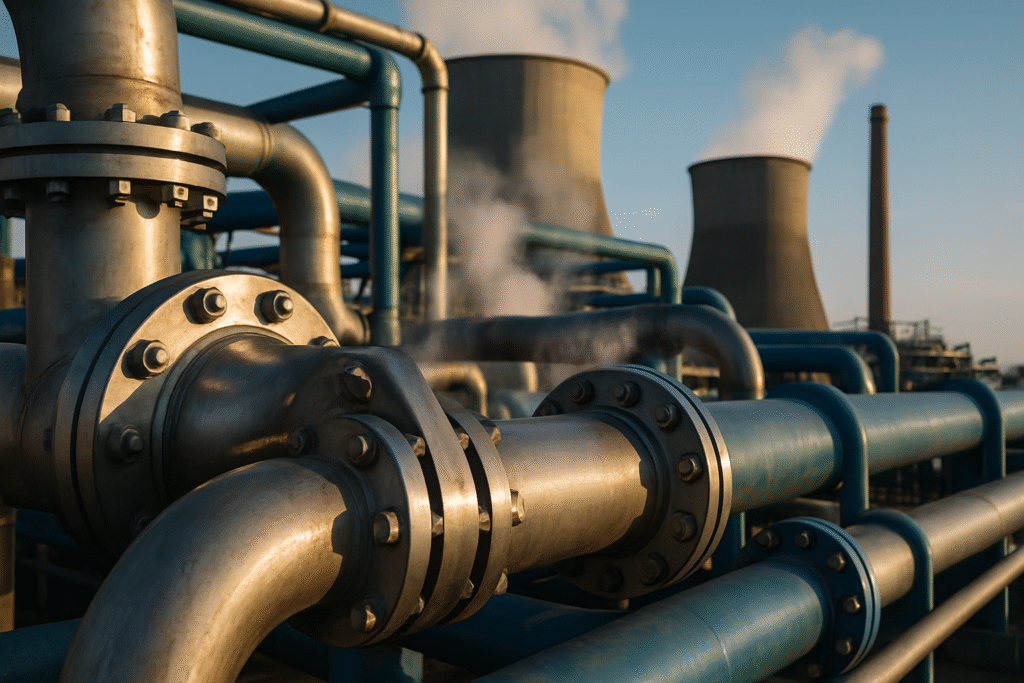
ステンレス鋼管フランジ市場は58億ドル: 隠れた利点, 種類, 用途, および最も一般的なフランジの選択方法
の ステンレス鋼管フランジ remains one of the most specified connection components in modern process piping. グランドビューリサーチによると (2024), 世界の工業用フランジ市場は次のように評価されました。 $5.8 億で 2023 に達すると予測されています $7.2 10億まで 2030, which highlights why engineers and buyers are paying closer attention to material grade, 圧力クラス, とコンプライアンス.
EPC請負業者向け, OEM, and plant procurement teams, the intriguing value of stainless steel is not just corrosion resistance. The hidden advantages include lower lifecycle cost, stronger hygiene performance, better weld integrity, and reliable service across oil and gas, 石油化学, 力, 海洋, および水処理システム.
Why the stainless steel pipe flange market keeps expanding
Demand for the stainless steel pipe flange continues to rise because critical industries need leak-tight joints that also resist corrosion, 振動, および熱サイクル. 統計局によると (2024), 石油・ガス産業が約 35% 世界のフランジ消費量の, which makes hydrocarbon processing a major driver of product specification.
Regional manufacturing strength also matters. IBISWorldによると (2024), アジア太平洋地域が占める割合は超過 45% 世界のフランジ生産量の, 中国が最大の製造国である, therefore buyers increasingly source from qualified Chinese factories that can combine scale with documentation.
That sourcing shift has changed buyer expectations. 今日, procurement managers want more than price. 彼らは望んでいます EN 10204 3.1 認証, 熱数トレーサビリティ, PMIサポート, 寸法検査, and conformance to ASME B16.5, ASME B16.47, DIN, JIS, ゴスト, とEN 1092 要件.
モルドール情報局によると (2024), broader industrial pipeline investments in energy, 脱塩, and chemical processing continue to support demand for stainless and alloy flanges worldwide. 並行して, stricter environmental and safety requirements are pushing end users toward higher-integrity materials such as 316L, デュプレックス 2205, そしてスーパーデュプレックス 2507.
As James Porter, 上級配管エンジニア, 州: “A flange is rarely a commodity when the service is critical, because material chemistry, フェーシング仕上げ, ボルト荷重, and standard compliance directly affect plant reliability.” That observation explains why technically informed buyers evaluate far more than nominal size.
SASA FLANGE operates in this environment as a factory-focused supplier serving Oil & ガス, 石油化学, 発電, 造船 & 海兵隊, 水処理, および建設部門. と ISO 9001:2015 および PED 2014/68/EU 認証, the company supports projects that require stainless steel flanges, 炭素鋼フランジ, 合金フランジ, とパイプ継手 304, 316, 316l, 904l, 2205, 2507, A105, A182, インコネル, モネル, ハステロイ, およびチタングレード.
Buyers comparing supply partners should also review manufacturing capability and communication speed. 高度な CNC 加工と包括的な品質テストに裏付けられています, SASA FLANGE supports custom sizes from 1/2" 60まで" 以上の分野で顧客にサービスを提供します 50 国.
一般的な取引モデルとは対照的に, factory-backed production typically improves control over machining tolerances, bevel quality, drilling accuracy, そして配送計画. 結果として, the total procurement risk can fall even when the unit price difference looks small at first glance.
ステンレス鋼製管フランジの種類, 隠れた利点, and technical selection factors
Understanding flange types is essential before comparing grades like 304, 316l, 904l, または両面印刷 2205. The most common flange selection errors happen when teams focus only on corrosion resistance and overlook pressure class, 接続方法, ガスケットの互換性, および動作温度.
によると ASME B16.5, dimensional and pressure-temperature requirements for flanges up to NPS 24 must align with defined classes and facing details (ASME, 2020). したがって, a technically correct specification always combines material standard, フランジ標準, 直面している, サイズ, スケジュール, そして評価.
博士として. エレナ・モリス, 材料科学者, 州: “The hidden advantages of stainless steel often appear after installation, because resistance to chloride attack, 汚染リスクの低減, and better long-term surface stability reduce maintenance events.” That is especially relevant in marine, 製薬, 食品グレードの, and high-purity water systems.
The most common stainless grades each fit different service windows. 学年 304 remains widely used for general corrosion resistance and balanced cost, その間 316 and 316L add molybdenum for improved pitting resistance in chloride-bearing environments.
For aggressive media or elevated reliability demands, エンジニアは 904L に移行することが多い, デュプレックス 2205, またはスーパーデュプレックス 2507. マーケットリサーチの将来によると (2024), demand for duplex stainless products is increasing in offshore and desalination projects because end users seek higher strength-to-weight performance and improved resistance to stress corrosion cracking.
- 溶接ネックフランジ: Preferred for high pressure and cyclic service because the tapered hub improves stress distribution.
- スリップオンフランジ: 経済的で位置合わせも簡単, however it is generally chosen for lower to moderate service severity.
- ソケット溶接フランジ: Used for small-bore, high-pressure systems where compact design is important.
- ねじ付きフランジ: Useful when welding is impractical, especially in certain maintenance or hazardous locations.
- ブラインドフランジ: Applied to close line ends, pressure vessel nozzles, または将来の拡張ポイント.
- ラップジョイントフランジ: Chosen where frequent dismantling is required and stub-end rotation improves bolt alignment.
The intriguing part of stainless flange selection is that performance often depends on the full assembly, not only the flange body. ガスケットの種類, ボルト材質, 表面仕上げ, and flange facing such as RF, FF, or RTJ all influence seal reliability.
によると ASTM A182, forged or rolled alloy and stainless steel pipe flanges must meet specified chemistry and mechanical property requirements for high-temperature service (ASTM, 2023). 実務的には, that means traceable forging quality remains just as important as selecting the correct alloy family.
Engineers should also compare material behavior by environment. 例えば, 304 performs well in many water and general industrial systems, but 316L typically performs better in coastal, 化学薬品, or chloride-bearing media. 二重 2205 offers higher strength and often allows wall thickness optimization in selected designs.
- 304/304l: 一般産業サービス, 食品加工, きれいな水, and moderate corrosion duty.
- 316/316l: Chemical lines, 海洋環境, seawater splash zones, and chloride exposure.
- 904l: Severe acid service and higher-corrosion process streams.
- 2205 二重: オフショアプラットフォーム, 脱塩, and high-strength corrosive service.
- 2507 スーパーデュプレックス: Extremely aggressive chloride and subsea conditions.
NACE の腐食管理ガイダンスに準拠, chloride stress corrosion cracking and pitting risk increase as process severity rises, therefore alloy choice should be verified against actual media composition and temperature (ネイス, 2023). This is why high-quality technical support matters during quotation review.
SASA FLANGE でフランジを製造します 304, 316, 904l, 2205, 2507 その他のプレミアムグレード, and it also supplies elbows, ティー, 減速機, and caps for complete piping packages. For project teams needing support on sizes, 圧力クラス, and custom machining, it is practical to start via https://sasaflange.com/contact-us/.
Beyond standard products, buyers often need drilled non-standard patterns, 特殊なフェーシング, or project-specific marking. That is where a factory with CNC machining, PMI inspection support, and coordinated documentation can shorten approval cycles.
ISO品質管理原則に基づく, standardized process control reduces variability and improves traceability in industrial manufacturing (ISO, 2015). その結果, suppliers with disciplined QC systems tend to perform better on repeatability, ドキュメント, and corrective action speed.
ASME, ASTM, DIN, EN, and PED compliance for industrial flange procurement
Compliance is the backbone of industrial flange procurement because dimensional mismatch or incorrect certification can delay an entire project. したがって, engineers usually begin with standard selection before they compare lead time or price.
北米および多くの世界的なプロジェクト向け, ASME B16.5 そして ASME B16.47 define key dimensional frameworks for flanges. Pipe fittings commonly align with ASME B16.9, while material requirements often reference ASTM A182 for forged stainless and alloy grades.
European and export projects frequently require EN 1092 and PED 2014/68/EU compliance. 加えて, DIN-based dimensions may still appear in brownfield facilities, especially where legacy equipment or regional design conventions remain in service.
- ASME B16.5: Flanges and flanged fittings up to NPS 24.
- ASME B16.47: Large-diameter steel flanges from NPS 26 NPSを通じて 60.
- ASME B16.9: 工場製鍛突合せ溶接継手.
- ASTM A182: Forged or rolled alloy and stainless flanges and forged fittings.
- EN 1092: European flange standard covering dimensions and pressure ratings.
- PED 2014/68/EU: EU市場に投入される圧力機器の規制枠組み.
For technical buyers, documentation must match the project class. Typical requirements include MTC EN 10204 3.1, 確実な物質識別, 硬さ試験, hydrostatic or pneumatic test references where applicable, ferrite control for certain weld procedures, and complete marking for traceability.
欧州委員会の PED フレームワークによると, pressure equipment manufacturers and component suppliers must demonstrate conformity through appropriate technical documentation and quality systems (PED, 2014). That is one reason certified suppliers hold a structural advantage in export-oriented projects.
Below is a practical comparison engineers often use during RFQ review.
- ASME projects: Focus on flange class, 直面している, ボアスケジュール, ASTM材料グレード, and MSS or ASME dimensional compatibility.
- EN/PED projects: Focus on EN dimensions, PED ドキュメント, CE-related conformity route, および材料のトレーサビリティ.
- Marine/offshore projects: Add DNV or NORSOK-related expectations depending on owner specification.
- Sour service projects: チェック NACE MR0175 compatibility where H2S exposure exists.
SASA FLANGE aligns with these procurement needs through ISO 9001:2015, PED 2014/68/EU, とAD 2000 資格. さらに, the company supports material and dimensional compliance across ANSI, ASME, DIN, JIS, ゴスト, とEN 1092 フレームワーク, which helps multinational EPC teams consolidate sourcing.
Buyers should also verify actual testing scope before placing a PO. Some projects require ultrasonic testing, 染料浸透試験, or third-party witness inspections, while others only require standard dimensional and material certification.
As Robert Klein, 産業市場アナリスト, 州: “The most common cause of flange procurement delays is not machining capacity but document mismatch between purchase order, プロジェクト仕様書, and inspection plan.” That comment reflects a daily reality in cross-border industrial sourcing.
For current standard ranges and manufacturing support, buyers can also review SASA FLANGE 製品の機能. That early review often prevents mistakes in class selection, bore schedule matching, and requested documentation level.
How to choose the most common flange for oil, ガス, 化学薬品, 力, および海洋サービス
Choosing the most common flange for a project starts with service conditions, カタログ優先ではない. Engineers should define media, 塩化物濃度, 設計圧力, 動作温度, 循環ロード, 腐食代, and maintenance frequency before selecting grade and flange type.
石油およびガスシステムにおいて, ネックフランジを溶接します ASTM A182 F316/F316L, デュプレックス 2205, or alloy materials often dominate critical lines because they handle stress concentration more effectively. 統計局によると (2024), oil and gas still represents about 35% 世界のフランジ消費量の, therefore this sector strongly influences global specification habits.
石油化学プラント内, 316L remains a common flange material where process fluids present moderate chloride or corrosive exposure. しかし, more severe acid, 酸っぱい, or chloride-rich service may require 904L, デュプレックス, モネル, ハステロイ, or other nickel-based alloys after corrosion review.
Power generation applications often prioritize pressure-temperature integrity and long-term reliability. したがって, engineers frequently compare stainless and alloy selections against steam conditions, 凝縮物の化学, and outage maintenance strategy.
Marine and shipbuilding environments impose constant corrosion pressure from salt-laden atmospheres. For these uses, 316L offers a practical baseline in many applications, while duplex grades provide higher strength and stronger resistance where conditions become more aggressive.
- 水処理用: Evaluate chloride concentration, 消毒化学, and risk of crevice corrosion.
- オフショア用: Verify pitting resistance, サワーサービスの互換性, and required owner approvals.
- 化学サービス用: Match the alloy to exact acid, アルカリ, and temperature conditions.
- For high-purity systems: Prioritize surface cleanliness, low contamination risk, and weld quality.
- For maintenance-intensive plants: Consider lap joint or threaded designs only where technically justified.
Practical flange selection should also include connection style and pipe schedule. あ 4 inch stainless steel pipe flange for Schedule 40S service may require different bore details than the same NPS size for Schedule 80S or XS service, so dimensional review is essential.
According to ASME engineering practice, misalignment between flange bore and connected pipe can increase turbulence and local stress. 結果として, even a correctly rated flange may perform poorly if boring or facing details are not controlled.
Cost evaluation should cover total installed cost rather than unit piece price alone. Stainless steel may cost more than carbon steel initially, yet it often reduces coating needs, replacement intervals, contamination risk, and unplanned downtime.
SASA FLANGE supports custom manufacturing, 規格外寸法を含む, 特殊な材料, and coordinated supply of matching fittings. For engineers needing project review on a stainless steel pipe flange package, direct communication through SASA FLANGE can simplify material and standard confirmation.
Buyers should ask suppliers six practical questions before final approval.
- Is the flange standard ASME B16.5, ASME B16.47, DIN, JIS, またはEN 1092?
- What is the exact material grade and corresponding ASTM or EN material specification?
- What pressure class or PN rating applies at operating temperature?
- What facing type is required, RFなどの, FF, RTJ, or tongue-and-groove?
- What documentation is included, のような EN 10204 3.1, PMI, および第三者検査?
- What is the realistic lead time for standard and custom sizes from 1/2" 60インチまで?
These questions appear simple, however they eliminate many avoidable supply issues. さらに, they help procurement teams compare quotations on a technically equivalent basis.
Future outlook, pricing pressure, and strategic sourcing recommendations
The stainless steel pipe flange market is likely to remain resilient because process industries continue to expand capacity and upgrade aging infrastructure. グランドビューリサーチによると (2024), the global industrial flange market is projected to grow from $5.8 億で 2023 に $7.2 10億まで 2030, which signals sustained medium-term demand.
同時に, competition will intensify around documentation, リードタイムの短縮, and higher-alloy capability. Buyers increasingly expect suppliers to support not only standard 304 and 316L flanges, でも904Lも, デュプレックス, スーパーデュプレックス, ニッケル合金, and complete fitting packages.
Digital procurement is also changing sourcing behavior. Engineers now compare suppliers based on downloadable technical data, certification readiness, fast quotation turnaround, and visible manufacturing competence rather than relying only on local distribution.
IBISWorldによると (2024), Asia-Pacific remains the dominant production base for flanges, and China leads manufacturing volume. したがって, strategic sourcing from certified Chinese producers can improve cost efficiency if quality control, communication, and documentation standards are consistently verified.
B2Bバイヤー向け, several recommendations stand out.
- Standardize approved flange classes, フェーシング, and documentation requirements before tender release.
- Qualify suppliers by certification scope, testing capability, and export project experience.
- Request material traceability and dimensional checks early, especially for custom or mixed-standard packages.
- ライフサイクル値の比較, not just ex-works price, when evaluating stainless versus lower-grade alternatives.
- Use a supplier capable of flanges and fittings together to reduce coordination risk.
多くのプロジェクトで, the most intriguing advantage is not hidden in the alloy alone but in the supply chain. A responsive manufacturer with ISO 9001:2015 and PED support can reduce technical clarification time, improve compliance confidence, and protect delivery schedules.
That is why many global buyers prefer working with manufacturers that combine broad material coverage, 高度なCNC加工, and export documentation discipline. When your next RFQ involves stainless steel flanges, 継手, またはカスタムディメンション, ~との技術的な議論 SASA FLANGE can help align specification, コンプライアンス, and commercial targets from the start.
よくある質問
どちらが良いですか 304 または 420 ステンレス鋼?
●学年 304 is better for most stainless steel pipe flange applications because it offers stronger corrosion resistance and is widely used under ASTM A182 そして ASTM A240 仕様.
●学年 420 provides higher hardness after heat treatment, but it is less suitable for corrosive piping duty and is uncommon for standard ASME B16.5 flange service.
●プロセス配管用, 海洋, 水処理, および化学システム, buyers should usually choose 304 or upgrade to 316L, and projects requiring verified compliance can be reviewed with established manufacturers like SASA FLANGE.
とは何ですか 4 types of stainless steel?
●The four main types of stainless steel are austenitic, フェライト系, マルテンサイト系, そして二重, and austenitic grades such as 304 そして 316 are the most common in industrial flange production.
●マーケットリサーチの将来によると (2024), duplex stainless demand is rising in offshore and desalination applications because it combines higher strength with improved corrosion resistance.
●フランジ選定について, engineers should match the stainless family to pressure, メディア, 塩化物含有量, and fabrication method before finalizing the purchase specification.
ステンレス鋼フランジは何に使用されますか?
●パイプの接続にはステンレス製のフランジが使用されます, バルブ, パンプス, and equipment in systems that require leak-tight joints, 耐食性, メンテナンスへのアクセスが容易になりました.
●統計局によると (2024), 石油とガスは約 35% 世界のフランジ消費量の, which shows how important flanged joints are in critical process industries.
●For projects involving chlorides, hygiene requirements, or demanding operating conditions, selecting the correct grade such as 304, 316l, or duplex and sourcing from qualified suppliers is essential.
3種類のフランジとは何ですか?
●最も一般的に参照される 3 つのフランジ タイプは溶接ネックです。, スリッポン, そして盲目, ねじ込まれていますが, ソケット溶接, 重ね継手フランジも広く使用されています.
●ASME B16.5 defines key dimensions and pressure classes for many of these flange types, which helps engineers maintain interchangeability and sealing performance.
●In high-pressure or cyclic service, weld neck designs are generally preferred, while procurement teams should confirm facing type, 材質グレード, and standard before ordering.
適切なステンレス鋼管フランジのサイズと圧力定格を選択するにはどうすればよいですか??
●The correct stainless steel pipe flange size depends on nominal pipe size, スケジュール, ボアマッチ, 直面している, and pressure class such as Class 150, 300, 600, or higher under ASME B16.5.
●According to ASME standards practice, dimensional compatibility between flange bore and connected pipe is essential to reduce stress concentration and flow disruption.
●のために 2 インチ, 4 インチ, and large-diameter applications alike, buyers should confirm size, クラス, スケジュール, and material together before placing a purchase order with suppliers such as SASA FLANGE.
ステンレス鋼管フランジの価格に影響を与えるもの?
●Stainless steel pipe flange price is influenced by alloy grade, サイズ, 圧力クラス, 鍛造ルート, 加工の複雑さ, テスト範囲, および次のような認定要件 EN 10204 3.1.
●グランドビューリサーチによると (2024), steady market growth and continued industrial demand support long-term purchasing activity, while higher-alloy grades like 904L and 2507 typically command significant premiums over 304.
●正確な価格を知るには, buyers should submit complete technical data including standard, 材料, サイズ, クラス, 直面している, 量, and inspection requirements so suppliers can quote on an equivalent basis.
関連投稿

オリフィスフランジの定義, 詳細と ASME B16.36 フランジの概要: 市場データ, 選択ガイドとコンプライアンスに関する洞察
世界の工業用フランジ市場は次のように評価されました。 $5.8 十億…

ブラックディスポフランジ市場ガイド: 材料, 3.5″ 互換性, キッチン シンク フランジの B2B 調達データ
キッチン設備の購入者として黒色の使い捨てフランジの需要が高まっています…