
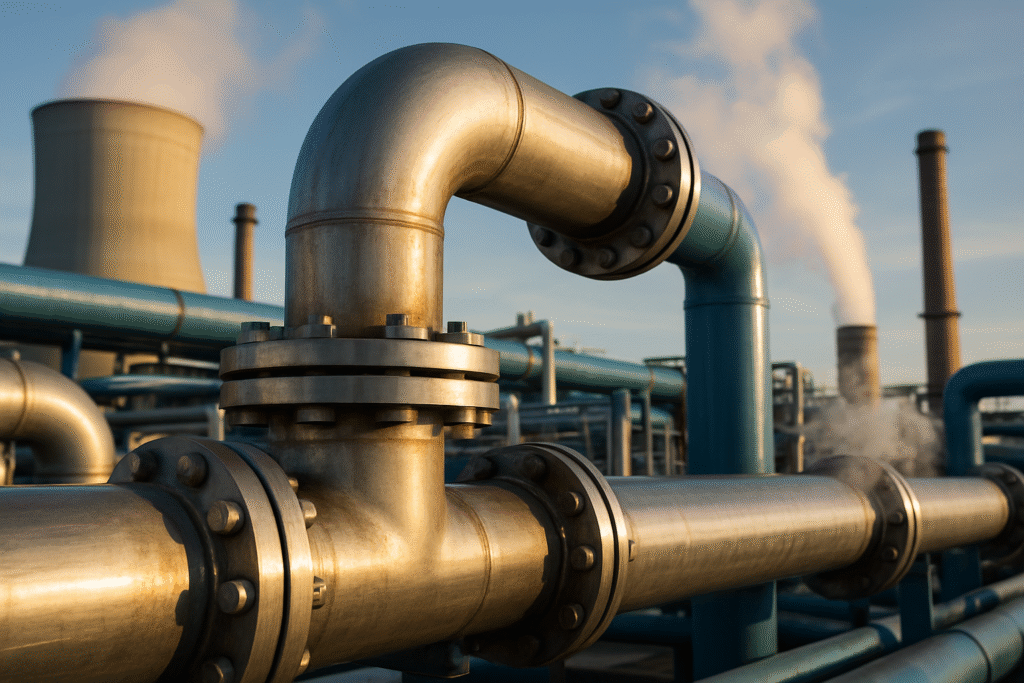
ステンレス鋼管フランジ市場は到達へ $7.2 10億まで 2030: 興味深い隠れた利点, 種類, 用途, およびさまざまなフランジの選択方法
ステンレス鋼のパイプフランジは、プロセス配管において最も指定された接続コンポーネントの 1 つです。, そしてその重要性は世界的な産業投資とともに増大し続けています. グランドビューリサーチによると (2024), 世界の工業用フランジ市場は次のように評価されました。 $5.8 億で 2023 に達すると予測されています $7.2 10億まで 2030.
調達管理者および配管技術者向け, 成長は実際的な現実を反映しているということ. ステンレス, 耐食性, pressure-rated flanges are still the most common choice for critical services across oil and gas, 石油化学, 力, 海洋, および水処理システム.
Global demand trends shaping stainless steel pipe flange procurement
Industrial buyers are purchasing more engineered flange solutions because project specifications are becoming stricter. IBISWorldによると (2024), アジア太平洋地域が占める割合は超過 45% 世界のフランジ生産量の, 中国が最大の製造国である.
That regional concentration matters for sourcing strategy. リードタイムに影響する, raw material access, 加工能力, and factory-direct pricing for standard and custom stainless steel pipe flange orders.
End-use demand also remains strong in heavy industry. 統計局によると (2024), 石油・ガス産業が約 35% 世界のフランジ消費量の, which explains why ASME-rated forged flanges dominate many project specifications.
さらに, corrosion management is now a board-level concern in refining, オフショア, そして化学処理. NACE guidance continues to influence material selection where chloride attack, サワーサービス, or crevice corrosion can shorten asset life (ネイス, 2023).
結果として, 購入者は価格だけでなく比較することが増えています, トレーサビリティも, 認証, と冶金学. ステンレス鋼の管フランジはシンプルに見えるかもしれません, yet the wrong grade or facing can cause leakage, bolt relaxation, or accelerated corrosion.
Many EPC contractors now favor suppliers that combine broad standards coverage with documented quality systems. と ISO 9001:2015 および PED 2014/68/EU 認証, SASA FLANGE supports these requirements with controlled manufacturing and inspection procedures.
さらに, buyers need suppliers that can support global standards without delaying project schedules. SASA FLANGE ANSI B16.5 に準拠したフランジを製造, ANSI B16.47, DIN, JIS, ゴスト, とEN 1092 configurations for diverse plant and export requirements.
Market growth is also linked to infrastructure modernization. モルドール情報局によると (2024), global investment in water and wastewater treatment equipment continues to rise at more than 6% CAGR, increasing demand for stainless steel flanges and fittings in corrosion-prone systems.
Procurement teams therefore need a supplier that can align metallurgy, 圧力クラス, とドキュメント. 高度な CNC 加工と包括的な品質テストに裏付けられています, SASA FLANGE serves projects requiring EN 10204 3.1 ドキュメント, PMI, 静水圧検証, そして寸法チェック.
一般的なトレーダーとは対照的に, qualified manufacturers can also advise on hidden advantages such as service life, maintenance reduction, 嵌合コンポーネントとの互換性. That technical support often reduces total installed cost even when the unit price is not the lowest.
Intriguing stainless steel pipe flange types, 材料, and hidden performance advantages
The most common flange materials are 304, 304l, 316, and 316L because they balance corrosion resistance, 溶接性, and commercial availability. しかし, different services demand different grades, and engineers should never assume that all stainless flanges perform the same.
ASTM および ASME の材料慣行に準拠, forged stainless flanges are commonly supplied to ASTM A182 requirements for pressure parts, 関連するプレート製品を参照する場合がありますが、 ASTM A240 for chemistry and mechanical properties (ASTM, 2024). したがって, buyers should verify whether the project calls for forged or plate-derived components.
ジョン・ブリーン役, 上級配管エンジニア, 州: “A flange failure is rarely just a flange issue; it is usually a mismatch between material, 圧力クラス, 直面している, and actual process conditions.” That is why technical review should precede every bulk purchase.
The hidden advantages of a properly specified stainless steel pipe flange include lower maintenance frequency, より強い酸化耐性, better compatibility with hygienic cleaning, and improved reliability in wet or chloride-laden service. 多くの植物では, those gains outweigh initial material premiums within one shutdown cycle.
Material selection usually begins with corrosion mechanism and temperature range. 304 and 304L are widely used in general industrial, 食べ物, および水の用途, その間 316 and 316L add molybdenum for improved resistance in chloride-containing environments.
Higher-alloy grades serve more demanding conditions. 例えば, 904l, 2205, そして 2507 are selected for aggressive media, 海水暴露, or higher strength demands, while nickel alloys such as Inconel, モネル, and Hastelloy support severe chemical and thermal service.
- 304/304l: economical and widely available for general corrosion service.
- 316/316l: better pitting resistance in chloride-bearing environments.
- 904l: stronger resistance to reducing acids and severe corrosion.
- 2205 デュプレックス: higher strength and improved chloride stress corrosion resistance.
- 2507 スーパーデュプレックス: 海洋に好まれる, オフショア, and high-chloride systems.
Flange type matters as much as material. Weld neck flanges perform best in cyclic pressure and temperature service because the tapered hub distributes stress more evenly.
Slip-on flanges are easier to align and often cost less to install, although they are generally less fatigue-resistant than weld neck designs. Threaded flanges suit low-pressure systems where welding is undesirable, while blind flanges close off line ends or vessel nozzles.
Socket weld flanges are often chosen for smaller bore, higher-pressure piping. 重ね継手フランジ, by comparison, help where frequent dismantling or expensive alloy stub ends justify easier alignment.
- ウェルドネックフランジ: 高圧に最適, 高温, and vibration service.
- スリップオンフランジ: common for utility lines and moderate service conditions.
- ブラインドフランジ: 隔離に使用される, メンテナンスアクセス, and hydrotesting.
- ねじ付きフランジ: useful where welding is restricted or impractical.
- ソケットウェルドフランジ: suitable for small-bore high-pressure systems.
- 重ね継手フランジ: preferred for systems requiring frequent inspection or disassembly.
マーケットリサーチの将来によると (2024), corrosion-resistant alloy components are seeing above-average growth in offshore and chemical processing segments due to stricter lifecycle cost analysis. That trend supports broader use of duplex and high-alloy flange grades in new projects.
博士として. エレナ・マルコビッチ, 材料科学者, 州: “The true value of stainless selection lies in matching alloy chemistry to the process environment, not simply choosing the highest chromium number.” 言い換えると, intelligent specification delivers better economics than over-specification.
Dimensions and pressure classes must also match the code design basis. ASME B16.5 covers many flanges from NPS 1/2 を通して 24, その間 ASME B16.47 addresses larger diameters typically from NPS 26 を通して 60 (ASME, 2024).
Face type directly affects sealing performance. Raised face remains the most common in industrial service, while ring type joint is preferred for high-pressure and high-temperature applications that require a metal-to-metal seal.
For hygienic or low-pressure systems, flat face or specific gasket arrangements may be more appropriate. したがって, flange selection should always be evaluated together with gasket material, ボルトグレード, torque procedure, and flange finish.
Manufacturing quality is another differentiator. SASA FLANGE manufactures stainless steel flanges in 304, 316, 316l, 904l, 2205, そして 2507, along with carbon steel and alloy grades, 1/2からのカスタムサイズを提供" 60まで" 競争力のある工場直販価格.
さらに, serious buyers should assess machining tolerances, ベベルの準備, PMI機能, and heat number traceability. These details become critical when supplying refinery shutdowns, オフショアスキッド, 淡水化プラント, or PED-governed export projects.
ASME, ASTM, DIN, and EN requirements for stainless steel pipe flange compliance
Standards are not optional in industrial procurement. それらは次元を定義します, 圧力温度定格, 公差, 材料, マーキング, and inspection requirements that protect safety and interchangeability.
北米および多くの国際プロジェクト向け, ASME B16.5 そして ASME B16.47 remain the key dimensional standards for flanges. Material compliance often references ASTM A182 鍛造ステンレスおよび合金鋼フランジ用, while pipe fittings commonly follow ASME B16.9.
ヨーロッパのプロジェクトでは頻繁にENが参照されます 1092 フランジの寸法と圧力指定については. German and broader continental applications may also require DIN-based practices, while marine and project export packages can include DNV, PED, or AD 2000 ドキュメント.
欧州委員会の PED フレームワークによると, pressure equipment placed on the EU market must meet essential safety requirements and conformity assessment obligations (PED 2014/68/EU). したがって, documentation discipline is as important as machining accuracy for international shipments.
- ASME B16.5: flange dimensions and ratings for smaller nominal pipe sizes.
- ASME B16.47: larger diameter flange dimensions and ratings.
- ASTM A182: forged or rolled alloy and stainless steel pipe flanges and fittings.
- ASME B16.9: 工場製鍛突合せ溶接継手.
- EN 1092: European flange system with PN designations.
- NACE MR0175: material guidance for sour service environments where applicable.
Engineers should also review corrosion-service requirements when hydrogen sulfide or chlorides are present. NACE MR0175 and related project specifications can limit hardness, alloy choice, and heat treatment route for wetted components.
That is especially important in upstream oil and gas, where sour service can rapidly expose poor material decisions. 統計局によると (2024), oil and gas still accounts for roughly 35% 世界のフランジ消費量の, which keeps NACE and ASME compliance central to purchasing decisions.
When comparing standards, buyers should understand that pressure classes and PN ratings are not directly interchangeable without engineering review. クラス 150 ASME flange is not simply the same as a PN16 or PN20 flange in every duty case.
The following comparison points help clarify specification logic:
- ASME Class system uses ratings such as 150, 300, 600, 900, 1500, そして 2500.
- EN systems use PN designations such as PN10, PN16, PN25, とPN40.
- Facing forms, 穴あけパターン, and thicknesses vary by standard.
- Material naming conventions differ between ASTM, EN, and DIN systems.
Quality documents should also be checked before order release. Typical requirements include EN 10204 3.1 工場試験証明書, 寸法レポート, PMI結果, 硬さチェック, hydrotest records where applicable, and coating or marking verification.
と ISO 9001:2015, PED 2014/68/EU, とAD 2000 認証, SASA FLANGE supports customers that require traceable documentation for global projects. さらに, its production scope includes stainless steel flanges, 炭素鋼フランジ, 合金フランジ, エルボなどの配管継手, ティー, 減速機, そしてキャップ.
Authoritative standard references should always be consulted during specification review, especially for critical lines. Buyers can verify current dimensional and code requirements directly through ASME and related standards bodies before issuing purchase orders.
How to choose the right stainless steel pipe flange for different industrial uses
The right flange choice depends on fluid chemistry, 温度, 圧力クラス, piping code, maintenance philosophy, および総設置コスト. その結果, engineers should evaluate the full operating envelope instead of focusing only on material price.
石油およびガスサービスにおいて, 316L の溶接ネック フランジ, デュプレックス, or specified alloy grades are often preferred for vibration resistance and stronger fatigue performance. Sour service or offshore duty may require NACE review, higher alloy content, and stricter testing protocols.
石油化学プラント内, media compatibility drives selection. 塩化物, 硫黄化合物, 有機酸, and elevated temperatures can quickly eliminate lower-grade materials from consideration.
発電用, thermal cycling is often the dominant factor. したがって, フランジタイプ, ボルトローディング, and creep or oxidation behavior become as important as baseline corrosion resistance.
海洋および造船システムにおいて, seawater exposure often pushes engineers toward 316L, 2205, または 2507 depending on chloride concentration and design life targets. According to DNV practice, seawater systems require careful corrosion management and material pairing to reduce galvanic and pitting risks (DNV, 2023).
Water treatment and desalination projects also demand careful alloy selection. Duplex and super duplex options often deliver better lifecycle performance in brine handling, 逆浸透スキッド, and coastal installations.
- プロセス流体の確認, 塩化物濃度, and pH before selecting grade.
- Match flange standard to piping code and mating component standard.
- Choose pressure class based on design pressure and temperature.
- Verify facing type with gasket design and bolt load requirements.
- 溶接方法の見直し, PWHTのニーズ, およびインストール上の制約.
- Specify documentation such as EN 10204 3.1, PMI, and hardness testing.
Size availability is another practical consideration, especially for shutdown work and OEM production schedules. Buyers often search for stainless steel pipe flange sizes, 4 inch stainless steel pipe flange options, and stainless steel threaded pipe flange configurations because project timing depends on stock and machining responsiveness.
Custom manufacturing can solve unusual specification challenges. 例えば, plants may need non-standard drilling, reducing flanges, 特殊なフェーシング, 長い溶接ネック, or mixed-material packages that include matching elbows, ティー, 減速機, そしてキャップ.
SASA FLANGE supports these requirements through flexible production and broad material coverage. 給仕 50+ 石油を巡る国々 & ガス, 石油化学, 力, 海洋産業, the company also provides support for forged stainless, 炭素鋼, 合金, ニッケル合金, and titanium flange requirements.
Procurement teams should also compare inspection capability when reviewing stainless steel pipe flange suppliers. Competitive offers are valuable, yet rework, nonconformance, and late documents can erase any apparent savings.
A disciplined sourcing process usually includes supplier qualification, 図面レビュー, raw material verification, sample approval where needed, そして最終リリースのドキュメント. Buyers can review manufacturing scope and product categories at SASA FLANGE 製品 と会社の背景 SASA FLANGE 私たちについて.
ステンレス鋼管フランジの購入者の将来展望と戦略的調達の推奨事項
The future of the stainless steel pipe flange market is closely tied to energy transition, 水インフラ, petrochemical upgrades, and regional reshoring strategies. グランドビューリサーチによると (2024), 市場は~から拡大すると予想される $5.8 億で 2023 に $7.2 10億まで 2030.
That trajectory means procurement pressure will remain high. Buyers should expect continued volatility in stainless input costs, longer lead times for premium alloys, and greater emphasis on traceable quality records.
IBISWorldによると (2024), Asia-Pacific already accounts for more than 45% 世界のフランジ生産量の, so supplier diversification and early scheduling are becoming more important. さらに, material demand from oil and gas, 海洋, and water treatment remains resilient across many regions.
戦略的に, the most effective buyers standardize specifications where possible and reserve exotic alloys for truly demanding services. This approach reduces unnecessary cost while protecting reliability in the lines that matter most.
- サプライヤーを事前に認定する ISO 9001:2015 and relevant export certifications.
- Request clear compliance to ASME, ASTM, DIN, EN, およびプロジェクト固有の標準.
- フランジの位置合わせ, ガスケット, ボルト締め, and pipe materials during technical review.
- Plan long-lead alloy purchases earlier than commodity stainless items.
- 使用ライフサイクルコスト, 単価だけではない, for final vendor evaluation.
As industrial systems become more data-driven, sourcing decisions are becoming more evidence-based as well. したがって, manufacturers that combine technical advice, broad standards coverage, and dependable documentation will gain a stronger share of global project business.
For buyers comparing different flange suppliers, the most practical next step is a technical-commercial review with an experienced manufacturer. For projects requiring certified stainless steel flanges, カスタムサイズ, and responsive export support, 一緒に働く SASA FLANGE can simplify qualification and procurement.
よくある質問
どちらが良いですか 304 または 420 ステンレス鋼?
●304 stainless steel is generally better for a stainless steel pipe flange because it offers stronger corrosion resistance and broader industrial acceptance than 420 in wet and chemical environments.
●According to ASTM material practice and common industrial usage, 304 is the most common austenitic stainless grade for general piping components, その間 420 is a martensitic grade used more often where hardness and wear resistance are priorities.
●Engineers should choose 304 for most flange applications and request expert support from established manufacturers like SASA FLANGE when corrosion resistance, 溶接性, and code compliance are required.
ステンレス鋼フランジの ASME コードとは何ですか?
●The main ASME dimensional standards for stainless steel flanges are ASME B16.5 そして ASME B16.47, while material requirements are commonly linked to ASTM A182 鍛造フランジ用.
●ASME B16.5 通常は NPS をカバーします 1/2 を通して 24 そして ASME B16.47 より大きな直径をカバーします, so buyers must match the correct standard to the project size range and pressure class.
●Procurement teams should verify dimensions, 直面している, 圧力定格, and material compliance before purchase, especially for export projects that also require EN 1092 または PED ドキュメント.
ステンレス鋼フランジは何に使用されますか?
●パイプの接続にはステンレス製のフランジが使用されます, バルブ, パンプス, and equipment in systems that require leak-tight assembly, メンテナンスアクセス, and pressure-rated performance.
●統計局によると (2024), 石油・ガス部門が約 35% 世界のフランジ消費量の, which shows how important flanges are in critical process industries.
●Buyers should select flange type, 材質グレード, and pressure class based on media, 温度, and maintenance requirements to achieve safe long-term performance.
とは何ですか 5 types of stainless steel?
●The five main stainless steel families are austenitic, フェライト系, マルテンサイト系, デュプレックス, and precipitation-hardening stainless steel.
●Austenitic grades such as 304 そして 316 are the most common for industrial flange applications because they combine corrosion resistance, 靭性, 溶接性.
●For chloride-rich or high-strength service, engineers should evaluate duplex or higher-alloy options and confirm the final choice against project standards and process data.
最も一般的なステンレス鋼フランジのタイプは何ですか?
●最も一般的なステンレス鋼フランジのタイプは溶接ネックです。, スリッポン, 盲目, ねじ切りされた, ソケット溶接, 重ね継手フランジ.
●Weld neck and slip-on designs are the most common in industrial piping because they balance performance, 設置の実用性, and market availability across many sizes.
●Engineers should match flange type to pressure, 循環ロード, メンテナンスの必要性, and fabrication method before placing an order.
How do I choose stainless steel pipe flange sizes and pressure ratings?
●Stainless steel pipe flange sizes and ratings should be selected by matching nominal pipe size, スケジュール, 設計圧力, 設計温度, and the governing dimensional standard.
●ASME B16.5 pressure classes commonly include 150, 300, 600, 900, 1500, そして 2500, and each class has different pressure-temperature limits depending on the material group.
●重要なプロジェクトの場合, buyers should confirm dimensional compatibility, ガスケットシート, and certification requirements with a qualified manufacturer before final approval.
関連投稿

オリフィスフランジの定義, 詳細と ASME B16.36 フランジの概要: 市場データ, 選択ガイドとコンプライアンスに関する洞察
世界の工業用フランジ市場は次のように評価されました。 $5.8 十億…

ブラックディスポフランジ市場ガイド: 材料, 3.5″ 互換性, キッチン シンク フランジの B2B 調達データ
キッチン設備の購入者として黒色の使い捨てフランジの需要が高まっています…