
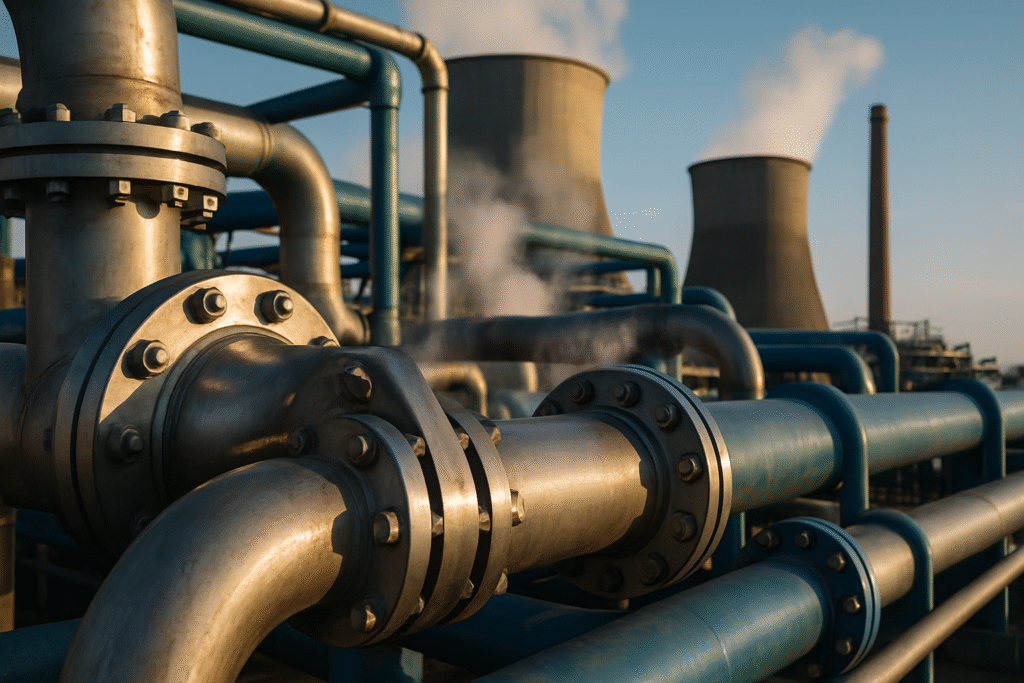
Stainless Steel Pipe Flange Market at $5.8B: Hidden Advantages, Types, Uses, and How to Choose the Most Common Flange
The stainless steel pipe flange remains one of the most specified connection components in modern process piping. According to Grand View Research (2024), the global industrial flange market was valued at $5.8 billion in 2023 and is projected to reach $7.2 billion by 2030, which highlights why engineers and buyers are paying closer attention to material grade, pressure class, and compliance.
For EPC contractors, OEMs, and plant procurement teams, the intriguing value of stainless steel is not just corrosion resistance. The hidden advantages include lower lifecycle cost, stronger hygiene performance, better weld integrity, and reliable service across oil and gas, petrochemical, power, marine, and water treatment systems.
Why the stainless steel pipe flange market keeps expanding
Demand for the stainless steel pipe flange continues to rise because critical industries need leak-tight joints that also resist corrosion, vibration, and thermal cycling. According to Statista (2024), the oil and gas industry accounts for approximately 35% of global flange consumption, which makes hydrocarbon processing a major driver of product specification.
Regional manufacturing strength also matters. According to IBISWorld (2024), Asia-Pacific accounts for over 45% of global flange production, with China being the largest manufacturer, therefore buyers increasingly source from qualified Chinese factories that can combine scale with documentation.
That sourcing shift has changed buyer expectations. Today, procurement managers want more than price. They want EN 10204 3.1 certification, heat number traceability, PMI support, dimensional inspection, and conformance to ASME B16.5, ASME B16.47, DIN, JIS, GOST, and EN 1092 requirements.
According to Mordor Intelligence (2024), broader industrial pipeline investments in energy, desalination, and chemical processing continue to support demand for stainless and alloy flanges worldwide. In parallel, stricter environmental and safety requirements are pushing end users toward higher-integrity materials such as 316L, duplex 2205, and super duplex 2507.
As James Porter, Senior Piping Engineer, states: “A flange is rarely a commodity when the service is critical, because material chemistry, facing finish, bolt load, and standard compliance directly affect plant reliability.” That observation explains why technically informed buyers evaluate far more than nominal size.
SASA FLANGE operates in this environment as a factory-focused supplier serving Oil & Gas, Petrochemical, Power Generation, Shipbuilding & Marine, Water Treatment, and Construction sectors. With ISO 9001:2015 and PED 2014/68/EU certifications, the company supports projects that require stainless steel flanges, carbon steel flanges, alloy flanges, and pipe fittings in 304, 316, 316L, 904L, 2205, 2507, A105, A182, Inconel, Monel, Hastelloy, and Titanium grades.
Buyers comparing supply partners should also review manufacturing capability and communication speed. Backed by advanced CNC machining and comprehensive quality testing, SASA FLANGE supports custom sizes from 1/2" to 60" and serves customers in more than 50 countries.
In contrast with generic trading models, factory-backed production typically improves control over machining tolerances, bevel quality, drilling accuracy, and delivery planning. As a result, the total procurement risk can fall even when the unit price difference looks small at first glance.
Stainless steel pipe flange types, hidden advantages, and technical selection factors
Understanding flange types is essential before comparing grades like 304, 316L, 904L, or duplex 2205. The most common flange selection errors happen when teams focus only on corrosion resistance and overlook pressure class, connection method, gasket compatibility, and operating temperature.
According to ASME B16.5, dimensional and pressure-temperature requirements for flanges up to NPS 24 must align with defined classes and facing details (ASME, 2020). Therefore, a technically correct specification always combines material standard, flange standard, facing, size, schedule, and rating.
As Dr. Elena Morris, Materials Scientist, states: “The hidden advantages of stainless steel often appear after installation, because resistance to chloride attack, lower contamination risk, and better long-term surface stability reduce maintenance events.” That is especially relevant in marine, pharmaceutical, food-grade, and high-purity water systems.
The most common stainless grades each fit different service windows. Grade 304 remains widely used for general corrosion resistance and balanced cost, while 316 and 316L add molybdenum for improved pitting resistance in chloride-bearing environments.
For aggressive media or elevated reliability demands, engineers often move to 904L, duplex 2205, or super duplex 2507. According to Market Research Future (2024), demand for duplex stainless products is increasing in offshore and desalination projects because end users seek higher strength-to-weight performance and improved resistance to stress corrosion cracking.
- Weld Neck Flange: Preferred for high pressure and cyclic service because the tapered hub improves stress distribution.
- Slip-On Flange: Economical and easy to align, however it is generally chosen for lower to moderate service severity.
- Socket Weld Flange: Used for small-bore, high-pressure systems where compact design is important.
- Threaded Flange: Useful when welding is impractical, especially in certain maintenance or hazardous locations.
- Blind Flange: Applied to close line ends, pressure vessel nozzles, or future expansion points.
- Lap Joint Flange: Chosen where frequent dismantling is required and stub-end rotation improves bolt alignment.
The intriguing part of stainless flange selection is that performance often depends on the full assembly, not only the flange body. Gasket type, bolt material, surface finish, and flange facing such as RF, FF, or RTJ all influence seal reliability.
According to ASTM A182, forged or rolled alloy and stainless steel pipe flanges must meet specified chemistry and mechanical property requirements for high-temperature service (ASTM, 2023). In practical terms, that means traceable forging quality remains just as important as selecting the correct alloy family.
Engineers should also compare material behavior by environment. For example, 304 performs well in many water and general industrial systems, but 316L typically performs better in coastal, chemical, or chloride-bearing media. Duplex 2205 offers higher strength and often allows wall thickness optimization in selected designs.
- 304/304L: General industrial service, food processing, clean water, and moderate corrosion duty.
- 316/316L: Chemical lines, marine environments, seawater splash zones, and chloride exposure.
- 904L: Severe acid service and higher-corrosion process streams.
- 2205 Duplex: Offshore platforms, desalination, and high-strength corrosive service.
- 2507 Super Duplex: Extremely aggressive chloride and subsea conditions.
According to NACE guidance for corrosion control, chloride stress corrosion cracking and pitting risk increase as process severity rises, therefore alloy choice should be verified against actual media composition and temperature (NACE, 2023). This is why high-quality technical support matters during quotation review.
SASA FLANGE manufactures flanges in 304, 316, 904L, 2205, 2507 and other premium grades, and it also supplies elbows, tees, reducers, and caps for complete piping packages. For project teams needing support on sizes, pressure classes, and custom machining, it is practical to start via https://sasaflange.com/contact-us/.
Beyond standard products, buyers often need drilled non-standard patterns, special facings, or project-specific marking. That is where a factory with CNC machining, PMI inspection support, and coordinated documentation can shorten approval cycles.
According to ISO quality management principles, standardized process control reduces variability and improves traceability in industrial manufacturing (ISO, 2015). Consequently, suppliers with disciplined QC systems tend to perform better on repeatability, documentation, and corrective action speed.
ASME, ASTM, DIN, EN, and PED compliance for industrial flange procurement
Compliance is the backbone of industrial flange procurement because dimensional mismatch or incorrect certification can delay an entire project. Therefore, engineers usually begin with standard selection before they compare lead time or price.
For North American and many global projects, ASME B16.5 and ASME B16.47 define key dimensional frameworks for flanges. Pipe fittings commonly align with ASME B16.9, while material requirements often reference ASTM A182 for forged stainless and alloy grades.
European and export projects frequently require EN 1092 and PED 2014/68/EU compliance. In addition, DIN-based dimensions may still appear in brownfield facilities, especially where legacy equipment or regional design conventions remain in service.
- ASME B16.5: Flanges and flanged fittings up to NPS 24.
- ASME B16.47: Large-diameter steel flanges from NPS 26 through NPS 60.
- ASME B16.9: Factory-made wrought buttwelding fittings.
- ASTM A182: Forged or rolled alloy and stainless flanges and forged fittings.
- EN 1092: European flange standard covering dimensions and pressure ratings.
- PED 2014/68/EU: Regulatory framework for pressure equipment placed on the EU market.
For technical buyers, documentation must match the project class. Typical requirements include MTC EN 10204 3.1, positive material identification, hardness testing, hydrostatic or pneumatic test references where applicable, ferrite control for certain weld procedures, and complete marking for traceability.
According to the European Commission PED framework, pressure equipment manufacturers and component suppliers must demonstrate conformity through appropriate technical documentation and quality systems (PED, 2014). That is one reason certified suppliers hold a structural advantage in export-oriented projects.
Below is a practical comparison engineers often use during RFQ review.
- ASME projects: Focus on flange class, facing, bore schedule, ASTM material grade, and MSS or ASME dimensional compatibility.
- EN/PED projects: Focus on EN dimensions, PED documentation, CE-related conformity route, and material traceability.
- Marine/offshore projects: Add DNV or NORSOK-related expectations depending on owner specification.
- Sour service projects: Check NACE MR0175 compatibility where H2S exposure exists.
SASA FLANGE aligns with these procurement needs through ISO 9001:2015, PED 2014/68/EU, and AD 2000 credentials. Moreover, the company supports material and dimensional compliance across ANSI, ASME, DIN, JIS, GOST, and EN 1092 frameworks, which helps multinational EPC teams consolidate sourcing.
Buyers should also verify actual testing scope before placing a PO. Some projects require ultrasonic testing, dye penetrant testing, or third-party witness inspections, while others only require standard dimensional and material certification.
As Robert Klein, Industrial Market Analyst, states: “The most common cause of flange procurement delays is not machining capacity but document mismatch between purchase order, project specification, and inspection plan.” That comment reflects a daily reality in cross-border industrial sourcing.
For current standard ranges and manufacturing support, buyers can also review SASA FLANGE product capabilities. That early review often prevents mistakes in class selection, bore schedule matching, and requested documentation level.
How to choose the most common flange for oil, gas, chemical, power, and marine service
Choosing the most common flange for a project starts with service conditions, not catalog preference. Engineers should define media, chloride level, design pressure, operating temperature, cyclic loading, corrosion allowance, and maintenance frequency before selecting grade and flange type.
In oil and gas systems, weld neck flanges in ASTM A182 F316/F316L, duplex 2205, or alloy materials often dominate critical lines because they handle stress concentration more effectively. According to Statista (2024), oil and gas still represents about 35% of global flange consumption, therefore this sector strongly influences global specification habits.
In petrochemical plants, 316L remains a common flange material where process fluids present moderate chloride or corrosive exposure. However, more severe acid, sour, or chloride-rich service may require 904L, duplex, Monel, Hastelloy, or other nickel-based alloys after corrosion review.
Power generation applications often prioritize pressure-temperature integrity and long-term reliability. Therefore, engineers frequently compare stainless and alloy selections against steam conditions, condensate chemistry, and outage maintenance strategy.
Marine and shipbuilding environments impose constant corrosion pressure from salt-laden atmospheres. For these uses, 316L offers a practical baseline in many applications, while duplex grades provide higher strength and stronger resistance where conditions become more aggressive.
- For water treatment: Evaluate chloride concentration, disinfection chemistry, and risk of crevice corrosion.
- For offshore: Verify pitting resistance, sour service compatibility, and required owner approvals.
- For chemical service: Match the alloy to exact acid, alkali, and temperature conditions.
- For high-purity systems: Prioritize surface cleanliness, low contamination risk, and weld quality.
- For maintenance-intensive plants: Consider lap joint or threaded designs only where technically justified.
Practical flange selection should also include connection style and pipe schedule. A 4 inch stainless steel pipe flange for Schedule 40S service may require different bore details than the same NPS size for Schedule 80S or XS service, so dimensional review is essential.
According to ASME engineering practice, misalignment between flange bore and connected pipe can increase turbulence and local stress. As a result, even a correctly rated flange may perform poorly if boring or facing details are not controlled.
Cost evaluation should cover total installed cost rather than unit piece price alone. Stainless steel may cost more than carbon steel initially, yet it often reduces coating needs, replacement intervals, contamination risk, and unplanned downtime.
SASA FLANGE supports custom manufacturing, including non-standard dimensions, special materials, and coordinated supply of matching fittings. For engineers needing project review on a stainless steel pipe flange package, direct communication through SASA FLANGE can simplify material and standard confirmation.
Buyers should ask suppliers six practical questions before final approval.
- Is the flange standard ASME B16.5, ASME B16.47, DIN, JIS, or EN 1092?
- What is the exact material grade and corresponding ASTM or EN material specification?
- What pressure class or PN rating applies at operating temperature?
- What facing type is required, such as RF, FF, RTJ, or tongue-and-groove?
- What documentation is included, such as EN 10204 3.1, PMI, and third-party inspection?
- What is the realistic lead time for standard and custom sizes from 1/2" to 60"?
These questions appear simple, however they eliminate many avoidable supply issues. Moreover, they help procurement teams compare quotations on a technically equivalent basis.
Future outlook, pricing pressure, and strategic sourcing recommendations
The stainless steel pipe flange market is likely to remain resilient because process industries continue to expand capacity and upgrade aging infrastructure. According to Grand View Research (2024), the global industrial flange market is projected to grow from $5.8 billion in 2023 to $7.2 billion by 2030, which signals sustained medium-term demand.
At the same time, competition will intensify around documentation, shorter lead times, and higher-alloy capability. Buyers increasingly expect suppliers to support not only standard 304 and 316L flanges, but also 904L, duplex, super duplex, nickel alloys, and complete fitting packages.
Digital procurement is also changing sourcing behavior. Engineers now compare suppliers based on downloadable technical data, certification readiness, fast quotation turnaround, and visible manufacturing competence rather than relying only on local distribution.
According to IBISWorld (2024), Asia-Pacific remains the dominant production base for flanges, and China leads manufacturing volume. Therefore, strategic sourcing from certified Chinese producers can improve cost efficiency if quality control, communication, and documentation standards are consistently verified.
For B2B buyers, several recommendations stand out.
- Standardize approved flange classes, facings, and documentation requirements before tender release.
- Qualify suppliers by certification scope, testing capability, and export project experience.
- Request material traceability and dimensional checks early, especially for custom or mixed-standard packages.
- Compare lifecycle value, not just ex-works price, when evaluating stainless versus lower-grade alternatives.
- Use a supplier capable of flanges and fittings together to reduce coordination risk.
In many projects, the most intriguing advantage is not hidden in the alloy alone but in the supply chain. A responsive manufacturer with ISO 9001:2015 and PED support can reduce technical clarification time, improve compliance confidence, and protect delivery schedules.
That is why many global buyers prefer working with manufacturers that combine broad material coverage, advanced CNC machining, and export documentation discipline. When your next RFQ involves stainless steel flanges, fittings, or custom dimensions, a technical discussion with SASA FLANGE can help align specification, compliance, and commercial targets from the start.
Frequently Asked Questions
Which is better 304 or 420 stainless steel?
●Grade 304 is better for most stainless steel pipe flange applications because it offers stronger corrosion resistance and is widely used under ASTM A182 and ASTM A240 specifications.
●Grade 420 provides higher hardness after heat treatment, but it is less suitable for corrosive piping duty and is uncommon for standard ASME B16.5 flange service.
●For process piping, marine, water treatment, and chemical systems, buyers should usually choose 304 or upgrade to 316L, and projects requiring verified compliance can be reviewed with established manufacturers like SASA FLANGE.
What are the 4 types of stainless steel?
●The four main types of stainless steel are austenitic, ferritic, martensitic, and duplex, and austenitic grades such as 304 and 316 are the most common in industrial flange production.
●According to Market Research Future (2024), duplex stainless demand is rising in offshore and desalination applications because it combines higher strength with improved corrosion resistance.
●For flange selection, engineers should match the stainless family to pressure, media, chloride content, and fabrication method before finalizing the purchase specification.
What are stainless steel flanges used for?
●Stainless steel flanges are used to connect pipe, valves, pumps, and equipment in systems that require leak-tight joints, corrosion resistance, and easier maintenance access.
●According to Statista (2024), oil and gas accounts for about 35% of global flange consumption, which shows how important flanged joints are in critical process industries.
●For projects involving chlorides, hygiene requirements, or demanding operating conditions, selecting the correct grade such as 304, 316L, or duplex and sourcing from qualified suppliers is essential.
What are the three types of flanges?
●The three most commonly referenced flange types are weld neck, slip-on, and blind, although threaded, socket weld, and lap joint flanges are also widely used.
●ASME B16.5 defines key dimensions and pressure classes for many of these flange types, which helps engineers maintain interchangeability and sealing performance.
●In high-pressure or cyclic service, weld neck designs are generally preferred, while procurement teams should confirm facing type, material grade, and standard before ordering.
How do I choose the right stainless steel pipe flange size and pressure rating?
●The correct stainless steel pipe flange size depends on nominal pipe size, schedule, bore match, facing, and pressure class such as Class 150, 300, 600, or higher under ASME B16.5.
●According to ASME standards practice, dimensional compatibility between flange bore and connected pipe is essential to reduce stress concentration and flow disruption.
●For 2 inch, 4 inch, and large-diameter applications alike, buyers should confirm size, class, schedule, and material together before placing a purchase order with suppliers such as SASA FLANGE.
What affects stainless steel pipe flange price?
●Stainless steel pipe flange price is influenced by alloy grade, size, pressure class, forging route, machining complexity, testing scope, and certification requirements such as EN 10204 3.1.
●According to Grand View Research (2024), steady market growth and continued industrial demand support long-term purchasing activity, while higher-alloy grades like 904L and 2507 typically command significant premiums over 304.
●To obtain accurate pricing, buyers should submit complete technical data including standard, material, size, class, facing, quantity, and inspection requirements so suppliers can quote on an equivalent basis.
Related Posts
Flange Face Finish: Concentric vs Spiral Serrations Explained
Concentric and spiral serrations are both machined flange face finishes…
Duplex 2205 vs 316L Flanges: Which Material Should You Choose?
Quick answer: Duplex 2205 flanges are usually the stronger candidate…

Orifice Flange Definition, Details and ASME B16.36 Flanges Overview: Market Data, Selection Guide and Compliance Insights
The global industrial flange market was valued at $5.8 billion…

Black Disposal Flange Market Guide: Materials, 3.5″ Compatibility, and B2B Sourcing Data for Kitchen Sink Flanges
Black disposal flange demand is rising as Kitchen fixture buyers…