
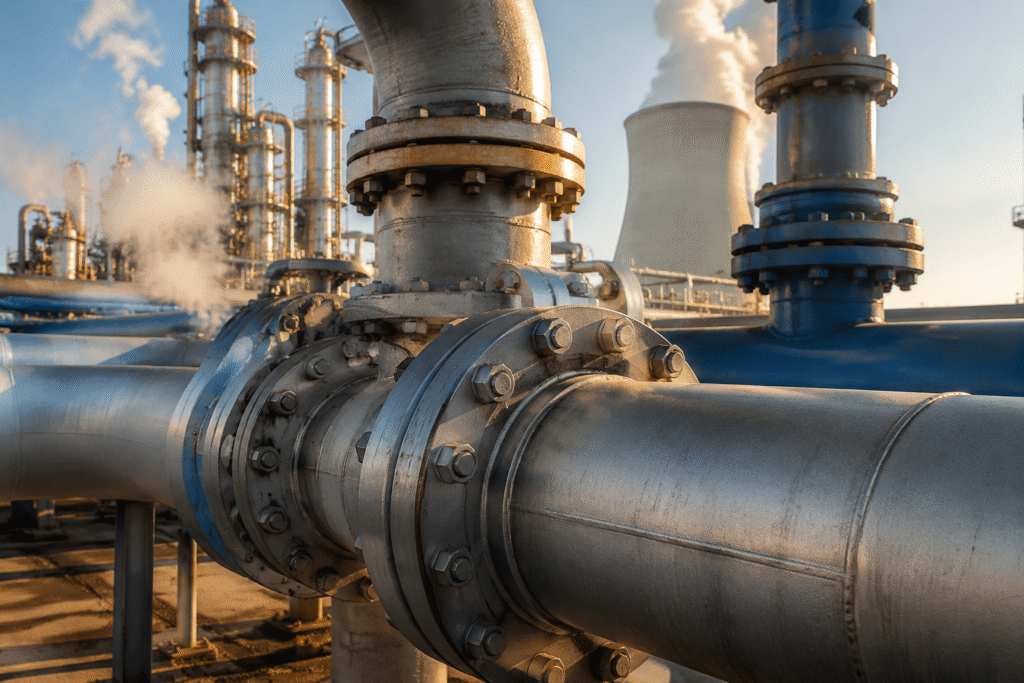
ステンレス鋼管フランジ マーケットガイド: ASME B16.5, B16.47, 種類, での用途と隠れた利点 2025
ステンレス鋼のパイプフランジは、現代のプロセス配管の中核コンポーネントであり続けています, そして市場の需要はエネルギー全体で増加し続けています, 水, および海洋部門. グランドビューリサーチによると (2024), 世界の工業用フランジ市場は次のように評価されました。 $5.8 億で 2023 に達すると予測されています $7.2 10億まで 2030.
調達チーム向け, the most Intriguing factor is not only price, but the Hidden Advantages of Stainless Steel performance, ライフサイクルコスト, およびコードコンプライアンス. したがって, buyers increasingly compare Flanges by durability, 耐食性, トレーサビリティ, and certification rather than by nominal size alone.
ステンレス鋼管フランジの調達を形作る世界的な需要動向
Industrial buyers now source flanges in a more data-driven way because downtime costs are rising in every continuous process industry. IBISWorldによると (2024), アジア太平洋地域が占める割合は超過 45% 世界のフランジ生産量の, 中国が最大の製造国である.
That production concentration matters for lead time, mill availability, and custom machining capacity. 結果として, many EPC contractors and stockists look to qualified Chinese manufacturers that can supply ASME, DIN, JIS, ゴスト, and EN dimensions from one source.
Demand remains especially strong in upstream and downstream energy. 統計局によると (2024), 石油・ガス産業が約 35% 世界のフランジ消費量の, which explains why pressure class, 材料のトレーサビリティ, and NACE compliance remain central purchase criteria.
同時に, stainless grades continue gaining share in aggressive service. モルドール情報局によると (2024), corrosion-resistant alloy demand in industrial piping is increasing as operators seek longer maintenance intervals and lower total ownership cost.
The Hidden Advantages of stainless over coated carbon steel become clear in wet chloride, オフショア, および化学環境. Although initial unit cost is higher, replacement frequency is lower, and inspection intervals may improve when the correct alloy is selected.
材料工学博士として. ヘレン・モリスは次のように述べています: “In corrosive service, the cheapest flange is rarely the lowest-cost flange over a full operating cycle.” That view aligns with current procurement practice, where lifecycle economics now influence supplier approval more than headline piece price.
Standards also shape sourcing behavior. ASME B16.5 NPS のパイプ フランジとフランジ付き継手をカバーします 1/2 を通して 24, その間 ASME B16.47 NPSの大径フランジをカバー 26 を通して 60 (ASME, 2023).
鍛造ステンレスフランジ用, ASTM A182 remains the benchmark specification for many pressure applications. 対照的に, plate flange projects may reference ASTM A240 設計と製造ルートに応じて (ASTM, 2023).
Buyers therefore need a supplier that understands both code and manufacturing detail. と ISO 9001:2015 および PED 2014/68/EU 認証, SASA FLANGE supports global industrial projects requiring dimensional accuracy, 材料のトレーサビリティ, そして EN 10204 3.1 ドキュメント.
さらに, supply flexibility has become a differentiator. フランジの製造 304, 316, 316l, 904l, 2205, 2507, A105, A182, インコネル, モネル, ハステロイ, and Titanium allows one vendor to support both standard and critical applications.
マーケットリサーチの将来によると (2024), the broader industrial pipe components market is growing at above 4% CAGR, supported by refinery upgrades, water treatment expansion, and power infrastructure investment. したがって, flange buyers should expect continued pressure on lead times for large diameters and exotic alloys.
エンジニアおよび調達マネージャー向け, the key takeaway is clear. The right stainless steel pipe flange strategy balances standards compliance, 合金の選択, 加工品質, and supply reliability rather than focusing only on upfront price.
stainless steel pipe flange technical overview: 種類, 用途, Versatility and durability
The performance of a stainless steel pipe flange depends on four variables. These variables are flange type, 合金グレード, 圧力クラス, and actual process conditions including temperature, 塩化物, 周期負荷, and media composition.
Stainless Steel Flanges deliver strong Versatility because one material family can cover sanitary, ユーティリティ, and severe service systems. しかし, each grade has limits, so proper selection requires more than a simple 304 対 316 comparison.
配管コンサルタントとしてマーク・エリソン, PE, 州: “The safest flange selection starts with the service fluid, then works outward to temperature, 圧力クラス, 直面している, and joint integrity.” That process reduces misapplication, especially where gasket selection and bolting are equally critical.
Common flange Types used in industrial piping include the following.
- 高圧用ウェルドネックフランジ, 高温, そして循環サービス.
- Slip-on flanges for lower pressure utility lines and easier alignment.
- Blind flanges for line end isolation, テスト, and future expansion.
- Threaded flanges for small bore systems where welding is restricted.
- Socket weld flanges for small diameter high-pressure piping.
- Lap joint flanges where frequent dismantling is required.
Each type has distinct installation economics. 例えば, weld neck designs cost more initially, yet they often improve fatigue resistance because the tapered hub distributes stress more smoothly into the pipe wall.
素材の選択も同様に重要です. 304 and 304L remain widely used in water, 食べ物, and general industrial systems, その間 316 and 316L offer improved pitting resistance because molybdenum enhances chloride performance.
For more aggressive media, engineers may specify 904L, デュプレックス 2205, またはスーパーデュプレックス 2507. These alloys increase strength and corrosion resistance, which can allow thinner wall designs or longer operating life in seawater and sour service.
According to NACE guidance for corrosive environments, 塩化物濃度, 温度, and oxygen content all influence localized attack risk (ネイス, 2023). したがって, alloy selection must match the actual process chemistry rather than the generic industry label.
When comparing ASME pressure classes, engineers usually consider Class 150, 300, 600, 900, 1500, そして 2500. Yet actual pressure-temperature limits depend on material group and the tables in ASME B16.5 またはB16.47, not on class number alone.
Important selection factors include the following.
- Nominal pipe size and flange standard.
- 圧力クラスと設計温度.
- Face type such as RF, FF, RTJ, または舌と溝.
- 材質グレードと腐食代.
- Welding method, PWHT requirements, 及び検査範囲.
- Document package including MTC, PMI, 水圧試験, そして EN 10204 3.1.
For large diameter projects, ASME B16.47 Series A and Series B require careful review because bolt patterns and weights differ. 実務的には, that affects interchangeability, freight cost, and field assembly time.
The Uses of stainless flanges also vary by sector. 石油とガスにおいて, engineers prioritize pressure containment and sour service resistance, while in food and water systems they often focus on cleanliness, 腐食防止, メンテナンスの手間がかからない.
オフショア システムに関する DNV ガイダンスによると, marine atmosphere and seawater exposure accelerate corrosion risk where material selection is inadequate (DNV, 2023). 結果として, duplex and super duplex flanges often justify their premium in topside and coastal applications.
Another Hidden advantage is inventory simplification. A supplier that can offer flanges plus elbows, ティー, 減速機, and caps in matching metallurgy reduces qualification steps and lowers mismatch risk during fabrication.
高度な CNC 加工と包括的な品質テストに裏付けられています, SASA FLANGE supplies stainless steel flanges and pipe fittings in standard and custom sizes for global EPCs, 株屋, and fabricators. 1/2からのカスタムサイズを提供します" 60まで" with competitive factory-direct pricing also helps buyers align technical need with budget discipline.
Procurement teams should also compare delivered value, 工場出荷時の価格だけではありません. Machining tolerance, bevel accuracy, フェーシング仕上げ, and PMI reliability all affect field fit-up and installation cost.
According to ISO-aligned quality studies cited by industrial manufacturers, nonconformance in piping components can increase project rework cost by double-digit percentages when discovered late in fabrication. したがって, source inspection and document control remain essential for critical flanged systems.
For buyers evaluating products online, it helps to review a manufacturer’s full range before requesting a quote. の SASA FLANGE product portfolio covers stainless, 炭素鋼, 合金, and high-performance materials for diverse operating environments.
要するに, the best way to Choose a stainless steel pipe flange is to begin with service data, then confirm type, 標準, 合金, 圧力クラス, 直面している, とドキュメント. This method produces safer systems and more predictable long-term cost.
ASME B16.5, B16.47 and stainless steel flange standards that drive compliance
Code compliance is not optional in industrial piping. It directly affects interchangeability, 圧力の完全性, project approval, and cross-border shipment acceptance.
ASME B16.5 remains the most referenced standard for standard-size flanges in process piping. 寸法をカバーします, 公差, 圧力温度定格, マーキング, and testing for flanges from NPS 1/2 に 24 (ASME, 2023).
ASME B16.47 extends the framework to larger diameters. It addresses NPS 26 を通して 60 and separates products into Series A and Series B, which differ in bolt circle and flange mass.
ASTM 規格は材料化学と機械的特性を定義します. ASTM A182 commonly applies to forged or rolled alloy and stainless steel flanges, その間 ASTM A240 may apply to plate products used in fabricated components (ASTM, 2023).
European and international projects often add DIN or EN references. EN 1092 is a key flange standard in EU projects, especially where PED 2014/68/EU conformity is required for pressure equipment placed on the European market.
For corrosive oilfield and process conditions, NACE MR0175 または ISO 15156 may also enter the specification. These standards are important where sulfide stress cracking or sour service resistance must be verified.
Buyers should confirm at least the following data points before release.
- 標準: ASME B16.5, ASME B16.47, DIN, JIS, ゴスト, またはEN 1092.
- 材質仕様: ASTM A182 F304, F316L, F51, F53, and similar grades.
- 圧力クラスまたはPN定格.
- フェーシングの種類と仕上げ.
- Required certification such as ISO 9001:2015, PED, 広告 2000, または EN 10204 3.1.
- Special testing such as PMI, フェライト制御, 硬度, インパクト, or corrosion testing.
The following quick comparison helps engineers and buyers review the most common framework.
| 標準 | 一般的な範囲 | 共通使用 |
|---|---|---|
| ASME B16.5 | NPS 1/2 に 24 | プロセス配管, 製油所, 力, 化学薬品 |
| ASME B16.47 | NPS 26 に 60 | Large diameter transmission and plant systems |
| ASTM A182 | 鍛造ステンレスおよび合金素材 | Material compliance for pressure parts |
| EN 1092 | ヨーロッパのフランジの寸法と圧力定格 | EU projects and PED-linked applications |
欧州委員会の PED 2014/68/EU の枠組みによる, pressure equipment supplied to the EU may require conformity assessment based on category and application. したがって, documentation discipline is just as important as machining quality when exporting to Europe.
As metallurgist Prof. David Chen states: “Traceability is the bridge between metallurgy and liability.” That insight explains why leading buyers request heat number traceability, MTC, and inspection records for every critical flange lot.
と ISO 9001:2015, PED 2014/68/EU, とAD 2000 資格, SASA FLANGE aligns manufacturing and documentation with international project expectations. 給仕 50+ 石油を巡る国々 & ガス, 石油化学, 力, and Marine industries further supports supplier confidence in multi-standard projects.
Engineers should also verify dimensions against authoritative sources such as ASME before final purchase release. This is particularly important when replacing large-diameter flanges in brownfield systems where legacy drawings may be incomplete.
実際に, compliance means more than ticking a box. It means the flange fits, シール, survives service, and arrives with the documentation needed for inspection, turnover, and audit.
How to choose stainless steel pipe flange products for oil, ガス, 化学薬品, power and marine service
The best procurement decisions begin with the operating envelope. Buyers should define fluid, 塩化物濃度, プレッシャー, 温度, shutdown interval, inspection philosophy, and required design life before comparing suppliers.
石油およびガスシステム用, 316L の溶接ネック フランジ, デュプレックス 2205, またはスーパーデュプレックス 2507 often provide stronger long-term value than basic austenitic grades in chloride-rich or sour environments. 加えて, RTJ facings may be preferred at higher classes where joint integrity is critical.
石油化学プラント向け, 304L and 316L remain common in utility and process lines, but media-specific review is essential. 有機酸, 塩化物, 硫黄化合物, and cleaning chemicals can change the correct alloy choice quickly.
Power generation projects often prioritize thermal cycling performance and dimensional consistency. したがって, 溶接の準備, ハブの形状, and bolt load control become as important as nominal material grade.
Marine and shipbuilding projects face continuous atmospheric chloride exposure. 結果として, 2205 そして 2507 are frequently selected for seawater, バラスト, 脱塩, およびオフショアユーティリティシステム.
選択基準には以下を含める必要があります。.
- Corrosion resistance versus actual media composition.
- Pressure-temperature rating to ASME B16.5 またはB16.47.
- Flange type based on stress profile and maintenance frequency.
- Compatibility with gasket, ボルト締め, and mating flange standard.
- 可用性, 配送スケジュール, および総設置コスト.
- Testing package, トレーサビリティ, および輸出コンプライアンス.
統計局によると (2024), 石油とガスは依然として約 35% 世界のフランジ消費量の, so buyers in this sector usually see the broadest range of approved vendor requirements. That often includes PMI, 硬さチェック, 臨死体験, and sour-service review.
水処理用, 304L may be sufficient in less aggressive services, while 316L or duplex grades perform better in brackish or coastal systems. したがって, water chemistry and disinfectant strategy should be reviewed before material release.
Flange sizes also influence choice. Small-bore threaded or socket weld designs can reduce fabrication time, while large-bore B16.47 flanges demand closer attention to handling, bolt-up sequence, and gasket seating stress.
Procurement teams should also compare local stock versus project manufacturing. 標準 2 インチ, 4 インチ, and common Class 150 または 300 アイテムはすぐに入手できるかもしれません, but exotic alloys, 規格外の穴あけ, and large diameters often require factory production.
ここでサプライヤーの能力が重要になります. SASA FLANGE カスタム製造をサポート, CNC加工, and matching pipe fittings including elbows, ティー, 減速機, 統合パッケージ供給用のキャップ.
For EPC and distributor buyers, package consolidation reduces complexity. One technically competent source can align dimensions, 冶金, and documentation across the full piping component set.
When evaluating quotations, ask for these details up front.
- Exact material grade and dual certification if applicable.
- Manufacturing route such as forged, 皿, or fabricated.
- Lead time by size range and pressure class.
- Inspection scope including PMI and third-party witness options.
- Document list including MTC, 包装内容明細書, およびコンプライアンス証明書.
IBISWorldによると (2024), China remains the largest manufacturing base for flanges, which gives buyers scale advantages but also requires careful vendor qualification. したがって, audits, sample approvals, and documentation review remain best practice before large purchase orders.
多くのプロジェクトで, the Hidden Advantages of a stronger supplier are fewer delays, lower mismatch risk, and better after-sales support. Those factors may save far more than a small difference in unit price.
Future outlook for stainless steel pipe flange procurement and strategic sourcing
The outlook for industrial flange demand remains positive because energy investment, 水道インフラの拡張, and process plant modernization continue across key regions. グランドビューリサーチによると (2024), 産業用フランジ市場は、 $5.8 億で 2023 に $7.2 10億まで 2030.
さらに, corrosion-resistant materials should outperform basic commodity segments in value growth. マーケットリサーチの将来によると (2024), higher spending on long-life industrial assets is increasing demand for premium alloys and engineered piping components.
Digital procurement will also change the buying process. Engineers now expect faster access to drawings, 証明書, 寸法確認, and cross-standard support before issuing technical approval.
As industry analyst Rebecca Stone notes: “The next competitive edge in industrial components is documentation speed combined with manufacturing consistency.” That statement reflects what global buyers already expect from approved flange suppliers.
戦略的に, buyers should build a dual focus. 初め, standardize frequently used flange specifications across sites. 2番, maintain approved sources for custom and critical materials such as 904L, 2205, 2507, インコネル, モネル, ハステロイ, とチタン.
Recommended actions for procurement and engineering teams include the following.
- Prequalify vendors against ISO 9001:2015, PED, およびプロジェクト固有の標準.
- Lock key dimensions and facing requirements to reduce field mismatch.
- Use lifecycle costing for corrosive services rather than lowest-price bidding.
- Request clear documentation packages and heat traceability.
- Consolidate flanges and fittings where possible to simplify quality control.
For companies sourcing globally, factory-direct relationships can improve both pricing and technical coordination. Manufacturers with strong export experience often respond faster on packing, マーキング, and multi-standard compliance.
That is why many buyers engage suppliers early in the specification phase. ステンレスが必要なプロジェクト向け, デュプレックス, or alloy flange packages, 連絡する SASA FLANGE early can improve material selection, lead time planning, and documentation readiness before procurement becomes urgent.
よくある質問
ステンレス鋼製管フランジのサイズとは何ですか?
●Stainless steel pipe flange sizes typically range from NPS 1/2 に 24 下 ASME B16.5 and from NPS 26 に 60 下 ASME B16.47.
●Common project demand centers on 2 インチ, 4 インチ, 6 インチ, そして 8 インチサイズ, but the correct choice depends on pipe schedule, 圧力クラス, そして対面タイプ.
●Buyers should verify dimensions, 掘削, and pressure-temperature ratings against ASME standards before ordering from an approved manufacturer.
How do I choose between stainless steel flange types?
●ウェルドネック, スリッポン, 盲目, ねじ切りされた, ソケット溶接, and lap joint are the main stainless steel flange types used in industrial piping systems.
●によると ASME B16.5, flange dimensions and ratings vary by class and facing, so the best type depends on stress level, メンテナンスの頻度, とインストール方法.
●For critical pressure or thermal cycling service, engineers usually prefer weld neck flanges and should confirm alloy grade, ガスケットの互換性, and inspection scope before purchase.
What is the typical stainless steel pipe flange price?
●Stainless steel pipe flange price varies by size, 圧力クラス, 合金, machining route, およびテスト要件, with duplex and nickel alloys costing significantly more than 304 または 316 成績.
●グランドビューリサーチによると (2024), rising global flange demand is supporting long-term market growth, which can affect lead times and pricing for large diameters and premium materials.
●総コストをコントロールするには, buyers should compare delivered documentation, 検査, and field fit-up quality rather than relying on unit price alone.
とは何ですか 4 inch stainless steel pipe flange used for?
●あ 4 inch stainless steel pipe flange is widely used in process lines, ユーティリティ配管, 給水システム, and skid packages because it balances flow capacity with manageable installation weight.
●クラス 150 そして 300 versions are common, but the final selection should match process pressure, 温度, 腐食の危険性, and the mating flange standard.
●For repeated service in corrosive media, buyers should consider 316L or duplex grades and request EN 10204 3.1 certification from the supplier.
Are stainless steel flanges and fittings better sourced from one supplier?
●Sourcing stainless steel flanges and fittings from one qualified supplier can reduce dimensional mismatch, simplify traceability, and improve project documentation control.
●IBISWorldによると (2024), アジア太平洋地域では以上の生産が行われています 45% 世界のフランジのうち, so integrated sourcing from a capable manufacturer can also improve lead time coordination.
●For EPC and fabrication projects, buyers should prioritize suppliers that can provide matching elbows, ティー, 減速機, キャップ, and flanges in the same certified metallurgy.
ステンレス鋼製のねじ込み管フランジをいつ使用すべきか?
●A stainless steel threaded pipe flange is usually selected for small-bore systems where welding is difficult, 制限付き, or undesirable for maintenance reasons.
●These flanges are practical in utility service and some low-to-moderate pressure applications, but engineers must still confirm code limits, vibration risk, and leak tightness requirements.
●For higher stress service, a weld neck or socket weld design is often safer, and consulting an experienced supplier like SASA FLANGE can help confirm the best option.
関連投稿

オリフィスフランジの定義, 詳細と ASME B16.36 フランジの概要: 市場データ, 選択ガイドとコンプライアンスに関する洞察
世界の工業用フランジ市場は次のように評価されました。 $5.8 十億…

ブラックディスポフランジ市場ガイド: 材料, 3.5″ 互換性, キッチン シンク フランジの B2B 調達データ
キッチン設備の購入者として黒色の使い捨てフランジの需要が高まっています…