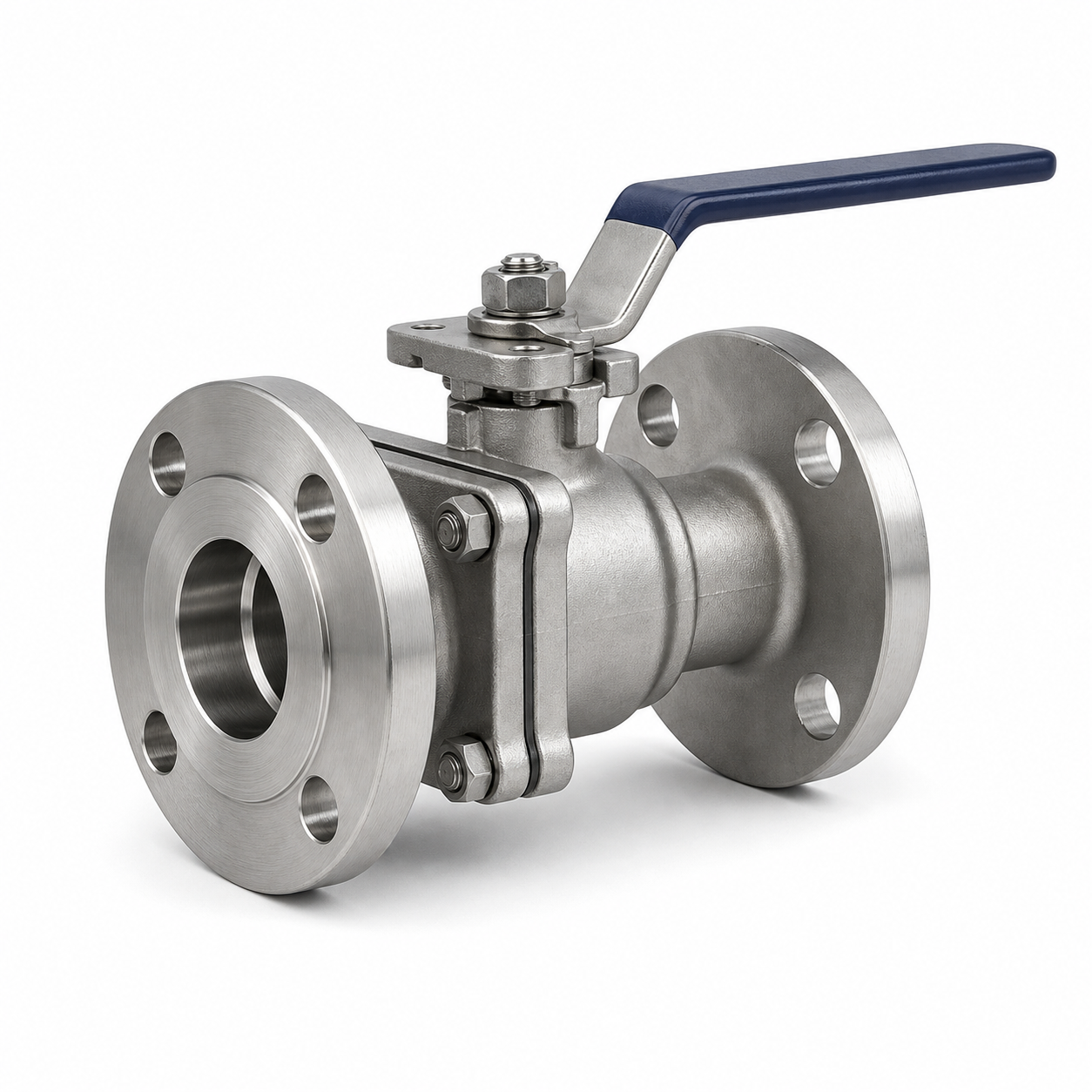
Description
Molybdenum-bearing austenitic stainless steel industrial valve
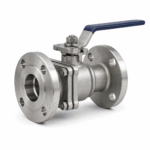
316 Stainless Steel Floating Ball Valve
A widely specified corrosion-resistant valve material for chemical, pharmaceutical, water and general process systems. The floating ball valve configuration is engineered for fast on-off isolation in process and utility piping.
What is a 316 Stainless Steel Floating Ball Valve?
A 316 Stainless Steel Floating Ball Valve combines a molybdenum-bearing chromium-nickel austenitic stainless steel family with improved resistance to localized corrosion compared with 304 in many environments with a compact quarter-turn isolation design in which line pressure loads the floating ball against the downstream seat.
316 is a common market description; cast valve bodies are generally specified as CF8M or low-carbon CF3M, while forged parts use F316 or F316L. Floating-ball suitability depends on size, differential pressure, seat load, operating torque and cavity-pressure behavior.
316 Stainless Steel Floating Ball Valve specifications
| Product | 316 Stainless Steel Floating Ball Valve |
|---|---|
| Valve construction | One-, two- or three-piece floating-ball construction; full or reduced bore |
| Nominal material | 316 Stainless Steel |
| UNS / EN reference | UNS S31600/S31603; EN 1.4401/1.4404 |
| Product forms | Wrought ASTM A182 F316/F316L; cast ASTM A351 CF8M/CF3M; exact component specification stated on order |
| Design standards | API 608, ISO 17292 and ASME B16.34; API 6D only when specifically designed and ordered |
| Pressure testing | API 598 or project-specified shell and closure testing |
| Pressure rating | ASME Class or PN rating verified against exact material, size, construction and design temperature |
| End connections | RF/RTJ flanged, threaded, socket-weld or butt-weld according to design |
| Operation | Lever, gearbox, pneumatic or electric actuator |
| Documentation | EN 10204 3.1 material records, pressure test report, GA drawing and project inspection records as ordered |
This is an engineered inquiry product, not a universal stock specification. Final availability depends on valve size, pressure class, material form, trim, seat system, operator, quantity and required code edition.
316 Stainless Steel material selection
| Selection point | Engineering guidance |
|---|---|
| Material profile | a molybdenum-bearing chromium-nickel austenitic stainless steel family with improved resistance to localized corrosion compared with 304 in many environments |
| Why it is selected | Good fabrication, broad availability and improved pitting resistance over 304 in many moderately chloride-bearing services. |
| Typical service | Chemical processing, pharmaceutical, food, clean utilities and selected chloride-bearing water service. |
| Limitations to check | Warm chlorides, crevices and seawater can exceed 316 capability. Reducing acids and mixed contaminants require service-specific corrosion data. |
| Specification route | Wrought ASTM A182 F316/F316L; cast ASTM A351 CF8M/CF3M; exact component specification stated on order |
| Verification | MTC and heat traceability with PMI for molybdenum verification when ordered; low-carbon grade and solution condition confirmed as required. |
Floating Ball Valve design and standards
API 608 / ISO 17292
Common design bases for industrial metal ball valves; exact scope and edition must be stated.
ASME B16.34
Pressure-temperature, material, design, examination, testing and marking requirements within scope.
API 598
Common shell and closure pressure-testing basis when specified.
API 607 / API 6FA
Fire-test qualification applies only to the exact offered seat, seal and valve configuration.
Seat polymer or metal, ball/stem alloy, packing, anti-static device, blowout-resistant stem, cavity relief and actuator torque must be selected together.
Fire-safe, fugitive-emission, sour-service, oxygen, cryogenic, chlorine and PED requirements apply only when explicitly defined and supported for the exact offered configuration.
Typical applications
| Industry | Material service context | Valve selection focus |
|---|---|---|
| Chemical processing | Compatible organic chemicals, solvents and moderate corrosive process streams | Seat compatibility, differential pressure, cavity relief, torque and fire-safe/emissions requirements |
| Pharmaceutical | Clean process, purified water and hygienic utility systems | Seat compatibility, differential pressure, cavity relief, torque and fire-safe/emissions requirements |
| Food and beverage | Product transfer and cleaning systems within chloride limits | Seat compatibility, differential pressure, cavity relief, torque and fire-safe/emissions requirements |
| Water treatment | Treated water and selected moderate-chloride service after review | Seat compatibility, differential pressure, cavity relief, torque and fire-safe/emissions requirements |
Application examples are not a corrosion or design approval. The end user must verify process chemistry, contaminants, pressure, temperature, velocity, cycling, emissions and regulatory requirements.
Quality, testing and traceability
Heat-number traceability and EN 10204 3.1 records matched to the ordered component specifications.
MTC and heat traceability with PMI for molybdenum verification when ordered; low-carbon grade and solution condition confirmed as required.
API 598 or project-specified shell and closure testing, with acceptance and leakage criteria stated on the order.
GA drawing, dimensions, marking, operation, pressure test and specified NDE/third-party records.
RFQ checklist
- Valve design standard and required edition
- Nominal size and ASME Class or PN rating
- Exact material specifications for pressure boundary, trim, seats, packing and bolting
- Full or reduced bore, seat material, cavity relief, anti-static/fire-safe and actuator requirements
- End connection, facing and face-to-face requirement
- Fluid composition, concentration, contaminants and solids
- Design and operating pressure/temperature
- PMI, corrosion testing, NDE, witnessing and document requirements
Frequently asked questions
What is the cast equivalent commonly used for 316 valve bodies?
ASTM A351 CF8M is commonly associated with cast 316-type chemistry and CF3M with low-carbon 316L-type chemistry. They remain distinct casting grades with their own requirements.
Is 316 stainless steel suitable for seawater?
Not automatically. Temperature, oxygen, velocity, crevices, deposits and residual chlorine can cause localized attack. Duplex, super duplex or higher-alloy materials are often evaluated for demanding seawater duty.
Why is PMI requested for 316 valves?
PMI helps distinguish molybdenum-bearing 316-type components from visually similar 304-type material and supports material traceability in alloy-controlled projects.
How does a floating ball valve achieve shutoff?
Line pressure moves the ball slightly toward the downstream seat, producing pressure-assisted sealing. Seat material and geometry control leakage and operating torque.
When should a trunnion-mounted design be considered?
Trunnion mounting is commonly evaluated as size, pressure, torque, seat-load control or pipeline-service requirements increase.
Can 316 Stainless Steel be used for every component in this floating ball valve?
Not automatically. Pressure-boundary, trim, stem or shaft, seating, packing, gasket and bolting materials have different mechanical and corrosion duties. The complete bill of materials must be engineered for the service.
Related 316 Stainless Steel valve products
Need a broader comparison? View the general stainless steel and alloy ball valves guide or browse all Ball Valves.
Request a 316 Stainless Steel Floating Ball Valve quotation
Send the valve specification, exact material grades, size, pressure class, operating conditions, quantity and inspection requirements for technical review.