
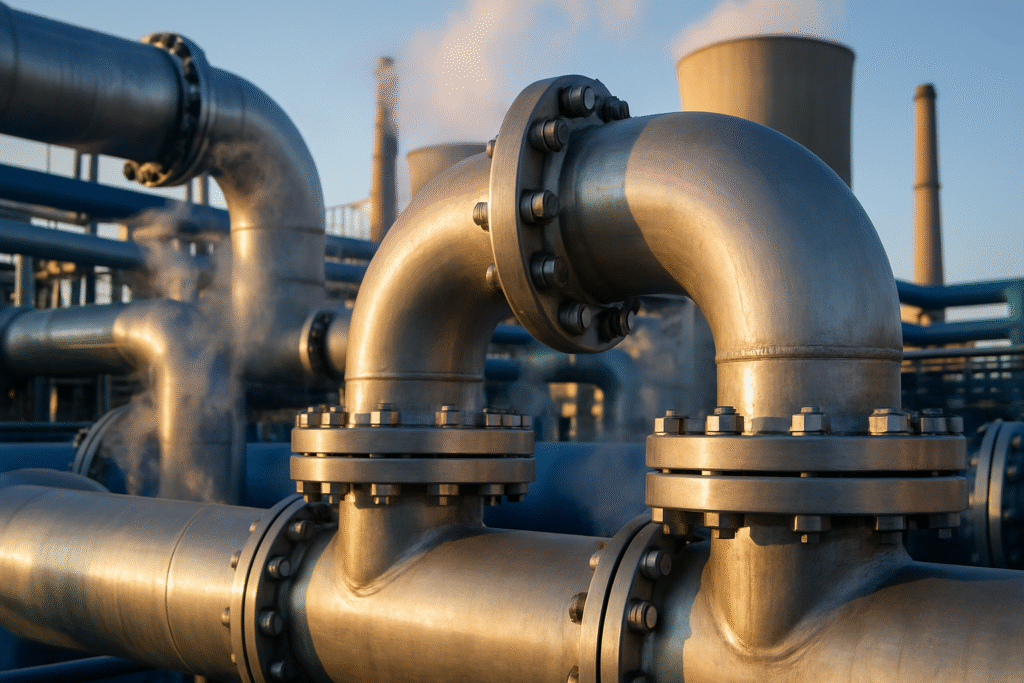
Flange de tubo de aço inoxidável: 7 Vantagens ocultas baseadas em dados, Tipos, Usos, e como escolher o flange certo
O mercado de flanges para tubos de aço inoxidável está se expandindo à medida que as indústrias de processo exigem maior resistência à corrosão, controle de qualidade mais rígido, e maior vida útil. De acordo com a pesquisa Grand View (2024), o mercado global de flanges industriais foi avaliado em $5.8 bilhão em 2023 e está projetado para atingir $7.2 bilhão por 2030, which makes stainless steel pipe flange selection more strategic than ever.
Para engenheiros e compradores, a parte intrigante não é apenas o custo do material. The hidden advantages of stainless steel pipe flange products include reduced maintenance, melhor limpeza, stronger corrosion performance, and broader compatibility with critical pipe systems.
Market Demand for Stainless Steel Pipe Flange in Global Industrial Systems
Demand for stainless steel pipe flange products continues to rise across oil and gas, petroquímico, marinho, e projetos de tratamento de água. De acordo com IBISWorld (2024), Ásia-Pacífico é responsável por mais de 45% da produção global de flanges, sendo a China o maior fabricante.
Essa concentração regional é importante para as equipes de compras. Afeta os prazos de entrega, mill sourcing, capacidade de usinagem, and price stability for standard and custom flange orders.
Além disso, stainless grades have become more important as operators push for longer design life in aggressive environments. De acordo com Statista (2024), a indústria de petróleo e gás é responsável por aproximadamente 35% do consumo global de flanges, which explains why corrosion resistant flanges remain a high-priority category.
Em paralelo, atualizações de refinaria, Terminais de GNL, and offshore projects are increasing demand for ASTM A182 F304, F316, F316L, duplex, and super duplex flange solutions. Portanto, os compradores estão comparando não apenas o preço, mas também rastreabilidade, EN 10204 3.1 documentos de inspeção, e conformidade com ASME B16.5, ASME B16.47, DIN, e PT 1092 requisitos.
De acordo com a Inteligência Mordor (2024), global water and wastewater infrastructure investment is rising steadily as utilities replace aging metallic systems. Como resultado, stainless steel flange and fittings are gaining share in desalination, municipal water, and industrial effluent treatment where chlorides and hygiene matter.
De acordo com a Pesquisa de Mercado Futuro (2024), specialty alloy demand in industrial piping is growing at more than 4% annually as operators upgrade systems for harsher temperature and corrosion conditions. That trend supports growth in 316L, 904eu, 2205, 2507, Monel, Hastelloy, and titanium flange applications.
Buyers also expect suppliers to provide more than a catalog item. Eles querem precisão de usinagem, PMI, hydrostatic support documentation, verificação de dureza, and dimensional conformity to recognized standards.
That is where manufacturers with established export systems have an advantage. SASA FLANGE serves industrial customers with ISO 9001:2015 e certificações PED 2014/68/EU, while supplying stainless steel flanges and fittings in 304, 316, 316eu, 904eu, 2205, 2507, e outras notas premium.
Adicionalmente, factory-direct production can improve project economics when specifications are clear. Oferecendo tamanhos personalizados de 1/2 polegada para 60 inch with competitive pricing is especially relevant for EPC contractors handling mixed standard and non-standard flange packages.
The competitor landscape often focuses on material names alone. No entanto, procurement teams usually need deeper guidance on flange types, aulas de pressão, opções de enfrentamento, and how to choose a flange for a given pipe schedule and service condition.
That is why a stronger B2B article must go beyond generic descriptions. It should connect stainless, aço, flange, cano, tipos, usa, and hidden advantages in a practical framework for design and sourcing decisions.
Hidden Advantages of Stainless Steel Pipe Flange Types and How Engineers Choose Them
The hidden advantages of a stainless steel pipe flange become clearer when lifecycle cost is evaluated instead of only unit price. According to NACE corrosion guidance and industry maintenance studies, corrosion-related damage can account for significant operating losses in process facilities, making material selection a primary reliability lever (NACE, 2023).
Como John Reynolds, corrosion and materials consultant, estados: “The cheapest flange at purchase is rarely the cheapest flange in service when corrosion, risco de vazamento, and replacement shutdowns are included.” That principle applies directly to pipe systems in chloride-bearing, azedo, or high-purity environments.
Stainless steel flange types are selected by pressure, temperatura, método de montagem, e filosofia de manutenção. Portanto, engineers must align the flange design with process loads, gasket requirements, and welding practice.
- Flange de pescoço soldado: preferido para alta pressão, carregamento cíclico, e linhas de processo críticas.
- Deslizar no flange: economical for lower pressure systems and easier alignment during fabrication.
- Flange cega: usado para isolar, teste, or future-proof process ends.
- Flange de solda de soquete: adequado para furo pequeno, tubulação de alta pressão.
- Flange roscada: useful where welding is restricted or field assembly must be simplified.
- Flange de junta sobreposta: chosen where frequent dismantling is required and stub ends are used.
Material choice is equally important. ASTM A182 governs forged or rolled alloy and stainless steel pipe flanges for pressure systems, while dimensions are commonly specified by ASME B16.5 e ASME B16.47 para diâmetros maiores (ASME, 2023).
For many general industrial applications, 304 and 304L remain common because they balance corrosion resistance, disponibilidade, e custo. No entanto, 316 and 316L offer better pitting resistance in chloride service due to molybdenum addition, which often justifies the premium in marine or chemical environments.
According to ASTM material guidance, low-carbon grades such as 304L and 316L reduce the risk of sensitization after welding, especially in heavy-section assemblies (ASTM, 2023). Portanto, they are frequently specified for welded pipe flange systems that require robust corrosion performance in the heat-affected zone.
For stronger chloride resistance, duplex grades like 2205 e superduplex 2507 provide higher strength and improved stress corrosion cracking resistance. According to industry alloy performance data, duplex materials can deliver nearly double the yield strength of standard austenitic stainless steels in many service conditions (Inteligência Mordor, 2024).
Como Dr.. Ravi Singh, engenheiro de materiais, estados: “When pressure, cloretos, and weight reduction matter together, duplex flange selection can unlock both mechanical and corrosion advantages.” That insight is particularly useful for offshore skids, módulos superiores, and seawater lines.
Engineers also compare facing options because gasket seating affects long-term sealing reliability. Common choices include RF, FF, RTJ, língua e sulco, and male-female configurations depending on class rating and service criticality.
- Rosto levantado (RF): the most widely used facing for ASME B16.5 flanges.
- Rosto plano (FF): common in low-pressure or cast equipment connections.
- Junta tipo anel (RTJ): preferred in high-pressure and high-temperature oil and gas service.
Another hidden advantage is cleanliness. Stainless steel pipe flange assemblies are often preferred in food, farmacêutico, água ultrapura, and sanitary-adjacent systems because they support easier cleaning and lower contamination risk when properly finished.
According to ISO quality guidance, controlled manufacturing and inspection improve dimensional repeatability and traceability in pressure components (ISO, 2023). Como resultado, buyers increasingly request CNC-machined flange faces, PMI, ferrite checks when needed, and documented heat numbers.
SASA FLANGE supports these procurement expectations through advanced CNC machining and comprehensive quality testing. Backed by EN 10204 3.1 documentation capability and export experience, the company supplies forged stainless steel flange products for oil and gas, petroquímico, poder, marinho, e setores de tratamento de água.
Em termos práticos, how do buyers choose a flange? They start with process data, applicable standards, classe de linha, tolerância à corrosão, e método de instalação. Depois disso, they compare stainless steel flange types against total ownership cost rather than only a short-term price target.
That is where a specification-driven sourcing approach creates value. It helps prevent under-grading, over-specifying, or purchasing a flange that fits the pipe dimension but not the service environment.
ASME, ASTM, DIN, e normas EN que regem a qualidade dos flanges de tubos de aço inoxidável
Industrial buyers should treat standards compliance as a first-line qualification filter. A stainless steel pipe flange that looks correct dimensionally can still create risk if material chemistry, classificação de pressão, enfrentando tolerâncias, or testing documentation do not meet code requirements.
ASME B16.5 cobre flanges de tubos e acessórios flangeados da NPS 1/2 através 24. ASME B16.47 extends coverage to larger diameter flanges, enquanto ASME B16.9 applies to factory-made wrought buttwelding fittings used in related pipe systems (ASME, 2023).
ASTM A182 defines forged or rolled alloy and stainless steel pipe flange material requirements for pressure service. ASTM A240 is relevant for plate products, enquanto ASTM A403 e ASTM A815 apply to stainless and duplex wrought fittings used alongside flange assemblies.
Os projectos europeus especificam frequentemente EN 1092 flange dimensions and PED 2014/68/EU compliance. Portanto, exporters serving global EPC packages must understand both ASME and EN systems rather than treating them as interchangeable.
- ASME B16.5: dimensões, tolerâncias, classificações de pressão-temperatura, marcações, and materials for common flange sizes.
- ASME B16.47: flanges de grande diâmetro, normalmente NPS 26 para 60.
- ASTM A182: forged stainless and alloy material specification for flanges and fittings.
- EN 1092-1: European flange standard used in many PED-regulated projects.
- Padrões DIN: still referenced in legacy industrial and European installations.
- NACE MR0175 / ISO 15156: material guidance for H2S-containing oil and gas environments.
De acordo com a estrutura PED da Comissão Europeia, pressure equipment suppliers must demonstrate conformity when products fall under the directive scope (DEP, 2014/68/UE). Consequentemente, documentation quality becomes as important as machining quality for many export orders.
Procurement teams should also compare pressure class and temperature limitations carefully. Aula 150, 300, 600, 900, 1500, e 2500 flanges each have different pressure-temperature ratings that vary by material group under ASME rules.
Por exemplo, a 316L stainless steel flange in Class 300 may fit the size requirement, yet the design pressure at operating temperature must still be verified against the applicable rating table. Além disso, seleção de juntas, aparafusamento, and flange facing condition affect the final joint reliability.
Critical compliance checkpoints usually include the following items.
- Correct ASTM grade and heat treatment status.
- Dimensional conformity to ASME, DIN, JIS, GOST, or EN standard.
- Pressure class and facing verification.
- Positive material identification for stainless and alloy grades.
- EN 10204 3.1 certificado de inspeção.
- DEP, ANÚNCIO 2000, or client-specific documentation when required.
- NACE compliance review for sour service applications.
Como Laura Chen, engenheiro de tubulação sênior, estados: “Most flange failures start long before startup, usually with mismatched standards, weak traceability, or an incorrect assumption about service severity.” That is why experienced buyers audit both the drawing and the documentation package.
Com ISO 9001:2015, PED 2014/68/EU, e ANÚNCIO 2000 certificações, SASA FLANGE aligns well with projects that require controlled manufacturing records and export-ready compliance. Fabricação de flanges em 304, 316, 904eu, 2205, 2507, A105, A182, Inconel, Monel, Hastelloy, and titanium also supports mixed-material procurement for complex plants.
Além disso, buyers should ask whether the supplier can coordinate flange and fitting packages together. Combinando cotovelos, camisetas, redutores, bonés, and flanges under one QA system can reduce interface risk during inspection and site installation.
How to Choose the Right Flange for Oil and Gas, Químico, Poder, and Marine Pipe Systems
Choosing the right flange starts with service conditions, não preferência de catálogo. The engineer must review fluid composition, nível de cloreto, pressão de projeto, faixa de temperatura, cronograma de tubulação, tolerância à corrosão, e acesso para manutenção.
Em petróleo e gás, pressure integrity and sour service compatibility often dominate. Portanto, weld neck flange and RTJ combinations are common for high-pressure hydrocarbon lines, enquanto NACE MR0175 review may be necessary for H2S service.
De acordo com Statista (2024), oil and gas uses about 35% de flanges globais. That large share explains why API-related searches such as API flanges, API flange catalogue, API flanges Houston, and API weld neck flange remain important in procurement research.
No processamento químico, corrosion resistance usually drives the decision. Por exemplo, 316L pode ser adequado para serviços moderados de cloreto, mas 904L, duplex 2205, or nickel alloys may be better for stronger acids, cloretos mistos, or higher localized corrosion risk.
Power generation projects focus on temperature, classe de pressão, and reliability under cycling loads. De acordo, weld neck flange designs and upgraded material grades are often selected for steam, condensado, and boiler-adjacent applications.
Marine and shipbuilding projects face chloride exposure, zonas de respingo, and maintenance constraints. Como resultado, 316eu, duplex 2205, e superduplex 2507 are frequently evaluated for ballast, água do mar, aguardente, and deck piping systems.
Buyers can streamline flange selection with a practical checklist.
- Confirme o padrão governante: ASME, EN, DIN, JIS, ou especificação do projeto.
- Match flange size to pipe NPS, agendar, and end preparation.
- Verify pressure class against design temperature.
- Choose the correct material grade for corrosion and strength requirements.
- Select facing type based on gasket design and service severity.
- Review welding, inspeção, and heat treatment requirements.
- Solicitar EN 10204 3.1, PMI, and additional test reports when needed.
Cost evaluation should include more than the stainless steel pipe flange price. It should also consider downtime risk, spare strategy, coating avoidance, expected maintenance, and replacement intervals.
Por exemplo, um 4 inch stainless steel pipe flange may cost more than a carbon steel alternative at purchase. No entanto, in corrosive wet service, the stainless option can reduce repainting, leakage intervention, and unplanned shutdown exposure.
Buyers also ask about stainless steel pipe flange sizes, threaded options, e acessórios correspondentes. A capable supplier should support standard sizes, usinagem personalizada, bore modifications, and complete packages of stainless steel flanges and fittings.
That flexibility is important for project schedules. SASA FLANGE offers custom manufacturing for flanges and pipe fittings, incluindo cotovelos, camisetas, redutores, e bonés, which helps EPC teams consolidate sourcing and simplify inspections.
When evaluating flange manufacturers, procurement managers should compare five factors. These include traceability, precisão de usinagem, controle de matéria-prima, export documentation capability, and responsiveness during technical clarification.
Those factors matter because flange issues often emerge at handover, not at RFQ stage. Portanto, a supplier that can answer material substitution, tolerância dimensional, and certification questions quickly usually reduces total project friction.
Perspectivas futuras para aquisição de flanges de tubos de aço inoxidável e recomendações estratégicas de compra
A perspectiva para a demanda por flanges de tubos de aço inoxidável permanece positiva porque a infraestrutura, transição energética, and process modernization continue to support industrial investment. De acordo com a pesquisa Grand View (2024), the flange market will expand from $5.8 bilhão em 2023 para $7.2 bilhão por 2030.
Ao mesmo tempo, o comportamento de compras está mudando. Buyers want faster drawings, prazos de entrega mais curtos, stronger documentation, and multi-standard supply from one manufacturing source.
De acordo com IBISWorld (2024), Asia-Pacific contributes more than 45% da produção global de flanges. Portanto, supplier selection in China and broader Asia will remain central to cost competitiveness and capacity planning.
No entanto, the lowest quote is not always the best result. Em contraste, strategic buyers increasingly favor manufacturers that combine premium grades, Usinagem CNC, apoio à inspeção, and stable export experience.
Three recommendations stand out for industrial sourcing teams.
- Standardize preferred flange specifications by service category to reduce engineering variation.
- Pre-qualify suppliers on standards compliance, certificados, and documentation speed.
- Evaluate total lifecycle value, especially for corrosive and critical pipe services.
Além disso, buyers should build a material hierarchy before tendering. Por exemplo, they can define where 304L is acceptable, where 316L is mandatory, and where duplex or nickel alloys provide better lifecycle economics.
Digital procurement will also change how flange manufacturers compete. Catalog depth still matters, yet technical responsiveness, revisão de desenho, and traceable QA records increasingly influence shortlist decisions.
For projects requiring certified stainless steel pipe flange products in 304, 316, 316eu, 904eu, 2205, e 2507, working with an experienced source such as SASA FLANGE can simplify both engineering review and commercial execution. Servindo 50+ países em petróleo e gás, petroquímico, poder, e indústrias marítimas, the company is positioned to support buyers who need reliable flange types, tamanhos personalizados, and standards-based documentation.
Perguntas frequentes
O que é melhor 304 ou 420 aço inoxidável?
●304 stainless steel is generally better for stainless steel pipe flange applications because it offers stronger corrosion resistance and broader weldability than 420.
●420 stainless is a martensitic grade with higher hardness, but it is less suitable for corrosive pipe service and is rarely the first choice for standard ASME B16.5 process flanges.
●According to ASTM stainless material classifications and common industry practice, 304 and 304L are among the most widely specified austenitic grades for industrial flanges because they balance formability, soldabilidade, e custo.
●Para equipes de compras, the choice depends on service conditions because 420 may suit wear-oriented components, enquanto 304 is usually preferred for chemical, água, comida, and general industrial pipe systems.
●For projects requiring reliable forged flange supply in ASTM A182 F304 or F304L, trabalhando com fabricantes estabelecidos como SASA FLANGE ajuda a garantir a rastreabilidade, precisão dimensional, e documentação de exportação.
Qual é o código ASME para flanges de aço inoxidável?
●O principal padrão ASME para dimensões e classificações de flanges de tubos de aço inoxidável é ASME B16.5 para NPS 1/2 através 24, enquanto ASME B16.47 cobre diâmetros maiores.
●The material itself is commonly specified under ASTM A182 for forged stainless steel flanges used in pressure service, so buyers should review both the dimensional standard and the material standard together.
●De acordo com a ASME (2023), B16.5 defines pressure-temperature ratings, tolerâncias, dimensões voltadas, marcação, and testing references for common flange classes such as 150, 300, 600, 900, 1500, e 2500.
●Na prática, engineers also verify related requirements such as gasket compatibility, aparafusamento, and any project-specific PED or EN 1092 obligations before final approval.
●If your project needs ASME-compliant stainless flanges with EN 10204 3.1 documentação, SASA FLANGE can support technical review and quotation alignment.
Quais são os 5 tipos de aço inoxidável?
●The five main types of stainless steel are austenitic, ferrítico, martensítico, duplex, e aços inoxidáveis endurecidos por precipitação.
●Na fabricação de flanges, graus austeníticos, como 304, 304eu, 316, and 316L are the most common, enquanto as classes duplex, como 2205 e 2507 are selected for higher strength and better chloride resistance.
●According to industry materials data cited by Mordor Intelligence (2024), duplex stainless steels can provide nearly twice the yield strength of common austenitic grades in many service conditions, which makes them valuable in offshore and chemical process systems.
●Martensitic grades like 420 are harder but less corrosion resistant, while ferritic and precipitation-hardening grades are used in more specialized roles depending on forming, força, and temperature needs.
●Para compradores de flanges, the best recommendation is to choose the stainless family based on corrosion mechanism, welding demands, and code requirements rather than selecting by price alone.
Qual indústria usa mais aço inoxidável?
●Heavy process industries and construction consume major stainless steel volumes, but within flange demand the oil and gas sector is one of the largest end users.
●De acordo com Statista (2024), a indústria de petróleo e gás é responsável por aproximadamente 35% do consumo global de flanges, which reflects the sector’s extensive use of pressure piping, válvulas, separadores, and rotating equipment connections.
●Petroquímica, geração de energia, construção naval, tratamento de água, and food processing also use large quantities of stainless steel flanges because corrosion resistance, higiene, and lifecycle reliability are critical in those environments.
●Por exemplo, marine systems often favor 316L or duplex materials, while chemical plants may upgrade to 904L or nickel alloys depending on acid concentration and chloride content.
●If you are sourcing for oil and gas, marinho, or water treatment projects, fabricantes como SASA FLANGE can help match stainless grades and flange types to the actual service profile.
How do I choose the right stainless steel flange type for a pipe system?
●The correct stainless steel flange type depends on pressure class, temperatura, tamanho do tubo, método de montagem, and the corrosiveness of the media.
●Weld neck flanges are commonly chosen for high-pressure or cyclic service, slip on flanges suit lower-pressure fabrication needs, threaded flanges help where welding is limited, and blind flanges isolate line ends for inspection or future expansion.
●De acordo com ASME B16.5 and standard piping practice, facing style and pressure class must be verified together because an RF Class 300 flange is not interchangeable with an RTJ Class 600 flange even if the nominal pipe size is the same.
●Engineers should also review ASTM material grade, procedimento de soldagem, NACE requirements for sour service, e se EN 10204 3.1 or PMI reports are required by the client specification.
●The best recommendation is to submit service conditions and line data to a qualified manufacturer before purchasing, especially for custom bores, diâmetros maiores, or mixed-standard projects.
O que afeta o preço e o prazo de entrega do flange do tubo de aço inoxidável?
●O preço do flange do tubo de aço inoxidável é afetado principalmente pela qualidade do material, tipo de flange, tamanho, classe de pressão, raw material volatility, complexidade de usinagem, e requisitos de inspeção.
●Classes como 316L, 904eu, 2205, e 2507 usually cost more than 304 because alloy content and processing requirements are higher, while RTJ or large-diameter weld neck flanges often carry longer machining time than simple slip on designs.
●De acordo com a pesquisa Grand View (2024), o mercado de flanges industriais atingiu $5.8 bilhão em 2023, and that scale means pricing is influenced by both global demand and regional production dynamics, especially across Asia-Pacific manufacturing hubs.
●Lead time also depends on whether the order is standard stock, made-to-order, or fully custom with extra tests such as PMI, dureza, ferrita, or third-party inspection.
●To control cost and delivery risk, buyers should issue complete specifications early and confirm documentation needs before production starts with the selected supplier.
Posts Relacionados
Acabamento da face do flange: Serrilhas concêntricas vs espirais explicadas
As serrilhas concêntricas e espirais são acabamentos de face de flange usinados…
Dúplex 2205 vs Flanges 316L: Qual material você deve escolher?
Resposta rápida: Dúplex 2205 flanges são geralmente o candidato mais forte…

Definição de flange de orifício, Detalhes e visão geral dos flanges ASME B16.36: Dados de mercado, Guia de seleção e insights de conformidade
O mercado global de flanges industriais foi avaliado em $5.8 bilhão…

Guia de mercado de flange de descarte preto: Materiais, 3.5″ Compatibilidade, e dados de fornecimento B2B para flanges de pia de cozinha
A demanda por flanges descartáveis pretos está aumentando à medida que os compradores de utensílios de cozinha…