
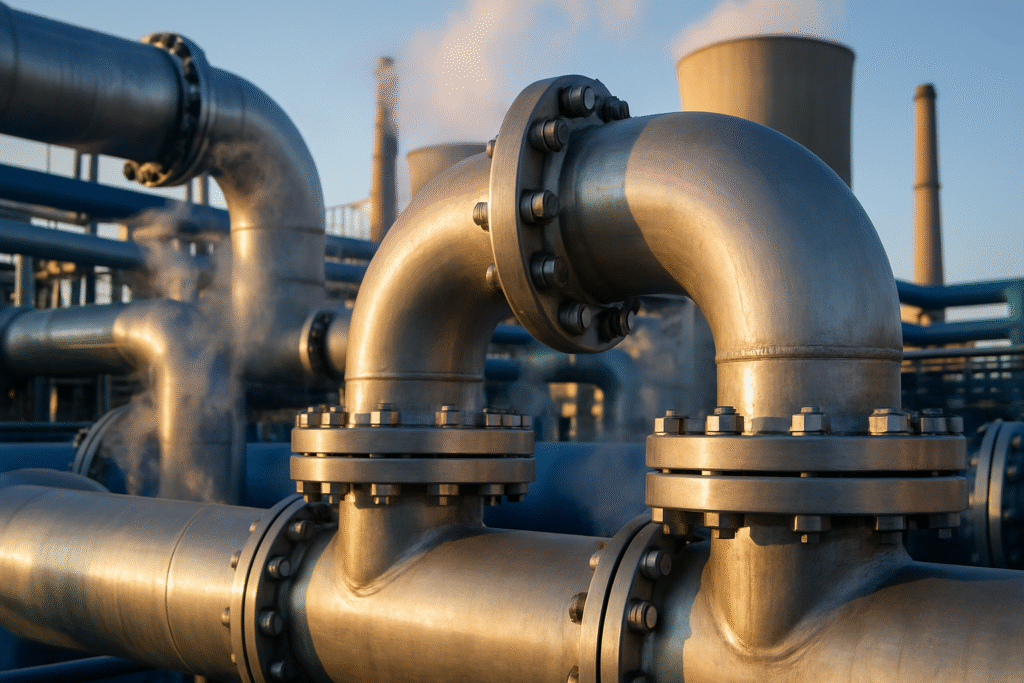
ステンレス鋼管フランジ: 7 データに裏付けられた隠れた利点, 種類, 用途, および適切なフランジの選択方法
プロセス産業のさらなる耐食性の要求に伴い、ステンレス鋼管フランジ市場が拡大, より厳格な品質管理, そしてより長い耐用年数. グランドビューリサーチによると (2024), 世界の工業用フランジ市場は次のように評価されました。 $5.8 億で 2023 に達すると予測されています $7.2 10億まで 2030, which makes stainless steel pipe flange selection more strategic than ever.
エンジニアとバイヤー向け, 興味深いのは材料費だけではない. The hidden advantages of stainless steel pipe flange products include reduced maintenance, より良い清潔さ, stronger corrosion performance, and broader compatibility with critical pipe systems.
Market Demand for Stainless Steel Pipe Flange in Global Industrial Systems
Demand for stainless steel pipe flange products continues to rise across oil and gas, 石油化学, 海洋, および水処理プロジェクト. IBISWorldによると (2024), アジア太平洋地域が占める割合は超過 45% 世界のフランジ生産量の, 中国が最大の製造国である.
調達チームにとって地域集中が重要であること. リードタイムに影響する, mill sourcing, 加工能力, and price stability for standard and custom flange orders.
さらに, stainless grades have become more important as operators push for longer design life in aggressive environments. 統計局によると (2024), 石油・ガス産業が約 35% 世界のフランジ消費量の, which explains why corrosion resistant flanges remain a high-priority category.
並行して, refinery upgrades, LNG基地, and offshore projects are increasing demand for ASTM A182 F304, F316, F316L, デュプレックス, and super duplex flange solutions. したがって, 買い手は価格だけを比較しているわけではありません, トレーサビリティも, EN 10204 3.1 検査書類, との遵守 ASME B16.5, ASME B16.47, DIN, とEN 1092 要件.
モルドール情報局によると (2024), global water and wastewater infrastructure investment is rising steadily as utilities replace aging metallic systems. 結果として, stainless steel flange and fittings are gaining share in desalination, municipal water, and industrial effluent treatment where chlorides and hygiene matter.
マーケットリサーチの将来によると (2024), specialty alloy demand in industrial piping is growing at more than 4% annually as operators upgrade systems for harsher temperature and corrosion conditions. That trend supports growth in 316L, 904l, 2205, 2507, モネル, ハステロイ, and titanium flange applications.
Buyers also expect suppliers to provide more than a catalog item. They want machining accuracy, PMI, hydrostatic support documentation, 硬さの検証, and dimensional conformity to recognized standards.
That is where manufacturers with established export systems have an advantage. SASA FLANGE serves industrial customers with ISO 9001:2015 および PED 2014/68/EU 認証, while supplying stainless steel flanges and fittings in 304, 316, 316l, 904l, 2205, 2507, その他のプレミアムグレード.
さらに, factory-direct production can improve project economics when specifications are clear. カスタムサイズを提供 1/2 インチから 60 inch with competitive pricing is especially relevant for EPC contractors handling mixed standard and non-standard flange packages.
The competitor landscape often focuses on material names alone. しかし, procurement teams usually need deeper guidance on flange types, 圧力クラス, 直面する選択肢, and how to choose a flange for a given pipe schedule and service condition.
That is why a stronger B2B article must go beyond generic descriptions. It should connect stainless, 鋼鉄, フランジ, パイプ, 種類, 用途, and hidden advantages in a practical framework for design and sourcing decisions.
Hidden Advantages of Stainless Steel Pipe Flange Types and How Engineers Choose Them
The hidden advantages of a stainless steel pipe flange become clearer when lifecycle cost is evaluated instead of only unit price. According to NACE corrosion guidance and industry maintenance studies, corrosion-related damage can account for significant operating losses in process facilities, making material selection a primary reliability lever (ネイス, 2023).
ジョン・レイノルズ役, corrosion and materials consultant, 州: “The cheapest flange at purchase is rarely the cheapest flange in service when corrosion, 漏洩リスク, and replacement shutdowns are included.” That principle applies directly to pipe systems in chloride-bearing, 酸っぱい, or high-purity environments.
Stainless steel flange types are selected by pressure, 温度, 組み立て方法, メンテナンス哲学. したがって, engineers must align the flange design with process loads, gasket requirements, そして溶接の練習.
- ウェルドネックフランジ: 高圧に好ましい, 循環ロード, 重要なプロセスライン.
- スリップオンフランジ: economical for lower pressure systems and easier alignment during fabrication.
- ブラインドフランジ: used to isolate, テスト, or future-proof process ends.
- ソケットウェルドフランジ: 小口径に適しています, 高圧配管.
- ねじ付きフランジ: useful where welding is restricted or field assembly must be simplified.
- 重ね継手フランジ: chosen where frequent dismantling is required and stub ends are used.
Material choice is equally important. ASTM A182 governs forged or rolled alloy and stainless steel pipe flanges for pressure systems, while dimensions are commonly specified by ASME B16.5 そして ASME B16.47 より大きな直径用 (ASME, 2023).
多くの一般産業用途向け, 304 and 304L remain common because they balance corrosion resistance, 可用性, そしてコスト. しかし, 316 and 316L offer better pitting resistance in chloride service due to molybdenum addition, which often justifies the premium in marine or chemical environments.
ASTM 材料ガイダンスによると, low-carbon grades such as 304L and 316L reduce the risk of sensitization after welding, especially in heavy-section assemblies (ASTM, 2023). したがって, they are frequently specified for welded pipe flange systems that require robust corrosion performance in the heat-affected zone.
For stronger chloride resistance, duplex grades like 2205 そしてスーパーデュプレックス 2507 provide higher strength and improved stress corrosion cracking resistance. According to industry alloy performance data, duplex materials can deliver nearly double the yield strength of standard austenitic stainless steels in many service conditions (モルドール・インテリジェンス, 2024).
博士として. Ravi Singh, 材料エンジニア, 州: “When pressure, 塩化物, and weight reduction matter together, duplex flange selection can unlock both mechanical and corrosion advantages.” That insight is particularly useful for offshore skids, トップサイドモジュール, and seawater lines.
Engineers also compare facing options because gasket seating affects long-term sealing reliability. Common choices include RF, FF, RTJ, 舌と溝, and male-female configurations depending on class rating and service criticality.
- 盛り上がった顔 (RF): the most widely used facing for ASME B16.5 フランジ.
- 平面 (FF): common in low-pressure or cast equipment connections.
- リング型ジョイント (RTJ): preferred in high-pressure and high-temperature oil and gas service.
Another hidden advantage is cleanliness. Stainless steel pipe flange assemblies are often preferred in food, 製薬, 超純水, and sanitary-adjacent systems because they support easier cleaning and lower contamination risk when properly finished.
According to ISO quality guidance, controlled manufacturing and inspection improve dimensional repeatability and traceability in pressure components (ISO, 2023). 結果として, buyers increasingly request CNC-machined flange faces, PMI, ferrite checks when needed, and documented heat numbers.
SASA FLANGE supports these procurement expectations through advanced CNC machining and comprehensive quality testing. Backed by EN 10204 3.1 documentation capability and export experience, the company supplies forged stainless steel flange products for oil and gas, 石油化学, 力, 海洋, および水処理部門.
実務的には, how do buyers choose a flange? They start with process data, applicable standards, ラインクラス, 腐食代, とインストール方法. その後, they compare stainless steel flange types against total ownership cost rather than only a short-term price target.
That is where a specification-driven sourcing approach creates value. It helps prevent under-grading, over-specifying, or purchasing a flange that fits the pipe dimension but not the service environment.
ASME, ASTM, DIN, and EN Standards That Govern Stainless Steel Pipe Flange Quality
Industrial buyers should treat standards compliance as a first-line qualification filter. A stainless steel pipe flange that looks correct dimensionally can still create risk if material chemistry, 圧力定格, 面の公差, or testing documentation do not meet code requirements.
ASME B16.5 NPS のパイプ フランジとフランジ付き継手をカバーします 1/2 を通して 24. ASME B16.47 より大きな直径のフランジまでカバー範囲を拡張, その間 ASME B16.9 applies to factory-made wrought buttwelding fittings used in related pipe systems (ASME, 2023).
ASTM A182 defines forged or rolled alloy and stainless steel pipe flange material requirements for pressure service. ASTM A240 is relevant for plate products, その間 ASTM A403 そして ASTM A815 apply to stainless and duplex wrought fittings used alongside flange assemblies.
ヨーロッパのプロジェクトでは EN を指定することがよくあります 1092 flange dimensions and PED 2014/68/EU compliance. したがって, exporters serving global EPC packages must understand both ASME and EN systems rather than treating them as interchangeable.
- ASME B16.5: 寸法, 公差, 圧力温度定格, マーキング, and materials for common flange sizes.
- ASME B16.47: 大径フランジ, 通常は NPS 26 に 60.
- ASTM A182: forged stainless and alloy material specification for flanges and fittings.
- EN 1092-1: European flange standard used in many PED-regulated projects.
- DIN規格: still referenced in legacy industrial and European installations.
- NACE MR0175 / ISO 15156: material guidance for H2S-containing oil and gas environments.
欧州委員会の PED フレームワークによると, pressure equipment suppliers must demonstrate conformity when products fall under the directive scope (PED, 2014/68/欧州連合). その結果, documentation quality becomes as important as machining quality for many export orders.
Procurement teams should also compare pressure class and temperature limitations carefully. クラス 150, 300, 600, 900, 1500, そして 2500 flanges each have different pressure-temperature ratings that vary by material group under ASME rules.
例えば, a 316L stainless steel flange in Class 300 may fit the size requirement, yet the design pressure at operating temperature must still be verified against the applicable rating table. さらに, ガスケットの選択, ボルト締め, and flange facing condition affect the final joint reliability.
Critical compliance checkpoints usually include the following items.
- Correct ASTM grade and heat treatment status.
- Dimensional conformity to ASME, DIN, JIS, ゴスト, or EN standard.
- Pressure class and facing verification.
- Positive material identification for stainless and alloy grades.
- EN 10204 3.1 検査証明書.
- PED, 広告 2000, or client-specific documentation when required.
- NACE compliance review for sour service applications.
ローラ・チェン役, シニア配管エンジニア, 州: “Most flange failures start long before startup, usually with mismatched standards, weak traceability, or an incorrect assumption about service severity.” That is why experienced buyers audit both the drawing and the documentation package.
と ISO 9001:2015, PED 2014/68/EU, とAD 2000 認証, SASA FLANGE aligns well with projects that require controlled manufacturing records and export-ready compliance. フランジの製造 304, 316, 904l, 2205, 2507, A105, A182, インコネル, モネル, ハステロイ, and titanium also supports mixed-material procurement for complex plants.
加えて, buyers should ask whether the supplier can coordinate flange and fitting packages together. Combining elbows, ティー, 減速機, キャップ, and flanges under one QA system can reduce interface risk during inspection and site installation.
How to Choose the Right Flange for Oil and Gas, 化学薬品, 力, および海洋パイプシステム
Choosing the right flange starts with service conditions, カタログ優先ではない. The engineer must review fluid composition, 塩化物濃度, 設計圧力, 温度範囲, パイプスケジュール, 腐食代, およびメンテナンスアクセス.
石油とガスにおいて, pressure integrity and sour service compatibility often dominate. したがって, weld neck flange and RTJ combinations are common for high-pressure hydrocarbon lines, その間 NACE MR0175 review may be necessary for H2S service.
統計局によると (2024), 石油とガスの使用について 35% グローバルフランジの. That large share explains why API-related searches such as API flanges, API flange catalogue, API flanges Houston, and API weld neck flange remain important in procurement research.
化学処理において, 通常、耐食性が決定の決め手になります. 例えば, 316L may suit moderate chloride service, でも904L, デュプレックス 2205, or nickel alloys may be better for stronger acids, mixed chlorides, or higher localized corrosion risk.
Power generation projects focus on temperature, 圧力クラス, and reliability under cycling loads. それに応じて, weld neck flange designs and upgraded material grades are often selected for steam, 凝縮水, and boiler-adjacent applications.
Marine and shipbuilding projects face chloride exposure, スプラッシュゾーン, and maintenance constraints. 結果として, 316l, デュプレックス 2205, そしてスーパーデュプレックス 2507 are frequently evaluated for ballast, 海水, 防火水, and deck piping systems.
Buyers can streamline flange selection with a practical checklist.
- 準拠基準を確認する: ASME, EN, DIN, JIS, またはプロジェクト仕様書.
- Match flange size to pipe NPS, スケジュール, and end preparation.
- Verify pressure class against design temperature.
- Choose the correct material grade for corrosion and strength requirements.
- Select facing type based on gasket design and service severity.
- Review welding, 検査, and heat treatment requirements.
- リクエスト EN 10204 3.1, PMI, and additional test reports when needed.
Cost evaluation should include more than the stainless steel pipe flange price. It should also consider downtime risk, spare strategy, coating avoidance, expected maintenance, and replacement intervals.
例えば, ある 4 inch stainless steel pipe flange may cost more than a carbon steel alternative at purchase. しかし, in corrosive wet service, the stainless option can reduce repainting, leakage intervention, and unplanned shutdown exposure.
Buyers also ask about stainless steel pipe flange sizes, threaded options, と一致するフィッティング. A capable supplier should support standard sizes, カスタム加工, bore modifications, and complete packages of stainless steel flanges and fittings.
That flexibility is important for project schedules. SASA FLANGE offers custom manufacturing for flanges and pipe fittings, 肘も含めて, ティー, 減速機, そしてキャップ, which helps EPC teams consolidate sourcing and simplify inspections.
When evaluating flange manufacturers, procurement managers should compare five factors. These include traceability, 加工精度, 原料管理, export documentation capability, and responsiveness during technical clarification.
Those factors matter because flange issues often emerge at handover, not at RFQ stage. したがって, a supplier that can answer material substitution, 寸法公差, and certification questions quickly usually reduces total project friction.
ステンレス鋼管フランジ調達の今後の見通しと戦略的な購入の提案
The outlook for stainless steel pipe flange demand remains positive because infrastructure, エネルギー遷移, and process modernization continue to support industrial investment. グランドビューリサーチによると (2024), the flange market will expand from $5.8 億で 2023 に $7.2 10億まで 2030.
同時に, 調達行動が変化している. Buyers want faster drawings, リードタイムの短縮, stronger documentation, and multi-standard supply from one manufacturing source.
IBISWorldによると (2024), アジア太平洋地域は以上の貢献をしています 45% 世界のフランジ生産量の. したがって, supplier selection in China and broader Asia will remain central to cost competitiveness and capacity planning.
しかし, the lowest quote is not always the best result. 対照的に, strategic buyers increasingly favor manufacturers that combine premium grades, CNC加工, 検査サポート, and stable export experience.
Three recommendations stand out for industrial sourcing teams.
- Standardize preferred flange specifications by service category to reduce engineering variation.
- Pre-qualify suppliers on standards compliance, 証明書, and documentation speed.
- Evaluate total lifecycle value, especially for corrosive and critical pipe services.
さらに, buyers should build a material hierarchy before tendering. 例えば, they can define where 304L is acceptable, where 316L is mandatory, and where duplex or nickel alloys provide better lifecycle economics.
Digital procurement will also change how flange manufacturers compete. Catalog depth still matters, yet technical responsiveness, 図面レビュー, and traceable QA records increasingly influence shortlist decisions.
For projects requiring certified stainless steel pipe flange products in 304, 316, 316l, 904l, 2205, そして 2507, working with an experienced source such as SASA FLANGE can simplify both engineering review and commercial execution. 給仕 50+ 石油とガスをめぐる国々, 石油化学, 力, 海洋産業, the company is positioned to support buyers who need reliable flange types, カスタムサイズ, and standards-based documentation.
よくある質問
どちらが良いですか 304 または 420 ステンレス鋼?
●304 stainless steel is generally better for stainless steel pipe flange applications because it offers stronger corrosion resistance and broader weldability than 420.
●420 stainless is a martensitic grade with higher hardness, but it is less suitable for corrosive pipe service and is rarely the first choice for standard ASME B16.5 process flanges.
●According to ASTM stainless material classifications and common industry practice, 304 and 304L are among the most widely specified austenitic grades for industrial flanges because they balance formability, 溶接性, そしてコスト.
●調達チーム向け, the choice depends on service conditions because 420 may suit wear-oriented components, その間 304 is usually preferred for chemical, 水, 食べ物, and general industrial pipe systems.
●For projects requiring reliable forged flange supply in ASTM A182 F304 or F304L, のような確立されたメーカーと協力する SASA FLANGE helps ensure traceability, 寸法精度, および輸出書類.
ステンレス鋼フランジの ASME コードとは何ですか?
●The main ASME standard for stainless steel pipe flange dimensions and ratings is ASME B16.5 NPS向け 1/2 を通して 24, その間 ASME B16.47 より大きな直径をカバーします.
●The material itself is commonly specified under ASTM A182 for forged stainless steel flanges used in pressure service, so buyers should review both the dimensional standard and the material standard together.
●ASMEによると (2023), B16.5 defines pressure-temperature ratings, 公差, 対面寸法, マーキング, and testing references for common flange classes such as 150, 300, 600, 900, 1500, そして 2500.
●実際に, engineers also verify related requirements such as gasket compatibility, ボルト締め, and any project-specific PED or EN 1092 obligations before final approval.
●If your project needs ASME-compliant stainless flanges with EN 10204 3.1 ドキュメント, SASA FLANGE can support technical review and quotation alignment.
とは何ですか 5 ステンレス鋼の種類?
●The five main types of stainless steel are austenitic, フェライト系, マルテンサイト系, デュプレックス, and precipitation-hardening stainless steels.
●フランジ製作において, austenitic grades such as 304, 304l, 316, and 316L are the most common, while duplex grades such as 2205 そして 2507 are selected for higher strength and better chloride resistance.
●According to industry materials data cited by Mordor Intelligence (2024), duplex stainless steels can provide nearly twice the yield strength of common austenitic grades in many service conditions, which makes them valuable in offshore and chemical process systems.
●Martensitic grades like 420 are harder but less corrosion resistant, while ferritic and precipitation-hardening grades are used in more specialized roles depending on forming, 強さ, and temperature needs.
●フランジ購入者向け, the best recommendation is to choose the stainless family based on corrosion mechanism, welding demands, and code requirements rather than selecting by price alone.
ステンレス鋼を最も多く使用している産業は何ですか?
●Heavy process industries and construction consume major stainless steel volumes, but within flange demand the oil and gas sector is one of the largest end users.
●統計局によると (2024), 石油・ガス産業が約 35% 世界のフランジ消費量の, which reflects the sector’s extensive use of pressure piping, バルブ, セパレーター, and rotating equipment connections.
●石油化学, 発電, 造船, 水処理, and food processing also use large quantities of stainless steel flanges because corrosion resistance, 衛生, and lifecycle reliability are critical in those environments.
●例えば, marine systems often favor 316L or duplex materials, while chemical plants may upgrade to 904L or nickel alloys depending on acid concentration and chloride content.
●If you are sourcing for oil and gas, 海洋, or water treatment projects, メーカーのような SASA FLANGE can help match stainless grades and flange types to the actual service profile.
How do I choose the right stainless steel flange type for a pipe system?
●The correct stainless steel flange type depends on pressure class, 温度, パイプサイズ, 組み立て方法, and the corrosiveness of the media.
●Weld neck flanges are commonly chosen for high-pressure or cyclic service, slip on flanges suit lower-pressure fabrication needs, ねじ付きフランジは溶接が制限されている場合に役立ちます, and blind flanges isolate line ends for inspection or future expansion.
●によると ASME B16.5 and standard piping practice, facing style and pressure class must be verified together because an RF Class 300 flange is not interchangeable with an RTJ Class 600 flange even if the nominal pipe size is the same.
●Engineers should also review ASTM material grade, 溶接手順, NACE requirements for sour service, そしてどうか EN 10204 3.1 or PMI reports are required by the client specification.
●The best recommendation is to submit service conditions and line data to a qualified manufacturer before purchasing, especially for custom bores, より大きな直径, or mixed-standard projects.
ステンレス鋼管フランジの価格とリードタイムに影響を与えるもの?
●ステンレス鋼管フランジの価格は主に材料グレードに影響されます, フランジタイプ, サイズ, 圧力クラス, 原材料の揮発性, 加工の複雑さ, および検査要件.
●316Lなどのグレード, 904l, 2205, そして 2507 usually cost more than 304 because alloy content and processing requirements are higher, while RTJ or large-diameter weld neck flanges often carry longer machining time than simple slip on designs.
●グランドビューリサーチによると (2024), 産業用フランジ市場に到達 $5.8 億で 2023, and that scale means pricing is influenced by both global demand and regional production dynamics, especially across Asia-Pacific manufacturing hubs.
●Lead time also depends on whether the order is standard stock, made-to-order, or fully custom with extra tests such as PMI, 硬度, フェライト, or third-party inspection.
●To control cost and delivery risk, buyers should issue complete specifications early and confirm documentation needs before production starts with the selected supplier.
関連投稿

オリフィスフランジの定義, 詳細と ASME B16.36 フランジの概要: 市場データ, 選択ガイドとコンプライアンスに関する洞察
世界の工業用フランジ市場は次のように評価されました。 $5.8 十億…

ブラックディスポフランジ市場ガイド: 材料, 3.5″ 互換性, キッチン シンク フランジの B2B 調達データ
キッチン設備の購入者として黒色の使い捨てフランジの需要が高まっています…