
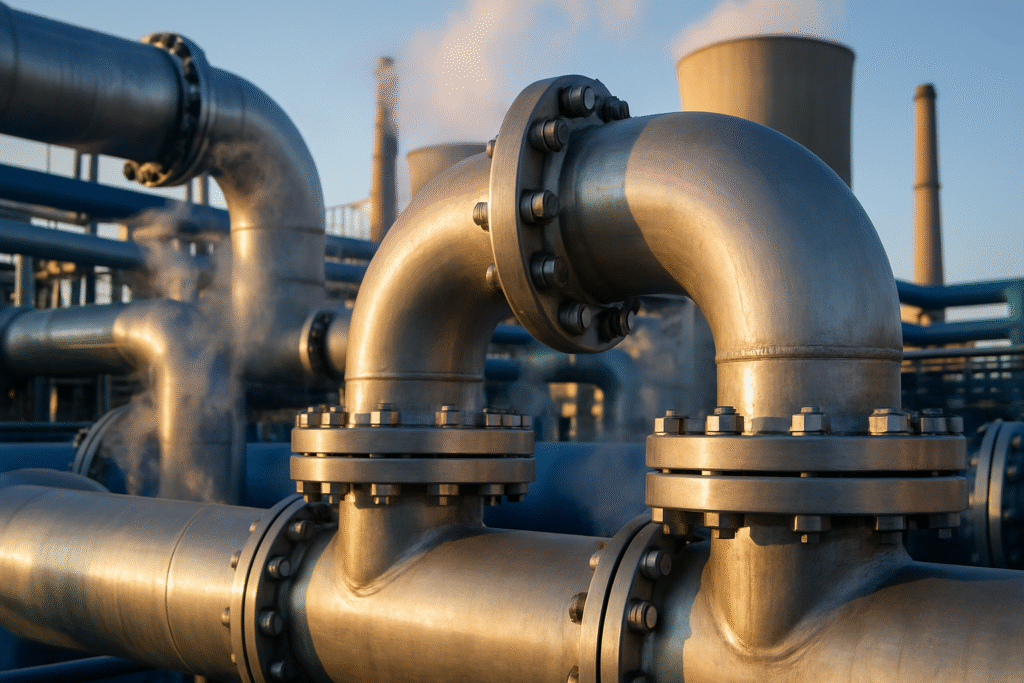
Brida de tubería de acero inoxidable: 7 Ventajas ocultas respaldadas por datos, Tipos, Usos, y cómo elegir la brida adecuada
El mercado de bridas para tuberías de acero inoxidable se está expandiendo a medida que las industrias de procesos exigen una mayor resistencia a la corrosión., control de calidad más estricto, y una vida útil más larga. Según la investigación de Grand View (2024), El mercado mundial de bridas industriales se valoró en $5.8 mil millones en 2023 y se prevé que alcance $7.2 mil millones por 2030, which makes stainless steel pipe flange selection more strategic than ever.
Para ingenieros y compradores, the intriguing part is not only material cost. The hidden advantages of stainless steel pipe flange products include reduced maintenance, mejor limpieza, stronger corrosion performance, and broader compatibility with critical pipe systems.
Market Demand for Stainless Steel Pipe Flange in Global Industrial Systems
Demand for stainless steel pipe flange products continues to rise across oil and gas, petroquímico, marina, y proyectos de tratamiento de agua. Según IBISWorld (2024), Asia-Pacífico representa más de 45% de la producción mundial de bridas, siendo China el mayor fabricante.
La concentración regional es importante para los equipos de adquisiciones. Afecta los tiempos de entrega, mill sourcing, capacidad de mecanizado, and price stability for standard and custom flange orders.
Además, stainless grades have become more important as operators push for longer design life in aggressive environments. Según Statista (2024), La industria del petróleo y el gas representa aproximadamente 35% del consumo global de bridas, which explains why corrosion resistant flanges remain a high-priority category.
En paralelo, refinery upgrades, terminales de GNL, and offshore projects are increasing demand for ASTM A182 F304, F316, F316L, dúplex, and super duplex flange solutions. Por lo tanto, Los compradores no solo comparan el precio., pero también trazabilidad, EN 10204 3.1 documentos de inspección, and compliance with ASME B16.5, ASME B16.47, DIN, y ES 1092 requisitos.
Según la inteligencia de Mordor (2024), global water and wastewater infrastructure investment is rising steadily as utilities replace aging metallic systems. Como resultado, stainless steel flange and fittings are gaining share in desalination, municipal water, and industrial effluent treatment where chlorides and hygiene matter.
Según Market Research Future (2024), specialty alloy demand in industrial piping is growing at more than 4% annually as operators upgrade systems for harsher temperature and corrosion conditions. That trend supports growth in 316L, 904l, 2205, 2507, Monel, Hastelloy, and titanium flange applications.
Buyers also expect suppliers to provide more than a catalog item. They want machining accuracy, PMI, hydrostatic support documentation, verificación de dureza, and dimensional conformity to recognized standards.
That is where manufacturers with established export systems have an advantage. SASA FLANGE serves industrial customers with ISO 9001:2015 y certificaciones PED 2014/68/UE, while supplying stainless steel flanges and fittings in 304, 316, 316l, 904l, 2205, 2507, y otros grados premium.
Además, factory-direct production can improve project economics when specifications are clear. Ofreciendo tamaños personalizados desde 1/2 pulgada a 60 inch with competitive pricing is especially relevant for EPC contractors handling mixed standard and non-standard flange packages.
The competitor landscape often focuses on material names alone. Sin embargo, procurement teams usually need deeper guidance on flange types, clases de presión, facing options, and how to choose a flange for a given pipe schedule and service condition.
That is why a stronger B2B article must go beyond generic descriptions. It should connect stainless, acero, brida, tubo, tipos, usos, and hidden advantages in a practical framework for design and sourcing decisions.
Hidden Advantages of Stainless Steel Pipe Flange Types and How Engineers Choose Them
The hidden advantages of a stainless steel pipe flange become clearer when lifecycle cost is evaluated instead of only unit price. According to NACE corrosion guidance and industry maintenance studies, corrosion-related damage can account for significant operating losses in process facilities, making material selection a primary reliability lever (NACE, 2023).
Como John Reynolds, corrosion and materials consultant, estados: “The cheapest flange at purchase is rarely the cheapest flange in service when corrosion, riesgo de fuga, and replacement shutdowns are included.” That principle applies directly to pipe systems in chloride-bearing, agrio, or high-purity environments.
Stainless steel flange types are selected by pressure, temperatura, método de montaje, y filosofía de mantenimiento. Por lo tanto, engineers must align the flange design with process loads, gasket requirements, and welding practice.
- Brida con cuello para soldar: preferido para alta presión, carga cíclica, y líneas de proceso críticas.
- Brida deslizante: economical for lower pressure systems and easier alignment during fabrication.
- Brida ciega: used to isolate, test, or future-proof process ends.
- Brida para soldar: suitable for small-bore, tubería de alta presión.
- Brida roscada: useful where welding is restricted or field assembly must be simplified.
- Brida de junta solapada: chosen where frequent dismantling is required and stub ends are used.
Material choice is equally important. ASTM A182 governs forged or rolled alloy and stainless steel pipe flanges for pressure systems, while dimensions are commonly specified by ASME B16.5 y ASME B16.47 para diámetros mayores (ASME, 2023).
Para muchas aplicaciones industriales generales, 304 and 304L remain common because they balance corrosion resistance, disponibilidad, y costo. Sin embargo, 316 and 316L offer better pitting resistance in chloride service due to molybdenum addition, which often justifies the premium in marine or chemical environments.
Según la guía de materiales ASTM, low-carbon grades such as 304L and 316L reduce the risk of sensitization after welding, especially in heavy-section assemblies (ASTM, 2023). Por lo tanto, they are frequently specified for welded pipe flange systems that require robust corrosion performance in the heat-affected zone.
For stronger chloride resistance, grados dúplex como 2205 y súper dúplex 2507 provide higher strength and improved stress corrosion cracking resistance. According to industry alloy performance data, duplex materials can deliver nearly double the yield strength of standard austenitic stainless steels in many service conditions (Inteligencia de Mordor, 2024).
Como Dr.. Ravi Singh, ingeniero de materiales, estados: “When pressure, cloruros, and weight reduction matter together, duplex flange selection can unlock both mechanical and corrosion advantages.” That insight is particularly useful for offshore skids, módulos superiores, and seawater lines.
Engineers also compare facing options because gasket seating affects long-term sealing reliability. Common choices include RF, FF, RTJ, lengua y ranura, and male-female configurations depending on class rating and service criticality.
- cara levantada (RF): the most widely used facing for ASME B16.5 bridas.
- Cara plana (FF): common in low-pressure or cast equipment connections.
- Junta tipo anillo (RTJ): preferred in high-pressure and high-temperature oil and gas service.
Another hidden advantage is cleanliness. Stainless steel pipe flange assemblies are often preferred in food, farmacéutico, agua ultrapura, and sanitary-adjacent systems because they support easier cleaning and lower contamination risk when properly finished.
According to ISO quality guidance, controlled manufacturing and inspection improve dimensional repeatability and traceability in pressure components (ISO, 2023). Como resultado, buyers increasingly request CNC-machined flange faces, PMI, ferrite checks when needed, and documented heat numbers.
SASA FLANGE supports these procurement expectations through advanced CNC machining and comprehensive quality testing. Respaldado por EN 10204 3.1 documentation capability and export experience, the company supplies forged stainless steel flange products for oil and gas, petroquímico, fuerza, marina, y sectores de tratamiento de agua.
En términos prácticos, how do buyers choose a flange? They start with process data, applicable standards, clase de línea, tolerancia a la corrosión, y método de instalación. Después, they compare stainless steel flange types against total ownership cost rather than only a short-term price target.
That is where a specification-driven sourcing approach creates value. It helps prevent under-grading, over-specifying, or purchasing a flange that fits the pipe dimension but not the service environment.
ASME, ASTM, DIN, y normas EN que rigen la calidad de las bridas de tuberías de acero inoxidable
Industrial buyers should treat standards compliance as a first-line qualification filter. A stainless steel pipe flange that looks correct dimensionally can still create risk if material chemistry, clasificación de presión, enfrentando tolerancias, or testing documentation do not meet code requirements.
ASME B16.5 Cubre bridas de tuberías y accesorios bridados de NPS. 1/2 a través de 24. ASME B16.47 extends coverage to larger diameter flanges, mientras ASME B16.9 applies to factory-made wrought buttwelding fittings used in related pipe systems (ASME, 2023).
ASTM A182 defines forged or rolled alloy and stainless steel pipe flange material requirements for pressure service. ASTM A240 is relevant for plate products, mientras ASTM A403 y ASTM A815 apply to stainless and duplex wrought fittings used alongside flange assemblies.
Los proyectos europeos suelen especificar EN 1092 flange dimensions and PED 2014/68/EU compliance. Por lo tanto, exporters serving global EPC packages must understand both ASME and EN systems rather than treating them as interchangeable.
- ASME B16.5: dimensiones, tolerancias, clasificaciones de presión-temperatura, marcas, and materials for common flange sizes.
- ASME B16.47: bridas de gran diámetro, típicamente NPS 26 a 60.
- ASTM A182: forged stainless and alloy material specification for flanges and fittings.
- EN 1092-1: European flange standard used in many PED-regulated projects.
- Normas DIN: still referenced in legacy industrial and European installations.
- NACE MR0175 / ISO 15156: material guidance for H2S-containing oil and gas environments.
Según el marco PED de la Comisión Europea, pressure equipment suppliers must demonstrate conformity when products fall under the directive scope (DEP, 2014/68/UE). Como consecuencia, documentation quality becomes as important as machining quality for many export orders.
Procurement teams should also compare pressure class and temperature limitations carefully. Clase 150, 300, 600, 900, 1500, y 2500 flanges each have different pressure-temperature ratings that vary by material group under ASME rules.
Por ejemplo, a 316L stainless steel flange in Class 300 may fit the size requirement, yet the design pressure at operating temperature must still be verified against the applicable rating table. Además, selección de juntas, atornillar, and flange facing condition affect the final joint reliability.
Critical compliance checkpoints usually include the following items.
- Correct ASTM grade and heat treatment status.
- Dimensional conformity to ASME, DIN, JIS, GOST, or EN standard.
- Pressure class and facing verification.
- Positive material identification for stainless and alloy grades.
- EN 10204 3.1 certificado de inspección.
- DEP, ANUNCIO 2000, or client-specific documentation when required.
- NACE compliance review for sour service applications.
Como Laura Chen, ingeniero de tuberias senior, estados: “Most flange failures start long before startup, usually with mismatched standards, weak traceability, or an incorrect assumption about service severity.” That is why experienced buyers audit both the drawing and the documentation package.
Con ISO 9001:2015, DEP 2014/68/UE, y anuncio 2000 certificaciones, SASA FLANGE aligns well with projects that require controlled manufacturing records and export-ready compliance. Fabricación de bridas en 304, 316, 904l, 2205, 2507, A105, A182, Inconel, Monel, Hastelloy, and titanium also supports mixed-material procurement for complex plants.
Además, buyers should ask whether the supplier can coordinate flange and fitting packages together. Combinando codos, camisetas, reductores, gorras, and flanges under one QA system can reduce interface risk during inspection and site installation.
How to Choose the Right Flange for Oil and Gas, Químico, Fuerza, and Marine Pipe Systems
Choosing the right flange starts with service conditions, no preferencia de catálogo. The engineer must review fluid composition, nivel de cloruro, presión de diseño, rango de temperatura, cronograma de tuberías, tolerancia a la corrosión, y acceso de mantenimiento.
En petróleo y gas, pressure integrity and sour service compatibility often dominate. Por lo tanto, weld neck flange and RTJ combinations are common for high-pressure hydrocarbon lines, mientras NACE MR0175 review may be necessary for H2S service.
Según Statista (2024), usos del petróleo y el gas sobre 35% de bridas globales. That large share explains why API-related searches such as API flanges, API flange catalogue, API flanges Houston, and API weld neck flange remain important in procurement research.
En procesamiento químico, La resistencia a la corrosión generalmente impulsa la decisión.. Por ejemplo, 316L may suit moderate chloride service, but 904L, dúplex 2205, or nickel alloys may be better for stronger acids, cloruros mixtos, or higher localized corrosion risk.
Power generation projects focus on temperature, clase de presión, and reliability under cycling loads. Respectivamente, weld neck flange designs and upgraded material grades are often selected for steam, condensar, and boiler-adjacent applications.
Marine and shipbuilding projects face chloride exposure, zonas de chapoteo, and maintenance constraints. Como resultado, 316l, dúplex 2205, y súper dúplex 2507 are frequently evaluated for ballast, agua de mar, aguardiente, and deck piping systems.
Buyers can streamline flange selection with a practical checklist.
- Confirmar el estándar rector: ASME, EN, DIN, JIS, o especificación del proyecto.
- Match flange size to pipe NPS, cronograma, and end preparation.
- Verify pressure class against design temperature.
- Choose the correct material grade for corrosion and strength requirements.
- Select facing type based on gasket design and service severity.
- Review welding, inspección, and heat treatment requirements.
- Pedido EN 10204 3.1, PMI, and additional test reports when needed.
Cost evaluation should include more than the stainless steel pipe flange price. It should also consider downtime risk, spare strategy, coating avoidance, expected maintenance, e intervalos de reemplazo.
Por ejemplo, a 4 inch stainless steel pipe flange may cost more than a carbon steel alternative at purchase. Sin embargo, in corrosive wet service, the stainless option can reduce repainting, leakage intervention, and unplanned shutdown exposure.
Buyers also ask about stainless steel pipe flange sizes, opciones roscadas, and matching fittings. A capable supplier should support standard sizes, mecanizado personalizado, bore modifications, and complete packages of stainless steel flanges and fittings.
That flexibility is important for project schedules. SASA FLANGE offers custom manufacturing for flanges and pipe fittings, incluyendo codos, camisetas, reductores, y gorras, which helps EPC teams consolidate sourcing and simplify inspections.
When evaluating flange manufacturers, procurement managers should compare five factors. These include traceability, precisión de mecanizado, control de materia prima, export documentation capability, and responsiveness during technical clarification.
Those factors matter because flange issues often emerge at handover, not at RFQ stage. Por lo tanto, a supplier that can answer material substitution, tolerancia dimensional, and certification questions quickly usually reduces total project friction.
Perspectivas futuras para la adquisición de bridas para tuberías de acero inoxidable y recomendaciones de compra estratégica
Las perspectivas para la demanda de bridas de tubos de acero inoxidable siguen siendo positivas porque la infraestructura, transición energética, and process modernization continue to support industrial investment. Según la investigación de Grand View (2024), the flange market will expand from $5.8 mil millones en 2023 a $7.2 mil millones por 2030.
Al mismo tiempo, procurement behavior is changing. Buyers want faster drawings, plazos de entrega más cortos, stronger documentation, and multi-standard supply from one manufacturing source.
Según IBISWorld (2024), Asia-Pacific contributes more than 45% de la producción mundial de bridas. Por lo tanto, supplier selection in China and broader Asia will remain central to cost competitiveness and capacity planning.
Sin embargo, the lowest quote is not always the best result. En contraste, strategic buyers increasingly favor manufacturers that combine premium grades, Mecanizado CNC, apoyo a la inspección, and stable export experience.
Three recommendations stand out for industrial sourcing teams.
- Standardize preferred flange specifications by service category to reduce engineering variation.
- Pre-qualify suppliers on standards compliance, certificados, and documentation speed.
- Evaluate total lifecycle value, especially for corrosive and critical pipe services.
Además, buyers should build a material hierarchy before tendering. Por ejemplo, they can define where 304L is acceptable, where 316L is mandatory, and where duplex or nickel alloys provide better lifecycle economics.
Digital procurement will also change how flange manufacturers compete. Catalog depth still matters, yet technical responsiveness, revisión de dibujo, and traceable QA records increasingly influence shortlist decisions.
For projects requiring certified stainless steel pipe flange products in 304, 316, 316l, 904l, 2205, y 2507, working with an experienced source such as SASA FLANGE can simplify both engineering review and commercial execution. Servicio 50+ Países de petróleo y gas., petroquímico, fuerza, e industrias marinas, the company is positioned to support buyers who need reliable flange types, tamaños personalizados, and standards-based documentation.
Preguntas frecuentes
cual es mejor 304 o 420 acero inoxidable?
●304 stainless steel is generally better for stainless steel pipe flange applications because it offers stronger corrosion resistance and broader weldability than 420.
●420 stainless is a martensitic grade with higher hardness, but it is less suitable for corrosive pipe service and is rarely the first choice for standard ASME B16.5 process flanges.
●According to ASTM stainless material classifications and common industry practice, 304 and 304L are among the most widely specified austenitic grades for industrial flanges because they balance formability, soldabilidad, y costo.
●Para equipos de adquisiciones, the choice depends on service conditions because 420 may suit wear-oriented components, mientras 304 is usually preferred for chemical, agua, alimento, and general industrial pipe systems.
●For projects requiring reliable forged flange supply in ASTM A182 F304 or F304L, trabajando con fabricantes establecidos como SASA FLANGE helps ensure traceability, exactitud dimensional, y documentación de exportación.
¿Qué es el Código ASME para bridas de acero inoxidable??
●The main ASME standard for stainless steel pipe flange dimensions and ratings is ASME B16.5 para NPS 1/2 a través de 24, mientras ASME B16.47 cubre diámetros más grandes.
●The material itself is commonly specified under ASTM A182 for forged stainless steel flanges used in pressure service, so buyers should review both the dimensional standard and the material standard together.
●Según ASME (2023), B16.5 define las clasificaciones de presión y temperatura., tolerancias, dimensiones enfrentadas, calificación, and testing references for common flange classes such as 150, 300, 600, 900, 1500, y 2500.
●En la práctica, engineers also verify related requirements such as gasket compatibility, atornillar, and any project-specific PED or EN 1092 obligations before final approval.
●If your project needs ASME-compliant stainless flanges with EN 10204 3.1 documentación, SASA FLANGE can support technical review and quotation alignment.
¿Cuáles son los 5 tipos de acero inoxidable?
●The five main types of stainless steel are austenitic, ferrítico, martensítico, dúplex, y aceros inoxidables endurecidos por precipitación.
●En la fabricación de bridas, grados austeníticos como 304, 304l, 316, and 316L are the most common, mientras que los grados dúplex como 2205 y 2507 are selected for higher strength and better chloride resistance.
●According to industry materials data cited by Mordor Intelligence (2024), duplex stainless steels can provide nearly twice the yield strength of common austenitic grades in many service conditions, which makes them valuable in offshore and chemical process systems.
●Martensitic grades like 420 are harder but less corrosion resistant, while ferritic and precipitation-hardening grades are used in more specialized roles depending on forming, fortaleza, and temperature needs.
●Para compradores de bridas, the best recommendation is to choose the stainless family based on corrosion mechanism, welding demands, y requisitos de código en lugar de seleccionar solo por precio.
¿Qué industria utiliza más acero inoxidable??
●Heavy process industries and construction consume major stainless steel volumes, but within flange demand the oil and gas sector is one of the largest end users.
●Según Statista (2024), La industria del petróleo y el gas representa aproximadamente 35% del consumo global de bridas, which reflects the sector’s extensive use of pressure piping, valvulas, separadores, and rotating equipment connections.
●Petroquímico, generación de energía, construcción naval, tratamiento de agua, and food processing also use large quantities of stainless steel flanges because corrosion resistance, higiene, and lifecycle reliability are critical in those environments.
●Por ejemplo, marine systems often favor 316L or duplex materials, while chemical plants may upgrade to 904L or nickel alloys depending on acid concentration and chloride content.
●If you are sourcing for oil and gas, marina, or water treatment projects, fabricantes como SASA FLANGE can help match stainless grades and flange types to the actual service profile.
How do I choose the right stainless steel flange type for a pipe system?
●The correct stainless steel flange type depends on pressure class, temperatura, pipe size, método de montaje, and the corrosiveness of the media.
●Weld neck flanges are commonly chosen for high-pressure or cyclic service, slip on flanges suit lower-pressure fabrication needs, Las bridas roscadas ayudan donde la soldadura es limitada., and blind flanges isolate line ends for inspection or future expansion.
●De acuerdo a ASME B16.5 and standard piping practice, facing style and pressure class must be verified together because an RF Class 300 flange is not interchangeable with an RTJ Class 600 flange even if the nominal pipe size is the same.
●Engineers should also review ASTM material grade, procedimiento de soldadura, NACE requirements for sour service, y si EN 10204 3.1 or PMI reports are required by the client specification.
●The best recommendation is to submit service conditions and line data to a qualified manufacturer before purchasing, especially for custom bores, diámetros mayores, or mixed-standard projects.
¿Qué afecta el precio y el tiempo de entrega de la brida de tubería de acero inoxidable??
●El precio de la brida de tubería de acero inoxidable se ve afectado principalmente por la calidad del material., tipo de brida, tamaño, clase de presión, raw material volatility, complejidad del mecanizado, y requisitos de inspección.
●Grados como 316L, 904l, 2205, y 2507 usually cost more than 304 because alloy content and processing requirements are higher, while RTJ or large-diameter weld neck flanges often carry longer machining time than simple slip on designs.
●Según la investigación de Grand View (2024), El mercado de bridas industriales alcanzó $5.8 mil millones en 2023, and that scale means pricing is influenced by both global demand and regional production dynamics, especially across Asia-Pacific manufacturing hubs.
●Lead time also depends on whether the order is standard stock, hecho a pedido, or fully custom with extra tests such as PMI, dureza, ferrito, or third-party inspection.
●To control cost and delivery risk, buyers should issue complete specifications early and confirm documentation needs before production starts with the selected supplier.
Posts Relacionados
Acabado de la cara de la brida: Dentados concéntricos versus espirales explicados
Los dentados concéntricos y en espiral son acabados de cara de brida mecanizados.…
Dúplex 2205 frente a bridas 316L: ¿Qué material debería elegir??
respuesta rapida: Dúplex 2205 Las bridas suelen ser el candidato más fuerte.…

Definición de brida de orificio, Detalles y descripción general de bridas ASME B16.36: Datos de mercado, Guía de selección e información sobre cumplimiento
El mercado mundial de bridas industriales se valoró en $5.8 mil millones…

Guía del mercado de bridas de eliminación negras: Materiales, 3.5″ Compatibilidad, y datos de abastecimiento B2B para bridas de fregaderos de cocina
La demanda de bridas de eliminación negras está aumentando a medida que los compradores de accesorios de cocina…