
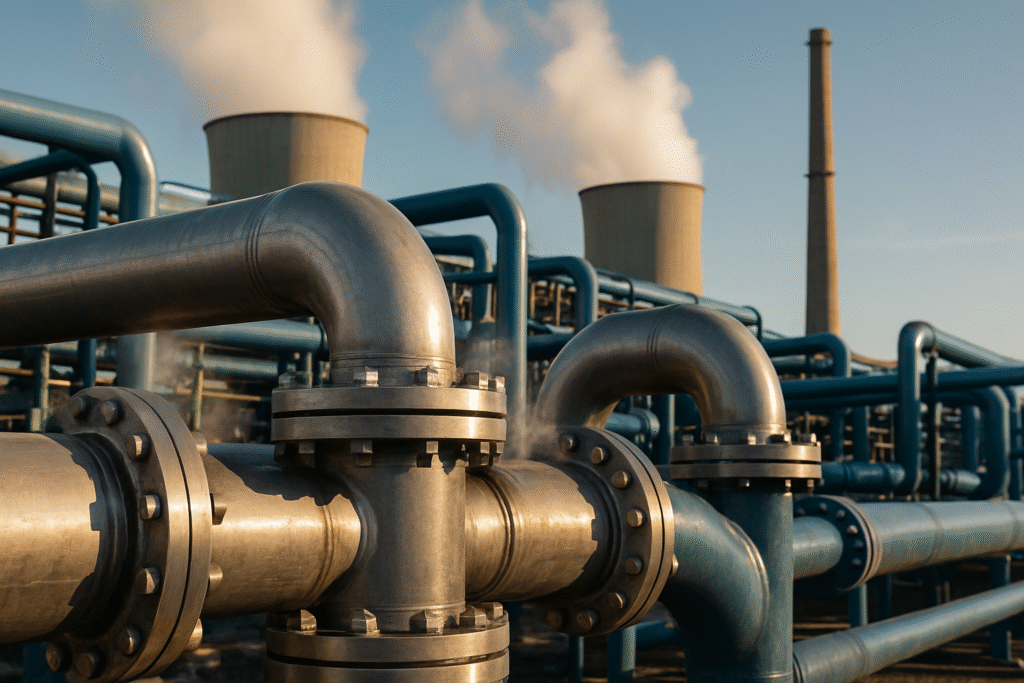
Фланец трубы из нержавеющей стали: Интригующие данные, Скрытые преимущества, Типы, Использование, и как выбрать ASME B16.5 & B16.47 Фланцы
The фланец трубы из нержавеющей стали остается важнейшим компонентом современных технологических трубопроводов, и рыночный спрос подтверждает его стратегическую ценность. По данным исследования Grand View (2024), мировой рынок промышленных фланцев оценивался в $5.8 миллиард в 2023 и, по прогнозам, достигнет $7.2 миллиард на 2030, driven by energy, вода, и перерабатывающая промышленность.
Для инженеров и менеджеров по снабжению, the intriguing part is not only the size of the market but the hidden advantages of material and standard selection. Поэтому, understanding stainless steel flange types, ASME B16.5 и ASME B16.47 размеры, and application-specific grade choice directly improves lifecycle cost and plant reliability.
Industrial Market Trends Shaping Stainless Steel Pipe Flange Demand
Global demand for stainless steel flanges continues to track industrial expansion, corrosion-control priorities, and infrastructure investment. По данным IBISWorld (2024), На долю Азиатско-Тихоокеанского региона приходится более 45% мирового производства фланцев, при этом Китай является крупнейшим производителем.
This production concentration affects lead time, raw material access, и прямые цены с завода для покупателей по всему миру. Как результат, many EPC contractors and distributors now evaluate not only product compliance but also the manufacturing ecosystem behind each flange supplier.
The oil and gas sector remains the largest single demand center for flange products. По данным Статистики (2024), на долю нефтегазовой отрасли приходится около 35% мирового потребления фланцев, во многом потому, что вверх по течению, на середине течения, and downstream systems require bolted, inspectable, pressure-rated connections.
В отличие, water treatment and marine sectors increasingly specify stainless steel pipe flange products for corrosion resistance and maintenance reduction. Более того, power generation and petrochemical plants often require mixed-material packages that combine stainless steel flanges with elbows, тройники, редукторы, и шапки.
Buyers also face a broader technical choice set than in the past. Common austenitic grades like 304, 304л, 316, and 316L still dominate general service, в то время как 904L, дуплекс 2205, и супер дуплекс 2507 are chosen for aggressive chloride service and higher strength.
По данным Market Research Future (2024), corrosion-resistant alloy demand in process equipment is growing at a faster rate than commodity carbon steel in chemical and offshore applications. That trend reflects rising shutdown costs, stricter environmental performance targets, and greater awareness of total cost of ownership.
Для отделов закупок, this means a flange cannot be treated as a generic commodity in every project. A weld neck flange in ASTM A182 F316L, например, may deliver a much lower risk profile than a lower-grade alternative when chloride exposure, циклическая загрузка, or media contamination are present.
Как инженер трубопроводов Джон Рейнольдс, бывший специалист по коррозии и отраслевой автор, государства: «Material selection errors rarely fail in the quotation stage; они терпят неудачу в обслуживании, when downtime is most expensive.» That observation is especially relevant for stainless steel pipe flange purchases tied to offshore platforms, кислое обслуживание, и технологические линии высокой чистоты.
Manufacturers with strong process control are therefore gaining preference. SASA FLANGE, при поддержке ISO 9001:2015 и сертификаты PED 2014/68/ЕС., поставляет нержавеющую сталь, углеродистая сталь, and alloy flanges in grades including 304, 316, 316л, 904л, 2205, и 2507.
Кроме того, buyers increasingly request traceability, EN 10204 3.1 сертификация, PMI, гидростатические испытания, и отчеты о проверке размеров перед отправкой. Поэтому, a supplier’s quality system now matters almost as much as the nominal standard stamped on the flange.
По данным Мордорской разведки (2024), industrial operators are investing more heavily in asset integrity programs and predictive maintenance. Следовательно, flange selection is moving upstream in procurement strategy, especially for critical pipe systems where leakage risk, fugitive emissions, and unplanned outages carry significant financial penalties.
Stainless Steel Flanges Types, Материалы, and Hidden Advantages for Industrial Pipe Systems
The most common stainless steel flange types include weld neck, без шнуровки, слепой, раструбная сварка, резьбовой, и конструкции коленчатых соединений. Однако, лучший выбор зависит от класса давления, график труб, жидкая химия, термоциклирование, и требования к проверке.
ASME B16.5 охватывает фланцы труб и фланцевые фитинги из НПС 1/2 через 24, пока ASME B16.47 адресован более крупным размерам из NPS 26 через 60 for many configurations. For projects requiring large-diameter stainless steel pipe flange dimensions, B16.47 Series A and Series B differences can materially affect bolt pattern, масса, and mating compatibility (ASME, 2023).
Как доктор. Hongmei Li, materials scientist in corrosion engineering, государства: «The hidden advantages of stainless steel are realized when alloy chemistry matches chloride level, температура, and fabrication method.» Поэтому, selecting 316L over 304 is not just a material upgrade; it is often a risk-control decision for chemical, морской, and water treatment service.
According to ASTM specifications used across the industry, ASTM A182 applies to forged or rolled alloy and stainless steel pipe flanges, кованые фитинги, и клапаны для работы при высоких температурах, пока ASTM A240 крышка пластины, лист, and strip for pressure vessel and general applications (ASTM, 2024). These distinctions matter because forged flange integrity, поток зерна, and pressure performance differ from plate-based fabrication routes.
Для инженерных команд, the main flange forms can be assessed as follows:
- Приварной фланец с шейкой: Лучше всего для высокого давления, высокая температура, and cyclic service due to tapered hub geometry and butt-weld connection.
- Накидной фланец: Cost-effective for lower-pressure service and easier alignment, but typically less fatigue-resistant than weld neck designs.
- Глухой фланец: Used to terminate a piping system or allow future expansion and inspection access.
- Фланец под приварку враструб: Common in smaller-bore, high-pressure systems where socket depth and fillet welding are preferred.
- Резьбовой фланец: Полезно там, где сварка ограничена., though pressure and vibration suitability must be checked carefully.
- Фланец внахлестку: Preferred where frequent dismantling or expensive corrosion-resistant alloy stub ends improve cost control.
The intriguing difference between popular grades becomes clearer when viewed through application risk. Оценка 304 offers good corrosion resistance and favorable fabrication economics, пока 316 and 316L add molybdenum for stronger resistance in chloride-bearing environments.
Более того, дуплекс 2205 can provide nearly double the yield strength of 316L in many conditions, which may reduce wall thickness requirements in properly engineered systems. According to NACE guidance and industry corrosion practice, duplex materials are often selected where chloride stress corrosion cracking is a design concern (КДЕС, 2023).
Specialty grades also serve specific needs:
- 904л: Enhanced resistance to reducing acids and chlorides in aggressive chemical service.
- 2205 дуплекс: Excellent balance of strength and pitting resistance for offshore and process applications.
- 2507 супер дуплекс: Higher PREN and stronger seawater resistance for severe marine exposure.
- Инконель, Монель, Хастеллой, Титан: Selected for extreme corrosion, температура, or contamination-control requirements.
По данным исследования Grand View (2024), corrosion and maintenance costs in process industries remain among the main drivers behind alloy upgrades in connection hardware. Как результат, buyers increasingly compare lifecycle cost instead of only initial unit price.
That shift highlights one of the hidden advantages of premium stainless steel flange selection: fewer leak events, lower maintenance labor, и увеличенные интервалы замены. In high-consequence systems, one avoided shutdown can offset a large difference in flange package cost.
Manufacturing capability is equally important. SASA FLANGE предлагает нестандартные размеры от 1/2 дюйм до 60 дюймы, producing stainless steel flanges to ANSI B16.5, АНСИ Б16.47, DIN, JIS, ГОСТ, и RU 1092 standards with advanced CNC machining and comprehensive quality testing.
Procurement teams should also ask whether a supplier can provide matching pipe fittings and mixed material packages. That matters because flange performance depends on the total joint assembly, including gasket type, запирание, облицовка фланца, обработка поверхности, and connected pipe schedule.
According to ISO-aligned quality practice across pressure-component manufacturing, dimensional accuracy and traceability are fundamental to field fit-up and joint reliability. Поэтому, a stainless steel pipe flange supplier should be evaluated on machining tolerance, facing finish control, Возможности PMI, и документальная дисциплина, not only catalog breadth.
ASME, ASTM, DIN, Требования EN и соответствие фланцев труб из нержавеющей стали
Compliance is a purchasing filter, not a paperwork exercise. In industrial projects, the flange must match the governing piping code, расчетное давление, спецификация материала, inspection requirement, and destination-market regulation.
The core standards most buyers encounter include ASME B16.5, ASME B16.47, ASTM A182, EN 1092-1, and relevant DIN or JIS dimensions. В Европе и экспортные проекты, PED 2014/68/EU can also shape marking, документация, and conformity requirements.
For clarity, the major standards serve different purposes:
- ASME B16.5: Размеры, допуски, номинальные значения давления и температуры, материалы, маркировка, and testing for flanges NPS 1/2 к 24.
- ASME B16.47: Large-diameter steel flanges NPS 26 к 60 in Series A and Series B formats.
- ASTM A182: Material specification for forged or rolled alloy and stainless steel flanges and forged fittings.
- ASME B16.9: Factory-made wrought buttwelding fittings such as elbows, тройники, редукторы, и шапки.
- EN 1092-1: European flange dimensions, обозначения давления, and facing requirements.
- NACE MR0175/ISO 15156: Руководство по материалам для кислых сред, где вызывает беспокойство сульфидное растрескивание под напряжением.
В соответствии с ASME, proper flange selection requires alignment between pressure class, температура, and material group. Поэтому, Класс 300 stainless steel flange in one alloy may not have identical pressure-temperature limits as the same nominal class in another material family.
Engineers should also distinguish forged flanges from fabricated alternatives. Кованый ASTM A182 flanges generally offer superior structural continuity and are widely specified for pressure service, while fabricated solutions may be acceptable only where project standards permit them.
При сравнении стандартов, покупатели должны просмотреть:
- Nominal pipe size and flange outside diameter.
- Bolt circle diameter and bolt quantity.
- Тип облицовки, в том числе РФ, ФФ, и РТДЖ.
- Pressure class or PN designation.
- Марка материала, термическая обработка, and corrosion service suitability.
- Документы проверки, такие как EN 10204 3.1.
These details directly affect field interchangeability. Несоответствие между ASME B16.5 и RU 1092 dimensions can stop installation, even when the material grade itself is correct.
According to DNV guidance used in marine and offshore projects, flange integrity depends not only on material but also on bolting practice, выбор прокладки, preload control, и сервисная среда (ДНВ, 2023). Следовательно, procurement teams should source flanges as part of a controlled joint system rather than as isolated parts.
С ISO 9001:2015, ПЭД 2014/68/ЕС, и АД 2000 реквизиты для входа, SASA FLANGE supports buyers who require export-ready documentation and multi-standard supply. Компания производит фланцы в 304, 316, 316л, 904л, 2205, 2507, А105, А182, Инконель, Монель, Хастеллой, and Titanium for oil and gas, нефтехимический, власть, морской, и проекты водоочистки.
That capability is especially valuable in EPC packages that combine stainless steel flanges with elbows, тройники, редукторы, и шапки. Более того, single-source procurement can simplify QA review, reduce interface risk, and improve delivery coordination across project milestones.
Как правильно выбрать фланец для трубы из нержавеющей стали для масла, Газ, Химическая, Власть, и морское использование
Choosing the correct stainless steel pipe flange starts with service conditions, not with price. Engineers should define pressure class, расчетная температура, профиль коррозии, media cleanliness, метод присоединения, and maintenance philosophy before requesting quotations.
For oil and gas applications, приварные фланцы из стали 316L, дуплекс 2205, или супердуплекс 2507 are often preferred where pressure, вибрация, and chloride exposure are significant. По данным Статистики (2024), нефть и газ составляют примерно 35% мирового потребления фланцев, so suppliers with deep energy-sector experience usually understand traceability, Требования КДЕС, and shutdown-critical delivery schedules.
В нефтехимическом сервисе, the media determines the alloy. Например, 316L may perform well in moderate corrosive duty, в то время как 904L, Хастеллой, or other nickel alloys may be required for stronger acids, смешанные хлориды, or contamination-sensitive process streams.
В производстве электроэнергии, thermal cycling and pressure transients often push designers toward weld neck flanges and high-integrity forged components. Поэтому, flange type selection must consider fatigue resistance, not only static pressure.
Marine and shipbuilding environments impose a different set of risks. Солевой спрей, seawater contact, and crevice corrosion can quickly punish under-specified materials, so duplex and super duplex grades frequently deliver better long-term value than commodity stainless options.
Water treatment systems often use 304, 316, and duplex flanges depending on chloride concentration and disinfection chemistry. Более того, buyers should verify gasket compatibility, because an otherwise suitable flange can still fail at the joint if sealing materials are poorly matched to media and temperature.
Практический контрольный список выбора включает в себя:
- Confirm applicable standard: ASME B16.5, ASME B16.47, DIN, JIS, или RU 1092.
- Match flange type to loading: приварная шейка, без шнуровки, слепой, раструбная сварка, резьбовой, or lap joint.
- Verify alloy against corrosion risks: 304, 316л, 904л, 2205, 2507, или никелевый сплав.
- Check pressure class, лицом к лицу, and compatible pipe schedule.
- Требовать EN 10204 3.1, PMI, и контроль размеров для критически важных служб.
- Review lead time, упаковка, экспортная документация, and project support.
As industry analyst Michael Reed notes: «The lowest flange price seldom equals the lowest installed cost once inspection, примерка, and maintenance are included.» That is why experienced procurement teams compare total package value, including QA, техническая поддержка, and consistency across repeat orders.
Custom manufacturing can also be decisive in project execution. SASA FLANGE supports custom dimensions, специальные материалы, and complete flange-plus-fitting supply for projects across 50+ страны, helping buyers consolidate sourcing while maintaining standard compliance.
Для 4 дюймовый фланец трубы из нержавеющей стали, например, the specification should define not only NPS and pressure class but also facing type, сорт материала, график труб, and gasket seating requirement. Without those details, quotations may look comparable while delivering materially different field performance.
Buyers evaluating stainless steel flange price should also understand the variables behind cost:
- Material grade and alloy surcharge.
- Forging route and machining complexity.
- Pressure class and wall section.
- Тестирование, документация, и сторонняя проверка.
- Heat treatment and PMI requirements.
- Order volume and delivery urgency.
Поэтому, the best way to choose is to issue a clear technical datasheet and compare supplier responses line by line. This approach reduces hidden risk and improves apples-to-apples procurement decisions for pipe and flange packages.
Future Outlook for Stainless Steel Flanges and Strategic B2B Buying Recommendations
The outlook for stainless steel flanges remains favorable as energy transition projects, водная инфраструктура, offshore upgrades, and industrial modernization continue. По данным исследования Grand View (2024), Ожидается, что рынок вырастет с $5.8 миллиард в 2023 к $7.2 миллиард на 2030, reflecting durable long-term demand.
В то же время, buyers should expect more scrutiny on quality assurance, прослеживаемость, and lifecycle economics. Более того, as plants pursue emission reduction and asset integrity targets, flange leakage prevention will remain a measurable procurement priority.
Asia-Pacific will likely remain central to supply availability and cost competitiveness. По данным IBISWorld (2024), the region already contributes over 45% мирового производства фланцев, and China continues to hold a leading manufacturing position.
That trend creates opportunity, but it also raises the importance of supplier qualification. Поэтому, procurement managers should favor manufacturers that combine standards compliance, документированные системы качества, широкие материальные возможности, and responsive technical communication.
Стратегически, B2B buyers should take five actions:
- Стандартизировать утвержденные спецификации фланцев по категориям обслуживания..
- Prequalify manufacturers with ISO 9001:2015 and PED capability.
- Compare lifecycle cost, не только цена за единицу.
- По возможности объединяйте фланцы и фитинги в пучок, чтобы снизить риск сопряжения..
- Request complete documentation before shipment release.
For companies sourcing stainless steel pipe flange products for oil and gas, нефтехимический, власть, морской, or water treatment applications, technical support from the manufacturer can accelerate safer decisions. If your project requires ASME B16.5, Б16.47, EN 1092, or special alloy compliance, соединяясь с SASA FLANGE can help align material, размер, сертификация, and delivery requirements early in the procurement cycle.
Часто задаваемые вопросы
Для чего нужен фланец из нержавейки?
●A stainless steel flange is used to connect pipe, клапаны, насосы, and pressure equipment in systems that require a secure, inspectable, and maintainable bolted joint.
●По данным Статистики (2024), на нефть и газ приходится около 35% мирового потребления фланцев, which shows how important flanged joints are in critical industrial service.
●Common uses include line connections, насадки для оборудования, dead-end closures with blind flanges, and maintenance points where frequent disassembly is required.
●In corrosive or hygienic service, stainless steel flange materials such as 304, 316, and 316L are often chosen because they resist rusting better than carbon steel in many environments.
●Для проектов, требующих ASME B16.5 или RU 1092 согласие, работа с известными производителями, такими как SASA FLANGE helps ensure the flange matches pressure class, лицом к лицу, and material certification requirements.
Делают ли они фитинги для труб из нержавеющей стали??
●Да, производители производят фитинги для труб из нержавеющей стали, такие как колена, тройники, редукторы, and caps for butt-welded and threaded piping systems.
●ASME B16.9 is one of the key standards for factory-made wrought buttwelding fittings, and ASTM material specifications define the applicable stainless grades for pressure service.
●These fittings are commonly supplied in 304, 316, 316л, 904л, 2205, и 2507 depending on corrosion risk, температура, and strength requirements.
●По данным Market Research Future (2024), corrosion-resistant alloy demand is rising as operators focus on reliability and lower maintenance cost across chemical, морской, и системы очистки воды.
●When buyers source flanges and fittings together, they usually gain better dimensional consistency, simpler QA review, and fewer field fit-up issues.
Каков стандарт для фланцев из нержавеющей стали??
●Основные стандарты размеров фланцев из нержавеющей стали: ASME B16.5 для АПЛ 1/2 к 24 и ASME B16.47 for larger diameters up to NPS 60.
●Material compliance is commonly specified under ASTM A182 для кованых фланцев из нержавеющей стали, в то время как В 1092-1 is widely used for European projects.
●Согласно ASME (2023), flange selection must consider pressure-temperature ratings, тип облицовки, запирание, and material group instead of nominal size alone.
●In sour service or regulated applications, additional requirements such as NACE MR0175, ПЭД 2014/68/ЕС, и EN 10204 3.1 documentation may apply.
●Procurement teams should always verify whether the project requires ASME, DIN, EN, JIS, or mixed standard compatibility before placing a flange order.
Какой тип фланца трубопровода самый прочный?
●The weld neck flange is generally considered the strongest standard piping flange for high-pressure and high-temperature service because its tapered hub reduces stress concentration.
●Its butt-weld connection provides better fatigue resistance than a slip-on flange in systems with vibration, термоциклирование, or severe operating conditions.
●По данным ДНВ (2023), flange integrity depends on total joint design, so even the strongest flange type still requires correct bolting, выбор прокладки, and preload control.
●In demanding service, a forged ASTM A182 weld neck flange in 316L, дуплекс 2205, или 2507 may offer significantly better long-term performance than a lower-grade alternative.
●For critical pipe systems, engineers should validate flange type by code, stress analysis, and service environment rather than by habit or price alone.
Как мне выбрать между 304 и 316 stainless steel flange materials?
●Выбирать 304 stainless steel for general industrial service with moderate corrosion exposure, и выбери 316 or 316L where chlorides, marine conditions, or stronger chemicals are present.
●The key difference is molybdenum in 316 оценки, which improves pitting and crevice corrosion resistance in many aggressive environments.
●Как доктор. Hongmei Li, ученый-материаловед, государства: «The hidden advantages of stainless steel are realized when alloy chemistry matches chloride level, температура, and fabrication method.»
●По данным исследования Grand View (2024), growing demand for corrosion-resistant alloys reflects the cost of downtime and maintenance in process industries.
●If the service involves seawater, химическое воздействие, or stricter lifecycle targets, requesting technical guidance from SASA FLANGE is a practical step before final material approval.
Какие факторы влияют на цену фланца трубы из нержавеющей стали?
●Цена фланца трубы из нержавеющей стали зависит в основном от марки сплава., класс давления, размер, маршрут ковки, объем тестирования, и требования к документации.
●А 4 дюймовый фланец трубы из нержавеющей стали ASTM A182 F316L with EN 10204 3.1, PMI, and third-party inspection will cost more than a basic 304 slip-on flange with standard documents.
●По данным IBISWorld (2024), На долю Азиатско-Тихоокеанского региона приходится более 45% мирового производства фланцев, which strongly influences global pricing, доступность, and lead-time competition.
●Buyers should compare quotes based on total delivered value, including machining quality, сертификация, упаковка, and schedule reliability rather than unit price only.
●For repeat industrial supply, factory-direct sourcing often improves cost control when the manufacturer can provide both flanges and fittings under one quality system.
Связанные Посты
Отделка торцевой поверхности фланца: Объяснение концентрических и спиральных зубцов
Концентрические и спиральные зубцы представляют собой обработанную поверхность фланца.…
Дуплекс 2205 по сравнению с фланцами 316L: Какой материал выбрать?
Быстрый ответ: Дуплекс 2205 flanges are usually the stronger candidate…

Определение фланца с диафрагмой, Подробности и обзор фланцев ASME B16.36: Рыночные данные, Руководство по выбору и анализ соответствия требованиям
Мировой рынок промышленных фланцев оценивался в $5.8 миллиард…

Руководство по рынку черных сливных фланцев: Материалы, 3.5″ Совместимость, и данные о поставщиках B2B для фланцев для кухонной мойки
Спрос на черные фланцы для утилизации растет благодаря покупателям кухонной техники…