
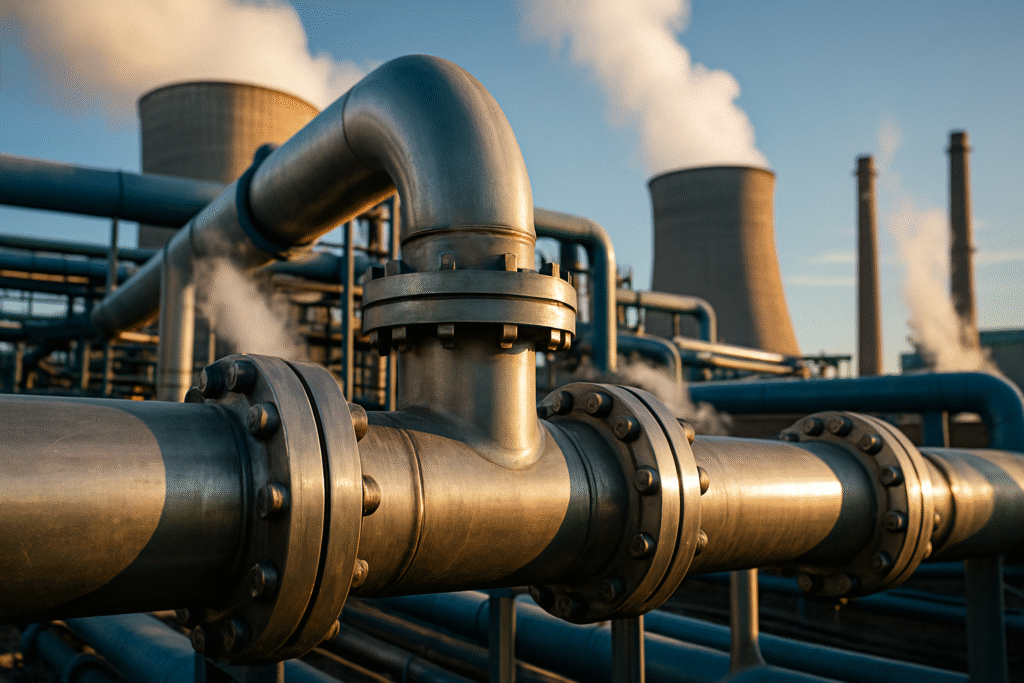
Guia de flange de tubo de aço inoxidável: 7 Vantagens baseadas em dados, Tipos, Usos, e como escolher
O mercado de flanges para tubos de aço inoxidável continua a se expandir à medida que o controle de corrosão, integridade de pressão, e o custo do ciclo de vida tornam-se as principais prioridades para os compradores industriais. De acordo com a pesquisa Grand View (2024), o mercado global de flanges industriais foi avaliado em $5.8 bilhão em 2023 e está projetado para atingir $7.2 bilhão por 2030, which highlights the Hidden Advantages and long-term Versatility of Stainless Steel Flanges in modern Pipe systems.
Para engenheiros e gerentes de compras, the question is no longer whether stainless materials perform well. Em vez de, the practical issue is how to Choose the right Flanges, notas, padrões, and facing configurations for demanding process conditions.
Drivers de mercado por trás da demanda por flanges de tubos de aço inoxidável
Demand for stainless steel pipe flange products is rising because process industries now evaluate total installed cost, frequência de manutenção, and outage risk together. De acordo com Statista (2024), a indústria de petróleo e gás é responsável por aproximadamente 35% do consumo global de flanges, which makes material durability and code compliance central to project success.
Adicionalmente, regional supply capability matters. De acordo com IBISWorld (2024), Ásia-Pacífico é responsável por mais de 45% da produção global de flanges, sendo a China o maior fabricante, so buyers increasingly source from qualified producers with traceable quality systems.
This trend supports manufacturers that combine global standards with efficient production. SASA FLANGE, por exemplo, fornece aço inoxidável, aço carbono, liga, duplex, liga de níquel, and titanium flange products for Oil & Gás, Petroquímica, Geração de energia, Marinho, Tratamento de Água, e mercados de construção.
Procurement teams also expect more than catalog stock. Eles querem EN 10204 3.1 documentação, PMI, suporte para testes hidrostáticos, verificação dimensional, and material traceability from raw forging to finished machining.
Como resultado, suppliers must offer much more than commodity parts. They must deliver ASTM-compliant raw materials, ASME dimensional accuracy, and project-specific machining for weld neck, escorregar, cego, solda de soquete, rosqueado, and lap joint Types.
De acordo com a Inteligência Mordor (2024), industrial infrastructure investment in energy and water sectors remains a major growth driver for piping components worldwide. Portanto, buyers increasingly prioritize suppliers that can support both replacement maintenance and greenfield EPC packages.
The stainless category remains especially attractive because it balances corrosion resistance, resistência mecânica, fabricability, and clean-service suitability. In contrast to coated carbon steel, stainless steel flange assemblies often reduce repainting, contamination risk, and maintenance interventions over long service periods.
Como o engenheiro de materiais Dr.. Helen Morris, Especialista em Corrosão, estados: “When chloride exposure, umidade, and cyclic shutdowns combine, stainless flanges often deliver lower lifecycle cost than lower-priced alternatives.” That insight is highly relevant for offshore, químico, e aplicações de tratamento de água.
Buyers also compare sourcing risk. Com ISO 9001:2015 e certificações PED 2014/68/EU, SASA FLANGE aligns manufacturing control with international project requirements while serving customers across 50+ países.
Além disso, product breadth affects bid competitiveness. Fabricação de flanges em 304, 316, 316eu, 904eu, 2205, 2507, Classes A182, Inconel, Monel, Hastelloy, and Titanium gives project teams flexibility when media chemistry, temperatura de projeto, or corrosion allowance changes late in specification review.
Intriguing Stainless Steel Pipe Flange Technical Guide: Notas, Avaliações, e vantagens ocultas
The most Intriguing aspect of a stainless steel pipe flange is its ability to combine leak-tight connection performance with service-specific alloy selection. No entanto, the best result depends on matching flange class, enfrentando, metalurgia, espessura da parede, e ambiente de serviço.
De acordo com a Pesquisa de Mercado Futuro (2024), corrosion-resistant alloy demand in industrial processing continues to grow as operators seek longer service life and lower unplanned downtime. Portanto, stainless and duplex Flanges are no longer niche selections in many aggressive media systems.
ASME B16.5 covers dimensions and pressure-temperature ratings for flanges from NPS 1/2 através 24, enquanto ASME B16.47 aborda diâmetros maiores (ASME, 2023). ASTM A182 commonly applies to forged stainless and alloy Steel flanges, enquanto ASTM A240 relates to plate products used in some fabricated components (ASTM, 2024).
As piping consultant Michael Trent, Engenheiro de Tubulação Sênior, estados: “A flange failure is rarely caused by one variable alone; grau de material, carga do parafuso, gasket choice, and alignment all matter equally.” This is why experienced buyers review the full joint assembly rather than only the flange material.
Among austenitic grades, 304 and 304L remain common for general industrial service because they provide good weldability and cost efficiency. No entanto, 316 and 316L offer enhanced pitting resistance through molybdenum addition, so they are often preferred for chloride-bearing environments.
Para serviços mais severos, 904eu, 2205, e 2507 offer higher resistance to localized corrosion and stress corrosion cracking. Além disso, nickel alloys such as Inconel, Monel, and Hastelloy support applications where standard stainless grades may not provide adequate durability.
- 304/304eu: Linhas gerais de processo, sistemas de água, serviço de qualidade alimentar, moderate corrosion exposure.
- 316/316eu: Marine atmospheres, chemical transfer, patins offshore, meio contendo cloreto.
- 904eu: Stronger resistance in acidic and high-corrosion environments.
- 2205 Dúplex: High strength plus improved chloride resistance for offshore and process plants.
- 2507 Superduplex: Severe seawater and high-chloride duties.
- Titânio: Outstanding corrosion resistance for specialized chemical and marine systems.
A seleção da classe de pressão é igualmente importante. Standard classes include 150, 300, 600, 900, 1500, e 2500 sob ASME B16.5, and each class must be checked against service temperature because allowable pressure decreases as temperature rises (ASME, 2023).
Facing style influences sealing. Raised face suits many industrial systems, ring type joint is common in high-pressure and high-temperature service, and flat face is often specified for cast iron or mating equipment where flange stress must remain controlled.
Common Stainless Steel Flange Types include:
- Flange de pescoço soldado para alta pressão, alta temperatura, and cyclic duty.
- Slip on flange for easier installation and lower initial cost.
- Blind flange for line isolation and pressure boundary closure.
- Flange de solda de soquete para furo pequeno, aplicações de alta pressão.
- Threaded flange where welding is undesirable or restricted.
- Flange de junta sobreposta para sistemas que necessitam de desmontagem frequente.
Dimensions and tolerances must match the connected Pipe specification. Portanto, buyers should confirm nominal size, agendar, chato, flange width, acabamento frontal, padrão de perfuração, and metallurgy before purchase.
According to ISO guidance and European practice, EN 1092 flanges remain common in multinational projects where metric dimensions and PN ratings are specified (EN, 2023). Em contraste, North American process plants often standardize around ASME ratings and inch-based nominal sizing.
Quality assurance should include more than a visual check. Apoiado por usinagem CNC avançada e testes de qualidade abrangentes, SASA FLANGE can support PMI, inspeção dimensional, chemical and mechanical verification, and documentation packages for export projects.
Buyers also ask about stainless steel pipe flange price. Price depends on alloy grade, classe de pressão, rota de forjamento, raw material volatility, complexidade de usinagem, requisitos de teste, quantidade, e cronograma de entrega, so technical alignment early in RFQ preparation helps avoid costly revision cycles.
Por exemplo, um 4 flange de tubo de aço inoxidável de polegada na classe 316L 150 may be straightforward, while a 4 polegada 2507 RTJ Class 600 flange requires more specialized forging and inspection. Consequentemente, the commercial gap between apparently similar parts can be significant.
The Hidden Advantages of stainless solutions become clearer over the full asset life. Reduced corrosion maintenance, cleaner service performance, menor frequência de substituição, and better reliability often offset higher upfront material cost.
As industry analyst Rachel Dunn states: “In process equipment procurement, the lowest purchase price is not the lowest ownership cost.” That statement reflects the reality of shutdown economics in refinery, GNL, and chemical processing operations.
Padrões, Conformidade, and Inspection Requirements for Stainless Steel Flanges
Standards provide the technical language that allows EPC firms, armazenistas, and end users to buy with confidence. Portanto, every stainless steel pipe flange order should reference material standard, padrão dimensional, classe de pressão, enfrentando, testando, and documentation level.
The most frequently specified standards include ASTM A182 para flanges forjados em aço inoxidável e liga, ASME B16.5 for dimensions up to NPS 24, ASME B16.47 para tamanhos maiores, ASME B16.9 para conexões soldadas, e PT 1092 for European pressure classes. DIN, JIS, and GOST standards also remain important in regional and legacy systems.
- ASTM A182: Forged or rolled alloy and stainless Steel pipe flanges, acessórios, válvulas, e peças.
- ASME B16.5: Pipe Flanges and flanged fittings, NPS 1/2 para 24.
- ASME B16.47: Flanges de aço de grande diâmetro, NPS 26 para 60.
- ASME B16.9: Acessórios para soldagem de topo forjados feitos na fábrica.
- EN 1092-1: Flanges europeus com designações PN.
- NACE MR0175 / ISO 15156: Material suitability guidance for sour service environments.
De acordo com a ASME (2023), flange pressure-temperature ratings depend on both material group and design temperature, so the same class number does not carry the same allowable pressure across all materials. This is a critical detail when engineers compare carbon steel and stainless alternatives.
In sour service or chloride-rich applications, NACE requirements may affect material selection and hardness control. Além disso, offshore and marine projects may impose additional owner specifications from DNV or NORSOK depending on geography and service severity.
Typical compliance documents requested by professional buyers include EN 10204 3.1 certificados de materiais, rastreabilidade do número de calor, relatórios dimensionais, Registros PMI, and marking photographs. PED 2014/68/EU documentation may also be required for equipment entering the European Economic Area.
Para equipes de compras, the comparison below helps clarify common specification checkpoints:
- Grau do material: 304, 316eu, 904eu, 2205, 2507, titânio, or nickel alloy.
- Padrão: ASTM A182, ASME B16.5, ASME B16.47, DIN, JIS, GOST, EN 1092.
- Faixa de tamanho: tipicamente 1/2 polegada para 60 inch depending on design standard.
- Classificação de pressão: Aula 150 para 2500 or PN series under EN standards.
- Enfrentando: RF, FF, RTJ, or special finish on request.
- Documentação: EN 10204 3.1, DEP, relatórios de inspeção, third-party witness if required.
De acordo com ISO (2023), certified quality management systems reduce process variability and improve traceability in manufacturing environments. This is one reason major projects prefer suppliers with established quality frameworks and auditable procedures.
Com ISO 9001:2015, PED 2014/68/EU, e ANÚNCIO 2000 credenciais, SASA FLANGE supports project requirements that demand documented process control and export-ready compliance. Além disso, tamanhos personalizados de 1/2 polegada para 60 inch with factory-direct pricing help buyers consolidate sourcing across standard and special orders.
For technical verification, engineers should still review the original standards directly through authoritative sources such as ASME. Doing so ensures the specified stainless steel pipe flange matches the latest dimensional and rating requirements before final release.
Application-Specific Selection: How to Choose Stainless Steel Flanges for Critical Industries
Selection should begin with service conditions rather than with catalog habit. Composição da mídia, teor de cloreto, ciclagem de pressão, temperatura de projeto, condição de isolamento, and maintenance philosophy all influence the best stainless steel pipe flange choice.
Em petróleo e gás, flange leakage can trigger major safety and environmental consequences. Como o setor representa cerca de 35% do consumo global de flanges de acordo com Statista (2024), operators often prioritize weld neck, RTJ, duplex, and higher-class flange configurations in upstream and process units.
For petrochemical service, 316eu, 904eu, and selected nickel alloys often appear where aggressive chemicals or mixed process streams create corrosion risks. Portanto, material review should include both normal operating chemistry and upset conditions.
Os projetos de geração de energia geralmente se concentram na temperatura, pressão, e fadiga. Nestes sistemas, forged flanges with precise machining, controlled metallurgy, and strong QA records help maintain joint integrity through thermal cycling.
Marine and shipbuilding environments introduce seawater, spray de sal, and humidity. Como resultado, 316eu, duplex 2205, e superduplex 2507 frequently offer stronger durability than basic austenitic grades in exposed service.
Water treatment facilities also rely heavily on corrosion resistant flanges because chemical dosing, desinfetantes, and wet atmospheres accelerate material degradation. Além disso, stainless solutions often support cleaner service and lower maintenance in potable or process-water infrastructure.
- Choose 304/304L for general service with moderate corrosion exposure and budget sensitivity.
- Choose 316/316L for marine, contendo cloreto, or more aggressive industrial environments.
- Choose duplex 2205 for higher strength and improved chloride resistance.
- Escolher 2507 or nickel alloys for severe corrosion, offshore, or critical process lines.
- Choose titanium for highly specialized chemical and marine exposure where exceptional corrosion resistance is required.
Selection should also consider connection and maintenance strategy. Por exemplo, threaded stainless steel pipe flange designs may suit low-pressure utility lines where welding must be avoided, while weld neck flanges fit critical process piping with higher stress concentration concerns.
Here is a practical industry guide for common Uses:
- Óleo & Gás: Pescoço de solda RTJ, 316eu, 2205, 2507, Aula 600 and above where required.
- Processamento Químico: 316eu, 904eu, Hastelloy, Monel depending on media compatibility.
- Usinas Elétricas: Forged weld neck or blind flanges with elevated pressure-temperature review.
- Marinho: 316eu, duplex, titanium for seawater and deck exposure.
- Tratamento de Água: 304L or 316L depending on chemistry and cleanliness requirements.
- Construction and General Industry: Slip on and blind flanges for utility and equipment tie-ins.
Custom manufacturing remains essential because many projects require special bores, perfuração fora do padrão, unique facing, ou pacotes padrão mistos. For projects requiring tailored dimensions, os compradores podem contato SASA FLANGE for custom forged and machined solutions across stainless, liga, and special materials.
Lead time should be reviewed as early as technical selection. Although standard 304 e 316 os itens podem estar disponíveis rapidamente, superduplex, titanium flanges, F11 flanges, and heavy-section large diameters usually require longer manufacturing cycles and more inspection stages.
Procurement teams should also confirm whether the supplier can provide associated elbows, camisetas, redutores, e bonés sob ASME B16.9. Bundling flanges and fittings from one qualified source can simplify logistics, planejamento de inspeção, e controle de documentação.
Perspectivas Futuras, Recomendações Estratégicas de Compra, and Long-Term Value
The future of the stainless steel pipe flange segment looks positive because energy, água, marinho, and process industries continue to upgrade infrastructure. De acordo com a pesquisa Grand View (2024), espera-se que o mercado cresça a partir $5.8 bilhão em 2023 para $7.2 bilhão por 2030, which signals steady demand for high-performance connection components.
Ao mesmo tempo, buyers face more scrutiny on lifecycle cost, emissões, e confiabilidade. Portanto, materials that deliver better durability and lower maintenance interruptions should remain strategically important.
Procurement managers can improve outcomes by standardizing technical review before RFQ release. This includes confirming grade, flange chart reference, aula, enfrentando, tamanho, flange width, quantidade, documentação, and project-specific compliance needs.
Engineers should also compare more than unit price. A lower-cost flange that requires earlier replacement or causes sealing issues can create larger shutdown losses than a premium-grade component.
Recommended sourcing practices include:
- Specify exact material and standard, not only a generic stainless description.
- Match pressure class and facing to the full joint design.
- Solicitar EN 10204 3.1 certificates and traceability for critical service.
- Confirm machining capability for custom bores and nonstandard dimensions.
- Evaluate supplier certifications, experiência de exportação, and response speed.
De acordo com IBISWorld (2024), A China continua a ser a maior base industrial numa região responsável por mais de 45% da produção global de flanges. Consequentemente, selecting a technically strong and quality-focused manufacturer in this supply chain can improve both project economics and delivery flexibility.
For companies seeking a reliable source of stainless steel, duplex, liga, and titanium flange products, SASA FLANGE offers engineering support, ampla cobertura de materiais, and documented quality systems for international B2B projects. That combination helps buyers turn specification clarity into procurement confidence.
Perguntas frequentes
O que é melhor 304 ou 420 aço inoxidável?
●304 stainless steel is generally better for stainless steel pipe flange applications because it offers stronger corrosion resistance and weldability than 420 in most industrial piping environments.
●According to ASTM material usage patterns in process industries, 304 and 304L are far more common for fabricated piping components, enquanto 420 is usually selected for hardness-focused parts rather than corrosion-critical flange joints.
●Em termos práticos, 420 is a martensitic stainless grade with higher carbon content, so it can achieve greater hardness after heat treatment, but it does not match 304 for resistance to wet service, produtos químicos, or atmospheric corrosion in typical plant conditions.
●Para equipes de compras, the selection should follow service exposure rather than generic grade popularity, because moderate water, comida, utilidade, and clean process duties often favor 304, while wear-oriented mechanical parts may justify 420.
●For projects requiring corrosion resistance, conformidade do código, and stable supply in ASTM A182 forged flange materials, trabalhando com fabricantes estabelecidos como SASA FLANGE supports a more reliable specification decision.
Para que são usados os flanges de aço inoxidável?
●Flanges de aço inoxidável são usadas para conectar tubos, válvulas, bombas, vasos de pressão, and inline equipment while allowing assembly, inspeção, manutenção, e desmontagem segura.
●De acordo com Statista (2024), petróleo e gás representam aproximadamente 35% do consumo global de flanges, which shows how critical flanged joints remain in high-value industrial piping systems.
●These components are widely used in petrochemical plants, plataformas offshore, centrais eléctricas, construção naval, instalações de tratamento de água, linhas de processamento de alimentos, and general manufacturing because stainless materials provide corrosion resistance and dependable sealing performance.
●Common applications include process piping tie-ins, tank nozzles, skid connections, isolation points with blind flanges, and maintenance-intensive systems where bolted joints are preferred over permanent welded connections.
●For systems that demand 304, 316eu, duplex, or titanium materials with traceable certification and custom machining, sourcing through experienced suppliers like SASA FLANGE helps reduce operational and documentation risk.
Qual é o código ASME para flanges de aço inoxidável?
●Os principais padrões ASME para flanges de aço inoxidável são ASME B16.5 para NPS 1/2 para 24 e ASME B16.47 para diâmetros maiores, while material is often specified under ASTM A182.
●De acordo com a ASME (2023), pressure-temperature ratings depend on flange class, grupo de materiais, e temperatura de serviço, so engineers must verify the full rating table rather than relying on class number alone.
●In project documentation, buyers typically reference ASME B16.5 or B16.47 for dimensions, enfrentando, perfuração, e classificação, then combine that with ASTM A182 grade requirements such as F304, F304L, F316, ou F316L.
●Additional requirements may include ASME B31.3 for process piping design, NACE MR0175 para serviço azedo, ou PT 1092 where European metric systems are specified.
●Para pedidos críticos, buyers should confirm the exact standard edition and inspection package with qualified manufacturers like SASA FLANGE before issuing a purchase order.
Quais são os três tipos de flanges?
●The three most widely recognized flange types in basic industrial discussion are weld neck flanges, deslizamento em flanges, e flanges cegas.
●Weld neck flanges are preferred for high-pressure or cyclic service because their tapered hub improves stress distribution, while slip on flanges are easier to align and are often chosen for lower-pressure systems.
●Blind flanges are used to close the end of a piping system, vessel nozzle, ou futuro ponto de expansão, and they are critical for testing, isolamento, and maintenance planning in industrial plants.
●No entanto, engineers should remember that socket weld, rosqueado, and lap joint flanges are also standard Types under ASME systems, so actual selection depends on line size, classe de pressão, welding approach, e acesso para manutenção.
●For buyers who need guidance on flange chart interpretation, opções de enfrentamento, or custom bores across stainless, liga, duplex, and titanium grades, an experienced producer such as SASA FLANGE can provide application-specific support.
Quais fatores afetam o preço do flange do tubo de aço inoxidável?
●O preço do flange do tubo de aço inoxidável é afetado principalmente pelo tipo de liga, tamanho, classe de pressão, custo de forjamento, complexidade de usinagem, escopo de teste, e quantidade do pedido.
●De acordo com a pesquisa Grand View (2024), the broader industrial flange market reached $5.8 bilhão em 2023, and that scale reflects how raw material volatility and energy costs can influence pricing across the supply chain.
●UM 2 polegada ou 4 flange de tubo de aço inoxidável de polegada em 304 or 316L Class 150 may be relatively standard, but larger sizes, Revestimentos RTJ, classes duplex, titanium flanges, and urgent delivery requirements usually increase unit cost substantially.
●Requisitos de documentação, como EN 10204 3.1 certificados, PMI, inspeção de terceiros, and PED compliance can also add measurable value and cost, especially for export or regulated projects.
●The most effective buying strategy is to submit a complete RFQ with size, agendar, aula, enfrentando, padrão, quantidade, and certificate requirements so the quoted price reflects the real technical scope.
How do I choose the right stainless steel pipe flange sizes and flange chart reference?
●Você deve escolher o tamanho do flange correspondendo ao tamanho nominal do tubo, cronograma de parede, chato, classe de pressão, and dimensional standard such as ASME B16.5, ASME B16.47, ou PT 1092.
●De acordo com a ASME (2023), dimensional compatibility across bolt circle, chato, enfrentando, and thickness is essential for sealing integrity, which is why flange chart verification remains a basic engineering control step.
●Na prática, buyers should confirm whether the project uses inch or metric standards, then review the correct flange chart for outside diameter, furos de parafusos, flange width, altura do rosto elevada, and pressure-temperature class.
●This step becomes especially important when ordering stainless steel flange types for mixed-standard facilities, replacement maintenance, or custom fabrication involving threaded pipe flange or large-diameter blind flange configurations.
●For projects that require exact chart matching and custom manufacturing from 1/2 polegada para 60 polegada, consulting a specialized supplier such as SASA FLANGE helps avoid fit-up delays and costly field rework.
Posts Relacionados
Acabamento da face do flange: Serrilhas concêntricas vs espirais explicadas
As serrilhas concêntricas e espirais são acabamentos de face de flange usinados…
Dúplex 2205 vs Flanges 316L: Qual material você deve escolher?
Resposta rápida: Dúplex 2205 flanges são geralmente o candidato mais forte…

Definição de flange de orifício, Detalhes e visão geral dos flanges ASME B16.36: Dados de mercado, Guia de seleção e insights de conformidade
O mercado global de flanges industriais foi avaliado em $5.8 bilhão…

Guia de mercado de flange de descarte preto: Materiais, 3.5″ Compatibilidade, e dados de fornecimento B2B para flanges de pia de cozinha
A demanda por flanges descartáveis pretos está aumentando à medida que os compradores de utensílios de cozinha…