
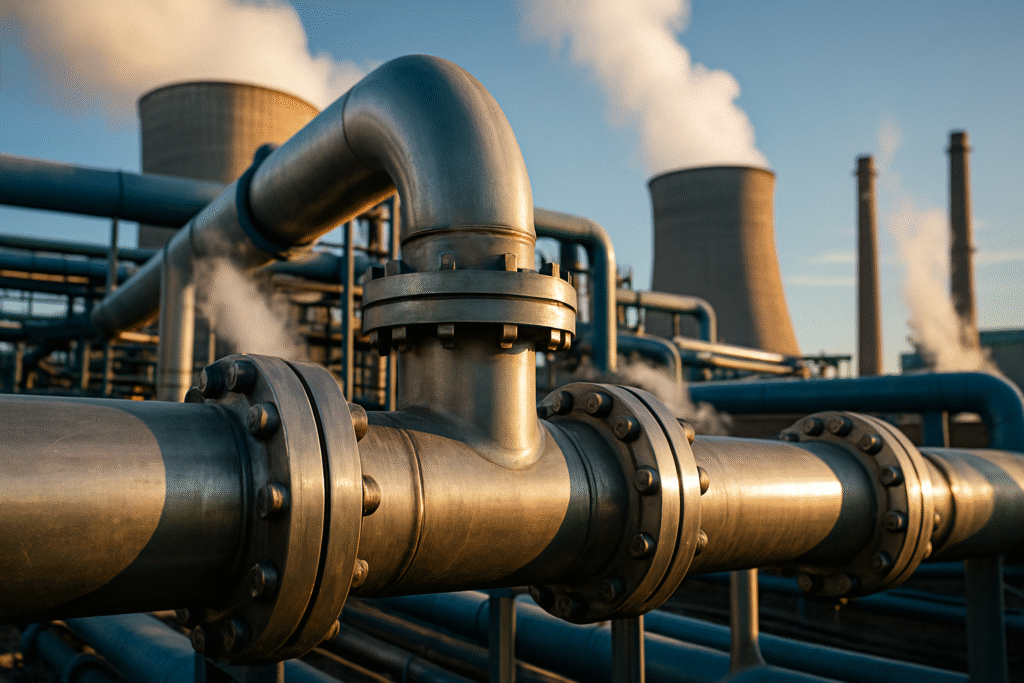
Flanschführung für Edelstahlrohre: 7 Datengestützte Vorteile, Typen, Verwendungsmöglichkeiten, und wie man wählt
Der Markt für Rohrflansche aus Edelstahl wächst weiterhin als Korrosionsschutz, Druckintegrität, und Lebenszykluskosten werden für Industriekäufer zur obersten Priorität. Laut Grand View Research (2024), Der globale Markt für Industrieflansche wurde mit bewertet $5.8 Milliarden in 2023 und wird voraussichtlich erreicht werden $7.2 Milliarden von 2030, which highlights the Hidden Advantages and long-term Versatility of Stainless Steel Flanges in modern Pipe systems.
Für Ingenieure und Einkaufsmanager, the question is no longer whether stainless materials perform well. Stattdessen, the practical issue is how to Choose the right Flanges, Noten, Standards, and facing configurations for demanding process conditions.
Markttreiber hinter der Nachfrage nach Edelstahlrohrflanschen
Demand for stainless steel pipe flange products is rising because process industries now evaluate total installed cost, Wartungshäufigkeit, and outage risk together. Laut Statista (2024), auf die Öl- und Gasindustrie entfallen ca 35% des weltweiten Flanschverbrauchs, which makes material durability and code compliance central to project success.
Zusätzlich, regional supply capability matters. Laut IBISWorld (2024), Der asiatisch-pazifische Raum macht mehr als aus 45% der weltweiten Flanschproduktion, wobei China der größte Hersteller ist, so buyers increasingly source from qualified producers with traceable quality systems.
This trend supports manufacturers that combine global standards with efficient production. SASA FLANGE, Zum Beispiel, liefert Edelstahl, Kohlenstoffstahl, Legierung, Duplex, Nickellegierung, und Titanflanschprodukte für Öl & Gas, Petrochemie, Stromerzeugung, Marine, Wasseraufbereitung, und Baumärkte.
Procurement teams also expect more than catalog stock. Sie wollen EN 10204 3.1 Dokumentation, PMI, Unterstützung für hydrostatische Tests, Dimensionsüberprüfung, and material traceability from raw forging to finished machining.
Infolge, suppliers must offer much more than commodity parts. They must deliver ASTM-compliant raw materials, ASME dimensional accuracy, and project-specific machining for weld neck, reinschlüpfen, blind, Muffenschweißen, mit Gewinde, and lap joint Types.
Laut Mordor-Geheimdienst (2024), industrial infrastructure investment in energy and water sectors remains a major growth driver for piping components worldwide. daher, buyers increasingly prioritize suppliers that can support both replacement maintenance and greenfield EPC packages.
The stainless category remains especially attractive because it balances corrosion resistance, mechanische Festigkeit, fabricability, and clean-service suitability. In contrast to coated carbon steel, stainless steel flange assemblies often reduce repainting, Kontaminationsrisiko, and maintenance interventions over long service periods.
Als Werkstoffingenieur Dr. Helen Morris, Korrosionsspezialist, Staaten: “When chloride exposure, Luftfeuchtigkeit, and cyclic shutdowns combine, stainless flanges often deliver lower lifecycle cost than lower-priced alternatives.” That insight is highly relevant for offshore, chemisch, und Wasseraufbereitungsanwendungen.
Buyers also compare sourcing risk. Mit ISO 9001:2015 und PED 2014/68/EU-Zertifizierungen, SASA FLANGE aligns manufacturing control with international project requirements while serving customers across 50+ Länder.
Darüber hinaus, product breadth affects bid competitiveness. Herstellung von Flanschen in 304, 316, 316L, 904L, 2205, 2507, A182-Klassen, Inconel, Monel, Hastelloy, and Titanium gives project teams flexibility when media chemistry, Auslegungstemperatur, or corrosion allowance changes late in specification review.
Intriguing Stainless Steel Pipe Flange Technical Guide: Noten, Bewertungen, und versteckte Vorteile
The most Intriguing aspect of a stainless steel pipe flange is its ability to combine leak-tight connection performance with service-specific alloy selection. Jedoch, the best result depends on matching flange class, gegenüber, Metallurgie, Wandstärke, und Serviceumgebung.
Laut Market Research Future (2024), corrosion-resistant alloy demand in industrial processing continues to grow as operators seek longer service life and lower unplanned downtime. daher, stainless and duplex Flanges are no longer niche selections in many aggressive media systems.
ASME B16.5 covers dimensions and pressure-temperature ratings for flanges from NPS 1/2 durch 24, während ASME B16.47 adressiert größere Durchmesser (ASME, 2023). ASTM A182 commonly applies to forged stainless and alloy Steel flanges, wohingegen ASTM A240 relates to plate products used in some fabricated components (ASTM, 2024).
Als Rohrleitungsberater Michael Trent, Leitender Rohrleitungsingenieur, Staaten: “A flange failure is rarely caused by one variable alone; Materialqualität, Schraubenlast, Auswahl der Dichtung, and alignment all matter equally.” This is why experienced buyers review the full joint assembly rather than only the flange material.
Among austenitic grades, 304 and 304L remain common for general industrial service because they provide good weldability and cost efficiency. Jedoch, 316 and 316L offer enhanced pitting resistance through molybdenum addition, so they are often preferred for chloride-bearing environments.
Für anspruchsvolleren Einsatz, 904L, 2205, Und 2507 offer higher resistance to localized corrosion and stress corrosion cracking. Zusätzlich, Nickellegierungen wie Inconel, Monel, and Hastelloy support applications where standard stainless grades may not provide adequate durability.
- 304/304L: Allgemeine Prozesslinien, Wassersysteme, Service in Lebensmittelqualität, moderate corrosion exposure.
- 316/316L: Marine atmospheres, chemische Übertragung, Offshore-Skids, chloridhaltige Medien.
- 904L: Stronger resistance in acidic and high-corrosion environments.
- 2205 Duplex: High strength plus improved chloride resistance for offshore and process plants.
- 2507 Super-Duplex: Severe seawater and high-chloride duties.
- Titan: Outstanding corrosion resistance for specialized chemical and marine systems.
Ebenso wichtig ist die Auswahl der Druckklasse. Standard classes include 150, 300, 600, 900, 1500, Und 2500 unter ASME B16.5, and each class must be checked against service temperature because allowable pressure decreases as temperature rises (ASME, 2023).
Facing style influences sealing. Raised face suits many industrial systems, ring type joint is common in high-pressure and high-temperature service, and flat face is often specified for cast iron or mating equipment where flange stress must remain controlled.
Zu den gängigen Flanschtypen aus Edelstahl gehören::
- Weld neck flange for high-pressure, hohe Temperatur, and cyclic duty.
- Slip on flange for easier installation and lower initial cost.
- Blind flange for line isolation and pressure boundary closure.
- Muffenschweißflansch für kleine Bohrungen, Hochdruckanwendungen.
- Threaded flange where welding is undesirable or restricted.
- Lap joint flange for systems needing frequent dismantling.
Dimensions and tolerances must match the connected Pipe specification. daher, buyers should confirm nominal size, Zeitplan, langweilig, flange width, Verkleidungsende, Bohrbild, and metallurgy before purchase.
According to ISO guidance and European practice, EN 1092 flanges remain common in multinational projects where metric dimensions and PN ratings are specified (EN, 2023). Im Gegensatz, North American process plants often standardize around ASME ratings and inch-based nominal sizing.
Quality assurance should include more than a visual check. Unterstützt durch fortschrittliche CNC-Bearbeitung und umfassende Qualitätsprüfungen, SASA FLANGE can support PMI, Maßprüfung, chemical and mechanical verification, and documentation packages for export projects.
Buyers also ask about stainless steel pipe flange price. Price depends on alloy grade, Druckklasse, Schmiederoute, Rohstoffvolatilität, Bearbeitungskomplexität, Testanforderungen, Menge, und Lieferplan, so technical alignment early in RFQ preparation helps avoid costly revision cycles.
Zum Beispiel, A 4 inch stainless steel pipe flange in 316L Class 150 may be straightforward, während a 4 Zoll 2507 RTJ Class 600 flange requires more specialized forging and inspection. Folglich, the commercial gap between apparently similar parts can be significant.
The Hidden Advantages of stainless solutions become clearer over the full asset life. Reduced corrosion maintenance, cleaner service performance, geringere Austauschhäufigkeit, and better reliability often offset higher upfront material cost.
As industry analyst Rachel Dunn states: “In process equipment procurement, the lowest purchase price is not the lowest ownership cost.” That statement reflects the reality of shutdown economics in refinery, LNG, and chemical processing operations.
Standards, Einhaltung, and Inspection Requirements for Stainless Steel Flanges
Standards provide the technical language that allows EPC firms, Fachhändler, and end users to buy with confidence. daher, every stainless steel pipe flange order should reference material standard, Maßstandard, Druckklasse, gegenüber, Testen, and documentation level.
The most frequently specified standards include ASTM A182 für geschmiedete Edelstahl- und Legierungsflansche, ASME B16.5 for dimensions up to NPS 24, ASME B16.47 für größere Größen, ASME B16.9 for buttweld fittings, und EN 1092 for European pressure classes. DIN, JIS, and GOST standards also remain important in regional and legacy systems.
- ASTM A182: Forged or rolled alloy and stainless Steel pipe flanges, Beschläge, Ventile, und Teile.
- ASME B16.5: Pipe Flanges and flanged fittings, NPS 1/2 Zu 24.
- ASME B16.47: Stahlflansche mit großem Durchmesser, NPS 26 Zu 60.
- ASME B16.9: Werkseitig hergestellte, geschmiedete Stumpfschweißbeschläge.
- EN 1092-1: European flanges with PN designations.
- NACE MR0175 / ISO 15156: Leitfaden zur Materialeignung für saure Betriebsumgebungen.
Laut ASME (2023), flange pressure-temperature ratings depend on both material group and design temperature, so the same class number does not carry the same allowable pressure across all materials. This is a critical detail when engineers compare carbon steel and stainless alternatives.
In sour service or chloride-rich applications, NACE requirements may affect material selection and hardness control. Außerdem, offshore and marine projects may impose additional owner specifications from DNV or NORSOK depending on geography and service severity.
Typical compliance documents requested by professional buyers include EN 10204 3.1 Materialzertifikate, Rückverfolgbarkeit der Herdenzahl, dimensionale Berichte, PMI-Aufzeichnungen, and marking photographs. PED 2014/68/EU documentation may also be required for equipment entering the European Economic Area.
Für Beschaffungsteams, the comparison below helps clarify common specification checkpoints:
- Materialqualität: 304, 316L, 904L, 2205, 2507, Titan, oder Nickellegierung.
- Standard: ASTM A182, ASME B16.5, ASME B16.47, DIN, JIS, GOST, EN 1092.
- Größenbereich: typischerweise 1/2 Zoll zu 60 inch depending on design standard.
- Druckstufe: Klasse 150 Zu 2500 or PN series under EN standards.
- Gegenüber: RF, FF, RTJ, or special finish on request.
- Dokumentation: EN 10204 3.1, PED, Inspektionsberichte, third-party witness if required.
Laut ISO (2023), certified quality management systems reduce process variability and improve traceability in manufacturing environments. This is one reason major projects prefer suppliers with established quality frameworks and auditable procedures.
Mit ISO 9001:2015, PED 2014/68/EU, und AD 2000 Anmeldeinformationen, SASA FLANGE supports project requirements that demand documented process control and export-ready compliance. Zusätzlich, custom sizes from 1/2 Zoll zu 60 inch with factory-direct pricing help buyers consolidate sourcing across standard and special orders.
Zur technischen Überprüfung, engineers should still review the original standards directly through authoritative sources such as ASME. Doing so ensures the specified stainless steel pipe flange matches the latest dimensional and rating requirements before final release.
Application-Specific Selection: How to Choose Stainless Steel Flanges for Critical Industries
Selection should begin with service conditions rather than with catalog habit. Medienkomposition, Chloridgehalt, Druckwechsel, Auslegungstemperatur, Isolationszustand, and maintenance philosophy all influence the best stainless steel pipe flange choice.
Bei Öl und Gas, flange leakage can trigger major safety and environmental consequences. Da der Sektor ca. darstellt 35% des weltweiten Flanschverbrauchs laut Statista (2024), operators often prioritize weld neck, RTJ, Duplex, and higher-class flange configurations in upstream and process units.
For petrochemical service, 316L, 904L, and selected nickel alloys often appear where aggressive chemicals or mixed process streams create corrosion risks. daher, material review should include both normal operating chemistry and upset conditions.
Energieerzeugungsprojekte konzentrieren sich oft auf die Temperatur, Druck, und Müdigkeit. In diesen Systemen, forged flanges with precise machining, controlled metallurgy, and strong QA records help maintain joint integrity through thermal cycling.
Marine and shipbuilding environments introduce seawater, Salzsprühnebel, und Feuchtigkeit. Infolge, 316L, Duplex 2205, und Super-Duplex 2507 frequently offer stronger durability than basic austenitic grades in exposed service.
Water treatment facilities also rely heavily on corrosion resistant flanges because chemical dosing, Desinfektionsmittel, and wet atmospheres accelerate material degradation. Darüber hinaus, stainless solutions often support cleaner service and lower maintenance in potable or process-water infrastructure.
- Choose 304/304L for general service with moderate corrosion exposure and budget sensitivity.
- Choose 316/316L for marine, chloridhaltig, or more aggressive industrial environments.
- Choose duplex 2205 for higher strength and improved chloride resistance.
- Wählen 2507 or nickel alloys for severe corrosion, Off-Shore-, or critical process lines.
- Choose titanium for highly specialized chemical and marine exposure where exceptional corrosion resistance is required.
Selection should also consider connection and maintenance strategy. Zum Beispiel, threaded stainless steel pipe flange designs may suit low-pressure utility lines where welding must be avoided, while weld neck flanges fit critical process piping with higher stress concentration concerns.
Here is a practical industry guide for common Uses:
- Öl & Gas: Schweißhals RTJ, 316L, 2205, 2507, Klasse 600 and above where required.
- Chemische Verarbeitung: 316L, 904L, Hastelloy, Monel depending on media compatibility.
- Kraftwerke: Forged weld neck or blind flanges with elevated pressure-temperature review.
- Marine: 316L, Duplex, titanium for seawater and deck exposure.
- Wasseraufbereitung: 304L or 316L depending on chemistry and cleanliness requirements.
- Construction and General Industry: Slip on and blind flanges for utility and equipment tie-ins.
Custom manufacturing remains essential because many projects require special bores, nicht standardmäßiges Bohren, unique facing, or mixed standard packages. For projects requiring tailored dimensions, Käufer können Kontakt SASA FLANGE for custom forged and machined solutions across stainless, Legierung, and special materials.
Lead time should be reviewed as early as technical selection. Although standard 304 Und 316 items may be available quickly, Super-Duplex, titanium flanges, F11 flanges, and heavy-section large diameters usually require longer manufacturing cycles and more inspection stages.
Procurement teams should also confirm whether the supplier can provide associated elbows, T-Shirts, Reduzierstücke, und Kappen darunter ASME B16.9. Bundling flanges and fittings from one qualified source can simplify logistics, Inspektionsplanung, und Dokumentationskontrolle.
Zukunftsausblick, Strategische Kaufempfehlungen, and Long-Term Value
The future of the stainless steel pipe flange segment looks positive because energy, Wasser, Marine, and process industries continue to upgrade infrastructure. Laut Grand View Research (2024), Es wird erwartet, dass der Markt weiter wächst $5.8 Milliarden in 2023 Zu $7.2 Milliarden von 2030, which signals steady demand for high-performance connection components.
Gleichzeitig, buyers face more scrutiny on lifecycle cost, Emissionen, und Zuverlässigkeit. daher, materials that deliver better durability and lower maintenance interruptions should remain strategically important.
Procurement managers can improve outcomes by standardizing technical review before RFQ release. This includes confirming grade, flange chart reference, Klasse, gegenüber, Größe, flange width, Menge, Dokumentation, and project-specific compliance needs.
Engineers should also compare more than unit price. A lower-cost flange that requires earlier replacement or causes sealing issues can create larger shutdown losses than a premium-grade component.
Recommended sourcing practices include:
- Specify exact material and standard, not only a generic stainless description.
- Match pressure class and facing to the full joint design.
- Anfrage EN 10204 3.1 certificates and traceability for critical service.
- Confirm machining capability for custom bores and nonstandard dimensions.
- Evaluate supplier certifications, Exporterfahrung, and response speed.
Laut IBISWorld (2024), China ist nach wie vor der größte Produktionsstandort innerhalb einer Region, für die mehr als 100.000 Menschen verantwortlich sind 45% der weltweiten Flanschproduktion. Folglich, selecting a technically strong and quality-focused manufacturer in this supply chain can improve both project economics and delivery flexibility.
For companies seeking a reliable source of stainless steel, Duplex, Legierung, and titanium flange products, SASA FLANGE offers engineering support, breite Materialabdeckung, and documented quality systems for international B2B projects. That combination helps buyers turn specification clarity into procurement confidence.
Häufig gestellte Fragen
Was ist besser? 304 oder 420 Edelstahl?
●304 stainless steel is generally better for stainless steel pipe flange applications because it offers stronger corrosion resistance and weldability than 420 in most industrial piping environments.
●According to ASTM material usage patterns in process industries, 304 and 304L are far more common for fabricated piping components, während 420 is usually selected for hardness-focused parts rather than corrosion-critical flange joints.
●In praktischer Hinsicht, 420 is a martensitic stainless grade with higher carbon content, so it can achieve greater hardness after heat treatment, but it does not match 304 for resistance to wet service, Chemikalien, or atmospheric corrosion in typical plant conditions.
●Für Beschaffungsteams, the selection should follow service exposure rather than generic grade popularity, because moderate water, Essen, Dienstprogramm, and clean process duties often favor 304, while wear-oriented mechanical parts may justify 420.
●For projects requiring corrosion resistance, Code-Compliance, and stable supply in ASTM A182 forged flange materials, Zusammenarbeit mit etablierten Herstellern wie SASA FLANGE supports a more reliable specification decision.
Wofür werden Edelstahlflansche verwendet??
●Zur Verbindung von Rohren werden Edelstahlflansche verwendet, Ventile, Pumps, Druckbehälter, and inline equipment while allowing assembly, Inspektion, Wartung, und sichere Demontage.
●Laut Statista (2024), Öl und Gas machen ca. aus 35% des weltweiten Flanschverbrauchs, which shows how critical flanged joints remain in high-value industrial piping systems.
●These components are widely used in petrochemical plants, Offshore-Plattformen, Kraftwerke, Schiffbau, Wasseraufbereitungsanlagen, Lebensmittelverarbeitungslinien, and general manufacturing because stainless materials provide corrosion resistance and dependable sealing performance.
●Common applications include process piping tie-ins, tank nozzles, skid connections, isolation points with blind flanges, and maintenance-intensive systems where bolted joints are preferred over permanent welded connections.
●For systems that demand 304, 316L, Duplex, or titanium materials with traceable certification and custom machining, sourcing through experienced suppliers like SASA FLANGE helps reduce operational and documentation risk.
Was ist der ASME-Code für Edelstahlflansche??
●The main ASME standards for stainless steel flanges are ASME B16.5 für NPS 1/2 Zu 24 Und ASME B16.47 für größere Durchmesser, while material is often specified under ASTM A182.
●Laut ASME (2023), pressure-temperature ratings depend on flange class, Materialgruppe, und Betriebstemperatur, so engineers must verify the full rating table rather than relying on class number alone.
●In project documentation, buyers typically reference ASME B16.5 or B16.47 for dimensions, gegenüber, Bohren, und Bewertung, then combine that with ASTM A182 grade requirements such as F304, F304L, F316, oder F316L.
●Additional requirements may include ASME B31.3 for process piping design, NACE MR0175 für sauren Service, oder EN 1092 where European metric systems are specified.
●Für kritische Aufträge, buyers should confirm the exact standard edition and inspection package with qualified manufacturers like SASA FLANGE before issuing a purchase order.
Welche drei Arten von Flanschen gibt es??
●The three most widely recognized flange types in basic industrial discussion are weld neck flanges, Aufsteckflansche, und Blindflansche.
●Weld neck flanges are preferred for high-pressure or cyclic service because their tapered hub improves stress distribution, while slip on flanges are easier to align and are often chosen for lower-pressure systems.
●Blind flanges are used to close the end of a piping system, vessel nozzle, oder zukünftiger Erweiterungspunkt, and they are critical for testing, Isolierung, and maintenance planning in industrial plants.
●Jedoch, engineers should remember that socket weld, mit Gewinde, and lap joint flanges are also standard Types under ASME systems, so actual selection depends on line size, Druckklasse, welding approach, und Wartungszugang.
●For buyers who need guidance on flange chart interpretation, gegenüberstehende Optionen, or custom bores across stainless, Legierung, Duplex, und Titansorten, an experienced producer such as SASA FLANGE can provide application-specific support.
Welche Faktoren beeinflussen den Preis für Edelstahlrohrflansche??
●Der Preis für Edelstahlrohrflansche wird hauptsächlich von der Legierungssorte beeinflusst, Größe, Druckklasse, Schmiedekosten, Bearbeitungskomplexität, Testumfang, und Bestellmenge.
●Laut Grand View Research (2024), the broader industrial flange market reached $5.8 Milliarden in 2023, and that scale reflects how raw material volatility and energy costs can influence pricing across the supply chain.
●A 2 Zoll bzw 4 Zoll Edelstahlrohrflansch in 304 or 316L Class 150 kann relativ Standard sein, but larger sizes, RTJ-Beschichtungen, Duplex-Sorten, titanium flanges, and urgent delivery requirements usually increase unit cost substantially.
●Dokumentationspflichten wie z EN 10204 3.1 Zertifikate, PMI, Inspektion durch Dritte, and PED compliance can also add measurable value and cost, especially for export or regulated projects.
●The most effective buying strategy is to submit a complete RFQ with size, Zeitplan, Klasse, gegenüber, Standard, Menge, and certificate requirements so the quoted price reflects the real technical scope.
How do I choose the right stainless steel pipe flange sizes and flange chart reference?
●Sie sollten die Flanschgröße entsprechend der Nennrohrgröße auswählen, Wandplan, langweilig, Druckklasse, and dimensional standard such as ASME B16.5, ASME B16.47, oder EN 1092.
●Laut ASME (2023), dimensional compatibility across bolt circle, langweilig, gegenüber, and thickness is essential for sealing integrity, which is why flange chart verification remains a basic engineering control step.
●In der Praxis, buyers should confirm whether the project uses inch or metric standards, then review the correct flange chart for outside diameter, Schraubenlöcher, flange width, erhöhte Gesichtshöhe, and pressure-temperature class.
●This step becomes especially important when ordering stainless steel flange types for mixed-standard facilities, replacement maintenance, or custom fabrication involving threaded pipe flange or large-diameter blind flange configurations.
●For projects that require exact chart matching and custom manufacturing from 1/2 Zoll zu 60 Zoll, consulting a specialized supplier such as SASA FLANGE helps avoid fit-up delays and costly field rework.
Verwandte Beiträge
Flanschoberflächenfinish: Konzentrische vs. spiralförmige Verzahnungen erklärt
Konzentrische und spiralförmige Verzahnungen sind beide bearbeitete Flanschflächenoberflächen…
Duplex 2205 vs. 316L-Flansche: Welches Material sollten Sie wählen??
Schnelle Antwort: Duplex 2205 Flansche sind normalerweise der stärkere Kandidat…

Definition des Öffnungsflansches, Details und Übersicht über ASME B16.36-Flansche: Marktdaten, Auswahlhilfe und Compliance-Einblicke
Der globale Markt für Industrieflansche wurde mit bewertet $5.8 Milliarde…

Marktführer für schwarze Entsorgungsflansche: Materialien, 3.5″ Kompatibilität, und B2B-Beschaffungsdaten für Küchenspülenflansche
Die Nachfrage nach schwarzen Entsorgungsflanschen steigt bei Käufern von Küchenarmaturen…