
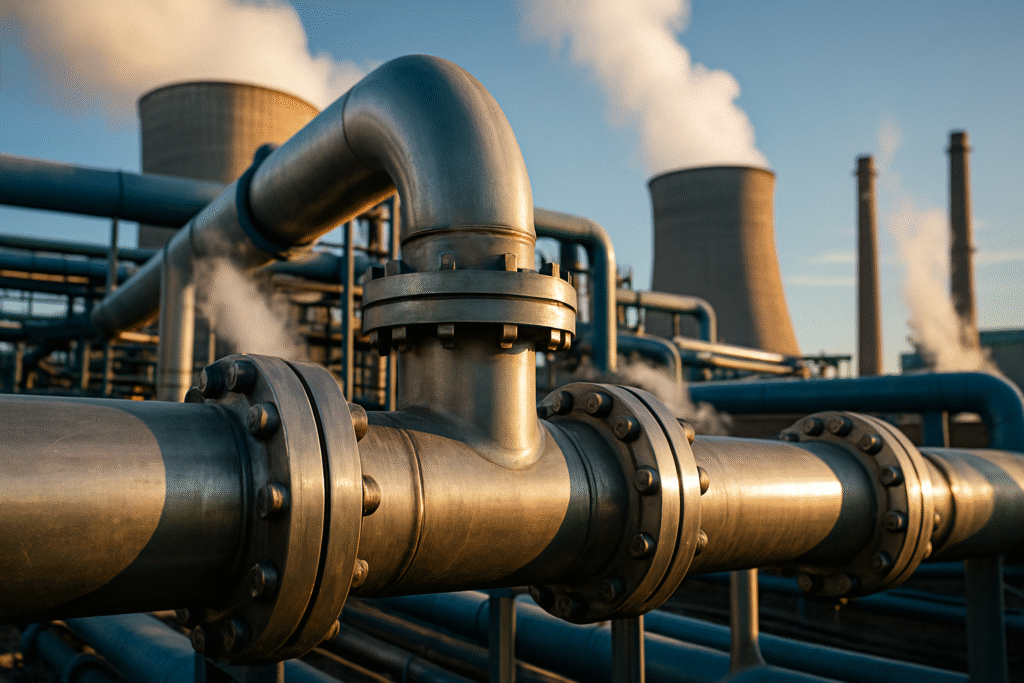
Направляющая фланца трубы из нержавеющей стали: 7 Преимущества, основанные на данных, Типы, Использование, и как выбрать
Рынок фланцев для труб из нержавеющей стали продолжает расширяться по мере борьбы с коррозией., целостность давления, и стоимость жизненного цикла становятся главными приоритетами для промышленных покупателей. По данным исследования Grand View (2024), мировой рынок промышленных фланцев оценивался в $5.8 миллиард в 2023 и, по прогнозам, достигнет $7.2 миллиард на 2030, which highlights the Hidden Advantages and long-term Versatility of Stainless Steel Flanges in modern Pipe systems.
Для инженеров и менеджеров по снабжению, the question is no longer whether stainless materials perform well. Вместо, the practical issue is how to Choose the right Flanges, оценки, стандарты, and facing configurations for demanding process conditions.
Market Drivers Behind Stainless Steel Pipe Flange Demand
Demand for stainless steel pipe flange products is rising because process industries now evaluate total installed cost, частота технического обслуживания, and outage risk together. По данным Статистики (2024), на долю нефтегазовой отрасли приходится около 35% мирового потребления фланцев, which makes material durability and code compliance central to project success.
Кроме того, regional supply capability matters. По данным IBISWorld (2024), На долю Азиатско-Тихоокеанского региона приходится более 45% мирового производства фланцев, при этом Китай является крупнейшим производителем, so buyers increasingly source from qualified producers with traceable quality systems.
This trend supports manufacturers that combine global standards with efficient production. SASA FLANGE, например, поставляет нержавеющую сталь, углеродистая сталь, сплав, дуплекс, никелевый сплав, and titanium flange products for Oil & Газ, нефтехимическая, Производство электроэнергии, Морской, Очистка воды, и Строительные рынки.
Procurement teams also expect more than catalog stock. Они хотят EN 10204 3.1 документация, PMI, hydrostatic testing support, проверка размеров, and material traceability from raw forging to finished machining.
Как результат, suppliers must offer much more than commodity parts. They must deliver ASTM-compliant raw materials, ASME dimensional accuracy, and project-specific machining for weld neck, надеть, слепой, раструбная сварка, резьбовой, and lap joint Types.
По данным Мордорской разведки (2024), industrial infrastructure investment in energy and water sectors remains a major growth driver for piping components worldwide. Поэтому, buyers increasingly prioritize suppliers that can support both replacement maintenance and greenfield EPC packages.
The stainless category remains especially attractive because it balances corrosion resistance, механическая прочность, технологичность, and clean-service suitability. In contrast to coated carbon steel, stainless steel flange assemblies often reduce repainting, contamination risk, and maintenance interventions over long service periods.
Как инженер-материаловед доктор. Хелен Моррис, Специалист по коррозии, государства: «When chloride exposure, влажность, and cyclic shutdowns combine, stainless flanges often deliver lower lifecycle cost than lower-priced alternatives.» That insight is highly relevant for offshore, химический, и применения в области очистки воды.
Buyers also compare sourcing risk. С ISO 9001:2015 и сертификаты PED 2014/68/ЕС., SASA FLANGE aligns manufacturing control with international project requirements while serving customers across 50+ страны.
Более того, product breadth affects bid competitiveness. Изготовление фланцев в 304, 316, 316л, 904л, 2205, 2507, Классы А182, Инконель, Монель, Хастеллой, and Titanium gives project teams flexibility when media chemistry, расчетная температура, or corrosion allowance changes late in specification review.
Intriguing Stainless Steel Pipe Flange Technical Guide: Оценки, Рейтинги, и скрытые преимущества
The most Intriguing aspect of a stainless steel pipe flange is its ability to combine leak-tight connection performance with service-specific alloy selection. Однако, the best result depends on matching flange class, лицом к лицу, металлургия, толщина стенки, и сервисная среда.
По данным Market Research Future (2024), corrosion-resistant alloy demand in industrial processing continues to grow as operators seek longer service life and lower unplanned downtime. Поэтому, stainless and duplex Flanges are no longer niche selections in many aggressive media systems.
ASME B16.5 covers dimensions and pressure-temperature ratings for flanges from NPS 1/2 через 24, пока ASME B16.47 подходит для больших диаметров (ASME, 2023). ASTM A182 commonly applies to forged stainless and alloy Steel flanges, тогда как ASTM A240 relates to plate products used in some fabricated components (ASTM, 2024).
Консультант по трубопроводам Майкл Трент, Старший инженер по трубопроводам, государства: «A flange failure is rarely caused by one variable alone; сорт материала, болтовая нагрузка, gasket choice, and alignment all matter equally.» This is why experienced buyers review the full joint assembly rather than only the flange material.
Among austenitic grades, 304 and 304L remain common for general industrial service because they provide good weldability and cost efficiency. Однако, 316 and 316L offer enhanced pitting resistance through molybdenum addition, so they are often preferred for chloride-bearing environments.
For more severe service, 904л, 2205, и 2507 offer higher resistance to localized corrosion and stress corrosion cracking. Кроме того, nickel alloys such as Inconel, Монель, and Hastelloy support applications where standard stainless grades may not provide adequate durability.
- 304/304л: Общие технологические линии, водные системы, продовольственный сервис, moderate corrosion exposure.
- 316/316л: Marine atmospheres, химический перенос, морские салазки, chloride-containing media.
- 904л: Stronger resistance in acidic and high-corrosion environments.
- 2205 Дуплекс: High strength plus improved chloride resistance for offshore and process plants.
- 2507 Супер Дуплекс: Severe seawater and high-chloride duties.
- Титан: Outstanding corrosion resistance for specialized chemical and marine systems.
Выбор класса давления не менее важен.. Standard classes include 150, 300, 600, 900, 1500, и 2500 под ASME B16.5, and each class must be checked against service temperature because allowable pressure decreases as temperature rises (ASME, 2023).
Facing style influences sealing. Raised face suits many industrial systems, ring type joint is common in high-pressure and high-temperature service, and flat face is often specified for cast iron or mating equipment where flange stress must remain controlled.
Common Stainless Steel Flange Types include:
- Weld neck flange for high-pressure, высокотемпературный, and cyclic duty.
- Slip on flange for easier installation and lower initial cost.
- Blind flange for line isolation and pressure boundary closure.
- Фланец под приварку враструб для малого диаметра, приложения высокого давления.
- Threaded flange where welding is undesirable or restricted.
- Lap joint flange for systems needing frequent dismantling.
Dimensions and tolerances must match the connected Pipe specification. Поэтому, покупатели должны подтвердить номинальный размер, расписание, бурить, ширина фланца, облицовочная отделка, схема сверления, and metallurgy before purchase.
According to ISO guidance and European practice, EN 1092 flanges remain common in multinational projects where metric dimensions and PN ratings are specified (EN, 2023). В отличие, North American process plants often standardize around ASME ratings and inch-based nominal sizing.
Quality assurance should include more than a visual check. Благодаря передовой обработке с ЧПУ и всестороннему тестированию качества., SASA FLANGE can support PMI, проверка размеров, chemical and mechanical verification, and documentation packages for export projects.
Buyers also ask about stainless steel pipe flange price. Price depends on alloy grade, класс давления, маршрут ковки, нестабильность сырья, сложность обработки, требования к тестированию, количество, и график доставки, so technical alignment early in RFQ preparation helps avoid costly revision cycles.
Например, а 4 дюймовый фланец трубы из нержавеющей стали класса 316L 150 may be straightforward, while a 4 дюйм 2507 RTJ Class 600 flange requires more specialized forging and inspection. Следовательно, the commercial gap between apparently similar parts can be significant.
The Hidden Advantages of stainless solutions become clearer over the full asset life. Reduced corrosion maintenance, cleaner service performance, более низкая частота замены, and better reliability often offset higher upfront material cost.
As industry analyst Rachel Dunn states: «In process equipment procurement, the lowest purchase price is not the lowest ownership cost.» That statement reflects the reality of shutdown economics in refinery, СПГ, and chemical processing operations.
Стандарты, Согласие, and Inspection Requirements for Stainless Steel Flanges
Standards provide the technical language that allows EPC firms, продавцы с запасами, and end users to buy with confidence. Поэтому, every stainless steel pipe flange order should reference material standard, стандарт размеров, класс давления, лицом к лицу, тестирование, и уровень документации.
The most frequently specified standards include ASTM A182 for forged stainless and alloy flanges, ASME B16.5 for dimensions up to NPS 24, ASME B16.47 для больших размеров, ASME B16.9 for buttweld fittings, и RU 1092 for European pressure classes. DIN, JIS, and GOST standards also remain important in regional and legacy systems.
- ASTM A182: Forged or rolled alloy and stainless Steel pipe flanges, арматура, клапаны, и части.
- ASME B16.5: Pipe Flanges and flanged fittings, НПС 1/2 к 24.
- ASME B16.47: Стальные фланцы большого диаметра, НПС 26 к 60.
- ASME B16.9: Кованые фитинги для стыковой сварки заводского изготовления..
- EN 1092-1: European flanges with PN designations.
- NACE MR0175 / ISO 15156: Рекомендации по пригодности материалов для эксплуатации в кислых средах.
Согласно ASME (2023), flange pressure-temperature ratings depend on both material group and design temperature, so the same class number does not carry the same allowable pressure across all materials. This is a critical detail when engineers compare carbon steel and stainless alternatives.
In sour service or chloride-rich applications, NACE requirements may affect material selection and hardness control. Более того, offshore and marine projects may impose additional owner specifications from DNV or NORSOK depending on geography and service severity.
Typical compliance documents requested by professional buyers include EN 10204 3.1 сертификаты на материалы, отслеживание номера плавки, отчеты о размерах, записи PMI, and marking photographs. PED 2014/68/EU documentation may also be required for equipment entering the European Economic Area.
Для отделов закупок, the comparison below helps clarify common specification checkpoints:
- Марка материала: 304, 316л, 904л, 2205, 2507, титан, или никелевый сплав.
- Стандартный: ASTM A182, ASME B16.5, ASME B16.47, DIN, JIS, ГОСТ, EN 1092.
- Диапазон размеров: обычно 1/2 дюйм до 60 inch depending on design standard.
- Номинальное давление: Сорт 150 к 2500 or PN series under EN standards.
- Облицовка: РФ, ФФ, РТЖ, or special finish on request.
- Документация: EN 10204 3.1, ПЭД, отчеты об инспекциях, third-party witness if required.
По данным ИСО (2023), certified quality management systems reduce process variability and improve traceability in manufacturing environments. This is one reason major projects prefer suppliers with established quality frameworks and auditable procedures.
С ISO 9001:2015, ПЭД 2014/68/ЕС, и АД 2000 реквизиты для входа, SASA FLANGE supports project requirements that demand documented process control and export-ready compliance. Кроме того, custom sizes from 1/2 дюйм до 60 inch with factory-direct pricing help buyers consolidate sourcing across standard and special orders.
Для технической проверки, engineers should still review the original standards directly through authoritative sources such as ASME. Doing so ensures the specified stainless steel pipe flange matches the latest dimensional and rating requirements before final release.
Application-Specific Selection: How to Choose Stainless Steel Flanges for Critical Industries
Selection should begin with service conditions rather than with catalog habit. Медиа-композиция, содержание хлоридов, циклическое давление, расчетная температура, состояние изоляции, and maintenance philosophy all influence the best stainless steel pipe flange choice.
В нефти и газе, flange leakage can trigger major safety and environmental consequences. Since the sector represents about 35% мирового потребления фланцев по данным Statista (2024), operators often prioritize weld neck, РТЖ, дуплекс, and higher-class flange configurations in upstream and process units.
For petrochemical service, 316л, 904л, and selected nickel alloys often appear where aggressive chemicals or mixed process streams create corrosion risks. Поэтому, material review should include both normal operating chemistry and upset conditions.
Power generation projects often focus on temperature, давление, и усталость. В этих системах, forged flanges with precise machining, controlled metallurgy, and strong QA records help maintain joint integrity through thermal cycling.
Marine and shipbuilding environments introduce seawater, соляной туман, и влажность. Как результат, 316л, дуплекс 2205, и супер дуплекс 2507 frequently offer stronger durability than basic austenitic grades in exposed service.
Water treatment facilities also rely heavily on corrosion resistant flanges because chemical dosing, дезинфицирующие средства, and wet atmospheres accelerate material degradation. Более того, stainless solutions often support cleaner service and lower maintenance in potable or process-water infrastructure.
- Choose 304/304L for general service with moderate corrosion exposure and budget sensitivity.
- Choose 316/316L for marine, хлоридсодержащий, or more aggressive industrial environments.
- Choose duplex 2205 for higher strength and improved chloride resistance.
- Выбирать 2507 or nickel alloys for severe corrosion, оффшорный, or critical process lines.
- Choose titanium for highly specialized chemical and marine exposure where exceptional corrosion resistance is required.
Selection should also consider connection and maintenance strategy. Например, threaded stainless steel pipe flange designs may suit low-pressure utility lines where welding must be avoided, while weld neck flanges fit critical process piping with higher stress concentration concerns.
Here is a practical industry guide for common Uses:
- Масло & Газ: Приварная шейка RTJ, 316л, 2205, 2507, Сорт 600 and above where required.
- Химическая обработка: 316л, 904л, Хастеллой, Monel depending on media compatibility.
- Электростанции: Forged weld neck or blind flanges with elevated pressure-temperature review.
- Морской: 316л, дуплекс, titanium for seawater and deck exposure.
- Очистка воды: 304L or 316L depending on chemistry and cleanliness requirements.
- Construction and General Industry: Slip on and blind flanges for utility and equipment tie-ins.
Custom manufacturing remains essential because many projects require special bores, нестандартное бурение, unique facing, или смешанные стандартные пакеты. For projects requiring tailored dimensions, покупатели могут контакт SASA FLANGE for custom forged and machined solutions across stainless, сплав, and special materials.
Lead time should be reviewed as early as technical selection. Although standard 304 и 316 товары могут быть доступны быстро, супер дуплекс, титановые фланцы, F11 flanges, and heavy-section large diameters usually require longer manufacturing cycles and more inspection stages.
Procurement teams should also confirm whether the supplier can provide associated elbows, тройники, редукторы, и колпачки под ASME B16.9. Bundling flanges and fittings from one qualified source can simplify logistics, планирование инспекций, и контроль документации.
Перспективы на будущее, Рекомендации по стратегическим покупкам, and Long-Term Value
The future of the stainless steel pipe flange segment looks positive because energy, вода, морской, and process industries continue to upgrade infrastructure. По данным исследования Grand View (2024), Ожидается, что рынок вырастет с $5.8 миллиард в 2023 к $7.2 миллиард на 2030, which signals steady demand for high-performance connection components.
В то же время, buyers face more scrutiny on lifecycle cost, выбросы, и надежность. Поэтому, materials that deliver better durability and lower maintenance interruptions should remain strategically important.
Procurement managers can improve outcomes by standardizing technical review before RFQ release. This includes confirming grade, flange chart reference, сорт, лицом к лицу, размер, ширина фланца, количество, документация, and project-specific compliance needs.
Engineers should also compare more than unit price. A lower-cost flange that requires earlier replacement or causes sealing issues can create larger shutdown losses than a premium-grade component.
Recommended sourcing practices include:
- Specify exact material and standard, not only a generic stainless description.
- Match pressure class and facing to the full joint design.
- Запрос EN 10204 3.1 certificates and traceability for critical service.
- Confirm machining capability for custom bores and nonstandard dimensions.
- Evaluate supplier certifications, опыт экспорта, and response speed.
По данным IBISWorld (2024), Китай остается крупнейшей производственной базой в регионе, на долю которого приходится более 45% мирового производства фланцев. Следовательно, selecting a technically strong and quality-focused manufacturer in this supply chain can improve both project economics and delivery flexibility.
For companies seeking a reliable source of stainless steel, дуплекс, сплав, and titanium flange products, SASA FLANGE offers engineering support, широкий охват материала, and documented quality systems for international B2B projects. That combination helps buyers turn specification clarity into procurement confidence.
Часто задаваемые вопросы
Что лучше 304 или 420 нержавеющая сталь?
●304 stainless steel is generally better for stainless steel pipe flange applications because it offers stronger corrosion resistance and weldability than 420 in most industrial piping environments.
●According to ASTM material usage patterns in process industries, 304 and 304L are far more common for fabricated piping components, пока 420 is usually selected for hardness-focused parts rather than corrosion-critical flange joints.
●В практическом плане, 420 is a martensitic stainless grade with higher carbon content, so it can achieve greater hardness after heat treatment, but it does not match 304 for resistance to wet service, химикаты, or atmospheric corrosion in typical plant conditions.
●Для отделов закупок, the selection should follow service exposure rather than generic grade popularity, because moderate water, еда, полезность, and clean process duties often favor 304, while wear-oriented mechanical parts may justify 420.
●For projects requiring corrosion resistance, соответствие кодексу, and stable supply in ASTM A182 forged flange materials, работа с известными производителями, такими как SASA FLANGE supports a more reliable specification decision.
Для чего используются фланцы из нержавеющей стали?
●Фланцы из нержавеющей стали используются для соединения труб., клапаны, насосы, сосуды под давлением, and inline equipment while allowing assembly, инспекция, обслуживание, и безопасная разборка.
●По данным Статистики (2024), на нефть и газ приходится около 35% мирового потребления фланцев, which shows how critical flanged joints remain in high-value industrial piping systems.
●These components are widely used in petrochemical plants, морские платформы, электростанции, судостроение, водоочистные сооружения, линии пищевой промышленности, and general manufacturing because stainless materials provide corrosion resistance and dependable sealing performance.
●Common applications include process piping tie-ins, tank nozzles, skid connections, isolation points with blind flanges, and maintenance-intensive systems where bolted joints are preferred over permanent welded connections.
●For systems that demand 304, 316л, дуплекс, or titanium materials with traceable certification and custom machining, sourcing through experienced suppliers like SASA FLANGE helps reduce operational and documentation risk.
Что такое код ASME для фланцев из нержавеющей стали??
●The main ASME standards for stainless steel flanges are ASME B16.5 для АПЛ 1/2 к 24 и ASME B16.47 для больших диаметров, while material is often specified under ASTM A182.
●Согласно ASME (2023), pressure-temperature ratings depend on flange class, группа материалов, и рабочая температура, so engineers must verify the full rating table rather than relying on class number alone.
●In project documentation, buyers typically reference ASME B16.5 or B16.47 for dimensions, лицом к лицу, бурение, and rating, then combine that with ASTM A182 grade requirements such as F304, F304L, Ф316, или F316L.
●Additional requirements may include ASME B31.3 for process piping design, NACE MR0175 за кислое обслуживание, или RU 1092 where European metric systems are specified.
●Для критических заказов, buyers should confirm the exact standard edition and inspection package with qualified manufacturers like SASA FLANGE before issuing a purchase order.
Какие три типа фланцев существуют??
●The three most widely recognized flange types in basic industrial discussion are weld neck flanges, slip on flanges, и глухие фланцы.
●Weld neck flanges are preferred for high-pressure or cyclic service because their tapered hub improves stress distribution, while slip on flanges are easier to align and are often chosen for lower-pressure systems.
●Blind flanges are used to close the end of a piping system, сопло сосуда, или будущая точка расширения, and they are critical for testing, изоляция, and maintenance planning in industrial plants.
●Однако, engineers should remember that socket weld, резьбовой, and lap joint flanges are also standard Types under ASME systems, so actual selection depends on line size, класс давления, welding approach, и доступ для обслуживания.
●For buyers who need guidance on flange chart interpretation, варианты облицовки, or custom bores across stainless, сплав, дуплекс, and titanium grades, an experienced producer such as SASA FLANGE can provide application-specific support.
Какие факторы влияют на цену фланца трубы из нержавеющей стали?
●Stainless steel pipe flange price is mainly affected by alloy grade, размер, класс давления, forging cost, сложность обработки, объем тестирования, и количество заказа.
●По данным исследования Grand View (2024), the broader industrial flange market reached $5.8 миллиард в 2023, and that scale reflects how raw material volatility and energy costs can influence pricing across the supply chain.
●А 2 дюйм или 4 дюймовый фланец трубы из нержавеющей стали 304 or 316L Class 150 may be relatively standard, but larger sizes, Облицовка RTJ, дуплексные сорта, титановые фланцы, and urgent delivery requirements usually increase unit cost substantially.
●Требования к документации, такие как EN 10204 3.1 сертификаты, PMI, проверка третьей стороной, and PED compliance can also add measurable value and cost, especially for export or regulated projects.
●The most effective buying strategy is to submit a complete RFQ with size, расписание, сорт, лицом к лицу, стандартный, количество, and certificate requirements so the quoted price reflects the real technical scope.
How do I choose the right stainless steel pipe flange sizes and flange chart reference?
●Размер фланца следует выбирать в соответствии с номинальным размером трубы., настенное расписание, бурить, класс давления, and dimensional standard such as ASME B16.5, ASME B16.47, или RU 1092.
●Согласно ASME (2023), dimensional compatibility across bolt circle, бурить, лицом к лицу, and thickness is essential for sealing integrity, which is why flange chart verification remains a basic engineering control step.
●На практике, buyers should confirm whether the project uses inch or metric standards, then review the correct flange chart for outside diameter, отверстия для болтов, ширина фланца, поднятая высота лица, and pressure-temperature class.
●This step becomes especially important when ordering stainless steel flange types for mixed-standard facilities, replacement maintenance, or custom fabrication involving threaded pipe flange or large-diameter blind flange configurations.
●For projects that require exact chart matching and custom manufacturing from 1/2 дюйм до 60 дюйм, consulting a specialized supplier such as SASA FLANGE helps avoid fit-up delays and costly field rework.
Связанные Посты
Отделка торцевой поверхности фланца: Объяснение концентрических и спиральных зубцов
Концентрические и спиральные зубцы представляют собой обработанную поверхность фланца.…
Дуплекс 2205 по сравнению с фланцами 316L: Какой материал выбрать?
Быстрый ответ: Дуплекс 2205 flanges are usually the stronger candidate…

Определение фланца с диафрагмой, Подробности и обзор фланцев ASME B16.36: Рыночные данные, Руководство по выбору и анализ соответствия требованиям
Мировой рынок промышленных фланцев оценивался в $5.8 миллиард…

Руководство по рынку черных сливных фланцев: Материалы, 3.5″ Совместимость, и данные о поставщиках B2B для фланцев для кухонной мойки
Спрос на черные фланцы для утилизации растет благодаря покупателям кухонной техники…