
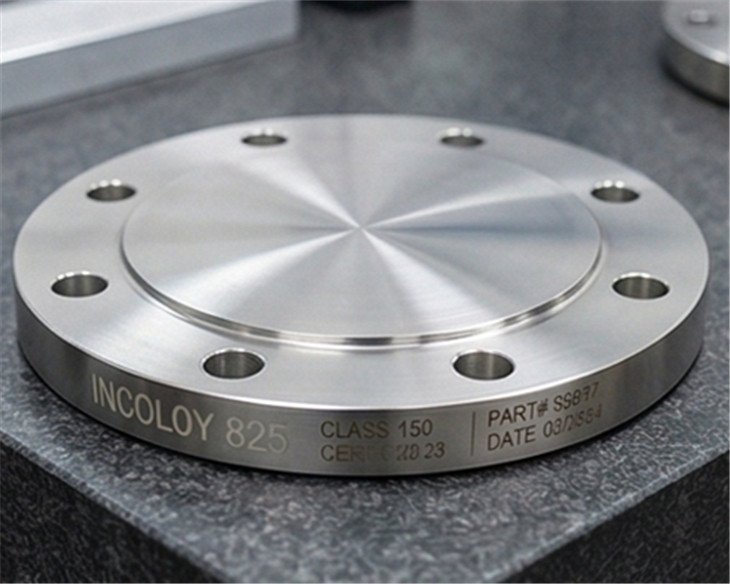
Кованые и литые фланцы: Что безопаснее для критически важных трубопроводов?
Прямой ответ
Forged flanges are commonly preferred for critical piping because controlled deformation can refine grain flow and forged ASTM grades are widely specified for pressure components. Cast flanges can also be code-compliant when produced, heat treated, examined and qualified to the correct casting specification. Safety depends on the complete specification and quality evidence, not the manufacturing label alone.
Ключевые выводы
- Forged does not mean defect-free, and cast does not automatically mean unsafe.
- Compare the exact material specifications, rating tables and inspection requirements.
- Critical service often justifies enhanced surface and volumetric examination regardless of route.
How the manufacturing routes differ
Forging shapes hot metal through compressive deformation, which can refine structure and orient grain flow. Casting pours molten metal into a mould, allowing complex geometry but introducing solidification-related variables that require process control.
Both routes require qualified melting, термическая обработка, механическая обработка, проверка и прослеживаемость. Final properties depend on grade, section size and actual manufacturing practice.
Typical discontinuity concerns
| Route | Potential concerns to control | Useful inspection |
|---|---|---|
| Forged | Laps, seams, bursts, inclusions, improper reduction or heat treatment | ВТ, MT/PT and UT as specified |
| Бросать | Shrinkage, gas porosity, inclusions, hot tears and repair welds | ВТ, MT/PT, RT or UT as specified |
Why forged flanges dominate many alloy-steel orders
ASTM A182 is specifically established for forged or rolled alloy and stainless piping components, making it a familiar route for F11, F22 and F91 flanges. Procurement systems, welding specifications and rating tables are frequently built around these forged grades.
For severe cyclic, high-temperature or high-consequence service, owner specifications may prohibit cast construction or require additional qualification.
A fair safety comparison
Review material specification, форма продукта, термическая обработка, pressure-temperature rating, NDE coverage, repair history, mechanical tests and foundry/forge qualification. Ask whether the proposed route is explicitly permitted by the line class and mating-equipment specification.
Do not accept a generic “equivalent” cast grade in place of an ordered forged grade without formal engineering approval.
Часто задаваемые вопросы
Are forged flanges always stronger?
Not as a universal rule. Compare the exact grades, heat treatments, section sizes and required properties.
Can a casting repair weld be accepted?
Only when permitted by the material specification and project procedure, with qualified welding, heat treatment and required re-examination.
Which route is typical for ASTM A182 F22?
ASTM A182 is a forged or rolled product specification, so F22 flanges ordered to A182 use that product route.
Основные стандарты, на которые ссылаются
- ASTM A182/A182M-26 — Компоненты трубопроводов из кованых или катаных сплавов и нержавеющей стали.
- ASME B16.5-2025 — Трубные фланцы и фланцевые фитинги, НПС 1/2 Через НПС 24
Всегда проверяйте версию, указанную в заказе на поставку, и получайте полный контролируемый стандарт проектирования и приемки..
Запросить коммерческое предложение на фланцы из легированной стали
Отправьте марку материала, стандартный, НПС, класс давления, тип фланца, лицом к лицу, график труб, требования к количеству и проверке. SASA FLANGE рассмотрит техническое описание перед предложением.
Связанные Посты
C-2000 против фланцев C22: Выбор материала и проверка запросов предложений
Сравните идентичность материалов фланцев C-2000 и C22., условия обслуживания, ковка…
Что должен делать EN 10204 3.1 Сертификат материала включает в себя?
Контрольный список покупателя для проверки RU 10204 3.1 сертификаты предоставлены…
Методы неразрушающего контроля фланцев из кованой легированной стали
Ориентированное на покупателя руководство по методам неразрушающего контроля кованых сплавов.…

Требования к испытанию на твердость для F11, Фланцы F22 и F91
Практическое руководство по определению и интерпретации испытаний на твердость.…