
EN 1092-1 Lap Joint Flange and Collar Compatibility
Quick answer: An EN 1092-1 loose flange is not selected independently from its collar or lapped pipe end. The complete assembly must agree on the adopted standard and edition, DN, PN, flanş tipi, bore or pipe wall, contact geometry, facing and gasket concept, materials and documentation. Matching nominal size alone does not prove interchangeability.
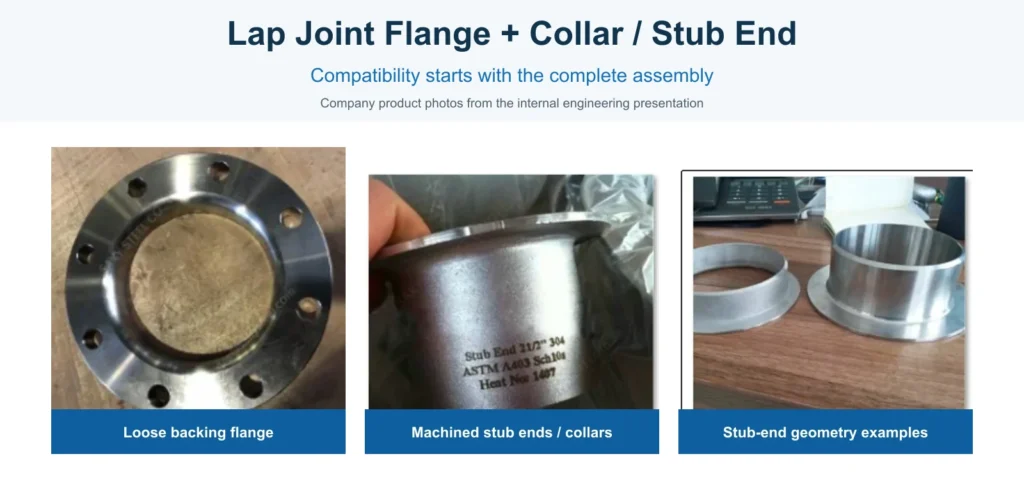
Lap-joint assemblies are attractive because the backing flange can rotate for bolt-hole alignment and may be separated from the wetted collar or stub end. That flexibility also creates a common purchasing risk: two parts can carry the same nominal size yet fail to seat, rotate or transmit bolt load correctly when their mating geometry comes from different standards or drawings.
How the Two-Part Assembly Works
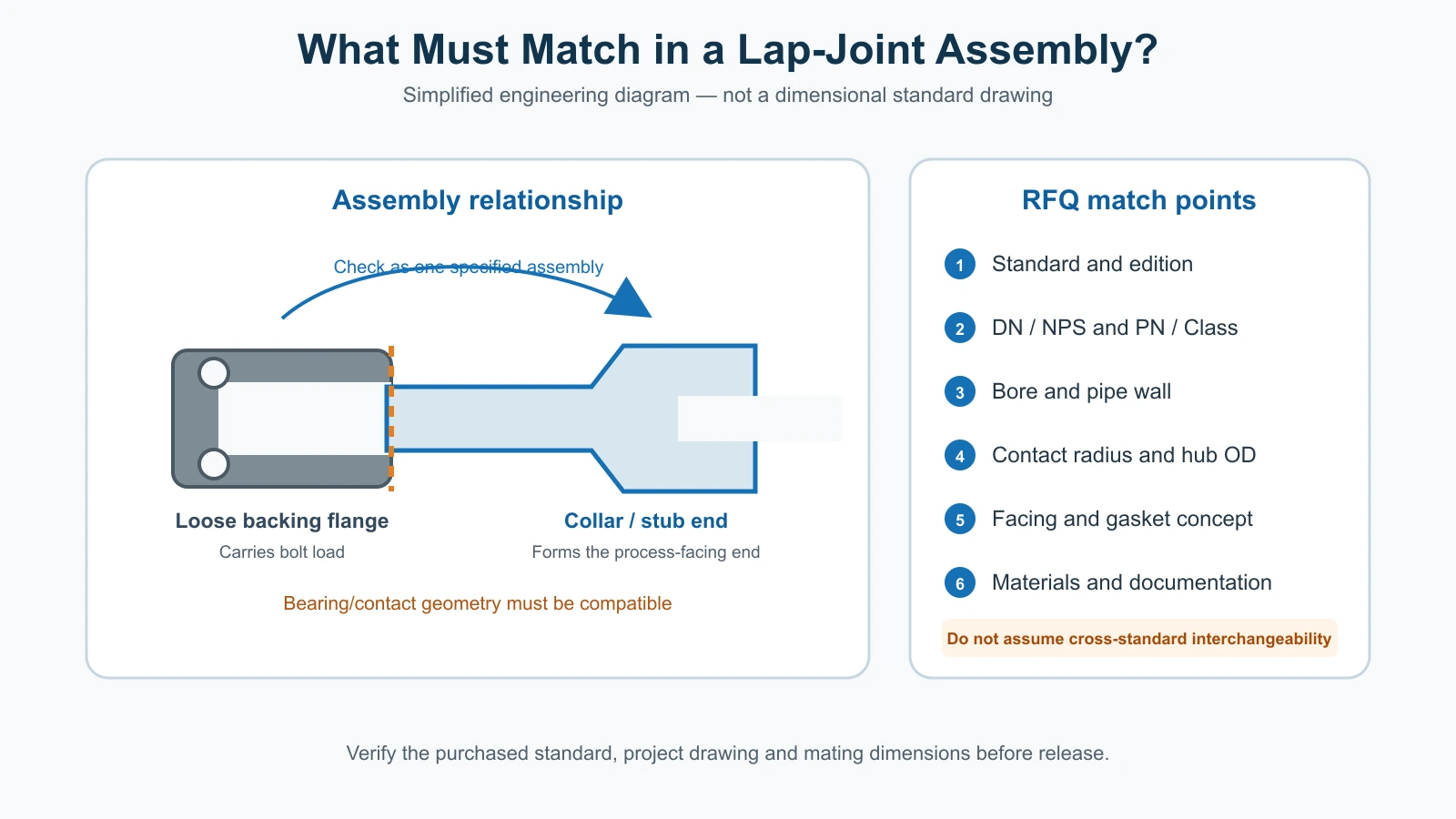
The loose flange provides the bolt circle and transfers the compressive load. The collar or stub end is joined to the pipe and forms the process-facing end of the assembly. During tightening, the flange bears against the back of the collar or stub-end lap. The contact area, radius and thickness therefore matter as much as the bolt-hole pattern.
EN 1092-1 Terminology: Tip 02, Tip 04 and Collars
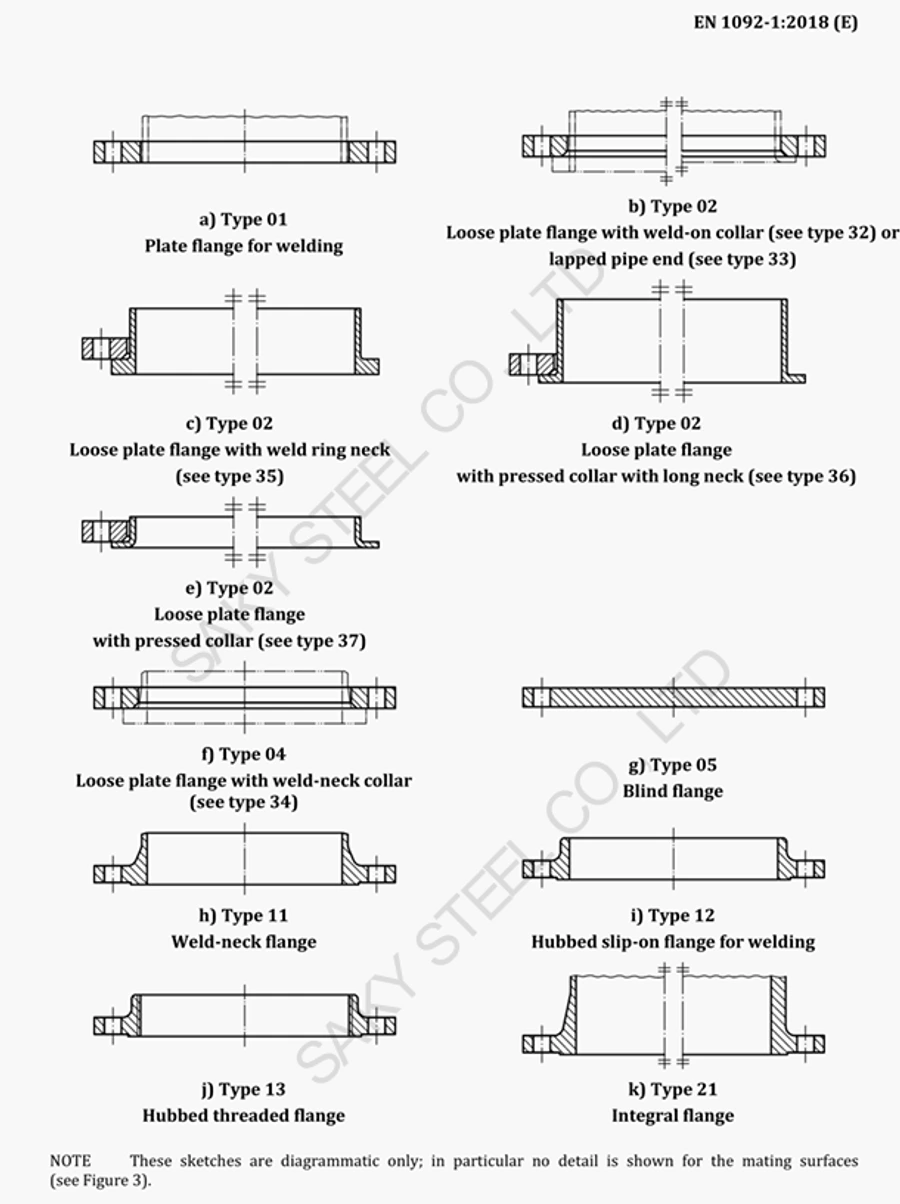
EN 1092-1 uses a type system for PN-designated steel flanges and associated collars. A Type 02 loose plate flange is shown with several permitted collar or lapped-end arrangements, while Type 04 is a loose plate flange used with a weld-neck collar. The exact permitted pairing, dimensions and pressure-temperature limits must be taken from the project-adopted edition of the standard.
In ASME-based purchasing, buyers more often use the terms bindirme flanşı Ve stub end. Similar function does not establish dimensional equivalence. Do not convert an EN Type 02 or Type 04 assembly into an ASME lap-joint order by terminology alone.
Eight Items That Must Match
| Check | Why it matters | RFQ evidence |
|---|---|---|
| Standart ve sürüm | Type names and dimensions are standard-specific. | State EN 1092-1 and the project edition, or attach the governing drawing. |
| DN and PN | Controls drilling, outside dimensions and pressure designation. | Specify both DN and PN; do not substitute NPS/Class without approval. |
| Flange and collar type | The loose flange must be intended for the selected collar form. | List the type numbers and component description. |
| Bore and pipe wall | Affects fit-up, flow bore and welding preparation. | Give pipe OD, wall thickness or schedule and required bore. |
| Contact radius and hub OD | Interference can prevent seating or rotation; insufficient bearing can concentrate load. | Confirm mating dimensions on approved drawings. |
| Facing and gasket | The collar face forms the gasket interface. | State facing, finish, gasket type and mating-flange details. |
| Malzemeler | Backing and wetted components may have different material duties. | Specify each component separately; do not infer availability. |
| Inspection and documents | Traceability must cover both components. | State MTC, PMI, NDE and inspection requirements where applicable. |
Common Mismatch Scenarios
- Same DN, different PN: the flange drilling and outside geometry may differ.
- EN flange with an ASME stub end: nominal size labels may look compatible while the lap diameter, fillet radius or bearing surface is not.
- Correct bolt circle, wrong collar: bolts fit, but the backing flange does not seat correctly.
- Pipe wall omitted: the supplied end does not match the pipe bore or weld preparation.
- Facing omitted: the gasket concept is assumed from the flange rather than specified at the process-facing collar.
A dimensional review should occur before manufacture or purchase release. When the order combines standards, nonstandard dimensions or dissimilar materials, require an approved assembly drawing rather than relying on a verbal “equivalent.”
Material Selection: Backing Flange vs Wetted End
The collar or stub end normally contacts the process fluid, while the loose backing flange may be outside the wetted boundary. This can support a split-material design, but it is not an automatic cost-saving rule. External corrosion, sıcaklık, galvanic interaction, mekanik özellikler, project specifications and traceability still apply to the backing flange.
For an example of a corrosion-resistant assembly route, review the Dubleks 2205 bindirme flanşı and the separate Dubleks 2205 stub end. These product pages illustrate the two component roles; they do not authorize mixing EN and ASME dimensions. Confirm the governing standard and mating drawing in the RFQ.
RFQ Checklist for a Complete Assembly
- Governing standard and edition for each component.
- DN or NPS and PN or pressure class.
- Loose flange type and collar or stub-end type.
- Pipe OD, wall thickness or schedule, and welding end.
- bakan, finish, gasket and mating-flange details.
- Material grade and product specification for both components.
- Miktar, approved drawing, tolerances and any project deviations.
- Required MTC, PMI, ÖYD, işaretleme, packing and inspection hold points.
If the project uses duplex materials, the Dubleks 2205 lap joint flange product page Ve Dubleks 2205 stub end product page provide useful starting points for an RFQ. Kullanılabilirlik, boyutlar, documentation and testing remain order-specific.
Sıkça Sorulan Sorular
Which flange is used with a stub end?
A loose or lap-joint backing flange is used with a compatible stub end or collar. The exact pairing must follow the same standard or an approved mating drawing.
Is an EN 1092-1 Tip 02 flange the same as an ASME lap joint flange?
They serve a similar assembly function, but they are not automatically dimensionally interchangeable. Verify drilling, outside dimensions, lap geometry, delik, pressure designation and the mating end.
What is the difference between a stub end and a flange?
The stub end or collar is joined to the pipe and supplies the process-facing lap and gasket surface. The loose flange rotates behind it and supplies the bolt circle and clamping load.
Can the backing flange use a different material?
Sometimes, but only after reviewing external corrosion, sıcaklık, mechanical requirements, galvanic effects, project rules and documentation. Specify both materials rather than assuming a default combination.
Send the Complete Flange-and-Collar RFQ
Provide the governing standard, type, DN, PN, pipe wall, karşı karşıya, materials and mating drawing. SASAFLANGE can review the requested component scope and flag details that need confirmation before quotation.
References and Image Source Index
- BSI Knowledge — BS EN 1092-1:2018 standard overview.
- ASME B16.5 official scope page.
- ASME B16.9 official scope page.
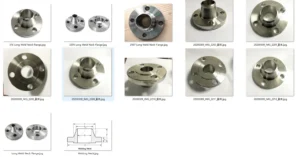
- Company internal presentation “ASME B16.5 Flange Important Matters”: company product photographs and the supplied technical excerpt identified as EN 1092-1:2018. The standard itself governs; the image is explanatory only.
İlgili Mesajlar
ASTM A182 F51 vs F60 Flanşlar: S31803 ve S32205'in Açıklaması
ASTM A182 F51 ve F60 dubleks flanşları karşılaştırın, S31803/S32205 dahil…
UNS S32750 ve S32760 Flanşları: ASTM A182 F53 veya F55?
S32750 ve S32760 süper dubleks flanşları karşılaştırın, ASTM A182 dahil…

ASME Sınıfıyla PN16 Flanş Montajı Yapılabilir mi? 150 Vana?
PN16 flanş cıvatası ASME Sınıfı 150'ye bağlanabilir mi?…
TR 1092-1 ASME Yükseltilmiş Yüz Flanşlı Tip B1/B2 Mate?
TR 1092-1 B1 veya B2 tipi eş ile…