
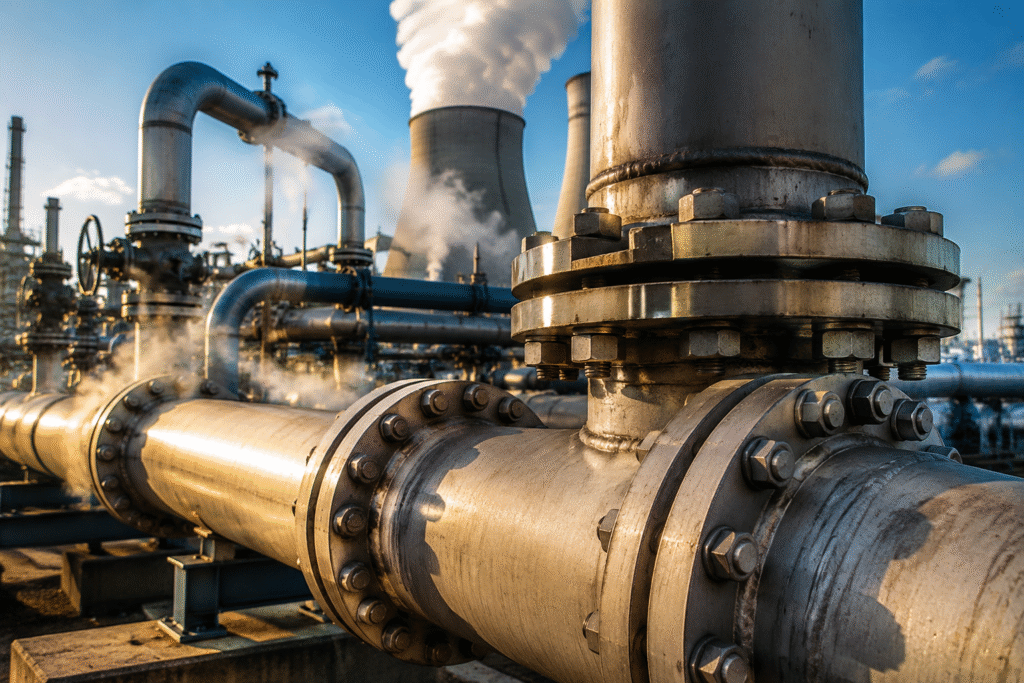
Paslanmaz Çelik Boru Flanş Pazar Rehberi: 7.2 Milyar Görünümü, Türler, Kullanım Alanları, ve Nasıl Seçilir
Grand View Araştırmasına göre (2024), küresel endüstriyel flanş pazarı şu şekilde değerlendi: $5.8 milyar 2023 ulaşılması öngörülüyor ve $7.2 milyar tarafından 2030. Bu büyüme, EPC yüklenicileri için paslanmaz çelik boru flanşı tedarikini daha stratejik hale getiriyor, OEM'ler, and industrial procurement teams.
Buyers today need more than a catalog. They need verified standards, clear material guidance, and a supplier that understands pressure classes, korozyon mekanizmaları, ve belge gereksinimleri.
Paslanmaz çelik boru flanşı pazarı neden endüstriyel sektörlerde genişliyor?
The flange market is growing because process industries continue to invest in resilient piping systems. Statista'ya göre (2024), Petrol ve gaz endüstrisi yaklaşık olarak 35% küresel flanş tüketiminin.
That demand is not limited to upstream projects. Petrokimya tesisleri, elektrik santralleri, tuzdan arındırma sistemleri, marine vessels, and water treatment facilities all rely on stainless steel pipe flange assemblies for leak-tight, serviceable connections.
Bölgesel tedarik dinamikleri de önemli. IBISWorld'e göre (2024), Asya-Pasifik'in hesapları 45% küresel flanş üretimi, Çin'in en büyük üretici olduğu.
Öyleyse, global buyers increasingly evaluate Chinese manufacturers on quality systems, izlenebilirlik, and export execution rather than price alone. This shift benefits suppliers with certified production and stable material control.
Tedarik yöneticileri için, stainless steel remains attractive because it balances corrosion resistance, mekanik dayanım, imalat verimliliği, ve uzun servis ömrü. In many media, the total installed cost is lower than repeated replacement of coated carbon steel components.
Malzeme mühendisi Dr.. Helen Zhou, Korozyon Uzmanı, eyaletler: “In chloride-bearing and cyclic-temperature service, flange selection errors often begin with underestimating localized corrosion, not pressure rating.” Her point is critical for engineers choosing between 304, 316L, veya çift yönlü kaliteler.
Standards also shape market demand. ASME B16.5 Ve ASME B16.47 define key dimensional requirements for pipe flanges, sırasında ASTM A182 governs forged stainless and alloy steel flanges for high-temperature service (ASME, 2023; ASTM, 2024).
European and international projects frequently specify EN 1092-1, DIN, PED, Ve EN 10204 3.1 muayene belgeleri. Sonuç olarak, cross-standard fluency is now a competitive requirement, especially for export-driven projects.
SASA FLANGE bu ihtiyacı desteklemektedir ISO 9001:2015 and PED 2014/68/EU aligned manufacturing practices. Gelişmiş CNC işleme ve kapsamlı kalite testleri ile desteklenmektedir, şirket paslanmaz çelik flanşlar tedarik ediyor, karbon çelik flanşlar, alaşım flanşlar, Petrol için boru bağlantı parçaları & Gaz, Petrokimya, Güç, Deniz, Su Arıtma, ve İnşaat sektörleri.
Buyers comparing global sources should also look beyond basic grade listings. They should assess heat number traceability, PMI kullanılabilirliği, boyutsal muayene, hydrostatic or NDT coordination, and the ability to issue EN 10204 3.1 malzeme sertifikaları.
pratikte, a flange is not just a component. It is a pressure boundary, bakım erişim noktası, and often a compliance checkpoint during project inspection.
For teams evaluating qualified supply partners, SASA FLANGE presents a useful benchmark with export experience, geniş malzeme kapsamı, and custom manufacturing capability. That combination matters when project schedules tighten and specifications become more complex.
Paslanmaz çelik boru flanş çeşitleri, malzemeler, and how engineers choose the right option
Not all stainless steel pipe flange designs perform the same way in service. Selection depends on pressure class, sıcaklık, korozyon ortamı, titreşim, muayene erişimi, and the welding procedure used in fabrication.
Pazar Araştırması Geleceğine Göre (2024), demand for corrosion-resistant piping components is rising in desalination, offshore energy, and chemical processing due to lifecycle cost pressures. That trend is pushing more projects toward 316L, dubleks 2205, ve süper dubleks 2507.
The first technical distinction is flange type. Geometry determines how the load transfers from bolts to gasket to hub and then into the connected pipe.
- Kaynak boyunlu flanş: yüksek basınç için tercih edilir, termal bisiklet, and severe service because the tapered hub reduces stress concentration.
- Flanş üzerinde kayma: economical and easy to align, but usually less fatigue-resistant than weld neck designs.
- Kör flanş: used to close pipe ends, vana çıkışları, veya gelecekteki genişleme noktaları.
- Soket kaynak flanşı: küçük çaplı için uygun, high-pressure systems where socket welding is preferred.
- Dişli flanş: useful where welding is restricted, especially in utility or hazardous maintenance environments.
- Bindirme flanşı: selected where frequent dismantling or expensive alloy stub ends make cost control important.
The second distinction is material grade. Grade selection should follow actual process conditions rather than habit or initial unit price.
304 and 304L are common choices for general industrial service. They offer good formability and corrosion resistance, but chloride exposure can trigger pitting and crevice attack.
316 ve 316L molibden içerir, which improves resistance in chloride-containing environments. Öyleyse, they are widely specified for marine, kimyasal, and pharmaceutical installations.
904L provides stronger performance in aggressive acidic service, especially where sulfuric or mixed media are present. Dubleks 2205 increases strength and chloride stress corrosion cracking resistance, sırasında 2507 extends that performance further for offshore and seawater systems.
Borulama danışmanı Mark Ellison olarak, PE, eyaletler: “For many process lines, the wrong flange material costs far more than the flange itself because shutdowns, yeniden işlemek, and lost production dominate lifecycle economics.” That is why serious buyers compare corrosion allowance, PREN values, and weldability before purchase.
Mordor İstihbaratına göre (2024), corrosion-related maintenance can account for a significant share of operating expense in process facilities, especially in marine and chemical assets. Although the exact cost burden varies by sector, materials optimization consistently reduces unplanned downtime.
Engineers often compare materials using practical criteria rather than marketing claims. The matrix below reflects typical purchasing logic.
- 304/304L: economical for mild corrosive service, gıda işleme, and indoor industrial utilities.
- 316/316L: stronger choice for chlorides, coastal conditions, su arıtma, and general chemical service.
- 904L: suitable for aggressive acid service where standard austenitic grades may fail.
- 2205 dubleks: daha yüksek güç, better SCC resistance, and lower wall thickness potential in many systems.
- 2507 süper dubleks: excellent for seawater, offshore topside piping, and high-chloride process lines.
- İnkonel, Monel, Hastelloy, Titanyum: selected for highly specialized media, yüksek sıcaklık, or severe corrosion environments.
Dimensions and ratings must also align with the system code. ASME B16.5 genellikle NPS'yi kapsar 1/2 başından sonuna kadar 24, sırasında ASME B16.47 daha büyük çaplara hitap eder, commonly NPS 26 başından sonuna kadar 60 (ASME, 2023).
Pressure classes such as Class 150, 300, 600, 900, 1500, Ve 2500 indicate pressure-temperature capability within the standard. Fakat, the allowable pressure depends on material group and service temperature, not class number alone.
Surface finish and facing style affect sealing reliability. Yükseltilmiş yüz, düz yüz, and ring type joint options must match gasket design, cıvata yükü, and flange alignment requirements.
SASA FLANGE flanşlar üretmektedir 304, 316, 316L, 904L, 2205, 2507, A105, A182, İnkonel, Monel, Hastelloy, ve Titanyum kaliteleri. Özel boyutlar sunan 1/2 inç ila 60 rekabetçi fabrika doğrudan fiyatlandırmasıyla inç, şirket hem standart hem de projeye özel gereksinimleri desteklemektedir.
Ek olarak, buyers often require related fittings in matching metallurgy. SASA FLANGE dirsekler malzemeleri, tişört, redüktörler, ve altındaki kapaklar ASME B16.9 to help maintain consistency across complete piping packages.
For buyers comparing stock and custom options, the product range is most valuable when paired with engineering review. That process helps confirm facing, sondaj, sondaj programı, and inspection scope before production starts.
Standartlar, test, and compliance requirements for stainless steel pipe flange procurement
Compliance determines whether a flange can be installed, inspected, and accepted on a regulated project. Öyleyse, engineers should verify both dimensional standards and material standards at the inquiry stage.
The most commonly referenced dimensional standards include ASME B16.5, ASME B16.47, DIN, JIS, GOST, ve TR 1092-1. Material and forging standards often include ASTM A182, while plate-based flanges may involve ASTM A240 and related product specifications (ASTM, 2024).
For sour service and corrosive hydrocarbon environments, buyers may also review NACE MR0175 veya ISO 15156 requirements depending on project scope. In offshore and European projects, PED 2014/68/AB, DNV rules, and NORSOK references may also apply.
The practical difference between standards is not cosmetic. Small dimensional mismatches in bolt circle, bakan yükseklik, or thickness can create installation delays and gasket failures.
- ASME B16.5: standard for pipe flanges and flanged fittings in common industrial pressure classes.
- ASME B16.47: large diameter steel flanges for major transmission and plant piping systems.
- ASTM A182: dövme veya haddelenmiş alaşımlı ve paslanmaz çelik boru flanşları, bağlantı parçaları, vanalar, ve yüksek sıcaklıkta servis için parçalar.
- EN 1092-1: European flange dimensions and PN pressure designations.
- ASME B16.9: factory-made wrought buttwelding fittings such as elbows, tişört, redüktörler, ve büyük harfler.
- NACE MR0175 / ISO 15156: material guidance for H2S-containing environments in oil and gas production.
Inspection and documentation are equally important. Serious buyers usually request mill test certificates, boyutlu raporlar, PMI for alloy verification, hardness or mechanical property data, and visual or NDT reports where specified.
According to ISO guidance and industry purchasing practice, traceability from raw material heat to final marking is a core quality requirement for pressure boundary components. Sonuç olarak, manufacturers without robust identification systems create unnecessary supply risk.
For projects requiring formal conformity assessment, SASA FLANGE ile çalışır ISO 9001:2015 quality management and supports PED 2014/68/EU expectations. The company also aligns with export documentation needs such as EN 10204 3.1 certification and project-specific inspection workflows.
Procurement managers should compare suppliers on more than declared standards. They should confirm tolerances, işleme yeteneği, hidrotest koordinasyonu, packaging for export, and responsiveness to third-party inspection agencies.
A simple supplier checklist improves outcomes.
- Verify exact standard edition and pressure class.
- Confirm flange type, karşı karşıya, delik, takvim, and finish.
- Request ASTM and heat treatment compliance where relevant.
- Specify MTC, EN 10204 3.1, PMI, ve işaretleme gereksinimleri.
- Confirm packing, kurşun zamanı, and third-party inspection availability.
- Check if fittings and flanges can be supplied in matching heats or grades.
Authoritative resources should always support technical review. Buyers can reference official guidance directly from ASME when validating code and standard language for project documentation.
In regulated projects, this discipline saves time. It also reduces NCRs, sitenin yeniden işlenmesi, and late-stage substitution requests.
Uygulama kılavuzu: kullanır, boyutlar, and selection criteria for industrial projects
Application-specific selection is where many purchase decisions succeed or fail. A stainless steel pipe flange that performs well in treated water may not survive offshore splash zones or acidic process media.
Oil and gas remains the largest demand center. Statista'ya göre (2024), sektör yaklaşık olarak 35% küresel flanş tüketiminin, which explains the strong emphasis on pressure classes, ekşi hizmet uyumluluğu, and full traceability.
In upstream and midstream oil and gas systems, weld neck and blind flanges are common because they tolerate pressure fluctuation and maintenance shutdowns well. Dubleks 2205 Ve 2507 are often chosen for seawater injection, açık deniz boruları, and chloride-heavy service.
Petrokimya tesislerinde, 316L and higher alloys may be specified for corrosive process streams, solvent kullanımı, or mixed acid environments. Burada, gasket compatibility and bolt load control are just as important as base material selection.
Power generation projects often prioritize temperature resistance, yorulma performansı, and dimensional reliability. High-temperature service may require forged materials, controlled heat treatment, and more stringent inspection records.
Marine and shipbuilding environments create continuous chloride exposure. Öyleyse, 316L, dubleks, and super duplex grades often provide better value than lower-alloy stainless options over the equipment lifecycle.
Water treatment and desalination systems require close attention to pitting and crevice corrosion. For these projects, engineers often review water chemistry, flow regime, and shutdown conditions before finalizing the grade.
Common buyer searches such as stainless steel pipe flange sizes, 4 inç paslanmaz çelik boru flanşı, and stainless steel threaded pipe flange reflect practical procurement needs. Fakat, size alone never determines suitability.
Selection should follow a structured evaluation.
- Medya bileşimi: klorürler, asitler, H2S, kostikler, katılar, or cleaning chemicals.
- Sıcaklık aralığı: continuous operation, termal bisiklet, and upset conditions.
- Basınç sınıfı: ASME Sınıfı 150 başından sonuna kadar 2500 or EN PN designation.
- Bağlantı türü: kaynak boynu, giymek, kör, dişli, soket kaynağı, veya kucak eklemi.
- Pipe schedule and bore: ensure proper fit-up and flow continuity.
- Kaplama tipi: RF, FF, or RTJ according to gasket design.
- Denetim düzeyi: MTC, PMI, ferrit, sertlik, NDT, and third-party witness if required.
- Compliance needs: ASME, ASTM, DIN, EN 1092, PED, veya NACE MR0175.
Lead time and packaging should also be evaluated early. Large-diameter or non-standard drilling patterns can affect machining schedules, while export seaworthy packing helps prevent damage in transit.
SASA FLANGE supports custom manufacturing for project-specific requirements, including special sizes, standart dışı sondaj, and material upgrades. Servis 50 plus countries across Oil & Gaz, Petrokimya, Güç, ve Denizcilik endüstrileri, the company combines factory-direct pricing with technical support.
When buyers need a coordinated package, combining flanges and fittings from one supplier simplifies documentation and material matching. That approach often reduces project administration time and minimizes compatibility issues at site.
For design review or RFQ support, temas etmek SASA FLANGE with size, sınıf, malzeme kalitesi, karşı karşıya, and quantity details. Early technical clarification usually prevents costly revision cycles later.
Future outlook, pricing considerations, and strategic recommendations for buyers
The next several years will reward buyers who combine cost discipline with technical precision. Grand View Araştırmasına göre (2024), küresel endüstriyel flanş pazarının şu seviyeye ulaşması bekleniyor: $7.2 milyar tarafından 2030, reflecting steady infrastructure and process industry investment.
Aynı zamanda, procurement teams face tighter compliance demands, volatile alloy surcharges, and rising expectations for documentation. Öyleyse, selecting a qualified stainless steel pipe flange supplier becomes a strategic supply chain decision, not just a transactional purchase.
Fiyat önemini koruyor, especially for repeat maintenance and MRO orders. Fakat, stainless steel pipe flange price should be reviewed against machining quality, material authenticity, test kapsamı, and total lifecycle performance.
According to industry analyst commentary in IBISWorld (2024), regional manufacturing concentration in Asia-Pacific gives buyers strong sourcing options, but supplier qualification remains the decisive factor. Başka bir deyişle, competitive pricing only creates value when quality systems are reliable.
As metallurgist Dr. Aaron Lim states: “The most cost-effective flange is the one that meets code, seals correctly on first installation, and avoids premature replacement in the actual service environment.” That is a simple test for every RFQ.
Procurement and engineering teams can improve buying outcomes with a few practical steps.
- Standardize approved flange types and grades for repeat applications.
- Define documentation requirements in the RFQ, not after PO release.
- Compare suppliers on lead time, izlenebilirlik, and inspection responsiveness.
- Yaşam döngüsü maliyetini kullan, not piece price alone, for corrosive environments.
- Bundle fittings and flanges when metallurgical consistency matters.
- Qualify one reliable export-ready supplier for urgent and project orders.
For companies planning long-term sourcing, the strongest partners are those that can support both standard inventory and engineered custom work. That balance becomes especially useful when project scopes shift during fabrication.
SASA FLANGE fits this model by offering stainless steel, karbon çeliği, alaşım flanşlar, and matching fittings under recognized global standards. For buyers needing technical review, competitive quotation, or custom sizes, SASA FLANGE can support specification alignment from inquiry through shipment.
Sıkça Sorulan Sorular
Farklı paslanmaz çelik flanş türleri nelerdir??
●En yaygın paslanmaz çelik boru flanşı türleri kaynak boyunludur, giymek, kör, soket kaynağı, dişli, ve kucak eklemi, ile ASME B16.5 covering many standard dimensions.
●Grand View Araştırmasına göre (2024), endüstriyel flanş pazarına ulaştı $5.8 milyar 2023, which reflects broad demand across oil, gaz, su, deniz, and chemical systems that use these flange types differently.
●Weld neck flanges usually suit high-pressure and cyclic-temperature service because the tapered hub improves stress distribution at the pipe-to-flange transition.
●Slip on flanges are often selected for lower-pressure applications and easier alignment, while blind flanges close off lines for isolation, test, veya gelecekteki genişleme.
●Threaded and socket weld flanges are useful in smaller bore systems, while lap joint flanges help where frequent dismantling or expensive alloy stub ends make maintenance easier.
●Material grade also matters because 304, 316L, 2205, Ve 2507 each deliver different corrosion resistance and strength profiles in service.
●Boru mühendisi Mark Ellison olarak, PE, eyaletler: “Flange type determines load path, but alloy selection determines service life in corrosive systems.”
●Engineers should match type, karşı karşıya, and pressure class with the media, sıcaklık, boru programı, and maintenance strategy before issuing a purchase order.
●For projects requiring certified custom sizes, flange facing options, Ve EN 10204 3.1 dokümantasyon, gibi yerleşik üreticilerle çalışmak SASA FLANGE improves procurement confidence.
Hangisi daha iyi 304 veya 420 paslanmaz çelik?
●Çoğu paslanmaz çelik boru flanşı uygulaması için, 304 genellikle bundan daha iyidir 420 because it offers stronger corrosion resistance and better weldability in industrial piping systems.
●420 stainless is a martensitic grade that can achieve higher hardness, but it is less commonly used for pressure-retaining industrial flanges than austenitic grades such as 304 veya 316.
●According to ASTM material practice and common process piping standards, forged stainless flanges are more often supplied under ASTM A182 in grades like F304, F304L, F316, and F316L than in 420-based configurations.
●304 performs well in general industrial service, gıda işleme, and mild atmospheric exposure, sırasında 420 is more often chosen for wear-resistant parts, blades, or components needing hardness after heat treatment.
●Fakat, 304 is not ideal in chloride-rich marine or chemical environments because pitting resistance is limited compared with 316 veya çift yönlü kaliteler.
●Tersine, 420 may lose corrosion performance more quickly in wet or aggressive media, which can make it a poor choice for flange connections that must remain leak-tight over long operating cycles.
●Statista'ya göre (2024), petrol ve gaz hesapları yaklaşık 35% küresel flanş tüketiminin, and this sector rarely prioritizes hardness over corrosion resistance for mainstream stainless flange selection.
●Malzeme bilimcisi Dr.. Helen Zhou states: “Hardness is not a substitute for corrosion resistance when the component is part of a sealed pressure boundary.”
●If your application involves standard process piping, 304 is usually the safer baseline, while 316L or duplex may be the better upgrade for corrosive service; for specification review, alıcılar danışabilir SASA FLANGE.
Üç tip flanş nedir?
●The three flange types most often referenced in basic industrial discussions are weld neck, giymek, ve kör flanşlar.
●These three appear frequently because they cover the most common needs in process piping, namely high-integrity connection, easy installation, and end-of-line closure.
●Weld neck flanges are preferred for demanding pressure and temperature conditions because the long tapered hub reduces stress concentration and improves fatigue performance.
●Slip on flanges are more economical and easier to fit during fabrication, although they usually offer lower fatigue strength than weld neck flanges.
●Blind flanges do not connect to a pipe bore, so they are used to seal the end of a line, ekipmanı izole et, or provide future access points.
●Buna göre ASME B16.5 (2023), each of these flange types is available in standardized dimensions and pressure classes, which supports interchangeability and design consistency.
●Gerçek projelerde, engineers may also use threaded, soket kaynağı, and lap joint flanges depending on line size, welding restrictions, ve bakım stratejisi.
●IBISWorld'e göre (2024), Asya-Pasifik'te üretim artıyor 45% küresel flanşların, so buyers can access all major flange types from qualified export manufacturers, but only if standards and inspection requirements are clearly defined.
●When selecting among the three main types, en iyi seçim basınç sınıfına bağlıdır, servis sıvısı, kapatma sıklığı, and required compliance documents, and experienced suppliers such as SASA FLANGE can help validate the final specification.
Paslanmaz çelik flanşlar için ASME Kodu nedir?
●The main ASME standard for many stainless steel pipe flange dimensions is ASME B16.5, büyük çaplı flanşlar genellikle ASME B16.47.
●Bu standartlar boyutları tanımlar, sondaj, karşı karşıya, basınç sınıfları, ve toleranslar, but they do not replace the separate material specification used to define metallurgy and mechanical properties.
●Dövme paslanmaz flanşlar için, ASTM A182 is one of the most important material standards, and it commonly applies to grades such as F304, F304L, F316, F316L, F321, and F347.
●Öyleyse, engineers usually reference both ASME and ASTM together when preparing a compliant flange purchase specification.
●Örneğin, a typical inquiry may call for ASME B16.5 kaynak boyunlu flanşlar, ASTM A182 F316L, Sınıf 300, yükseltilmiş yüz, ile EN 10204 3.1 sertifikasyon.
●ASME'ye göre (2023), pressure-temperature ratings vary by material group and class, so buyers should never assume that Class 300 means the same allowable pressure for all alloys and temperatures.
●Avrupa projeleri ayrıca EN gerektirebilir 1092-1 or PED 2014/68/EU compliance, especially where CE-related documentation or notified-body review is involved.
●Sonuç olarak, the phrase “ASME code for stainless steel flanges” usually means a package of dimensional, malzeme, denetleme, and documentation standards rather than one single code number.
●For projects involving mixed global standards, buyers should confirm the exact ASME, ASTM, EN, or DIN references before production, ve üreticiler bunun gibi SASA FLANGE can support that alignment.
What affects intriguing stainless steel flanges for industrial use price?
●Paslanmaz çelik boru flanşı fiyatı esas olarak malzeme kalitesinden etkilenir, flanş tipi, boyut, basınç sınıfı, işleme karmaşıklığı, test kapsamı, ve sipariş hacmi.
●A 4 inç paslanmaz çelik boru flanşı 304 may be priced very differently from a 4 inch weld neck flange in 316L, 2205, veya 2507 because alloy cost and machining time vary significantly.
●Grand View Araştırmasına göre (2024), the flange market is growing toward $7.2 milyar tarafından 2030, and stronger global demand can influence lead times, alloy surcharges, and export pricing.
●Blind and weld neck flanges typically use more material than slip on flanges, so geometry alone can change the quote even before inspection and certification are added.
●Documentation requirements also matter because PMI, üçüncü taraf denetimi, EN 10204 3.1 sertifikalar, özel işaretleme, and export seaworthy packaging add real production and handling cost.
●Aşındırıcı hizmette, the lowest piece price is rarely the lowest lifecycle cost because premature corrosion, sızıntı, and shutdown risk can outweigh initial savings.
●According to industry analysts cited by IBISWorld (2024), Asia-Pacific remains the leading production hub, which gives global buyers competitive sourcing options, but pricing still depends on supplier capability and quality controls.
●The best way to control cost is to define exact size, sınıf, malzeme, karşı karşıya, miktar, and documentation needs at the RFQ stage so the quote reflects the actual project scope.
●For accurate factory-direct quotations on standard or custom stainless steel pipe flange orders, procurement teams can send drawings or specifications to SASA FLANGE.
How do I choose a flange manufacturer or flange vendor for API and industrial projects?
●You should choose a flange manufacturer or flange vendor based on standards compliance, izlenebilirlik, malzeme aralığı, muayene yeteneği, ihracat tecrübesi, and responsiveness to technical RFQs.
●A supplier that only lists products online is not enough for critical service because pressure-boundary components require dimensional accuracy, verifiable metallurgy, and complete quality records.
●IBISWorld'e göre (2024), Asya-Pasifik'te birden fazla yer var 45% küresel flanş üretimi, so buyers have many sourcing options, but qualification discipline is what separates low-risk suppliers from high-risk ones.
●Start by checking whether the manufacturer can supply to ASME B16.5, ASME B16.47, ASTM A182, ASME B16.9, DIN, JIS, ve TR 1092 requirements where relevant to your project.
●Then confirm available grades such as 304, 316L, 904L, 2205, 2507, nikel alaşımları, and titanium if your media or corrosion profile demands upgraded materials.
●Reliable suppliers should also support ISO 9001:2015 sistemler, PED-related requirements for applicable exports, EN 10204 3.1 belgeler, PMI, ve üçüncü taraf denetim koordinasyonu.
●Borulama danışmanı Mark Ellison olarak, PE, eyaletler: “A qualified flange vendor reduces total project risk by preventing substitutions, documentation gaps, and dimensional surprises at site.”
●If API flanges or API flange catalogue requirements are involved, buyers should verify the exact product scope because API-related project language often overlaps with ASME, ASTM, and end-user specifications rather than relying on a catalog title alone.
●For buyers needing a manufacturer with custom capability, broad metallurgy, and coordinated supply of flanges and fittings, SASA FLANGE is a practical option to evaluate.
İlgili Mesajlar
Flanş Yüzü Kaplaması: Eşmerkezli ve Spiral Tırtıkların Açıklaması
Eşmerkezli ve spiral tırtılların her ikisi de işlenmiş flanş yüzeyidir…
Dubleks 2205 316L Flanşlara Karşı: Hangi Malzemeyi Seçmelisiniz?
Hızlı cevap: Dubleks 2205 flanşlar genellikle daha güçlü adaydır…

Orifis Flanşı Tanımı, Ayrıntılar ve ASME B16.36 Flanşlara Genel Bakış: Piyasa Verileri, Seçim Kılavuzu ve Uyumluluk Bilgileri
Küresel endüstriyel flanş pazarı şu şekilde değerlendi: $5.8 milyar…

Siyah Bertaraf Flanşı Pazar Rehberi: Malzemeler, 3.5″ Uyumluluk, Mutfak Lavabo Flanşları için B2B Kaynak Verileri
Mutfak armatürü alıcıları nedeniyle siyah atık flanş talebi artıyor…