
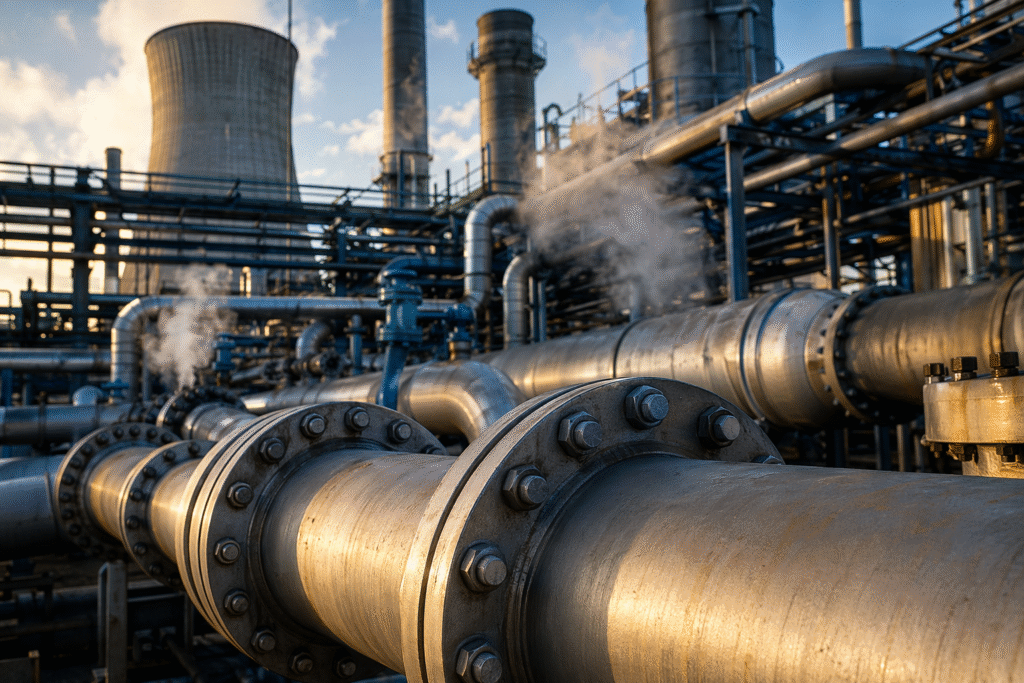
Yağ için Paslanmaz Çelik Flanşlar, Gaz, Kimya ve Denizcilik Hizmeti
Endüstriyel operatörlerin korozyon direncine öncelik vermesi nedeniyle paslanmaz çelik boru flanşı talebi artmaya devam ediyor, yaşam döngüsü değeri, ve uyumluluk. Grand View Araştırmasına göre (2024), küresel endüstriyel flanş pazarı şu şekilde değerlendi: $5.8 milyar 2023 ulaşılması öngörülüyor ve $7.2 milyar tarafından 2030.
That growth reflects a simple procurement reality. Buyers need flanges that perform under pressure, sıcaklık döngüsü, and aggressive media while meeting ASME, ASTM, DIN, ve EN gereklilikleri.
Mühendisler için, alıcılar, and EPC teams, this guide explains the intriguing and often hidden advantages of stainless steel pipe flange products. It also compares types, kullanır, malzemeler, and selection criteria so you can choose flanges with greater confidence.
Why Stainless Steel Pipe Flange Demand Keeps Expanding in Global Industry
IBISWorld'e göre (2024), Asya-Pasifik'in hesapları 45% küresel flanş üretimi, Çin'in en büyük üretici olduğu. Öyleyse, sourcing strategies now focus not only on price, but also on traceability, standart uyumluluk, ve işleme tutarlılığı.
Statista'ya göre (2024), Petrol ve gaz endüstrisi yaklaşık olarak 35% küresel flanş tüketiminin. Dahası, petrokimya, enerji üretimi, deniz, and water treatment projects continue to specify stainless grades where corrosion risk and maintenance costs are high.
pratikte, stainless steel pipe flange products deliver value far beyond initial material cost. They reduce unplanned shutdowns, support longer inspection intervals, and improve sealing reliability in piping systems.
Sonuç olarak, procurement teams increasingly compare total installed cost rather than only unit price. That approach often favors 304, 316, 316L, dubleks, and high-alloy flange solutions over lower-grade alternatives.
Mordor İstihbaratına göre (2024), global process industry investment remains strong in refinery upgrades, LNG infrastructure, and industrial water systems. Each of these sectors relies on standardized flange connections for maintenance access, modular assembly, and safe pressure containment.
Üstelik, pressure class requirements continue to shape buying decisions. Birçok projede, buyers specify Class 150, 300, 600, 900, 1500, veya 2500 flanges under ASME B16.5, while larger diameters may require ASME B16.47 A veya B Serisi.
The hidden advantages of stainless steel pipe flange systems often appear after years of operation. These include better resistance to pitting, improved cleanability, daha düşük kirlenme riski, and stronger long-term performance in chloride-bearing environments.
Dr. olarak. Helen Morris, Malzeme Mühendisi ve korozyon danışmanı, eyaletler: “In lifecycle cost analysis, stainless flanges often outperform coated carbon steel when downtime, bakım işçiliği, and media compatibility are fully considered.” That insight is especially relevant for continuous-process plants where leaks create safety and production losses.
SASA FLANGE serves this demand with stainless steel flanges, karbon çelik flanşlar, alaşım flanşlar, ve boru bağlantı parçaları 304, 316, 316L, 904L, 2205, 2507, A105, A182, İnkonel, Monel, Hastelloy, ve Titanyum. İle ISO 9001:2015 ve PED 2014/68/EU sertifikaları, the company supports buyers seeking factory-direct supply and internationally recognized quality documentation.
For teams comparing global suppliers, manufacturing capability matters as much as metallurgy. Gelişmiş CNC işleme ve kapsamlı kalite testleri ile desteklenmektedir, SASA FLANGE özel boyutları destekler 1/2 inç ila 60 Yağ için inç & Gaz, Petrokimya, Güç, Deniz, ve İnşaat projeleri.
Ek olarak, experienced suppliers can align flange faces, basınç değerleri, and inspection documents with project requirements early in the RFQ stage. That reduces delays caused by mismatched standards, incomplete MTCs, or unclear dimensional tolerances.
Buyers should also note the growing importance of EN 10204 3.1 documentation and PED traceability for exports into Europe. Tersine, upstream oil and gas projects may place more weight on sour service compatibility, material heat traceability, Ve NACE MR0175 considerations.
Paslanmaz Çelik Boru Flanş Çeşitleri, Malzemeler, and Hidden Advantages in Real Service
A stainless steel pipe flange is not a single commodity item. It is a pressure-retaining component whose geometry, karşı karşıya, metalurji, and dimensional standard directly affect system integrity.
Pazar Araştırması Geleceğine Göre (2024), industrial demand for corrosion-resistant alloys is growing steadily due to stricter reliability and safety requirements. Öyleyse, stainless flanges and fittings remain a strategic category in both greenfield and brownfield investments.
James Porter olarak, Kıdemli Boru Mühendisi, eyaletler: “The best flange selection is rarely the cheapest piece price. It is the component that matches pressure class, korozyon payı, conta tasarımı, and maintenance reality.”
From a technical standpoint, buyers typically evaluate stainless steel pipe flange options by alloy family, basınç sınıfı, bakan tip, bore compatibility, ve bağlantıyı sonlandır. Dahası, they compare whether welding, threading, or lap-joint assembly best suits the piping layout.
The most common stainless grades include 304 Ve 316 families. Fakat, severe service may require 316L, 904L, 2205 dubleks, 2507 süper dubleks, or nickel alloys when chlorides, asitler, or elevated temperatures are present.
- 304 paslanmaz çelik flanş: good general corrosion resistance and attractive cost-performance balance.
- 316 and 316L stainless steel flange: improved resistance to chlorides and chemical media because of molybdenum content.
- 904L flanş: suited to highly corrosive environments such as sulfuric acid service.
- 2205 dubleks flanş: higher strength and better chloride stress corrosion cracking resistance than austenitic grades.
- 2507 süper dubleks flanş: preferred for offshore, deniz suyu, ve agresif kimyasal servisi.
Material selection should also consider welding performance. Low-carbon grades such as 304L and 316L reduce sensitization risk after welding, which matters in fabricated spool systems and field installations.
In terms of geometry, several flange types dominate industrial piping. Each one addresses a different balance of pressure integrity, kurulum kolaylığı, and total system cost.
- Kaynak boyunlu flanş: best for severe pressure and temperature duty because the tapered hub reduces stress concentration.
- Flanş üzerinde kayma: easier to align and often lower in fabrication cost, but generally less robust than weld neck in cyclic service.
- Kör flanş: used to close line ends, nozullar, veya gelecekteki genişleme noktaları.
- Soket kaynak flanşı: common in small-bore, yüksek basınçlı sistemler.
- Dişli flanş: kaynağın pratik olmadığı durumlarda faydalıdır, especially in low-pressure utility service.
- Bindirme flanşı: suitable for systems needing frequent dismantling and alignment flexibility.
Buna göre ASME B16.5, basınç-sıcaklık değerleri malzeme grubuna ve sınıfa göre değişir. Öyleyse, bir sınıf 300 stainless steel pipe flange does not simply mean one universal pressure value across all temperatures.
Facing configuration is equally important. Yükseltilmiş yüz, düz yüz, and ring type joint designs must match the mating flange and gasket system to avoid leakage or flange damage.
Örneğin, RF flanges are widely used in process piping. RTJ flanşları, Yine de, are preferred in higher-pressure and critical service because the metal ring gasket can provide superior sealing under demanding conditions.
Procurement managers often ask about hidden advantages beyond corrosion resistance. One advantage is lower contamination risk in clean service, including food processing, pharmaceutical utility systems, and high-purity water lines.
Another advantage is durability under washdown and marine exposure. Stainless steel pipe flange products also maintain appearance better than coated carbon steel, which supports visible installations and corrosive outdoor service.
According to ASTM and ASME material specifications, forged stainless flanges are often supplied under ASTM A182 boyutlar tarafından yönetilen ASME B16.5 veya ASME B16.47. Ek olarak, butt weld fittings commonly follow ASME B16.9, which helps buyers align elbows, tişört, redüktörler, and caps with flange materials and schedules.
For specification clarity, buyers should confirm these parameters before placing an order:
- Material grade and dual certification, such as 316/316L.
- Standard and pressure class, örneğin ASME B16.5 Sınıf 300.
- Kaplama tipi, RF gibi, FF, veya RTJ.
- Boru programı ve delik uyumu, such as SCH 40 or SCH 80.
- Surface finish and serration where gasket performance matters.
- Inspection requirements including PMI, hidrotest, or NDE where applicable.
- Documentation such as EN 10204 3.1 MTC ve ısı izlenebilirliği.
SASA FLANGE supports these specification needs with flanges and pipe fittings manufactured to ANSI B16.5, ANSI B16.47, ASME B16.9, DIN, JIS, GOST, ve TR 1092. Buyers evaluating stainless steel flanges and fittings can review product scope at ürün sayfası and align flange orders with complete piping packages.
According to ISO guidance and major EPC procurement practice, material traceability and dimensional consistency reduce field rework significantly. Sonuç olarak, experienced manufacturers that control forging, işleme, işaretleme, and final inspection provide measurable schedule advantages.
Laura Chen olarak, Endüstriyel Pazar Analisti, eyaletler: “Procurement leaders increasingly favor suppliers that can deliver flanges, dirsekler, tişört, redüktörler, and caps under one quality system because it simplifies inspection and vendor management.” That is especially useful on multi-site and export-driven projects.
ASME, ASTM, DIN, ve Paslanmaz Çelik Boru Flanş Kalitesini Yöneten EN Standartları
Standards are the backbone of reliable flange procurement. Onlar olmadan, buyers cannot verify dimensions, basınç değerleri, kimya, test kapsamı, or interchangeability.
Kuzey Amerika ve birçok küresel proje için, ASME B16.5 NPS'den boru flanşlarını ve flanşlı bağlantı parçalarını kapsar 1/2 başından sonuna kadar 24. ASME B16.47 daha büyük çapları kapsar, genellikle NPS'den 26 başından sonuna kadar 60, using Series A and Series B dimensions.
Material requirements commonly point to ASTM A182 dövme veya haddelenmiş alaşım ve paslanmaz çelik flanşlar için. Bu sırada, stainless plate products used elsewhere in fabrication may reference ASTM A240 depending on form and application.
Avrupa projeleri sıklıkla EN'yi belirtir 1092 flanges and PED compliance. Öyleyse, exporters must understand not just dimensional differences, but also marking, denetleme, and declaration requirements for the target market.
The following comparison helps procurement teams check compatibility quickly:
- ASME B16.5: boyutlar, sondaj, karşı karşıya, and pressure-temperature classes for common pipe flanges.
- ASME B16.47: large-diameter flanges with Series A and Series B options.
- ASTM A182: chemical and mechanical requirements for forged stainless and alloy flange materials.
- ASME B16.9: fabrika yapımı dövme alın kaynak bağlantı parçaları, dirsekler dahil, tişört, redüktörler, ve büyük harfler.
- EN 1092: European flange dimensions and pressure designations such as PN16, PN25, ve PN40.
- DIN standartları: still referenced in many legacy systems and regional specifications.
- NACE MR0175 / ISO 15156: critical for sour service material compatibility.
According to ASME and ASTM published standards, dimensional compliance alone is not enough. Buyers must also confirm chemistry, çekme özellikleri, hardness where relevant, and manufacturing route.
Dahası, standards do not eliminate the need for application engineering. A technically compliant flange can still be a poor choice if the grade, yüz, conta, cıvatalama, and operating environment are mismatched.
For offshore, kimyasal, and sour service systems, compliance can extend beyond baseline dimensions. NORVEÇ, DNV, PED, and client-specific inspection test plans may also apply depending on the project and region.
That is why qualified manufacturers maintain documented quality systems. İle ISO 9001:2015, PED 2014/68/AB, ve AD 2000 sertifikalar, SASA FLANGE helps customers align production, dokümantasyon, and export requirements under one controlled process.
Traceability is another major procurement issue. Heat number marking, pozitif malzeme tanımlama, Ve EN 10204 3.1 certificates support auditability from raw material to final shipment.
Ek olarak, machining quality affects field fit-up. Bolt hole alignment, flange thickness tolerance, kaplama kaplama, and bore concentricity all influence installation efficiency and leak performance.
Procurement professionals should request these documents when sourcing stainless steel pipe flange products:
- Malzeme test sertifikası EN 10204 3.1.
- Boyutsal inceleme raporu.
- PMI report for alloy verification when required.
- Pressure class and standard confirmation.
- Surface treatment or pickling/passivation records where specified.
- PED declarations for EU-bound equipment where applicable.
For teams needing more supplier background, SASA FLANGE şirket bilgileri provides manufacturing context, supported grades, and service coverage. This is particularly useful when prequalifying flange manufacturers and long-term flange vendor partners.
Buyers should also use authoritative references directly when finalizing specifications. Resmi ASME web sitesi remains an essential source for current code and standard information.
Petrol için Paslanmaz Çelik Boru Flanş Ürünleri Nasıl Seçilir, Gaz, Kimyasal, Güç, ve Denizcilik Hizmeti
The right flange selection starts with service conditions, katalog kolaylığı değil. Basınç, sıcaklık, orta, korozyon riski, temizleme yöntemi, and inspection requirements should drive the decision.
Petrol ve gaz sistemleri için, corrosion allowance and sealing integrity are usually the first priorities. Statista'ya göre (2024), bu sektör yaklaşık olarak temsil ediyor 35% küresel flanş tüketiminin, so specification discipline is critical.
In upstream and midstream service, buyers often choose weld neck or RTJ configurations for pressure containment and vibration resistance. Duplex and super duplex grades may also be preferred for seawater, açık deniz, and chloride-rich media.
Petrokimya tesislerinde, media compatibility becomes more complex. Asitler, klorürler, solvent exposure, and elevated temperatures can quickly eliminate low-cost materials from consideration.
Bu uygulamalar için, engineers often compare 316L, 904L, alaşım 20 alternatives, or nickel alloys depending on the process fluid. Ek olarak, gasket material and bolt metallurgy must be reviewed as part of the whole flange assembly.
Power generation systems place heavy emphasis on temperature, bisikletçilik, and joint reliability. Öyleyse, weld neck flanges and higher-pressure classes are common in steam, yoğunlaşma, and auxiliary piping.
Denizcilik ve gemi inşa ortamları farklı bir zorluk yaratıyor. Tuz spreyi, nem, and intermittent immersion push many buyers toward 316L, 2205, veya 2507 grades for critical lines and exposed assemblies.
Water treatment systems often prioritize corrosion resistance and maintenance reduction. Stainless steel pipe flange products work well in desalination, RO kızakları, kimyasal dozaj hatları, and sludge treatment packages.
Paslanmaz çelik boru flanş boyutlarını değerlendirirken, buyers should confirm more than nominal diameter. A 4 inç paslanmaz çelik boru flanşı, Örneğin, still requires matching schedule, karşı karşıya, delme deseni, ve basınç sınıfı.
Use this checklist when you choose flanges for a project:
- Define process medium, klorür seviyesi, sıcaklık aralığı, and pressure envelope.
- Match flange standard to project specification, örneğin ASME B16.5 veya TR 1092.
- Select flange type based on stress, bakım sıklığı, and welding access.
- Confirm material grade against corrosion and temperature requirements.
- Verify gasket compatibility and bolting material.
- Request traceability, test, and certificate package before production.
- Check lead time, ihracat ambalajı, and logistics support.
Price should be evaluated carefully. Stainless steel pipe flange price varies with alloy, dövme rotası, sınıf, çap, işleme karmaşıklığı, ve denetim kapsamı.
Fakat, lower upfront cost can become expensive if fit-up issues, corrosion failure, or certificate gaps delay commissioning. Sonuç olarak, many EPC buyers shortlist suppliers that can offer both technical support and manufacturing control.
SASA FLANGE provides custom manufacturing for flanges and related fittings including elbows, tişört, redüktörler, ve büyük harfler. Servis 50+ Petrol genelindeki ülkeler & Gaz, Petrokimya, Güç, ve Denizcilik endüstrileri, the company helps clients consolidate sourcing while maintaining specification accuracy.
That supplier model is valuable when a project requires mixed materials such as 316L flanges, A182 forgings, duplex fittings, and special alloy components. It also reduces the coordination burden between multiple flange manufacturers and fitting vendors.
For projects involving stainless steel flange types, dişli seçenekler, or nonstandard dimensions, early technical review is recommended. Buyers can discuss project-specific requirements through SASA FLANGE before final RFQ release.
Future Outlook for Stainless Steel Pipe Flange Procurement and Strategic Buying Decisions
Market indicators suggest continued growth for corrosion-resistant piping components. Grand View Araştırmasına göre (2024), flanş pazarının şu seviyeye ulaşması bekleniyor: $7.2 milyar tarafından 2030, which signals sustained investment in infrastructure and process reliability.
Aynı zamanda, buyers will face more demanding expectations around documentation, sürdürülebilirlik, and supply resilience. Öyleyse, supplier qualification will increasingly include digital traceability, ihracat uyumluluğu, and multi-standard manufacturing capacity.
Another clear trend is package sourcing. Procurement teams prefer fewer qualified vendors that can deliver flanges, alın kaynaklı bağlantı parçaları, and special materials together under one audited system.
That approach reduces inspection complexity and improves schedule predictability. It also supports stronger commercial leverage on large-volume projects.
İleriye bakmak, duplex and high-performance stainless grades should gain share in chloride-heavy and high-risk services. Tersine, standart 304 Ve 316 families will remain dominant in general industrial, su, yapı, and moderate chemical service.
Buyers should also expect greater emphasis on lifecycle engineering. Instead of asking only what flanges are for sale, leading teams now ask how the selected flange will perform after five or ten years in service.
Stratejik olarak, procurement managers should do three things. Birinci, standardize approved flange specifications by service class. Saniye, prequalify suppliers that hold ISO 9001:2015 and PED-related capabilities. Üçüncü, align RFQs with exact pressure class, karşı karşıya, malzeme, ve belge gereksinimleri.
For companies building resilient supply chains, the best results usually come from technical clarity and stable supplier partnerships. When stainless steel pipe flange reliability, uyumluluk, and competitive factory pricing all matter, a conversation with SASA FLANGE can help move projects from specification to shipment with less risk.
Sıkça Sorulan Sorular
Paslanmaz çelik flanşlar ne için kullanılır??
●Boruları bağlamak için paslanmaz çelik flanşlar kullanılır, vanalar, pompalar, and vessels in pressure systems where corrosion resistance and sealing reliability are critical.
●Statista'ya göre (2024), Petrol ve gaz endüstrisi yaklaşık olarak 35% küresel flanş tüketiminin, which shows how important flanged joints are in high-value process infrastructure.
●Petrokimya tesislerinde yaygın olarak belirtilirler., deniz sistemleri, elektrik santralleri, gıda işleme hatları, and water treatment facilities because they allow maintenance access and standardized assembly.
Paslanmaz çelik boru bağlantı parçaları yapıyorlar mı?
●Evet, üreticiler dirsek gibi paslanmaz çelik boru bağlantı parçaları üretiyor, tişört, redüktörler, and caps to work with flange systems and welded pipe networks.
●ASME B16.9 is a common standard for factory-made wrought buttwelding fittings, and buyers often match these components with ASTM A182 stainless steel flanges for material consistency.
●For projects requiring coordinated supply of flanges and fittings in 304, 316, 2205, veya 2507 notlar, gibi yerleşik üreticilerle çalışmak SASA FLANGE helps simplify sourcing and documentation.
Hangi flanşlar paslanmaz çelikten yapılmıştır??
●Yaygın paslanmaz çelik flanşlar kaynak boynunu içerir, giymek, kör, soket kaynağı, dişli, and lap joint designs made in grades such as 304, 304L, 316, 316L, 904L, 2205, Ve 2507.
●ASTM ve ASME uygulamalarına göre, forged stainless flanges are frequently supplied under ASTM A182 and dimensioned to ASME B16.5 veya ASME B16.47 boyutuna bağlı olarak.
●Buyers should choose the flange type and grade based on pressure class, orta, sıcaklık, and required facing such as RF, FF, veya RTJ.
Üç tip flanş nedir?
●The three most commonly referenced flange types in general industrial discussions are weld neck, giymek, ve kör flanşlar.
●Weld neck flanges are preferred for severe pressure and temperature service, slip on flanges support easier alignment and lower fabrication cost, and blind flanges seal line ends or nozzle openings.
●For critical duty, engineers should verify ASME B16.5 sınıf, flanş yüzü, and pipe schedule before selecting any of these standard types.
How do buyers choose between 304 Ve 316 paslanmaz çelik boru flanş malzemeleri?
●304 stainless steel pipe flange products are suitable for many general industrial services, sırasında 316 and 316L provide better resistance in chloride-bearing and chemical environments because of molybdenum content.
●According to corrosion engineering practice and common ASTM material selection guidance, 316L is often preferred where welding and reduced sensitization risk matter.
●When the service includes seawater, aggressive cleaning chemicals, or higher pitting risk, buyers should evaluate 316L, dubleks, or higher-alloy alternatives instead of defaulting to 304.
What documents should a flange manufacturer or flange vendor provide with stainless steel flanges?
●A qualified flange manufacturer should provide at least a material test certificate, dimensional inspection confirmation, ısı izlenebilirliği, and standard designation such as ASME B16.5 veya TR 1092.
●For export and regulated projects, EN 10204 3.1 dokümantasyon, PED-related declarations, PMI raporları, and marking records may also be required depending on destination and service class.
●Buyers seeking reliable compliance should request the full documentation package before production release and confirm it matches project specifications line by line.
İlgili Mesajlar
Flanş Yüzü Kaplaması: Eşmerkezli ve Spiral Tırtıkların Açıklaması
Eşmerkezli ve spiral tırtılların her ikisi de işlenmiş flanş yüzeyidir…
Dubleks 2205 316L Flanşlara Karşı: Hangi Malzemeyi Seçmelisiniz?
Hızlı cevap: Dubleks 2205 flanşlar genellikle daha güçlü adaydır…

Orifis Flanşı Tanımı, Ayrıntılar ve ASME B16.36 Flanşlara Genel Bakış: Piyasa Verileri, Seçim Kılavuzu ve Uyumluluk Bilgileri
Küresel endüstriyel flanş pazarı şu şekilde değerlendi: $5.8 milyar…

Siyah Bertaraf Flanşı Pazar Rehberi: Malzemeler, 3.5″ Uyumluluk, Mutfak Lavabo Flanşları için B2B Kaynak Verileri
Mutfak armatürü alıcıları nedeniyle siyah atık flanş talebi artıyor…