
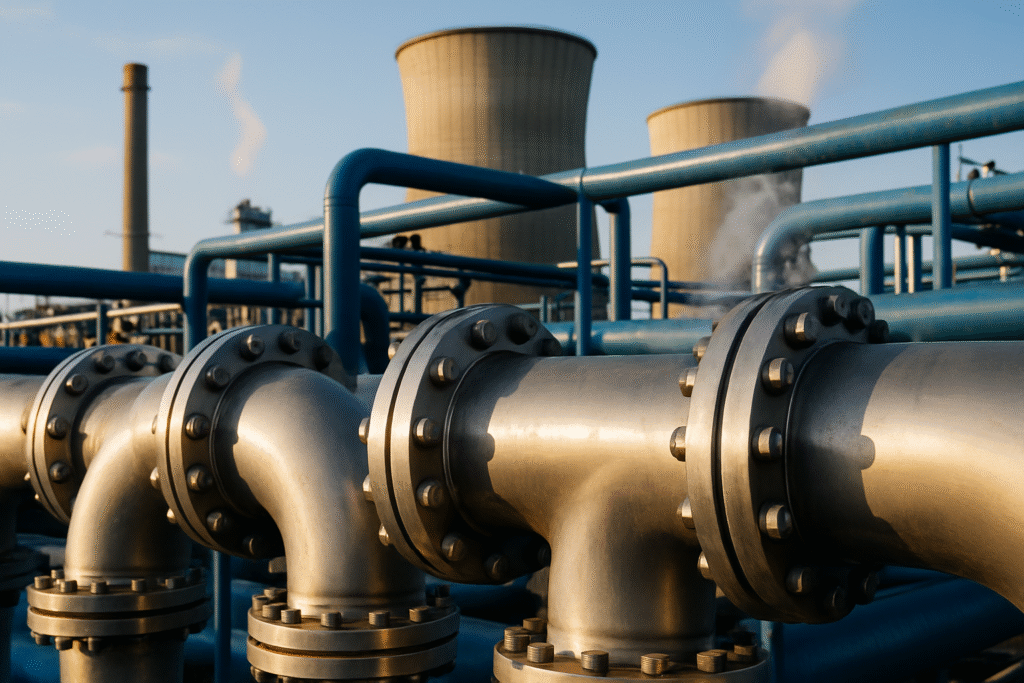
Paslanmaz Çelik Boru Flanş Pazarı 2025: Gizli Avantajlar, Prim Türleri, Kullanım Alanları, ve Seçim Verileri
The paslanmaz çelik boru flanşı modern proses borularında kritik bir bileşen olmaya devam ediyor, özellikle petrolde güvenilirlik talepleri arttıkça, gaz, su, ve enerji projeleri. Grand View Araştırmasına göre (2024), küresel endüstriyel flanş pazarı şu şekilde değerlendi: $5.8 milyar 2023 ulaşılması öngörülüyor ve $7.2 milyar tarafından 2030.
That growth reflects more than volume. It shows the hidden advantages of premium stainless solutions, including corrosion resistance, dayanıklılık, yaşam döngüsü maliyet kontrolü, and broad versatility across aggressive service conditions.
Paslanmaz Çelik Boru Flanş Pazarı Neden Genişliyor?
Industrial buyers no longer evaluate flanges as simple connection hardware. They evaluate performance over years of pressure cycling, thermal loading, kimyasal maruziyet, and maintenance downtime.
Statista'ya göre (2024), Petrol ve gaz endüstrisi yaklaşık olarak 35% küresel flanş tüketiminin. Öyleyse, materials that reduce leakage risk and unplanned shutdowns have become strategically important.
IBISWorld'e göre (2024), Asya-Pasifik'in hesapları 45% küresel flanş üretimi, Çin'in en büyük üretici olduğu. Sonuç olarak, satın alma ekipleri yalnızca fiyatı değil, giderek daha fazla karşılaştırma yapıyor, ama aynı zamanda izlenebilirlik, standartlara uygunluk, and factory quality systems.
This shift favors manufacturers with certified systems and broad machining capabilities. İle ISO 9001:2015 ve PED 2014/68/EU sertifikaları, SASA FLANGE supports buyers who need consistent documentation, boyutsal doğruluk, ve ihracata hazır kalite kontrol.
Pratik açıdan, a stainless steel pipe flange offers several commercial benefits over lower-grade alternatives. It often delivers longer service life in chloride-bearing media, lower maintenance frequency, and better compatibility with hygienic or high-purity systems.
Mordor İstihbaratına göre (2024), global investment in downstream petrochemical and industrial processing infrastructure continues to support steady demand for corrosion-resistant piping components. Dahası, replacement spending in mature plants is driving recurring flange purchases, özellikle ASTM A182 F304/F304L and F316/F316L grades.
Engineers also prioritize joint integrity under changing pressure classes. ASME B16.5 Ve ASME B16.47 flanş boyutları, toleranslarla yüzleşmek, and pressure-temperature ratings remain central to safe piping design (ASME, 2023).
That is why specification language has become more precise. Buyers increasingly request ASTM material grades, EN 10204 3.1 inspection certificates, PMI testi, and heat number traceability before approving a supplier.
In contrast with commodity sourcing, premium projects demand complete manufacturing accountability. Bu nedenle, many EPC contractors prefer suppliers that can produce stainless, karbon çeliği, alaşım, dubleks, nikel alaşımı, and titanium flanges under one quality system.
SASA FLANGE serves this requirement by manufacturing flanges in 304, 316, 316L, 904L, 2205, 2507, A105, A182, İnkonel, Monel, Hastelloy, ve Titanyum. Ek olarak, the company supplies pipe fittings such as elbows, tişört, redüktörler, and caps for integrated project purchasing.
Tedarik yöneticileri için, this broader supply scope reduces coordination risk. It can also shorten purchasing cycles when projects require multiple materials, basınç sınıfları, and standards such as ANSI, DIN, JIS, GOST, ve TR 1092.
Paslanmaz Çelik Boru Flanş Çeşitleri Teknik Kılavuzu, Kullanım Alanları, and Premium Material Choices
The best stainless steel pipe flange specification depends on media chemistry, sıcaklık, tasarım basıncı, korozyon payı, ve üretim yöntemi. Fakat, 304/304L and 316/316L still dominate general industrial demand because they balance cost, kaynaklanabilirlik, ve korozyon performansı.
ASTM'ye ve yaygın endüstri uygulamalarına göre, 304/304L is widely selected for water, gıdaya uygun, and general chemical service, while 316/316L adds molybdenum for improved resistance to chlorides and more aggressive corrosive environments (ASTM, 2023). Öyleyse, 316/316L often becomes the preferred choice for marine, açık deniz, ve kimyasal işleme sistemleri.
John Butterfield olarak, a senior piping engineer, eyaletler: “Flange failures rarely start with dimensions alone; they start when the material grade does not match the corrosion mechanism of the service.” That point is especially relevant in chloride service, ekşi servis, and high-temperature cycling applications.
Stainless grades are not interchangeable in every duty. Buyers should match metallurgy to actual process conditions, not only to initial budget.
- 304/304L: General-purpose stainless for moderate corrosion environments and good fabrication performance.
- 316/316L: Improved pitting and crevice corrosion resistance in chloride-bearing applications.
- 904L: Better resistance in strong reducing acids and selected severe chemical environments.
- 2205 dubleks: Higher strength and better chloride stress corrosion cracking resistance than standard austenitic grades.
- 2507 süper dubleks: Premium option for highly aggressive offshore, deniz suyu, and high-chloride service.
- Titanyum: Strong choice for seawater and highly corrosive media where weight and corrosion resistance matter.
Material selection also affects wall thickness transitions and welding procedures. Örneğin, low-carbon L grades help reduce sensitization risk after welding, especially in fabricated systems that may later face corrosive process streams.
Pazar Araştırması Geleceğine Göre (2024), demand for corrosion-resistant alloys in process industries is expected to outpace standard carbon steel categories in several high-growth applications. Dahası, duplex and super duplex flanges are gaining share where operators need higher strength-to-weight performance.
Not all flange Types serve the same piping condition. Yüz tipi, bore geometry, and installation method directly influence sealing reliability and maintenance accessibility.
- Kaynak boyunlu flanş: Preferred for high-pressure and high-temperature service because the tapered hub reduces stress concentration.
- Geçmeli flanş: Often selected for moderate service where fabrication speed and lower installed cost matter.
- Kör flanş: Satır sonlarını kapatmak için kullanılır, damar nozulları, veya gelecekteki genişleme noktaları.
- Soket kaynak flanşı: Daha küçük çaplı yüksek basınç hatları için uygundur.
- Dişli flanş: Used where welding is impractical or restricted.
- Bindirme flanşı: Sık sık sökme ve hizalama esnekliği gerektiren sistemler için kullanışlıdır.
Buna göre ASME B16.5 (2023), flange ratings from Class 150 sınıfa 2500 provide standardized pressure-temperature guidance. Sonuç olarak, a correct class selection must consider not only operating pressure but also material group and service temperature.
Dr. olarak. Elena Morris, a materials scientist in corrosion engineering, eyaletler: “The hidden advantages of stainless are most visible over time, because durability, daha az bakım, and reduced contamination often outweigh higher upfront cost.” This lifecycle view is increasingly shaping industrial procurement decisions.
Dimensional compatibility matters just as much as metallurgy. Common requests include 2 inç, 4 inch stainless steel pipe flange products, large-diameter ASME B16.47 pieces, and custom-drilled flanges for replacement work.
Gelişmiş CNC işleme ve kapsamlı kalite testleri ile desteklenmektedir, SASA FLANGE özel boyutlar sunuyor 1/2 inç ila 60 rekabetçi fabrika doğrudan fiyatlandırmasıyla inç. Üstelik, şirket RF'yi destekliyor, FF, RTJ, and custom facing requirements for project-specific applications.
Procurement teams should also review these specification points before ordering:
- Material grade and dual certification, 304/304L veya 316/316L gibi.
- Geçerli standart, içermek ASME B16.5, ASME B16.47, DIN, JIS, veya TR 1092-1.
- Pressure rating and service temperature.
- Kaplama tipi, yükseltilmiş yüz gibi, düz yüz, or ring type joint.
- Testing scope, PMI dahil, hidrotest desteği, sertlik, ve boyutsal muayene.
- Documentation requirements, içermek EN 10204 3.1 and heat traceability.
- Corrosion risks, especially chlorides, asitler, ekşi medya, veya deniz maruziyeti.
These details influence performance, inspection acceptance, ve toplam kurulu maliyet. Birçok projede, the right premium flange specification prevents expensive rework later.
ASME, ASTM, DIN, and EN Compliance Requirements for Industrial Flanges
Standards compliance separates dependable industrial supply from generic metal trading. For a stainless steel pipe flange, engineers usually begin with dimensional standards, then confirm material standards, basınç sınıfı, ve muayene gereklilikleri.
The most common dimensional references are ASME B16.5 NPS için 1/2 başından sonuna kadar 24 Ve ASME B16.47 daha büyük boyutlar için. Avrupa projelerinde, EN 1092-1 sıklıkla belirtilir, while DIN legacy references still appear in maintenance and retrofit work.
Malzeme standartları da aynı derecede önemlidir. ASTM A182 governs forged or rolled alloy and stainless steel pipe flanges and forged fittings for high-temperature service, sırasında ASTM A240 covers stainless steel plate, çarşaf, basınçlı kaplar ve genel uygulamalar için şerit ve şeritler (ASTM, 2023).
For buyers comparing international projects, the following framework is useful:
- ASME B16.5: Boyutlar, toleranslar, basınç-sıcaklık değerleri, işaretler, and testing for common flanges.
- ASME B16.47: Büyük çaplı çelik flanşlar.
- ASME B16.9: Fabrika yapımı dövme alın kaynağı bağlantı parçaları.
- ASTM A182: Dövme paslanmaz ve alaşımlı flanş malzemeleri.
- EN 1092-1: European flange dimensions and PN rating system.
- DIN/İSA/GOST: Regional dimensional systems for specific installed bases.
- NACE MR0175/ISO 15156: Ekşi hizmet ortamları için malzeme kılavuzu.
According to NACE and ISO guidance, material compatibility in H2S-containing systems requires careful review of hardness, kimya, ısıl işlem, ve çevresel ciddiyet (NACE, 2023). Öyleyse, stainless selection in sour service must never rely on catalog descriptions alone.
Compliance also extends beyond dimensions and chemistry. PED 2014/68/AB, test sertifikaları, and traceability records are often mandatory for exported pressure equipment packages.
For many European and international buyers, documented quality systems reduce approval time. İle ISO 9001:2015, PED 2014/68/AB, ve AD 2000 sertifikalar, SASA FLANGE aligns with the documentation expectations common in regulated industrial supply chains.
Inspection scope should be agreed before production starts. That usually includes raw material review, forging controls, machining inspection, marking verification, boyutsal kontroller, and final release documentation.
A practical compliance checklist often includes:
- Correct standard edition listed on PO and drawings.
- Malzeme kalitesi, ısı numarası, and traceability markings.
- Pressure class or PN rating verification.
- Facing finish and serration confirmation.
- EN 10204 3.1 or project-specific MTC requirements.
- İsteğe bağlı PMI, ferrit, sertlik, or NDE reports.
Açık deniz sistemleri için DNV kılavuzuna göre, documentation quality and traceability can be as important as material strength because verification supports long-term operational integrity (DNV, 2024). Sonuç olarak, buyers should treat quality documents as part of the product, not as an afterthought.
For engineers managing mixed-standard projects, early technical clarification prevents expensive mismatch issues. Bolt circle differences, face dimensions, and drilling patterns can create installation failures even when nominal Pipe size appears identical.
That is why experienced manufacturers review drawings and standards before production release. Buyers can explore broader product options through SASA FLANGE ürün yetenekleri when applications require both flange and fitting packages under one supplier.
Petrol için Paslanmaz Çelik Boru Flanşları Nasıl Seçilir, Gaz, Kimyasal, Güç, ve Denizcilik Hizmeti
Selection should start with operating data, katalog kolaylığı değil. Medya bileşimi, klorürler, basınç sınıfı, flow regime, and shutdown economics all affect the right stainless steel pipe flange choice.
Petrol ve gaz sistemlerinde, korozyon riski, basınç döngüsü, and sour service conditions often drive stricter specifications. Statista'ya göre (2024), bu sektör yaklaşık olarak temsil ediyor 35% küresel flanş tüketiminin, so specification discipline remains high.
Yukarı ve orta akış hatları için, engineers frequently prefer weld neck Flanges in ASTM A182 F316/L, dubleks 2205, veya süper dubleks 2507 depending on chloride level and pressure conditions. Nerede NACE MR0175 geçerlidir, metallurgy review becomes even more important.
Petrokimya ve kimya tesislerinde, media compatibility often determines whether 304/304L is sufficient or whether 316L, 904L, Hastelloy, or titanium is necessary. Öyleyse, corrosion data and process temperature should be reviewed together.
Enerji üretimi için, thermal fatigue and pressure integrity matter more than simple atmospheric corrosion resistance. High-temperature applications may require alloy grades and carefully controlled forging quality, especially for critical steam or condensate systems.
Marine and shipbuilding projects create a different challenge. Tuzlu suya maruz kalma, sıçrama bölgeleri, and long maintenance intervals often push engineers toward 316L, 2205, 2507, or titanium depending on budget and design life.
Use this practical selection approach:
- Yağ & Gaz: Basınç sınıfına öncelik verin, NACE incelemesi, and leak-tight sealing performance.
- Kimyasal İşleme: Match alloy to acid concentration, klorürler, ve çalışma sıcaklığı.
- Güç Üretimi: Focus on temperature, yorulma direnci, ve kod uyumluluğu.
- Deniz: Select grades with proven seawater and chloride resistance.
- Su Arıtma: Balance corrosion resistance with lifecycle cost and hygienic requirements.
- Construction and Utilities: Consider standard availability, kurulum hızı, and maintenance accessibility.
Fiyat hala önemli, especially in large tenders. Fakat, stainless steel pipe flange price should be evaluated against service life, bakım işçiliği, production downtime, ve değiştirme sıklığı.
Michael Trent olarak, an industrial procurement analyst, eyaletler: “The cheapest flange on day one can become the most expensive connection in the plant if documentation, metalurji, or machining quality is inconsistent.” That is why serious buyers compare total cost of ownership rather than unit price alone.
According to ISO-aligned procurement practices across process industries, approved vendors increasingly need consistent QC records and repeatable dimensional control (ISO, 2023). Sonuç olarak, purchasing teams often shortlist factories with proven export experience and broad standards coverage.
SASA FLANGE standart ve standart dışı gereksinimler için özel üretimi destekler, including stainless, karbon, alaşım, dubleks, and nickel alloy flanges. Servis 50+ Petrol genelindeki ülkeler & Gaz, Petrokimya, Güç, ve Denizcilik endüstrileri, the company also supplies matching elbows, tişört, redüktörler, and caps for coordinated sourcing.
Bir tedarikçiyi değerlendirirken, buyers should ask:
- Can the manufacturer supply from 1/2 inç ila 60 inç?
- Can it meet ASME, DIN, JIS, GOST, ve TR 1092 gereksinimler?
- Can it provide EN 10204 3.1 certificates and PMI results?
- Can it machine special facings or custom drillings?
- Can it support urgent shutdown or replacement schedules?
These questions help separate a premium manufacturing partner from a simple reseller. In critical applications, that distinction directly affects project risk.
Future Outlook for Premium Stainless Flanges and Strategic Buying Recommendations
Demand for corrosion-resistant piping components is expected to stay firm as refinery upgrades, LNG yatırımı, su altyapısının genişletilmesi, and marine replacement cycles continue. Grand View Araştırmasına göre (2024), the flange market is projected to grow from $5.8 milyar 2023 ile $7.2 milyar tarafından 2030.
That growth will likely favor suppliers with strong quality systems, ihracat belgeleri, and material range. Ek olarak, buyers are showing greater interest in duplex, süper dubleks, and nickel alloy options where hidden advantages justify higher upfront spend.
Procurement strategy should therefore combine technical review with supply-chain resilience. Buyers should lock down standards, muayene kapsamı, kurşun zamanı, and traceability before purchase order release.
These actions improve purchasing outcomes:
- Standardize approved material grades for recurring service conditions.
- Specify ASME or EN dimensional standards clearly on RFQs.
- MTC isteyin, PMI, ve kritik hatlar için izlenebilirlik.
- Evaluate total lifecycle cost, sadece birim fiyat değil.
- Use suppliers with integrated machining and testing capability.
In a market where durability, çok yönlülük, and compliance increasingly shape buying decisions, the right stainless steel pipe flange supplier becomes part of project risk management. For teams seeking premium materials, özel boyutlar, and certified export support, ile bağlantı kurmak SASA FLANGE is a practical next step in sourcing with greater confidence.
Sıkça Sorulan Sorular
Paslanmaz çelik flanşlar için ASME Kodu nedir?
●The main ASME dimensional code for a stainless steel pipe flange is ASME B16.5 for sizes from NPS 1/2 başından sonuna kadar 24, sırasında ASME B16.47 covers larger diameter flanges.
●ASTM A182 is commonly used with ASME dimensions because it defines forged stainless and alloy material requirements for many industrial flange applications.
●For projects requiring verified compliance, gibi yerleşik üreticilerle çalışmak SASA FLANGE helps ensure correct dimensional standards, malzeme izlenebilirliği, Ve EN 10204 3.1 certification support.
Paslanmaz çelik flanşlar ne için kullanılır??
●Boruları bağlamak için paslanmaz çelik flanşlar kullanılır, vanalar, pompalar, Korozyona dayanıklılık gerektiren sistemlerde ve ekipmanlarda, basınç bütünlüğü, and easier maintenance access.
●Statista'ya göre (2024), petrol ve gaz sektörü yaklaşık olarak 35% küresel flanş tüketiminin, bu da flanşların kritik endüstriyel hizmetlerde ne kadar önemli olduğunu gösteriyor.
●They are especially useful in chemical processing, deniz, su arıtma, and hygienic systems where durability and leak-tight sealing matter over long operating periods.
Üç tip flanş nedir?
●The three most commonly referenced flange types in general industrial discussions are weld neck flanges, geçmeli flanşlar, ve kör flanşlar.
●Weld neck flanges suit high-pressure service, slip-on flanges simplify fabrication in moderate conditions, and blind flanges close line ends or future tie-in points.
●Selection should still follow ASME B16.5 rating rules and service conditions, especially when temperature, basınç, or corrosive media could affect joint reliability.
Hangisi daha iyi 304 veya 420 paslanmaz çelik?
●For most flange applications, 304 stainless is better than 420 because it offers stronger corrosion resistance and better weldability in process piping service.
●Seviye 420 is a martensitic stainless more often associated with hardness and wear resistance, sırasında 304 remains one of the most widely specified stainless materials for industrial flanges and fittings.
●Buyers should choose 304 or 316-series forged flange grades for most piping systems unless a specific hardness-driven application requires an alternative metallurgy.
Paslanmaz çelik boru flanşı fiyatını hangi faktörler etkiler??
●Paslanmaz çelik boru flanşı fiyatı esas olarak malzeme kalitesine bağlıdır, boyut, basınç sınıfı, hammadde piyasa koşulları, işleme karmaşıklığı, ve test gereksinimleri.
●IBISWorld'e göre (2024), Asya-Pasifik'in hesapları 45% küresel flanş üretimi, so regional manufacturing capacity and export logistics have a direct effect on pricing competitiveness.
●Teklifleri doğru bir şekilde karşılaştırmak için, buyers should evaluate certification, muayene kapsamı, kurşun zamanı, and lifecycle value rather than unit price alone.
How do I choose the right flange diameter and size?
●Flange diameter and size should match the pipe nominal size, takvim, basınç sınıfı, bakan tip, ve uygulanabilir boyut standardı ASME B16.5 veya TR 1092-1.
●A 4 inç paslanmaz çelik boru flanşı, Örneğin, can differ in outside diameter, cıvata dairesi, and bore details depending on class and standard, so nominal pipe size alone is not enough.
●For replacement and project-critical work, sharing drawings and operating data with a qualified manufacturer like SASA FLANGE reduces mismatch risk and speeds technical confirmation.
İlgili Mesajlar
Flanş Yüzü Kaplaması: Eşmerkezli ve Spiral Tırtıkların Açıklaması
Eşmerkezli ve spiral tırtılların her ikisi de işlenmiş flanş yüzeyidir…
Dubleks 2205 316L Flanşlara Karşı: Hangi Malzemeyi Seçmelisiniz?
Hızlı cevap: Dubleks 2205 flanşlar genellikle daha güçlü adaydır…

Orifis Flanşı Tanımı, Ayrıntılar ve ASME B16.36 Flanşlara Genel Bakış: Piyasa Verileri, Seçim Kılavuzu ve Uyumluluk Bilgileri
Küresel endüstriyel flanş pazarı şu şekilde değerlendi: $5.8 milyar…

Siyah Bertaraf Flanşı Pazar Rehberi: Malzemeler, 3.5″ Uyumluluk, Mutfak Lavabo Flanşları için B2B Kaynak Verileri
Mutfak armatürü alıcıları nedeniyle siyah atık flanş talebi artıyor…