
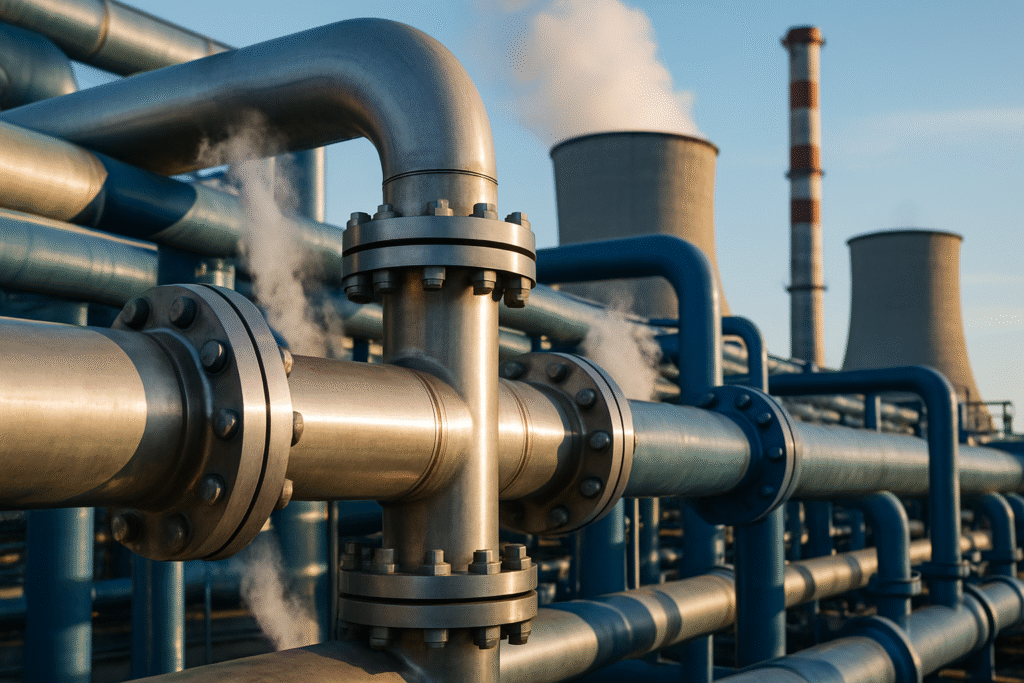
Dữ liệu thị trường mặt bích ống thép không gỉ: Ưu điểm tiềm ẩn, Các loại phổ biến, Công dụng, và cách chọn mặt bích
Thị trường mặt bích ống thép không gỉ đang mở rộng nhờ độ tin cậy, chống ăn mòn, và giá trị vòng đời trở thành trọng tâm trong việc mua sắm đường ống công nghiệp. Theo nghiên cứu của Grand View (2024), thị trường mặt bích công nghiệp toàn cầu được định giá ở mức $5.8 tỷ trong 2023 và dự kiến sẽ đạt $7.2 tỷ bởi 2030, which makes stainless steel pipe flange selection a strategic purchasing decision rather than a routine commodity buy.
Dành cho kỹ sư và người quản lý mua sắm, the most intriguing aspect is not only price. The hidden advantages of stainless steel pipe flange solutions include lower maintenance frequency, broader media compatibility, and better long-term performance in corrosive and high-temperature service.
Trình điều khiển thị trường công nghiệp đằng sau nhu cầu mặt bích ống thép không gỉ
Demand for stainless steel pipe flange products is closely tied to energy, hóa dầu, hàng hải, and water infrastructure investment. Theo Statista (2024), ngành dầu khí chiếm khoảng 35% tiêu thụ mặt bích toàn cầu, which confirms why flange specification has direct implications for plant uptime and safety.
Năng lực sản xuất khu vực cũng định hình chiến lược tìm nguồn cung ứng. Theo IBISWorld (2024), Châu Á - Thái Bình Dương chiếm hơn 45% sản xuất mặt bích toàn cầu, với Trung Quốc là nhà sản xuất lớn nhất, giving buyers access to high-volume output and competitive lead times.
These numbers explain why procurement teams compare not only flange types, but also manufacturing quality systems, truy xuất nguồn gốc kiểm tra, và kinh nghiệm xuất khẩu. In contrast to generic supply, project buyers increasingly require EN 10204 3.1 giấy chứng nhận vật chất, Xác minh PMI, and dimensional compliance with ASME and EN standards.
As projects become more international, standard harmonization matters more than ever. ASME B16.5 remains the core reference for NPS 1/2 bởi vì 24 mặt bích, trong khi ASME B16.47 covers large-diameter flanges, và VN 1092 provides a widely used European framework (ASME, 2023; EN, 2024).
Về mặt thực tế, stainless steel pipe flange procurement often involves balancing corrosion resistance, lớp áp lực, kiểu khuôn mặt, and fabrication schedule. Vì thế, buyers need suppliers that can manufacture weld neck, trượt trên, mù, ổ cắm hàn, xâu chuỗi, and lap joint designs in 304, 316, 316L, 904L, 2205, Và 2507 điểm.
SASA FLANGE serves this need with ISO 9001:2015 và chứng nhận PED 2014/68/EU, phạm vi tài liệu rộng, and export support for Oil & Khí đốt, hóa dầu, Quyền lực, Hàng hải, và xử lý nước. Buyers evaluating supply options can review capabilities through SASA FLANGE thông tin công ty and product scope through its industrial flange and fitting portfolio.
Another market factor is lifecycle economics. Theo Mordor Intelligence (2024), corrosion-related downtime and maintenance remain among the largest avoidable costs in process industries, which is why stainless materials continue gaining share in aggressive service systems.
Hơn thế nữa, stainless steel offers measurable value in environments exposed to chlorides, hóa chất, hơi nước, and repeated cleaning cycles. For many users, the most common reason to choose flanges in 304 hoặc 316 grades is not simply corrosion resistance, but predictable service life under variable operating conditions.
That is especially relevant in projects with strict inspection plans. ASTM A182 forged stainless flanges and ASTM A240 plate-derived materials are commonly specified because traceable chemistry and mechanical properties improve consistency in fabrication and operation (ASTM, 2024).
Kết quả là, a well-specified stainless steel pipe flange package can reduce replacement intervals, simplify maintenance planning, and support safer operating margins. This is one of the hidden advantages often missed when decisions focus only on the lowest initial unit price.
Các loại mặt bích ống thép không gỉ, Điểm, và Ưu điểm tiềm ẩn trong dịch vụ
Understanding stainless steel pipe flange types is essential because geometry affects stress distribution, tính toàn vẹn của mối hàn, and installation cost. Weld neck flanges remain the preferred choice for high-pressure and cyclic service, while slip-on flanges are often selected for lower-pressure systems where fabrication simplicity matters.
Như John Breen, Kỹ sư đường ống cao cấp, tiểu bang: “Flange selection is never only about material grade; hình học trung tâm, đối mặt, căn chỉnh lỗ khoan, and pressure class often determine long-term joint reliability.” Quan điểm đó phù hợp với thực tiễn thiết kế ASME, where the flange type must match service severity, nhiệt độ, and assembly requirements.
Theo Nghiên cứu thị trường Tương lai (2024), industrial demand for corrosion-resistant alloy and stainless flange products is increasing at over 4% CAGR in line with stricter reliability and emissions targets. Ngoài ra, theo Statista (2024), process industries continue prioritizing durable piping components as maintenance budgets shift toward predictive asset management.
The most common stainless grades for industrial flange applications are 304, 304L, 316, và 316L. Tuy nhiên, hai mặt 2205, siêu song công 2507, 904L, Monel, Hastelloy, and Inconel become important when chloride stress corrosion cracking, dịch vụ chua, or highly oxidizing media are present.
Grade selection should follow the actual medium, nhiệt độ hoạt động, và triết lý trợ cấp ăn mòn. Ví dụ, 304 is widely used in general water, đồ ăn, và dịch vụ hóa chất nhẹ, trong khi 316 or 316L is often preferred for chloride-bearing environments because molybdenum improves pitting resistance.
Như Tiến sĩ. Elena Markovic, Nhà khoa học vật liệu, tiểu bang: “Trong các ứng dụng mặt bích, the hidden advantages of higher alloy content appear over time, because resistance to pitting, crevice attack, and heat tint degradation directly influences leak risk.” That is particularly true in offshore, hàng hải, and aggressive washdown systems.
- 304/304L: economical and widely available for general industrial service.
- 316/316L: improved corrosion resistance for chlorides, seawater splashes, and harsher chemical exposure.
- 904L: stronger resistance in sulfuric and highly corrosive environments.
- 2205 hai mặt: higher strength and better chloride resistance than austenitic 316L.
- 2507 siêu song công: selected for severe offshore and high-chloride applications.
- A105 and A182 alloy options: used where carbon steel or alloy steel is required by service design.
Type selection matters just as much as alloy selection. The most common flange configurations each solve a different piping problem, and procurement teams should map them to process conditions rather than habit.
- Mặt bích cổ hàn: tốt nhất cho áp suất cao, rung động, đạp xe nhiệt, và các dòng quy trình quan trọng.
- Mặt bích trượt: lower fabrication cost and easier alignment in non-critical service.
- Mặt bích mù: dùng để kết thúc dòng, hệ thống cô lập, hoặc cho phép mở rộng trong tương lai.
- Mặt bích hàn ổ cắm: phù hợp với lỗ khoan nhỏ, đường ống cao áp.
- Mặt bích ren: practical where welding is restricted.
- Mặt bích khớp nối: useful when frequent dismantling or alignment flexibility is needed.
Face design also affects sealing performance. Raised face is common in process plants, ring type joint is used in high-pressure critical service, and flat face is often specified for cast iron or lower-stress mating equipment (ASME B16.5, 2023).
Theo hướng dẫn của ASME, pressure-temperature ratings depend on material group and flange class, so buyers cannot compare Class 150 và lớp 300 products by dimensions alone. Vì thế, proper flange selection must integrate rating class, loại đệm, tải bu lông, và nhiệt độ hoạt động.
Từ góc độ tìm nguồn cung ứng, manufacturing capability matters because dimensional accuracy drives fit-up and sealing success. SASA FLANGE sản xuất mặt bích ở 304, 316, 316L, 904L, 2205, 2507 và các hạng cao cấp khác, backed by advanced CNC machining and comprehensive quality testing for export projects.
Custom requirements are also common in B2B procurement. Many EPC buyers need non-standard bores, mặt đặc biệt, mẫu khoan, NACE MR0175-compatible material options, or combined flange-and-fitting packages for complete piping systems.
SASA FLANGE supports this model with custom sizes from 1/2 inch đến 60 inch and factory-direct supply for flanges, khuỷu tay, áo thun, bộ giảm tốc, và mũ. For technical discussions on drawings, lớp áp lực, hoặc hợp kim đặc biệt, buyers can connect directly through SASA FLANGE hỗ trợ bán hàng kỹ thuật.
Cuối cùng, the intriguing question is not just which stainless flange is available. The better question is how to choose flanges that minimize total installed cost while preserving joint integrity for 10, 20, hoặc thậm chí 30 years of service.
Tiêu chuẩn, Kiểm tra, và tuân thủ đối với mặt bích bằng thép không gỉ
Industrial buyers should anchor every stainless steel pipe flange purchase to recognized standards. ASME B16.5 Và ASME B16.47 xác định kích thước, xếp hạng, dung sai, and facing requirements, trong khi ASTM A182 commonly governs forged stainless steel flanges and ASTM A240 supports plate material requirements for related products (ASTM, 2024).
Các dự án châu Âu và quốc tế thường yêu cầu EN 1092, DIN, or JIS compliance in addition to ASME. Vì thế, global suppliers must understand dimensional interchange limits, drilling differences, and marking requirements before production starts.
Theo tiêu chuẩn ISO (2023), traceability and documented quality management remain essential in pressure-containing components because nonconforming materials increase both safety and legal risk. Đó là lý do tại sao ISO 9001:2015 hệ thống, mill test reports, and positive material identification are now routine requirements in many tenders.
For corrosive upstream and chemical applications, NACE MR0175 hoặc ISO 15156 may also become relevant where sulfide stress cracking is a concern. Ngoài ra, PED 2014/68/EU compliance is important when products enter regulated European pressure equipment supply chains.
- ASME B16.5: pipe flanges and flanged fittings for NPS 1/2 ĐẾN 24.
- ASME B16.47: mặt bích thép đường kính lớn cho NPS 26 ĐẾN 60.
- ASTM A182: forged or rolled alloy and stainless steel flanges and forged fittings.
- ASME B16.9: factory-made wrought buttwelding fittings for elbows, áo thun, bộ giảm tốc, và mũ.
- EN 1092: European flange standard covering dimensions and pressure designations.
- NACE MR0175 / ISO 15156: Yêu cầu vật chất đối với môi trường chứa H2S.
Inspection planning should be equally disciplined. Most project specifications require dimensional inspection, kiểm tra trực quan, material traceability checks, and marking verification, while higher criticality orders may add PMI, kiểm tra độ cứng, kiểm tra ferrite, hỗ trợ kiểm tra thủy tĩnh, hoặc kiểm tra nhân chứng của bên thứ ba.
As Michael Tan, Nhà phân tích thị trường công nghiệp, tiểu bang: “Quality documentation has become a commercial differentiator because EPC firms increasingly score suppliers on traceability, chứng nhận, và khả năng đáp ứng, not only on price.” That trend is especially visible in energy and offshore projects.
Documentation requirements usually include heat number traceability, EN 10204 3.1 certificate packages, and standard marking on each stainless steel pipe flange. Hơn nữa, flange buyers should verify bore finish, răng cưa, kiểu đối mặt, and drilling accuracy because these details affect gasket seating and bolt stress distribution.
SASA FLANGE integrates these compliance needs into export manufacturing with ISO 9001:2015, PED 2014/68/EU, và AD 2000 aligned quality processes. Phục vụ 50+ các quốc gia trên khắp dầu mỏ & Khí đốt, hóa dầu, Quyền lực, và ngành hàng hải, the company supports both standard and project-specific documentation packages.
When evaluating vendors, procurement teams should compare more than nominal specification claims. They should confirm whether the supplier can provide ASTM-compliant raw material, CNC-machined tolerances, test records, and packaging methods that protect serrated sealing surfaces during shipment.
It is also wise to verify whether the supplier can combine flanges with ASME B16.9 fittings in the same project lot. That reduces inspection complexity and supports material consistency across elbows, áo thun, bộ giảm tốc, mũ lưỡi trai, and flange components.
For detailed project requirements, buyers can discuss specifications and certification needs at SASA FLANGE trang liên hệ. Song song, engineers can review dimensional baseline requirements directly from the ASME official website before final approval.
Hướng dẫn đăng ký: Cách chọn mặt bích cho dầu, Khí đốt, Hóa chất, Quyền lực, và hệ thống hàng hải
Choosing the right stainless steel pipe flange begins with operating conditions. Áp lực, nhiệt độ, hóa học chất lỏng, kích thước dòng, cơ chế ăn mòn, and inspection class should all be defined before a grade or flange type is selected.
Oil and gas systems often prioritize pressure containment, sour service compliance, and resistance to chloride exposure. Vì thế, mặt bích cổ hàn trong 316L, hai mặt 2205, hoặc siêu song công 2507 may be preferred depending on produced water chemistry, vùng nước bắn tung tóe ngoài khơi, and pipeline stress levels.
Theo Statista (2024), dầu khí chiếm khoảng 35% nhu cầu mặt bích toàn cầu, so field-proven reliability is critical in this sector. In many upstream and midstream applications, buyers also require material traceability and third-party inspection as standard purchasing conditions.
Các nhà máy xử lý hóa chất tập trung nhiều hơn vào khả năng tương thích của môi trường. 316L is common for moderate chemical service, nhưng 904L, Hastelloy, Monel, or titanium may be required where acids, clorua, or mixed aggressive media make standard austenitic stainless insufficient.
Power generation projects often deal with temperature cycling, hơi nước, and pressure fluctuation. Kết quả là, weld neck flanges with carefully matched metallurgy are often selected to reduce stress concentration at the hub-to-pipe transition.
Marine and shipbuilding applications must consider salt exposure, ăn mòn kẽ hở, and washdown conditions. Trong những môi trường này, 316L is frequently a baseline, while duplex grades offer a stronger strength-to-weight ratio and better chloride resistance for severe duty.
- Check fluid composition, bao gồm clorua, sunfua, và nồng độ axit.
- Match flange class to design pressure and operating temperature.
- Confirm compatibility between gasket, vật liệu bu lông, and flange face finish.
- Select forged or plate-based product according to project specification.
- Review whether ASME, DIN, JIS, or EN dimensions are required.
- Specify certificates, PMI, and third-party inspection before purchase order release.
Another practical issue is size range. Người mua đang tìm kiếm kích thước mặt bích ống thép không gỉ, 4 tùy chọn mặt bích ống thép không gỉ inch, or stainless steel threaded pipe flange products should verify bore schedule, độ dày mặt bích, kiểu khoan, and face type rather than relying on nominal size descriptions alone.
Ví dụ, Một 4 inch flange may differ significantly depending on Class 150, 300, hoặc 600 rating and whether it follows ASME B16.5 hoặc VN 1092. Do đó, dimensional checks should always reference the exact standard and pressure designation.
Procurement teams should also evaluate total package availability. Flanges rarely ship alone on major projects, and integrating elbows, áo thun, bộ giảm tốc, and caps from the same approved supplier can simplify quality control and logistics.
SASA FLANGE offers custom manufacturing for stainless steel flanges and related fittings in a broad material portfolio, bao gồm 304, 316, 316L, 904L, 2205, 2507, A105, A182, Inconel, Monel, Hastelloy, và Titan. This is useful when projects require mixed metallurgy packages or non-standard drilling and facing details.
Lead time and cost should be assessed alongside reliability. A lower-priced stainless steel pipe flange can become more expensive if poor tolerances, missing documents, or surface damage delay installation and force reinspection.
Vì thế, the most effective way to choose flanges is to align engineering criteria with supplier capability. Buyers who do this consistently reduce field fit-up issues, improve sealing performance, and gain better control over lifecycle cost.
Triển vọng tương lai, Chiến lược mua hàng, and Commercial Recommendations
Triển vọng về nhu cầu mặt bích ống thép không gỉ vẫn tích cực do đổi mới cơ sở hạ tầng, dự án chuyển đổi năng lượng, and industrial resilience programs continue to support investment. Theo nghiên cứu của Grand View (2024), thị trường dự kiến sẽ tăng trưởng từ $5.8 tỷ trong 2023 ĐẾN $7.2 tỷ bởi 2030, reflecting steady long-term demand.
Ngoài ra, theo IBISWorld (2024), Châu Á-Thái Bình Dương đã chiếm hơn 45% sản xuất mặt bích toàn cầu, which means sourcing strategies will continue to emphasize qualified Asian manufacturers with proven export quality systems. Tuy nhiên, buyers will increasingly favor suppliers that combine cost efficiency with traceability and engineering support.
One clear trend is specification tightening. EPC contractors and end users now expect faster document turnaround, PED and project certification support, and stronger material verification protocols than they did five years ago.
Another trend is bundled procurement. Instead of purchasing flanges, khuỷu tay, áo thun, bộ giảm tốc, và mũ từ nhiều nhà cung cấp, many buyers prefer integrated packages to reduce quality variation and simplify expediting.
Commercially, the most common buying mistakes remain under-specifying corrosion requirements, ignoring documentation scope, and treating all stainless grades as interchangeable. Ngược lại, successful procurement teams define media chemistry, xếp hạng lớp, kích thước, giấy chứng nhận, and inspection expectations before RFQ release.
Để tìm nguồn cung ứng chiến lược, buyers should compare vendors on five criteria. These include material range, tuân thủ tiêu chuẩn, độ chính xác gia công, chất lượng tài liệu, and delivery responsiveness.
- Standardize approved flange types by service category.
- Pre-qualify suppliers with ISO 9001:2015 and PED support.
- Lời yêu cầu EN 10204 3.1 certificates and PMI for critical grades.
- Bundle flange and fitting procurement when material consistency matters.
- Evaluate lifecycle cost rather than initial unit price alone.
For companies seeking a dependable partner, SASA FLANGE combines broad grade coverage, project documentation support, and custom production for industrial piping systems. Buyers planning current or future flange packages can use SASA FLANGE to discuss technical drawings, tiêu chuẩn, and delivery requirements with an experienced export team.
Câu hỏi thường gặp
Cái nào tốt hơn 304 hoặc 420 thép không gỉ?
●Đối với hầu hết các ứng dụng mặt bích ống thép không gỉ, 304 is the better choice because it offers stronger corrosion resistance, khả năng hàn tốt hơn, and wider acceptance under industrial flange standards such as ASTM A182 Và ASME B16.5.
●Theo nghiên cứu của Grand View (2024), thị trường mặt bích công nghiệp đạt $5.8 tỷ trong 2023, and a significant share of demand comes from corrosive process systems where austenitic grades like 304 Và 316 are preferred over hardenable martensitic grades such as 420.
●The main technical difference is microstructure and service intent. Cấp 304 is an austenitic stainless steel with roughly 18% crom và 8% niken, so it performs well in general chemical handling, xử lý nước, chế biến thực phẩm, và dịch vụ kiến trúc. Cấp 420 is a martensitic stainless steel with higher carbon and lower corrosion resistance, and it is typically selected for hardness, chống mài mòn, and edge retention rather than flange fabrication.
●In practical piping terms, 420 is not the most common flange material because its weldability is poorer and its corrosion performance is weaker in wet or chloride-containing environments. Engineers usually avoid 420 for process flanges unless a very specific mechanical requirement exists and corrosion exposure is limited.
●As materials specialists often note, flange materials must be selected for sealing reliability over time, not only for hardness. Vì thế, if your system handles water, hơi nước, hóa chất nhẹ, or washdown service, 304 is generally the more reliable and economical choice, trong khi 316 or duplex grades may be even better where chlorides are present.
●For projects requiring certified forged stainless flanges, traceable chemistry, và tuân thủ kích thước, làm việc với các nhà sản xuất có uy tín như SASA FLANGE helps ensure the grade matches the real service conditions and standard requirements.
Làm thế nào tôi có thể biết thép không gỉ của tôi có phải là 304 hoặc 316?
●You usually cannot confirm whether a stainless steel pipe flange is 304 hoặc 316 by visual inspection alone because both grades look very similar after machining, dưa chua, hoặc thụ động.
●According to ISO and common industrial QA practice, the most reliable identification methods are mill test certificates, xác định vật liệu tích cực, and laboratory chemical analysis, especially when the part is pressure-containing or used in regulated projects.
●The key compositional difference is molybdenum. Cấp 316 normally contains about 2% ĐẾN 3% molypden, trong khi 304 does not, and that extra alloying gives 316 better resistance to pitting and crevice corrosion in chloride environments. Portable PMI devices based on XRF technology can often detect this difference quickly in warehouses, fabrication shops, and project sites.
●Procurement teams should not rely on spark tests, magnets, or color differences because those methods are inaccurate for distinguishing austenitic stainless grades in flange service. Even stamped markings can be misleading if parts were mixed after machining or if traceability was lost during storage.
●According to industry analysts, documentation control is becoming more important across piping supply chains because wrong-grade installation can lead to expensive rework and corrosion failure. That is one reason EPC firms frequently require EN 10204 3.1 giấy chứng nhận, truy xuất nguồn gốc số nhiệt, and PMI for 316L, hai mặt, and other critical materials.
●If you need certainty before installation, request MTC review and PMI verification from a qualified supplier or third-party inspector. For projects that require traceable 304, 316, 316L, 2205, hoặc 2507 mặt bích, liên lạc SASA FLANGE is a practical way to secure documented material conformity and project-level QA support.
những gì là 5 các loại thép không gỉ?
●Năm họ thép không gỉ chính là austenit, ferit, martensitic, hai mặt, và thép không gỉ làm cứng kết tủa, and each group serves different industrial flange and piping requirements.
●According to ASTM and common materials engineering classifications, các loại austenit như 304 Và 316 are the most widely used in flange production because they combine corrosion resistance, độ dẻo, và khả năng hàn tốt.
●Austenitic stainless steels include 304, 304L, 316, 316L, 321, Và 347, and they dominate process piping because they perform well across many chemical and temperature conditions. Ferritic grades contain chromium but little or no nickel, so they offer moderate corrosion resistance and lower cost, yet they are less common in critical flange applications. Martensitic grades such as 410 Và 420 can be heat treated for hardness, but they are not usually the first choice for corrosion-focused flange service.
●Duplex stainless steels such as 2205 Và 2507 combine austenitic and ferritic structures, delivering higher strength and strong resistance to chloride stress corrosion cracking. Precipitation-hardening grades are used where very high strength is required, but they are more specialized and less common in standard pipe flange procurement.
●Theo Nghiên cứu thị trường Tương lai (2024), demand for higher-performance corrosion-resistant materials is growing as asset owners target longer service life and lower maintenance costs. That trend supports greater use of duplex and super duplex alloys in offshore, khử muối, and aggressive chemical systems.
●For most common industrial stainless steel pipe flange orders, buyers choose between austenitic and duplex grades based on corrosion severity, lớp áp lực, và mục tiêu chi phí. If you need help selecting among 304, 316L, 904L, 2205, hoặc 2507 for a project-specific application, an experienced supplier like SASA FLANGE can align material family choice with standards, điều kiện dịch vụ, và yêu cầu kiểm tra.
Mã ASME cho mặt bích thép không gỉ là gì?
●The primary ASME standards for stainless steel pipe flange dimensions and ratings are ASME B16.5 cho NPS 1/2 bởi vì 24 Và ASME B16.47 for large diameters from NPS 26 bởi vì 60.
●ASTM A182 is also commonly specified because it covers forged or rolled alloy and stainless steel flanges, phụ kiện giả mạo, và van cho dịch vụ nhiệt độ cao, making it one of the most important material standards for stainless flanges.
●Buyers should understand that ASME and ASTM play different but complementary roles. ASME B16.5 and B16.47 define dimensional requirements, xếp hạng nhiệt độ áp suất, đối mặt với chi tiết, dung sai, và các mẫu bu lông, trong khi ASTM A182 defines material chemistry, tính chất cơ học, xử lý nhiệt, và yêu cầu kiểm tra. In many project documents, both standards appear together because one controls geometry and the other controls material compliance.
●Other relevant standards may include ASME B16.9 for buttweld fittings, EN 1092 cho kích thước mặt bích châu Âu, Và NACE MR0175 hoặc ISO 15156 cho vật liệu dịch vụ chua. Vì thế, the full specification for a stainless flange package often includes more than one code or standard reference.
●Theo thông lệ ASME, pressure class selection must consider both material group and temperature, vì vậy một lớp học 300 flange cannot be evaluated only by nominal size. This is a critical point for procurement teams comparing quotations across different mills or international suppliers.
●The best approach is to specify the exact standard, cấp, đối mặt, lớp học, khoan, and documentation package in the RFQ. For ASME-compliant stainless steel pipe flange supply with supporting certificates and export documentation, nhà sản xuất thích SASA FLANGE can provide clearer compliance alignment from quotation through shipment.
Các loại mặt bích thép không gỉ phổ biến nhất là gì?
●Các loại mặt bích inox phổ biến nhất là cổ hàn, trượt trên, mù, ổ cắm hàn, xâu chuỗi, và khớp nối, and each type is designed for a different balance of strength, installation effort, và truy cập bảo trì.
●Theo Statista (2024), ngành dầu khí đại diện cho khoảng 35% tiêu thụ mặt bích toàn cầu, and that helps explain why weld neck flanges remain especially common in high-pressure and cyclic service.
●Weld neck flanges are favored where stress concentration must be minimized, such as refinery lines, đường ống điện, and critical process systems. Slip-on flanges are often selected for lower-pressure service because they are easier to fit and typically less expensive to install. Blind flanges are used to close the end of a pipe, isolate a section of line, or allow future modifications.
●Socket weld flanges are widely used in smaller bore, ứng dụng áp suất cao, while threaded flanges are useful where welding is undesirable or restricted. Mặt bích khớp nối, được sử dụng với đầu còn sơ khai, are helpful in systems that require frequent dismantling or rotational alignment during assembly.
●Face type is also important. Raised face is the most common for industrial process service, while ring type joint faces are used in higher-pressure applications requiring metal-to-metal gasket engagement under controlled bolt load.
●To choose correctly, buyers should match flange type to process pressure, mức độ rung, chu kỳ nhiệt độ, lớp kiểm tra, và chiến lược bảo trì. For projects involving stainless steel flange types, phụ kiện, and custom drilling or facing details, a supplier like SASA FLANGE can help standardize selection across entire piping packages.
How do I select stainless steel pipe flange sizes, kích thước, và giảm mặt bích?
●Stainless steel pipe flange sizes and dimensions must be selected by referencing the exact standard, kích thước ống danh nghĩa, lớp áp lực, kiểu đối mặt, and bore schedule rather than by nominal diameter alone.
●ASME B16.5 governs most common sizes from NPS 1/2 ĐẾN 24, trong khi ASME B16.47 bao gồm đường kính lớn hơn, and dimensional differences between Class 150, 300, 600, and higher ratings can be substantial even for the same nominal size.
●Ví dụ, Một 4 inch stainless steel pipe flange can vary in outside diameter, độ dày, vòng tròn bu lông, and hub dimensions depending on its class and type. Buyers searching for stainless steel flange dimensions or stainless steel flange for sale should therefore verify whether the product is weld neck, trượt trên, mù, xâu chuỗi, or socket weld and whether the bore matches Schedule 10S, 40S, or another wall thickness. This is also important for gasket fit and bolt selection.
●Reducing flanges deserve special attention because they connect a larger flange size to a smaller pipe bore. They can save space and reduce the number of fittings, but engineers must check turbulence, velocity change, and stress effects before using them in critical service.
●According to industry best practice, dimensional errors remain one of the most common causes of site installation delays because bolt misalignment and wrong bore schedules prevent direct fit-up. Kết quả là, many procurement teams now request approval drawings and detailed dimensional inspection reports before shipment.
●The most effective purchasing method is to submit your line size, lịch trình, lớp học, kiểu khuôn mặt, and standard together with any reducing flange requirement. If you need stainless steel pipe flange sizes from 1/2 inch đến 60 inch with project documentation and custom machining, SASA FLANGE can support both standard and non-standard dimensional requirements.
bài viết liên quan
Mặt bích hoàn thiện: Giải thích về răng cưa đồng tâm và xoắn ốc
Các răng cưa đồng tâm và xoắn ốc đều được gia công hoàn thiện mặt bích…
song công 2205 so với mặt bích 316L: Bạn nên chọn chất liệu nào?
Trả lời nhanh: song công 2205 mặt bích thường là ứng cử viên mạnh hơn…

Định nghĩa mặt bích lỗ, Chi tiết và tổng quan về mặt bích ASME B16.36: Dữ liệu thị trường, Hướng dẫn lựa chọn và thông tin chi tiết về tuân thủ
Thị trường mặt bích công nghiệp toàn cầu được định giá ở mức $5.8 tỷ…

Hướng dẫn thị trường mặt bích xử lý màu đen: Nguyên vật liệu, 3.5″ Khả năng tương thích, và dữ liệu tìm nguồn cung ứng B2B cho mặt bích bồn rửa nhà bếp
Nhu cầu mặt bích xử lý màu đen đang tăng lên khi người mua đồ đạc nhà bếp…