
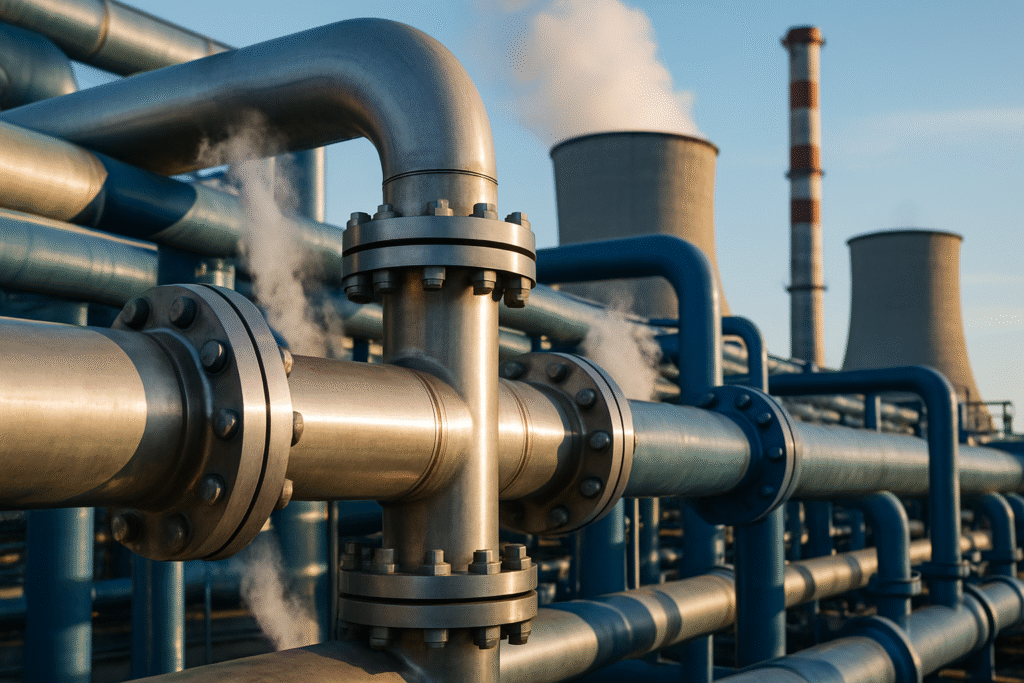
Данные о рынке фланцев для труб из нержавеющей стали: Скрытые преимущества, Распространенные типы, Использование, и как выбрать фланцы
Рынок фланцев для труб из нержавеющей стали расширяется по мере увеличения надежности, коррозионная стойкость, и ценность жизненного цикла становятся центральными при закупках промышленных трубопроводов. По данным исследования Grand View (2024), мировой рынок промышленных фланцев оценивался в $5.8 миллиард в 2023 и, по прогнозам, достигнет $7.2 миллиард на 2030, which makes stainless steel pipe flange selection a strategic purchasing decision rather than a routine commodity buy.
Для инженеров и менеджеров по снабжению, the most intriguing aspect is not only price. The hidden advantages of stainless steel pipe flange solutions include lower maintenance frequency, broader media compatibility, and better long-term performance in corrosive and high-temperature service.
Движущие силы промышленного рынка, определяющие спрос на фланцы для труб из нержавеющей стали
Demand for stainless steel pipe flange products is closely tied to energy, нефтехимический, морской, and water infrastructure investment. По данным Статистики (2024), на долю нефтегазовой отрасли приходится около 35% мирового потребления фланцев, which confirms why flange specification has direct implications for plant uptime and safety.
Региональные производственные мощности также определяют стратегию снабжения. По данным IBISWorld (2024), На долю Азиатско-Тихоокеанского региона приходится более 45% мирового производства фланцев, при этом Китай является крупнейшим производителем, giving buyers access to high-volume output and competitive lead times.
These numbers explain why procurement teams compare not only flange types, but also manufacturing quality systems, inspection traceability, и экспортируем опыт. In contrast to generic supply, project buyers increasingly require EN 10204 3.1 сертификаты на материалы, Проверка PMI, and dimensional compliance with ASME and EN standards.
As projects become more international, standard harmonization matters more than ever. ASME B16.5 remains the core reference for NPS 1/2 через 24 фланцы, пока ASME B16.47 covers large-diameter flanges, и RU 1092 provides a widely used European framework (ASME, 2023; EN, 2024).
В практическом плане, stainless steel pipe flange procurement often involves balancing corrosion resistance, класс давления, тип лица, and fabrication schedule. Поэтому, buyers need suppliers that can manufacture weld neck, без шнуровки, слепой, раструбная сварка, резьбовой, and lap joint designs in 304, 316, 316л, 904л, 2205, и 2507 оценки.
SASA FLANGE serves this need with ISO 9001:2015 и сертификаты PED 2014/68/ЕС., широкий охват материала, and export support for Oil & Газ, нефтехимическая, Власть, Морской, и водоочистки. Buyers evaluating supply options can review capabilities through SASA FLANGE информация о компании and product scope through its industrial flange and fitting portfolio.
Another market factor is lifecycle economics. По данным Мордорской разведки (2024), corrosion-related downtime and maintenance remain among the largest avoidable costs in process industries, which is why stainless materials continue gaining share in aggressive service systems.
Более того, stainless steel offers measurable value in environments exposed to chlorides, химикаты, пар, and repeated cleaning cycles. For many users, the most common reason to choose flanges in 304 или 316 grades is not simply corrosion resistance, but predictable service life under variable operating conditions.
That is especially relevant in projects with strict inspection plans. ASTM A182 forged stainless flanges and ASTM A240 plate-derived materials are commonly specified because traceable chemistry and mechanical properties improve consistency in fabrication and operation (ASTM, 2024).
Как результат, a well-specified stainless steel pipe flange package can reduce replacement intervals, simplify maintenance planning, and support safer operating margins. This is one of the hidden advantages often missed when decisions focus only on the lowest initial unit price.
Типы фланцев для труб из нержавеющей стали, Оценки, and Hidden Advantages in Service
Understanding stainless steel pipe flange types is essential because geometry affects stress distribution, целостность сварного шва, and installation cost. Weld neck flanges remain the preferred choice for high-pressure and cyclic service, while slip-on flanges are often selected for lower-pressure systems where fabrication simplicity matters.
Как Джон Брин, Старший инженер по трубопроводам, государства: «Flange selection is never only about material grade; геометрия ступицы, лицом к лицу, выравнивание отверстия, and pressure class often determine long-term joint reliability.» Эта точка зрения соответствует практике проектирования ASME., where the flange type must match service severity, температура, and assembly requirements.
По данным Market Research Future (2024), industrial demand for corrosion-resistant alloy and stainless flange products is increasing at over 4% CAGR in line with stricter reliability and emissions targets. Кроме того, по данным Статисты (2024), process industries continue prioritizing durable piping components as maintenance budgets shift toward predictive asset management.
The most common stainless grades for industrial flange applications are 304, 304л, 316, и 316Л. Однако, дуплекс 2205, супер дуплекс 2507, 904л, Монель, Хастеллой, and Inconel become important when chloride stress corrosion cracking, кислое обслуживание, or highly oxidizing media are present.
Grade selection should follow the actual medium, рабочая температура, and corrosion allowance philosophy. Например, 304 is widely used in general water, еда, и мягкие химические услуги, тогда как 316 or 316L is often preferred for chloride-bearing environments because molybdenum improves pitting resistance.
Как доктор. Елена Маркович, Материаловед, государства: «Во фланцевых применениях, the hidden advantages of higher alloy content appear over time, because resistance to pitting, crevice attack, and heat tint degradation directly influences leak risk.» That is particularly true in offshore, морской, and aggressive washdown systems.
- 304/304л: economical and widely available for general industrial service.
- 316/316л: improved corrosion resistance for chlorides, seawater splashes, and harsher chemical exposure.
- 904л: stronger resistance in sulfuric and highly corrosive environments.
- 2205 дуплекс: higher strength and better chloride resistance than austenitic 316L.
- 2507 супер дуплекс: selected for severe offshore and high-chloride applications.
- A105 and A182 alloy options: used where carbon steel or alloy steel is required by service design.
Type selection matters just as much as alloy selection. The most common flange configurations each solve a different piping problem, and procurement teams should map them to process conditions rather than habit.
- Приварные фланцы с шейкой: лучше всего для высокого давления, вибрация, термоциклирование, и критические технологические линии.
- Накидные фланцы: lower fabrication cost and easier alignment in non-critical service.
- Глухие фланцы: используется для завершения строк, изолировать системы, или разрешить дальнейшее расширение.
- Фланцы под приварку враструб: подходит для малокалиберных, трубопровод высокого давления.
- Резьбовые фланцы: practical where welding is restricted.
- Фланцы внахлестку: useful when frequent dismantling or alignment flexibility is needed.
Face design also affects sealing performance. Raised face is common in process plants, ring type joint is used in high-pressure critical service, and flat face is often specified for cast iron or lower-stress mating equipment (ASME B16.5, 2023).
Согласно руководству ASME, pressure-temperature ratings depend on material group and flange class, so buyers cannot compare Class 150 и класс 300 products by dimensions alone. Поэтому, proper flange selection must integrate rating class, тип прокладки, болтовая нагрузка, и рабочая температура.
С точки зрения снабжения, manufacturing capability matters because dimensional accuracy drives fit-up and sealing success. SASA FLANGE производит фланцы в 304, 316, 316л, 904л, 2205, 2507 и другие премиум-классы, backed by advanced CNC machining and comprehensive quality testing for export projects.
Custom requirements are also common in B2B procurement. Many EPC buyers need non-standard bores, специальная облицовка, просверленные шаблоны, NACE MR0175-compatible material options, or combined flange-and-fitting packages for complete piping systems.
SASA FLANGE supports this model with custom sizes from 1/2 дюйм до 60 inch and factory-direct supply for flanges, локти, тройники, редукторы, и шапки. For technical discussions on drawings, классы давления, или специальные сплавы, buyers can connect directly through SASA FLANGE техническая поддержка продаж.
В конечном счете, the intriguing question is not just which stainless flange is available. The better question is how to choose flanges that minimize total installed cost while preserving joint integrity for 10, 20, или даже 30 years of service.
Стандарты, Тестирование, and Compliance for Stainless Steel Flanges
Industrial buyers should anchor every stainless steel pipe flange purchase to recognized standards. ASME B16.5 и ASME B16.47 определить размеры, рейтинги, допуски, and facing requirements, пока ASTM A182 commonly governs forged stainless steel flanges and ASTM A240 supports plate material requirements for related products (ASTM, 2024).
Европейские и международные проекты часто требуют EN 1092, DIN, or JIS compliance in addition to ASME. Поэтому, global suppliers must understand dimensional interchange limits, drilling differences, and marking requirements before production starts.
По данным ИСО (2023), traceability and documented quality management remain essential in pressure-containing components because nonconforming materials increase both safety and legal risk. Поэтому ISO 9001:2015 системы, mill test reports, and positive material identification are now routine requirements in many tenders.
For corrosive upstream and chemical applications, NACE MR0175 или ISO 15156 may also become relevant where sulfide stress cracking is a concern. Кроме того, PED 2014/68/EU compliance is important when products enter regulated European pressure equipment supply chains.
- ASME B16.5: pipe flanges and flanged fittings for NPS 1/2 к 24.
- ASME B16.47: Стальные фланцы большого диаметра для АПЛ 26 к 60.
- ASTM A182: forged or rolled alloy and stainless steel flanges and forged fittings.
- ASME B16.9: factory-made wrought buttwelding fittings for elbows, тройники, редукторы, и шапки.
- EN 1092: European flange standard covering dimensions and pressure designations.
- NACE MR0175 / ISO 15156: material requirements for H2S-containing environments.
Inspection planning should be equally disciplined. Most project specifications require dimensional inspection, визуальный осмотр, material traceability checks, and marking verification, while higher criticality orders may add PMI, испытание на твердость, ферритовые проверки, hydrostatic test support, or third-party witness inspection.
Как Майкл Тан, Аналитик промышленного рынка, государства: «Quality documentation has become a commercial differentiator because EPC firms increasingly score suppliers on traceability, сертификация, и отзывчивость, not only on price.» That trend is especially visible in energy and offshore projects.
Documentation requirements usually include heat number traceability, EN 10204 3.1 certificate packages, and standard marking on each stainless steel pipe flange. Более того, flange buyers should verify bore finish, serration, тип облицовки, and drilling accuracy because these details affect gasket seating and bolt stress distribution.
SASA FLANGE integrates these compliance needs into export manufacturing with ISO 9001:2015, ПЭД 2014/68/ЕС, и АД 2000 aligned quality processes. Обслуживание 50+ страны по нефти & Газ, нефтехимическая, Власть, и морская промышленность, the company supports both standard and project-specific documentation packages.
When evaluating vendors, procurement teams should compare more than nominal specification claims. They should confirm whether the supplier can provide ASTM-compliant raw material, CNC-machined tolerances, протоколы испытаний, and packaging methods that protect serrated sealing surfaces during shipment.
It is also wise to verify whether the supplier can combine flanges with ASME B16.9 fittings in the same project lot. That reduces inspection complexity and supports material consistency across elbows, тройники, редукторы, кепки, and flange components.
For detailed project requirements, buyers can discuss specifications and certification needs at SASA FLANGE страница контактов. Параллельно, engineers can review dimensional baseline requirements directly from the ASME official website before final approval.
Руководство по применению: Как выбрать фланцы для масла, Газ, Химическая, Власть, и морские системы
Choosing the right stainless steel pipe flange begins with operating conditions. Давление, температура, жидкая химия, размер линии, механизм коррозии, and inspection class should all be defined before a grade or flange type is selected.
Oil and gas systems often prioritize pressure containment, sour service compliance, and resistance to chloride exposure. Поэтому, приварные фланцы из стали 316L, дуплекс 2205, или супердуплекс 2507 may be preferred depending on produced water chemistry, offshore splash zones, and pipeline stress levels.
По данным Статистики (2024), на долю нефти и газа приходится около 35% мирового спроса на фланцы, so field-proven reliability is critical in this sector. In many upstream and midstream applications, buyers also require material traceability and third-party inspection as standard purchasing conditions.
Chemical processing plants focus more heavily on media compatibility. 316L is common for moderate chemical service, но 904Л, Хастеллой, Монель, or titanium may be required where acids, хлориды, or mixed aggressive media make standard austenitic stainless insufficient.
Power generation projects often deal with temperature cycling, пар, and pressure fluctuation. Как результат, weld neck flanges with carefully matched metallurgy are often selected to reduce stress concentration at the hub-to-pipe transition.
Marine and shipbuilding applications must consider salt exposure, щелевая коррозия, and washdown conditions. В этих средах, 316L is frequently a baseline, while duplex grades offer a stronger strength-to-weight ratio and better chloride resistance for severe duty.
- Check fluid composition, в том числе хлориды, сульфиды, и концентрация кислоты.
- Match flange class to design pressure and operating temperature.
- Confirm compatibility between gasket, материал болта, and flange face finish.
- Select forged or plate-based product according to project specification.
- Review whether ASME, DIN, JIS, or EN dimensions are required.
- Specify certificates, PMI, and third-party inspection before purchase order release.
Another practical issue is size range. Покупатели ищут размеры фланцев для труб из нержавеющей стали, 4 Варианты дюймовых фланцев для труб из нержавеющей стали, or stainless steel threaded pipe flange products should verify bore schedule, толщина фланца, схема сверления, and face type rather than relying on nominal size descriptions alone.
Например, а 4 inch flange may differ significantly depending on Class 150, 300, или 600 rating and whether it follows ASME B16.5 или RU 1092. Следовательно, dimensional checks should always reference the exact standard and pressure designation.
Procurement teams should also evaluate total package availability. Flanges rarely ship alone on major projects, and integrating elbows, тройники, редукторы, and caps from the same approved supplier can simplify quality control and logistics.
SASA FLANGE offers custom manufacturing for stainless steel flanges and related fittings in a broad material portfolio, включая 304, 316, 316л, 904л, 2205, 2507, А105, А182, Инконель, Монель, Хастеллой, и Титан. This is useful when projects require mixed metallurgy packages or non-standard drilling and facing details.
Lead time and cost should be assessed alongside reliability. A lower-priced stainless steel pipe flange can become more expensive if poor tolerances, missing documents, or surface damage delay installation and force reinspection.
Поэтому, the most effective way to choose flanges is to align engineering criteria with supplier capability. Buyers who do this consistently reduce field fit-up issues, improve sealing performance, and gain better control over lifecycle cost.
Перспективы на будущее, Стратегия покупки, and Commercial Recommendations
Перспективы спроса на фланцы для труб из нержавеющей стали остаются позитивными, поскольку обновление инфраструктуры, проекты энергетического перехода, and industrial resilience programs continue to support investment. По данным исследования Grand View (2024), Ожидается, что рынок вырастет с $5.8 миллиард в 2023 к $7.2 миллиард на 2030, reflecting steady long-term demand.
Кроме того, по данным IBISWorld (2024), На долю Азиатско-Тихоокеанского региона уже приходится более 45% мирового производства фланцев, which means sourcing strategies will continue to emphasize qualified Asian manufacturers with proven export quality systems. Однако, buyers will increasingly favor suppliers that combine cost efficiency with traceability and engineering support.
One clear trend is specification tightening. EPC contractors and end users now expect faster document turnaround, PED and project certification support, and stronger material verification protocols than they did five years ago.
Another trend is bundled procurement. Instead of purchasing flanges, локти, тройники, редукторы, и крышки от разных поставщиков, many buyers prefer integrated packages to reduce quality variation and simplify expediting.
Commercially, the most common buying mistakes remain under-specifying corrosion requirements, ignoring documentation scope, and treating all stainless grades as interchangeable. В отличие, successful procurement teams define media chemistry, рейтинг класса, размеры, сертификаты, and inspection expectations before RFQ release.
Для стратегического снабжения, buyers should compare vendors on five criteria. These include material range, соответствие стандартам, точность обработки, качество документации, and delivery responsiveness.
- Standardize approved flange types by service category.
- Предварительная квалификация поставщиков с ISO 9001:2015 and PED support.
- Запрос EN 10204 3.1 certificates and PMI for critical grades.
- Bundle flange and fitting procurement when material consistency matters.
- Evaluate lifecycle cost rather than initial unit price alone.
For companies seeking a dependable partner, SASA FLANGE combines broad grade coverage, project documentation support, and custom production for industrial piping systems. Buyers planning current or future flange packages can use SASA FLANGE to discuss technical drawings, стандарты, and delivery requirements with an experienced export team.
Часто задаваемые вопросы
Что лучше 304 или 420 нержавеющая сталь?
●Для большинства случаев применения фланцев труб из нержавеющей стали., 304 is the better choice because it offers stronger corrosion resistance, лучшая свариваемость, and wider acceptance under industrial flange standards such as ASTM A182 и ASME B16.5.
●По данным исследования Grand View (2024), рынок промышленных фланцев достиг $5.8 миллиард в 2023, and a significant share of demand comes from corrosive process systems where austenitic grades like 304 и 316 are preferred over hardenable martensitic grades such as 420.
●The main technical difference is microstructure and service intent. Оценка 304 is an austenitic stainless steel with roughly 18% хром и 8% никель, so it performs well in general chemical handling, очистка воды, пищевая промышленность, и архитектурные услуги. Оценка 420 is a martensitic stainless steel with higher carbon and lower corrosion resistance, and it is typically selected for hardness, износостойкость, and edge retention rather than flange fabrication.
●In practical piping terms, 420 is not the most common flange material because its weldability is poorer and its corrosion performance is weaker in wet or chloride-containing environments. Engineers usually avoid 420 for process flanges unless a very specific mechanical requirement exists and corrosion exposure is limited.
●As materials specialists often note, flange materials must be selected for sealing reliability over time, not only for hardness. Поэтому, if your system handles water, пар, mild chemicals, or washdown service, 304 is generally the more reliable and economical choice, пока 316 or duplex grades may be even better where chlorides are present.
●For projects requiring certified forged stainless flanges, traceable chemistry, и соответствие размеров, работа с известными производителями, такими как SASA FLANGE helps ensure the grade matches the real service conditions and standard requirements.
Как я могу определить, исправна ли моя нержавеющая сталь? 304 или 316?
●You usually cannot confirm whether a stainless steel pipe flange is 304 или 316 by visual inspection alone because both grades look very similar after machining, маринование, или пассивация.
●According to ISO and common industrial QA practice, the most reliable identification methods are mill test certificates, положительная идентификация материала, and laboratory chemical analysis, especially when the part is pressure-containing or used in regulated projects.
●The key compositional difference is molybdenum. Оценка 316 normally contains about 2% к 3% молибден, пока 304 does not, and that extra alloying gives 316 better resistance to pitting and crevice corrosion in chloride environments. Portable PMI devices based on XRF technology can often detect this difference quickly in warehouses, fabrication shops, and project sites.
●Procurement teams should not rely on spark tests, magnets, or color differences because those methods are inaccurate for distinguishing austenitic stainless grades in flange service. Even stamped markings can be misleading if parts were mixed after machining or if traceability was lost during storage.
●According to industry analysts, documentation control is becoming more important across piping supply chains because wrong-grade installation can lead to expensive rework and corrosion failure. That is one reason EPC firms frequently require EN 10204 3.1 сертификаты, отслеживание номера плавки, and PMI for 316L, дуплекс, and other critical materials.
●If you need certainty before installation, request MTC review and PMI verification from a qualified supplier or third-party inspector. For projects that require traceable 304, 316, 316л, 2205, или 2507 фланцы, контакт SASA FLANGE is a practical way to secure documented material conformity and project-level QA support.
Какие 5 виды нержавеющей стали?
●Пять основных семейств нержавеющей стали являются аустенитными., ферритный, мартенситный, дуплекс, и дисперсионно-твердеющие нержавеющие стали, and each group serves different industrial flange and piping requirements.
●According to ASTM and common materials engineering classifications, аустенитные марки, такие как 304 и 316 are the most widely used in flange production because they combine corrosion resistance, пластичность, and good weldability.
●Austenitic stainless steels include 304, 304л, 316, 316л, 321, и 347, and they dominate process piping because they perform well across many chemical and temperature conditions. Ferritic grades contain chromium but little or no nickel, so they offer moderate corrosion resistance and lower cost, yet they are less common in critical flange applications. Martensitic grades such as 410 и 420 can be heat treated for hardness, but they are not usually the first choice for corrosion-focused flange service.
●Duplex stainless steels such as 2205 и 2507 combine austenitic and ferritic structures, delivering higher strength and strong resistance to chloride stress corrosion cracking. Precipitation-hardening grades are used where very high strength is required, but they are more specialized and less common in standard pipe flange procurement.
●По данным Market Research Future (2024), demand for higher-performance corrosion-resistant materials is growing as asset owners target longer service life and lower maintenance costs. That trend supports greater use of duplex and super duplex alloys in offshore, опреснение, and aggressive chemical systems.
●For most common industrial stainless steel pipe flange orders, buyers choose between austenitic and duplex grades based on corrosion severity, класс давления, и целевые затраты. If you need help selecting among 304, 316л, 904л, 2205, или 2507 for a project-specific application, an experienced supplier like SASA FLANGE can align material family choice with standards, условия обслуживания, и требования к проверке.
Что такое код ASME для фланцев из нержавеющей стали??
●The primary ASME standards for stainless steel pipe flange dimensions and ratings are ASME B16.5 для АПЛ 1/2 через 24 и ASME B16.47 for large diameters from NPS 26 через 60.
●ASTM A182 is also commonly specified because it covers forged or rolled alloy and stainless steel flanges, кованые фитинги, и клапаны для работы при высоких температурах, making it one of the most important material standards for stainless flanges.
●Buyers should understand that ASME and ASTM play different but complementary roles. ASME B16.5 and B16.47 define dimensional requirements, номинальные значения давления и температуры, детали облицовки, допуски, и схемы болтов, пока ASTM A182 defines material chemistry, механические свойства, термическая обработка, и требования к тестированию. In many project documents, both standards appear together because one controls geometry and the other controls material compliance.
●Other relevant standards may include ASME B16.9 для стыковых фитингов, EN 1092 для европейских размеров фланцев, и NACE MR0175 или ISO 15156 для кислых сервисных материалов. Поэтому, the full specification for a stainless flange package often includes more than one code or standard reference.
●Согласно практике ASME, pressure class selection must consider both material group and temperature, так что класс 300 flange cannot be evaluated only by nominal size. This is a critical point for procurement teams comparing quotations across different mills or international suppliers.
●The best approach is to specify the exact standard, оценка, лицом к лицу, сорт, бурить, and documentation package in the RFQ. For ASME-compliant stainless steel pipe flange supply with supporting certificates and export documentation, производители любят SASA FLANGE can provide clearer compliance alignment from quotation through shipment.
Какие типы фланцев из нержавеющей стали наиболее распространены??
●Наиболее распространенными типами фланцев из нержавеющей стали являются приварные шейки., без шнуровки, слепой, раструбная сварка, резьбовой, и коленный сустав, and each type is designed for a different balance of strength, installation effort, и доступ для обслуживания.
●По данным Статистики (2024), нефтегазовый сектор представляет около 35% мирового потребления фланцев, and that helps explain why weld neck flanges remain especially common in high-pressure and cyclic service.
●Weld neck flanges are favored where stress concentration must be minimized, such as refinery lines, силовые трубопроводы, and critical process systems. Slip-on flanges are often selected for lower-pressure service because they are easier to fit and typically less expensive to install. Blind flanges are used to close the end of a pipe, isolate a section of line, or allow future modifications.
●Socket weld flanges are widely used in smaller bore, приложения высокого давления, while threaded flanges are useful where welding is undesirable or restricted. Фланцы внахлестку, used with stub ends, are helpful in systems that require frequent dismantling or rotational alignment during assembly.
●Face type is also important. Raised face is the most common for industrial process service, while ring type joint faces are used in higher-pressure applications requiring metal-to-metal gasket engagement under controlled bolt load.
●To choose correctly, buyers should match flange type to process pressure, vibration level, циклическое изменение температуры, класс проверки, и стратегия обслуживания. Для проектов, включающих типы фланцев из нержавеющей стали., арматура, and custom drilling or facing details, a supplier like SASA FLANGE can help standardize selection across entire piping packages.
How do I select stainless steel pipe flange sizes, размеры, и редукционные фланцы?
●Stainless steel pipe flange sizes and dimensions must be selected by referencing the exact standard, номинальный размер трубы, класс давления, тип облицовки, and bore schedule rather than by nominal diameter alone.
●ASME B16.5 governs most common sizes from NPS 1/2 к 24, пока ASME B16.47 охватывает большие диаметры, and dimensional differences between Class 150, 300, 600, and higher ratings can be substantial even for the same nominal size.
●Например, а 4 inch stainless steel pipe flange can vary in outside diameter, толщина, болт круг, and hub dimensions depending on its class and type. Buyers searching for stainless steel flange dimensions or stainless steel flange for sale should therefore verify whether the product is weld neck, без шнуровки, слепой, резьбовой, or socket weld and whether the bore matches Schedule 10S, 40С, or another wall thickness. This is also important for gasket fit and bolt selection.
●Reducing flanges deserve special attention because they connect a larger flange size to a smaller pipe bore. They can save space and reduce the number of fittings, but engineers must check turbulence, velocity change, and stress effects before using them in critical service.
●According to industry best practice, dimensional errors remain one of the most common causes of site installation delays because bolt misalignment and wrong bore schedules prevent direct fit-up. Как результат, many procurement teams now request approval drawings and detailed dimensional inspection reports before shipment.
●The most effective purchasing method is to submit your line size, расписание, сорт, тип лица, and standard together with any reducing flange requirement. If you need stainless steel pipe flange sizes from 1/2 дюйм до 60 inch with project documentation and custom machining, SASA FLANGE can support both standard and non-standard dimensional requirements.
Связанные Посты
Отделка торцевой поверхности фланца: Объяснение концентрических и спиральных зубцов
Концентрические и спиральные зубцы представляют собой обработанную поверхность фланца.…
Дуплекс 2205 по сравнению с фланцами 316L: Какой материал выбрать?
Быстрый ответ: Дуплекс 2205 flanges are usually the stronger candidate…

Определение фланца с диафрагмой, Подробности и обзор фланцев ASME B16.36: Рыночные данные, Руководство по выбору и анализ соответствия требованиям
Мировой рынок промышленных фланцев оценивался в $5.8 миллиард…

Руководство по рынку черных сливных фланцев: Материалы, 3.5″ Совместимость, и данные о поставщиках B2B для фланцев для кухонной мойки
Спрос на черные фланцы для утилизации растет благодаря покупателям кухонной техники…