
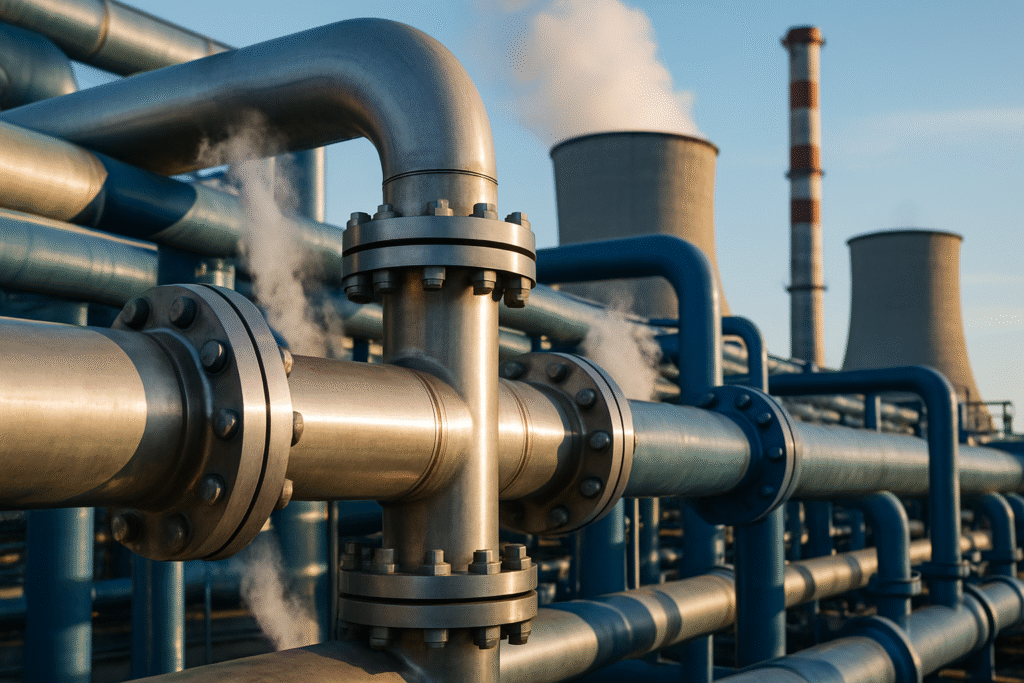
Datos de mercado de bridas de tuberías de acero inoxidable: Ventajas ocultas, Tipos comunes, Usos, y cómo elegir bridas
El mercado de bridas para tuberías de acero inoxidable se está expandiendo a medida que aumenta la confiabilidad., resistencia a la corrosión, y el valor del ciclo de vida se vuelven fundamentales para la adquisición de tuberías industriales. Según la investigación de Grand View (2024), El mercado mundial de bridas industriales se valoró en $5.8 mil millones en 2023 y se prevé que alcance $7.2 mil millones por 2030, which makes stainless steel pipe flange selection a strategic purchasing decision rather than a routine commodity buy.
Para ingenieros y gerentes de adquisiciones, the most intriguing aspect is not only price. The hidden advantages of stainless steel pipe flange solutions include lower maintenance frequency, broader media compatibility, and better long-term performance in corrosive and high-temperature service.
Impulsores del mercado industrial detrás de la demanda de bridas para tuberías de acero inoxidable
Demand for stainless steel pipe flange products is closely tied to energy, petroquímico, marina, and water infrastructure investment. Según Statista (2024), La industria del petróleo y el gas representa aproximadamente 35% del consumo global de bridas, which confirms why flange specification has direct implications for plant uptime and safety.
La capacidad de fabricación regional también da forma a la estrategia de abastecimiento. Según IBISWorld (2024), Asia-Pacífico representa más de 45% de la producción mundial de bridas, siendo China el mayor fabricante, giving buyers access to high-volume output and competitive lead times.
These numbers explain why procurement teams compare not only flange types, but also manufacturing quality systems, inspection traceability, y experiencia exportadora. In contrast to generic supply, project buyers increasingly require EN 10204 3.1 certificados de materiales, Verificación del PMI, and dimensional compliance with ASME and EN standards.
As projects become more international, standard harmonization matters more than ever. ASME B16.5 remains the core reference for NPS 1/2 a través de 24 bridas, mientras ASME B16.47 covers large-diameter flanges, y ES 1092 provides a widely used European framework (ASME, 2023; EN, 2024).
En términos prácticos, stainless steel pipe flange procurement often involves balancing corrosion resistance, clase de presión, tipo de cara, and fabrication schedule. Por lo tanto, buyers need suppliers that can manufacture weld neck, deslizarse, ciego, soldadura de encaje, roscado, and lap joint designs in 304, 316, 316l, 904l, 2205, y 2507 calificaciones.
SASA FLANGE serves this need with ISO 9001:2015 y certificaciones PED 2014/68/UE, amplia cobertura material, and export support for Oil & Gas, Petroquímico, Fuerza, Marina, y sectores de Tratamiento de Agua. Buyers evaluating supply options can review capabilities through SASA FLANGE información de la empresa and product scope through its industrial flange and fitting portfolio.
Another market factor is lifecycle economics. Según la inteligencia de Mordor (2024), corrosion-related downtime and maintenance remain among the largest avoidable costs in process industries, which is why stainless materials continue gaining share in aggressive service systems.
Además, stainless steel offers measurable value in environments exposed to chlorides, quimicos, vapor, and repeated cleaning cycles. For many users, the most common reason to choose flanges in 304 o 316 grades is not simply corrosion resistance, but predictable service life under variable operating conditions.
That is especially relevant in projects with strict inspection plans. ASTM A182 forged stainless flanges and ASTM A240 plate-derived materials are commonly specified because traceable chemistry and mechanical properties improve consistency in fabrication and operation (ASTM, 2024).
Como resultado, a well-specified stainless steel pipe flange package can reduce replacement intervals, simplify maintenance planning, and support safer operating margins. This is one of the hidden advantages often missed when decisions focus only on the lowest initial unit price.
Tipos de bridas para tuberías de acero inoxidable, Grados, y ventajas ocultas en el servicio
Understanding stainless steel pipe flange types is essential because geometry affects stress distribution, integridad de la soldadura, and installation cost. Weld neck flanges remain the preferred choice for high-pressure and cyclic service, while slip-on flanges are often selected for lower-pressure systems where fabrication simplicity matters.
Como John Breen, Ingeniero Senior de Tuberías, estados: “Flange selection is never only about material grade; geometría del cubo, frente a, alineación del orificio, and pressure class often determine long-term joint reliability.” That view aligns with ASME design practice, where the flange type must match service severity, temperatura, and assembly requirements.
Según Market Research Future (2024), industrial demand for corrosion-resistant alloy and stainless flange products is increasing at over 4% CAGR in line with stricter reliability and emissions targets. Además, según estadista (2024), process industries continue prioritizing durable piping components as maintenance budgets shift toward predictive asset management.
The most common stainless grades for industrial flange applications are 304, 304l, 316, y 316L. Sin embargo, dúplex 2205, súper dúplex 2507, 904l, Monel, Hastelloy, and Inconel become important when chloride stress corrosion cracking, servicio amargo, or highly oxidizing media are present.
Grade selection should follow the actual medium, temperatura de funcionamiento, y filosofía de tolerancia a la corrosión. Por ejemplo, 304 is widely used in general water, alimento, y servicio de productos químicos suaves, mientras 316 or 316L is often preferred for chloride-bearing environments because molybdenum improves pitting resistance.
Como Dr.. Elena Markovic, Científico de materiales, estados: “En aplicaciones de bridas, the hidden advantages of higher alloy content appear over time, because resistance to pitting, crevice attack, and heat tint degradation directly influences leak risk.” That is particularly true in offshore, marina, and aggressive washdown systems.
- 304/304l: economical and widely available for general industrial service.
- 316/316l: improved corrosion resistance for chlorides, seawater splashes, and harsher chemical exposure.
- 904l: stronger resistance in sulfuric and highly corrosive environments.
- 2205 dúplex: higher strength and better chloride resistance than austenitic 316L.
- 2507 súper dúplex: selected for severe offshore and high-chloride applications.
- A105 and A182 alloy options: used where carbon steel or alloy steel is required by service design.
Type selection matters just as much as alloy selection. The most common flange configurations each solve a different piping problem, and procurement teams should map them to process conditions rather than habit.
- Bridas con cuello soldado: mejor para alta presión, vibración, ciclo térmico, y líneas de proceso críticas.
- Bridas deslizantes: lower fabrication cost and easier alignment in non-critical service.
- Bridas ciegas: utilizado para terminar líneas, aislar sistemas, o permitir una futura expansión.
- Bridas para soldar: suitable for small-bore, tubería de alta presión.
- Bridas roscadas: practical where welding is restricted.
- Bridas para juntas traslapadas: useful when frequent dismantling or alignment flexibility is needed.
Face design also affects sealing performance. La cara elevada es común en las plantas de proceso., ring type joint is used in high-pressure critical service, and flat face is often specified for cast iron or lower-stress mating equipment (ASME B16.5, 2023).
Según la guía ASME, pressure-temperature ratings depend on material group and flange class, so buyers cannot compare Class 150 y clase 300 products by dimensions alone. Por lo tanto, proper flange selection must integrate rating class, tipo de junta, carga de perno, y temperatura de funcionamiento.
Desde una perspectiva de abastecimiento, manufacturing capability matters because dimensional accuracy drives fit-up and sealing success. SASA FLANGE fabrica bridas en 304, 316, 316l, 904l, 2205, 2507 y otros grados premium, backed by advanced CNC machining and comprehensive quality testing for export projects.
Custom requirements are also common in B2B procurement. Many EPC buyers need non-standard bores, revestimiento especial, patrones perforados, NACE MR0175-compatible material options, or combined flange-and-fitting packages for complete piping systems.
SASA FLANGE supports this model with custom sizes from 1/2 pulgada a 60 inch and factory-direct supply for flanges, codos, camisetas, reductores, y gorras. For technical discussions on drawings, clases de presión, o aleaciones especiales, buyers can connect directly through SASA FLANGE soporte técnico de ventas.
Al final, the intriguing question is not just which stainless flange is available. The better question is how to choose flanges that minimize total installed cost while preserving joint integrity for 10, 20, o incluso 30 years of service.
Estándares, Pruebas, y cumplimiento para bridas de acero inoxidable
Industrial buyers should anchor every stainless steel pipe flange purchase to recognized standards. ASME B16.5 y ASME B16.47 define dimensions, calificaciones, tolerancias, and facing requirements, mientras ASTM A182 commonly governs forged stainless steel flanges and ASTM A240 supports plate material requirements for related products (ASTM, 2024).
Los proyectos europeos e internacionales a menudo requieren EN 1092, DIN, or JIS compliance in addition to ASME. Por lo tanto, global suppliers must understand dimensional interchange limits, drilling differences, and marking requirements before production starts.
Según ISO (2023), traceability and documented quality management remain essential in pressure-containing components because nonconforming materials increase both safety and legal risk. Es por eso que ISO 9001:2015 sistemas, mill test reports, and positive material identification are now routine requirements in many tenders.
For corrosive upstream and chemical applications, NACE MR0175 o ISO 15156 may also become relevant where sulfide stress cracking is a concern. Además, PED 2014/68/EU compliance is important when products enter regulated European pressure equipment supply chains.
- ASME B16.5: pipe flanges and flanged fittings for NPS 1/2 a 24.
- ASME B16.47: bridas de acero de gran diámetro para NPS 26 a 60.
- ASTM A182: forged or rolled alloy and stainless steel flanges and forged fittings.
- ASME B16.9: factory-made wrought buttwelding fittings for elbows, camisetas, reductores, y gorras.
- EN 1092: European flange standard covering dimensions and pressure designations.
- NACE MR0175 / ISO 15156: Requisitos de materiales para entornos que contienen H2S..
Inspection planning should be equally disciplined. Most project specifications require dimensional inspection, examen visual, material traceability checks, and marking verification, while higher criticality orders may add PMI, prueba de dureza, controles de ferrita, hydrostatic test support, o inspección de testigos de terceros.
As Michael Tan, Analista de Mercados Industriales, estados: “Quality documentation has become a commercial differentiator because EPC firms increasingly score suppliers on traceability, proceso de dar un título, y capacidad de respuesta, not only on price.” That trend is especially visible in energy and offshore projects.
Documentation requirements usually include heat number traceability, EN 10204 3.1 certificate packages, and standard marking on each stainless steel pipe flange. Además, flange buyers should verify bore finish, serration, tipo de revestimiento, and drilling accuracy because these details affect gasket seating and bolt stress distribution.
SASA FLANGE integrates these compliance needs into export manufacturing with ISO 9001:2015, DEP 2014/68/UE, y anuncio 2000 aligned quality processes. Servicio 50+ países de todo el petróleo & Gas, Petroquímico, Fuerza, e industrias marinas, the company supports both standard and project-specific documentation packages.
When evaluating vendors, procurement teams should compare more than nominal specification claims. They should confirm whether the supplier can provide ASTM-compliant raw material, CNC-machined tolerances, registros de prueba, and packaging methods that protect serrated sealing surfaces during shipment.
It is also wise to verify whether the supplier can combine flanges with ASME B16.9 fittings in the same project lot. That reduces inspection complexity and supports material consistency across elbows, camisetas, reductores, gorras, and flange components.
For detailed project requirements, buyers can discuss specifications and certification needs at SASA FLANGE pagina de contacto. En paralelo, engineers can review dimensional baseline requirements directly from the ASME official website before final approval.
Guía de aplicación: Cómo elegir bridas para aceite, Gas, Químico, Fuerza, y sistemas marinos
Choosing the right stainless steel pipe flange begins with operating conditions. Presión, temperatura, química de fluidos, tamaño de línea, mecanismo de corrosión, and inspection class should all be defined before a grade or flange type is selected.
Oil and gas systems often prioritize pressure containment, sour service compliance, and resistance to chloride exposure. Por lo tanto, Bridas con cuello soldado en 316L., dúplex 2205, o súper dúplex 2507 may be preferred depending on produced water chemistry, offshore splash zones, and pipeline stress levels.
Según Statista (2024), El petróleo y el gas representan aproximadamente 35% de la demanda mundial de bridas, so field-proven reliability is critical in this sector. In many upstream and midstream applications, buyers also require material traceability and third-party inspection as standard purchasing conditions.
Chemical processing plants focus more heavily on media compatibility. 316L is common for moderate chemical service, but 904L, Hastelloy, Monel, or titanium may be required where acids, cloruros, or mixed aggressive media make standard austenitic stainless insufficient.
Power generation projects often deal with temperature cycling, vapor, and pressure fluctuation. Como resultado, weld neck flanges with carefully matched metallurgy are often selected to reduce stress concentration at the hub-to-pipe transition.
Marine and shipbuilding applications must consider salt exposure, corrosión por grietas, and washdown conditions. En estos ambientes, 316L is frequently a baseline, while duplex grades offer a stronger strength-to-weight ratio and better chloride resistance for severe duty.
- Check fluid composition, incluyendo cloruros, sulfuros, and acid concentration.
- Match flange class to design pressure and operating temperature.
- Confirm compatibility between gasket, material del perno, and flange face finish.
- Select forged or plate-based product according to project specification.
- Review whether ASME, DIN, JIS, or EN dimensions are required.
- Specify certificates, PMI, and third-party inspection before purchase order release.
Another practical issue is size range. Buyers searching for stainless steel pipe flange sizes, 4 Opciones de brida de tubería de acero inoxidable en pulgadas, or stainless steel threaded pipe flange products should verify bore schedule, espesor de brida, patrón de perforación, and face type rather than relying on nominal size descriptions alone.
Por ejemplo, a 4 inch flange may differ significantly depending on Class 150, 300, o 600 rating and whether it follows ASME B16.5 o ES 1092. Como consecuencia, dimensional checks should always reference the exact standard and pressure designation.
Procurement teams should also evaluate total package availability. Flanges rarely ship alone on major projects, and integrating elbows, camisetas, reductores, and caps from the same approved supplier can simplify quality control and logistics.
SASA FLANGE offers custom manufacturing for stainless steel flanges and related fittings in a broad material portfolio, incluido 304, 316, 316l, 904l, 2205, 2507, A105, A182, Inconel, Monel, Hastelloy, y titanio. This is useful when projects require mixed metallurgy packages or non-standard drilling and facing details.
Lead time and cost should be assessed alongside reliability. A lower-priced stainless steel pipe flange can become more expensive if poor tolerances, missing documents, or surface damage delay installation and force reinspection.
Por lo tanto, the most effective way to choose flanges is to align engineering criteria with supplier capability. Buyers who do this consistently reduce field fit-up issues, improve sealing performance, and gain better control over lifecycle cost.
Perspectivas futuras, Estrategia de compra, and Commercial Recommendations
Las perspectivas para la demanda de bridas para tubos de acero inoxidable siguen siendo positivas debido a la renovación de la infraestructura., proyectos de transición energética, and industrial resilience programs continue to support investment. Según la investigación de Grand View (2024), Se espera que el mercado crezca de $5.8 mil millones en 2023 a $7.2 mil millones por 2030, reflecting steady long-term demand.
Además, según IBISWorld (2024), Asia-Pacific already accounts for more than 45% de la producción mundial de bridas, which means sourcing strategies will continue to emphasize qualified Asian manufacturers with proven export quality systems. Sin embargo, buyers will increasingly favor suppliers that combine cost efficiency with traceability and engineering support.
One clear trend is specification tightening. EPC contractors and end users now expect faster document turnaround, PED and project certification support, and stronger material verification protocols than they did five years ago.
Another trend is bundled procurement. Instead of purchasing flanges, codos, camisetas, reductores, y gorras de múltiples proveedores, many buyers prefer integrated packages to reduce quality variation and simplify expediting.
Commercially, the most common buying mistakes remain under-specifying corrosion requirements, ignoring documentation scope, and treating all stainless grades as interchangeable. En contraste, successful procurement teams define media chemistry, calificación de clase, dimensiones, certificados, and inspection expectations before RFQ release.
Para abastecimiento estratégico, buyers should compare vendors on five criteria. These include material range, cumplimiento de normas, precisión de mecanizado, documentation quality, and delivery responsiveness.
- Standardize approved flange types by service category.
- Pre-qualify suppliers with ISO 9001:2015 and PED support.
- Pedido EN 10204 3.1 certificates and PMI for critical grades.
- Bundle flange and fitting procurement when material consistency matters.
- Evaluate lifecycle cost rather than initial unit price alone.
For companies seeking a dependable partner, SASA FLANGE combines broad grade coverage, project documentation support, and custom production for industrial piping systems. Buyers planning current or future flange packages can use SASA FLANGE to discuss technical drawings, estándares, and delivery requirements with an experienced export team.
Preguntas frecuentes
cual es mejor 304 o 420 acero inoxidable?
●Para la mayoría de aplicaciones de bridas de tuberías de acero inoxidable, 304 is the better choice because it offers stronger corrosion resistance, better weldability, and wider acceptance under industrial flange standards such as ASTM A182 y ASME B16.5.
●Según la investigación de Grand View (2024), El mercado de bridas industriales alcanzó $5.8 mil millones en 2023, and a significant share of demand comes from corrosive process systems where austenitic grades like 304 y 316 are preferred over hardenable martensitic grades such as 420.
●The main technical difference is microstructure and service intent. Calificación 304 is an austenitic stainless steel with roughly 18% cromo y 8% níquel, so it performs well in general chemical handling, tratamiento de agua, procesamiento de alimentos, y servicio de arquitectura. Calificación 420 is a martensitic stainless steel with higher carbon and lower corrosion resistance, and it is typically selected for hardness, resistencia al desgaste, and edge retention rather than flange fabrication.
●In practical piping terms, 420 is not the most common flange material because its weldability is poorer and its corrosion performance is weaker in wet or chloride-containing environments. Engineers usually avoid 420 for process flanges unless a very specific mechanical requirement exists and corrosion exposure is limited.
●As materials specialists often note, flange materials must be selected for sealing reliability over time, not only for hardness. Por lo tanto, if your system handles water, vapor, químicos suaves, or washdown service, 304 is generally the more reliable and economical choice, mientras 316 or duplex grades may be even better where chlorides are present.
●For projects requiring certified forged stainless flanges, traceable chemistry, y cumplimiento dimensional, trabajando con fabricantes establecidos como SASA FLANGE helps ensure the grade matches the real service conditions and standard requirements.
¿Cómo puedo saber si mi acero inoxidable es 304 o 316?
●You usually cannot confirm whether a stainless steel pipe flange is 304 o 316 by visual inspection alone because both grades look very similar after machining, decapado, o pasivación.
●According to ISO and common industrial QA practice, the most reliable identification methods are mill test certificates, identificación positiva del material, and laboratory chemical analysis, especially when the part is pressure-containing or used in regulated projects.
●The key compositional difference is molybdenum. Calificación 316 normally contains about 2% a 3% molibdeno, mientras 304 does not, and that extra alloying gives 316 better resistance to pitting and crevice corrosion in chloride environments. Portable PMI devices based on XRF technology can often detect this difference quickly in warehouses, fabrication shops, and project sites.
●Procurement teams should not rely on spark tests, magnets, or color differences because those methods are inaccurate for distinguishing austenitic stainless grades in flange service. Even stamped markings can be misleading if parts were mixed after machining or if traceability was lost during storage.
●According to industry analysts, documentation control is becoming more important across piping supply chains because wrong-grade installation can lead to expensive rework and corrosion failure. That is one reason EPC firms frequently require EN 10204 3.1 certificados, trazabilidad del número de calor, and PMI for 316L, dúplex, and other critical materials.
●If you need certainty before installation, request MTC review and PMI verification from a qualified supplier or third-party inspector. For projects that require traceable 304, 316, 316l, 2205, o 2507 bridas, contactando SASA FLANGE is a practical way to secure documented material conformity and project-level QA support.
¿Cuáles son los 5 tipos de acero inoxidable?
●Las cinco familias principales de acero inoxidable son austeníticas., ferrítico, martensítico, dúplex, y aceros inoxidables endurecidos por precipitación, and each group serves different industrial flange and piping requirements.
●According to ASTM and common materials engineering classifications, grados austeníticos como 304 y 316 are the most widely used in flange production because they combine corrosion resistance, ductilidad, and good weldability.
●Austenitic stainless steels include 304, 304l, 316, 316l, 321, y 347, and they dominate process piping because they perform well across many chemical and temperature conditions. Ferritic grades contain chromium but little or no nickel, so they offer moderate corrosion resistance and lower cost, yet they are less common in critical flange applications. Martensitic grades such as 410 y 420 can be heat treated for hardness, but they are not usually the first choice for corrosion-focused flange service.
●Duplex stainless steels such as 2205 y 2507 combine austenitic and ferritic structures, delivering higher strength and strong resistance to chloride stress corrosion cracking. Precipitation-hardening grades are used where very high strength is required, but they are more specialized and less common in standard pipe flange procurement.
●Según Market Research Future (2024), demand for higher-performance corrosion-resistant materials is growing as asset owners target longer service life and lower maintenance costs. That trend supports greater use of duplex and super duplex alloys in offshore, desalinización, and aggressive chemical systems.
●For most common industrial stainless steel pipe flange orders, buyers choose between austenitic and duplex grades based on corrosion severity, clase de presión, y objetivos de costos. If you need help selecting among 304, 316l, 904l, 2205, o 2507 for a project-specific application, an experienced supplier like SASA FLANGE can align material family choice with standards, condiciones de servicio, y requisitos de inspección.
¿Qué es el Código ASME para bridas de acero inoxidable??
●The primary ASME standards for stainless steel pipe flange dimensions and ratings are ASME B16.5 para NPS 1/2 a través de 24 y ASME B16.47 for large diameters from NPS 26 a través de 60.
●ASTM A182 is also commonly specified because it covers forged or rolled alloy and stainless steel flanges, accesorios forjados, y válvulas para servicio de alta temperatura, making it one of the most important material standards for stainless flanges.
●Buyers should understand that ASME and ASTM play different but complementary roles. ASME B16.5 and B16.47 define dimensional requirements, clasificaciones de presión-temperatura, detalles enfrentados, tolerancias, y patrones de pernos, mientras ASTM A182 defines material chemistry, propiedades mecánicas, tratamiento térmico, y requisitos de prueba. In many project documents, both standards appear together because one controls geometry and the other controls material compliance.
●Other relevant standards may include ASME B16.9 for buttweld fittings, EN 1092 para dimensiones de brida europeas, y NACE MR0175 o ISO 15156 para materiales de servicio ácidos. Por lo tanto, the full specification for a stainless flange package often includes more than one code or standard reference.
●Según la práctica ASME, pressure class selection must consider both material group and temperature, entonces una clase 300 flange cannot be evaluated only by nominal size. This is a critical point for procurement teams comparing quotations across different mills or international suppliers.
●The best approach is to specify the exact standard, calificación, frente a, clase, aburrir, and documentation package in the RFQ. For ASME-compliant stainless steel pipe flange supply with supporting certificates and export documentation, fabricantes como SASA FLANGE can provide clearer compliance alignment from quotation through shipment.
¿Cuáles son los tipos de bridas de acero inoxidable más comunes??
●Los tipos de bridas de acero inoxidable más comunes son las de cuello soldado., deslizarse, ciego, soldadura de encaje, roscado, y junta de regazo, and each type is designed for a different balance of strength, installation effort, y acceso de mantenimiento.
●Según Statista (2024), El sector del petróleo y el gas representa aproximadamente 35% del consumo global de bridas, and that helps explain why weld neck flanges remain especially common in high-pressure and cyclic service.
●Weld neck flanges are favored where stress concentration must be minimized, such as refinery lines, tubería de energía, and critical process systems. Slip-on flanges are often selected for lower-pressure service because they are easier to fit and typically less expensive to install. Blind flanges are used to close the end of a pipe, isolate a section of line, or allow future modifications.
●Socket weld flanges are widely used in smaller bore, aplicaciones de alta presión, while threaded flanges are useful where welding is undesirable or restricted. Bridas para juntas traslapadas, used with stub ends, are helpful in systems that require frequent dismantling or rotational alignment during assembly.
●Face type is also important. Raised face is the most common for industrial process service, while ring type joint faces are used in higher-pressure applications requiring metal-to-metal gasket engagement under controlled bolt load.
●To choose correctly, buyers should match flange type to process pressure, nivel de vibración, ciclos de temperatura, inspection class, y estrategia de mantenimiento. Para proyectos que involucran tipos de bridas de acero inoxidable, guarniciones, and custom drilling or facing details, a supplier like SASA FLANGE can help standardize selection across entire piping packages.
How do I select stainless steel pipe flange sizes, dimensiones, y bridas reductoras?
●Stainless steel pipe flange sizes and dimensions must be selected by referencing the exact standard, nominal pipe size, clase de presión, tipo de revestimiento, and bore schedule rather than by nominal diameter alone.
●ASME B16.5 governs most common sizes from NPS 1/2 a 24, mientras ASME B16.47 cubre diámetros más grandes, and dimensional differences between Class 150, 300, 600, and higher ratings can be substantial even for the same nominal size.
●Por ejemplo, a 4 inch stainless steel pipe flange can vary in outside diameter, espesor, círculo de pernos, and hub dimensions depending on its class and type. Buyers searching for stainless steel flange dimensions or stainless steel flange for sale should therefore verify whether the product is weld neck, deslizarse, ciego, roscado, or socket weld and whether the bore matches Schedule 10S, 40S, or another wall thickness. This is also important for gasket fit and bolt selection.
●Reducing flanges deserve special attention because they connect a larger flange size to a smaller pipe bore. They can save space and reduce the number of fittings, but engineers must check turbulence, velocity change, and stress effects before using them in critical service.
●According to industry best practice, dimensional errors remain one of the most common causes of site installation delays because bolt misalignment and wrong bore schedules prevent direct fit-up. Como resultado, many procurement teams now request approval drawings and detailed dimensional inspection reports before shipment.
●The most effective purchasing method is to submit your line size, cronograma, clase, tipo de cara, and standard together with any reducing flange requirement. If you need stainless steel pipe flange sizes from 1/2 pulgada a 60 inch with project documentation and custom machining, SASA FLANGE can support both standard and non-standard dimensional requirements.
Posts Relacionados
Acabado de la cara de la brida: Dentados concéntricos versus espirales explicados
Los dentados concéntricos y en espiral son acabados de cara de brida mecanizados.…
Dúplex 2205 frente a bridas 316L: ¿Qué material debería elegir??
respuesta rapida: Dúplex 2205 Las bridas suelen ser el candidato más fuerte.…

Definición de brida de orificio, Detalles y descripción general de bridas ASME B16.36: Datos de mercado, Guía de selección e información sobre cumplimiento
El mercado mundial de bridas industriales se valoró en $5.8 mil millones…

Guía del mercado de bridas de eliminación negras: Materiales, 3.5″ Compatibilidad, y datos de abastecimiento B2B para bridas de fregaderos de cocina
La demanda de bridas de eliminación negras está aumentando a medida que los compradores de accesorios de cocina…