
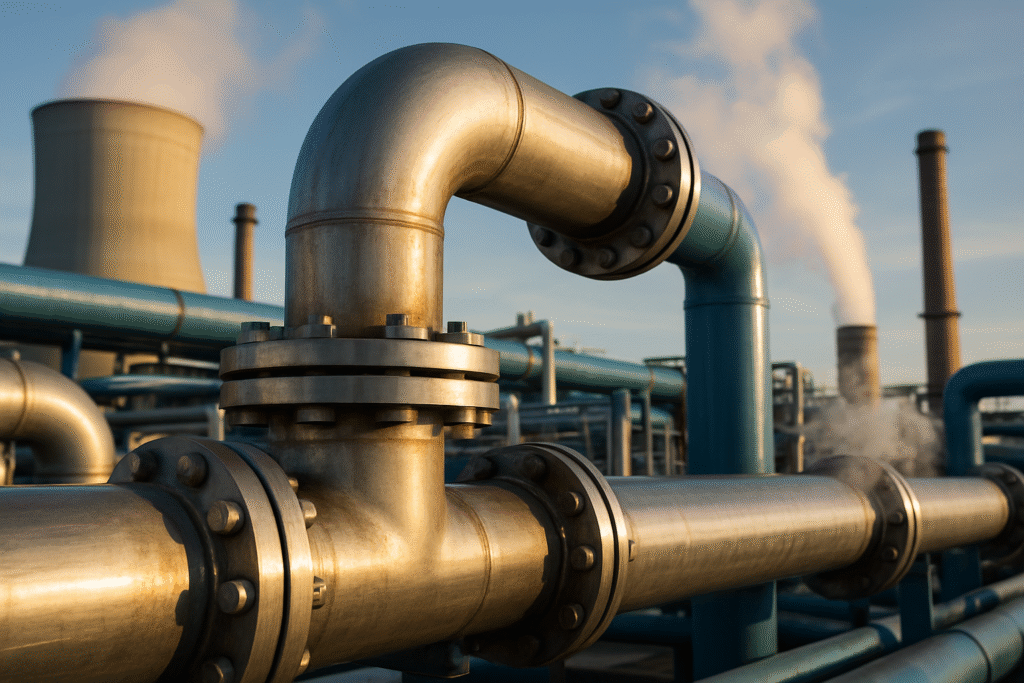
Mercado de bridas de tubería de acero inoxidable para alcanzar $7.2 mil millones por 2030: Ventajas ocultas intrigantes, Tipos, Usos, y cómo elegir diferentes bridas
La brida de tubería de acero inoxidable sigue siendo uno de los componentes de conexión más especificados en tuberías de proceso., y su importancia continúa creciendo con la inversión industrial global. Según la investigación de Grand View (2024), El mercado mundial de bridas industriales se valoró en $5.8 mil millones en 2023 y se prevé que alcance $7.2 mil millones por 2030.
Para gerentes de adquisiciones e ingenieros de tuberías, que el crecimiento refleja una realidad práctica. Inoxidable, resistente a la corrosión, pressure-rated flanges are still the most common choice for critical services across oil and gas, petroquímico, fuerza, marina, y sistemas de tratamiento de agua.
Global demand trends shaping stainless steel pipe flange procurement
Industrial buyers are purchasing more engineered flange solutions because project specifications are becoming stricter. Según IBISWorld (2024), Asia-Pacífico representa más de 45% de la producción mundial de bridas, siendo China el mayor fabricante.
That regional concentration matters for sourcing strategy. Afecta los tiempos de entrega, raw material access, capacidad de mecanizado, and factory-direct pricing for standard and custom stainless steel pipe flange orders.
End-use demand also remains strong in heavy industry. Según Statista (2024), La industria del petróleo y el gas representa aproximadamente 35% del consumo global de bridas, which explains why ASME-rated forged flanges dominate many project specifications.
Además, corrosion management is now a board-level concern in refining, costa afuera, y procesamiento químico. NACE guidance continues to influence material selection where chloride attack, servicio amargo, or crevice corrosion can shorten asset life (NACE, 2023).
Como resultado, buyers increasingly compare not only price, pero también trazabilidad, proceso de dar un título, y metalurgia. A stainless steel pipe flange may look simple, yet the wrong grade or facing can cause leakage, bolt relaxation, or accelerated corrosion.
Many EPC contractors now favor suppliers that combine broad standards coverage with documented quality systems. Con ISO 9001:2015 y certificaciones PED 2014/68/UE, SASA FLANGE supports these requirements with controlled manufacturing and inspection procedures.
Además, buyers need suppliers that can support global standards without delaying project schedules. SASA FLANGE manufactures flanges in ANSI B16.5, ANSI B16.47, DIN, JIS, GOST, y ES 1092 configurations for diverse plant and export requirements.
Market growth is also linked to infrastructure modernization. Según la inteligencia de Mordor (2024), global investment in water and wastewater treatment equipment continues to rise at more than 6% CAGR, increasing demand for stainless steel flanges and fittings in corrosion-prone systems.
Procurement teams therefore need a supplier that can align metallurgy, clase de presión, y documentación. Respaldado por mecanizado CNC avanzado y pruebas de calidad integrales, SASA FLANGE serves projects requiring EN 10204 3.1 documentación, PMI, verificación hidrostática, y controles dimensionales.
In contrast to generic traders, qualified manufacturers can also advise on hidden advantages such as service life, maintenance reduction, and compatibility with mating components. That technical support often reduces total installed cost even when the unit price is not the lowest.
Intriguing stainless steel pipe flange types, materiales, and hidden performance advantages
The most common flange materials are 304, 304l, 316, and 316L because they balance corrosion resistance, soldabilidad, and commercial availability. Sin embargo, different services demand different grades, and engineers should never assume that all stainless flanges perform the same.
Según la práctica de materiales ASTM y ASME., forged stainless flanges are commonly supplied to ASTM A182 requirements for pressure parts, while related plate products may reference ASTM A240 for chemistry and mechanical properties (ASTM, 2024). Por lo tanto, buyers should verify whether the project calls for forged or plate-derived components.
Como John Breen, Ingeniero Senior de Tuberías, estados: “A flange failure is rarely just a flange issue; it is usually a mismatch between material, clase de presión, frente a, and actual process conditions.” That is why technical review should precede every bulk purchase.
The hidden advantages of a properly specified stainless steel pipe flange include lower maintenance frequency, stronger oxidation resistance, better compatibility with hygienic cleaning, and improved reliability in wet or chloride-laden service. En muchas plantas, those gains outweigh initial material premiums within one shutdown cycle.
Material selection usually begins with corrosion mechanism and temperature range. 304 and 304L are widely used in general industrial, alimento, and water applications, mientras 316 and 316L add molybdenum for improved resistance in chloride-containing environments.
Higher-alloy grades serve more demanding conditions. Por ejemplo, 904l, 2205, y 2507 are selected for aggressive media, exposición al agua de mar, or higher strength demands, while nickel alloys such as Inconel, Monel, and Hastelloy support severe chemical and thermal service.
- 304/304l: economical and widely available for general corrosion service.
- 316/316l: better pitting resistance in chloride-bearing environments.
- 904l: stronger resistance to reducing acids and severe corrosion.
- 2205 dúplex: higher strength and improved chloride stress corrosion resistance.
- 2507 súper dúplex: preferred for marine, costa afuera, and high-chloride systems.
Flange type matters as much as material. Weld neck flanges perform best in cyclic pressure and temperature service because the tapered hub distributes stress more evenly.
Slip-on flanges are easier to align and often cost less to install, although they are generally less fatigue-resistant than weld neck designs. Threaded flanges suit low-pressure systems where welding is undesirable, while blind flanges close off line ends or vessel nozzles.
Socket weld flanges are often chosen for smaller bore, tubería de mayor presión. Bridas para juntas traslapadas, by comparison, help where frequent dismantling or expensive alloy stub ends justify easier alignment.
- Brida con cuello para soldar: mejor para alta presión, temperatura alta, and vibration service.
- Brida deslizante: common for utility lines and moderate service conditions.
- Brida ciega: utilizado para aislamiento, acceso de mantenimiento, and hydrotesting.
- Brida roscada: useful where welding is restricted or impractical.
- Brida para soldar: suitable for small-bore high-pressure systems.
- Brida de junta solapada: preferred for systems requiring frequent inspection or disassembly.
Según Market Research Future (2024), corrosion-resistant alloy components are seeing above-average growth in offshore and chemical processing segments due to stricter lifecycle cost analysis. That trend supports broader use of duplex and high-alloy flange grades in new projects.
Como Dr.. Elena Markovic, Científico de materiales, estados: “The true value of stainless selection lies in matching alloy chemistry to the process environment, not simply choosing the highest chromium number.” En otras palabras, intelligent specification delivers better economics than over-specification.
Dimensions and pressure classes must also match the code design basis. ASME B16.5 covers many flanges from NPS 1/2 a través de 24, mientras ASME B16.47 addresses larger diameters typically from NPS 26 a través de 60 (ASME, 2024).
Face type directly affects sealing performance. Raised face remains the most common in industrial service, while ring type joint is preferred for high-pressure and high-temperature applications that require a metal-to-metal seal.
For hygienic or low-pressure systems, flat face or specific gasket arrangements may be more appropriate. Por lo tanto, flange selection should always be evaluated together with gasket material, grado de perno, torque procedure, and flange finish.
Manufacturing quality is another differentiator. SASA FLANGE manufactures stainless steel flanges in 304, 316, 316l, 904l, 2205, y 2507, along with carbon steel and alloy grades, ofreciendo tamaños personalizados desde 1/2" a 60" con precios competitivos directos de fábrica.
Además, serious buyers should assess machining tolerances, preparación de bisel, Capacidad PMI, and heat number traceability. These details become critical when supplying refinery shutdowns, patines en alta mar, plantas desalinizadoras, or PED-governed export projects.
ASME, ASTM, DIN, and EN requirements for stainless steel pipe flange compliance
Standards are not optional in industrial procurement. They define dimensions, clasificaciones de presión-temperatura, tolerancias, materiales, calificación, and inspection requirements that protect safety and interchangeability.
For North American and many international projects, ASME B16.5 y ASME B16.47 remain the key dimensional standards for flanges. Material compliance often references ASTM A182 para bridas de acero inoxidable y aleado forjado, while pipe fittings commonly follow ASME B16.9.
Los proyectos europeos hacen referencia frecuente a EN 1092 para dimensiones de bridas y designaciones de presión. German and broader continental applications may also require DIN-based practices, while marine and project export packages can include DNV, DEP, or AD 2000 documentación.
Según el marco PED de la Comisión Europea, pressure equipment placed on the EU market must meet essential safety requirements and conformity assessment obligations (DEP 2014/68/UE). Por lo tanto, documentation discipline is as important as machining accuracy for international shipments.
- ASME B16.5: flange dimensions and ratings for smaller nominal pipe sizes.
- ASME B16.47: larger diameter flange dimensions and ratings.
- ASTM A182: forged or rolled alloy and stainless steel pipe flanges and fittings.
- ASME B16.9: Accesorios forjados para soldadura a tope fabricados en fábrica..
- EN 1092: European flange system with PN designations.
- NACE MR0175: material guidance for sour service environments where applicable.
Engineers should also review corrosion-service requirements when hydrogen sulfide or chlorides are present. NACE MR0175 and related project specifications can limit hardness, elección de aleación, and heat treatment route for wetted components.
That is especially important in upstream oil and gas, where sour service can rapidly expose poor material decisions. Según Statista (2024), oil and gas still accounts for roughly 35% del consumo global de bridas, which keeps NACE and ASME compliance central to purchasing decisions.
When comparing standards, buyers should understand that pressure classes and PN ratings are not directly interchangeable without engineering review. una clase 150 ASME flange is not simply the same as a PN16 or PN20 flange in every duty case.
The following comparison points help clarify specification logic:
- ASME Class system uses ratings such as 150, 300, 600, 900, 1500, y 2500.
- EN systems use PN designations such as PN10, PN16, PN25, y PN40.
- Facing forms, patrones de perforación, and thicknesses vary by standard.
- Material naming conventions differ between ASTM, EN, and DIN systems.
Quality documents should also be checked before order release. Typical requirements include EN 10204 3.1 certificados de prueba de molino, informes dimensionales, Resultados del PMI, controles de dureza, hydrotest records where applicable, and coating or marking verification.
Con ISO 9001:2015, DEP 2014/68/UE, y anuncio 2000 certificaciones, SASA FLANGE supports customers that require traceable documentation for global projects. Además, its production scope includes stainless steel flanges, bridas de acero al carbono, bridas de aleación, y accesorios de tuberías como codos, camisetas, reductores, y gorras.
Authoritative standard references should always be consulted during specification review, especially for critical lines. Buyers can verify current dimensional and code requirements directly through ASME and related standards bodies before issuing purchase orders.
How to choose the right stainless steel pipe flange for different industrial uses
The right flange choice depends on fluid chemistry, temperatura, clase de presión, piping code, filosofía de mantenimiento, y costo total instalado. Como consecuencia, engineers should evaluate the full operating envelope instead of focusing only on material price.
En el servicio de petróleo y gas., Bridas con cuello soldado en 316L., dúplex, or specified alloy grades are often preferred for vibration resistance and stronger fatigue performance. Sour service or offshore duty may require NACE review, higher alloy content, and stricter testing protocols.
En plantas petroquímicas, media compatibility drives selection. Cloruros, compuestos de azufre, ácidos orgánicos, and elevated temperatures can quickly eliminate lower-grade materials from consideration.
Para la generación de energía, thermal cycling is often the dominant factor. Por lo tanto, tipo de brida, carga de pernos, and creep or oxidation behavior become as important as baseline corrosion resistance.
In marine and shipbuilding systems, seawater exposure often pushes engineers toward 316L, 2205, o 2507 depending on chloride concentration and design life targets. According to DNV practice, seawater systems require careful corrosion management and material pairing to reduce galvanic and pitting risks (DNV, 2023).
Los proyectos de tratamiento de agua y desalinización también exigen una cuidadosa selección de aleaciones.. Duplex and super duplex options often deliver better lifecycle performance in brine handling, patines de ósmosis inversa, and coastal installations.
- Confirm process fluid, nivel de cloruro, and pH before selecting grade.
- Match flange standard to piping code and mating component standard.
- Choose pressure class based on design pressure and temperature.
- Verify facing type with gasket design and bolt load requirements.
- Revisar el método de soldadura., necesidades PWHT, y restricciones de instalación.
- Specify documentation such as EN 10204 3.1, PMI, and hardness testing.
Size availability is another practical consideration, especially for shutdown work and OEM production schedules. Buyers often search for stainless steel pipe flange sizes, 4 Opciones de brida de tubería de acero inoxidable en pulgadas, and stainless steel threaded pipe flange configurations because project timing depends on stock and machining responsiveness.
Custom manufacturing can solve unusual specification challenges. Por ejemplo, plants may need non-standard drilling, reducing flanges, revestimientos especiales, long weld necks, or mixed-material packages that include matching elbows, camisetas, reductores, y gorras.
SASA FLANGE supports these requirements through flexible production and broad material coverage. Servicio 50+ países de todo el petróleo & Gas, Petroquímico, Fuerza, e industrias marinas, the company also provides support for forged stainless, acero carbono, aleación, aleación de níquel, and titanium flange requirements.
Procurement teams should also compare inspection capability when reviewing stainless steel pipe flange suppliers. Competitive offers are valuable, yet rework, nonconformance, and late documents can erase any apparent savings.
A disciplined sourcing process usually includes supplier qualification, revisión de dibujo, raw material verification, sample approval where needed, y documentación de lanzamiento final. Buyers can review manufacturing scope and product categories at SASA FLANGE productos y antecedentes de la empresa en SASA FLANGE sobre nosotros.
Perspectivas futuras para los compradores de bridas para tuberías de acero inoxidable y recomendaciones de abastecimiento estratégico
The future of the stainless steel pipe flange market is closely tied to energy transition, infraestructura de agua, petrochemical upgrades, and regional reshoring strategies. Según la investigación de Grand View (2024), Se espera que el mercado se expanda desde $5.8 mil millones en 2023 a $7.2 mil millones por 2030.
That trajectory means procurement pressure will remain high. Buyers should expect continued volatility in stainless input costs, longer lead times for premium alloys, and greater emphasis on traceable quality records.
Según IBISWorld (2024), Asia-Pacific already accounts for more than 45% de la producción mundial de bridas, so supplier diversification and early scheduling are becoming more important. Además, material demand from oil and gas, marina, and water treatment remains resilient across many regions.
Estratégicamente, the most effective buyers standardize specifications where possible and reserve exotic alloys for truly demanding services. This approach reduces unnecessary cost while protecting reliability in the lines that matter most.
- Precalificar proveedores con ISO 9001:2015 and relevant export certifications.
- Request clear compliance to ASME, ASTM, DIN, EN, y estándares específicos del proyecto.
- Align flange, empaquetadora, atornillar, and pipe materials during technical review.
- Plan long-lead alloy purchases earlier than commodity stainless items.
- Utilice el costo del ciclo de vida, no solo el precio unitario, for final vendor evaluation.
As industrial systems become more data-driven, sourcing decisions are becoming more evidence-based as well. Por lo tanto, manufacturers that combine technical advice, broad standards coverage, and dependable documentation will gain a stronger share of global project business.
For buyers comparing different flange suppliers, the most practical next step is a technical-commercial review with an experienced manufacturer. For projects requiring certified stainless steel flanges, tamaños personalizados, and responsive export support, trabajando con SASA FLANGE can simplify qualification and procurement.
Preguntas frecuentes
cual es mejor 304 o 420 acero inoxidable?
●304 stainless steel is generally better for a stainless steel pipe flange because it offers stronger corrosion resistance and broader industrial acceptance than 420 in wet and chemical environments.
●According to ASTM material practice and common industrial usage, 304 is the most common austenitic stainless grade for general piping components, mientras 420 is a martensitic grade used more often where hardness and wear resistance are priorities.
●Engineers should choose 304 for most flange applications and request expert support from established manufacturers like SASA FLANGE when corrosion resistance, soldabilidad, and code compliance are required.
¿Qué es el Código ASME para bridas de acero inoxidable??
●Los principales estándares dimensionales ASME para bridas de acero inoxidable son ASME B16.5 y ASME B16.47, while material requirements are commonly linked to ASTM A182 para bridas forjadas.
●ASME B16.5 normalmente cubre NPS 1/2 a través de 24 y ASME B16.47 cubre diámetros más grandes, so buyers must match the correct standard to the project size range and pressure class.
●Procurement teams should verify dimensions, frente a, clasificación de presión, and material compliance before purchase, especially for export projects that also require EN 1092 or PED documentation.
¿Para qué se utilizan las bridas de acero inoxidable??
●Las bridas de acero inoxidable se utilizan para conectar tuberías., valvulas, zapatillas, and equipment in systems that require leak-tight assembly, acceso de mantenimiento, and pressure-rated performance.
●Según Statista (2024), El sector del petróleo y el gas representa aproximadamente 35% del consumo global de bridas, which shows how important flanges are in critical process industries.
●Buyers should select flange type, grado del material, and pressure class based on media, temperatura, and maintenance requirements to achieve safe long-term performance.
¿Cuáles son los 5 tipos de acero inoxidable?
●Las cinco familias principales de acero inoxidable son austeníticas., ferrítico, martensítico, dúplex, and precipitation-hardening stainless steel.
●Grados austeníticos como 304 y 316 are the most common for industrial flange applications because they combine corrosion resistance, tenacidad, y soldabilidad.
●For chloride-rich or high-strength service, engineers should evaluate duplex or higher-alloy options and confirm the final choice against project standards and process data.
¿Cuáles son los tipos de bridas de acero inoxidable más comunes??
●Los tipos de bridas de acero inoxidable más comunes son las de cuello soldado., deslizarse, ciego, roscado, soldadura de encaje, y bridas para juntas traslapadas.
●Weld neck and slip-on designs are the most common in industrial piping because they balance performance, practicidad de instalación, and market availability across many sizes.
●Engineers should match flange type to pressure, carga cíclica, necesidades de mantenimiento, and fabrication method before placing an order.
How do I choose stainless steel pipe flange sizes and pressure ratings?
●Stainless steel pipe flange sizes and ratings should be selected by matching nominal pipe size, cronograma, presión de diseño, temperatura de diseño, and the governing dimensional standard.
●ASME B16.5 pressure classes commonly include 150, 300, 600, 900, 1500, y 2500, and each class has different pressure-temperature limits depending on the material group.
●Para proyectos críticos, buyers should confirm dimensional compatibility, asiento de junta, and certification requirements with a qualified manufacturer before final approval.
Posts Relacionados
Acabado de la cara de la brida: Dentados concéntricos versus espirales explicados
Los dentados concéntricos y en espiral son acabados de cara de brida mecanizados.…
Dúplex 2205 frente a bridas 316L: ¿Qué material debería elegir??
respuesta rapida: Dúplex 2205 Las bridas suelen ser el candidato más fuerte.…

Definición de brida de orificio, Detalles y descripción general de bridas ASME B16.36: Datos de mercado, Guía de selección e información sobre cumplimiento
El mercado mundial de bridas industriales se valoró en $5.8 mil millones…

Guía del mercado de bridas de eliminación negras: Materiales, 3.5″ Compatibilidad, y datos de abastecimiento B2B para bridas de fregaderos de cocina
La demanda de bridas de eliminación negras está aumentando a medida que los compradores de accesorios de cocina…