
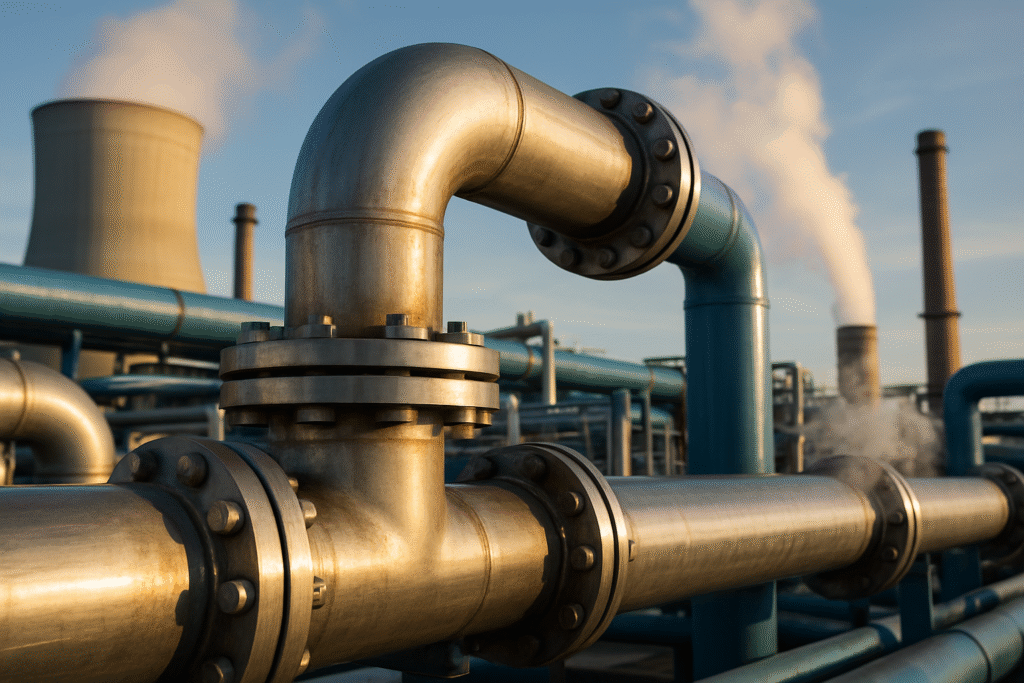
ตลาดหน้าแปลนท่อสแตนเลสที่จะเข้าถึง $7.2 พันล้านโดย 2030: ข้อดีที่ซ่อนอยู่อันน่าทึ่ง, ประเภท, การใช้งาน, และวิธีการเลือกหน้าแปลนแบบต่างๆ
หน้าแปลนท่อสแตนเลสยังคงเป็นหนึ่งในส่วนประกอบการเชื่อมต่อที่ระบุมากที่สุดในกระบวนการวางท่อ, และความสำคัญของมันยังคงเติบโตอย่างต่อเนื่องพร้อมกับการลงทุนภาคอุตสาหกรรมทั่วโลก. จากการวิจัยของแกรนด์วิว (2024), ตลาดหน้าแปลนอุตสาหกรรมทั่วโลกมีมูลค่าอยู่ที่ $5.8 พันล้านใน 2023 และคาดว่าจะไปถึง $7.2 พันล้านโดย 2030.
สำหรับผู้จัดการฝ่ายจัดซื้อและวิศวกรระบบท่อ, การเติบโตดังกล่าวสะท้อนถึงความเป็นจริงในทางปฏิบัติ. สแตนเลส, ทนต่อการกัดกร่อน, pressure-rated flanges are still the most common choice for critical services across oil and gas, ปิโตรเคมี, พลัง, ทะเล, และระบบบำบัดน้ำ.
Global demand trends shaping stainless steel pipe flange procurement
Industrial buyers are purchasing more engineered flange solutions because project specifications are becoming stricter. อ้างอิงจาก IBISWorld (2024), บัญชีเอเชียแปซิฟิกมีมากกว่า 45% ของการผลิตหน้าแปลนทั่วโลก, โดยจีนเป็นผู้ผลิตรายใหญ่ที่สุด.
ความเข้มข้นของภูมิภาคนั้นมีความสำคัญต่อกลยุทธ์การจัดหา. มันส่งผลต่อระยะเวลารอคอย, การเข้าถึงวัตถุดิบ, กำลังการผลิตเครื่องจักร, and factory-direct pricing for standard and custom stainless steel pipe flange orders.
End-use demand also remains strong in heavy industry. ตามสถิติของสตาติสต้า (2024), อุตสาหกรรมน้ำมันและก๊าซมีสัดส่วนประมาณ 35% ของการบริโภคหน้าแปลนทั่วโลก, which explains why ASME-rated forged flanges dominate many project specifications.
นอกจากนี้, corrosion management is now a board-level concern in refining, นอกชายฝั่ง, และการแปรรูปทางเคมี. NACE guidance continues to influence material selection where chloride attack, บริการเปรี้ยว, or crevice corrosion can shorten asset life (เนซ, 2023).
ส่งผลให้, buyers increasingly compare not only price, แต่ยังสามารถตรวจสอบย้อนกลับได้, การรับรอง, และโลหะวิทยา. หน้าแปลนท่อสแตนเลสอาจดูเรียบง่าย, yet the wrong grade or facing can cause leakage, การผ่อนคลายแบบสายฟ้า, or accelerated corrosion.
Many EPC contractors now favor suppliers that combine broad standards coverage with documented quality systems. กับ ISO 9001:2015 และการรับรอง PED 2014/68/EU, SASA FLANGE supports these requirements with controlled manufacturing and inspection procedures.
นอกจากนี้, buyers need suppliers that can support global standards without delaying project schedules. SASA FLANGE ผลิตหน้าแปลนใน ANSI B16.5, ANSI B16.47, DIN, JIS, GOST, และภาษาอังกฤษ 1092 configurations for diverse plant and export requirements.
Market growth is also linked to infrastructure modernization. ตามข้อมูลของ Mordor Intelligence (2024), global investment in water and wastewater treatment equipment continues to rise at more than 6% CAGR, increasing demand for stainless steel flanges and fittings in corrosion-prone systems.
Procurement teams therefore need a supplier that can align metallurgy, ระดับความดัน, และเอกสารประกอบ. ได้รับการสนับสนุนจากเครื่องจักร CNC ขั้นสูงและการทดสอบคุณภาพที่ครอบคลุม, SASA FLANGE serves projects requiring EN 10204 3.1 เอกสารประกอบ, พีเอ็มไอ, การตรวจสอบอุทกสถิต, และการตรวจสอบมิติ.
ตรงกันข้ามกับผู้ค้าทั่วไป, qualified manufacturers can also advise on hidden advantages such as service life, maintenance reduction, และความเข้ากันได้กับส่วนประกอบการผสมพันธุ์. That technical support often reduces total installed cost even when the unit price is not the lowest.
Intriguing stainless steel pipe flange types, วัสดุ, and hidden performance advantages
The most common flange materials are 304, 304ล, 316, and 316L because they balance corrosion resistance, ความสามารถในการเชื่อม, and commercial availability. อย่างไรก็ตาม, different services demand different grades, and engineers should never assume that all stainless flanges perform the same.
ตามแนวทางปฏิบัติของวัสดุ ASTM และ ASME, forged stainless flanges are commonly supplied to ASTM A182 requirements for pressure parts, ในขณะที่ผลิตภัณฑ์แผ่นที่เกี่ยวข้องอาจอ้างอิง ASTM A240 for chemistry and mechanical properties (ASTM, 2024). ดังนั้น, buyers should verify whether the project calls for forged or plate-derived components.
ดังเช่นจอห์น บรีน, วิศวกรท่ออาวุโส, รัฐ: “A flange failure is rarely just a flange issue; it is usually a mismatch between material, ระดับความดัน, หันหน้าไปทาง, and actual process conditions.” That is why technical review should precede every bulk purchase.
The hidden advantages of a properly specified stainless steel pipe flange include lower maintenance frequency, ต้านทานการเกิดออกซิเดชันที่แข็งแกร่งขึ้น, better compatibility with hygienic cleaning, and improved reliability in wet or chloride-laden service. ในพืชหลายชนิด, those gains outweigh initial material premiums within one shutdown cycle.
Material selection usually begins with corrosion mechanism and temperature range. 304 and 304L are widely used in general industrial, อาหาร, and water applications, ในขณะที่ 316 and 316L add molybdenum for improved resistance in chloride-containing environments.
Higher-alloy grades serve more demanding conditions. ตัวอย่างเช่น, 904ล, 2205, และ 2507 are selected for aggressive media, การสัมผัสกับน้ำทะเล, or higher strength demands, while nickel alloys such as Inconel, โมเนล, and Hastelloy support severe chemical and thermal service.
- 304/304ล: economical and widely available for general corrosion service.
- 316/316ล: better pitting resistance in chloride-bearing environments.
- 904ล: stronger resistance to reducing acids and severe corrosion.
- 2205 ดูเพล็กซ์: ความแข็งแรงสูงขึ้นและทนต่อการกัดกร่อนจากความเค้นคลอไรด์ได้ดีขึ้น.
- 2507 ซูเปอร์ดูเพล็กซ์: ที่ต้องการสำหรับทะเล, นอกชายฝั่ง, and high-chloride systems.
Flange type matters as much as material. Weld neck flanges perform best in cyclic pressure and temperature service because the tapered hub distributes stress more evenly.
Slip-on flanges are easier to align and often cost less to install, although they are generally less fatigue-resistant than weld neck designs. Threaded flanges suit low-pressure systems where welding is undesirable, while blind flanges close off line ends or vessel nozzles.
Socket weld flanges are often chosen for smaller bore, ท่อแรงดันสูง. หน้าแปลนร่วมตัก, by comparison, help where frequent dismantling or expensive alloy stub ends justify easier alignment.
- หน้าแปลนคอเชื่อม: ดีที่สุดสำหรับแรงดันสูง, อุณหภูมิสูง, and vibration service.
- หน้าแปลนสลิปออน: common for utility lines and moderate service conditions.
- หน้าแปลนตาบอด: ใช้สำหรับการแยก, การเข้าถึงการบำรุงรักษา, และการทดสอบไฮโดรเทสติ้ง.
- หน้าแปลนเกลียว: useful where welding is restricted or impractical.
- หน้าแปลนเชื่อมซ็อกเก็ต: suitable for small-bore high-pressure systems.
- หน้าแปลนร่วมตัก: preferred for systems requiring frequent inspection or disassembly.
ตามการวิจัยตลาดอนาคต (2024), corrosion-resistant alloy components are seeing above-average growth in offshore and chemical processing segments due to stricter lifecycle cost analysis. That trend supports broader use of duplex and high-alloy flange grades in new projects.
ในฐานะดร. เอเลนา มาร์โควิช, นักวิทยาศาสตร์วัสดุ, รัฐ: “The true value of stainless selection lies in matching alloy chemistry to the process environment, not simply choosing the highest chromium number.” กล่าวอีกนัยหนึ่ง, intelligent specification delivers better economics than over-specification.
Dimensions and pressure classes must also match the code design basis. ASME B16.5 covers many flanges from NPS 1/2 ผ่าน 24, ในขณะที่ ASME B16.47 addresses larger diameters typically from NPS 26 ผ่าน 60 (ASME, 2024).
Face type directly affects sealing performance. Raised face remains the most common in industrial service, while ring type joint is preferred for high-pressure and high-temperature applications that require a metal-to-metal seal.
For hygienic or low-pressure systems, flat face or specific gasket arrangements may be more appropriate. ดังนั้น, flange selection should always be evaluated together with gasket material, bolt grade, torque procedure, and flange finish.
Manufacturing quality is another differentiator. SASA FLANGE manufactures stainless steel flanges in 304, 316, 316ล, 904ล, 2205, และ 2507, along with carbon steel and alloy grades, เสนอขนาดที่กำหนดเองตั้งแต่ 1/2" ถึง 60" ด้วยราคาที่แข่งขันได้จากโรงงานโดยตรง.
นอกจากนี้, serious buyers should assess machining tolerances, การเตรียมเอียง, ความสามารถของพีเอ็มไอ, and heat number traceability. These details become critical when supplying refinery shutdowns, ลื่นไถลนอกชายฝั่ง, โรงงานแยกเกลือ, or PED-governed export projects.
ASME, ASTM, DIN, and EN requirements for stainless steel pipe flange compliance
Standards are not optional in industrial procurement. พวกเขากำหนดมิติ, การจัดอันดับความดันอุณหภูมิ, ความคลาดเคลื่อน, วัสดุ, การทำเครื่องหมาย, and inspection requirements that protect safety and interchangeability.
For North American and many international projects, ASME B16.5 และ ASME B16.47 remain the key dimensional standards for flanges. Material compliance often references ASTM A182 สำหรับหน้าแปลนเหล็กสเตนเลสและโลหะผสมหลอม, while pipe fittings commonly follow ASME B16.9.
โครงการในยุโรปมักอ้างอิงถึง EN 1092 for flange dimensions and pressure designations. German and broader continental applications may also require DIN-based practices, while marine and project export packages can include DNV, พีอีดี, or AD 2000 เอกสารประกอบ.
ตามกรอบ PED ของคณะกรรมาธิการยุโรป, pressure equipment placed on the EU market must meet essential safety requirements and conformity assessment obligations (พีอีดี 2014/68/สหภาพยุโรป). ดังนั้น, documentation discipline is as important as machining accuracy for international shipments.
- ASME B16.5: flange dimensions and ratings for smaller nominal pipe sizes.
- ASME B16.47: larger diameter flange dimensions and ratings.
- ASTM A182: forged or rolled alloy and stainless steel pipe flanges and fittings.
- ASME B16.9: อุปกรณ์เชื่อมชนดัดที่ทำจากโรงงาน.
- EN 1092: European flange system with PN designations.
- NACE MR0175: material guidance for sour service environments where applicable.
Engineers should also review corrosion-service requirements when hydrogen sulfide or chlorides are present. NACE MR0175 and related project specifications can limit hardness, ทางเลือกโลหะผสม, and heat treatment route for wetted components.
That is especially important in upstream oil and gas, where sour service can rapidly expose poor material decisions. ตามสถิติของสตาติสต้า (2024), oil and gas still accounts for roughly 35% ของการบริโภคหน้าแปลนทั่วโลก, which keeps NACE and ASME compliance central to purchasing decisions.
เมื่อเปรียบเทียบมาตรฐาน, buyers should understand that pressure classes and PN ratings are not directly interchangeable without engineering review. ชั้นเรียน 150 ASME flange is not simply the same as a PN16 or PN20 flange in every duty case.
The following comparison points help clarify specification logic:
- ASME Class system uses ratings such as 150, 300, 600, 900, 1500, และ 2500.
- EN systems use PN designations such as PN10, PN16, PN25, และ PN40.
- Facing forms, รูปแบบการเจาะ, and thicknesses vary by standard.
- Material naming conventions differ between ASTM, EN, and DIN systems.
Quality documents should also be checked before order release. ข้อกำหนดทั่วไปได้แก่ EN 10204 3.1 ใบรับรองการทดสอบโรงงาน, รายงานมิติ, ผลลัพธ์ของ PMI, การตรวจสอบความแข็ง, hydrotest records where applicable, and coating or marking verification.
กับ ISO 9001:2015, พีอีดี 2014/68/สหภาพยุโรป, และโฆษณา 2000 การรับรอง, SASA FLANGE supports customers that require traceable documentation for global projects. นอกจากนี้, its production scope includes stainless steel flanges, หน้าแปลนเหล็กคาร์บอน, หน้าแปลนโลหะผสม, และอุปกรณ์ท่อเช่นข้อศอก, เสื้อยืด, ตัวลด, และหมวกแก๊ป.
Authoritative standard references should always be consulted during specification review, especially for critical lines. Buyers can verify current dimensional and code requirements directly through ASME and related standards bodies before issuing purchase orders.
How to choose the right stainless steel pipe flange for different industrial uses
The right flange choice depends on fluid chemistry, อุณหภูมิ, ระดับความดัน, piping code, ปรัชญาการบำรุงรักษา, และค่าติดตั้งทั้งหมด. เพราะเหตุนี้, engineers should evaluate the full operating envelope instead of focusing only on material price.
ในการให้บริการน้ำมันและก๊าซ, หน้าแปลนคอเชื่อมใน 316L, ดูเพล็กซ์, or specified alloy grades are often preferred for vibration resistance and stronger fatigue performance. Sour service or offshore duty may require NACE review, higher alloy content, and stricter testing protocols.
ในโรงงานปิโตรเคมี, การเลือกไดรฟ์ที่เข้ากันได้กับสื่อ. คลอไรด์, สารประกอบกำมะถัน, กรดอินทรีย์, and elevated temperatures can quickly eliminate lower-grade materials from consideration.
สำหรับการผลิตไฟฟ้า, thermal cycling is often the dominant factor. ดังนั้น, ประเภทหน้าแปลน, กำลังโหลดสายฟ้า, and creep or oxidation behavior become as important as baseline corrosion resistance.
In marine and shipbuilding systems, seawater exposure often pushes engineers toward 316L, 2205, หรือ 2507 depending on chloride concentration and design life targets. According to DNV practice, seawater systems require careful corrosion management and material pairing to reduce galvanic and pitting risks (ดีเอ็นวี, 2023).
โครงการบำบัดน้ำและแยกเกลือออกจากน้ำทะเลยังต้องเลือกโลหะผสมอย่างระมัดระวัง. Duplex and super duplex options often deliver better lifecycle performance in brine handling, ระบบ Reverse Osmosis ลื่นไถล, and coastal installations.
- ยืนยันของเหลวในกระบวนการ, ระดับคลอไรด์, and pH before selecting grade.
- Match flange standard to piping code and mating component standard.
- Choose pressure class based on design pressure and temperature.
- Verify facing type with gasket design and bolt load requirements.
- ทบทวนวิธีการเชื่อม, ความต้องการ PWHT, และข้อจำกัดในการติดตั้ง.
- Specify documentation such as EN 10204 3.1, พีเอ็มไอ, and hardness testing.
Size availability is another practical consideration, especially for shutdown work and OEM production schedules. Buyers often search for stainless steel pipe flange sizes, 4 ตัวเลือกหน้าแปลนท่อสแตนเลสนิ้ว, and stainless steel threaded pipe flange configurations because project timing depends on stock and machining responsiveness.
Custom manufacturing can solve unusual specification challenges. ตัวอย่างเช่น, plants may need non-standard drilling, ลดหน้าแปลน, หันหน้าไปทางพิเศษ, long weld necks, or mixed-material packages that include matching elbows, เสื้อยืด, ตัวลด, และหมวกแก๊ป.
SASA FLANGE supports these requirements through flexible production and broad material coverage. เสิร์ฟ 50+ ประเทศทั่วน้ำมัน & แก๊ส, ปิโตรเคมี, พลัง, และอุตสาหกรรมทางทะเล, the company also provides support for forged stainless, เหล็กกล้าคาร์บอน, โลหะผสม, โลหะผสมนิกเกิล, and titanium flange requirements.
Procurement teams should also compare inspection capability when reviewing stainless steel pipe flange suppliers. Competitive offers are valuable, yet rework, nonconformance, and late documents can erase any apparent savings.
A disciplined sourcing process usually includes supplier qualification, รีวิวการวาดภาพ, raw material verification, sample approval where needed, and final release documentation. Buyers can review manufacturing scope and product categories at SASA FLANGE สินค้า และประวัติความเป็นมาของบริษัทที่ SASA FLANGE เกี่ยวกับเรา.
Future outlook for stainless steel pipe flange buyers and strategic sourcing recommendations
The future of the stainless steel pipe flange market is closely tied to energy transition, โครงสร้างพื้นฐานด้านน้ำ, petrochemical upgrades, and regional reshoring strategies. จากการวิจัยของแกรนด์วิว (2024), คาดว่าตลาดจะขยายตัวจาก $5.8 พันล้านใน 2023 ถึง $7.2 พันล้านโดย 2030.
That trajectory means procurement pressure will remain high. Buyers should expect continued volatility in stainless input costs, longer lead times for premium alloys, and greater emphasis on traceable quality records.
อ้างอิงจาก IBISWorld (2024), เอเชียแปซิฟิกมีสัดส่วนมากกว่านั้นแล้ว 45% ของการผลิตหน้าแปลนทั่วโลก, so supplier diversification and early scheduling are becoming more important. นอกจากนี้, material demand from oil and gas, ทะเล, and water treatment remains resilient across many regions.
อย่างมีกลยุทธ์, the most effective buyers standardize specifications where possible and reserve exotic alloys for truly demanding services. This approach reduces unnecessary cost while protecting reliability in the lines that matter most.
- คัดเลือกซัพพลายเออร์ล่วงหน้าด้วย ISO 9001:2015 and relevant export certifications.
- Request clear compliance to ASME, ASTM, DIN, EN, และมาตรฐานเฉพาะโครงการ.
- จัดตำแหน่งหน้าแปลน, ปะเก็น, การโบลต์, and pipe materials during technical review.
- Plan long-lead alloy purchases earlier than commodity stainless items.
- ใช้ต้นทุนตลอดอายุการใช้งาน, ไม่ใช่ราคาต่อหน่วยเพียงอย่างเดียว, for final vendor evaluation.
As industrial systems become more data-driven, sourcing decisions are becoming more evidence-based as well. ดังนั้น, manufacturers that combine technical advice, broad standards coverage, and dependable documentation will gain a stronger share of global project business.
For buyers comparing different flange suppliers, the most practical next step is a technical-commercial review with an experienced manufacturer. For projects requiring certified stainless steel flanges, ขนาดที่กำหนดเอง, and responsive export support, ทำงานกับ SASA FLANGE can simplify qualification and procurement.
คำถามที่พบบ่อย
ซึ่งจะดีกว่า 304 หรือ 420 สแตนเลส?
●304 stainless steel is generally better for a stainless steel pipe flange because it offers stronger corrosion resistance and broader industrial acceptance than 420 in wet and chemical environments.
●According to ASTM material practice and common industrial usage, 304 is the most common austenitic stainless grade for general piping components, ในขณะที่ 420 is a martensitic grade used more often where hardness and wear resistance are priorities.
●Engineers should choose 304 for most flange applications and request expert support from established manufacturers like SASA FLANGE when corrosion resistance, ความสามารถในการเชื่อม, and code compliance are required.
รหัส ASME สำหรับหน้าแปลนสแตนเลสคืออะไร?
●มาตรฐานมิติ ASME หลักสำหรับหน้าแปลนสแตนเลสคือ ASME B16.5 และ ASME B16.47, while material requirements are commonly linked to ASTM A182 สำหรับหน้าแปลนปลอมแปลง.
●ASME B16.5 โดยทั่วไปจะครอบคลุม NPS 1/2 ผ่าน 24 และ ASME B16.47 ครอบคลุมเส้นผ่านศูนย์กลางที่ใหญ่กว่า, so buyers must match the correct standard to the project size range and pressure class.
●Procurement teams should verify dimensions, หันหน้าไปทาง, ระดับความดัน, and material compliance before purchase, especially for export projects that also require EN 1092 หรือเอกสาร PED.
หน้าแปลนสแตนเลสใช้ทำอะไร?
●หน้าแปลนสแตนเลสใช้สำหรับเชื่อมต่อท่อ, วาล์ว, ปั๊ม, and equipment in systems that require leak-tight assembly, การเข้าถึงการบำรุงรักษา, and pressure-rated performance.
●ตามสถิติของสตาติสต้า (2024), ภาคน้ำมันและก๊าซมีสัดส่วนประมาณ 35% ของการบริโภคหน้าแปลนทั่วโลก, which shows how important flanges are in critical process industries.
●Buyers should select flange type, เกรดวัสดุ, and pressure class based on media, อุณหภูมิ, and maintenance requirements to achieve safe long-term performance.
อะไรบ้าง 5 ประเภทของสแตนเลส?
●ตระกูลเหล็กกล้าไร้สนิมหลักห้าตระกูลนั้นเป็นออสเทนนิติก, เฟอร์ริติก, มาร์เทนซิติก, ดูเพล็กซ์, and precipitation-hardening stainless steel.
●เกรดออสเทนนิติก เช่น 304 และ 316 are the most common for industrial flange applications because they combine corrosion resistance, ความเหนียว, และความสามารถในการเชื่อม.
●For chloride-rich or high-strength service, engineers should evaluate duplex or higher-alloy options and confirm the final choice against project standards and process data.
ประเภทหน้าแปลนสแตนเลสที่พบมากที่สุดคืออะไร?
●ประเภทหน้าแปลนสแตนเลสที่พบมากที่สุดคือคอเชื่อม, ลื่นบน, ตาบอด, เกลียว, เชื่อมซ็อกเก็ต, และหน้าแปลนข้อต่อตัก.
●Weld neck and slip-on designs are the most common in industrial piping because they balance performance, installation practicality, and market availability across many sizes.
●Engineers should match flange type to pressure, โหลดแบบวน, ความต้องการการบำรุงรักษา, and fabrication method before placing an order.
How do I choose stainless steel pipe flange sizes and pressure ratings?
●Stainless steel pipe flange sizes and ratings should be selected by matching nominal pipe size, กำหนดการ, แรงกดดันในการออกแบบ, อุณหภูมิการออกแบบ, and the governing dimensional standard.
●ASME B16.5 pressure classes commonly include 150, 300, 600, 900, 1500, และ 2500, and each class has different pressure-temperature limits depending on the material group.
●สำหรับโครงการที่สำคัญ, buyers should confirm dimensional compatibility, ปะเก็นที่นั่ง, and certification requirements with a qualified manufacturer before final approval.
โพสต์ที่เกี่ยวข้อง
หน้าแปลนเสร็จสิ้น: อธิบาย Serrations แบบศูนย์กลางและแบบเกลียว
ฟันปลาแบบศูนย์กลางและแบบเกลียวมีทั้งการตกแต่งผิวหน้าแปลนด้วยเครื่องจักร…
ดูเพล็กซ์ 2205 เทียบกับหน้าแปลน 316L: คุณควรเลือกวัสดุใด?
ตอบด่วน: ดูเพล็กซ์ 2205 หน้าแปลนมักจะเป็นตัวเลือกที่แข็งแกร่งกว่า…

คำจำกัดความหน้าแปลนปาก, รายละเอียดและภาพรวมหน้าแปลน ASME B16.36: ข้อมูลการตลาด, คู่มือการคัดเลือกและข้อมูลเชิงลึกด้านการปฏิบัติตามข้อกำหนด
ตลาดหน้าแปลนอุตสาหกรรมทั่วโลกมีมูลค่าอยู่ที่ $5.8 พันล้าน…

คู่มือการตลาดหน้าแปลนการกำจัดสีดำ: วัสดุ, 3.5″ ความเข้ากันได้, และการจัดหาข้อมูล B2B สำหรับหน้าแปลนอ่างล้างจาน
ความต้องการหน้าแปลนกำจัดสีดำเพิ่มขึ้นเนื่องจากผู้ซื้ออุปกรณ์ติดตั้งในครัว…