
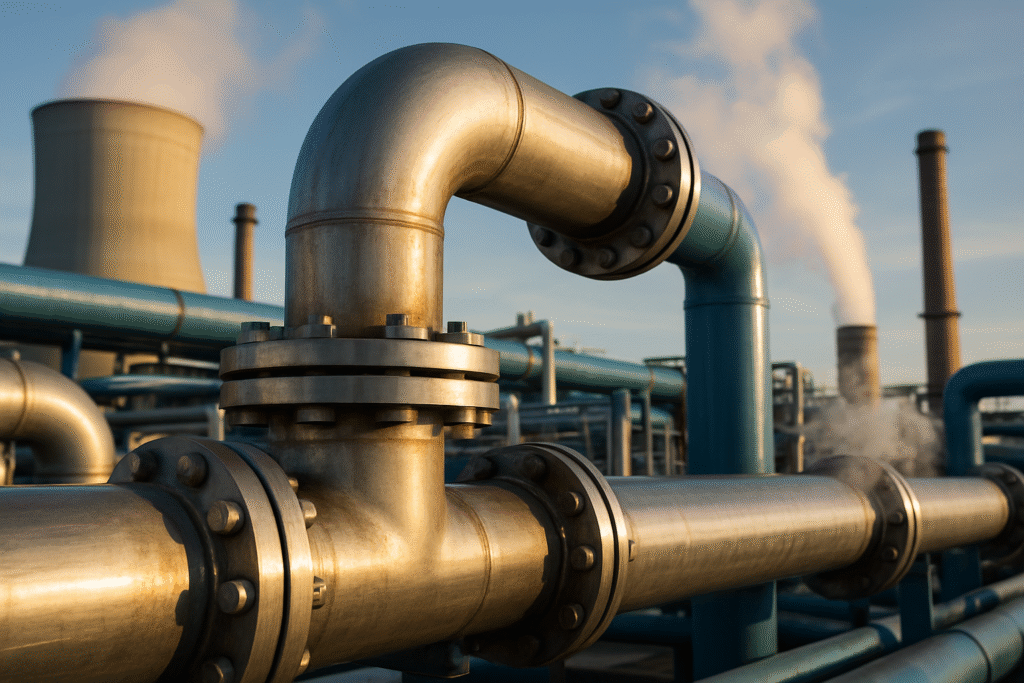
Рынок фланцев для труб из нержавеющей стали выйдет на рынок $7.2 Миллиард по 2030: Интригующие скрытые преимущества, Типы, Использование, и как выбрать разные фланцы
Фланец трубы из нержавеющей стали остается одним из наиболее востребованных соединительных компонентов технологических трубопроводов., и его значение продолжает расти вместе с глобальными промышленными инвестициями.. По данным исследования Grand View (2024), мировой рынок промышленных фланцев оценивался в $5.8 миллиард в 2023 и, по прогнозам, достигнет $7.2 миллиард на 2030.
Для менеджеров по закупкам и инженеров по трубопроводам, этот рост отражает практическую реальность. Нержавеющая сталь, устойчивый к коррозии, pressure-rated flanges are still the most common choice for critical services across oil and gas, нефтехимический, власть, морской, и системы очистки воды.
Global demand trends shaping stainless steel pipe flange procurement
Industrial buyers are purchasing more engineered flange solutions because project specifications are becoming stricter. По данным IBISWorld (2024), На долю Азиатско-Тихоокеанского региона приходится более 45% мирового производства фланцев, при этом Китай является крупнейшим производителем.
Региональная концентрация имеет значение для стратегии снабжения. Это влияет на сроки выполнения, raw material access, производительность обработки, and factory-direct pricing for standard and custom stainless steel pipe flange orders.
End-use demand also remains strong in heavy industry. По данным Статистики (2024), на долю нефтегазовой отрасли приходится около 35% мирового потребления фланцев, which explains why ASME-rated forged flanges dominate many project specifications.
Более того, corrosion management is now a board-level concern in refining, оффшорный, и химическая обработка. NACE guidance continues to influence material selection where chloride attack, кислое обслуживание, or crevice corrosion can shorten asset life (КДЕС, 2023).
Как результат, покупатели все чаще сравнивают не только цену, но и прослеживаемость, сертификация, и металлургия. A stainless steel pipe flange may look simple, yet the wrong grade or facing can cause leakage, болтовое расслабление, or accelerated corrosion.
Many EPC contractors now favor suppliers that combine broad standards coverage with documented quality systems. С ISO 9001:2015 и сертификаты PED 2014/68/ЕС., SASA FLANGE supports these requirements with controlled manufacturing and inspection procedures.
Кроме того, buyers need suppliers that can support global standards without delaying project schedules. SASA FLANGE manufactures flanges in ANSI B16.5, АНСИ Б16.47, DIN, JIS, ГОСТ, и RU 1092 configurations for diverse plant and export requirements.
Market growth is also linked to infrastructure modernization. По данным Мордорской разведки (2024), global investment in water and wastewater treatment equipment continues to rise at more than 6% Среднегодовой темп роста, increasing demand for stainless steel flanges and fittings in corrosion-prone systems.
Procurement teams therefore need a supplier that can align metallurgy, класс давления, и документация. Благодаря передовой обработке с ЧПУ и всестороннему тестированию качества., SASA FLANGE serves projects requiring EN 10204 3.1 документация, PMI, гидростатическая проверка, и проверка размеров.
В отличие от обычных трейдеров, qualified manufacturers can also advise on hidden advantages such as service life, maintenance reduction, and compatibility with mating components. That technical support often reduces total installed cost even when the unit price is not the lowest.
Intriguing stainless steel pipe flange types, материалы, and hidden performance advantages
The most common flange materials are 304, 304л, 316, and 316L because they balance corrosion resistance, свариваемость, and commercial availability. Однако, different services demand different grades, and engineers should never assume that all stainless flanges perform the same.
В соответствии с практикой материалов ASTM и ASME., forged stainless flanges are commonly supplied to ASTM A182 requirements for pressure parts, while related plate products may reference ASTM A240 for chemistry and mechanical properties (ASTM, 2024). Поэтому, buyers should verify whether the project calls for forged or plate-derived components.
Как Джон Брин, Старший инженер по трубопроводам, государства: «A flange failure is rarely just a flange issue; it is usually a mismatch between material, класс давления, лицом к лицу, and actual process conditions.» That is why technical review should precede every bulk purchase.
The hidden advantages of a properly specified stainless steel pipe flange include lower maintenance frequency, более высокая стойкость к окислению, better compatibility with hygienic cleaning, and improved reliability in wet or chloride-laden service. Во многих растениях, those gains outweigh initial material premiums within one shutdown cycle.
Material selection usually begins with corrosion mechanism and temperature range. 304 and 304L are widely used in general industrial, еда, and water applications, пока 316 and 316L add molybdenum for improved resistance in chloride-containing environments.
Higher-alloy grades serve more demanding conditions. Например, 904л, 2205, и 2507 are selected for aggressive media, воздействие морской воды, or higher strength demands, while nickel alloys such as Inconel, Монель, and Hastelloy support severe chemical and thermal service.
- 304/304л: economical and widely available for general corrosion service.
- 316/316л: better pitting resistance in chloride-bearing environments.
- 904л: stronger resistance to reducing acids and severe corrosion.
- 2205 дуплекс: более высокая прочность и улучшенная стойкость к хлоридной коррозии под напряжением.
- 2507 супер дуплекс: preferred for marine, оффшорный, and high-chloride systems.
Flange type matters as much as material. Weld neck flanges perform best in cyclic pressure and temperature service because the tapered hub distributes stress more evenly.
Slip-on flanges are easier to align and often cost less to install, although they are generally less fatigue-resistant than weld neck designs. Threaded flanges suit low-pressure systems where welding is undesirable, while blind flanges close off line ends or vessel nozzles.
Socket weld flanges are often chosen for smaller bore, higher-pressure piping. Фланцы внахлестку, by comparison, help where frequent dismantling or expensive alloy stub ends justify easier alignment.
- Приварной фланец с шейкой: лучше всего для высокого давления, высокая температура, and vibration service.
- Накидной фланец: common for utility lines and moderate service conditions.
- Глухой фланец: используется для изоляции, доступ для обслуживания, and hydrotesting.
- Резьбовой фланец: useful where welding is restricted or impractical.
- Фланец под приварку враструб: suitable for small-bore high-pressure systems.
- Фланец внахлестку: preferred for systems requiring frequent inspection or disassembly.
По данным Market Research Future (2024), corrosion-resistant alloy components are seeing above-average growth in offshore and chemical processing segments due to stricter lifecycle cost analysis. That trend supports broader use of duplex and high-alloy flange grades in new projects.
Как доктор. Елена Маркович, Материаловед, государства: «The true value of stainless selection lies in matching alloy chemistry to the process environment, not simply choosing the highest chromium number.» Другими словами, intelligent specification delivers better economics than over-specification.
Dimensions and pressure classes must also match the code design basis. ASME B16.5 covers many flanges from NPS 1/2 через 24, пока ASME B16.47 addresses larger diameters typically from NPS 26 через 60 (ASME, 2024).
Face type directly affects sealing performance. Raised face remains the most common in industrial service, while ring type joint is preferred for high-pressure and high-temperature applications that require a metal-to-metal seal.
For hygienic or low-pressure systems, flat face or specific gasket arrangements may be more appropriate. Поэтому, flange selection should always be evaluated together with gasket material, bolt grade, torque procedure, and flange finish.
Manufacturing quality is another differentiator. SASA FLANGE manufactures stainless steel flanges in 304, 316, 316л, 904л, 2205, и 2507, along with carbon steel and alloy grades, предлагаем нестандартные размеры от 1/2" до 60" с конкурентоспособными ценами напрямую с завода.
Кроме того, serious buyers should assess machining tolerances, подготовка фаски, Возможности PMI, and heat number traceability. These details become critical when supplying refinery shutdowns, морские салазки, опреснительные установки, or PED-governed export projects.
ASME, ASTM, DIN, and EN requirements for stainless steel pipe flange compliance
Standards are not optional in industrial procurement. Они определяют размеры, номинальные значения давления и температуры, допуски, материалы, маркировка, and inspection requirements that protect safety and interchangeability.
For North American and many international projects, ASME B16.5 и ASME B16.47 remain the key dimensional standards for flanges. Material compliance often references ASTM A182 для кованых фланцев из нержавеющей и легированной стали, while pipe fittings commonly follow ASME B16.9.
Европейские проекты часто ссылаются на EN 1092 for flange dimensions and pressure designations. German and broader continental applications may also require DIN-based practices, while marine and project export packages can include DNV, ПЭД, or AD 2000 документация.
В соответствии с рамками PED Европейской комиссии, pressure equipment placed on the EU market must meet essential safety requirements and conformity assessment obligations (ПЭД 2014/68/ЕС). Поэтому, documentation discipline is as important as machining accuracy for international shipments.
- ASME B16.5: flange dimensions and ratings for smaller nominal pipe sizes.
- ASME B16.47: larger diameter flange dimensions and ratings.
- ASTM A182: forged or rolled alloy and stainless steel pipe flanges and fittings.
- ASME B16.9: кованые фитинги для стыковой сварки заводского изготовления.
- EN 1092: European flange system with PN designations.
- NACE MR0175: material guidance for sour service environments where applicable.
Engineers should also review corrosion-service requirements when hydrogen sulfide or chlorides are present. NACE MR0175 and related project specifications can limit hardness, выбор сплава, and heat treatment route for wetted components.
That is especially important in upstream oil and gas, where sour service can rapidly expose poor material decisions. По данным Статистики (2024), oil and gas still accounts for roughly 35% мирового потребления фланцев, which keeps NACE and ASME compliance central to purchasing decisions.
При сравнении стандартов, buyers should understand that pressure classes and PN ratings are not directly interchangeable without engineering review. Класс 150 ASME flange is not simply the same as a PN16 or PN20 flange in every duty case.
The following comparison points help clarify specification logic:
- ASME Class system uses ratings such as 150, 300, 600, 900, 1500, и 2500.
- EN systems use PN designations such as PN10, PN16, Ру25, и Ру40.
- Facing forms, схемы сверления, and thicknesses vary by standard.
- Material naming conventions differ between ASTM, EN, and DIN systems.
Quality documents should also be checked before order release. Typical requirements include EN 10204 3.1 сертификаты испытаний мельницы, отчеты о размерах, Результаты PMI, проверка твердости, hydrotest records where applicable, and coating or marking verification.
С ISO 9001:2015, ПЭД 2014/68/ЕС, и АД 2000 сертификаты, SASA FLANGE supports customers that require traceable documentation for global projects. Более того, its production scope includes stainless steel flanges, фланцы из углеродистой стали, фланцы из сплава, и фитинги для труб, такие как колена, тройники, редукторы, и шапки.
Authoritative standard references should always be consulted during specification review, especially for critical lines. Buyers can verify current dimensional and code requirements directly through ASME and related standards bodies before issuing purchase orders.
How to choose the right stainless steel pipe flange for different industrial uses
The right flange choice depends on fluid chemistry, температура, класс давления, piping code, maintenance philosophy, и общая стоимость установки. Следовательно, engineers should evaluate the full operating envelope instead of focusing only on material price.
In oil and gas service, приварные фланцы из стали 316L, дуплекс, or specified alloy grades are often preferred for vibration resistance and stronger fatigue performance. Sour service or offshore duty may require NACE review, higher alloy content, and stricter testing protocols.
На нефтехимических заводах, Выбор совместимости носителей. Хлориды, соединения серы, органические кислоты, and elevated temperatures can quickly eliminate lower-grade materials from consideration.
Для производства электроэнергии, thermal cycling is often the dominant factor. Поэтому, тип фланца, загрузка болта, and creep or oxidation behavior become as important as baseline corrosion resistance.
В морских и судостроительных системах, seawater exposure often pushes engineers toward 316L, 2205, или 2507 depending on chloride concentration and design life targets. According to DNV practice, seawater systems require careful corrosion management and material pairing to reduce galvanic and pitting risks (ДНВ, 2023).
Water treatment and desalination projects also demand careful alloy selection. Duplex and super duplex options often deliver better lifecycle performance in brine handling, салазки обратного осмоса, and coastal installations.
- Confirm process fluid, уровень хлоридов, and pH before selecting grade.
- Match flange standard to piping code and mating component standard.
- Choose pressure class based on design pressure and temperature.
- Verify facing type with gasket design and bolt load requirements.
- Обзор метода сварки, потребности PWHT, и ограничения по установке.
- Specify documentation such as EN 10204 3.1, PMI, and hardness testing.
Size availability is another practical consideration, especially for shutdown work and OEM production schedules. Buyers often search for stainless steel pipe flange sizes, 4 Варианты дюймовых фланцев для труб из нержавеющей стали, and stainless steel threaded pipe flange configurations because project timing depends on stock and machining responsiveness.
Custom manufacturing can solve unusual specification challenges. Например, plants may need non-standard drilling, reducing flanges, специальные облицовки, long weld necks, or mixed-material packages that include matching elbows, тройники, редукторы, и шапки.
SASA FLANGE supports these requirements through flexible production and broad material coverage. Обслуживание 50+ страны по нефти & Газ, нефтехимическая, Власть, и морская промышленность, the company also provides support for forged stainless, углеродистая сталь, сплав, никелевый сплав, and titanium flange requirements.
Procurement teams should also compare inspection capability when reviewing stainless steel pipe flange suppliers. Competitive offers are valuable, yet rework, nonconformance, and late documents can erase any apparent savings.
A disciplined sourcing process usually includes supplier qualification, обзор чертежей, проверка сырья, sample approval where needed, и финальная версия документации. Buyers can review manufacturing scope and product categories at SASA FLANGE продукты и история компании в SASA FLANGE о нас.
Future outlook for stainless steel pipe flange buyers and strategic sourcing recommendations
The future of the stainless steel pipe flange market is closely tied to energy transition, водная инфраструктура, petrochemical upgrades, and regional reshoring strategies. По данным исследования Grand View (2024), Ожидается, что рынок расширится с $5.8 миллиард в 2023 к $7.2 миллиард на 2030.
That trajectory means procurement pressure will remain high. Buyers should expect continued volatility in stainless input costs, longer lead times for premium alloys, and greater emphasis on traceable quality records.
По данным IBISWorld (2024), На долю Азиатско-Тихоокеанского региона уже приходится более 45% мирового производства фланцев, so supplier diversification and early scheduling are becoming more important. Более того, material demand from oil and gas, морской, and water treatment remains resilient across many regions.
Стратегически, the most effective buyers standardize specifications where possible and reserve exotic alloys for truly demanding services. This approach reduces unnecessary cost while protecting reliability in the lines that matter most.
- Предварительная квалификация поставщиков с ISO 9001:2015 и соответствующие экспортные сертификаты.
- Request clear compliance to ASME, ASTM, DIN, EN, и стандарты, специфичные для проекта.
- Align flange, прокладка, запирание, and pipe materials during technical review.
- Plan long-lead alloy purchases earlier than commodity stainless items.
- Использовать стоимость жизненного цикла, не только цена за единицу, for final vendor evaluation.
As industrial systems become more data-driven, sourcing decisions are becoming more evidence-based as well. Поэтому, manufacturers that combine technical advice, broad standards coverage, and dependable documentation will gain a stronger share of global project business.
For buyers comparing different flange suppliers, the most practical next step is a technical-commercial review with an experienced manufacturer. For projects requiring certified stainless steel flanges, нестандартные размеры, and responsive export support, работаю с SASA FLANGE can simplify qualification and procurement.
Часто задаваемые вопросы
Что лучше 304 или 420 нержавеющая сталь?
●304 stainless steel is generally better for a stainless steel pipe flange because it offers stronger corrosion resistance and broader industrial acceptance than 420 in wet and chemical environments.
●According to ASTM material practice and common industrial usage, 304 is the most common austenitic stainless grade for general piping components, пока 420 is a martensitic grade used more often where hardness and wear resistance are priorities.
●Engineers should choose 304 for most flange applications and request expert support from established manufacturers like SASA FLANGE when corrosion resistance, свариваемость, and code compliance are required.
Что такое код ASME для фланцев из нержавеющей стали??
●Основные стандарты размеров ASME для фланцев из нержавеющей стали: ASME B16.5 и ASME B16.47, while material requirements are commonly linked to ASTM A182 для кованых фланцев.
●ASME B16.5 обычно охватывает NPS 1/2 через 24 и ASME B16.47 охватывает большие диаметры, so buyers must match the correct standard to the project size range and pressure class.
●Procurement teams should verify dimensions, лицом к лицу, номинальное давление, and material compliance before purchase, especially for export projects that also require EN 1092 or PED documentation.
Для чего используются фланцы из нержавеющей стали?
●Фланцы из нержавеющей стали используются для соединения труб., клапаны, насосы, and equipment in systems that require leak-tight assembly, доступ для обслуживания, and pressure-rated performance.
●По данным Статистики (2024), На долю нефтегазового сектора приходится около 35% мирового потребления фланцев, which shows how important flanges are in critical process industries.
●Buyers should select flange type, сорт материала, and pressure class based on media, температура, and maintenance requirements to achieve safe long-term performance.
Какие 5 виды нержавеющей стали?
●Пять основных семейств нержавеющей стали являются аустенитными., ферритный, мартенситный, дуплекс, and precipitation-hardening stainless steel.
●Аустенитные марки, такие как 304 и 316 are the most common for industrial flange applications because they combine corrosion resistance, прочность, и свариваемость.
●For chloride-rich or high-strength service, engineers should evaluate duplex or higher-alloy options and confirm the final choice against project standards and process data.
Какие типы фланцев из нержавеющей стали наиболее распространены??
●Наиболее распространенными типами фланцев из нержавеющей стали являются приварные шейки., без шнуровки, слепой, резьбовой, раструбная сварка, и фланцы внахлестку.
●Weld neck and slip-on designs are the most common in industrial piping because they balance performance, installation practicality, and market availability across many sizes.
●Engineers should match flange type to pressure, циклическая загрузка, потребности в техническом обслуживании, and fabrication method before placing an order.
How do I choose stainless steel pipe flange sizes and pressure ratings?
●Stainless steel pipe flange sizes and ratings should be selected by matching nominal pipe size, расписание, расчетное давление, расчетная температура, and the governing dimensional standard.
●ASME B16.5 pressure classes commonly include 150, 300, 600, 900, 1500, и 2500, and each class has different pressure-temperature limits depending on the material group.
●Для критически важных проектов, buyers should confirm dimensional compatibility, прокладка сиденья, and certification requirements with a qualified manufacturer before final approval.
Связанные Посты
Отделка торцевой поверхности фланца: Объяснение концентрических и спиральных зубцов
Концентрические и спиральные зубцы представляют собой обработанную поверхность фланца.…
Дуплекс 2205 по сравнению с фланцами 316L: Какой материал выбрать?
Быстрый ответ: Дуплекс 2205 flanges are usually the stronger candidate…

Определение фланца с диафрагмой, Подробности и обзор фланцев ASME B16.36: Рыночные данные, Руководство по выбору и анализ соответствия требованиям
Мировой рынок промышленных фланцев оценивался в $5.8 миллиард…

Руководство по рынку черных сливных фланцев: Материалы, 3.5″ Совместимость, и данные о поставщиках B2B для фланцев для кухонной мойки
Спрос на черные фланцы для утилизации растет благодаря покупателям кухонной техники…