
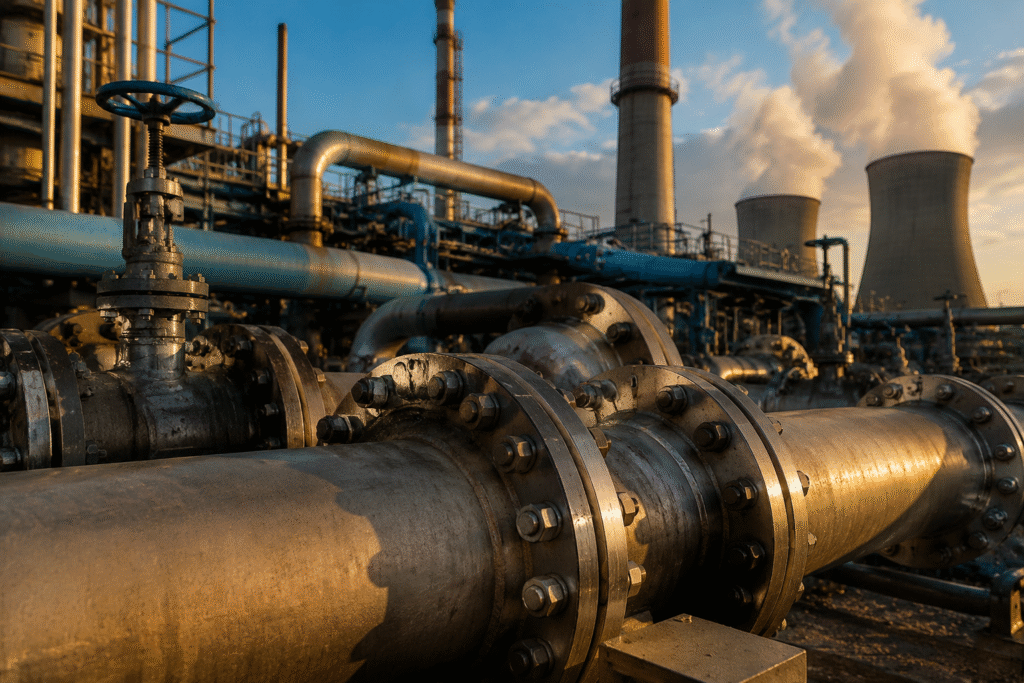
Factores de selección de bridas de acero inoxidable y errores comunes
Según la investigación de Grand View (2024), El mercado mundial de bridas industriales se valoró en $5.8 mil millones en 2023 y se prevé que alcance $7.2 mil millones por 2030. That growth makes the stainless steel pipe flange a strategic component for engineers and buyers who need corrosion resistance, integridad de la presión, y larga vida útil.
Para contratistas EPC, distribuidores, and plant operators, flange selection now affects more than connection design. It also influences maintenance intervals, inspection costs, y cumplimiento de ASME, ASTM, DIN, y normas EN.
Meta descripción: Explore the stainless steel pipe flange guide with data, estándares, and selection tips. Compare types and contact SASA FLANGE hoy.
Tendencias de la demanda industrial que dan forma a la adquisición de bridas de tuberías de acero inoxidable
The industrial piping market remains closely tied to energy, quimicos, tratamiento de agua, and marine infrastructure. Según Statista (2024), La industria del petróleo y el gas representa aproximadamente 35% del consumo global de bridas.
That figure explains why buyers continue to prioritize pressure classes, química de la aleación, and traceable certification. In high-risk systems, a flange is not a commodity. It is a pressure boundary component.
Regional supply dynamics also matter. Según IBISWorld (2024), Asia-Pacífico representa más de 45% de la producción mundial de bridas, siendo China el mayor fabricante.
Por lo tanto, global buyers increasingly source from qualified Chinese manufacturers that can combine scale with standards compliance. plazo de entrega, precisión de mecanizado, and material traceability are often the deciding factors.
En paralelo, corrosion-resistant alloys continue gaining share in aggressive service. Inteligencia de Mordor (2024) notes that stainless and alloy material demand is rising in desalination, costa afuera, and chemical processing because lifecycle cost often outweighs initial purchase price.
Como resultado, the hidden advantages of stainless steel pipe flange systems are receiving more attention. These advantages include lower replacement frequency, better hygiene performance, and improved resistance to pitting, crevice attack, y oxidación.
ASME B16.5 y ASME B16.47 remain the dominant dimensional references for many industrial projects, while EN 1092 and DIN standards stay important in European and mixed-specification projects. Buyers who manage cross-border sourcing must verify drilling, frente a, and pressure class compatibility before issuing a purchase order.
That need for precision creates opportunities for experienced manufacturers such as SASA FLANGE. Con ISO 9001:2015 y certificaciones PED 2014/68/UE, the company supports industrial buyers that require reliable flange supply across Oil & Gas, Petroquímico, Fuerza, Marina, Tratamiento de agua, y sectores de la construcción.
Según Market Research Future (2024), global process industry investment is shifting toward long-life assets and safer piping systems. Como consecuencia, procurement teams now ask for EN 10204 3.1 documentos de inspección, Pruebas del PMI, and stricter dimensional controls more often than before.
En este ambiente, the most common flange buying mistakes involve incomplete specification review. Por ejemplo, buyers may confirm material grade but overlook raised face requirements, calendario de perforación, o NACE MR0175 compatibility for sour service.
That is why a strong stainless steel pipe flange guide should move beyond material lists. It should connect types, usos, clases de presión, calidad de fabricación, and application-specific risk.
Tipos de bridas para tuberías de acero inoxidable, Ventajas ocultas, y factores de selección técnica
Los materiales de bridas de acero inoxidable más comunes incluyen ASTM A182 F304, F304L, F316, F316L, F904L, F51, y F53. Each grade offers a different balance of strength, soldabilidad, chloride resistance, y costo.
According to ASTM and industry application data, 304 y 316 remain the most widely specified stainless grades for general process systems. Sin embargo, dúplex 2205 y súper dúplex 2507 are increasingly chosen where chloride stress, erosión-corrosión, and higher pressure demand better performance.
Como John Butterfield, Ingeniero Senior de Tuberías, estados: “A flange should always be selected as part of the whole piping system, not as an isolated item, because temperature, medio, carga cíclica, and corrosion allowance all interact.” That principle is especially important in offshore, refinería, y aplicaciones de energía.
From a materials standpoint, the hidden advantages of stainless designs often appear over time. Initial cost may be higher than carbon steel, yet lower maintenance and better corrosion resistance frequently reduce total ownership cost.
According to NACE-aligned corrosion studies cited in industry practice guides, chloride environments can sharply shorten the life of improperly selected materials. Por lo tanto, 316l, 2205, o 2507 may deliver better value than 304 in seawater or chemical duty.
Buyers should compare flange types as carefully as they compare alloys. The choice among weld neck, deslizarse, ciego, soldadura de encaje, junta de regazo, and threaded designs affects stress distribution, método de montaje, y acceso de inspección.
- Bridas con cuello soldado: Preferido para alta presión, temperatura alta, y servicio cíclico porque el cubo cónico mejora la transición de tensión.
- Bridas deslizantes: Often used in lower pressure systems where faster fit-up and lower cost matter.
- Bridas ciegas: Usado para terminar, aislar, or future-proof pipeline sections and nozzle connections.
- Bridas para soldar: Común en calibre pequeño, sistemas de alta presión.
- Bridas roscadas: Útil donde la soldadura no es práctica, especially in certain utility lines or hazardous zones.
- Bridas para juntas traslapadas: Suitable where frequent dismantling is required and stub ends are specified.
The strongest type for most severe service is generally the weld neck flange, especially when designed to ASME B16.5 and matched to proper pipe schedule. Its geometry reduces local stress concentration better than many alternative designs.
Como Dr.. Elena Markovic, Científico de materiales, explica: “In chloride-bearing media, alloy selection is often the decisive factor, but flange geometry and weld quality still determine whether a system survives fatigue and corrosion together.” That insight helps procurement teams avoid oversimplified grade-only decisions.
Dimensional scope is another practical issue. Industrial buyers routinely request stainless steel pipe flange sizes from 1/2 pulgada a 24 pulgada debajo ASME B16.5, while larger diameters often move into ASME B16.47 Serie A o B.
Pressure ratings must match design conditions. Las clases ASME comunes incluyen 150, 300, 600, 900, 1500, y 2500, although actual pressure-temperature limits vary by material group and standard tables.
A nivel de fabricación, machining accuracy and facing finish matter just as much as chemistry. cara levantada, cara plana, and ring type joint configurations each require correct tolerances to seal properly with the intended gasket system.
According to ISO-aligned quality guidance used across pressure equipment manufacturing, repeatability in bore concentricity and facing finish directly affects leak risk. Como consecuencia, advanced CNC machining and final inspection are no longer optional for export-grade flanges.
SASA FLANGE fabrica bridas en 304, 316, 316l, 904l, 2205, 2507, A105, A182, Inconel, Monel, Hastelloy, y grados de titanio. Respaldado por mecanizado CNC avanzado y pruebas de calidad integrales, la empresa suministra tamaños personalizados de 1/2 pulgada a 60 inch for demanding industrial projects.
Pipe fittings also influence flange selection. Codos, camisetas, reductores, and caps must align with corrosion class, cronograma, and code basis, especially where the project includes ASME B16.9 fittings and ASTM pressure-retaining materials.
Por lo tanto, the right guide should answer both questions engineers ask most often: which flange type fits the load case, and which alloy fits the fluid environment. When those answers align, lifecycle reliability improves significantly.
Estándares, Proceso de dar un título, and Compliance Requirements for Stainless Steel Pipe Flange Supply
El cumplimiento de las normas es la base para la adquisición segura de bridas. ASME B16.5 Cubre bridas de tuberías y accesorios embridados para tamaños hasta NPS. 24, mientras ASME B16.47 covers larger diameter steel flanges.
Los estándares materiales son igualmente importantes. ASTM A182 rige las bridas de tuberías de acero inoxidable y de aleación forjadas o laminadas, accesorios forjados, y válvulas para servicio de alta temperatura, mientras ASTM A240 covers plate products used in related stainless applications.
Los proyectos europeos suelen hacer referencia a EN 1092-1, DEP 2014/68/UE, and DIN flange dimensions. Mixed-standard jobs require careful review because pressure designation, detalles enfrentados, and bolt hole arrangements can differ.
For authoritative dimensional guidance, buyers should review the current standard at ASME.org. This is especially useful when project specifications combine ASME pressure classes with European documentation requirements.
En sectores regulados, documentation is as important as machining. Typical requirements include EN 10204 3.1 certificados de prueba de molino, identificación positiva del material, controles de dureza, hydrotest records when applicable, e informes de inspección dimensional.
Según el marco de la Comisión Europea para PED 2014/68/UE, pressure equipment placed on the EU market must meet essential safety requirements. Por lo tanto, flange suppliers must understand both manufacturing control and documentation pathways.
Common standards and compliance points include:
- ASME B16.5: Dimensiones, tolerancias, clasificaciones de presión-temperatura, and marking for standard flanges up to NPS 24.
- ASME B16.47: Large diameter flange dimensions and drilling data.
- ASME B16.9: Factory-made wrought buttwelding fittings used with flange-connected piping systems.
- ASTM A182: Especificación del material de la brida de acero inoxidable y aleado forjado.
- EN 1092-1: European flange standard for dimensions and PN ratings.
- NACE MR0175 / ISO 15156: Guía de idoneidad de materiales para entornos de servicios ácidos.
- DEP 2014/68/UE: Regulatory compliance for pressure equipment in the EU.
A practical comparison helps procurement teams reduce errors:
- Clase ASME 150: Common in lower pressure utility and general process service.
- Clase ASME 300 y 600: Widely used in refineries, plantas quimicas, y sistemas de vapor.
- EN PN16 to PN40: Typical for European water, proceso, y sistemas mecánicos.
- Revestimientos RTJ: Preferred in high-pressure and high-integrity sealing applications.
- cara levantada: The most common choice for general industrial service.
Como Michael Tran, Pressure Equipment Consultant, estados: “A compliant flange package is not just a forged ring with bolt holes. It is a traceable assembly of material, dimensiones, pruebas, calificación, and certification.” That view reflects current project realities in international supply chains.
SASA FLANGE apoya estos requisitos con ISO 9001:2015, DEP 2014/68/UE, y anuncio 2000 cartas credenciales. Servicio 50+ países de todo el petróleo & Gas, Petroquímico, Fuerza, e industrias marinas, the company aligns production with customer-specific documentation and inspection needs.
Guía de aplicación: Cómo elegir bridas de tubería de acero inoxidable para petróleo, Químico, Fuerza, y Servicio Marítimo
Application context determines the best material and flange style. A flange that performs well in clean water may fail rapidly in chloride-rich seawater or high-temperature sulfur-bearing gas.
en aceite & Gas, material selection often starts with pressure, temperatura, H2S exposure, y tolerancia a la corrosión. Según Statista (2024), este sector representa aproximadamente 35% del consumo global de bridas, so field-proven reliability remains essential.
Para líneas upstream y midstream, buyers commonly choose weld neck flanges in ASTM A182 F316L, dúplex 2205, or carbon steel A105 depending on corrosion and code requirements. Sour service projects may also require NACE MR0175 review and additional hardness controls.
En plantas petroquímicas, media composition often drives the final decision. Ácidos orgánicos, cloruros, and solvent exposure can push engineers toward 316L, 904l, or nickel alloys rather than 304.
Power generation introduces another set of demands. Sistemas de vapor, ciclo térmico, and high pressure favor flange types with strong structural integrity, especially weld neck designs and correctly matched gasket assemblies.
Marine and shipbuilding projects require special attention to salinity, vibración, and compact installation space. Grados dúplex como 2205 y 2507 often provide a strong balance of strength and chloride resistance for these environments.
Water treatment systems can appear simple, yet chemistry varies widely. Desalinización, cloración, and chemical dosing lines can justify stainless or duplex selections that outperform painted carbon steel over the asset lifecycle.
When evaluating uses and types, buyers should review:
- química de fluidos, incluyendo el nivel de cloruro, pH, compuestos de azufre, y sólidos.
- Presión de diseño y temperatura de funcionamiento., including upset conditions.
- Connection type, tipo de revestimiento, y compatibilidad de juntas.
- Pipe schedule and bore match for flow and weld transition.
- Inspection requirements such as PMI, Utah, o EN 10204 3.1 proceso de dar un título.
- Normas aplicables, incluyendo ASME, ASTM, DIN, EN, y DEP.
- Costo del ciclo de vida, no solo precio unitario.
Many procurement teams still focus on stainless steel pipe flange price first. Sin embargo, low purchase price can become expensive if machining tolerance is poor, alloy chemistry is off-specification, or documentation delays site approval.
Según la investigación de Grand View (2024), the flange market is expanding steadily, which increases both supplier options and quality variation. Por lo tanto, prequalification and technical review are becoming more important, no menos.
Por ejemplo, a 4 Brida de tubería de acero inoxidable en pulgadas en clase 150 may look similar across suppliers. Yet the actual difference may appear in PMI traceability, serrated finish quality, wall transition at the bore, and certificate accuracy.
That is where experienced manufacturers bring value. SASA FLANGE offers custom manufacturing for stainless steel flanges and pipe fittings, incluyendo codos, camisetas, reductores, y gorras, enabling buyers to consolidate sourcing under one technical quality framework.
Fabricación de bridas en 304, 316, 904l, 2205, 2507 y otros grados premium, the company supports both standard and project-specific requirements. This is particularly useful for projects that combine ASME flanges with custom bores, revestimientos especiales, or non-standard inspection plans.
If the project calls for stainless steel flanges and fittings together, buyers should confirm material consistency across all pressure-retaining components. That approach simplifies QA review and improves long-term corrosion performance.
Perspectivas futuras, Strategic Buying Advice, and the Most Common Mistakes to Avoid
Las perspectivas del mercado de bridas industriales siguen siendo positivas. Según la investigación de Grand View (2024), Se prevé que el mercado crecerá desde $5.8 mil millones en 2023 a $7.2 mil millones por 2030.
That trajectory reflects continuing investment in energy, agua, quimicos, e infraestructura. It also reflects a shift toward higher-value materials and tighter quality control expectations.
Según IBISWorld (2024), Asia-Pacific leads global flange production with over 45% share. Como resultado, supplier selection in this region will continue to shape global pricing, plazos de entrega, and quality benchmarks.
Mirando hacia adelante, several trends are clear:
- More projects will demand duplex and super duplex materials for chloride service.
- Digital traceability and documented inspection will become standard expectations.
- Buyers will place greater emphasis on total lifecycle cost rather than only initial price.
- Factory-direct sourcing will remain attractive where quality systems are proven.
The most common purchasing mistakes remain preventable. Buyers often under-specify corrosion resistance, mix incompatible standards, or overlook bore schedule alignment.
Another frequent issue is assuming all stainless grades perform similarly. In reality, 304, 316l, 904l, 2205, y 2507 serve different corrosion, fortaleza, and temperature windows.
A practical buying process should include material review, standard verification, facing confirmation, test certificate requirements, y planificación de entrega. Además, engineering and procurement teams should validate whether the flange will operate in static, cíclico, corrosivo, or abrasive service.
For companies seeking a dependable supply partner, technical support matters as much as machining capacity. Working with established manufacturers such as SASA FLANGE can help reduce specification gaps, shorten approval cycles, and support safer project execution.
Preguntas frecuentes
¿Para qué se utilizan las bridas de acero inoxidable??
●Las bridas de acero inoxidable se utilizan para conectar tuberías., valvulas, zapatillas, y recipientes a presión en sistemas que requieren resistencia a la corrosión, resistencia mecánica, y sellado fiable bajo presión.
●Según Statista (2024), La industria del petróleo y el gas representa aproximadamente 35% del consumo global de bridas, which shows how important flanged joints are in critical process infrastructure.
●They are commonly specified in oil and gas, petroquímico, marina, procesamiento de alimentos, tratamiento de agua, and power generation because stainless materials perform well in wet, corrosivo, and hygienic environments.
¿Fabrican accesorios para tuberías de acero inoxidable??
●Sí, Los fabricantes producen accesorios para tuberías de acero inoxidable, como codos., camisetas, reductores, y límites máximos en grados que incluyen 304, 316, 316l, 904l, 2205, y 2507.
●ASME B16.9 is the key standard for factory-made wrought buttwelding fittings, and buyers should confirm schedule, preparación final, and material traceability before ordering.
●For projects that require matched flanges and fittings, sourcing both from experienced suppliers like SASA FLANGE helps maintain consistent metallurgy, documentación, and dimensional control.
¿Cuál es el tipo de brida de tubería más resistente??
●For most industrial services, the weld neck flange is considered the strongest standard piping flange because its tapered hub reduces stress concentration and supports high-pressure, high-temperature duty.
●ASME B16.5 Las bridas con cuello soldado se utilizan ampliamente en refinerías., vapor, and offshore systems where fatigue resistance and weld integrity matter more than simple installation speed.
●Sin embargo, the best choice still depends on pressure class, cronograma de tuberías, ambiente de corrosión, y requisitos del código, so engineering review is essential before selection.
¿Cuáles son los diferentes tipos de bridas de acero inoxidable??
●The main types of stainless steel flanges are weld neck, deslizarse, ciego, soldadura de encaje, roscado, y bridas para juntas traslapadas.
●Cada tipo tiene un propósito diferente., with weld neck flanges favored for severe service, slip-on flanges used in general plant piping, and blind flanges used to close line ends or future expansion points.
●To choose correctly, buyers should compare pressure rating, necesidades de mantenimiento, welding access, gasket surface, y la norma aplicable, como ASME B16.5 o ES 1092-1.
¿Qué es el Código ASME para bridas de acero inoxidable??
●The main ASME dimensional standard for stainless steel pipe flange products is ASME B16.5 para NPS 1/2 a través de 24, mientras ASME B16.47 cubre diámetros más grandes.
●Material is typically specified under ASTM A182 para bridas de acero inoxidable forjado, so buyers should review both the dimensional code and the material standard together.
●This combined approach helps ensure the flange meets design pressure, límites de temperatura, chemical composition requirements, and project documentation expectations.
¿Cómo elijo entre 304, 316l, 2205, y 2507 bridas de acero inoxidable?
●304 is often the most common choice for general service, 316L adds better chloride resistance, 2205 offers higher strength with strong corrosion performance, y 2507 is used for even more aggressive chloride environments.
●According to industry practice and corrosion guidance, molybdenum-bearing and duplex grades usually outperform 304 en agua de mar, salmuera, and many chemical applications where pitting risk is higher.
●For cost-effective selection, match the alloy to the fluid chemistry and operating conditions rather than choosing by price alone, and consult qualified suppliers like SASA FLANGE when specifications are critical.
Posts Relacionados
Acabado de la cara de la brida: Dentados concéntricos versus espirales explicados
Los dentados concéntricos y en espiral son acabados de cara de brida mecanizados.…
Dúplex 2205 frente a bridas 316L: ¿Qué material debería elegir??
respuesta rapida: Dúplex 2205 Las bridas suelen ser el candidato más fuerte.…

Definición de brida de orificio, Detalles y descripción general de bridas ASME B16.36: Datos de mercado, Guía de selección e información sobre cumplimiento
El mercado mundial de bridas industriales se valoró en $5.8 mil millones…

Guía del mercado de bridas de eliminación negras: Materiales, 3.5″ Compatibilidad, y datos de abastecimiento B2B para bridas de fregaderos de cocina
La demanda de bridas de eliminación negras está aumentando a medida que los compradores de accesorios de cocina…