
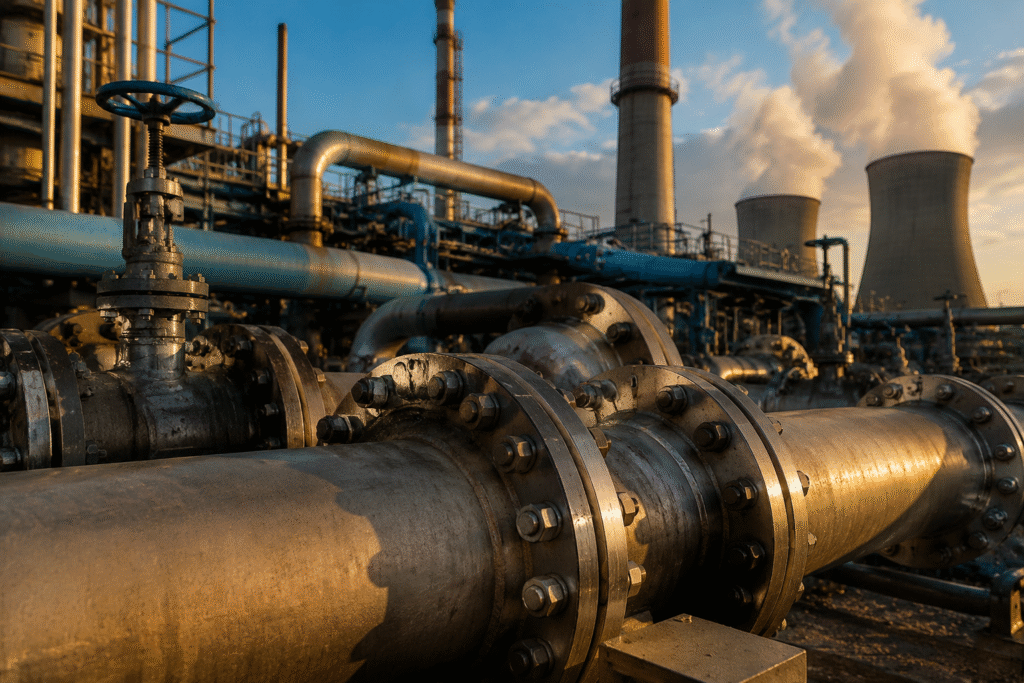
ステンレス鋼フランジの選択要素とよくある間違い
グランドビューリサーチによると (2024), 世界の工業用フランジ市場は次のように評価されました。 $5.8 億で 2023 に達すると予測されています $7.2 10億まで 2030. That growth makes the stainless steel pipe flange a strategic component for engineers and buyers who need corrosion resistance, 圧力の完全性, そして長寿命.
EPC請負業者向け, 販売代理店, and plant operators, flange selection now affects more than connection design. It also influences maintenance intervals, inspection costs, ASME への準拠, ASTM, DIN, およびEN規格.
メタディスクリプション: Explore the stainless steel pipe flange guide with data, 標準, and selection tips. Compare types and contact SASA FLANGE 今日.
ステンレス鋼管フランジの調達を形作る産業の需要動向
The industrial piping market remains closely tied to energy, 化学薬品, 水処理, and marine infrastructure. 統計局によると (2024), 石油・ガス産業が約 35% 世界のフランジ消費量の.
That figure explains why buyers continue to prioritize pressure classes, alloy chemistry, and traceable certification. In high-risk systems, a flange is not a commodity. It is a pressure boundary component.
Regional supply dynamics also matter. IBISWorldによると (2024), アジア太平洋地域が占める割合は超過 45% 世界のフランジ生産量の, 中国が最大の製造国である.
したがって, global buyers increasingly source from qualified Chinese manufacturers that can combine scale with standards compliance. リードタイム, 加工精度, and material traceability are often the deciding factors.
並行して, corrosion-resistant alloys continue gaining share in aggressive service. モルドール・インテリジェンス (2024) notes that stainless and alloy material demand is rising in desalination, オフショア, and chemical processing because lifecycle cost often outweighs initial purchase price.
結果として, the hidden advantages of stainless steel pipe flange systems are receiving more attention. These advantages include lower replacement frequency, better hygiene performance, and improved resistance to pitting, 隙間攻撃, そして酸化.
ASME B16.5 そして ASME B16.47 remain the dominant dimensional references for many industrial projects, IN中に 1092 and DIN standards stay important in European and mixed-specification projects. Buyers who manage cross-border sourcing must verify drilling, 直面している, and pressure class compatibility before issuing a purchase order.
That need for precision creates opportunities for experienced manufacturers such as SASA FLANGE. と ISO 9001:2015 および PED 2014/68/EU 認証, the company supports industrial buyers that require reliable flange supply across Oil & ガス, 石油化学, 力, 海兵隊, 水処理, および建設部門.
マーケットリサーチの将来によると (2024), global process industry investment is shifting toward long-life assets and safer piping systems. その結果, procurement teams now ask for EN 10204 3.1 検査書類, PMIテスト, and stricter dimensional controls more often than before.
この環境では, the most common flange buying mistakes involve incomplete specification review. 例えば, buyers may confirm material grade but overlook raised face requirements, ボアスケジュール, または NACE MR0175 compatibility for sour service.
That is why a strong stainless steel pipe flange guide should move beyond material lists. It should connect types, 用途, 圧力クラス, 製造品質, and application-specific risk.
ステンレス鋼管フランジの種類, 隠れた利点, および技術的な選択要素
The most common stainless steel flange materials include ASTM A182 F304, F304L, F316, F316L, F904L, F51, とF53. Each grade offers a different balance of strength, 溶接性, chloride resistance, そしてコスト.
ASTMおよび業界アプリケーションデータによると, 304 そして 316 remain the most widely specified stainless grades for general process systems. しかし, デュプレックス 2205 そしてスーパーデュプレックス 2507 are increasingly chosen where chloride stress, エロージョン・コロージョン, and higher pressure demand better performance.
ジョン・バターフィールド役, 上級配管エンジニア, 州: “A flange should always be selected as part of the whole piping system, not as an isolated item, because temperature, 中くらい, 周期負荷, and corrosion allowance all interact.” That principle is especially important in offshore, 製油所, および電源アプリケーション.
素材の観点から見ると, the hidden advantages of stainless designs often appear over time. Initial cost may be higher than carbon steel, yet lower maintenance and better corrosion resistance frequently reduce total ownership cost.
According to NACE-aligned corrosion studies cited in industry practice guides, chloride environments can sharply shorten the life of improperly selected materials. したがって, 316l, 2205, または 2507 may deliver better value than 304 in seawater or chemical duty.
Buyers should compare flange types as carefully as they compare alloys. The choice among weld neck, スリッポン, 盲目, ソケット溶接, ラップジョイント, and threaded designs affects stress distribution, 組み立て方法, および検査アクセス.
- 溶接ネックフランジ: 高圧に最適, 高温, and cyclic service because the tapered hub improves stress transition.
- スリップオンフランジ: Often used in lower pressure systems where faster fit-up and lower cost matter.
- ブラインドフランジ: 終了するために使用されます, 隔離する, or future-proof pipeline sections and nozzle connections.
- ソケットウェルドフランジ: 小口径共通, 高圧システム.
- ねじ付きフランジ: 溶接が不可能な場合に役立ちます, especially in certain utility lines or hazardous zones.
- 重ね継手フランジ: Suitable where frequent dismantling is required and stub ends are specified.
The strongest type for most severe service is generally the weld neck flange, especially when designed to ASME B16.5 and matched to proper pipe schedule. Its geometry reduces local stress concentration better than many alternative designs.
博士として. エレナ・マルコビッチ, 材料科学者, 説明する: “In chloride-bearing media, alloy selection is often the decisive factor, but flange geometry and weld quality still determine whether a system survives fatigue and corrosion together.” That insight helps procurement teams avoid oversimplified grade-only decisions.
Dimensional scope is another practical issue. Industrial buyers routinely request stainless steel pipe flange sizes from 1/2 インチから 24 インチ下 ASME B16.5, while larger diameters often move into ASME B16.47 Series A or B.
Pressure ratings must match design conditions. Common ASME classes include 150, 300, 600, 900, 1500, そして 2500, although actual pressure-temperature limits vary by material group and standard tables.
製造レベルで, machining accuracy and facing finish matter just as much as chemistry. 盛り上がった顔, 平らな面, and ring type joint configurations each require correct tolerances to seal properly with the intended gasket system.
According to ISO-aligned quality guidance used across pressure equipment manufacturing, repeatability in bore concentricity and facing finish directly affects leak risk. その結果, advanced CNC machining and final inspection are no longer optional for export-grade flanges.
SASA FLANGE でフランジを製造します 304, 316, 316l, 904l, 2205, 2507, A105, A182, インコネル, モネル, ハステロイ, およびチタングレード. 高度な CNC 加工と包括的な品質テストに裏付けられています, the company supplies custom sizes from 1/2 インチから 60 inch for demanding industrial projects.
Pipe fittings also influence flange selection. 肘, ティー, 減速機, and caps must align with corrosion class, スケジュール, and code basis, especially where the project includes ASME B16.9 fittings and ASTM pressure-retaining materials.
したがって, the right guide should answer both questions engineers ask most often: which flange type fits the load case, and which alloy fits the fluid environment. When those answers align, lifecycle reliability improves significantly.
基準, 認証, ステンレス鋼管フランジの供給に関する準拠要件
規格への準拠は安全なフランジ調達の基礎です. ASME B16.5 covers pipe flanges and flanged fittings for sizes up to NPS 24, その間 ASME B16.47 covers larger diameter steel flanges.
材料規格も同様に重要です. ASTM A182 鍛造または圧延合金およびステンレス鋼の管フランジを管理します, 鍛造継手, および高温用バルブ, その間 ASTM A240 covers plate products used in related stainless applications.
ヨーロッパのプロジェクトではよくENが参照されます 1092-1, PED 2014/68/EU, and DIN flange dimensions. Mixed-standard jobs require careful review because pressure designation, 細部に直面する, and bolt hole arrangements can differ.
For authoritative dimensional guidance, buyers should review the current standard at ASME.org. This is especially useful when project specifications combine ASME pressure classes with European documentation requirements.
規制された分野では, documentation is as important as machining. 一般的な要件には次のものがあります。 EN 10204 3.1 工場試験証明書, 確実な物質識別, 硬さチェック, hydrotest records when applicable, および寸法検査レポート.
欧州委員会の PED 2014/68/EU の枠組みによる, pressure equipment placed on the EU market must meet essential safety requirements. したがって, flange suppliers must understand both manufacturing control and documentation pathways.
Common standards and compliance points include:
- ASME B16.5: 寸法, 公差, 圧力温度定格, and marking for standard flanges up to NPS 24.
- ASME B16.47: Large diameter flange dimensions and drilling data.
- ASME B16.9: Factory-made wrought buttwelding fittings used with flange-connected piping systems.
- ASTM A182: Forged stainless and alloy steel flange material specification.
- EN 1092-1: European flange standard for dimensions and PN ratings.
- NACE MR0175 / ISO 15156: 過酷な使用環境向けの材料適合性ガイダンス.
- PED 2014/68/EU: Regulatory compliance for pressure equipment in the EU.
A practical comparison helps procurement teams reduce errors:
- ASMEクラス 150: Common in lower pressure utility and general process service.
- ASMEクラス 300 そして 600: Widely used in refineries, 化学プラント, および蒸気システム.
- EN PN16 to PN40: Typical for European water, プロセス, および機械システム.
- RTJフェーシング: Preferred in high-pressure and high-integrity sealing applications.
- 盛り上がった顔: The most common choice for general industrial service.
マイケル・トラン役, Pressure Equipment Consultant, 州: “A compliant flange package is not just a forged ring with bolt holes. It is a traceable assembly of material, 寸法, テスト, マーキング, and certification.” That view reflects current project realities in international supply chains.
SASA FLANGE これらの要件をサポートする ISO 9001:2015, PED 2014/68/EU, とAD 2000 資格. 給仕 50+ 石油を巡る国々 & ガス, 石油化学, 力, 海洋産業, the company aligns production with customer-specific documentation and inspection needs.
申請ガイド: 油用ステンレス鋼管フランジの選び方, 化学薬品, 力, および海洋サービス
Application context determines the best material and flange style. A flange that performs well in clean water may fail rapidly in chloride-rich seawater or high-temperature sulfur-bearing gas.
油中 & ガス, material selection often starts with pressure, 温度, H2S 暴露, および腐食代. 統計局によると (2024), このセクターは約を表します 35% 世界のフランジ消費量の, so field-proven reliability remains essential.
上流・中流用, buyers commonly choose weld neck flanges in ASTM A182 F316L, デュプレックス 2205, or carbon steel A105 depending on corrosion and code requirements. Sour service projects may also require NACE MR0175 review and additional hardness controls.
石油化学プラント内, media composition often drives the final decision. 有機酸, 塩化物, and solvent exposure can push engineers toward 316L, 904l, or nickel alloys rather than 304.
Power generation introduces another set of demands. 蒸気システム, 熱サイクル, and high pressure favor flange types with strong structural integrity, especially weld neck designs and correctly matched gasket assemblies.
Marine and shipbuilding projects require special attention to salinity, 振動, and compact installation space. デュプレックスグレードなど 2205 そして 2507 often provide a strong balance of strength and chloride resistance for these environments.
Water treatment systems can appear simple, yet chemistry varies widely. 脱塩, 塩素化, and chemical dosing lines can justify stainless or duplex selections that outperform painted carbon steel over the asset lifecycle.
When evaluating uses and types, buyers should review:
- 流体化学, 塩化物レベルを含む, pH, 硫黄化合物, そして固体.
- 設計圧力と使用温度, アップセットコンディションも含めて.
- 接続タイプ, 対面タイプ, ガスケットの互換性.
- Pipe schedule and bore match for flow and weld transition.
- Inspection requirements such as PMI, ユタ州, または EN 10204 3.1 認証.
- 適用規格, ASMEを含む, ASTM, DIN, EN, およびPED.
- ライフサイクルコスト, 単価だけではなく.
Many procurement teams still focus on stainless steel pipe flange price first. しかし, low purchase price can become expensive if machining tolerance is poor, alloy chemistry is off-specification, or documentation delays site approval.
グランドビューリサーチによると (2024), the flange market is expanding steadily, which increases both supplier options and quality variation. したがって, prequalification and technical review are becoming more important, それ以下ではない.
例えば, ある 4 クラスのインチステンレス鋼管フランジ 150 may look similar across suppliers. Yet the actual difference may appear in PMI traceability, serrated finish quality, wall transition at the bore, and certificate accuracy.
That is where experienced manufacturers bring value. SASA FLANGE offers custom manufacturing for stainless steel flanges and pipe fittings, 肘も含めて, ティー, 減速機, そしてキャップ, enabling buyers to consolidate sourcing under one technical quality framework.
フランジの製造 304, 316, 904l, 2205, 2507 その他のプレミアムグレード, the company supports both standard and project-specific requirements. This is particularly useful for projects that combine ASME flanges with custom bores, 特殊なフェーシング, or non-standard inspection plans.
If the project calls for stainless steel flanges and fittings together, buyers should confirm material consistency across all pressure-retaining components. That approach simplifies QA review and improves long-term corrosion performance.
今後の展望, Strategic Buying Advice, and the Most Common Mistakes to Avoid
工業用フランジの市場見通しは引き続き明るい. グランドビューリサーチによると (2024), 市場は~から成長すると予測されている $5.8 億で 2023 に $7.2 10億まで 2030.
That trajectory reflects continuing investment in energy, 水, 化学薬品, とインフラストラクチャ. It also reflects a shift toward higher-value materials and tighter quality control expectations.
IBISWorldによると (2024), Asia-Pacific leads global flange production with over 45% 共有. 結果として, supplier selection in this region will continue to shape global pricing, リードタイム, and quality benchmarks.
将来を見据えて, several trends are clear:
- More projects will demand duplex and super duplex materials for chloride service.
- Digital traceability and documented inspection will become standard expectations.
- Buyers will place greater emphasis on total lifecycle cost rather than only initial price.
- Factory-direct sourcing will remain attractive where quality systems are proven.
The most common purchasing mistakes remain preventable. Buyers often under-specify corrosion resistance, mix incompatible standards, or overlook bore schedule alignment.
Another frequent issue is assuming all stainless grades perform similarly. 実際には, 304, 316l, 904l, 2205, そして 2507 serve different corrosion, 強さ, and temperature windows.
A practical buying process should include material review, standard verification, facing confirmation, test certificate requirements, そして配送計画. さらに, engineering and procurement teams should validate whether the flange will operate in static, 周期的な, 腐食性の, or abrasive service.
For companies seeking a dependable supply partner, technical support matters as much as machining capacity. Working with established manufacturers such as SASA FLANGE can help reduce specification gaps, shorten approval cycles, and support safer project execution.
よくある質問
ステンレス鋼フランジは何に使用されますか?
●パイプの接続にはステンレス製のフランジが使用されます, バルブ, パンプス, 耐食性が必要なシステムの圧力容器など, 機械的強度, and reliable sealing under pressure.
●統計局によると (2024), 石油・ガス産業が約 35% 世界のフランジ消費量の, which shows how important flanged joints are in critical process infrastructure.
●They are commonly specified in oil and gas, 石油化学, 海洋, 食品加工, 水処理, and power generation because stainless materials perform well in wet, 腐食性の, and hygienic environments.
ステンレス鋼の管継手を製造していますか?
●はい, メーカーはエルボなどのステンレス鋼管継手を製造しています, ティー, 減速機, およびグレードの上限 304, 316, 316l, 904l, 2205, そして 2507.
●ASME B16.9 is the key standard for factory-made wrought buttwelding fittings, and buyers should confirm schedule, 準備を終える, and material traceability before ordering.
●For projects that require matched flanges and fittings, sourcing both from experienced suppliers like SASA FLANGE helps maintain consistent metallurgy, ドキュメント, and dimensional control.
配管フランジの中で最も強度が高いのは何ですか?
●For most industrial services, the weld neck flange is considered the strongest standard piping flange because its tapered hub reduces stress concentration and supports high-pressure, high-temperature duty.
●ASME B16.5 weld neck flanges are widely used in refinery, スチーム, and offshore systems where fatigue resistance and weld integrity matter more than simple installation speed.
●しかし, the best choice still depends on pressure class, パイプスケジュール, 腐食環境, コード要件, so engineering review is essential before selection.
ステンレス鋼フランジにはどのような種類がありますか?
●The main types of stainless steel flanges are weld neck, スリッポン, 盲目, ソケット溶接, ねじ切りされた, 重ね継手フランジ.
●それぞれのタイプは異なる目的を果たします, with weld neck flanges favored for severe service, slip-on flanges used in general plant piping, and blind flanges used to close line ends or future expansion points.
●To choose correctly, buyers should compare pressure rating, メンテナンスの必要性, welding access, gasket surface, および適用される規格など ASME B16.5 またはEN 1092-1.
ステンレス鋼フランジの ASME コードとは何ですか?
●The main ASME dimensional standard for stainless steel pipe flange products is ASME B16.5 NPS向け 1/2 を通して 24, その間 ASME B16.47 より大きな直径をカバーします.
●Material is typically specified under ASTM A182 鍛造ステンレス鋼フランジ用, so buyers should review both the dimensional code and the material standard together.
●This combined approach helps ensure the flange meets design pressure, 温度制限, chemical composition requirements, and project documentation expectations.
どちらかを選択するにはどうすればよいですか 304, 316l, 2205, そして 2507 ステンレス鋼フランジ?
●304 is often the most common choice for general service, 316L adds better chloride resistance, 2205 offers higher strength with strong corrosion performance, そして 2507 is used for even more aggressive chloride environments.
●According to industry practice and corrosion guidance, molybdenum-bearing and duplex grades usually outperform 304 in seawater, 塩水, and many chemical applications where pitting risk is higher.
●For cost-effective selection, match the alloy to the fluid chemistry and operating conditions rather than choosing by price alone, and consult qualified suppliers like SASA FLANGE when specifications are critical.
関連投稿

オリフィスフランジの定義, 詳細と ASME B16.36 フランジの概要: 市場データ, 選択ガイドとコンプライアンスに関する洞察
世界の工業用フランジ市場は次のように評価されました。 $5.8 十億…

ブラックディスポフランジ市場ガイド: 材料, 3.5″ 互換性, キッチン シンク フランジの B2B 調達データ
キッチン設備の購入者として黒色の使い捨てフランジの需要が高まっています…