
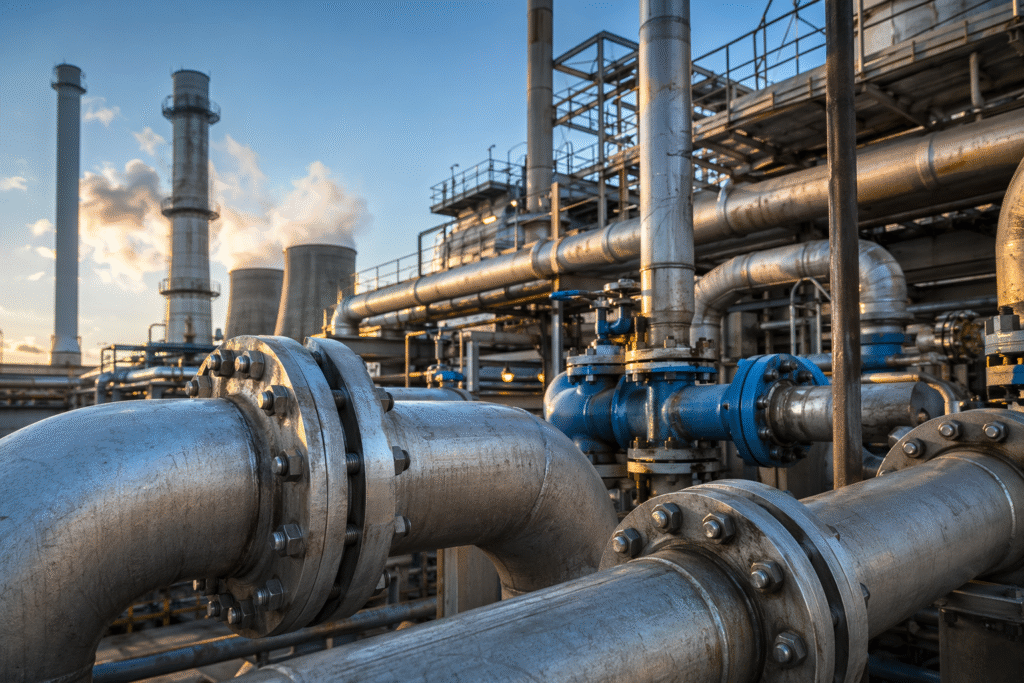
ステンレス鋼管フランジ市場: 7 隠れた利点, 種類, 用途, ASME B16.5 とその選択方法 & B16.47 フランジ
グランドビューリサーチによると (2024), 世界の工業用フランジ市場は次のように評価されました。 $5.8 億で 2023 に達すると予測されています $7.2 10億まで 2030. この成長は、なぜ ステンレス鋼管フランジ remains a critical component for engineers, EPC請負業者, 耐食性を求める調達チームと, 圧力の完全性, そして長寿命.
産業用バイヤー向け, the most intriguing factor is not only price, but also the hidden advantages of selecting the right flange material, 圧力クラス, そして標準的な. したがって, this guide explains flange types, 用途, ASME requirements, and practical selection criteria for demanding pipe systems.
Industrial Demand for Stainless Steel Pipe Flange in Global Process Markets
IBISWorldによると (2024), アジア太平洋地域が占める割合は超過 45% 世界のフランジ生産量の, 中国が最大の製造国である. 結果として, sourcing strategies increasingly focus on qualified Chinese exporters that can deliver ASME, DIN, JIS, ゴスト, and EN compliant products with full material traceability.
統計局によると (2024), 石油・ガス産業が約 35% 世界のフランジ消費量の. さらに, 石油化学処理, 発電, 造船, and water treatment continue to drive demand for stainless steel pipe flange products in 304, 316, デュプレックス, およびニッケル合金グレード.
These numbers matter because flange failure can shut down an entire line. 対照的に, a correctly specified flange improves joint integrity, reduces maintenance intervals, and supports safer operation under thermal cycling, 振動, および腐食性媒体.
モルドール情報局によると (2024), industrial infrastructure investments in energy and water sectors continue to support steady growth in piping components across emerging markets. さらに, buyers now prioritize suppliers that can combine machining precision, EN 10204 3.1 ドキュメント, 短いリードタイム.
The hidden advantages of stainless steel are especially relevant in facilities handling chlorides, 酸, スチーム, and high-purity fluids. 例えば, 316L stainless steel flange products usually outperform 304 in chloride exposure because molybdenum improves pitting resistance, while low carbon content helps reduce sensitization during welding.
As John Martinez, 上級配管エンジニア, 州: “A flange is a small component in cost share, but it is a major component in reliability strategy.” That insight reflects procurement reality, because flange quality often influences inspection frequency, leak risk, and lifecycle cost more than buyers expect.
SASA FLANGE この環境では次のように動作します ISO 9001:2015 および PED 2014/68/EU 認証. さらに, 同社はステンレス鋼を供給しています, 炭素鋼, 合金, デュプレックス, and special material flanges and fittings for clients across Oil & ガス, 石油化学, 力, 海兵隊, および水処理部門.
高度な CNC 加工と包括的な品質テストに裏付けられています, SASA FLANGE で製品を製造しています 304, 316, 316l, 904l, 2205, 2507, A105, A182, インコネル, モネル, ハステロイ, およびチタングレード. したがって, buyers can align corrosion performance, 圧力定格, and budget with actual service conditions instead of relying on generic substitution.
マーケットリサーチの将来によると (2024), industrial stainless component demand is rising as operators seek longer asset life and lower maintenance costs. その結果, flange sourcing has become a technical purchasing decision rather than a simple commodity buy.
隠れた利点, Flanges Types, and Technical Factors Engineers Should Evaluate
The most intriguing aspect of a stainless steel pipe flange is its ability to combine strength, 耐食性, and maintainability in one connection point. しかし, those benefits only appear when engineers match flange type, 直面している, 評価, and metallurgy to the pipe system.
によると ASME B16.5, フランジ寸法, 公差, 圧力温度定格, マーキング, and materials are standardized for NPS 1/2 を通して 24. 並行して, ASME B16.47 covers larger diameter flanges from NPS 26 を通して 60, トランスミッションでよくあること, 海洋, and large process pipelines (ASME, 2023).
博士として. Helen Zhou, 材料科学者, 州: “The best flange selection is a corrosion and temperature decision first, and a price decision second.” したがって, 選択する 304, 316l, 904l, 2205, または 2507 should follow fluid chemistry, 塩化物濃度, 温度範囲, および製造方法.
実際に, engineers often evaluate the following flange types for industrial pipe systems:
- 高圧用ウェルドネックフランジ, 熱サイクル, and critical services.
- Slip-on flange for moderate pressure applications with easier alignment and lower fabrication cost.
- ライン絶縁用のブラインドフランジ, 水圧試験, そして今後の拡張ポイント.
- Socket weld flange for small bore, 高圧配管.
- Threaded flange for low-pressure systems where welding is undesirable.
- 頻繁に分解が必要なシステム用の重ね継手フランジ.
Each flange type has hidden advantages. 例えば, weld neck designs distribute stress more evenly at the hub-to-pipe transition, while blind flanges provide strong end closure for pressure testing and maintenance isolation.
素材の選択も同様に重要です. ASTM A182 commonly governs forged stainless and alloy steel flanges, その間 ASTM A240 covers plate materials used in related components and fabrication (ASTM, 2024).
For most chemical and utility systems, common stainless choices include:
- 304/304L for general corrosion resistance and cost-effective performance.
- 316/316L for chloride-bearing media and better pitting resistance.
- 321 そして 347 grades for elevated temperature stabilization.
- 904L for aggressive acidic environments.
- 2205 デュプレックスと 2507 高強度と耐塩化物応力腐食性を実現するスーパー二相.
According to NACE guidance used widely in sour service selection, chloride and H2S exposure can rapidly narrow acceptable alloy options (ネイス, 2023). 結果として, duplex and high-alloy stainless flange products are increasingly chosen for offshore, 生産された水, and desalination lines.
Pressure class also changes the buying decision. ASME classes such as 150, 300, 600, 900, 1500, そして 2500 define flange strength and sealing capability under temperature-related derating.
調達管理者向け, the practical comparison often includes these factors:
- Pressure-temperature rating by ASME class.
- RFなどのフェーシングタイプ, RTJ, またはFF.
- Dimensional standard such as ASME B16.5, ASME B16.47, DIN, またはEN 1092.
- Material standard such as ASTM A182 F304, F316L, F51, またはF53.
- Inspection documents including EN 10204 3.1 MTC.
- NDT requirements such as PMI, PT, ユタ州, and hardness testing.
According to ISO requirements referenced by many EPC specifications, traceability and documented inspection are essential for pressure equipment quality systems (ISO, 2023). したがって, a low initial unit price may become expensive if reinspection, rejection, or unplanned downtime occurs.
A well-chosen stainless steel pipe flange also simplifies maintenance planning. さらに, stainless flanges generally support repeated disassembly better than lower-grade alternatives in clean service, 食品加工, および水処理システム, where contamination control and surface condition matter.
SASA FLANGE 1/2からのカスタムサイズを提供します" 60まで" 競争力のある工場直販価格. さらに, the company supports RF, FF, RTJ, ねじ切りされた, ソケット溶接, 盲目, and weld neck configurations manufactured to ANSI B16.5, ANSI B16.47, DIN, JIS, ゴスト, とEN 1092 要件.
給仕 50+ 石油を巡る国々 & ガス, 石油化学, 力, 海洋産業, SASA FLANGE aligns supply with real project documentation needs. 例えば, buyers often request PMI, 寸法検査, hydrostatic support data, and packing suitable for export logistics.
マーク・エリソン役, 産業市場アナリスト, 州: “Procurement leaders now value certified documentation nearly as much as they value delivered price.” That trend is especially clear in PED projects, offshore packages, and owner-approved vendor lists.
グランドビューリサーチによると (2024), capital investment in industrial processing equipment remains a major support factor for connection components and maintenance demand. その結果, stainless flange buyers should focus on specification accuracy, ライフサイクルコスト, and supplier consistency instead of comparing only quote totals.
ASME, ASTM, DIN, and EN Requirements for Stainless Steel Flanges Compliance
Standards compliance is where many flange projects succeed or fail. したがって, engineers should distinguish clearly between dimensional standards, material standards, 検査要件, and regional regulatory requirements.
ASME B16.5 NPS 用のパイプ フランジとフランジ付き継手をカバーします。 1/2 を通して 24. 対照的に, ASME B16.47 applies to large diameter steel flanges from NPS 26 を通して 60, with Series A and Series B dimensional differences that affect bolt patterns and compatibility (ASME, 2023).
ASTM A182 specifies forged or rolled alloy and stainless steel flange materials for high-temperature service. さらに, ASTM material designations such as F304, F304L, F316, F316L, F51, and F53 help engineers define chemistry and mechanical properties more precisely.
ヨーロッパのプロジェクトでは多くの場合、EN が必要です 1092 dimensional compliance and PED 2014/68/EU documentation. 同様に, DIN legacy references remain common in maintenance and retrofit environments, especially where older installed systems must match existing components.
The following summary helps clarify the main standards landscape:
- ASME B16.5: 寸法, 公差, 圧力クラス, NPS のマーキング 1/2 に 24.
- ASME B16.47: NPS用大径フランジ寸法 26 に 60.
- ASME B16.9: エルボなどの工場製鍛突合せ溶接継手, ティー, 減速機, そしてキャップ.
- ASTM A182: Forged stainless and alloy steel materials for flanges and fittings.
- EN 1092: ヨーロッパのフランジ寸法と圧力指定.
- NACE MR0175/ISO 15156: 厳しいサービス環境のための重要なガイダンス.
欧州委員会の PED フレームワークによると, pressure equipment compliance requires technical documentation, 適合性評価, and appropriate material traceability for applicable equipment categories (PED, 2014). 結果として, project buyers should verify not just the flange standard, but also the complete documentation package.
For corrosion-critical services, standards alone do not guarantee field performance. しかし, they create the baseline for interchangeability, qualification, and quality consistency across global supply chains.
実際の調達用語では, buyers should confirm these documentation points before purchase:
- 材料試験証明書へ EN 10204 3.1.
- Heat number traceability on each flange.
- 寸法検査報告書.
- PMI report for stainless, デュプレックス, およびニッケル合金グレード.
- Surface finish and facing inspection.
- Packing and marking requirements by project specification.
According to DNV expectations in many marine and offshore supply chains, traceability and inspection records significantly reduce non-conformance risk during audits and installation reviews (DNV, 2023). したがって, consistent QA systems matter as much as machining capacity.
SASA FLANGE これらの要件をサポートする ISO 9001:2015, PED 2014/68/EU, とAD 2000 認証. さらに, the company manufactures stainless steel flanges and pipe fittings under documented quality procedures suited to EPC, 卸売業者, and end-user sourcing models.
For buyers comparing vendors, one useful hidden advantage is standard flexibility. A supplier capable of ASME, DIN, JIS, ゴスト, and EN execution can simplify global projects, spare parts planning, and mixed-site maintenance programs.
Engineers should also review sealing face compatibility. 例えば, RF flanges dominate general industrial service, while RTJ flanges are preferred in higher pressure and critical hydrocarbon duties because the metal ring gasket offers robust sealing under severe service conditions.
For official dimensional and code references, 購入者は相談できます ASME. That step is valuable when project teams need to verify class ratings, 寸法, or code cross-references during design review.
油用ステンレス鋼管フランジの選び方, ガス, 化学薬品, 力, および海洋用途
Choosing the right stainless steel pipe flange begins with the service environment, not the catalog page. したがって, engineers should define media composition, 作動圧力, 設計温度, 腐食代, and maintenance frequency before selecting a flange type or grade.
Oil and gas systems often require strong performance under pressure cycling, 振動, and corrosive exposure. In these lines, weld neck and RTJ flange options are common, while duplex or super duplex materials may be preferred for seawater, injection, and offshore splash-zone duties.
統計局によると (2024), 石油とガスは約 35% 世界のフランジ消費量の. その結果, project specifications in this sector tend to be highly detailed, often requiring NACE compliance, PMI, 硬さの検証, and strict MTC control.
Chemical processing lines usually demand corrosion resistance first. 例えば, 316l, 904l, ハステロイ, or Monel flange products may be specified depending on chlorides, 酸, 温度, and concentration.
Power generation projects focus heavily on thermal cycles and pressure integrity. したがって, engineers may select higher class flanges, stabilized stainless grades, or alloy materials for steam, 凝縮水, and high-temperature auxiliary lines.
Marine and shipbuilding applications present a different challenge because saltwater exposure accelerates pitting and crevice corrosion. 結果として, 316l, 2205, そして 2507 often become more attractive than 304 in deck piping, バラスト, スクラバー, および海水システム.
The following checklist helps procurement teams choose more effectively:
- Confirm pipe size, 壁の厚さ, and matching schedule.
- Verify design pressure, 温度, and ASME class.
- Select flange type based on service criticality and maintenance needs.
- Match gasket and facing style to sealing requirements.
- Review corrosion data for chlorides, 酸, H2S, or seawater.
- Specify required test certificates and inspection scope.
- Check regional standards such as ASME, EN, DIN, またはJIS.
Another hidden advantage is total installed cost control. A slightly higher-grade flange can reduce replacement frequency, シャットダウン時の露出, and leak risk, which often delivers better economics across the asset lifecycle.
例えば, ある 4 inch stainless steel pipe flange used in a water treatment skid may only need ASME Class 150 and 316L material. 対照的に, a similar nominal size in offshore injection service could require duplex material, RTJ フェーシング, stricter NDT, and tighter traceability controls.
マーケットリサーチの将来によると (2024), water infrastructure upgrades continue to increase demand for corrosion-resistant piping components worldwide. したがって, municipal and industrial water projects are becoming important growth segments for stainless and duplex flange procurement.
SASA FLANGE supports custom manufacturing for non-standard drilling, 直面している, and material combinations. さらに, 同社は適合するエルボを供給できます, ティー, 減速機, and caps to simplify package procurement for complete piping systems.
For distributors and EPC contractors, consolidated sourcing can shorten project timelines. さらに, factory-direct coordination helps reduce dimensional mismatch risk between the flange, ガスケット, ボルト, and mating pipe or fitting.
When buyers need guidance on flange types, 材料, or project documentation, early technical review is essential. カスタムサイズが必要なプロジェクト向け, プレミアム合金, or fast delivery, 連絡する SASA FLANGE early can improve specification accuracy and purchasing efficiency.
Future Outlook for Stainless Flange Procurement and Strategic Buying Recommendations
The outlook for stainless flange demand remains positive as energy, 水, 海洋, and process industries continue upgrading aging infrastructure. グランドビューリサーチによると (2024), 産業用フランジ市場は次の規模に達すると予想されます $7.2 10億まで 2030, which indicates stable long-term procurement activity.
同時に, 買い手はより選択的になってきている. したがって, supplier evaluation increasingly includes not only price, but also certification status, 加工能力, 輸出経験, traceability systems, and response speed.
One intriguing shift is the move toward lifecycle-based purchasing. Instead of choosing the lowest initial quote, procurement teams now compare maintenance cost, failure risk, and expected service life across 304, 316l, デュプレックス, and high-alloy flange options.
Digital sourcing also changes buyer behavior. 例えば, engineers often search terms like stainless steel pipe flange sizes, ステンレス製フランジタイプ, stainless steel threaded pipe flange, and stainless steel pipe flange price before issuing RFQs.
That search behavior means supplier content must answer technical and commercial questions clearly. さらに, pages that combine standards guidance, material comparisons, and application advice are more likely to support both SEO performance and conversion quality.
戦略的に, buyers should follow five practical recommendations:
- Standardize approved materials for recurring services.
- サプライヤーを事前に認定する ISO 9001:2015 and PED capabilities.
- リクエスト EN 10204 3.1 重要なグレードの証明書と PMI.
- ライフサイクル値の比較, 単価だけではなく.
- Use suppliers that can deliver both flanges and fittings for package consistency.
IBISWorldによると (2024), 中国は依然として世界のフランジ製造能力の中心である. 結果として, working with experienced exporters that understand international standards and documentation can create significant cost and schedule advantages.
For companies balancing quality, 配達, とグローバルコンプライアンス, a data-driven sourcing approach is the safest path. When your next project requires ASME B16.5, B16.47, DIN, or EN compliant stainless steel flange solutions, discussing specifications with SASA FLANGE can help align technical needs with reliable factory supply.
よくある質問
ステンレス鋼フランジにはどのような種類がありますか?
●ステンレス鋼フランジの主なタイプはウェルドネックです。, スリッポン, 盲目, ソケット溶接, ねじ切りされた, そしてラップジョイント, そして ASME B16.5 defines the dimensional framework for most standard sizes up to NPS 24.
●統計局によると (2024), 石油とガスは約を消費します 35% グローバルフランジの, so weld neck and blind designs are especially common in high-integrity process lines.
●For critical pipe systems, engineers should choose flange types based on pressure class, 対面スタイル, メンテナンスアクセス, and corrosion environment, and established manufacturers like SASA FLANGE can support matching material and standard selection.
どちらが良いですか 304 または 420 ステンレス鋼?
●ほとんどのステンレス鋼管フランジ用途に対応, 304 一般にそれよりも優れています 420 なぜなら 304 offers superior corrosion resistance, 溶接性, and formability for industrial piping service.
●ASTM A182 flange grades such as F304 and F304L are widely used in pressure systems, その間 420 is a martensitic stainless steel more often selected for hardness and wear resistance than for corrosive process piping.
●Buyers should usually select 304 for general flange service and move to 316L or duplex for harsher environments, while consulting experienced suppliers like SASA FLANGE when chloride exposure or elevated temperatures are involved.
3種類のフランジとは何ですか?
●The three most commonly referenced flange types in general industry are weld neck, スリッポン, and blind flanges because they cover most pressure connection, インストール, and isolation needs.
●によると ASME B16.5, these flange categories are standardized for dimensions, 掘削, および圧力温度定格, which helps ensure interchangeability across many pipe systems.
●For most projects, weld neck suits severe service, slip-on suits moderate duty, and blind suits end closure or hydrotesting, so buyers should match the type to service risk and maintenance plans.
ステンレス鋼フランジの ASME コードとは何ですか?
●ステンレス鋼フランジの主な ASME 規格は次のとおりです。 ASME B16.5 NPS向け 1/2 を通して 24 そして ASME B16.47 NPS向け 26 を通して 60, その間 ASTM A182 commonly defines the forged stainless material grade.
●These standards cover dimensions, 圧力クラス, 公差, フェーシング, そしてマーキング, but project compliance may also require PED, EN 1092, または NACE MR0175 アプリケーションに応じて.
●Procurement teams should specify both the ASME dimensional standard and the ASTM material grade in every RFQ to avoid mismatched flange supply and documentation issues.
How do I choose the right stainless steel pipe flange size and pressure class?
●Flange size must match the pipe NPS and schedule, while pressure class such as 150, 300, または 600 must reflect design pressure and temperature according to ASME rating tables.
●グランドビューリサーチによると (2024), the flange market is growing with more complex industrial applications, which makes accurate class and material selection increasingly important for lifecycle cost control.
●Engineers should verify size, 直面している, 掘削, 材質グレード, and gasket compatibility together before ordering, 特にのために 2 inch and 4 inch stainless steel pipe flange requirements in mixed-standard systems.
Why are 316L and duplex stainless flanges often chosen over 304 海洋および化学サービスにおける?
●316L and duplex stainless flanges are often preferred because they provide better resistance to pitting, 隙間腐食, and chloride stress corrosion cracking than standard 304 in aggressive environments.
●IBISWorldによると (2024), Asia-Pacific leads global flange production, and marine and water infrastructure projects are increasing demand for higher-performance alloys such as 2205 そして 2507.
●海水用, 塩化物, or sour service, buyers should review full process chemistry and request PMI and EN 10204 3.1 certification before final material approval.
関連投稿

オリフィスフランジの定義, 詳細と ASME B16.36 フランジの概要: 市場データ, 選択ガイドとコンプライアンスに関する洞察
世界の工業用フランジ市場は次のように評価されました。 $5.8 十億…

ブラックディスポフランジ市場ガイド: 材料, 3.5″ 互換性, キッチン シンク フランジの B2B 調達データ
キッチン設備の購入者として黒色の使い捨てフランジの需要が高まっています…