
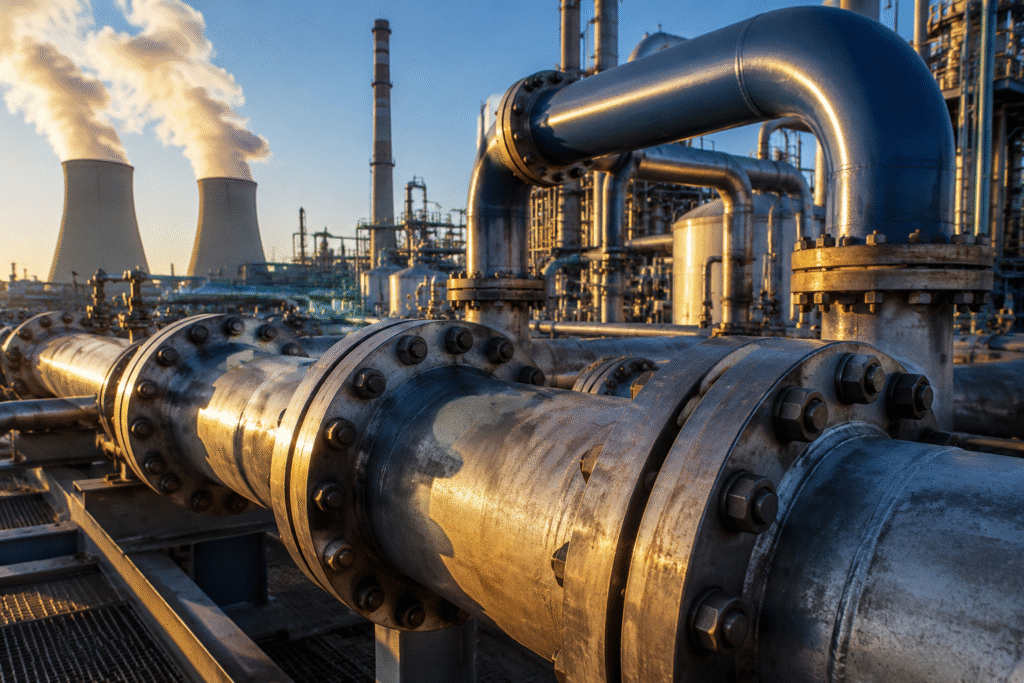
คู่มือแปลนท่อสแตนเลส: 7 ข้อดีที่ได้รับการสนับสนุนจากข้อมูล, ประเภท, การใช้และเกณฑ์การคัดเลือก
ความต้องการหน้าแปลนท่อสแตนเลสยังคงเพิ่มขึ้นอย่างต่อเนื่องเนื่องจากผู้ประกอบการอุตสาหกรรมให้ความสำคัญกับความต้านทานการกัดกร่อน, มูลค่าวงจรชีวิต, และการปฏิบัติตามข้อกำหนดในระบบท่อที่สำคัญ. จากการวิจัยของแกรนด์วิว (2024), ตลาดหน้าแปลนอุตสาหกรรมทั่วโลกมีมูลค่าอยู่ที่ $5.8 พันล้านใน 2023 และคาดว่าจะไปถึง $7.2 พันล้านโดย 2030, which makes material selection more strategic than ever.
สำหรับวิศวกรและทีมงานจัดซื้อ, the intriguing value of stainless solutions is no longer hidden. The advantages of stainless steel pipe flange products now extend beyond durability into traceability, ความสมบูรณ์ของความดัน, and long-term operating efficiency.
Why Stainless Steel Pipe Flange Demand Is Growing Across Industrial Markets
Industrial buyers are choosing stainless steel pipe flange products because plant uptime depends on leak-tight, ข้อต่อที่ทนต่อการกัดกร่อน. นอกจากนี้, modern projects demand components that meet ASME, ASTM, DIN, and EN requirements without adding excessive maintenance risk.
อ้างอิงจาก IBISWorld (2024), บัญชีเอเชียแปซิฟิกมีมากกว่า 45% ของการผลิตหน้าแปลนทั่วโลก, โดยจีนเป็นผู้ผลิตรายใหญ่ที่สุด. ดังนั้น, global sourcing strategies increasingly focus on qualified Chinese manufacturers that can combine scale, ความแม่นยำของเครื่องจักร, และการควบคุมเอกสาร.
ตามสถิติของสตาติสต้า (2024), อุตสาหกรรมน้ำมันและก๊าซมีสัดส่วนประมาณ 35% ของการบริโภคหน้าแปลนทั่วโลก. ส่งผลให้, the market strongly favors materials such as 304, 316, 316ล, 2205, และ 2507 สำหรับบริการเปรี้ยว, นอกชายฝั่ง, โรงกลั่น, and chemical processing applications.
Stainless grades remain attractive because they balance mechanical strength and corrosion resistance in chloride, ชื้น, and high-purity environments. ในทางตรงกันข้าม, lower-alloy materials may require more frequent coating, การตรวจสอบ, or replacement in aggressive service.
ASME B16.5 และ ASME B16.47 govern key dimensional and pressure-temperature requirements for many industrial flanges, ในขณะที่ ASTM A182 defines forged stainless and alloy flange material requirements (ASME, 2023; ASTM, 2023). เพราะเหตุนี้, buyers should evaluate both the material grade and the governing dimensional standard before placing an order.
The hidden procurement risk often lies in incomplete quality documentation rather than the flange itself. ดังนั้น, reputable suppliers should provide mill test reports, การติดตามความร้อน, การตรวจสอบมิติ, และ EN 10204 3.1 documentation when required.
ในฐานะวิศวกรวัสดุ ดร. เฮเลน มอร์ริส กล่าว: “หน้าแปลนไม่ได้เป็นเพียงตัวเชื่อมต่อเท่านั้น; it is a pressure boundary component, so alloy selection and standard compliance directly influence reliability.” That insight is especially relevant in petrochemical, นอกชายฝั่ง, and power generation systems where flange failure can shut down an entire line.
SASA FLANGE serves industrial customers in Oil & แก๊ส, ปิโตรเคมี, การผลิตไฟฟ้า, การต่อเรือ, การบำบัดน้ำ, และการก่อสร้าง. กับ ISO 9001:2015 และการรับรอง PED 2014/68/EU, the company supports global buyers seeking compliant stainless steel flanges and fittings from a factory-direct source.
นอกจากนี้, sourcing from an experienced manufacturer helps buyers align design intent with actual production capability. For more supplier details, ผู้ซื้อสามารถตรวจสอบได้ company background and explore available categories at หน้าผลิตภัณฑ์.
ชนิดหน้าแปลนท่อสเตนเลส, Materials and Hidden Advantages in Real Service
The versatility of a stainless steel pipe flange comes from the range of flange types, คลาสความดัน, and metallurgy available for different services. อย่างไรก็ตาม, choosing correctly requires understanding how type, ระดับ, and application interact.
ตามข้อมูลของ Mordor Intelligence (2024), industrial infrastructure upgrades in energy and water sectors are accelerating demand for corrosion-resistant piping components worldwide. นอกจากนี้, buyers increasingly request premium materials that reduce total cost of ownership rather than only minimizing purchase price.
ในฐานะที่ปรึกษาด้านการวางท่อ Mark Ellison, วิชาพลศึกษา, รัฐ: “The best flange selection starts with the process fluid, then temperature, then pressure class, and only after that with price.” This sequence helps engineers avoid short-term cost decisions that create long-term maintenance failures.
The most common stainless steel pipe flange materials include ASTM A182 F304, F304L, F316, F316L, F904L, F51, และ F53. นอกจากนี้, specialized projects may specify Inconel, โมเนล, ฮาสเตลลอย, or Titanium when standard stainless grades cannot handle the environment.
- 304 / 304ล: Good general corrosion resistance for water, การแปรรูปอาหาร, and moderate industrial service.
- 316 / 316ล: Improved molybdenum-bearing resistance to chlorides and many chemical media.
- 904ล: Stronger performance in reducing acids and severe corrosion environments.
- 2205 ดูเพล็กซ์: Higher strength and strong pitting resistance for offshore and process systems.
- 2507 ซุปเปอร์ดูเพล็กซ์: Premium solution for high chloride and high-pressure service.
In many specifications, 316L remains the default choice for process plants that require better chloride resistance than 304L. ในทางตรงกันข้าม, duplex and super duplex are often chosen when higher strength allows thinner wall design or improved resistance to stress corrosion cracking.
ตามการวิจัยตลาดอนาคต (2024), demand for duplex stainless components in energy and marine systems is growing at over 5% เป็นประจำทุกปี. ดังนั้น, procurement teams should evaluate duplex options earlier in the design stage instead of treating them as late substitutions.
The main flange Types used in industrial piping include weld neck, ลื่นบน, ตาบอด, เชื่อมซ็อกเก็ต, เกลียว, และข้อต่อตัก. Each Flange configuration has different benefits for alignment, bore continuity, ความเร็วในการติดตั้ง, และการเข้าถึงการตรวจสอบ.
- หน้าแปลนคอเชื่อม: ดีที่สุดสำหรับแรงดันสูง, การปั่นจักรยานด้วยความร้อน, และบริการที่สำคัญเนื่องจากดุมแบบเรียวช่วยลดความเข้มข้นของความเครียด.
- สลิปบนหน้าแปลน: Common for lower-pressure systems where installation efficiency and cost control matter.
- หน้าแปลนตาบอด: ใช้เพื่อยุติ, แยกออกจากกัน, or future-proof piping systems.
- หน้าแปลนเกลียว: Useful where welding is restricted or field conditions are difficult.
- หน้าแปลนเชื่อมซ็อกเก็ต: มักเลือกสำหรับการเจาะขนาดเล็ก, ท่อแรงดันสูง.
- หน้าแปลนร่วมตัก: Suitable when frequent dismantling is required.
For engineers comparing stainless steel flange types, the hidden advantages often appear during maintenance cycles. Weld neck designs can lower fatigue risk, while blind flanges simplify line isolation and hydrotest management.
Pressure class also matters. คลาส ASME ทั่วไปประกอบด้วย 150, 300, 600, 900, 1500, และ 2500, and the allowable pressure decreases as temperature rises according to ASME pressure-temperature ratings (ASME, 2023).
That is why a 4 inch stainless steel pipe flange for steam service may require a very different class and facing than the same nominal size in a water line. เช่นเดียวกัน, a Stainless Steel Threaded Pipe Flange may fit utility service but not a severe cyclic process unit.
SASA FLANGE ผลิตหน้าแปลนใน 304, 316, 316ล, 904ล, 2205, 2507 และเกรดพรีเมี่ยมอื่นๆ, สนับสนุนโดยเครื่องจักร CNC ขั้นสูงและการทดสอบคุณภาพที่ครอบคลุม. นอกจากนี้, ทางบริษัทเสนอขนาดที่กำหนดเองตั้งแต่ 1/2 นิ้วถึง 60 inch with competitive factory-direct pricing for export projects.
Buyers looking to Choose the right product should match material grade, หันหน้าไปทางหน้าแปลน, การจัดอันดับชั้นเรียน, and inspection requirements before RFQ release. Project teams can discuss custom specifications directly through SASA FLANGE ติดต่อฝ่ายสนับสนุน.
มาตรฐาน, Certification and Compliance for Stainless Steel Flanges and Fittings
Compliance is essential because stainless steel flanges and Fittings often serve as pressure boundary components in regulated environments. ดังนั้น, every purchase order should reference the exact manufacturing standard, มาตรฐานวัสดุ, ขอบเขตการตรวจสอบ, and document package.
Key dimensional and manufacturing references include ASME B16.5 สำหรับกรมอุทยานฯ 1/2 ผ่าน 24, ASME B16.47 สำหรับเส้นผ่านศูนย์กลางที่ใหญ่ขึ้น, และ ASME B16.9 สำหรับอุปกรณ์เชื่อมแบบชน. นอกจากนี้, international buyers often request DIN, JIS, GOST, หรือภาษาอังกฤษ 1092 dimensions for plant compatibility.
มาตรฐานวัสดุก็มีความสำคัญไม่แพ้กัน. ASTM A182 ครอบคลุมโลหะผสมปลอมแปลงหรือรีดและหน้าแปลนสแตนเลส, อุปกรณ์ปลอมแปลง, และวาล์วสำหรับการบริการที่อุณหภูมิสูง, ในขณะที่ ASTM A240 covers stainless plate products used in some flange and fitting-related applications (ASTM, 2023).
NACE MR0175 / ISO 15156 becomes critical when sour service is involved because sulfide stress cracking can quickly compromise unsuitable materials (เนซ, 2023). เช่นเดียวกัน, PED 2014/68/EU requirements can apply for equipment supplied into the European market.
- ASME B16.5: ขนาด, ความคลาดเคลื่อน, การจัดอันดับความดันอุณหภูมิ, หันหน้าไปทาง, and marking.
- ASME B16.47: Large-diameter flanges for major line sizes.
- ASTM A182: Material chemistry and mechanical requirements for forged stainless flanges.
- EN 1092: Common European flange dimensional standard.
- NACE MR0175: Material guidance for H2S-containing environments.
- EN 10204 3.1: Inspection document often requested by procurement teams.
ตามมาตรฐานไอเอสโอ (2023), documented quality systems reduce variation in manufacturing and inspection processes across serial production. ส่งผลให้, ISO 9001:2015 certification remains a meaningful baseline for industrial flange suppliers serving multinational customers.
สำหรับผู้ซื้อเปรียบเทียบซัพพลายเออร์, certifications should be matched with actual process control. A certificate alone does not confirm machining accuracy, ความสามารถของพีเอ็มไอ, การสนับสนุนการทดสอบน้ำ, การควบคุมเฟอร์ไรต์, or packaging discipline for export shipments.
That is why leading procurement teams request dimensional reports, ผลลัพธ์ของ PMI, hardness checks where applicable, and full traceability from raw material to final marking. นอกจากนี้, export projects often require third-party inspection by SGS, บีวี, ทียูวี, or similar agencies before shipment.
SASA FLANGE ดำเนินงานด้วย ISO 9001:2015, พีอีดี 2014/68/สหภาพยุโรป, และโฆษณา 2000 credentials to support demanding industrial supply chains. นอกจากนี้, ทางบริษัทสามารถจัดให้ได้ EN 10204 3.1 certification and coordinate inspection requirements for international EPC and MRO buyers.
The following comparison helps clarify common standard selection logic:
- ระบบ ASME: Preferred for North America, global EPC, น้ำมันและก๊าซ, และโครงการโรงกลั่น.
- EN / DIN system: Preferred for European industrial plants and equipment integration.
- ระบบ JIS: Common in Japanese standards environments and some Asian installations.
- Custom drawings: Required for OEM skids, packaged units, and retrofit dimensions.
Procurement managers should also verify flange facing requirements such as RF, เอฟเอฟ, RTJ, or custom serration patterns. ในการบริการที่สำคัญ, a mismatch between gasket type and flange facing can cause leakage even when the metallurgy is correct.
For authoritative standard details, buyers should consult the relevant organization directly, รวมทั้ง ASME. Internal coordination with an experienced manufacturer shortens review cycles, especially when mixed standards or special materials are involved.
วิธีการเลือกโซลูชั่นหน้าแปลนท่อสแตนเลสสำหรับน้ำมัน, แก๊ส, พลัง, ระบบทางทะเลและน้ำ
การเลือกควรเริ่มต้นด้วยเงื่อนไขการบริการ, not with price alone. ตัวอย่างเช่น, เคมีของไหล, คลอไรด์, อุณหภูมิ, ความดัน, cycling frequency, and inspection requirements all influence the correct flange specification.
ในน้ำมัน & Gas projects, stainless steel pipe flange selection often focuses on sour service, offshore corrosion, and high-integrity bolted joints. ดังนั้น, 316ล, 2205, และ 2507 are commonly reviewed depending on chloride level and design pressure.
ตามคำแนะนำของ DNV สำหรับระบบนอกชายฝั่ง (ดีเอ็นวี, 2023), material performance in chloride-rich marine environments is a major design factor for long service life. เพราะเหตุนี้, duplex or super duplex may outperform standard austenitic grades in many offshore skid and seawater applications.
ในโรงงานปิโตรเคมี, ความเข้ากันได้ของวัสดุกับกรด, ตัวทำละลาย, and chlorides becomes decisive. นอกจากนี้, low-carbon grades like 304L and 316L help reduce sensitization risk after welding in many process lines.
สำหรับการผลิตไฟฟ้า, thermal cycling and pressure transients often drive flange type selection. ส่งผลให้, weld neck designs are frequently preferred in steam, คอนเดนเสท, and high-temperature auxiliary systems.
Marine and shipbuilding projects require strong resistance to salt-laden atmospheres and splash-zone exposure. ดังนั้น, 316ล, 2205, และ 2507 are often considered for deck piping, ระบบบัลลาสต์, สายไฟ, และหน่วยแยกเกลือ.
Water treatment systems also benefit from stainless flange durability because chemical dosing and variable water quality can accelerate corrosion in coated carbon steel components. นอกจากนี้, clean finish and low maintenance support lifecycle savings in municipal and industrial treatment plants.
- Check the medium: Confirm chloride content, ค่า pH, ซัลไฟด์, และสารเคมีทำความสะอาด.
- Check pressure and temperature: Match ASME class and material limits to operating and upset conditions.
- ตรวจสอบประเภทหน้าแปลน: Select weld neck, ลื่นบน, ตาบอด, เกลียว, เชื่อมซ็อกเก็ต, or lap joint by service severity.
- Check facing: ตรวจสอบ RF, เอฟเอฟ, or RTJ against gasket design.
- Check documentation: Request MTC, พีเอ็มไอ, รายงานมิติ, และ EN 10204 3.1 ถ้าจำเป็น.
- Check installation constraints: Consider weld access, ความอดทนในการจัดตำแหน่ง, and future maintenance.
As corrosion specialist James Ortega notes: “Many flange failures start as specification shortcuts rather than manufacturing defects.” That is why the best Guide for procurement teams is to evaluate total installed risk, not simply the unit price of a Flange.
Lead time and supply continuity are also major purchasing variables. ตามสถิติของสตาติสต้า (2024), energy infrastructure expansion continues to support high demand for piping components, which can tighten delivery windows for special alloys and large diameters.
SASA FLANGE supports custom manufacturing for flanges and fittings including elbows, เสื้อยืด, ตัวลด, and caps in stainless, เหล็กกล้าคาร์บอน, โลหะผสม, and nickel-based grades. ได้รับการสนับสนุนจากเครื่องจักร CNC ขั้นสูงและการทดสอบคุณภาพที่ครอบคลุม, บริษัทให้บริการ 50+ ประเทศทั่วน้ำมัน & แก๊ส, ปิโตรเคมี, พลัง, และอุตสาหกรรมทางทะเล.
For projects needing custom drawings, มาตรฐานผสม, or urgent export packing, buyers can coordinate directly through หน้าการติดต่อ. This approach is especially helpful when evaluating stainless steel pipe flange sizes, special bore schedules, or project-specific marking requirements.
แนวโน้มในอนาคตสำหรับการจัดหาหน้าแปลนท่อสแตนเลสและคำแนะนำในการซื้อเชิงกลยุทธ์
แนวโน้มความต้องการหน้าแปลนท่อสแตนเลสยังคงเป็นบวกเนื่องจากพลังงาน, น้ำ, และโครงการปรับปรุงอุตสาหกรรมให้ทันสมัยยังคงดำเนินต่อไปทั่วโลก. จากการวิจัยของแกรนด์วิว (2024), คาดว่าตลาดจะเติบโตจาก $5.8 พันล้านใน 2023 ถึง $7.2 พันล้านโดย 2030, indicating steady long-term demand.
ในเวลาเดียวกัน, พฤติกรรมการจัดซื้อมีการเปลี่ยนแปลง. Buyers now compare not only stainless steel pipe flange price, but also lifecycle cost, คุณภาพเอกสาร, country-of-origin risk, and response speed for technical clarification.
Digital procurement is also reshaping vendor evaluation. ตามการวิจัยตลาดอนาคต (2024), B2B industrial sourcing platforms and direct manufacturer engagement are reducing reliance on purely local inventory channels, especially for specialized flange grades and custom dimensions.
ดังนั้น, strategic buyers should build approved vendor lists around measurable capability. That includes material breadth, กำลังการผลิตเครื่องจักร, สนับสนุนการตรวจสอบ, ประสบการณ์การส่งออก, and responsiveness during deviation review.
- สร้างมาตรฐานให้กับเกรดที่ได้รับอนุมัติ เช่น 304L, 316ล, 2205, และ 2507 ตามประเภทบริการ.
- Prequalify suppliers against ASME, ASTM, พีอีดี, และข้อกำหนดด้านเอกสาร.
- Request pricing in parallel with lead time, MTC format, และขอบเขตการตรวจสอบ.
- Use total cost evaluation for replacement frequency, downtime risk, and maintenance labor.
- Plan early for large-diameter or special alloy orders because mill availability can vary.
The most intriguing opportunity for buyers is hidden in lifecycle optimization. A slightly higher initial investment in the correct stainless material can reduce shutdowns, gasket failures, and replacement frequency over many years of operation.
For engineering-led organizations, the smart path is to align specification discipline with reliable supply partnerships. Companies seeking compliant, export-ready stainless steel pipe flange solutions can review available product ranges or connect with SASA FLANGE for project-specific support.
คำถามที่พบบ่อย
หน้าแปลนสแตนเลสใช้ทำอะไร?
●หน้าแปลนสแตนเลสใช้สำหรับเชื่อมต่อท่อ, วาล์ว, ปั๊ม, และภาชนะรับแรงดันในระบบที่ต้องการความต้านทานการกัดกร่อน, ความแข็งแรงทางกล, และการปิดผนึกที่เชื่อถือได้ภายใต้แรงกดดัน.
●ตามสถิติของสตาติสต้า (2024), อุตสาหกรรมน้ำมันและก๊าซมีสัดส่วนประมาณ 35% ของการบริโภคหน้าแปลนทั่วโลก, which shows how important flanged joints are in critical process piping.
●มีการใช้กันอย่างแพร่หลายในโรงงานปิโตรเคมี, แพลตฟอร์มนอกชายฝั่ง, สิ่งอำนวยความสะดวกบำบัดน้ำ, สถานีไฟฟ้า, ท่อทางทะเล, and food-grade systems because stainless materials resist rust, คลอไรด์, and frequent cleaning cycles better than many coated alternatives.
●Common applications include line connection, การแยกอุปกรณ์, การเข้าถึงการบำรุงรักษา, และจุดขยายในอนาคต, especially when operators need dismantling capability that welded joints alone cannot provide.
●For projects requiring certified materials and full traceability, ทำงานร่วมกับผู้ผลิตที่จัดตั้งขึ้นเช่น SASA FLANGE ช่วยให้มั่นใจในการปฏิบัติตาม ASME, ASTM, and EN documentation expectations.
พวกเขาทำข้อต่อท่อสแตนเลสหรือไม่?
●ใช่, ผู้ผลิตผลิตอุปกรณ์ท่อสแตนเลสเช่นข้อศอก, เสื้อยืด, ตัวลด, หมวกแก๊ป, and stub ends for both welded and threaded piping systems.
●ASME B16.9 is one of the key standards for factory-made wrought butt-welding fittings, while ASTM material grades such as 304, 316, and duplex variants support different corrosion and temperature requirements (ASME, 2023; ASTM, 2023).
●These fittings are commonly paired with stainless steel flanges to create complete piping assemblies for chemical processing, การผลิตกระแสไฟฟ้า, บริการทางทะเล, and high-purity utility lines.
●ในทางปฏิบัติ, buyers should match fitting grade, ความหนาของผนัง, and end preparation to the same piping specification as the flange to avoid weld mismatch or corrosion imbalance.
●For integrated flange and fitting supply, ก่อตั้งบริษัทผู้ผลิตเช่น SASA FLANGE can simplify sourcing, การตรวจสอบ, and export documentation in one package.
หน้าแปลนอะไรทำจากสแตนเลส?
●การออกแบบหน้าแปลนหลายแบบทำจากสแตนเลส, รวมถึงคอเชื่อม, ลื่นบน, ตาบอด, เกลียว, เชื่อมซ็อกเก็ต, และหน้าแปลนข้อต่อตักในเกรดต่างๆ เช่น 304, 316, 316ล, 904ล, 2205, และ 2507.
●ASTM A182 is a widely referenced material standard for forged stainless flanges, และ ASME B16.5 defines the dimensions and pressure-temperature framework for many of these products (ASTM, 2023; ASME, 2023).
●Material choice depends on fluid chemistry, อุณหภูมิในการทำงาน, การสัมผัสกับคลอไรด์, ระดับความดัน, and whether the service involves offshore, ก๊าซเปรี้ยว, or hygienic conditions.
●ตัวอย่างเช่น, 316L is often chosen for chloride-bearing environments, while duplex stainless can offer higher strength and stronger resistance to pitting in seawater or aggressive process media.
●For projects needing guidance on grades, หันหน้าไปทางหน้าแปลน, หรือขนาดที่กำหนดเอง, experienced suppliers like SASA FLANGE can help align the flange design with actual operating conditions.
หน้าแปลนสามประเภทคืออะไร?
●ประเภทหน้าแปลนที่ใช้อ้างอิงมากที่สุดสามประเภทในการอภิปรายทางอุตสาหกรรมขั้นพื้นฐานคือคอเชื่อม, ลื่นบน, และหน้าแปลนตาบอด.
●Weld neck flanges are preferred for high-pressure and high-temperature service because their tapered hub improves stress distribution, while slip on flanges are valued for easier alignment and lower fabrication cost in less severe service.
●Blind flanges are used to close the end of a piping system or vessel nozzle, which makes them essential for isolation, การทดสอบไฮโดรเทสติ้ง, และการขยายระบบในอนาคต.
●Although these three are the most familiar, many projects also use threaded, เชื่อมซ็อกเก็ต, and lap joint designs depending on maintenance access, small-bore service, or welding restrictions.
●ตามกฎการปฏิบัติ, engineers should select flange type by pressure, อุณหภูมิ, การสัมผัสกับความเหนื่อยล้า, and maintenance needs rather than by initial price alone.
What is the ASME code for stainless steel pipe flange?
●ASME B16.5 is the most common dimensional standard for stainless steel pipe flange products from NPS 1/2 ผ่าน 24, ในขณะที่ ASME B16.47 ครอบคลุมเส้นผ่านศูนย์กลางที่ใหญ่กว่ามากมาย.
●Material requirements are typically specified separately through ASTM standards such as ASTM A182 สำหรับหน้าแปลนสเตนเลสปลอมแปลง, so buyers must reference both the dimensional and material standard on purchase documents.
●ตามข้อมูลของ ASME (2023), การให้คะแนนอุณหภูมิความดันจะแตกต่างกันไปตามกลุ่มวัสดุและประเภทหน้าแปลน, which means the same nominal size can have different allowable limits at different temperatures.
●That is why complete specifications should include flange type, ระดับ, หันหน้าไปทาง, มาตรฐาน, เกรด ASTM, ข้อกำหนดการทดสอบ, and certificate format instead of only naming the pipe size.
●For regulated projects or export orders, confirming ASME compliance with an experienced manufacturer reduces the risk of mismatch during inspection and installation.
จะเลือกยังไงระหว่าง. 304 และ 316 หน้าแปลนสแตนเลส?
●เลือก 304 stainless flanges for general industrial service with moderate corrosion exposure, และเลือก 316 หรือ 316L เมื่อคลอไรด์, สภาพชายฝั่ง, หรือมีสารเคมีที่มีฤทธิ์รุนแรงมากขึ้น.
●The addition of molybdenum in 316 improves pitting and crevice corrosion resistance, which is why many marine, เคมี, and water treatment projects specify 316L over 304L.
●จากการวิจัยของแกรนด์วิว (2024), industrial buyers are increasingly prioritizing lifecycle value, and that favors materials that reduce replacement and maintenance costs in corrosive service.
●ในแง่การปฏิบัติ, 304 may be fully suitable for indoor utility lines or mild process conditions, ในขณะที่ 316 is often the safer long-term option for outdoor, ชายฝั่งทะเล, or chloride-bearing systems.
●When service conditions are uncertain, buyers should review process chemistry and operating limits with a qualified supplier before finalizing the flange grade.
โพสต์ที่เกี่ยวข้อง
หน้าแปลนเสร็จสิ้น: อธิบาย Serrations แบบศูนย์กลางและแบบเกลียว
ฟันปลาแบบศูนย์กลางและแบบเกลียวมีทั้งการตกแต่งผิวหน้าแปลนด้วยเครื่องจักร…
ดูเพล็กซ์ 2205 เทียบกับหน้าแปลน 316L: คุณควรเลือกวัสดุใด?
ตอบด่วน: ดูเพล็กซ์ 2205 หน้าแปลนมักจะเป็นตัวเลือกที่แข็งแกร่งกว่า…

คำจำกัดความหน้าแปลนปาก, รายละเอียดและภาพรวมหน้าแปลน ASME B16.36: ข้อมูลการตลาด, คู่มือการคัดเลือกและข้อมูลเชิงลึกด้านการปฏิบัติตามข้อกำหนด
ตลาดหน้าแปลนอุตสาหกรรมทั่วโลกมีมูลค่าอยู่ที่ $5.8 พันล้าน…

คู่มือการตลาดหน้าแปลนการกำจัดสีดำ: วัสดุ, 3.5″ ความเข้ากันได้, และการจัดหาข้อมูล B2B สำหรับหน้าแปลนอ่างล้างจาน
ความต้องการหน้าแปลนกำจัดสีดำเพิ่มขึ้นเนื่องจากผู้ซื้ออุปกรณ์ติดตั้งในครัว…