
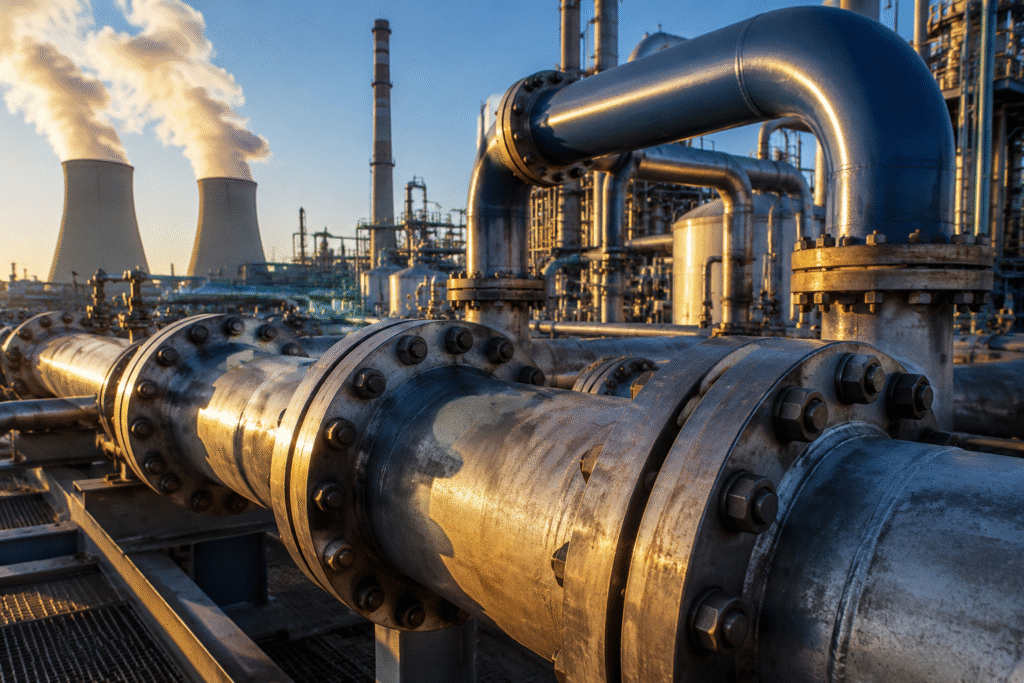
Направляющая фланца трубы из нержавеющей стали: 7 Преимущества, основанные на данных, Типы, Использование и критерии выбора
Спрос на фланцы для труб из нержавеющей стали продолжает расти, поскольку промышленные предприятия уделяют приоритетное внимание устойчивости к коррозии., ценность жизненного цикла, и соответствие требованиям в критически важных трубопроводных системах. По данным исследования Grand View (2024), мировой рынок промышленных фланцев оценивался в $5.8 миллиард в 2023 и, по прогнозам, достигнет $7.2 миллиард на 2030, which makes material selection more strategic than ever.
Для инженеров и отделов закупок, the intriguing value of stainless solutions is no longer hidden. The advantages of stainless steel pipe flange products now extend beyond durability into traceability, целостность давления, and long-term operating efficiency.
Why Stainless Steel Pipe Flange Demand Is Growing Across Industrial Markets
Industrial buyers are choosing stainless steel pipe flange products because plant uptime depends on leak-tight, коррозионностойкие соединения. Более того, modern projects demand components that meet ASME, ASTM, DIN, and EN requirements without adding excessive maintenance risk.
По данным IBISWorld (2024), На долю Азиатско-Тихоокеанского региона приходится более 45% мирового производства фланцев, при этом Китай является крупнейшим производителем. Поэтому, global sourcing strategies increasingly focus on qualified Chinese manufacturers that can combine scale, точность обработки, и контроль документации.
По данным Статистики (2024), на долю нефтегазовой отрасли приходится около 35% мирового потребления фланцев. Как результат, the market strongly favors materials such as 304, 316, 316л, 2205, и 2507 за кислое обслуживание, оффшорный, нефтеперерабатывающий завод, и приложения химической обработки.
Stainless grades remain attractive because they balance mechanical strength and corrosion resistance in chloride, влажный, and high-purity environments. В отличие, lower-alloy materials may require more frequent coating, инспекция, or replacement in aggressive service.
ASME B16.5 и ASME B16.47 govern key dimensional and pressure-temperature requirements for many industrial flanges, пока ASTM A182 defines forged stainless and alloy flange material requirements (ASME, 2023; ASTM, 2023). Следовательно, buyers should evaluate both the material grade and the governing dimensional standard before placing an order.
The hidden procurement risk often lies in incomplete quality documentation rather than the flange itself. Поэтому, reputable suppliers should provide mill test reports, прослеживаемость тепла, проверка размеров, и EN 10204 3.1 documentation when required.
Как инженер-материаловед доктор. Хелен Моррис утверждает: «A flange is not just a connector; it is a pressure boundary component, so alloy selection and standard compliance directly influence reliability.» That insight is especially relevant in petrochemical, оффшорный, and power generation systems where flange failure can shut down an entire line.
SASA FLANGE serves industrial customers in Oil & Газ, нефтехимическая, Производство электроэнергии, Судостроение, Очистка воды, и строительство. С ISO 9001:2015 и сертификаты PED 2014/68/ЕС., the company supports global buyers seeking compliant stainless steel flanges and fittings from a factory-direct source.
Кроме того, sourcing from an experienced manufacturer helps buyers align design intent with actual production capability. For more supplier details, покупатели могут просмотреть company background and explore available categories at product pages.
Типы фланцев для труб из нержавеющей стали, Materials and Hidden Advantages in Real Service
The versatility of a stainless steel pipe flange comes from the range of flange types, классы давления, and metallurgy available for different services. Однако, choosing correctly requires understanding how type, оценка, and application interact.
По данным Мордорской разведки (2024), industrial infrastructure upgrades in energy and water sectors are accelerating demand for corrosion-resistant piping components worldwide. Более того, buyers increasingly request premium materials that reduce total cost of ownership rather than only minimizing purchase price.
Консультант по трубопроводам Марк Эллисон, ЧП, государства: «The best flange selection starts with the process fluid, then temperature, then pressure class, and only after that with price.» This sequence helps engineers avoid short-term cost decisions that create long-term maintenance failures.
The most common stainless steel pipe flange materials include ASTM A182 F304, F304L, Ф316, F316L, F904L, F51, и F53. Кроме того, specialized projects may specify Inconel, Монель, Хастеллой, or Titanium when standard stainless grades cannot handle the environment.
- 304 / 304л: Good general corrosion resistance for water, пищевая промышленность, and moderate industrial service.
- 316 / 316л: Improved molybdenum-bearing resistance to chlorides and many chemical media.
- 904л: Stronger performance in reducing acids and severe corrosion environments.
- 2205 Дуплекс: Higher strength and strong pitting resistance for offshore and process systems.
- 2507 Супер Дуплекс: Premium solution for high chloride and high-pressure service.
In many specifications, 316L remains the default choice for process plants that require better chloride resistance than 304L. В отличие, duplex and super duplex are often chosen when higher strength allows thinner wall design or improved resistance to stress corrosion cracking.
По данным Market Research Future (2024), demand for duplex stainless components in energy and marine systems is growing at over 5% ежегодно. Поэтому, procurement teams should evaluate duplex options earlier in the design stage instead of treating them as late substitutions.
The main flange Types used in industrial piping include weld neck, надеть, слепой, раструбная сварка, резьбовой, и коленный сустав. Each Flange configuration has different benefits for alignment, bore continuity, скорость установки, и доступ для осмотра.
- Приварной фланец с шейкой: Лучше всего для высокого давления, термоциклирование, и критически важное обслуживание, поскольку коническая ступица снижает концентрацию напряжений.
- Наденьте фланец: Common for lower-pressure systems where installation efficiency and cost control matter.
- Глухой фланец: Используется для прекращения, изолировать, or future-proof piping systems.
- Резьбовой фланец: Useful where welding is restricted or field conditions are difficult.
- Фланец под приварку враструб: Often selected for small-bore, трубопровод высокого давления.
- Фланец внахлестку: Suitable when frequent dismantling is required.
For engineers comparing stainless steel flange types, the hidden advantages often appear during maintenance cycles. Weld neck designs can lower fatigue risk, while blind flanges simplify line isolation and hydrotest management.
Pressure class also matters. Common ASME classes include 150, 300, 600, 900, 1500, и 2500, and the allowable pressure decreases as temperature rises according to ASME pressure-temperature ratings (ASME, 2023).
That is why a 4 inch stainless steel pipe flange for steam service may require a very different class and facing than the same nominal size in a water line. Так же, a Stainless Steel Threaded Pipe Flange may fit utility service but not a severe cyclic process unit.
SASA FLANGE производит фланцы в 304, 316, 316л, 904л, 2205, 2507 и другие премиум-классы, поддерживается передовой обработкой с ЧПУ и всесторонним тестированием качества. Более того, Компания предлагает нестандартные размеры от 1/2 дюйм до 60 inch with competitive factory-direct pricing for export projects.
Buyers looking to Choose the right product should match material grade, облицовка фланца, рейтинг класса, and inspection requirements before RFQ release. Project teams can discuss custom specifications directly through SASA FLANGE contact support.
Стандарты, Certification and Compliance for Stainless Steel Flanges and Fittings
Compliance is essential because stainless steel flanges and Fittings often serve as pressure boundary components in regulated environments. Поэтому, every purchase order should reference the exact manufacturing standard, стандарт материала, объем проверки, and document package.
Key dimensional and manufacturing references include ASME B16.5 для АПЛ 1/2 через 24, ASME B16.47 для больших диаметров, и ASME B16.9 для фитингов под стыковую сварку. Кроме того, international buyers often request DIN, JIS, ГОСТ, или RU 1092 dimensions for plant compatibility.
Стандарты материалов одинаково важны. ASTM A182 covers forged or rolled alloy and stainless flanges, кованые фитинги, и клапаны для работы при высоких температурах, пока ASTM A240 covers stainless plate products used in some flange and fitting-related applications (ASTM, 2023).
NACE MR0175 / ISO 15156 becomes critical when sour service is involved because sulfide stress cracking can quickly compromise unsuitable materials (КДЕС, 2023). Так же, PED 2014/68/EU requirements can apply for equipment supplied into the European market.
- ASME B16.5: Размеры, допуски, номинальные значения давления и температуры, облицовка, и маркировка.
- ASME B16.47: Large-diameter flanges for major line sizes.
- ASTM A182: Material chemistry and mechanical requirements for forged stainless flanges.
- EN 1092: Common European flange dimensional standard.
- NACE MR0175: Material guidance for H2S-containing environments.
- EN 10204 3.1: Inspection document often requested by procurement teams.
По данным ИСО (2023), documented quality systems reduce variation in manufacturing and inspection processes across serial production. Как результат, ISO 9001:2015 certification remains a meaningful baseline for industrial flange suppliers serving multinational customers.
Для покупателей, сравнивающих поставщиков, certifications should be matched with actual process control. A certificate alone does not confirm machining accuracy, Возможности PMI, сопровождение гидроиспытаний, ферритовый контроль, or packaging discipline for export shipments.
That is why leading procurement teams request dimensional reports, Результаты PMI, hardness checks where applicable, and full traceability from raw material to final marking. Более того, export projects often require third-party inspection by SGS, БВ, ТУВ, or similar agencies before shipment.
SASA FLANGE работает с ISO 9001:2015, ПЭД 2014/68/ЕС, и АД 2000 credentials to support demanding industrial supply chains. Более того, the company can provide EN 10204 3.1 certification and coordinate inspection requirements for international EPC and MRO buyers.
The following comparison helps clarify common standard selection logic:
- система ASME: Preferred for North America, global EPC, нефть и газ, and refinery projects.
- EN / DIN system: Preferred for European industrial plants and equipment integration.
- JIS system: Common in Japanese standards environments and some Asian installations.
- Custom drawings: Required for OEM skids, packaged units, and retrofit dimensions.
Procurement managers should also verify flange facing requirements such as RF, ФФ, РТЖ, or custom serration patterns. В критической службе, a mismatch between gasket type and flange facing can cause leakage even when the metallurgy is correct.
For authoritative standard details, buyers should consult the relevant organization directly, включая ASME. Internal coordination with an experienced manufacturer shortens review cycles, especially when mixed standards or special materials are involved.
Как выбрать фланцы для труб из нержавеющей стали для масла, Газ, Власть, Marine and Water Systems
Выбор следует начинать с условий эксплуатации., not with price alone. Например, жидкая химия, хлориды, температура, давление, cycling frequency, and inspection requirements all influence the correct flange specification.
В масле & Gas projects, stainless steel pipe flange selection often focuses on sour service, морская коррозия, and high-integrity bolted joints. Поэтому, 316л, 2205, и 2507 are commonly reviewed depending on chloride level and design pressure.
Согласно руководству DNV для морских систем (ДНВ, 2023), material performance in chloride-rich marine environments is a major design factor for long service life. Следовательно, duplex or super duplex may outperform standard austenitic grades in many offshore skid and seawater applications.
На нефтехимических заводах, material compatibility with acids, растворители, and chlorides becomes decisive. Более того, low-carbon grades like 304L and 316L help reduce sensitization risk after welding in many process lines.
Для производства электроэнергии, thermal cycling and pressure transients often drive flange type selection. Как результат, weld neck designs are frequently preferred in steam, конденсат, and high-temperature auxiliary systems.
Marine and shipbuilding projects require strong resistance to salt-laden atmospheres and splash-zone exposure. Поэтому, 316л, 2205, и 2507 are often considered for deck piping, балластные системы, огневые линии, and desalination units.
Water treatment systems also benefit from stainless flange durability because chemical dosing and variable water quality can accelerate corrosion in coated carbon steel components. Кроме того, clean finish and low maintenance support lifecycle savings in municipal and industrial treatment plants.
- Check the medium: Confirm chloride content, рН, сульфиды, и чистящие химикаты.
- Check pressure and temperature: Match ASME class and material limits to operating and upset conditions.
- Проверьте тип фланца: Select weld neck, надеть, слепой, резьбовой, раструбная сварка, or lap joint by service severity.
- Check facing: Проверить РФ, ФФ, or RTJ against gasket design.
- Check documentation: Request MTC, PMI, отчеты о размерах, и EN 10204 3.1 если требуется.
- Check installation constraints: Consider weld access, допуск выравнивания, and future maintenance.
As corrosion specialist James Ortega notes: «Many flange failures start as specification shortcuts rather than manufacturing defects.» That is why the best Guide for procurement teams is to evaluate total installed risk, not simply the unit price of a Flange.
Lead time and supply continuity are also major purchasing variables. По данным Статистики (2024), energy infrastructure expansion continues to support high demand for piping components, which can tighten delivery windows for special alloys and large diameters.
SASA FLANGE supports custom manufacturing for flanges and fittings including elbows, тройники, редукторы, and caps in stainless, углеродистая сталь, сплав, and nickel-based grades. Благодаря передовой обработке с ЧПУ и всестороннему тестированию качества., компания обслуживает 50+ страны по нефти & Газ, нефтехимическая, Власть, и морская промышленность.
For projects needing custom drawings, смешанные стандарты, or urgent export packing, buyers can coordinate directly through страница контактов. This approach is especially helpful when evaluating stainless steel pipe flange sizes, special bore schedules, or project-specific marking requirements.
Будущие перспективы закупок фланцев для труб из нержавеющей стали и рекомендации по стратегическим закупкам
The outlook for stainless steel pipe flange demand remains positive because energy, вода, и проекты промышленной модернизации продолжаются во всем мире. По данным исследования Grand View (2024), Ожидается, что рынок вырастет с $5.8 миллиард в 2023 к $7.2 миллиард на 2030, indicating steady long-term demand.
В то же время, поведение в сфере закупок меняется. Buyers now compare not only stainless steel pipe flange price, but also lifecycle cost, качество документации, country-of-origin risk, and response speed for technical clarification.
Digital procurement is also reshaping vendor evaluation. По данным Market Research Future (2024), B2B industrial sourcing platforms and direct manufacturer engagement are reducing reliance on purely local inventory channels, especially for specialized flange grades and custom dimensions.
Поэтому, strategic buyers should build approved vendor lists around measurable capability. That includes material breadth, производительность обработки, инспекционная поддержка, опыт экспорта, and responsiveness during deviation review.
- Стандартизировать утвержденные марки, такие как 304L., 316л, 2205, и 2507 по категориям услуг.
- Prequalify suppliers against ASME, ASTM, ПЭД, и требования к документации.
- Request pricing in parallel with lead time, Формат МТС, и объем проверки.
- Use total cost evaluation for replacement frequency, downtime risk, and maintenance labor.
- Plan early for large-diameter or special alloy orders because mill availability can vary.
The most intriguing opportunity for buyers is hidden in lifecycle optimization. A slightly higher initial investment in the correct stainless material can reduce shutdowns, gasket failures, and replacement frequency over many years of operation.
For engineering-led organizations, the smart path is to align specification discipline with reliable supply partnerships. Companies seeking compliant, export-ready stainless steel pipe flange solutions can review available product ranges or connect with SASA FLANGE for project-specific support.
Часто задаваемые вопросы
Для чего используются фланцы из нержавеющей стали?
●Фланцы из нержавеющей стали используются для соединения труб., клапаны, насосы, и сосуды под давлением в системах, требующих коррозионной стойкости, механическая прочность, и надежная герметизация под давлением.
●По данным Статистики (2024), на долю нефтегазовой отрасли приходится около 35% мирового потребления фланцев, which shows how important flanged joints are in critical process piping.
●They are widely used in petrochemical plants, морские платформы, водоочистные сооружения, электростанции, морской трубопровод, and food-grade systems because stainless materials resist rust, хлориды, and frequent cleaning cycles better than many coated alternatives.
●Common applications include line connection, изоляция оборудования, доступ для обслуживания, и будущие точки расширения, especially when operators need dismantling capability that welded joints alone cannot provide.
●For projects requiring certified materials and full traceability, работа с известными производителями, такими как SASA FLANGE помогает обеспечить соответствие ASME, ASTM, and EN documentation expectations.
Делают ли они фитинги для труб из нержавеющей стали??
●Да, производители производят фитинги для труб из нержавеющей стали, такие как колена, тройники, редукторы, кепки, and stub ends for both welded and threaded piping systems.
●ASME B16.9 is one of the key standards for factory-made wrought butt-welding fittings, while ASTM material grades such as 304, 316, and duplex variants support different corrosion and temperature requirements (ASME, 2023; ASTM, 2023).
●These fittings are commonly paired with stainless steel flanges to create complete piping assemblies for chemical processing, производство электроэнергии, морской сервис, and high-purity utility lines.
●На практике, buyers should match fitting grade, толщина стенки, and end preparation to the same piping specification as the flange to avoid weld mismatch or corrosion imbalance.
●For integrated flange and fitting supply, признанные производители, такие как SASA FLANGE can simplify sourcing, инспекция, and export documentation in one package.
Какие фланцы делают из нержавейки?
●Many flange designs are made of stainless steel, включая приварную шейку, надеть, слепой, резьбовой, раструбная сварка, and lap joint flanges in grades such as 304, 316, 316л, 904л, 2205, и 2507.
●ASTM A182 is a widely referenced material standard for forged stainless flanges, и ASME B16.5 defines the dimensions and pressure-temperature framework for many of these products (ASTM, 2023; ASME, 2023).
●Material choice depends on fluid chemistry, рабочая температура, воздействие хлоридов, класс давления, and whether the service involves offshore, кислый газ, or hygienic conditions.
●Например, 316L is often chosen for chloride-bearing environments, while duplex stainless can offer higher strength and stronger resistance to pitting in seawater or aggressive process media.
●For projects needing guidance on grades, flange facings, или нестандартные размеры, experienced suppliers like SASA FLANGE can help align the flange design with actual operating conditions.
Какие три типа фланцев существуют??
●В основных промышленных дискуссиях чаще всего упоминаются три типа фланцев: приварная шейка., надеть, и глухие фланцы.
●Weld neck flanges are preferred for high-pressure and high-temperature service because their tapered hub improves stress distribution, while slip on flanges are valued for easier alignment and lower fabrication cost in less severe service.
●Blind flanges are used to close the end of a piping system or vessel nozzle, which makes them essential for isolation, гидроиспытания, и будущее расширение системы.
●Although these three are the most familiar, many projects also use threaded, раструбная сварка, and lap joint designs depending on maintenance access, small-bore service, or welding restrictions.
●Как практическое правило, engineers should select flange type by pressure, температура, fatigue exposure, and maintenance needs rather than by initial price alone.
What is the ASME code for stainless steel pipe flange?
●ASME B16.5 is the most common dimensional standard for stainless steel pipe flange products from NPS 1/2 через 24, пока ASME B16.47 covers many larger diameters.
●Material requirements are typically specified separately through ASTM standards such as ASTM A182 для кованых фланцев из нержавеющей стали, so buyers must reference both the dimensional and material standard on purchase documents.
●Согласно ASME (2023), Номинальные значения давления и температуры различаются в зависимости от группы материалов и класса фланца, which means the same nominal size can have different allowable limits at different temperatures.
●That is why complete specifications should include flange type, сорт, лицом к лицу, стандартный, Класс ASTM, требования к тестированию, and certificate format instead of only naming the pipe size.
●For regulated projects or export orders, confirming ASME compliance with an experienced manufacturer reduces the risk of mismatch during inspection and installation.
Как мне выбрать между 304 и 316 фланцы из нержавеющей стали?
●Выбирать 304 stainless flanges for general industrial service with moderate corrosion exposure, и выбери 316 или 316L, когда хлориды, прибрежные условия, или более агрессивные химические вещества присутствуют.
●The addition of molybdenum in 316 improves pitting and crevice corrosion resistance, which is why many marine, химический, and water treatment projects specify 316L over 304L.
●По данным исследования Grand View (2024), industrial buyers are increasingly prioritizing lifecycle value, and that favors materials that reduce replacement and maintenance costs in corrosive service.
●В практическом плане, 304 may be fully suitable for indoor utility lines or mild process conditions, пока 316 is often the safer long-term option for outdoor, прибрежный, or chloride-bearing systems.
●When service conditions are uncertain, buyers should review process chemistry and operating limits with a qualified supplier before finalizing the flange grade.
Связанные Посты
Отделка торцевой поверхности фланца: Объяснение концентрических и спиральных зубцов
Концентрические и спиральные зубцы представляют собой обработанную поверхность фланца.…
Дуплекс 2205 по сравнению с фланцами 316L: Какой материал выбрать?
Быстрый ответ: Дуплекс 2205 flanges are usually the stronger candidate…

Определение фланца с диафрагмой, Подробности и обзор фланцев ASME B16.36: Рыночные данные, Руководство по выбору и анализ соответствия требованиям
Мировой рынок промышленных фланцев оценивался в $5.8 миллиард…

Руководство по рынку черных сливных фланцев: Материалы, 3.5″ Совместимость, и данные о поставщиках B2B для фланцев для кухонной мойки
Спрос на черные фланцы для утилизации растет благодаря покупателям кухонной техники…