
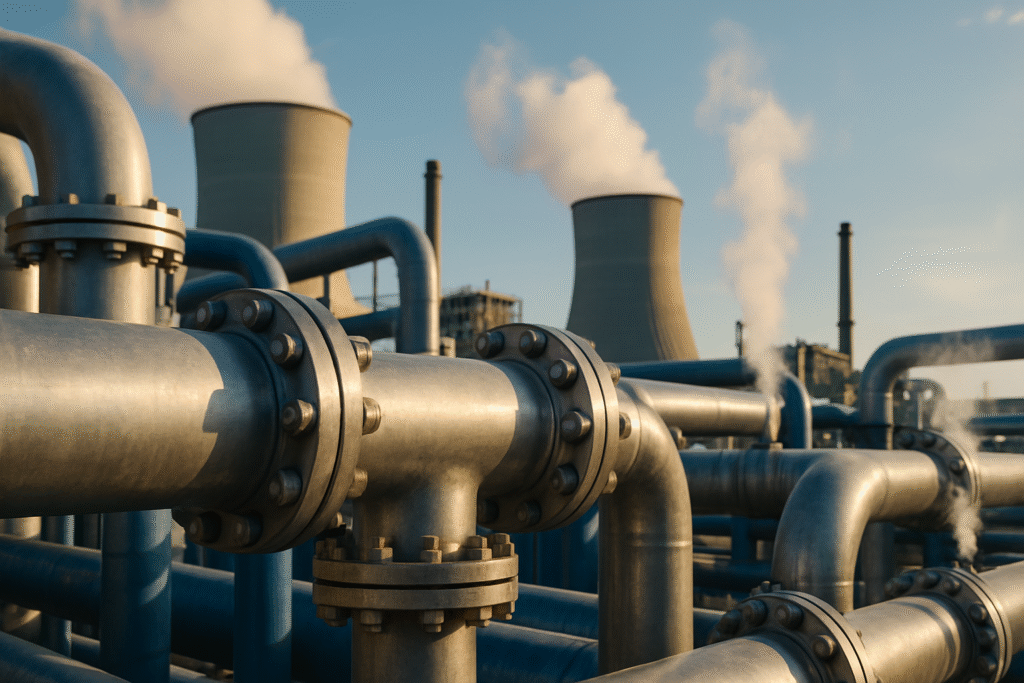
스테인레스 스틸 파이프 플랜지 시장: 숨겨진 장점, 유형, 용도, 및 플랜지를 선택하는 방법 2025
그랜드뷰 리서치에 따르면 (2024), 전 세계 산업용 플랜지 시장의 가치는 다음과 같습니다. $5.8 10억 2023 도달할 것으로 예상됩니다. $7.2 10억 단위로 2030. 그 성장이 스테인레스 스틸 파이프 플랜지 a critical buying category for EPC contractors, OEM, and industrial maintenance teams seeking durability, 규정 준수, 및 수명주기 가치.
조달 관리자용, the most common question is not only which flange to buy, but how to choose flanges that balance pressure class, 내식성, 리드타임, 및 총 설치 비용. This guide explains the hidden advantages, 종류, 용도, and standards that shape successful stainless steel flange selection.
스테인레스 스틸 파이프 플랜지 시장이 계속 확장되는 이유
Industrial demand remains strong because flanged piping systems support maintenance access, 점검, and safe disassembly in mission-critical plants. 스태티스타에 따르면 (2024), 석유 및 가스 산업은 대략적으로 35% 글로벌 플랜지 소비량, which confirms how central flanges are to upstream, 내의 한복판, and downstream assets.
Regional production also matters in sourcing strategy. IBISWorld에 따르면 (2024), 아시아 태평양 계정은 이상입니다. 45% 글로벌 플랜지 생산량의, 중국이 가장 큰 제조사이기 때문에, giving buyers broader access to competitive manufacturing and export capacity.
동시에, stainless grades continue to gain share in corrosive and hygienic service. This is especially true in offshore systems, 담수화, 의약품, 식품 가공, and chemical lines where contamination control and corrosion resistance directly affect uptime.
모르도르 정보국에 따르면 (2024), process industries are increasing investment in corrosion-resistant alloy piping components as maintenance budgets shift toward lifecycle optimization. 그러므로, stainless steel flanges often outperform painted carbon steel in wet, 염화물 함유, or washdown environments.
The hidden advantages of stainless steel are practical rather than theoretical. Buyers reduce repainting costs, lower leak risks, improve cleanability, and simplify inspection when they choose the correct ASTM and ASME-compliant flange.
데이비드 휴즈처럼, 수석 배관 엔지니어, 주: “A flange is rarely a high-cost item by itself, but a wrong flange selection can become a high-cost failure point for the entire system.” That is why experienced buyers focus on metallurgy, dimensional standards, and traceable documentation from the start.
Manufacturers with export experience can reduce procurement friction significantly. SASA FLANGE, 예를 들어, 스테인레스 스틸 플랜지 공급, 합금 플랜지, and pipe fittings to Oil & 가스, 석유화학, 힘, 선박, and Water Treatment projects in 50+ 국가.
와 함께 ISO 9001:2015 및 PED 2014/68/EU 인증, SASA FLANGE supports projects that require strict quality systems and international compliance. 고급 CNC 가공 및 포괄적인 품질 테스트를 통해 뒷받침됨, 회사는 다음에서 플랜지를 제조합니다. 304, 316, 316엘, 904엘, 2205, 2507, 티탄, 인코넬, 모넬, 하스텔로이, 그리고 다른 프리미엄 등급.
For buyers comparing multiple suppliers, data-backed qualification matters more than marketing adjectives like intriguing or premium. 실제로, reliable mill traceability, EN 10204 3.1 인증, PMI 테스트, 차원 제어, and on-time delivery are the real purchasing differentiators.
스테인레스 스틸 파이프 플랜지 유형, 재료, 그리고 숨겨진 장점
The most common stainless steel flange materials include ASTM A182 F304, F304L, F316, F316L, F321, F347, 듀플렉스 F51, and super duplex F53/F55. Each grade offers a different balance of chloride resistance, 용접성, 온도 성능, 그리고 비용.
According to ASTM and ASME material practice, 304 그리고 316 remain the most common stainless choices for industrial flanges because they are widely available and well understood in fabrication shops (ASTM, 2024; ASME, 2024). 하지만, the best grade depends on fluid chemistry, 온도 사이클링, and the required design code.
박사로서. Helen Mercer, 재료 과학자, 주: “The hidden advantage of 316L is not just better corrosion resistance than 304L, but more predictable performance in chloride-bearing service when welding and post-fabrication cleaning are controlled.” That distinction is important for coastal plants, marine skids, 및 화학물질 주입 시스템.
Buyers should compare flange types as carefully as they compare material grades. Design geometry affects gasket loading, installation time, 검사 접근, and long-term sealing performance.
- 웰드 넥 플랜지: 고압에 선호, 온도 사이클링, 진동, 테이퍼형 허브가 응력 분산을 개선하므로 중요한 서비스.
- 슬립온 플랜지: Lower installed cost in less severe service, but weld quality and fit-up control are essential.
- 소켓 용접 플랜지: Common in small-bore, 고압 라인, especially where clean bore alignment is needed.
- 스레드 플랜지: 용접이 제한된 곳에 유용, although thread compatibility and service limitations must be reviewed.
- 블라인드 플랜지: Used for line termination, 테스트, inspection openings, 그리고 향후 확장 포인트.
- 랩 조인트 플랜지: Valuable where frequent dismantling is required and where expensive alloy backing flanges can reduce cost.
The most common pressure classes for ASME B16.5 flanges are Class 150, 300, 600, 900, 1500, 그리고 2500. Higher pressure class does not automatically mean better selection, because temperature derating and material group rules also govern allowable service conditions.
에 따르면 ASME B16.5, 압력-온도 등급은 재료 그룹 및 플랜지 등급에 따라 다릅니다., so buyers must confirm the exact grade before finalizing design pressure (ASME, 2024). 대조적으로, EN 1092 and DIN systems use PN ratings, which require careful cross-standard verification during international sourcing.
Common stainless flange size ranges begin at 1/2 인치 및 확장 24 인치 미만 ASME B16.5, while larger diameters typically move to ASME B16.47 Series A or B. SASA FLANGE 사용자 정의 크기를 제공합니다 1/2 인치에서 60 신장, which helps buyers consolidate sourcing across standard and project-specific requirements.
Material selection should follow service conditions, 습관이 아니다. 예를 들어, 304/304L often suits water, 음식, 및 일반 프로세스 서비스, while 316/316L is typically chosen for chlorides, marine air, and more aggressive chemical exposure.
심한 부식의 경우, buyers often evaluate 904L, 듀플렉스 2205, 그리고 슈퍼 듀플렉스 2507. 시장 조사 미래에 따르면 (2024), demand for duplex stainless components is growing as operators seek higher strength-to-weight ratios and improved chloride stress corrosion cracking resistance in energy infrastructure.
These hidden advantages often create measurable project savings. Duplex grades can allow wall thickness optimization in some systems, and longer maintenance intervals can offset the higher initial material cost.
Procurement teams also care about matching flanges with elbows, 티셔츠, 감속기, and caps from the same quality-controlled source. Buyers can review broader product compatibility through SASA FLANGE 제품 성능, especially when mixed-material packages and project documentation are required.
According to ISO quality management practice, supplier consistency reduces non-conformance risk in large piping packages (ISO, 2024). 그러므로, purchasing flanges and fittings from a manufacturer with traceable procedures can improve dimensional compatibility and document control across the whole line class.
ASME, ASTM, DIN, and EN Standards That Define Stainless Steel Flanges
Every serious flange purchase begins with standards compliance. The most common standards for stainless steel flanges include ASME B16.5, ASME B16.47, ASTM A182, EN 1092-1, DIN 표준, and project-specific requirements tied to PED, NACE, API, or end-user specifications.
ASTM A182 단조 또는 압연 합금 및 스테인리스강 파이프 플랜지를 덮습니다., 단조 피팅, 및 고온 서비스용 밸브. This is the material standard most buyers reference when ordering forged stainless steel flanges in grades such as F304, F304L, F316, F316L, F321, and F347.
ASME B16.5 차원을 관리합니다., 공차, 마킹, 압력 온도 등급, and testing considerations for flanges from NPS 1/2 NPS를 통해 24. ASME B16.47 applies to larger diameters and is widely used for refinery, 단말기, and transmission projects.
유럽 프로젝트에서는 종종 EN을 지정합니다. 1092-1, especially where PED compliance is mandatory. 압력 장비 지침 2014/68/EU에 따름, pressure-retaining components sold into qualifying EU applications must meet essential safety requirements and conformity procedures (소아과, 2014).
부식성 서비스용, engineers frequently add NACE requirements. NACE MR0175/ISO 15156 is especially relevant in sour oil and gas environments where sulfide stress cracking risks can disqualify otherwise acceptable materials.
마크 엘리슨으로서, 부식 컨설턴트, 주: “Standards tell you the minimum acceptable framework, but the real engineering work is matching those standards to process chemistry, 혼란스러운 상황, and inspection strategy.” That is why code compliance alone does not replace application-specific review.
The table below summarizes the standards procurement teams use most often.
- ASTM A182: Material specification for forged stainless and alloy flanges.
- ASME B16.5: Dimensions and ratings for NPS 1/2 에게 24 플랜지.
- ASME B16.47: Dimensions and ratings for larger diameter flanges.
- ASME B16.9: Standard for factory-made wrought butt welding fittings.
- EN 1092-1: 유럽 플랜지 치수 및 압력 지정.
- DIN: Legacy and application-specific dimensional systems still used in many export markets.
- NACE MR0175/ISO 15156: 열악한 서비스 환경에 대한 자재 지침.
- EN 10204 3.1: Inspection certificate format widely required for traceability.
Dimensional and certification errors create avoidable delays. 예를 들어, mixing ASME B16.5 drilling with EN 1092 mating components can stop installation, even when the material grade is correct.
해양 부품에 대한 DNV 지침에 따름, documentation traceability and material verification are critical to integrity management in harsh-service systems (DNV, 2024). 그러므로, flange procurement should include MTC review, 열수 추적성, and verification of facing type, RF와 같은, RTJ, 또는 FF.
SASA FLANGE supports these quality expectations with ISO 9001:2015, PED 2014/68/EU, 그리고 광고 2000 신임장. The company also supplies test documentation aligned with project requirements, 포함 EN 10204 3.1 지정된 곳에.
글로벌 바이어를 위한, the practical advantage is clear. One qualified source can supply stainless steel flanges and ASME B16.9 fittings in aligned materials, which simplifies QA review, packing coordination, and shipment release.
For deeper project discussions on standards conversion, 재료 등급, 또는 맞춤 측정기준, engineers can connect directly through SASA FLANGE technical sales support. Early clarification often prevents mismatched orders and rework later in the procurement cycle.
오일용 플랜지를 선택하는 방법 & 가스, 화학적인, 힘, 해양 시스템
Choosing the right flange starts with service conditions and ends with commercial feasibility. Engineers should review pressure, 온도, 유체 구성, 부식 허용량, 진동, 플랜지 직면, 개스킷 호환성, and inspection access before approving a specification.
Oil and gas projects often prioritize weld neck flanges in ASTM A182 F316/F316L, 듀플렉스 2205, 또는 슈퍼 듀플렉스 2507, depending on chloride levels and sour service risk. Because the sector consumes roughly 35% 글로벌 플랜지의, many line classes already standardize these combinations for proven field performance (정치가, 2024).
Chemical plants usually focus on media compatibility and upset conditions. For sulfuric, chloride-rich, or mixed-acid service, buyers may need 904L, 하스텔로이, 모넬, or titanium rather than standard 304L or 316L.
Power generation projects often emphasize temperature stability, 피로 저항, 및 규정 준수. In steam lines or thermal cycling duty, flange geometry and bolting design can matter as much as base material.
Marine and shipbuilding applications demand resistance to salt spray, standing moisture, and galvanic exposure. 그러므로, 316/316엘, 듀플렉스 2205, and specialized nickel alloys become common choices where standard stainless may pit prematurely.
- Choose 304/304L for general water, 음식, and low-corrosion industrial service.
- Choose 316/316L for marine air, 염화물, 제약, and more aggressive wet service.
- Choose 904L for stronger acid resistance and severe corrosion challenges.
- 선택하다 2205 듀플렉스 for higher strength and improved chloride stress corrosion resistance.
- 선택하다 2507 슈퍼 듀플렉스 for offshore, 담수화, and highly aggressive saline systems.
- Choose alloy grades 인코넬과 같은, 모넬, 하스텔로이, or titanium for extreme process conditions.
Buyers should also review practical details that affect installed performance.
- 공칭 파이프 크기 및 일정 호환성.
- 압력 등급 또는 PN 등급.
- 올려진 얼굴, 평평한 얼굴, or ring type joint facing.
- Weld preparation and bevel requirements.
- Surface finish and gasket seating profile.
- Third-party inspection and test documentation.
- 포장, 마킹, 수출 규정 준수.
According to API-oriented plant maintenance data cited by industry analysts, unplanned shutdown costs can exceed the price of piping components by several orders of magnitude when leakage occurs. 결과적으로, flange selection should always be evaluated on total lifecycle cost rather than ex-works unit price alone.
Lead time is another strategic factor. Buyers often need a mix of standard items, ~와 같은 2 인치, 4 인치, 및 클래스 150 또는 300 stainless steel pipe flange sizes, along with custom bores, 특별한 외장, or non-standard drilling.
SASA FLANGE supports both standard and custom manufacturing, including stainless steel flanges and fittings in 304, 316, 316엘, 904엘, 2205, 그리고 2507. That capability helps EPC buyers reduce supplier fragmentation when a project includes elbows, 티셔츠, 감속기, 모자, and flanges under one quality plan.
Custom manufacturing becomes especially useful when older facilities need retrofit flanges or mixed-standard replacement parts. 그런 경우에는, 치수 확인, PMI, and drawing review are more valuable than generic catalogue descriptions.
For buyers evaluating stainless steel pipe flange price, the correct method is cost normalization. Compare unit cost against expected service life, maintenance intervals, coating needs, 재작업 위험, and documentation completeness.
According to NACE corrosion cost research, corrosion-related losses account for hundreds of billions of dollars globally each year, which reinforces the value of correct alloy selection (NACE, 2024). 그러므로, a lower purchase price can become a higher operating cost when the wrong material enters corrosive service.
스테인레스 스틸 플랜지에 대한 향후 전망 및 전략적 구매 권장 사항
The flange market outlook remains positive because energy, 물, 화학적인, and infrastructure projects continue to expand globally. 그랜드뷰 리서치에 따르면 (2024), 시장이 상승할 것으로 예상됨 $5.8 10억 2023 에게 $7.2 10억 단위로 2030, reflecting steady long-term demand for compliant piping components.
추가적으로, buyers are shifting from transactional sourcing toward risk-managed sourcing. This means they increasingly evaluate technical support, metallurgy depth, 수출 문서, and manufacturing consistency before placing volume orders.
Digital procurement is changing supplier selection as well. Engineers now expect fast access to drawings, 선교사 훈련원, pressure class data, and material options before issuing RFQs.
As supply chains tighten, the most resilient purchasing strategy combines approved vendors, dual-source planning, and early material review. This is especially important for duplex, 니켈 합금, 티탄, and PED-qualified exports, where documentation and production slots can affect delivery windows.
Procurement teams should follow a simple framework when they choose flanges.
- Define service chemistry, 압력, and design temperature first.
- Confirm the governing dimensional and material standards second.
- Match flange type to stress profile, 유지 관리 필요, 및 설치 방법.
- Verify documentation, 테스트 범위, and certification requirements before PO release.
- Compare total lifecycle cost, not just initial unit price.
For companies seeking a dependable source of stainless steel flanges and fittings, technical responsiveness matters as much as production capacity. Buyers needing ASME, DIN, JIS, 고스트, or EN-standard products can discuss project details with SASA FLANGE to streamline specification review and quotation accuracy.
In a market where the most common failures stem from incorrect selection rather than component existence, informed sourcing delivers the real competitive advantage. The hidden advantages of a well-specified stainless steel pipe flange are longer service life, 누출이 적다, easier maintenance, and better return on capital over the life of the system.
자주 묻는 질문
스테인레스 스틸 플랜지는 무엇에 사용됩니까??
●A stainless steel flange is used to connect pipes, 밸브, 슬리퍼, 강도가 필요한 시스템의 압력 용기 및, 내식성, and easy disassembly.
●스태티스타에 따르면 (2024), 석유와 가스는 대략적으로 35% 글로벌 플랜지 소비량, which shows how widely flanges are used in critical process lines.
●Common uses include chemical transfer, 해양 배관, 식품 가공, 수처리, and high-purity utility systems where 304, 316, or duplex grades improve service life.
●For projects requiring traceable ASTM A182 materials and ASME B16.5 치수, 다음과 같은 기존 제조업체와 협력 SASA FLANGE helps ensure compliance and reliable supply.
그들은 스테인레스 스틸 파이프 피팅을 만드나요??
●예, 제조업체는 엘보우와 같은 스테인레스 스틸 파이프 피팅을 생산합니다., 티셔츠, 감속기, and caps in grades including 304, 316, 316엘, 904엘, 2205, 그리고 2507.
●ASME B16.9 is the most common standard for factory-made wrought butt welding fittings, and it is widely specified alongside stainless steel flanges in industrial piping packages.
●Using flanges and fittings from the same qualified source can improve dimensional compatibility, documentation control, and corrosion performance across the full line class.
●For projects requiring matched materials and EN 10204 3.1 서류, buyers often prefer manufacturers such as SASA FLANGE that can supply both flanges and fittings together.
스테인레스 스틸 플랜지의 표준은 무엇입니까?
●스테인레스 스틸 플랜지의 주요 표준은 다음과 같습니다. ASTM A182 for material requirements and ASME B16.5 또는 ASME B16.47 치수의 경우, 평가, 및 공차.
●European projects often use EN 1092-1, while pressure equipment for EU-regulated applications may also require PED 2014/68/EU conformity.
●Buyers should always confirm whether the project follows ASME Class ratings or EN PN ratings because these systems are not directly interchangeable.
●For projects requiring multi-standard sourcing and export documentation, consulting a manufacturer like SASA FLANGE can reduce specification errors before ordering.
세 가지 유형의 플랜지는 무엇입니까?
●The three most common flange types are weld neck flanges, 슬립온 플랜지, 및 블라인드 플랜지, 스레드이지만, 소켓 용접, and lap joint types are also widely used.
●고압 및 주기적인 서비스에는 웰드 넥 플랜지가 선호됩니다., slip-on flanges are often selected for cost-sensitive general service, and blind flanges are used to close line ends or inspection points.
●에 따르면 ASME B16.5 practice, 올바른 선택은 압력 등급에 따라 다릅니다., 온도, weld details, and gasket sealing requirements rather than type popularity alone.
●중요한 시스템의 경우, engineers should review flange type together with alloy grade, 깃 달기, and bolting requirements before issuing the final specification.
다음 중에서 어떻게 선택하나요? 304 그리고 316 스테인레스 스틸 플랜지?
●선택하다 304 or 304L for general service and choose 316 또는 염화물의 경우 316L, marine exposure, or stronger corrosive conditions are present.
●Materials specialists widely regard molybdenum-bearing 316 grades as more resistant to pitting than 304 grades in chloride-bearing environments, especially when welding and surface finishing are properly controlled.
●하지만 316 typically costs more, the longer maintenance interval can make it the better lifecycle choice in coastal, washdown, or chemical service.
●For exact selection, buyers should compare fluid chemistry, 온도, cleaning regime, and design code rather than choosing only by initial price.
What documents should buyers request when purchasing stainless steel flanges?
●Buyers should request mill test certificates, 열수 추적성, 치수 검사 기록, 압력 등급 표시, 그리고 EN 10204 3.1 certification where specified.
●DNV에 따르면 (2024), traceability and material verification remain essential for integrity management in demanding industrial and offshore service.
●Additional documents may include PMI reports, hydrotest or NDT records, PED declarations, and packing lists with clear item-level identification.
●For regulated or export projects, requesting all required documents before production release helps prevent shipping delays, site rejection, and costly re-inspection.
관련 게시물

오리피스 플랜지 정의, 세부 정보 및 ASME B16.36 플랜지 개요: 시장 데이터, 선택 가이드 및 규정 준수 통찰력
전 세계 산업용 플랜지 시장의 가치는 다음과 같습니다. $5.8 10억…
