
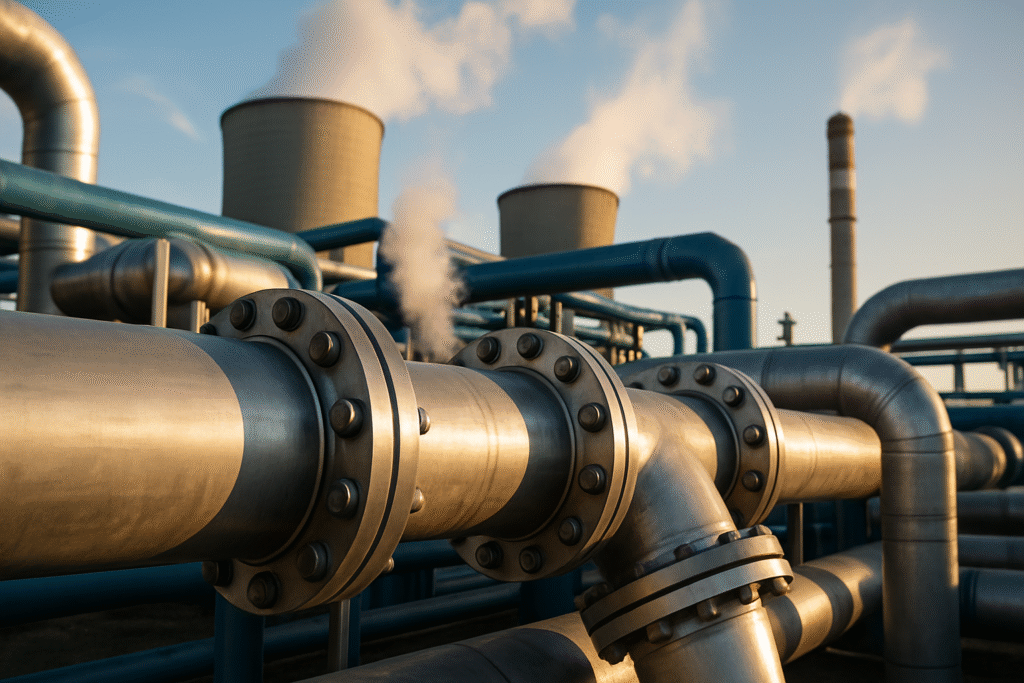
스테인레스 스틸 파이프 플랜지 시장 전망: 숨겨진 장점, 유형, 용도, ASME B16.5를 선택하는 방법 & B16.47 플랜지
그랜드뷰 리서치에 따르면 (2024), 전 세계 산업용 플랜지 시장의 가치는 다음과 같습니다. $5.8 10억 2023 도달할 것으로 예상됩니다. $7.2 10억 단위로 2030. That growth highlights why the stainless steel pipe flange remains a strategic component for industrial Pipe systems that demand corrosion resistance, 힘, 그리고 긴 서비스 기간.
EPC 계약자용, OEM, 및 조달팀, choosing the right Flange affects leakage control, 유지관리 비용, 및 규정 준수. 게다가, as projects move toward higher uptime targets, the Hidden Advantages of Stainless Steel, ASME compliance, and precise material selection matter more than ever.
Industrial demand trends shaping stainless steel pipe flange sourcing
IBISWorld에 따르면 (2024), 아시아 태평양 계정은 이상입니다. 45% 글로벌 플랜지 생산량의, 중국이 가장 큰 제조사이기 때문에. 그러므로, global buyers increasingly evaluate suppliers on machining capacity, 추적성, 및 표준 준수, not only on price.
스태티스타에 따르면 (2024), 석유 및 가스 산업은 대략적으로 35% 글로벌 플랜지 소비량. That single statistic explains why buyers in upstream, 내의 한복판, and downstream markets prioritize pressure class integrity, PMI 검증, and material documentation.
Stainless steel flange demand also rises in petrochemical, 수처리, 선박, and power generation projects. 이들 부문에서는, 부식 허용량, 염화물 노출, 온도 사이클링, and media purity directly influence whether 304, 316, 316엘, 904엘, 2205, 또는 2507 is the best fit.
As projects become more global, standards alignment becomes a commercial advantage. Buyers often need ASME B16.5 표준 크기의 경우, ASME B16.47 더 큰 직경의 경우, ASME B16.9 for fittings, 그리고 EN 1092 or DIN dimensions for regional compatibility.
모르도르 정보국에 따르면 (2024), industrial infrastructure upgrades in energy and water sectors continue to support long-term demand for corrosion-resistant flow control components. 결과적으로, Stainless Steel Flanges are increasingly specified where lifecycle cost matters more than first-cost purchasing.
Manufacturers that support both commodity and engineered supply tend to outperform in B2B procurement cycles. 예를 들어, clients often request weld neck, 미끄러지다, 눈이 먼, 소켓 용접, 랩 조인트, and threaded designs in custom schedules, facing finishes, and non-standard dimensions.
SASA FLANGE serves this demand with stainless steel flanges, 탄소강 플랜지, 합금 플랜지, and pipe fittings for global industrial users. 와 함께 ISO 9001:2015 및 PED 2014/68/EU 인증, the company supports buyers who need consistent quality, EN 10204 3.1 선적 서류 비치, and practical export experience across 50+ 국가.
추가적으로, modern sourcing teams want one supplier that can support both Flanges and fittings. Buyers reviewing 제품 성능 typically look for elbows, 티셔츠, 감속기, and caps alongside matching flange grades to simplify project control.
Lead time reliability is also a purchasing metric. 시장 조사 미래에 따르면 (2024), industrial component buyers increasingly consolidate orders with manufacturers that offer multi-standard production and faster logistics coordination.
That trend favors suppliers with CNC machining, forging control, 치수검사, and pressure-facing accuracy. It also favors factories that can produce from 1/2 인치에서 60 인치, across common ratings such as Class 150, 300, 600, 900, 1500, 그리고 2500.
Technical guide to stainless steel pipe flange materials, 종류, and hidden advantages
The main reason engineers specify a stainless steel pipe flange is durability under corrosive and variable-temperature service. 하지만, the best performance comes only when material grade, 플랜지형, 깃 달기, and pressure class are matched to the actual process conditions.
As John Barlow, 수석 배관 엔지니어, 주: “A flange selection mistake rarely appears at installation; it appears during operation, when corrosion, 진동, or gasket mismatch shortens service life.” That is why experienced buyers compare alloy chemistry, 압력 등급, and end connection as a complete system.
304 and 304L remain common choices for general industrial service. They offer strong formability and cost efficiency, although chloride-heavy media may push specifiers toward 316 or duplex grades.
316 and 316L provide improved molybdenum-enhanced corrosion resistance. 그러므로, 그들은 화학 처리에 널리 사용됩니다., offshore skid packages, 담수화 지원 시스템, and pharmaceutical utility lines.
공격적인 미디어의 경우, 구매자는 904L을 고려할 수 있습니다., 2205, 또는 2507. 대조적으로, 인코넬과 같은 니켈 합금, 모넬, and Hastelloy may be required for severe corrosion, 고온, or sour service conditions.
According to ASTM material frameworks, forged stainless steel flanges are commonly supplied to ASTM A182 성적, while plate products may align with ASTM A240 depending on product form and design requirements (ASTM, 2024). For piping designers, that distinction matters because base material route affects mechanical properties, 검사 계획, 및 제작방법.
Common Stainless Steel Flange Types include:
- Weld neck Flange for high-pressure and high-temperature Pipe service.
- Slip on Flange for easier alignment and economical fabrication.
- Blind Flange for line ends, 용기 노즐, and maintenance isolation.
- Socket weld Flange for smaller bore, 고압 애플리케이션.
- Threaded Flange where welding is undesirable or restricted.
- Lap joint Flange for systems requiring frequent dismantling.
The Hidden Advantages of stainless materials extend beyond corrosion resistance. Stainless grades reduce contamination risk, support cleaner surface finishes, and often lower total maintenance cost over long operating cycles.
According to NACE guidance and common industry practice, material selection in sour or chloride-bearing service must account for cracking resistance, 온도, and process chemistry (NACE, 2024). 그러므로, material upgrades can be a risk-control decision rather than a simple product upgrade.
직면 선택도 똑같이 중요합니다. Raised face remains standard for many ASME systems, while ring type joint designs support higher-pressure sealing integrity in critical services.
Dimensions and classes also drive performance. ASME B16.5 NPS를 커버 1/2 ~을 통해 24 for many common classes, ~하는 동안 ASME B16.47 extends larger diameter coverage, commonly from NPS 26 ~을 통해 60 (ASME, 2024).
박사로서. 에밀리 첸, 재료 과학자, 주: “The best alloy is not the most expensive alloy; it is the alloy that withstands the exact corrosion mechanism and temperature profile of the process.” That principle helps procurement teams avoid over-specification and under-performance at the same time.
For buyers comparing Types, 용도, and how to Choose Flanges, these checkpoints are practical:
- Confirm process media, 염화물 수준, 및 설계 온도.
- Verify flange standard such as ASME B16.5, ASME B16.47, DIN, 또는 EN 1092.
- Match material grade to piping material and corrosion allowance.
- Select facing type based on gasket design and pressure class.
- Review inspection documents, including heat number traceability and EN 10204 3.1.
- Check dimensional tolerances and machining quality before shipment.
SASA FLANGE 플랜지를 제조합니다. 304, 316, 316엘, 904엘, 2205, 2507 그리고 다른 프리미엄 등급, 고급 CNC 가공 및 포괄적인 품질 테스트를 통해 뒷받침됨. Buyers who need project support can review the company background at about SASA FLANGE and align specifications before RFQ release.
실제 조달에 있어서, the right supplier should also support mixed-material packages. Many projects combine stainless steel pipe flange items with carbon steel backup systems, alloy headers, 그리고 ASME B16.9 피팅, so integrated manufacturing simplifies QA and logistics.
ISO 품질 관리 원칙에 따르면, repeatability and process control are central to defect prevention (ISO, 2024). That is particularly important for flange flatness, bolt-hole alignment, bevel accuracy, and PMI consistency.
ASME B16.5, B16.47, ASTM, DIN, and EN standards for stainless steel flanges
The standard for a stainless steel pipe flange depends on size, 디자인 기초, and project geography. In many global industrial projects, ASME B16.5 그리고 ASME B16.47 remain the primary dimensional references for imperial piping systems, IN 동안 1092 and DIN standards are common in European or mixed-specification work.
ASME states that B16.5 covers pipe flanges and flanged fittings from NPS 1/2 에게 24, across pressure classes including 150 에게 2500 (ASME, 2024). 그 동안에, B16.47 covers large-diameter steel flanges from NPS 26 에게 60 and includes Series A and Series B dimensional options.
Material standards are separate from dimensional standards. ASTM A182 일반적으로 단조 스테인레스 및 합금강 플랜지를 관리합니다., ~하는 동안 ASTM A240 applies to stainless plate material used in related fabrication contexts (ASTM, 2024).
For buyers managing export or pressure equipment projects, PED 2014/68/EU documentation can be decisive. 와 함께 ISO 9001:2015, PED 2014/68/EU, 그리고 광고 2000 인증, SASA FLANGE supports customers who require controlled manufacturing records and international compliance pathways.
Below is a practical standards comparison:
- ASME B16.5: Standard flanges and flanged fittings, NPS 1/2 에게 24.
- ASME B16.47: Large diameter steel flanges, NPS 26 에게 60.
- ASME B16.9: 공장에서 제작한 단조 맞댐용접 피팅.
- ASTM A182: 단조 또는 압연 합금 및 스테인리스강 플랜지 재질.
- EN 1092: 유럽 플랜지 치수 및 압력 지정.
- DIN: German dimensional standards used across industrial projects.
Testing and documentation are equally important. Procurement teams should request MTCs, 열수 추적성, 차원 보고서, 필요한 경우 PMI, and surface condition verification for serrated faces and sealing areas.
According to DNV guidance for offshore and marine supply chains, documentation quality and material traceability directly affect component acceptance and operational risk control (DNV, 2024). 그러므로, a compliant flange is not just dimensionally correct; it must also be fully traceable.
Corrosion-related maintenance remains a major cost center in processing industries. According to NACE International estimates frequently cited across the sector, corrosion costs can exceed 3% of GDP in industrialized economies, which reinforces why material and standards compliance should never be treated as an afterthought.
해양용, 신맛이 나는 서비스, or corrosive chemical applications, NACE MR0175 or project-specific requirements may also influence alloy choice and hardness limitations. 뿐만 아니라, marine and energy clients may ask for third-party inspection, 수압 조정, or witness points before dispatch.
Global procurement teams should also compare bolt patterns, 압력 등급, and facing forms when substituting between standards. 대조적으로, assuming DIN, EN, and ASME interchangeability without dimensional review can cause installation delays and gasket mismatch.
For current specifications, engineers should consult official sources such as ASME. For project RFQs needing mixed standards and export documentation, buyers can also 연락하다 SASA FLANGE for technical confirmation before production.
How to choose stainless steel pipe flange for oil and gas, 화학적인, 힘, 해양 응용 분야
Choosing the right stainless steel pipe flange starts with application conditions. The same Flange that performs well in clean water service may fail quickly in chloride-rich, 고온, or cyclic-pressure environments.
석유 및 가스 분야, 압력 등급, sour service exposure, and vibration resistance dominate selection logic. 스태티스타에 따르면 (2024), 석유와 가스는 대략적으로 35% 글로벌 플랜지 소비량, so the sector strongly shapes flange quality expectations worldwide.
Weld neck designs are often preferred for critical hydrocarbon lines. Their tapered hub supports stress distribution, and therefore they are commonly selected for high-pressure systems, process headers, and temperature cycling service.
화학 처리 중, media chemistry is the first filter. 316L may suit many corrosive streams, 904L 동안, 2205, 또는 2507 may be required where pitting, 틈새 부식, or chloride stress corrosion cracking is a concern.
발전에 있어서, 증기, 응축수, and thermal cycling must be reviewed together. Flange facing finish, bolt load control, and gasket compatibility are as important as alloy selection because leakage at temperature can escalate shutdown costs.
Marine and shipbuilding projects place extra emphasis on salt exposure and compact maintenance planning. 그러므로, duplex stainless materials frequently gain attention where higher strength and chloride resistance improve lifecycle value.
선택 기준에는 다음이 포함되어야 합니다.:
- 파이프 크기, 일정, and mating connection type.
- Pressure class and design code requirements.
- Operating temperature and upset conditions.
- 공정 매체, 염화물, 부식 메커니즘.
- 플랜지형, 깃 달기, 개스킷 호환성.
- 검사 수준, MTC 요구 사항, and third-party witness needs.
- Project geography and required standards such as ASME, DIN, 또는 EN.
Procurement teams should also compare total cost, 단가뿐만 아니라. A cheaper grade may increase replacement frequency, 중단 시간, and inspection burden, while a better-matched alloy can lower lifecycle cost significantly.
시장 조사 미래에 따르면 (2024), buyers in industrial components increasingly favor suppliers that can deliver customization and documentation together. That matters when projects require non-standard drilling, 맞춤 두께, large-diameter pieces, 또는 혼합 재료 패키지.
SASA FLANGE 사용자 정의 크기를 제공합니다 1/2 인치에서 60 inch with competitive factory-direct pricing and broad material options. 고급 CNC 가공 및 포괄적인 품질 테스트를 통해 뒷받침됨, the company supports project packages for Oil & 가스, 석유화학, 힘, 해양 부문.
예를 들어, a water treatment skid may use 316L slip on flanges for corrosion resistance and cost balance. 대조적으로, an offshore produced-water line may justify duplex weld neck flanges because the operating chemistry and maintenance access are more demanding.
Buyers should also confirm whether matching stainless steel fittings are available. Integrated sourcing of elbows, 티셔츠, 감속기, and caps helps avoid grade mismatch and shortens supplier qualification cycles.
When engineers need fast technical confirmation, supplier responsiveness matters. A manufacturer that can quickly review drawings, 표준, material substitutions, and documentation requirements will usually reduce procurement friction and project risk.
스테인레스 스틸 파이프 플랜지 조달에 대한 향후 전망 및 전략적 구매 권장 사항
The market outlook remains positive for corrosion-resistant piping components. 그랜드뷰 리서치에 따르면 (2024), the industrial flange market is expected to rise from $5.8 10억 2023 에게 $7.2 10억 단위로 2030, which reflects sustained investment in energy, 하부 구조, and processing industries.
동시에, competition among global manufacturers will intensify. 그러므로, procurement teams should move beyond simple price comparisons and assess machining quality, metallurgical consistency, documentation speed, and export experience.
As David Turner, 산업 시장 분석가, 주: “The next advantage in flange sourcing will come from supply chain transparency and specification accuracy, not from catalog volume alone.” That view aligns with how EPCs now qualify suppliers for mission-critical components.
Several trends will shape buying decisions over the next few years:
- Higher demand for duplex and super duplex in chloride service.
- More documentation requirements for PED, 선박, and energy projects.
- Greater preference for integrated flange and fitting supply.
- Closer review of lifecycle cost and maintenance risk.
- Faster RFQ turnaround expectations for custom-engineered items.
구매자를 위한, 전략적 권고는 분명하다. 첫 번째, define media, 온도, 압력, and applicable standards before requesting quotes. 두번째, compare suppliers on quality records, 기술 지원, and documentation discipline, not just on nominal unit price.
제삼, ask for traceability details early. This step prevents delays later, especially on projects requiring EN 10204 3.1, PMI, 소아과 지원, or third-party inspection coordination.
마지막으로, choose a manufacturing partner that understands both global standards and real application performance. For teams sourcing stainless steel pipe flange products, 피팅, 및 맞춤 측정기준, early technical consultation with SASA FLANGE can help streamline specification review and reduce total procurement risk.
자주 묻는 질문
스테인레스 스틸 플랜지는 무엇에 사용됩니까??
●A stainless steel flange is used to connect Pipe sections, 밸브, 슬리퍼, 강도가 필요한 시스템의 장비 및 장비, 내식성, 및 서비스 가능성.
●스태티스타에 따르면 (2024), 석유와 가스는 약 35% 글로벌 플랜지 소비량, which shows how essential flanged joints are in critical industrial networks.
●실제로, stainless steel flanges support assembly, 유지 보수 액세스, 점검, and safe disconnection in petrochemical, 선박, 수처리, 및 전력 애플리케이션.
●They are especially valuable where media purity, 염화물 노출, or repeated maintenance make carbon steel less attractive over the asset lifecycle.
●For projects requiring material traceability and ASME or EN compliance, 다음과 같은 기존 제조업체와 협력 SASA FLANGE helps ensure proper grade selection and documentation.
스테인레스 스틸 플랜지의 표준은 무엇입니까?
●The most common dimensional standards are ASME B16.5 NPS용 1/2 ~을 통해 24 그리고 ASME B16.47 NPS용 26 ~을 통해 60.
●ASME confirms these standards define dimensions, 압력 등급, 공차, 및 표시, ~하는 동안 ASTM A182 일반적으로 단조 스테인레스 스틸 플랜지 재료를 다루고 있습니다. (ASME, 2024; ASTM, 2024).
●유럽 프로젝트에서, EN 1092 and DIN standards are also widely used, so buyers must confirm interchangeability before ordering.
●The material standard and the dimensional standard are not the same, which is why engineers should review both before approving procurement.
●For mixed-standard projects, it is wise to request technical verification from SASA FLANGE before finalizing RFQs.
그들은 스테인레스 스틸 파이프 피팅을 만드나요??
●예, manufacturers routinely produce stainless steel pipe fittings such as elbows, 티셔츠, 감속기, and caps to match flange and Pipe system specifications.
●시장 조사 미래에 따르면 (2024), industrial buyers increasingly prefer suppliers that can provide multiple related flow components in one sourcing package.
●These fittings are commonly made to ASME B16.9 for buttwelding configurations and are available in grades such as 304, 316, 316엘, 2205, 그리고 2507.
●Using fittings and flanges from aligned material batches can reduce compatibility risk and simplify inspection records during project execution.
●For applications needing matched flanges and fittings, a manufacturer such as SASA FLANGE can support integrated supply and documentation.
세 가지 유형의 플랜지는 무엇입니까?
●Three of the most common flange types are weld neck, 미끄러지다, 및 블라인드 플랜지.
●Weld neck flanges suit high-pressure and high-temperature service, slip on flanges offer easier installation, and blind flanges close line ends or nozzle openings for isolation.
●에 따르면 ASME B16.5 practice, each type follows dimensional and pressure class requirements that must match the connected Pipe system (ASME, 2024).
●Although these three are common, 소켓 용접, 스레드, and lap joint designs are also widely used in specialized services.
●중요한 시스템의 경우, engineers should choose flange type based on pressure, 온도, 유지보수 빈도, and weldability rather than initial cost alone.
다음 중에서 어떻게 선택하나요? 304, 316, 904엘, and duplex stainless steel flanges?
●304 일반 서비스에 널리 사용됩니다., ~하는 동안 316 and 316L offer better resistance in chloride-containing environments due to molybdenum addition.
●For more aggressive media, 904엘, 2205, 또는 2507 may be preferred because they improve resistance to pitting, 틈새 부식, 또는 더 높은 기계적 부하.
●박사로서. 에밀리 첸, 재료 과학자, 주: “Material selection should follow the corrosion mechanism, not the popularity of the grade.”
●According to NACE-aligned industry practice, 염화물 함량, 온도, and stress state should all be reviewed before final alloy selection (NACE, 2024).
●The best approach is to compare process chemistry, 설계 온도, and code requirements with your supplier before ordering production quantities.
스테인레스 스틸 파이프 플랜지 가격에 영향을 미치는 것은 무엇입니까??
●스테인레스 스틸 파이프 플랜지 가격은 주로 합금 등급에 따라 다릅니다., 플랜지형, 크기, 압력 등급, 가공 복잡성, 및 문서 요구 사항.
●그랜드뷰 리서치에 따르면 (2024), the growth of the global flange market to a projected $7.2 10억 단위로 2030 reflects steady demand pressure on raw materials and industrial manufacturing capacity.
●에이 4 인치 스테인레스 스틸 파이프 플랜지 304 또는 316 may be relatively standard, while large-diameter ASME B16.47 아이템, 이중 등급, or custom drilling patterns usually cost more.
●Inspection needs such as PMI, EN 10204 3.1 인증서, 소아과 지원, or third-party witness services can also increase total procurement cost.
●To control budget without sacrificing reliability, buyers should compare total lifecycle value and request detailed quotations that break out grade, 기준, 테스트, and delivery scope.
관련 게시물

오리피스 플랜지 정의, 세부 정보 및 ASME B16.36 플랜지 개요: 시장 데이터, 선택 가이드 및 규정 준수 통찰력
전 세계 산업용 플랜지 시장의 가치는 다음과 같습니다. $5.8 10억…
