
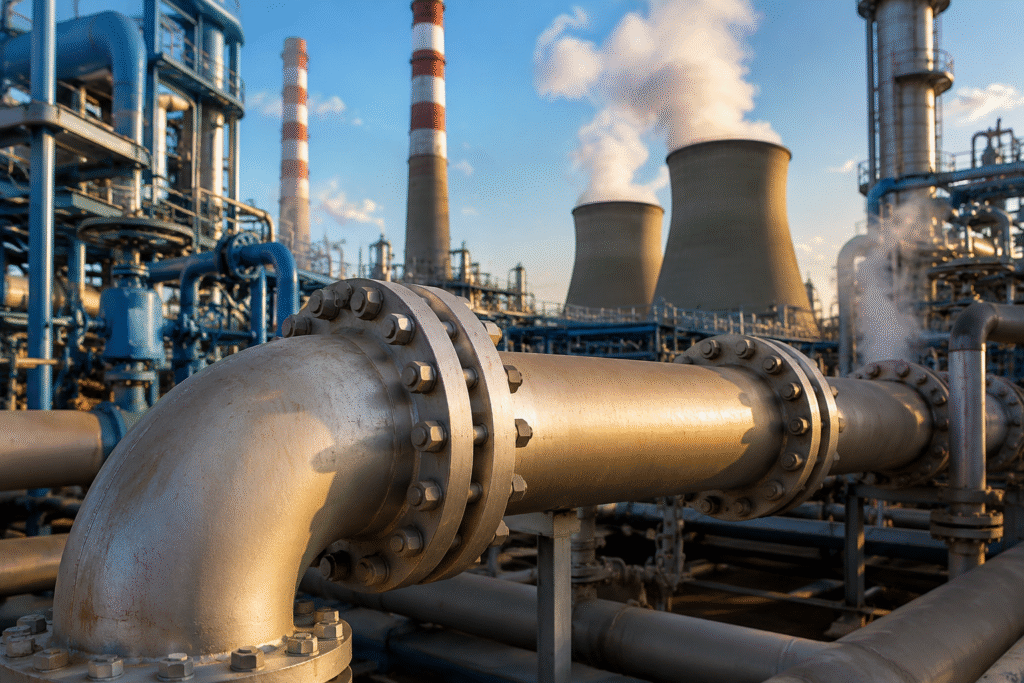
스테인레스 스틸 파이프 플랜지 시장 가이드: 7 데이터 포인트, 숨겨진 장점, 유형, 용도, 및 선택 방법
산업 프로젝트가 내구성을 우선시함에 따라 스테인레스 스틸 파이프 플랜지 수요가 계속 증가하고 있습니다., 내식성, 및 수명주기 가치. 그랜드뷰 리서치에 따르면 (2024), 전 세계 산업용 플랜지 시장의 가치는 다음과 같습니다. $5.8 10억 2023 도달할 것으로 예상됩니다. $7.2 10억 단위로 2030, which makes stainless steel pipe flange selection a strategic procurement decision.
엔지니어와 구매자를 위한, the most intriguing factor is not only price. It is the hidden advantages of material grade, 압력 등급, 치수 준수, and long-term maintenance performance across oil and gas, 석유화학, 선박, 및 전력 애플리케이션.
Why stainless steel pipe flange demand is rising in global industry
Industrial buyers now evaluate flanges with a total-cost perspective rather than a simple unit-price comparison. 결과적으로, 스테인레스, 듀플렉스, 니켈 합금, and specialty steel flange solutions are gaining share in corrosive and high-temperature service.
IBISWorld에 따르면 (2024), 아시아 태평양 계정은 이상입니다. 45% 글로벌 플랜지 생산량의, 중국이 가장 큰 제조사이기 때문에. 그러므로, sourcing strategy increasingly focuses on quality-certified manufacturers that can combine scale, 추적성, 수출 규정 준수.
스태티스타에 따르면 (2024), 석유 및 가스 산업은 대략적으로 35% 글로벌 플랜지 소비량. This high share explains why ASME pressure classes, ASTM 재료 등급, NACE requirements, and EN inspection documentation remain central in almost every serious RFQ.
게다가, water treatment and marine sectors are expanding their use of 316L, 2205, 그리고 2507 flange products because chloride attack remains a major reliability risk. 모르도르 정보국에 따르면 (2024), corrosion-related maintenance can represent a significant share of unplanned industrial shutdown cost in process industries.
That market reality changes how engineers choose pipe flanges. Instead of asking only which flange fits, buyers now ask which flange grade, 깃 달기, schedule match, and test documents reduce operating risk over 10 에게 20 연령.
ASME B16.5 remains the primary dimensional standard for pipe flanges up to NPS 24, ~하는 동안 ASME B16.47 더 큰 직경을 커버 (ASME, 2023). ASTM A182 is widely used for forged stainless steel flanges, 그리고 EN 1092 remains essential for many European projects.
These standards matter because interchangeability affects construction speed and leak integrity. Even a small dimensional mismatch at raised face height, 볼트 서클, or bore tolerance can delay site installation and increase rework cost.
For global EPC contractors, supplier capability is as important as the product itself. SASA FLANGE supports this need with ISO 9001:2015, PED 2014/68/EU, 그리고 광고 2000 신임장, 플랜지를 제조하는 동안 304, 316, 316엘, 904엘, 2205, 2507, A105, A182, 인코넬, 모넬, 하스텔로이, 그리고 티타늄.
게다가, buyers increasingly expect one source for both flange and fitting packages. That is why integrated suppliers offering elbows, 티셔츠, 감속기, and caps alongside flange products can shorten procurement cycles and simplify quality documentation.
시장 조사 미래에 따르면 (2024), infrastructure modernization and energy investment continue to support steady growth in industrial piping components worldwide. 따라서, the versatility of stainless steel flanges becomes more relevant where projects must balance corrosion resistance, 코드 준수, and predictable delivery schedules.
스테인레스 스틸 파이프 플랜지 유형, 재료 등급, and hidden advantages
There are several flange types, yet their suitability depends on service conditions more than simple familiarity. The most common Types include weld neck, 미끄러지다, 눈이 먼, 소켓 용접, 랩 조인트, and threaded Flanges, and each Flange design has different stress behavior.
존 브린으로서, 수석 배관 엔지니어, 주: “The best flange is rarely the cheapest flange; it is the design that matches pressure, 온도, 부식 프로필, and inspection requirements with the lowest lifetime failure risk.” This view reflects standard engineering practice in critical line classes.
Weld neck flanges are preferred for high-pressure and cyclic service because the tapered hub improves stress distribution. Slip on flange products cost less to install initially, however they generally offer lower fatigue resistance than weld neck designs.
Blind flanges seal the end of a line, 대통 주둥이, 또는 선박 개방. Socket weld flanges suit small-bore, 고압 배관, while threaded designs are useful where welding must be avoided.
- 용접 목 플랜지: 고압에 가장 적합, 고온, and severe service.
- 슬립온 플랜지: economical for low to medium pressure lines and easier alignment.
- 블라인드 플랜지: 격리에 사용, 유지, and hydrotest closure.
- 소켓 용접 플랜지: common for small-bore systems requiring strong bore support.
- 스레드 플랜지: 용접이 제한되거나 현장 조립이 단순화되어야 하는 곳에 적합합니다..
- 랩 조인트 플랜지: useful where frequent dismantling and alignment flexibility are required.
재료 선택도 마찬가지로 중요합니다. ASTM A182 F304 and F304L remain the most widely specified stainless steel grades for general industrial service because they offer strong corrosion resistance and competitive cost.
ASTM A182 F316 and F316L provide better resistance to chlorides and many aggressive process chemicals due to molybdenum addition. 그러므로, 316L often becomes the default Choose option in marine piping, 근해 스키드, 담수화 시스템, and chemical transfer lines.
For severe conditions, 904엘, 듀플렉스 2205, 그리고 슈퍼 듀플렉스 2507 deliver higher pitting resistance and stronger mechanical performance. According to NACE guidance and chloride service practice, duplex materials are often selected when 316L approaches its corrosion limit in seawater or high-chloride process media.
According to ASTM and industry specification practice, low-carbon grades such as 304L and 316L reduce the risk of sensitization after welding (ASTM, 2023). 결과적으로, they are widely used in fabricated piping systems that require post-fabrication corrosion reliability.
Surface facing also affects sealing. 올려진 얼굴, 평평한 얼굴, RTJ, and tongue-and-groove configurations must match gasket type, 압력 등급, and mating flange arrangement to avoid leakage.
- 304/304엘: general process lines, food-grade service, mild chemical duty.
- 316/316엘: 선박, 염화물, 의약품, 수처리, 난바다 쪽으로 부는.
- 904엘: stronger resistance in acidic and chloride-rich environments.
- 2205 듀플렉스: higher strength and improved chloride stress corrosion resistance.
- 2507 슈퍼 듀플렉스: aggressive offshore and subsea service.
- 니켈 합금: extreme temperature and corrosive chemical processing.
According to ISO and PED documentation practices, 재료 추적성, PMI, 수압시험 기록, 그리고 EN 10204 3.1 certificates are often mandatory for project approval (ISO, 2023). That is why procurement teams should review more than dimensions and price.
박사로서. 엘레나 모리스, 재료 과학자, 주: “Corrosion allowance is not a substitute for correct alloy selection, especially where chlorides, 온도 사이클링, and crevice geometry combine.” Her point is especially relevant for compact flange layouts and insulated outdoor piping.
The hidden Advantages of a correctly selected stainless steel pipe flange include reduced gasket failures, 가동 중단 횟수 감소, lower replacement frequency, and easier audit compliance. 대조적으로, an under-specified Flange may create leakage, bolt relaxation, or unexpected corrosion within only a few operating cycles.
SASA FLANGE supports standard and custom manufacturing from 1/2 인치에서 60 인치, with competitive factory-direct pricing and advanced CNC machining. 포괄적인 품질 테스트로 뒷받침됨, the company supplies stainless, 탄소강, 합금, and high-performance grades for projects in more than 50 국가.
For buyers comparing stainless steel flange 2 인치, 4 인치 스테인레스 스틸 파이프 플랜지, or large-diameter ASME B16.47 어셈블리, schedule matching is essential. Bore alignment between the flange and Pipe must match wall thickness to maintain flow profile and weld integrity.
표준, 규정 준수, and inspection requirements for industrial pipe flanges
Compliance is not an administrative step. It is the framework that determines whether a Flange can be accepted for pressure service, exported to regulated markets, and installed without project delay.
ASME B16.5 차원을 정의합니다, 공차, 압력 온도 등급, 외장, and marking requirements for flanges and flanged fittings. ASME B16.47 extends this coverage to larger sizes, ~하는 동안 ASME B16.9 governs many butt weld fittings used in the same line classes (ASME, 2023).
ASTM standards control material chemistry and mechanical properties. ASTM A182 단조 또는 압연 합금 및 스테인리스강 파이프 플랜지를 덮습니다., 단조 피팅, 및 고온 서비스용 밸브, ~하는 동안 ASTM A240 addresses plate products often used for some flange manufacturing routes.
European projects commonly reference EN 1092, PED 2014/68/EU, 그리고 광고 2000. 추가적으로, DIN and JIS standards remain relevant when projects require regional interchangeability or legacy plant compatibility.
For sour service and upstream applications, NACE MR0175 또는 ISO 15156 may apply depending on line medium and project specification. 그러므로, flange selection must align with the corrosion mechanism, 경도 한계, and metallurgical restrictions defined in the full piping class.
- ASME B16.5: dimensions and pressure classes for NPS 1/2 ~을 통해 24.
- ASME B16.47: large-diameter flange dimensions.
- ASTM A182: forged stainless and alloy steel flange material specification.
- ASME B16.9: butt weld fittings used with flange-connected systems.
- EN 1092: 유럽 플랜지 치수 및 압력 지정.
- NACE MR0175 / ISO 15156: material requirements for H2S-containing service.
According to DNV and offshore quality practice, documentation gaps are one of the most common causes of package approval delays in marine and energy projects (DNV, 2024). 결과적으로, leading buyers request MTCs, 열수 추적성, 치수 검사 보고서, PMI 기록, and sometimes ferrite or hardness testing.
Inspection scope varies by industry. Oil and gas projects may request RT, 유타, PT, or PMI on selected items, while pharmaceutical or ultra-clean service may focus more on surface finish, 청결, and passivation control.
The following comparison helps engineers align standards with practical procurement needs.
- 석유 및 가스: ASME, ASTM, API, NACE, EN 10204 3.1, PMI, hardness review.
- 석유화학: ASME B16.5, ASTM A182, corrosion test review, 추적성.
- 발전: high-temperature alloy verification, mechanical test records, 치수검사.
- Marine and Water Treatment: 316엘, 2205, 2507, chloride-focused grade selection, PED or class documentation where required.
와 함께 ISO 9001:2015 및 PED 2014/68/EU 인증, SASA FLANGE is positioned to support buyers that need export-ready documentation and controlled manufacturing quality. This is particularly important when a project combines stainless steel flanges and fittings across multiple size ranges and pressure classes.
Engineers should also verify flange marking and packaging standards. Clear heat number traceability, pressure class marking, grade identification, and corrosion-protective packing reduce receiving errors and site confusion.
For authoritative technical reference, buyers should review current standards directly from ASME. That extra step helps avoid using obsolete tables or non-conforming dimensions copied from outdated catalogs.
How to choose stainless steel pipe flange for oil, 가스, 화학적인, 힘, 해양 시스템
How should buyers Choose the right stainless steel pipe flange? The answer starts with process data, then moves through standards, 재료 호환성, 기하학, 및 공급업체 역량.
석유 및 가스 분야, pressure class and corrosion environment usually drive the first decision. 스태티스타에 따르면 (2024), this industry consumes about 35% 글로벌 플랜지 볼륨, so line class discipline is especially mature in upstream, 내의 한복판, 및 정유 애플리케이션.
For hydrocarbon service with moderate corrosion, 304 또는 316 grades may be sufficient in utility and non-critical systems. 하지만, 염화물 노출, sour conditions, or offshore atmosphere often shift the specification toward 316L, 2205, 또는 2507, depending on project engineering rules.
석유화학공장에서, temperature cycling and chemical exposure often make weld neck designs the preferred option. Their geometry better supports fatigue resistance at the hub-to-pipe transition, especially in pumps, 압축기, and hot process headers.
Power generation systems require close attention to temperature and pressure. Higher operating temperature may also require alloy selection beyond standard stainless, particularly in superheated steam, aggressive condensate, or flue gas treatment systems.
Marine and shipbuilding users focus heavily on chloride attack and maintenance access. 그러므로, 316엘, 듀플렉스 2205, 그리고 슈퍼 듀플렉스 2507 frequently outperform lower-alloy grades in seawater and splash-zone environments.
- Check design pressure and temperature against ASME class ratings.
- Match flange bore to pipe schedule and wall thickness.
- Confirm corrosion resistance for chlorides, 산, H2S, or mixed media.
- Choose facing type to match gasket and mating flange.
- Review weldability, 검사 요구, and heat treatment requirements.
- 요구 EN 10204 3.1 certification and traceability for critical service.
- Verify dimensions to ASME, DIN, JIS, 고스트, or EN standards as required.
Procurement teams also compare delivery capability. A supplier that can produce flanges, 팔꿈치, 티셔츠, 감속기, and caps under one QA system can reduce interface risk and simplify vendor approval.
This is where supplier depth matters. SASA FLANGE 사용자 정의 크기를 제공합니다 1/2 인치에서 60 인치, serves Oil & 가스, 석유화학, 힘, 선박, 및 수처리 분야, and supports material options from 304 and 316L to Inconel, 모넬, 하스텔로이, 그리고 티타늄.
The most practical buying process includes a technical bid tab. Compare not only unit cost, but also lead time, 테스트 범위, compliance documents, packaging method, and ability to support urgent revisions.
마크 엘리슨으로서, 산업 시장 분석가, 주: “Reliable flange procurement is about consistency under specification pressure, because one missing certificate can hold an entire piping package.” That is why disciplined RFQ preparation improves both schedule and cost control.
For projects searching stainless steel pipe flange for sale or stainless steel pipe flange price, the best approach is to define service conditions first. Then request a quote based on exact grade, 기준, 크기, 압력 등급, 깃 달기, 수량, and required documents.
Future outlook for stainless steel flanges and strategic sourcing recommendations
The market outlook remains positive, especially where energy, 하부 구조, and water investment continue. 그랜드뷰 리서치에 따르면 (2024), the flange market is expected to expand from $5.8 10억 2023 에게 $7.2 10억 단위로 2030, which reflects sustained demand for engineered connection components.
동시에, material expectations are rising. Buyers increasingly prefer suppliers that can deliver stainless, 듀플렉스, and nickel alloy flange packages with short lead times and auditable quality systems.
IBISWorld에 따르면 (2024), China remains the largest manufacturing base within a region responsible for over 45% 글로벌 생산의. 그러므로, global buyers should combine cost competitiveness with rigorous supplier qualification, document review, and pre-shipment inspection.
디지털 조달도 시장을 변화시키고 있습니다.. Engineers now expect fast access to drawings, 선교사 훈련원, PMI 기록, and dimensional data, not just a basic product list or generic Flange catalogue.
앞을 내다보며, the most intriguing opportunity lies in lifecycle optimization. Projects that Choose the correct stainless steel pipe flange grade early often reduce maintenance events, improve shutdown planning, and gain better spare-part standardization.
전략적으로, buyers should standardize approved material lists for common media, maintain a dimensional matrix for ASME and EN applications, and prequalify suppliers with proven export documentation capability. 게다가, they should align flange sourcing with fitting packages to reduce mismatch risk at installation.
For companies evaluating long-term sourcing partners, consistent compliance, flexible manufacturing, and responsive technical support matter more than headline price alone. For specific dimensional, 재료, or documentation requirements, 연락하다 SASA FLANGE can help procurement teams shorten bid cycles and improve specification clarity.
자주 묻는 질문
다양한 유형의 스테인레스 스틸 플랜지는 무엇입니까?
●주요 스테인레스 스틸 플랜지 유형은 용접 넥입니다., 미끄러지다, 눈이 먼, 소켓 용접, 스레드, 그리고 랩 조인트, 그리고 ASME B16.5 defines the dimensional framework for most standard sizes.
●Weld neck designs are usually chosen for high-pressure and cyclic service, while slip on flange products are common in lower-pressure systems because they simplify alignment and fabrication.
●정확한 유형 선택이 필요한 프로젝트의 경우, 다음과 같은 기존 제조업체와 협력 SASA FLANGE helps ensure the flange style matches pressure class, 깃 달기, 재료 등급, and inspection scope.
어느 것이 더 낫습니까? 304 또는 420 스테인레스 스틸?
●For most pipe flange applications, 304 stainless steel is better than 420 왜냐하면 304 offers stronger corrosion resistance and is widely used under ASTM A182 and related industrial specifications.
●등급 420 has higher hardness after heat treatment, but it is less suitable for many corrosive piping environments, especially where moisture, 약, or chlorides are present.
●If the application involves flange connections, process media, or outdoor service, engineers usually recommend 304, 316, or duplex grades rather than 420, 그리고 SASA FLANGE can assist with grade confirmation.
스테인레스 스틸을 가장 많이 사용하는 산업은 무엇입니까??
●The oil and gas industry is one of the largest users of industrial flanges, 그리고 Statista에 따르면 (2024), 대략적으로 설명합니다 35% 글로벌 플랜지 소비량.
●Stainless steel is also heavily used in petrochemical, 수처리, 선박, 식품 가공, and pharmaceutical plants because corrosion resistance and hygiene performance are critical.
●When specifying flange material for these industries, buyers should evaluate chloride exposure, 온도, cleaning cycles, and documentation requirements before selecting 304, 316엘, 2205, or higher-alloy options.
세 가지 유형의 플랜지는 무엇입니까?
●기본 산업 논의에서 가장 일반적으로 언급되는 세 가지 플랜지 유형은 용접 넥입니다., 미끄러지다, and blind flanges because they cover many pressure, 설치, 그리고 격리 요구.
●Weld neck flange designs support severe service, slip on flange products are cost-effective for simpler systems, and blind flanges are used to close or isolate the end of a piping run.
●Although these three are common, a complete specification should also consider socket weld, 스레드, and lap joint types so the final connection suits the actual process condition.
스테인레스 스틸 파이프 플랜지 가격에 영향을 미치는 것은 무엇입니까??
●Stainless steel pipe flange price mainly depends on raw material grade, 플랜지형, 크기, 압력 등급, 깃 달기, 테스트 요구 사항, 및 주문량, and duplex or nickel alloy options usually cost more than 304 또는 316L.
●그랜드뷰 리서치에 따르면 (2024), 산업용 플랜지 시장 진출 $5.8 10억 2023, which reflects strong demand and explains why alloy volatility and delivery schedules can influence quotations.
●The best way to get an accurate price is to submit the exact standard, 크기, 수업, 재료, 수량, and documentation requirement to a qualified manufacturer rather than relying on generic online listings.
How do I choose a flange manufacturer for API and industrial projects?
●A good flange manufacturer should demonstrate ISO 9001:2015 품질 관리, 추적 가능한 원료, ASME 및 ASTM 표준 준수, and the ability to provide EN 10204 3.1 certification when required.
●IBISWorld에 따르면 (2024), 아시아 태평양 계정은 이상입니다. 45% 글로벌 플랜지 생산량의, so manufacturer selection should focus on verified capability instead of region alone.
●For API-related and industrial sourcing, buyers should compare manufacturing range, 테스트 범위, 수출 문서, delivery reliability, and technical response speed before approving a supplier.
관련 게시물

오리피스 플랜지 정의, 세부 정보 및 ASME B16.36 플랜지 개요: 시장 데이터, 선택 가이드 및 규정 준수 통찰력
전 세계 산업용 플랜지 시장의 가치는 다음과 같습니다. $5.8 10억…
