
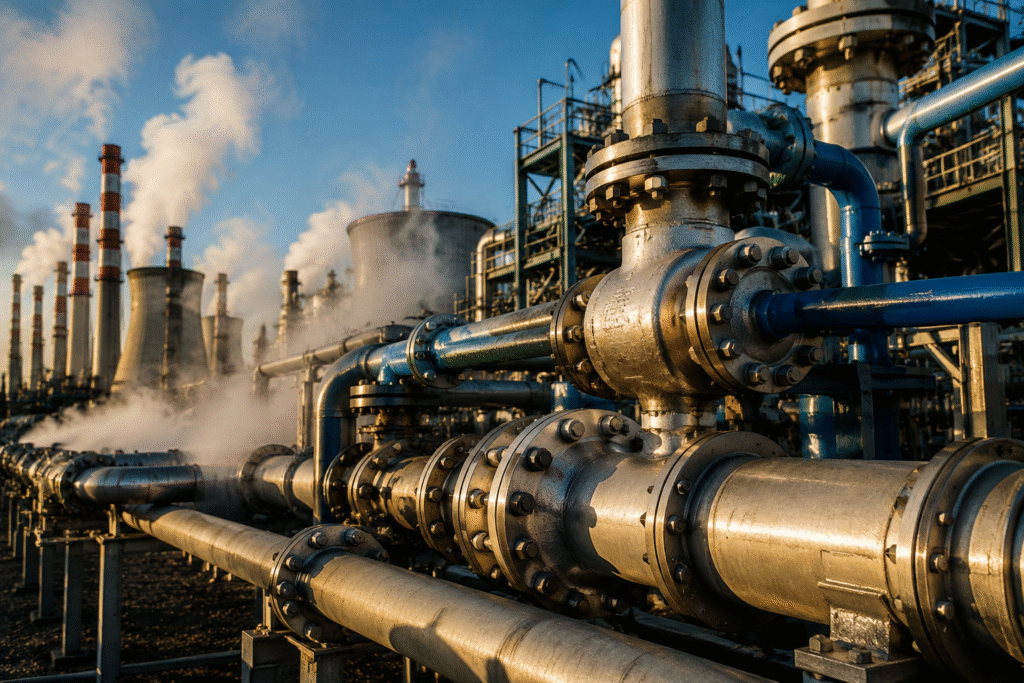
스테인레스 스틸 플랜지 조달: 시장 수요 및 표준
그랜드뷰 리서치에 따르면 (2024), 전 세계 산업용 플랜지 시장의 가치는 다음과 같습니다. $5.8 10억 2023 도달할 것으로 예상됩니다. $7.2 10억 단위로 2030. That growth highlights why the stainless steel pipe flange remains a critical component for modern piping systems that demand corrosion resistance, 내구성, 안정적인 압력 억제.
엔지니어 및 조달 팀용, the Hidden Advantages of Stainless Steel Flanges go beyond basic corrosion resistance. They include lifecycle cost control, wide standards compliance, strong Versatility across industries, and dependable performance in aggressive service conditions.
시장 수요, Industrial Growth, and Why Stainless Steel Pipe Flange Procurement Matters
The flange market is expanding because process industries continue to invest in new plants, 브라운필드 업그레이드, 및 파이프라인 신뢰성 프로그램. IBISWorld에 따르면 (2024), 아시아 태평양 계정은 이상입니다. 45% 글로벌 플랜지 생산량의, 중국이 가장 큰 제조사이기 때문에.
That manufacturing concentration matters for buyers who need scale, flexible lead times, 그리고 경쟁력 있는 가격. It also explains why many global EPC contractors source from qualified Chinese producers with export certifications and traceable QA systems.
Demand is especially strong in energy projects. 스태티스타에 따르면 (2024), 석유 및 가스 산업은 대략적으로 35% 글로벌 플랜지 소비량, driven by upstream gathering systems, 정유소, LNG 시설, and transmission infrastructure.
게다가, stainless grades continue to gain share where corrosion, 위생, or chloride exposure shortens the life of carbon steel. 모르도르 정보국에 따르면 (2024), corrosion-related maintenance can account for a significant portion of total piping lifecycle cost in chemical and offshore environments, which is why stainless and duplex solutions are often specified early.
결과적으로, buyers increasingly evaluate total installed cost rather than piece price alone. A lower-maintenance flange can reduce shutdown risk, 누출 사건, gasket replacement frequency, and long-term inspection burden.
이러한 이유로, a strong supplier must offer more than catalog variety. It should provide material traceability, 차원 제어, pressure-class compliance, 그리고 다음과 같은 문서 EN 10204 3.1 인증서.
SASA FLANGE supports this requirement with stainless steel flanges, 탄소강 플랜지, 합금 플랜지, and pipe fittings for industrial piping projects worldwide. 와 함께 ISO 9001:2015 및 PED 2014/68/EU 인증, 회사는 석유를 제공합니다 & 가스, 석유화학, 발전, 조선 & 선박, 수처리, 및 건설 부문.
추가적으로, manufacturing capability matters when procurement teams compare vendors. SASA FLANGE produces flanges and fittings in 304, 316, 316엘, 904엘, 2205, 2507, A105, A182, 인코넬, 모넬, 하스텔로이, 그리고 티타늄, while also supporting standards such as ANSI B16.5, ANSI B16.47, ASME B16.9, DIN, JIS, 고스트, 그리고 EN 1092.
시장 조사 미래에 따르면 (2024), industrial process equipment demand is increasingly linked to stricter environmental and safety compliance. 그러므로, end users now prioritize leak integrity, 인증된 재료, and standard-conforming flanges in both new projects and MRO purchases.
실용적인 측면에서, this means the right stainless steel pipe flange supplier should help buyers answer five questions quickly. What grade is best, what standard applies, what pressure class is needed, what documentation is available, and what lead time can be guaranteed.
Buyers who need project support can review the manufacturer profile at https://sasaflange.com/about-us/. They can also evaluate broader product availability through https://sasaflange.com/products/ before moving to RFQ stage.
스테인레스 스틸 파이프 플랜지 유형, 숨겨진 장점, and Technical Selection Insights
The main Types of stainless steel pipe flange include weld neck, 미끄러지다, 눈이 먼, 소켓 용접, 스레드, 랩 조인트, and ring type joint designs. Each Flange style affects installation cost, stress distribution, 유지 보수 액세스, and sealing reliability.
존 브린으로서, 수석 배관 엔지니어, 주: “A flange should never be selected on pressure class alone, because corrosion allowance, 온도 사이클링, and assembly practices often determine real service life.” That is especially true in process lines that see vibration, 열충격, or frequent dismantling.
ASME B16.5 remains the most common dimensional standard for NPS 1/2 ~을 통해 24 플랜지, ~하는 동안 ASME B16.47 더 큰 직경을 커버. 게다가, ASTM A182 is widely used for forged stainless and alloy steel flanges in pressure service (ASTM, 2024).
ASME에 따르면 (2024), flange joint integrity depends on the interaction of flange facing, 개스킷 선택, 볼트 응력, 및 조립방법. 그러므로, procurement teams should review the full joint system rather than treating the flange as a stand-alone commodity.
The Hidden Advantages of stainless steel pipe flange products usually come from metallurgy. Chromium forms a passive oxide film, while nickel improves toughness and corrosion performance, and molybdenum improves pitting resistance in chloride service.
예를 들어, 304 and 304L remain common general-purpose stainless options. 하지만, 316 and 316L typically perform better in marine, 화학적인, and higher chloride environments because molybdenum improves pitting and crevice corrosion resistance.
박사로서. 엘레나 모리스, 재료 과학자, 주: “염화물 함유 시스템, the cost difference between 304 그리고 316 is often small compared with the cost of premature leakage or shutdown.” That is why specification discipline matters more than short-term purchase savings.
Material selection should also consider temperature. Higher carbon grades such as 304H and 316H are often chosen for elevated temperature service, while duplex grades like 2205 그리고 2507 are specified for higher strength and improved chloride resistance.
- 304/304엘: good general corrosion resistance and weldability for water treatment, 식품 등급, and light chemical systems.
- 316/316엘: stronger resistance to chlorides and aggressive media for marine, 화학적인, and offshore piping.
- 904엘: enhanced resistance in sulfuric and phosphoric acid service.
- 2205 듀플렉스: higher strength and strong resistance to chloride stress corrosion cracking.
- 2507 슈퍼 듀플렉스: superior pitting resistance for severe offshore and desalination applications.
- 인코넬, 모넬, 하스텔로이, 티탄: specialist choices for extreme corrosion, 온도, or alloy compatibility demands.
NACE 지침에 따르면, chloride stress corrosion cracking risk increases significantly in susceptible austenitic stainless steels at elevated temperatures, especially when tensile stress is present (NACE, 2023). 그러므로, offshore and sour-service projects often evaluate duplex or nickel alloys during front-end engineering.
Dimension and pressure rating are equally important. Common classes include 150, 300, 600, 900, 1500, 그리고 2500, and buyers must match these to design pressure, 설계 온도, and gasket configuration.
Face type also affects sealing performance. 올려진 얼굴, 평평한 얼굴, and RTJ designs serve different bolting and gasket strategies, and each must align with mating flanges and application conditions.
- Weld neck flanges suit high-pressure and cyclic service because the tapered hub improves stress transition.
- Slip on flanges reduce fabrication complexity and often lower installed cost in moderate duty systems.
- Blind flanges isolate future tie-ins, 용기 노즐, and maintenance points.
- Threaded flanges help where welding should be avoided.
- Socket weld flanges are common in smaller bore, 고압 라인.
- Lap joint flanges support systems that require frequent dismantling.
ISO에 따르면 (2024), dimensional conformity and material traceability remain among the top audit points in industrial pressure component supply chains. 따라서, 고급 CNC 가공, PMI 테스트, hydrostatic verification where applicable, and strict raw material control improve procurement confidence.
SASA FLANGE supports these requirements with factory-direct production, 1/2부터 사용자 정의 크기" 60"까지, and comprehensive quality testing for industrial projects. Buyers looking to Choose the right stainless steel pipe flange for corrosive or high-temperature service can request technical support at https://sasaflange.com/contact-us/.
ASME, ASTM, DIN, 및 스테인레스 스틸 파이프 플랜지 준수에 대한 EN 표준
Standards compliance is where strong suppliers separate themselves from traders with limited technical control. In pressure piping, 치수 정확도, 재료화학, 기계적 성질, and inspection documentation all affect installation success and audit readiness.
For North American and many global projects, ASME B16.5 그리고 ASME B16.47 define flange dimensions and tolerances. ASTM A182 일반적으로 단조 또는 압연 합금 및 스테인레스 스틸 파이프 플랜지를 포함합니다., ~하는 동안 ASME B16.9 governs many butt weld fittings used with flanged systems.
European projects frequently reference EN 1092-1 및 PED 2014/68/EU. 게다가, buyers may request DIN dimensions, 광고 2000 규정 준수, and material certificates aligned with EN 10204 3.1.
For corrosive services, project specifications may also reference NACE MR0175 또는 ISO 15156 where sour environments are involved. That is particularly important in upstream oil and gas systems that contain H2S.
- ASME B16.5: flanges and flanged fittings for NPS 1/2 에게 24.
- ASME B16.47: NPS용 대구경 강철 플랜지 26 에게 60.
- ASTM A182: 단조 또는 압연 합금 및 스테인레스 스틸 플랜지 및 피팅.
- ASME B16.9: factory-made wrought buttwelding fittings.
- EN 1092-1: European flanges with PN pressure classes.
- PED 2014/68/EU: EU의 압력 장비에 대한 규제 프레임워크.
유럽연합 집행위원회 PED 프레임워크에 따르면 (2024), 선적 서류 비치, conformity assessment, and traceability are fundamental for pressure components placed on the EU market. 그러므로, certified manufacturing processes and inspection records reduce compliance risk for importers and OEMs.
When engineers compare standards, they should look beyond bolt circle and thickness tables. They also need to confirm pressure-temperature ratings, 호환성에 직면, 부식 허용 가정, and the exact ASTM or EN material grade ordered.
예를 들어, an ASME Class 300 flange and an EN PN40 flange are not always interchangeable even if nominal sizes appear close. Minor dimensional differences can create alignment issues, gasket mismatch, or unacceptable assembly stress.
Another common issue involves documentation quality. Serious projects increasingly demand MTCs, 열수 추적성, 차원 보고서, PMI 결과, and NDE records where specified.
SASA FLANGE addresses these needs through ISO 9001:2015 품질 관리, PED 2014/68/EU certification, 그리고 광고 2000 compliance support. 고급 CNC 가공 및 포괄적인 품질 테스트를 통해 뒷받침됨, the company helps EPCs and distributors source standard and custom products with lower technical risk.
Buyers can compare product standards and available configurations at https://sasaflange.com/products/. For detailed compliance discussions, including material options in 304, 316, 904엘, 2205, 그리고 2507, they can also contact https://sasaflange.com/contact-us/.
참고로, engineers can verify dimensional and code information directly through ASME.org. That extra verification step is useful when projects involve mixed regional standards or owner-specific specifications.
신청안내: 용도, 재료 매칭, and How to Choose the Right Flanges
Different industries prioritize different performance factors, so the best stainless steel pipe flange selection depends on service conditions. 하지만, the most common decision variables are media, 온도, 압력, 부식 메커니즘, joint accessibility, 유지보수 빈도.
기름에 & 가스, corrosion allowance and sour-service compatibility often dominate specification decisions. 그러므로, 316엘, 듀플렉스 2205, 또는 슈퍼 듀플렉스 2507 may be preferred over 304 where chlorides or aggressive brines are present.
In Petrochemical plants, gasket reliability and thermal cycling resistance matter strongly. Weld neck flanges are frequently chosen for severe service because they distribute stress more effectively at the hub-to-pipe transition.
발전 분야에서, elevated temperature service can drive material upgrades to H grades or alloy materials. 게다가, steam systems require careful review of pressure-temperature ratings and bolting procedures.
Marine and shipbuilding projects need strong resistance to seawater exposure and crevice corrosion. 결과적으로, 316엘, 듀플렉스, and super duplex materials often outperform standard austenitic grades in splash zones or saline systems.
Water treatment and desalination systems also demand careful material selection. DNV 지침에 따르면 (2024), chloride-rich water environments can accelerate localized corrosion if alloy choice and fabrication quality are not properly controlled.
- For general industrial water lines, 304/304L may be adequate where chloride levels are low.
- For marine and offshore service, 316L or duplex is usually a safer long-term choice.
- For acid or highly aggressive chemical media, 904엘, 하스텔로이, or titanium may be required.
- For high-pressure critical lines, weld neck or RTJ designs often provide better reliability.
- For lower-pressure utility systems, slip on flanges may reduce fabrication cost.
- For maintenance isolation, blind flanges remain essential.
Price is important, but specification fit is more important. A cheaper flange that fails early can create far higher costs through downtime, leak remediation, emergency replacement, 안전 노출.
According to industry analyst commentary summarized by Mordor Intelligence (2024), end users increasingly evaluate suppliers on delivery consistency, QA documentation, and alloy expertise rather than unit price alone. That shift favors manufacturers with broad material inventory and machining control.
Procurement teams should also consider practical buying criteria:
- Nominal size and wall schedule compatibility.
- 압력 등급 또는 PN 등급.
- Face type and gasket system.
- Material grade and corrosion resistance.
- Applicable standard and project code.
- Documentation package and testing requirements.
- 리드타임, MOQ, and packaging for export.
SASA FLANGE offers custom manufacturing for flanges and fittings including elbows, 티셔츠, 감속기, 그리고 모자, which helps buyers consolidate sourcing under one supplier. 피복재 50+ 석유를 건너는 나라들 & 가스, 석유화학, 힘, 해양산업, the company supports both standard production and special project requirements.
That capability is especially useful when projects combine standard ASME dimensions with custom drilling, non-standard thicknesses, or exotic alloys. 그러한 경우, coordination between design, 가공, 점검, and export packaging directly affects delivery performance.
For buyers comparing Flange manufacturers or looking for a dependable Flange vendor, response speed and technical clarity matter. Early confirmation of grade, 크기 범위, 기준, and certificate requirements can shorten RFQ cycles and reduce revision risk.
미래 전망, 전략적 구매 권장사항, and the Versatility of Stainless Steel Flanges
The outlook for stainless steel pipe flange demand remains positive because infrastructure investment, energy security projects, and stricter environmental controls continue to support industrial piping upgrades. 그랜드뷰 리서치에 따르면 (2024), 시장은 다음과 같이 성장할 것으로 예상됩니다. $5.8 10억 2023 에게 $7.2 10억 단위로 2030.
병렬로, supply chains are becoming more quality-driven. IBISWorld에 따르면 (2024), Asia-Pacific continues to lead production, and buyers increasingly rely on certified manufacturers that can combine scale with export documentation and material traceability.
This trend reinforces the Hidden Advantages of strategic sourcing. Instead of buying only on piece price, procurement teams gain more value by evaluating lifecycle durability, compliance support, 맞춤형 가공, and production stability.
마크 엘리슨으로서, Industrial Supply Analyst, 주: “The most competitive industrial buyers now measure suppliers by total delivered reliability, not simply by the invoice line item.” That approach is especially relevant for stainless and duplex flanges used in critical service.
앞을 내다보며, several recommendations stand out for engineers and sourcing managers:
- Standardize approved grades for recurring applications to reduce specification errors.
- Use 316L or duplex where chloride exposure threatens 304 서비스 수명.
- Confirm ASME, ASTM, DIN, or EN dimensional alignment before ordering mixed-standard systems.
- 요구 EN 10204 3.1 documentation and PMI where alloy verification matters.
- Evaluate suppliers on QA systems, 가공능력, and export experience.
게다가, digital procurement is changing how industrial buyers compare vendors. Faster quotation response, transparent certification records, and accessible technical support now influence shortlist decisions more than generic catalog claims.
For companies that need a partner with ISO 9001:2015 및 PED 2014/68/EU 인증, 넓은 합금 범위, and custom sizes from 1/2" 60"까지, SASA FLANGE provides a strong sourcing option. Engineers and buyers planning new projects or replacement orders can discuss specifications directly through https://sasaflange.com/contact-us/.
자주 묻는 질문
다양한 유형의 스테인레스 스틸 플랜지는 무엇입니까?
●가장 일반적인 스테인레스 스틸 플랜지 유형은 용접 넥입니다., 미끄러지다, 눈이 먼, 소켓 용접, 스레드, 랩 조인트, and ring type joint, ~와 함께 ASME B16.5 covering many standard dimensions.
●ASME에 따르면 (2024), flange selection should match pressure class, 직면 유형, and piping service rather than relying only on nominal size.
●Weld neck designs are usually preferred for high-pressure or cyclic service, while slip on flanges are often chosen for easier fabrication in moderate duty systems.
●Blind flanges isolate lines and equipment, and threaded flanges help in installations where welding is restricted or undesirable.
●For projects requiring multiple stainless grades and full documentation, 다음과 같은 기존 제조업체와 협력 SASA FLANGE helps ensure dimensional accuracy and traceable material certification.
어느 것이 더 낫습니까? 304 또는 420 스테인레스 스틸?
●대부분의 스테인레스 스틸 파이프 플랜지 적용 분야에 적합, 304 일반적으로 다음보다 낫습니다. 420 because it offers stronger corrosion resistance and better weldability in piping systems.
●420 stainless is a martensitic grade used more often for hardness and wear resistance, ~하는 동안 304 is an austenitic grade commonly specified for process piping and general industrial service.
●ASTM 재료 분류 및 일반적인 산업 관행에 따름, 304 is the more suitable choice for standard flanges exposed to water, 약, or outdoor environments.
●하지만, if abrasion resistance or hardness is the main requirement, 420 can be useful in specialized components, though it is less common for pressure flange service.
●For corrosive process systems, buyers should confirm media composition, 온도, and welding requirements before ordering from a qualified supplier such as SASA FLANGE.
세 가지 유형의 플랜지는 무엇입니까?
●The three flange types most often referenced in basic piping discussions are weld neck, 미끄러지다, and blind flanges because they cover many common connection and isolation needs.
●Weld neck flanges provide better stress distribution and are widely used in high-pressure or high-temperature systems, while slip on flanges simplify installation in less severe service.
●Blind flanges seal the end of a piping system or nozzle, making them essential for maintenance access, hydrotesting, and future tie-ins.
●스태티스타에 따르면 (2024), 석유와 가스는 대략적으로 35% 글로벌 플랜지 소비량, which explains why these standard flange categories remain central to procurement specifications.
●When choosing among them, engineers should review design pressure, 진동, 열 순환, and maintenance requirements rather than selecting on cost alone.
스테인레스 스틸 플랜지에 대한 ASME 코드는 무엇입니까?
●The primary ASME standards for stainless steel flanges are ASME B16.5 NPS용 1/2 에게 24 그리고 ASME B16.47 더 큰 직경의 경우, ~하는 동안 ASTM A182 commonly covers the forged stainless material.
●이러한 표준은 치수를 정의합니다., 공차, 교련, 압력 등급, and other requirements that help ensure compatibility across piping systems.
●ASME에 따르면 (2024), proper flange performance also depends on gasket selection, 탈당, and assembly procedures, so code compliance must be considered at the joint level.
●Many international projects additionally reference EN 1092-1, DIN 표준, or PED 2014/68/EU depending on end-use region and owner requirements.
●수출 프로젝트의 경우, buyers should request clear confirmation of the exact code edition, 재료 등급, and certificate package before releasing a purchase order.
What are common stainless steel pipe flange sizes and pressure ratings?
●Common stainless steel pipe flange sizes range from 1/2 인치에서 24 인치 미만 ASME B16.5, ~하는 동안 ASME B16.47 extends many applications up to 60 신장.
●Standard pressure classes include 150, 300, 600, 900, 1500, 그리고 2500, and the correct rating depends on design pressure, 온도, and flange material.
●그랜드뷰 리서치에 따르면 (2024), market growth in process industries is increasing demand for both standard and custom flange sizes across energy, 화학적인, and water infrastructure projects.
●In practical purchasing terms, buyers should verify not only nominal size but also wall schedule, 직면 유형, bore dimension, and bolt hole pattern to avoid installation mismatch.
●Manufacturers with custom machining capability can simplify procurement when projects require non-standard drilling, 특수 보어, or mixed-material package supply.
How do buyers choose a reliable flange manufacturer or flange vendor?
●A reliable flange manufacturer should provide recognized certifications, 추적 가능한 원료, 차원 제어, 그리고 다음과 같은 문서 EN 10204 3.1 인증서.
●IBISWorld에 따르면 (2024), 아시아 태평양 계정은 이상입니다. 45% 글로벌 플랜지 생산량의, so supplier evaluation should focus on quality systems and export capability rather than location alone.
●Buyers should assess standards coverage, 합금 범위, inspection processes, 가공능력, and responsiveness during RFQ review.
●It is also useful to confirm whether the supplier can support related fittings, 맞춤 크기, and project-specific requirements such as PMI, PED 문서, or duplex materials.
●For projects that need certified production, broad material options, 및 기술 지원, 연락하다 SASA FLANGE 실용적인 다음 단계입니다.
관련 게시물

오리피스 플랜지 정의, 세부 정보 및 ASME B16.36 플랜지 개요: 시장 데이터, 선택 가이드 및 규정 준수 통찰력
전 세계 산업용 플랜지 시장의 가치는 다음과 같습니다. $5.8 10억…
