Description
Product Detail
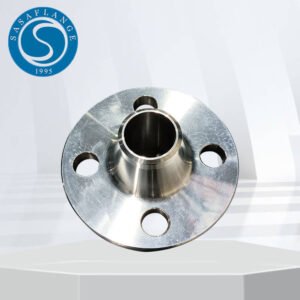
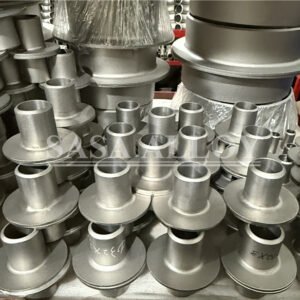
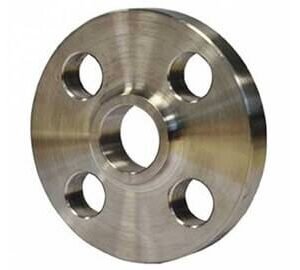
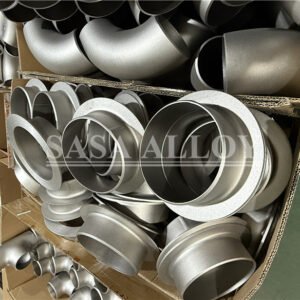
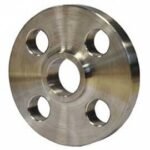
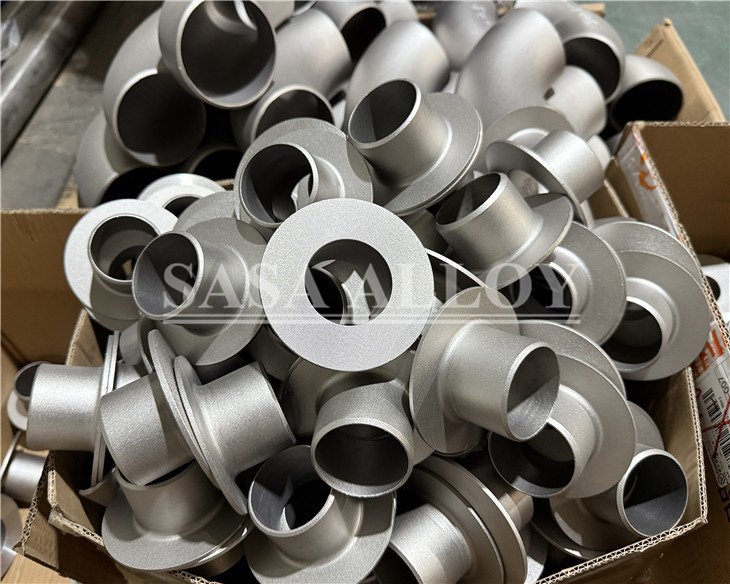
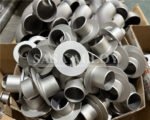
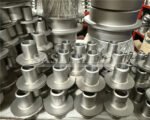
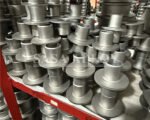
Tantalum lap joint flanges are loose-type flanges designed to rotate over a matching stub end, making alignment easier during installation and maintenance. They are selected for extremely corrosive media including hot sulfuric acid, hydrochloric acid in controlled conditions, nitric acid, bromine-bearing media and high-purity chemical service. Compared with integral flanges, lap joint designs reduce replacement cost when expensive corrosion-resistant materials such as tantalum are required only on the wetted side.
SASA FLANGE supplies tantalum lap joint flanges and tantalum-clad constructions in customized dimensions and drilling patterns to suit ASME B16.5, EN 1092-1, DIN, JIS and GB systems. Each order can be supported with chemical analysis, mechanical testing, dimensional inspection, PMI testing, EN 10204 3.1 certificate and full heat number traceability to meet demanding international project requirements.
- ✓Product Name: Tantalum Lap Joint Flanges
- ✓Material Grade: ASTM B521 R05200, R05400, R05252
- ✓Product Type: Lap Joint Flange / Backing Flange for Stub End Assembly
- ✓Main Feature: Exceptional corrosion resistance with flexible flange alignment and lower total cost in lined or clad systems
- ✓Applications: Acid service, fine chemicals, pharmaceuticals, chlor-alkali, high-purity processing, power and specialty equipment
Product Parameters
| Product Name | Tantalum Lap Joint Flanges |
| Material Grade | ASTM B521 R05200, R05400, R05252; tantalum-clad CS/SS options |
| Material Type | Pure tantalum forged/machined flange or tantalum-clad backing flange assembly |
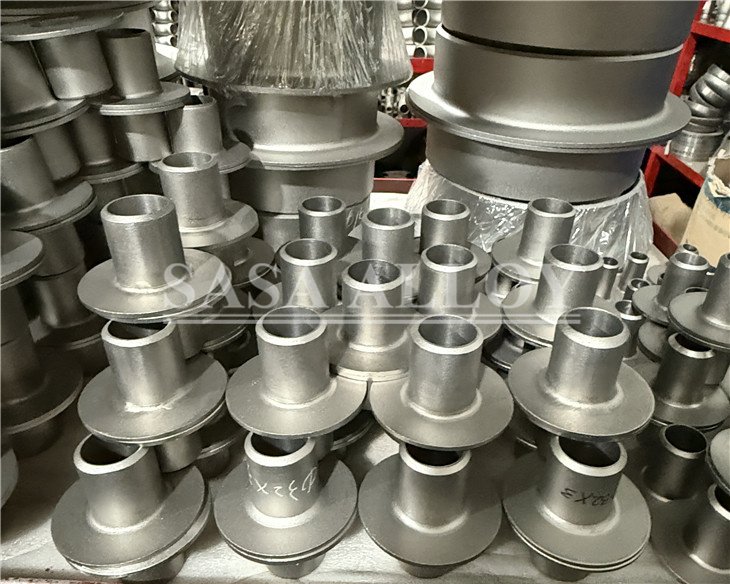
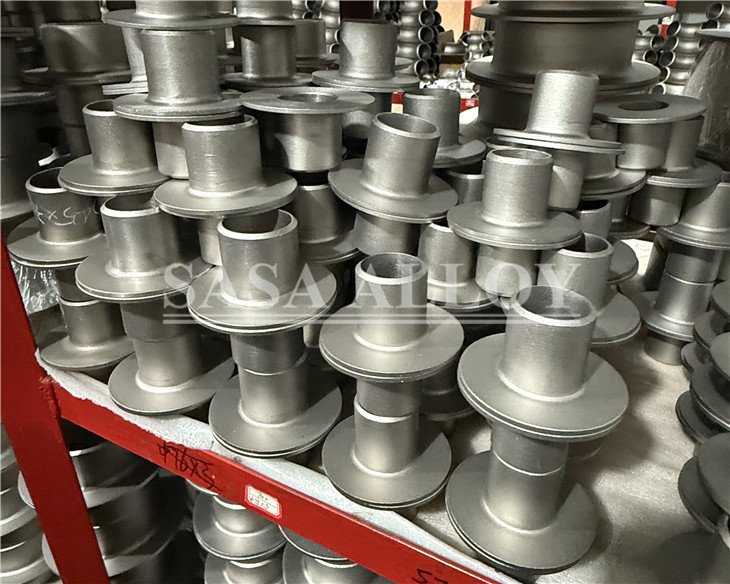
| Product Form | Lap Joint Flange used with Ta stub end or lined pipe stub end |
| Size Range | DN15 – DN600 (1/2 inch – 24 inch) |
| Pressure Class | Class 150 – 600 / PN10 – PN63 |
| Sealing Face | Flat Face, Raised Face on backing flange as applicable to stub end design; custom facing available |
| Surface Treatment | Precision machined, degreased, cleaned, pickled where applicable, protected for export shipment |
| Standard | ASME B16.5, EN 1092-1, DIN 2527, JIS B2220, GB/T 9119 or customer specification |
| Inspection | Chemical Analysis, Mechanical Test, PMI Test, Dimensional, Hydrostatic |
| Certificate | EN 10204 3.1 Material Certificate available |
| Processing Service | Cutting, CNC Machining, Custom Drilling, Custom Size Processing |
Chemical Composition
The chemical composition below is for reference for wrought tantalum grades commonly used for flange and stub end applications. Final chemistry depends on the selected ASTM grade, product form and purchase specification. Certified values are provided in the mill test certificate and verified against applicable standards and project requirements before shipment.
| Element | C | Si | Mn | P | S | Cr | Ni | Mo | Other |
|---|---|---|---|---|---|---|---|---|---|
| ASTM B521 R05200 | 0.01 max | 0.01 max | 0.01 max | 0.005 max | 0.005 max | 0.01 max | 0.01 max | 0.02 max | Ta 99.9% min |
Mechanical Properties
Mechanical properties of tantalum lap joint flanges vary with grade, cold work level, annealed condition, section thickness and manufacturing method. The values below are typical reference data for wrought tantalum materials used in flange production. Final tested results are confirmed by actual material certification and any supplementary project testing requirements.
| Grade | Tensile Strength | Yield Strength | Elongation | Hardness | Density |
|---|---|---|---|---|---|
| R05200 Annealed | 207 MPa | 138 MPa | 25% min | 90 HB | 16.6 g/cm3 |
| R05400 Annealed | 220 MPa | 145 MPa | 20% min | 95 HB | 16.6 g/cm3 |
Common Size Table
| Size Range | Pressure Class | Sealing Face | Material | Availability |
|---|---|---|---|---|
| DN15 – DN50 | Class 150 – 600 | FF / RF | R05200 / R05400 | Stock / Production |
| DN65 – DN300 | Class 150 – 600 | FF / RF | R05200 / R05400 / clad type | Production |
| DN350 – DN600 | Class 150 – 300 | FF / RF | R05200 / clad type | Production |
| DN15 – DN600 | PN10 – PN63 | Type to standard | R05200 / R05400 / clad type | Made to Order |
Different Specifications Comparison
| Type | Description | Typical Use |
|---|---|---|
| Solid Tantalum Lap Joint Flange | Machined from wrought tantalum material for maximum corrosion resistance across wetted surfaces | High-purity chemical lines, small to medium bore premium service |
| Tantalum-Clad Lap Joint Flange | Carbon steel or stainless backing flange with tantalum corrosion-resistant layer or contact surface | Cost-sensitive corrosive service with required tantalum exposure only |
| ASME Lap Joint Flange | Dimensions and drilling to ASME B16.5 for use with ASME stub ends and piping systems | Oil and gas, chemical and export projects using inch series piping |
| EN/DIN/JIS/GB Lap Joint Flange | Metric flange drilling and dimensions manufactured to regional standards or project drawings | European, Japanese, Chinese and mixed-standard industrial plants |
Equivalent Standards and International Names
Tantalum lap joint flanges are manufactured according to the dimensional flange standard required by the piping system, while the tantalum material grade follows recognized material specifications such as ASTM B521 or customer-approved equivalents. Regional standards mainly affect dimensions, drilling and pressure rating; material equivalence is confirmed through MTC, PMI and project documentation.
| Standard / Region | Standard Code | Typical Grade / Equivalent |
|---|---|---|
| USA | ASME B16.5 | ASTM B521 R05200 / R05400 tantalum |
| Europe | EN 1092-1 | Ta lap joint flange to project material specification |
| Germany | DIN 2527 / 2566 | Tantalum or tantalum-clad construction per drawing |
| Japan | JIS B2220 | Tantalum flange with JIS drilling and dimensions |
| China | GB/T 9119 | Tantalum lap joint flange to GB dimensions |
Production Process Flow
SASA FLANGE controls the full production route from certified tantalum raw material selection to final machining and inspection. Process discipline is especially important for reactive, high-value materials to ensure dimensional accuracy, surface integrity, traceability and reliable corrosion performance in severe service.
- 1. Raw Material Selection
- 2. Forging / Cutting
- 3. Heat Treatment
- 4. Rough Machining
- 5. Finish Machining
- 6. Drilling
- 7. Surface Treatment
- 8. Inspection
- 9. Marking
- 10. Packing
- 11. Delivery
| Process Step | Description | Quality Control Point |
|---|---|---|
| Raw Material | Select certified tantalum billets, forgings, plates or clad blanks | Material certificate and traceability |
| Forging | Hot forming or controlled cutting to achieve required flange blank shape | Forming temperature and reduction ratio |
| Heat Treatment | Stress relief or annealing where required by grade and fabrication route | Temperature and holding time control |
| Machining | Sealing face, bore, hub profile, bolt holes and dimensions | Dimensional accuracy and surface finish |
| Inspection | Final inspection before shipment | Dimension, surface, PMI, hydrostatic |
Product Inspection
1. Chemical Composition Inspection
Chemical composition inspection verifies the tantalum grade and impurity limits required for corrosive service. Raw material certificates are reviewed and, where specified, laboratory analysis is performed to confirm compliance with ASTM or customer requirements. This control is critical because small variations in interstitials and metallic impurities can affect corrosion resistance and fabrication performance.
2. Mechanical Properties Testing
Mechanical properties testing confirms tensile strength, yield strength, elongation and hardness of the tantalum material used for flange production. Test results are checked against the relevant grade and supply condition, such as annealed or stress-relieved. This helps ensure the flange can withstand assembly loads, thermal cycling and service stresses without cracking or excessive deformation.
3. Dimensional Inspection
Dimensional inspection covers outside diameter, thickness, bore, bolt circle, bolt hole size, flange flatness and sealing face finish. For lap joint flanges, special attention is paid to fit-up with the matching stub end and free rotation during installation. Standard-specific tolerances are verified to ASME, EN, DIN, JIS, GB or approved project drawings before release.
4. PMI Testing and Hydrostatic Testing
PMI testing is carried out to confirm the supplied material matches the specified tantalum grade or clad construction. When supplied as part of an assembled piping component, hydrostatic testing can be performed according to project requirements to verify pressure integrity. EN 10204 3.1 certificate, inspection reports and full heat number traceability are provided for documented quality assurance.
Product Packaging
- ✓Wooden Case Packaging: Suitable for high-pressure and large-diameter products
- ✓Pallet Packing with Shrink Wrap: Suitable for batch shipments and standard sizes
- ✓Anti-rust Oil Coating + Waterproof Paper: Used for ocean freight protection
- ✓Individual Plastic Bag + Carton: Used for small fittings and threaded products
- ✓Clear Marking: Grade, size, pressure class, heat number and PO number
Applications
Tantalum lap joint flanges are used where exceptional corrosion resistance and flexible maintenance are required. They are especially suitable for systems handling strong acids, halogen-bearing fluids and high-purity media, where the wetted corrosion-resistant component is combined with an economical backing flange design for easier alignment and reduced lifecycle cost.
| Industry | Typical Applications | Why This Product Is Used |
|---|---|---|
| Oil and Gas | Specialty chemical injection skids, acid handling units and offshore corrosion-critical package systems | Provides high resistance to aggressive chemicals while allowing easier flange alignment during maintenance |
| Chemical Processing | Sulfuric acid service, nitric acid systems, bromine-related media, reactors and transfer lines | Tantalum offers outstanding corrosion resistance in many severe chemical environments |
| Power Generation | FGD byproduct processing, specialty dosing lines and laboratory or pilot process circuits | Used where process chemistry is highly corrosive and equipment reliability is essential |
| Water Treatment | High-purity dosing systems, membrane chemical cleaning skids and specialty oxidation lines | Supports clean service and durability in aggressive chemical cleaning or treatment media |
| Marine and Offshore | Compact corrosive process modules, analyzer systems and specialty offshore chemical units | Lap joint construction simplifies installation in confined spaces and reduces replacement cost |
Why Choose SASA FLANGE?
- ✓Professional manufacturer of Lap Joint Flange for global industrial projects
- ✓Customized size, pressure class and material grade according to drawings
- ✓Full standard support: ASME, EN, DIN, JIS, GB, GOST and customer specifications
- ✓Material traceability with heat number control and EN 10204 3.1 material certificate
- ✓Chemical analysis, mechanical testing, PMI testing, hydrostatic and dimensional inspection
- ✓Stock availability for standard items, lead time 3-7 days; custom production 15-30 days
- ✓Export-grade packaging for sea, air and land transportation
- ✓15+ years experience supplying 50+ countries worldwide
FAQ
Q: What is a tantalum lap joint flange?
A: A tantalum lap joint flange is a rotating backing flange used together with a stub end, where the wetted corrosion-resistant component is typically tantalum or tantalum-lined. The design allows easier bolt hole alignment and lower replacement cost compared with solid integral flanges, making it suitable for highly corrosive chemical and high-purity process systems.
Q: What materials are available for tantalum lap joint flanges?
A: SASA FLANGE can supply solid tantalum grades such as ASTM B521 R05200, R05400 and R05252, depending on application requirements. For more economical solutions, tantalum-clad carbon steel or tantalum-clad stainless steel constructions are also available. Material selection depends on process chemistry, operating temperature, pressure class and the extent of tantalum exposure required.
Q: What pressure class is supported?
A: Typical supply range for tantalum lap joint flanges is ASME Class 150, 300 and 600, as well as metric PN10 to PN63 depending on size and design standard. Because tantalum is usually used in specialized corrosive service, the final pressure rating may also depend on backing flange construction, temperature and the associated stub end design.
Q: Can SASA FLANGE supply custom sizes?
A: Yes. SASA FLANGE supplies custom dimensions, drilling patterns, bore sizes, facing details and special mating arrangements for tantalum lap joint flange assemblies. We can manufacture to ASME, EN, DIN, JIS, GB or customer drawings, including special stub end fit-up, mixed-standard drilling and tailored clad or solid tantalum solutions for process equipment manufacturers and EPC projects.
Q: What certificate is provided?
A: Standard documentation includes EN 10204 3.1 material certificate with heat number traceability. Depending on order scope, SASA FLANGE can also provide chemical analysis reports, mechanical test results, PMI inspection records, dimensional inspection reports and hydrostatic test records for assembled components. This documentation helps global buyers meet project QA/QC and end-user approval requirements.
Contact Us
If you are looking for tantalum lap joint flanges or related custom flange products, please contact SASA FLANGE with your required size, pressure class, material grade, standard, surface treatment, quantity and inspection requirements. Our team will provide professional technical solutions and competitive quotation within 24 hours.
- 📧 Email: sales@sasaflange.com
- 📱 WhatsApp: +86 13764965049
- ☎️ Tel: +86 21 52236361
- 🌐 Website: www.sasaflange.com