
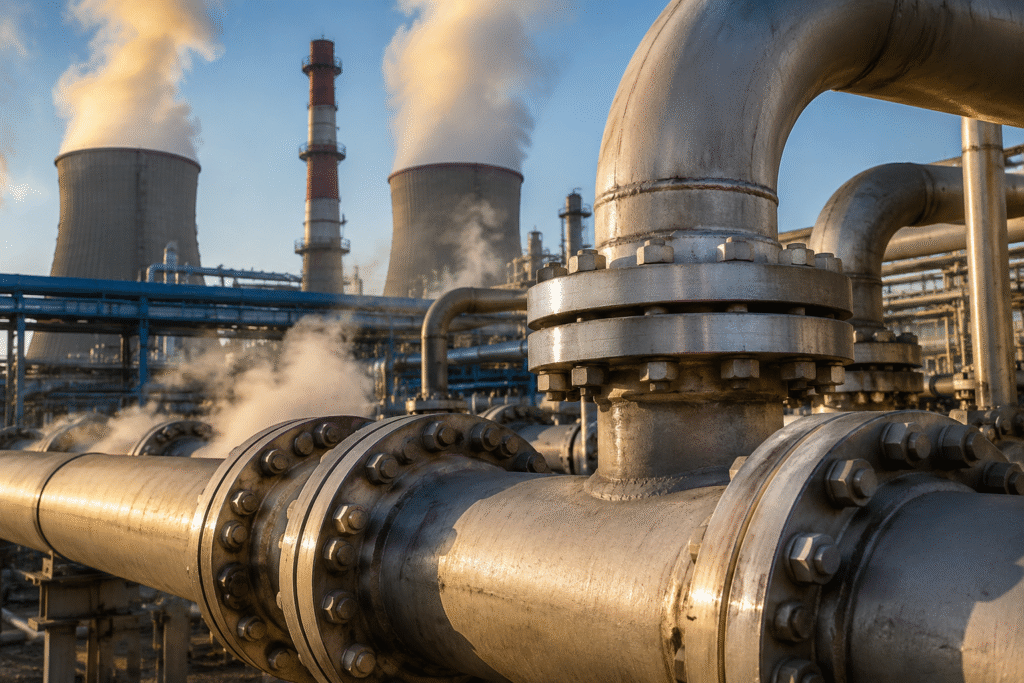
Рынок фланцев для труб из нержавеющей стали составляет 5,8 млрд долларов США: Скрытые преимущества, Типы, Использование, и как выбрать правильный фланец
По данным исследования Grand View (2024), мировой рынок промышленных фланцев оценивался в $5.8 миллиард в 2023 и, по прогнозам, достигнет $7.2 миллиард на 2030. That growth makes stainless steel pipe flange selection more strategic for engineers and procurement teams who need durability, коррозионная стойкость, and long-term lifecycle value.
В промышленных трубопроводах, the hidden advantages of stainless steel pipe flange products go far beyond basic connection points. Intriguing material versatility, целостность давления, and maintenance savings now influence how buyers choose flange types, размеры, and standards across Oil & Газ, Власть, Очистка воды, and Marine systems.
Industrial Demand for Stainless Steel Pipe Flange Solutions Is Accelerating
Global demand remains strong because industrial plants continue to expand capacity, replace aging infrastructure, and tighten compliance requirements. По данным IBISWorld (2024), На долю Азиатско-Тихоокеанского региона приходится более 45% мирового производства фланцев, при этом Китай является крупнейшим производителем.
That production concentration matters for procurement strategy. Buyers increasingly evaluate not only price, но и отслеживаемость мельниц, инспекционная документация, и надежность доставки.
The oil and gas sector remains the largest consuming industry. По данным Статистики (2024), на долю нефтегазовой отрасли приходится около 35% мирового потребления фланцев, which explains the heavy demand for ASME-rated stainless, углеродистая сталь, and alloy flange products.
В то же время, очистка воды, нефтехимический, and shipbuilding projects keep expanding stainless specifications. Мордорская разведка (2024) notes that corrosion-resistant materials continue gaining share in aggressive media applications because downtime costs often exceed initial component premiums.
For buyers comparing industrial flanges, stainless steel pipe flange products offer a strong balance of corrosion resistance, механическая прочность, and fabrication flexibility. Общие оценки включают в себя ASTM A182 F304, F304L, Ф316, F316L, дуплекс F51, and super duplex F53 for higher chloride exposure and improved pitting resistance.
Как доктор. James Hollis, Инженер по материалам и консультант по коррозии, государства: «A flange is rarely a commodity in aggressive service. Марка материала, качество ковки, and compliance documentation determine whether the joint will perform for years or fail early.»
This is where supplier capability becomes critical. С ISO 9001:2015 и сертификаты PED 2014/68/ЕС., SASA FLANGE supports international projects that require dimensional accuracy, EN 10204 3.1 сертификация, and dependable export execution.
Более того, factory capability affects lead time and consistency. По данным Market Research Future (2024), industrial buyers increasingly favor suppliers that combine machining, тестирование, and documentation under one quality system because this reduces project coordination risk.
For EPC contractors and distributors, stainless flange sourcing is no longer only about available stock. It is about choosing a partner that understands standards, классы давления, металлургия, and end-use risk.
Изготовление фланцев в 304, 316, 904л, 2205, 2507 и другие премиум-классы, SASA FLANGE serves projects across 50+ страны в нефти & Газ, нефтехимическая, Власть, Морской, и строительство. Поэтому, buyers can align material selection with both project specifications and long-term operating performance.
Техническое погружение: Скрытые преимущества, Универсальность, Долговечность, and Flange Types
The strongest case for a stainless steel pipe flange lies in lifecycle economics. Stainless materials usually cost more upfront than carbon steel, yet they often reduce repainting, corrosion failures, and replacement frequency in wet, химический, or saline service.
According to NACE guidance on corrosion control and materials selection, corrosion-related costs consume a meaningful share of industrial maintenance budgets worldwide (КДЕС, 2023). Поэтому, selecting the right stainless flange grade can directly reduce total cost of ownership.
Engineers usually start with grade selection, then match pressure class, лицом к лицу, and flange type to service conditions. ASTM A182 покрывает фланцы труб из кованых или катаных сплавов и нержавеющей стали., кованые фитинги, и клапаны для работы при высоких температурах, пока ASME B16.5 управляет размерами, допуски, рейтинги, and markings for NPS 1/2 через 24.
Для больших диаметров, ASME B16.47 применяется. В европейских проектах, ДИН и ЕН 1092 standards often define dimensions, бурение, and pressure designations, so interchangeability must be checked carefully.
В роли Майкла Трента, Старший инженер по трубопроводам, государства: «The wrong flange type can undermine a good material choice. A 316L flange in the wrong facing or pressure class still creates leakage and maintenance risk.»
The main types of stainless flanges each serve different piping priorities. Slip on flanges simplify alignment and installation. Weld neck flanges deliver superior stress distribution. Blind flanges terminate systems for testing, изоляция, или будущее расширение.
- Приварной фланец с горловиной: Лучше всего для высокого давления, циклическая загрузка, и критические технологические линии.
- Наденьте фланец: Common for lower pressure utility systems and cost-sensitive fabrication.
- Плата сварка: Suitable for small-bore, служба высокого давления.
- Резьбовой фланец: Useful where welding is restricted or field assembly must remain simple.
- Коленные соединения фланца: Preferred where frequent dismantling is required.
- Глухой фланец: Used for closure, гидроиспытания, и изоляция обслуживания.
Material choice then determines hidden advantages in specific environments. F304/F304L remains widely used for general process service because it offers good corrosion resistance and weldability. F316/F316L adds molybdenum, which improves resistance in chloride-bearing media and marine-adjacent environments.
Duplex and super duplex stainless grades raise performance further. Their higher strength can support wall-thickness optimization, while superior resistance to chloride stress corrosion cracking makes them attractive in offshore and desalination systems.
According to ASTM and industry application data, 316L is commonly specified where lower carbon content helps reduce sensitization after welding (ASTM, 2024). That makes it a practical choice for process plants with extensive field welding and post-installation inspection requirements.
Pressure class also matters when buyers choose pipe flanges. Классы ASME 150, 300, 600, 900, 1500, и 2500 define pressure-temperature capabilities, but exact limits depend on material group and operating temperature under ASME rules.
Face type affects sealing performance. Raised Face remains the most common general industrial option. Ring Type Joint supports higher pressure and more severe service. Flat Face is often selected for cast iron or low-bolt-load mating equipment.
В соответствии с ASME B16.5, запирание, совместимость прокладок, and surface finish all influence final joint integrity (ASME, 2024). Поэтому, flange selection must always consider the full assembly, not only the forged component.
Благодаря передовой обработке с ЧПУ и всестороннему тестированию качества., SASA FLANGE предлагает нестандартные размеры от 1/2" до 60" из нержавеющей стали, углеродистая сталь, сплав, никелевый сплав, and titanium grades. This capability helps buyers consolidate sourcing for flanges and pipe fittings such as elbows, тройники, редукторы, и шапки.
Procurement teams also look at practical manufacturing details. These include heat treatment, PMI, проверка размеров, hydrostatic test support, ferrite control where required, and traceable raw material records.
- Common stainless grades: 304, 304л, 316, 316л, 904л, 2205, 2507.
- Relevant forged flange specs: ASTM A182, ASME B16.5, ASME B16.47, EN 1092.
- Typical documentation: EN 10204 3.1, pressure test records, Отчеты PMI, dimension reports.
- Распространенные типы лица: РФ, ФФ, РТЖ.
- Typical end industries: Масло & Газ, нефтехимическая, Власть, Очистка воды, Морской.
That combination of versatility, долговечность, and standards compliance explains why stainless steel flanges remain essential in severe service piping. В отличие, selecting purely on unit price can create hidden costs through leakage, unplanned shutdowns, or faster replacement cycles.
Стандарты, Согласие, and Quality Assurance for Stainless Steel Pipe Flange Procurement
Industrial buyers rarely approve flanges without standards compliance. ASME, ASTM, DIN, EN, API, ISO, and PED references define how the flange is designed, кованый, обработанный, marked, проверено, and documented.
ASTM A182 is one of the most important material standards for forged stainless steel flange products. It covers chemical composition, механические свойства, heat treatment requirements, and grade identification for forged flanges and fittings.
ASME B16.5 governs dimensions and pressure-temperature ratings for pipe flanges and flanged fittings from NPS 1/2 через 24. ASME B16.47 extends dimensional requirements to larger diameters, обычно из НПС 26 через 60.
European projects frequently specify EN 1092 flange dimensions and pressure classes such as PN10, PN16, Ру25, и Ру40. Поэтому, engineers must verify drilling patterns and thickness compatibility before mixing ASME and EN components.
По данным ИСО (2024), documented quality systems improve consistency in manufacturing and traceability for pressure equipment supply chains. Поэтому ISO 9001:2015 certification remains a strong baseline for approved vendor evaluation.
Pressure equipment regulation also matters in export markets. PED 2014/68/EU applies to pressure equipment supplied into the European Economic Area, and proper conformity assessment is essential for compliant project delivery.
For sour service or sulfide stress environments, material review may also include NACE MR0175 and related project-specific requirements. In offshore projects, DNV and NORSOK references may further define inspection, тестирование, and documentation expectations.
Альтернативный текст изображения: stainless steel pipe flange manufacturing and inspection under ASME standards.
Below is a practical compliance checklist used by many engineering teams when evaluating flange suppliers.
- Material standard confirmation: ASTM A182, ASTM A105, or project-specified equivalent.
- Подтверждение стандарта размеров: ASME B16.5, ASME B16.47, DIN, JIS, ГОСТ, или RU 1092.
- Pressure class verification: 150 к 2500 or project-specific PN rating.
- Traceability documents: номер плавки, МТС, EN 10204 3.1.
- Объем проверки: PMI, твердость, размеры, визуальный, NDE if required.
- Marking and packaging: standard stamping, export-safe packing, moisture protection.
As Laura Mendel, Аналитик промышленного рынка, государства: «Compliance documentation now influences award decisions almost as much as price. Buyers want fewer surprises during inspection and commissioning.»
That is especially true in multinational projects with third-party inspections. Procurement teams often need fast access to drawings, МТС, декларации PED, and coating or preservation details before shipment approval.
С ISO 9001:2015, ПЭД 2014/68/ЕС, и АД 2000 сертификаты, SASA FLANGE aligns production and documentation with demanding project environments. Более того, the company supports materials including 304, 316, 316л, 904л, 2205, 2507, А105, А182, Инконель, Монель, Хастеллой, и Титан.
Buyers should also compare dimensional capability. Фланцы большого диаметра, custom bores, нестандартное бурение, RTJ канавки, and special facing finishes all require machining expertise, not just material availability.
По этой причине, many project teams prefer manufacturers that integrate forging coordination, обработка с ЧПУ, тестирование, and export packaging under one system. You can review capabilities or discuss project drawings through SASA FLANGE when complex compliance requirements apply.
For deeper standards reference, buyers should also verify the latest dimensional and pressure guidance directly from ASME. Current editions always take precedence over secondary summaries.
Руководство по применению: How to Choose Stainless Steel Pipe Flange Types for Real-World Uses
Выбор подходящего фланца для трубы из нержавеющей стали начинается с условий эксплуатации., не каталогизированные предпочтения. Engineers must evaluate media chemistry, температура, давление, циклические нагрузки, допуск на коррозию, and inspection access before specifying a flange.
В масле & Газовые системы, приварные фланцы из стали 316L, дуплекс, or super duplex grades often support process, оффшорный, and produced-water lines. Higher pressure classes and RTJ facings become common in severe hydrocarbon service.
На нефтехимических заводах, 304L and 316L flanges often serve utility and process lines depending on chloride level and media concentration. Однако, stronger acids or chlorides may justify 904L, Хастеллой, or nickel alloy options.
Power generation systems present a different profile. Термальный велоспорт, паровая служба, and pressure fluctuations push designers toward forged materials with strong dimensional accuracy and reliable bolting performance.
Marine and shipbuilding applications place a premium on chloride resistance. Поэтому, 316л, дуплекс 2205, и супер дуплекс 2507 often outperform standard austenitic grades in splash zones, системы морской воды, и палубные трубопроводы.
Water treatment and desalination systems also benefit from stainless selection. According to industry desalination case data summarized by DNV-related technical references, duplex materials often deliver improved resistance in chloride-rich water systems where lower-alloy materials deteriorate faster (ДНВ, 2023).
Below are practical selection criteria that help engineers and purchasing teams choose pipe flanges more accurately.
- СМИ: вода, пар, углеводороды, кислоты, хлориды, кислый газ, морская вода.
- Температура: окружающий, повышенный, or cyclic thermal service.
- Класс давления: ASME 150 к 2500 or EN PN rating.
- Тип фланца: приварная шейка, надеть, слепой, раструбная сварка, резьбовой, коленный сустав.
- Тип лица: РФ, ФФ, РТЖ.
- Марка материала: 304/304л, 316/316л, 904л, 2205, 2507, никелевый сплав.
- Документация: EN 10204 3.1, PMI, твердость, ОСП, PED as required.
- Project logistics: Время выполнения, упаковка, контрольные точки, готовность к экспорту.
There are also hidden advantages in supplier coordination. When a manufacturer can provide both flange and fittings, dimensional matching becomes easier and procurement administration becomes faster.
That matters in shutdowns and brownfield modifications where schedule risk is high. Предлагаю нестандартные размеры от 1/2." до 60" с конкурентоспособными ценами напрямую с завода, SASA FLANGE helps buyers consolidate flanges, локти, тройники, редукторы, and caps under one sourcing plan.
Common buying scenarios illustrate how selection changes by application.
- Offshore seawater header: 2205 или 2507 weld neck flange with RF or RTJ depending on design pressure.
- Chemical transfer line: 316L or 904L slip on or weld neck based on corrosion study and operating pressure.
- Power plant steam line: forged alloy or stainless weld neck flange in suitable ASME pressure class.
- Water treatment skid: 304L or 316L slip on flange where fabrication efficiency and corrosion resistance both matter.
- Maintenance isolation point: blind flange with correct gasket and bolting set for hydrotest or shutdown control.
Procurement managers should ask suppliers a few direct questions before placing orders. Can they provide MTCs quickly. Can they support third-party inspection. Can they machine special bores or RTJ grooves. Can they maintain traceability through packing and shipment.
Those questions often reveal more than a price sheet. На практике, a capable manufacturer reduces risk long before the flange arrives on site.
Перспективы развития фланцев из нержавеющей стали и рекомендации по стратегическим закупкам
Market fundamentals remain positive for stainless and alloy flange products. По данным исследования Grand View (2024), прогнозируется, что рынок достигнет $7.2 миллиард на 2030, driven by energy, industrial processing, and infrastructure upgrades.
В то же время, buyers face pressure from volatile alloy costs, compliance expectations, and tighter project schedules. Поэтому, strategic sourcing should balance price with corrosion performance, гарантия качества, и оперативность поставщика.
One clear trend is the shift toward lifecycle-based procurement. Engineers increasingly justify better stainless grades by showing lower replacement rates, меньше утечек, and better reliability in corrosive systems.
Another trend is documentation digitization. Manufacturers that provide fast access to MTCs, рисунки, протоколы проверок, and PED or ISO certificates can accelerate approval cycles and reduce site delays.
По данным Market Research Future (2024), industrial procurement teams are placing greater value on supplier transparency and integrated manufacturing support. Как результат, producers with strong quality systems and technical communication are better positioned in global tenders.
For buyers evaluating intriguing stainless steel flanges for industrial use, the best approach is straightforward. Match flange type to load condition. Match grade to corrosion risk. Match supplier capability to project documentation and schedule requirements.
В практическом плане, that means avoiding generic substitutions without engineering review. It also means confirming standards, класс давления, лицом к лицу, объем проверки, and country-specific compliance before order release.
When projects demand stainless steel pipe flange products in 304, 316, 904л, 2205, 2507, или специальные сплавы, working with experienced exporters improves execution. For detailed quotations, custom drawings, or urgent project support, engineers and sourcing teams can connect with SASA FLANGE to align specifications, документация, and lead time early in the procurement cycle.
Часто задаваемые вопросы
Какие существуют типы фланцев из нержавеющей стали??
●Наиболее распространенными типами фланцев из нержавеющей стали являются приварные шейки., надеть, слепой, раструбная сварка, резьбовой, и коленный сустав, с ASME B16.5 covering standard dimensions for NPS 1/2 через 24.
●Each flange type suits a different piping requirement because weld neck flanges handle higher stress, slip on flanges simplify fabrication, and blind flanges isolate or terminate a line.
●Для проектов, требующих правильного выбора типа, отслеживаемость материалов, и соответствие стандартам, работа с известными производителями, такими как SASA FLANGE helps ensure the flange matches pressure class, лицом к лицу, и условия обслуживания.
Что лучше 304 или 420 нержавеющая сталь?
●For most industrial stainless steel pipe flange applications, 304 is usually the better choice because it offers stronger corrosion resistance and better weldability than 420.
●Оценка 420 is a martensitic stainless steel used more often where hardness and wear resistance matter, пока ASTM A182 F304 is widely specified for forged flange service in piping systems.
●If the application involves corrosive media, fabrication welding, or process piping standards, buyers should generally prioritize 304 или 316 grades and confirm suitability with a qualified supplier such as SASA FLANGE.
В какой отрасли промышленности больше всего используется нержавеющая сталь?
●По данным Статистики (2024), на долю нефтегазовой отрасли приходится около 35% мирового потребления фланцев, making it one of the largest industrial users of stainless and alloy flange products.
●Однако, нефтехимический, очистка воды, морской, пищевая промышленность, and power generation also use significant volumes of stainless steel because corrosion resistance and hygiene or durability requirements are critical.
●When buyers serve multiple end-use sectors, selecting a manufacturer that supports broad material grades, стандарты, and export documentation improves sourcing flexibility and long-term supply consistency.
Какие три типа фланцев существуют??
●The three flange types most commonly referenced in general industrial purchasing are weld neck, надеть, and blind flanges because they cover most process piping, изготовление, и потребности в изоляции.
●Weld neck flanges perform best in high-pressure or cyclic service, slip on flanges support easier installation in lower-pressure systems, and blind flanges close the end of a pipe or vessel nozzle.
●Procurement teams should still review full operating conditions because threaded, коленный сустав, and socket weld designs may be better choices in specialized service or small-bore systems.
Что влияет на цену фланца трубы из нержавеющей стали?
●Цена фланца для труб из нержавеющей стали зависит в основном от марки материала., размер, класс давления, тип фланца, сложность обработки, объем тестирования, and required documentation such as EN 10204 3.1.
●По данным исследования Grand View (2024), continued market growth and alloy demand are influencing industrial flange sourcing, which means 316L, дуплекс, and super duplex products typically cost more than standard 304 оценки.
●Контролировать общую стоимость, buyers should compare not only unit price but also compliance, Время выполнения, инспекционная поддержка, and lifecycle durability before finalizing a purchase decision.
How do I choose a stainless steel slip on flange or threaded pipe flange?
●A stainless steel slip on flange is usually chosen for easier alignment and economical fabrication, while a threaded pipe flange is selected where welding is impractical or restricted by site conditions.
●ASME B16.5 dimensions and project pressure-temperature requirements should be checked carefully because installation convenience does not replace proper mechanical or sealing performance.
●For applications involving aggressive media, unusual bore sizes, or custom machining, a technical review with an experienced flange manufacturer is the safest way to confirm the correct design.
Связанные Посты
Отделка торцевой поверхности фланца: Объяснение концентрических и спиральных зубцов
Концентрические и спиральные зубцы представляют собой обработанную поверхность фланца.…
Дуплекс 2205 по сравнению с фланцами 316L: Какой материал выбрать?
Быстрый ответ: Дуплекс 2205 flanges are usually the stronger candidate…

Определение фланца с диафрагмой, Подробности и обзор фланцев ASME B16.36: Рыночные данные, Руководство по выбору и анализ соответствия требованиям
Мировой рынок промышленных фланцев оценивался в $5.8 миллиард…

Руководство по рынку черных сливных фланцев: Материалы, 3.5″ Совместимость, и данные о поставщиках B2B для фланцев для кухонной мойки
Спрос на черные фланцы для утилизации растет благодаря покупателям кухонной техники…