
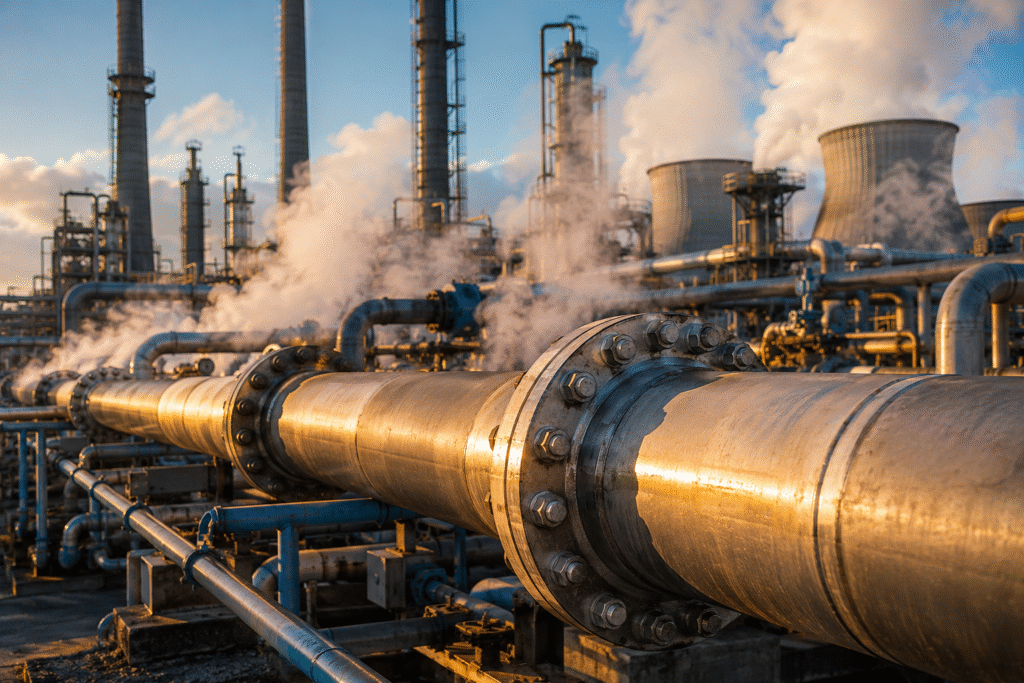
Рынок фланцев для труб из нержавеющей стали: 7 Скрытые преимущества, Типы, Использование и руководство по выбору ASME B16.5/B16.47
По данным исследования Grand View (2024), мировой рынок промышленных фланцев оценивался в $5.8 миллиард в 2023 и, по прогнозам, достигнет $7.2 миллиард на 2030. That growth highlights why the фланец трубы из нержавеющей стали remains a critical component for engineers, EPC-подрядчики, and procurement teams seeking durability, коррозионная стойкость, и длительный срок службы.
Для промышленных покупателей, the most Intriguing factor is not only the visible strength of Stainless Steel Flanges, but also the Hidden Advantages in lifecycle cost, inspection reliability, and application Versatility. Поэтому, selecting the right flange by material, класс давления, лицом к лицу, и стандартные, такие как ASME B16.5 или ASME B16.47 напрямую влияет на безопасность, время безотказной работы, и общая стоимость установки.
Спрос на фланцы для труб из нержавеющей стали, Market Growth, and Procurement Trends
По данным IBISWorld (2024), На долю Азиатско-Тихоокеанского региона приходится более 45% мирового производства фланцев, при этом Китай является крупнейшим производителем. Как результат, global buyers increasingly source stainless steel pipe flange products from qualified Chinese factories that can combine scale, CNC precision, и экспортная документация.
По данным Статистики (2024), на долю нефтегазовой отрасли приходится около 35% мирового потребления фланцев. Более того, нефтехимические заводы, power generation projects, системы опреснения, and shipbuilding programs continue to expand demand for corrosion-resistant piping components.
The procurement landscape has also changed. Buyers now expect mill test certificates, EN 10204 3.1 документация, PMI, hydrostatic or pneumatic test support, and traceability by heat number before releasing large-value orders.
По данным Мордорской разведки (2024), industrial infrastructure spending in energy and water sectors continues to support above-average demand for alloy and stainless piping components. Более того, duplex and super duplex grades are gaining traction where chloride corrosion and sour service conditions shorten the life of conventional carbon steel systems.
В этой среде, a supplier must offer more than catalog inventory. It must provide precise dimensional control, соответствие стандартам ASME и ASTM, and material availability across 304, 316, 316л, 904л, 2205, 2507, и никелевые сплавы.
SASA FLANGE operates in this quality-focused segment with ISO 9001:2015, ПЭД 2014/68/ЕС, и АД 2000 реквизиты для входа. Благодаря передовой обработке с ЧПУ и всестороннему тестированию качества., компания производит фланцы из нержавеющей стали, фланцы из углеродистой стали, фланцы из сплава, and pipe fittings for customers in Oil & Газ, нефтехимическая, Власть, Морской, Очистка воды, и строительство.
Для менеджеров по закупкам, market expansion creates both opportunity and risk. On one hand, more sourcing options can improve pricing. Однако, inconsistent machining tolerances, non-compliant raw material, and weak documentation can create downstream failures that cost far more than the initial purchase savings.
As David Nguyen, Старший инженер по трубопроводам, государства: «A flange is a small percentage of project CAPEX, but it has an outsized effect on mechanical integrity and shutdown risk.» That observation reflects why serious buyers prioritize standards compliance and material suitability over headline price alone.
Another important trend involves customization. По данным Market Research Future (2024), specialized industrial components for aggressive service environments are growing faster than commodity piping accessories, driven by stricter operating conditions and longer asset life expectations.
Поэтому, manufacturers that can supply custom sizes from 1/2" до 60", специальное бурение, non-standard facings, and exotic materials hold a clear advantage in the B2B market. This is especially relevant when projects require mixed standards, rapid turnaround, or replacement parts for older installations.
Technical Advantages of Stainless Steel Pipe Flange Products: Материалы, Типы, и производительность
The Hidden Advantages of a stainless steel pipe flange begin with metallurgical stability. Compared with ordinary steel in corrosive service, stainless grades form a passive chromium oxide layer that improves resistance to oxidation, moisture attack, and many chemical media.
According to ASTM material frameworks and common industrial practice, аустенитные марки, такие как 304 и 316 dominate general process piping because they balance weldability, формуемость, и коррозионная стойкость. В отличие, дуплексные сорта, такие как 2205 и 2507 provide higher strength and better chloride stress corrosion cracking resistance in more severe environments.
Как доктор. Елена Моррис, Материаловед, государства: «The best flange material is not the most expensive alloy, but the alloy that matches chloride level, температура, класс давления, and fabrication method.» Поэтому, the right selection depends on process chemistry and not on brand familiarity alone.
From a technical perspective, several Types of stainless flanges serve different assembly requirements. Weld neck flanges distribute stress efficiently. Slip-on flanges offer easier alignment and economical installation. Blind flanges terminate a line or nozzle and support inspection and maintenance access.
Other common Types include socket weld, резьбовой, коленный сустав, and ring-type joint configurations. Each option influences fabrication speed, weld profile, усталостные характеристики, and sealing behavior under thermal cycling.
- 304/304л: Хорошая общая устойчивость к коррозии, strong weldability, and cost-effective performance for water, еда, и легкая химическая служба.
- 316/316л: Added molybdenum improves resistance in chlorides, морская атмосфера, and many chemical applications.
- 904л: Higher nickel and molybdenum content supports strong resistance in aggressive acidic service.
- 2205 Дуплекс: Higher yield strength and improved SCC resistance for offshore, морская вода, и технологические системы.
- 2507 Супер Дуплекс: Premium choice for high-chloride and high-pressure environments.
According to NACE guidance used widely in sour service engineering, material compatibility must be checked against H2S exposure, пределы твердости, и рабочая температура. Кроме того, buyers should evaluate flange class, совместимость прокладок, болтовая нагрузка, and corrosion allowance together rather than as isolated variables.
Performance also depends on manufacturing quality. A forged stainless steel pipe flange usually provides better grain flow and mechanical integrity than poorly controlled alternatives, especially in pressure-retaining systems.
В соответствии с ASME B16.5, размеры фланца, бурение, номинальные значения давления и температуры, допуски, and markings must conform to specified requirements for NPS 1/2 через 24. ASME B16.47 extends dimensional coverage for larger diameters, generally NPS 26 через 60, which is critical for large process lines and terminal infrastructure.
These standards matter because interchangeability reduces site delays. When a flange does not align with bolt holes, размеры приподнятого лица, or thickness tolerances, installation crews lose hours and projects absorb avoidable cost.
The Uses of stainless flanges extend across sectors because Stainless components support both clean and corrosive service. Например, 316L flanges are common in pharmaceutical water systems, пока 2205 и 2507 are widely specified in offshore skid packages and desalination trains.
Согласно 2024 industry estimate from Statista, process industries are increasing spending on corrosion-resistant equipment as maintenance budgets shift from reactive repairs to reliability planning. Как результат, engineers are more often instructed to justify lifecycle value rather than first-cost savings.
SASA FLANGE supports this need by manufacturing flanges in 304, 316, 904л, 2205, 2507 и другие премиум-классы, alongside A105, А182, Инконель, Монель, Хастеллой, и Титан. Компания также поставляет локти, тройники, редукторы, and caps to help buyers consolidate sourcing and simplify project documentation.
When teams Choose a supplier, they should check machining capability, PMI procedures, positive traceability, и ли EN 10204 3.1 documents are available. They should also confirm whether the factory can produce raised face, плоское лицо, РТЖ, and custom drilling patterns in accordance with project specifications.
As Mark Feldman, Аналитик промышленного рынка, государства: «In global sourcing, documentation discipline is becoming as important as metallurgy.» That is particularly true for export projects requiring PED dossiers, проверка третьей стороной, and strict ITP compliance.
- Common pressure classes: 150, 300, 600, 900, 1500, 2500.
- Common facings: РФ, ФФ, РТЖ.
- Relevant standards: ASME B16.5, ASME B16.47, ASME B16.9, ASTM A182, EN 1092, DIN, JIS, ГОСТ.
- Inspection options: PMI, проверка размеров, hardness test, поддержка гидроиспытаний, surface finish checks, проверка материала.
В конечном счете, durability is not a marketing word in piping systems. It is a measurable result of correct alloy choice, proper flange design, compliant dimensions, and disciplined manufacturing control.
ASME, ASTM, DIN, and EN Compliance Requirements for Stainless Steel Flanges
Compliance determines whether a stainless steel pipe flange can be installed confidently in regulated or high-risk service. Поэтому, engineers usually begin with the governing dimensional standard, then move to material standard, класс давления, требования к тестированию, и пакет документации.
Для большинства международных проектов, ASME B16.5 и ASME B16.47 define dimensional requirements for flanges. ASTM A182 commonly defines forged or rolled alloy and stainless steel pipe flanges, пока ASME B16.9 applies to butt weld fittings used alongside the flange assembly.
European projects frequently specify EN 1092 dimensions and PED 2014/68/EU compliance. Кроме того, DIN and JIS standards remain important in legacy plants, marine projects, and regional procurement packages.
Согласно ASME code framework, correct dimensional conformity ensures interchangeability and reliable bolting alignment. Более того, standards reduce ambiguity across global supply chains and support safer maintenance planning.
- ASME B16.5: Фланцы труб и фланцевые фитинги для АПЛ 1/2 к 24.
- ASME B16.47: Стальные фланцы большого диаметра для АПЛ 26 к 60.
- ASTM A182: Forged or rolled alloy and stainless steel flange materials.
- EN 1092-1: Европейские размеры фланцев и классы давления PN.
- NACE MR0175: Руководство по материалам для кислых сред эксплуатации.
Buyers should also understand that standards do not automatically guarantee suitability for all media. Например, a compliant ASTM A182 F304 flange may still be the wrong choice in high-chloride service where 316L, 2205, или 2507 would perform better.
Documentation quality is equally important. Mill test certificates should identify heat number, химия, механические свойства, и соответствие стандартам, пока EN 10204 3.1 paperwork helps project teams verify traceability during inspection and handover.
В соответствии с принципами управления качеством, согласованными с ISO., traceability and process consistency reduce non-conformance risk during production and final release. Поэтому, производители с ISO 9001:2015 systems typically offer stronger procedural control for incoming material, механическая обработка, и окончательная проверка.
SASA FLANGE integrates ISO 9001:2015, ПЭД 2014/68/ЕС, и АД 2000 credentials into its manufacturing and export workflow. That matters for buyers who need reliable document packs, factory-direct communication, and support for third-party inspection before shipment.
The most common compliance mistakes are avoidable. They include ordering the wrong pressure class, mixing ASME and DIN drilling, overlooking gasket seating finish, or ignoring corrosion requirements in marine and sour service applications.
Procurement teams should confirm the following before issuing a PO:
- Размерный стандарт и издание.
- Марка материала и дополнительные требования.
- Тип облицовки и обработка поверхности.
- Класс давления или номинал PN.
- Inspection and documentation scope.
- Упаковка, маркировка, и требования к прослеживаемости.
When these details are defined early, lead times and technical clarifications drop sharply. В отличие, incomplete purchase descriptions often cause delays, NCRs, and expensive field modifications.
Как выбрать фланцы для труб из нержавеющей стали для масла, Газ, Химическая, Власть, и морская служба
Чтобы выбрать правильно, engineers should first evaluate the process medium. Хлориды, соединения серы, кислоты, temperature swings, and cleaning chemicals all influence the best Stainless material and flange design.
В нефти и газе, flange reliability is tied to pressure containment and corrosion control. Поскольку этот сектор потребляет около 35% глобальных фланцев (Государственный деятель, 2024), it remains the benchmark for robust materials, полная прослеживаемость, and strict inspection acceptance.
For upstream and offshore systems, duplex and super duplex grades often outperform standard austenitic materials in chloride-rich environments. Более того, RTJ facings and higher pressure classes may be required for severe pressure and temperature service.
В химической обработке, buyers often prioritize 316L, 904л, or nickel alloys depending on acidity and oxidation potential. Поэтому, the right choice involves corrosion data review, совместимость прокладок, and validation of cleaning and CIP cycles.
Power generation systems present a different challenge. Термическая усталость, паровая служба, and planned outages make dimensional consistency and weld preparation especially important for maintenance efficiency.
Marine and shipbuilding applications place continuous stress on components through salt exposure, вибрация, и влажность. Как результат, 316/316L and duplex grades are commonly preferred over lower-alloy alternatives in deck piping, балластные системы, and seawater treatment lines.
- Для нефти & Газ: Check pressure class, sour service needs, and chloride resistance.
- For Petrochemical: Match alloy to media chemistry and cleaning cycles.
- Для власти: Focus on thermal stability, качество сварки, and outage efficiency.
- Для морской пехоты: Prioritize seawater resistance, vibration tolerance, и долговечность.
Flange Types also affect installation cost. A slip-on flange may reduce fabrication complexity in lower-pressure utility systems, while a weld neck flange usually provides better fatigue resistance for critical process lines.
Three of the most specified Types are weld neck, без шнуровки, и слепой. Однако, threaded flanges remain useful where welding is restricted, and socket weld flanges are often selected for small-bore high-pressure systems.
Price evaluation should include more than unit cost. Цена фланцев из нержавеющей стали зависит от марки материала., сорт, лицом к лицу, размер, количество, объем проверки, and current alloy market conditions.
Например, а 4 дюймовый фланец трубы из нержавеющей стали 304 may be significantly less expensive than the same size in 316L or 2205. Однако, if premature corrosion forces replacement, the initial savings disappear quickly through downtime, труд, и безопасность воздействия.
This is where supplier capability matters. SASA FLANGE предлагает возможности индивидуального производства, competitive factory-direct pricing, and export support for projects requiring standard and non-standard flanges from 1/2" до 60".
Обслуживание 50+ страны по нефти & Газ, нефтехимическая, Власть, и морская промышленность, the company can support both production orders and replacement demand. Кроме того, buyers can source matching elbows, тройники, редукторы, and caps to simplify logistics and technical alignment.
To improve selection accuracy, use this practical checklist:
- Определение технологической среды, температура, и давление.
- Confirm standard such as ASME B16.5, ASME B16.47, или RU 1092.
- Select material grade based on corrosion and strength requirements.
- Choose flange type and facing based on service and assembly method.
- Specify testing, МТС, и требования к прослеживаемости.
- Review supplier machining capability and lead time performance.
When these factors are aligned, buyers reduce technical risk and improve asset life. Поэтому, the best procurement outcome comes from combining engineering rigor with supplier qualification.
Перспективы развития фланцев из нержавеющей стали и рекомендации по стратегическим закупкам
The flange market outlook remains positive as energy, вода, and industrial modernization projects continue worldwide. По данным исследования Grand View (2024), Ожидается, что рынок вырастет с $5.8 миллиард в 2023 к $7.2 миллиард на 2030, reinforcing sustained demand for stainless and specialty alloy products.
В то же время, buyers face tighter technical scrutiny. Regulatory compliance, отслеживаемость материалов, and lifecycle cost accountability are becoming standard requirements rather than premium options.
По данным IBISWorld (2024), Asia-Pacific will remain the largest manufacturing base for flange production. Поэтому, strategic sourcing from qualified Chinese manufacturers can improve cost control if quality systems, соответствие стандартам, and export communication are verified early.
Заглядывая в будущее, several trends will shape purchasing decisions:
- Higher demand for duplex and super duplex in chloride-rich service.
- More specification of PED-compliant documentation for export projects.
- Greater use of supplier audits and third-party inspection.
- Increased preference for bundled sourcing of flanges and fittings.
Для менеджеров по закупкам, the most effective strategy is to standardize approved grades, планы инспекций, and document requirements before tendering. Более того, supplier scorecards should measure NCR rate, on-time delivery, and technical response speed, не только цена.
Для инженеров, the recommendation is equally clear. Choose a stainless steel pipe flange based on service conditions, требования кода, and long-term durability rather than generic catalog descriptions.
Companies that align technical specifications with a qualified manufacturing partner will reduce shutdowns, переделка, и частота замены. For projects requiring ASME, EN, or custom stainless flange solutions, discussing detailed requirements with SASA FLANGE can help accelerate sourcing decisions with stronger quality assurance.
Часто задаваемые вопросы
Для чего используются фланцы из нержавеющей стали?
●Фланцы из нержавеющей стали используются для соединения труб., клапаны, насосы, и сосуды под давлением в системах, требующих коррозионной стойкости, сила, and reliable maintenance access.
●По данным Статистики (2024), на нефть и газ приходится около 35% мирового потребления фланцев, which shows how essential flanged joints are in critical process industries.
●They are widely specified in chemical plants, морские системы, водоочистные сооружения, линии пищевой промышленности, and power stations because Stainless materials combine durability with strong sealing performance.
●Common Uses include line assembly, nozzle connection, изоляция оборудования, and blind-end closure for inspection or future expansion.
●For projects requiring traceable materials and standards such as ASME B16.5 или RU 1092, работа с известными производителями, такими как SASA FLANGE helps ensure compliant dimensions and reliable documentation.
Делают ли они фитинги для труб из нержавеющей стали??
●Да, manufacturers commonly produce stainless steel pipe fittings such as elbows, тройники, редукторы, and caps to match stainless steel flange systems.
●По данным Market Research Future (2024), demand for corrosion-resistant piping components continues to rise as industrial buyers prioritize lifecycle value and lower maintenance frequency.
●These fittings are usually supplied to ASME B16.9 or related standards and are available in grades such as 304, 316, 316л, 904л, 2205, и 2507 for different service conditions.
●Matching fittings and flanges from one supplier can simplify material traceability, инспекция, and dimensional coordination during fabrication.
●For integrated flange and fitting packages, buyers often prefer manufacturers like SASA FLANGE that can support multiple grades, нестандартные размеры, и экспортная документация.
Какие существуют типы фланцев из нержавеющей стали??
●Different types of stainless steel flanges include weld neck, без шнуровки, слепой, раструбная сварка, резьбовой, коленный сустав, and ring-type joint designs.
●ASME B16.5 defines key dimensional requirements for many common flange Types from NPS 1/2 через 24, пока ASME B16.47 covers larger sizes used in major industrial lines.
●Weld neck flanges are preferred for high-pressure and high-temperature service, slip-on flanges are often chosen for easier installation, and blind flanges are used to close a line end or nozzle.
●The best option depends on pressure class, метод сварки, потребности в техническом обслуживании, and the specific media in the system.
●When engineers need help comparing Types, облицовка, и марки материалов, experienced suppliers can provide practical selection support before procurement is finalized.
Какие три типа фланцев существуют??
●Три наиболее распространенных типа фланцев — приварная шейка., без шнуровки, и глухие фланцы.
●These designs are widely used because they cover most industrial joining needs, from permanent high-integrity connections to economical utility service and line isolation.
●Приварные фланцы обеспечивают лучшее распределение напряжений., slip-on flanges are easier to align and weld, and blind flanges seal the end of a piping system for testing or maintenance.
●According to ASME dimensional standards, each type must meet specific requirements for thickness, болт круг, лицом к лицу, and tolerances to ensure interchangeability.
●For code-sensitive projects, buyers should confirm the exact standard, класс давления, and material grade before ordering.
Как мне выбрать между 304 и 316 Материалы фланцев труб из нержавеющей стали?
●304 stainless steel pipe flange products are usually selected for general service, пока 316 or 316L is preferred when chloride exposure or stronger corrosion resistance is required.
●The addition of molybdenum in 316 improves resistance in marine atmospheres, химическая служба, and many aggressive cleaning environments compared with 304.
●According to common ASTM and industry practice, both grades offer excellent weldability, but lifecycle performance differs significantly depending on media and temperature.
●If the system operates in seawater, прибрежный, or high-chloride conditions, 316L often delivers better long-term durability despite a higher initial price.
●Engineers should review media chemistry, температура, давление, and fabrication requirements before choosing either grade for critical service.
Что влияет на цену фланца трубы из нержавеющей стали и время выполнения заказа?
●Stainless steel pipe flange price and delivery time depend mainly on material grade, размер, класс давления, лицом к лицу, количество, объем проверки, and current alloy costs.
●А 4 дюймовый фланец трубы из нержавеющей стали ASTM A182 F304 is generally more affordable than the same flange in F316L, 2205, или 2507, especially when PMI and third-party inspection are added.
●По данным исследования Grand View (2024), market growth and industrial demand continue to support strong global consumption, which can influence raw material pricing and capacity planning.
●Lead time also depends on whether the product is standard ASME B16.5 stock or a custom B16.47, DIN, or EN configuration with special drilling and documentation.
●Чтобы уменьшить задержки, buyers should issue clear technical specifications and confirm testing, сертификаты, and packing requirements before production begins.
Связанные Посты
Отделка торцевой поверхности фланца: Объяснение концентрических и спиральных зубцов
Концентрические и спиральные зубцы представляют собой обработанную поверхность фланца.…
Дуплекс 2205 по сравнению с фланцами 316L: Какой материал выбрать?
Быстрый ответ: Дуплекс 2205 flanges are usually the stronger candidate…

Определение фланца с диафрагмой, Подробности и обзор фланцев ASME B16.36: Рыночные данные, Руководство по выбору и анализ соответствия требованиям
Мировой рынок промышленных фланцев оценивался в $5.8 миллиард…

Руководство по рынку черных сливных фланцев: Материалы, 3.5″ Совместимость, и данные о поставщиках B2B для фланцев для кухонной мойки
Спрос на черные фланцы для утилизации растет благодаря покупателям кухонной техники…