
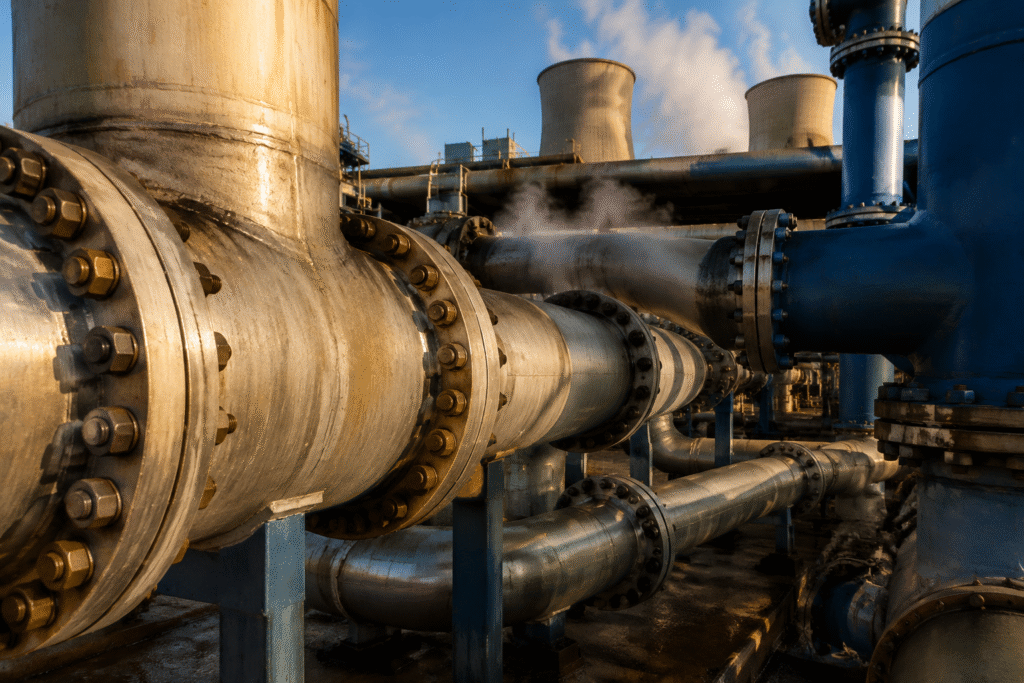
Руководство по рынку фланцев для труб из нержавеющей стали: 7 Информация о типах на основе данных, Использование, ASME B16.5 & B16.47 Выбор
The фланец трубы из нержавеющей стали remains a critical component in industrial piping because reliability, коррозионная стойкость, и соответствие стандартам напрямую влияют на время безотказной работы. По данным исследования Grand View (2024), мировой рынок промышленных фланцев оценивался в $5.8 миллиард в 2023 и, по прогнозам, достигнет $7.2 миллиард на 2030, which shows why buyers are looking more closely at the hidden advantages, типы, and uses of the right flange.
Для групп по закупкам и инженеров по трубопроводам, intriguing stainless steel flange selection is no longer only about base material. It also depends on pressure class, тип облицовки, ASME B16.5 or B16.47 dimensional compliance, термостойкость, welding performance, и качество документации.
Тенденции промышленного спроса определяют закупки фланцев для труб из нержавеющей стали
Global demand for industrial piping connections is rising across energy, опреснение, власть, и химическая обработка. По данным IBISWorld (2024), На долю Азиатско-Тихоокеанского региона приходится более 45% мирового производства фланцев, при этом Китай является крупнейшим производителем.
That production concentration matters for global sourcing strategy. Это влияет на сроки выполнения, pricing competitiveness, доступность сплава, and quality assurance workflows for buyers managing EPC and MRO projects.
End-use demand also remains concentrated in severe-service sectors. По данным Статистики (2024), на долю нефтегазовой отрасли приходится около 35% мирового потребления фланцев, which keeps stainless steel, дуплекс, and alloy flange demand structurally strong.
Более того, refinery upgrades and offshore corrosion-control requirements continue to favor stainless and high-performance alloys. Как результат, flange buyers increasingly compare not only 304 и 316 оценки, but also 904L, 2205, 2507, Монель, Хастеллой, and Inconel options.
По данным Мордорской разведки (2024), industrial infrastructure investment in water treatment and process industries is supporting steady growth in corrosion-resistant piping systems. Поэтому, engineers now prioritize lifecycle cost over lowest initial purchase price.
That shift explains why stainless steel pipe flange procurement often includes requests for EN 10204 3.1 сертификация, PMI, hydro testing, и отслеживаемость. В отличие, lower-spec sourcing may create hidden costs through premature leakage, переделка, и риск остановки.
ASME and ASTM standards remain the technical backbone of specification discipline. ASME B16.5 covers pipe flanges and flanged fittings typically from NPS 1/2 через 24, пока ASME B16.47 addresses larger diameter steel flanges, generally NPS 26 через 60 (ASME, 2023).
For buyers evaluating supply partners, manufacturing capability also matters as much as nominal compliance. С ISO 9001:2015 и сертификаты PED 2014/68/ЕС., SASA FLANGE supports projects that require documented quality systems, готовность к экспорту, и отслеживание материалов.
Кроме того, procurement teams increasingly want one source for flanges and fittings. Изготовление фланцев в 304, 316, 904л, 2205, 2507 и другие премиум-классы, alongside elbows, тройники, редукторы, и шапки, helps shorten sourcing cycles on complete piping packages.
По данным Market Research Future (2024), industrial flow-control and connection components are benefiting from modernization spending in petrochemical and power sectors. Более того, buyers are asking for factory-direct pricing with dependable machining tolerances and surface finish consistency.
These market drivers make stainless flange selection more technical than many competitor pages suggest. Instead of broad claims about corrosion resistance, serious B2B buyers need dimensional standards, material comparison data, and application-specific selection guidance.
How to Choose a Stainless Steel Pipe Flange: Типы, Материалы, Рейтинги, и скрытые преимущества
The best way to choose a фланец трубы из нержавеющей стали is to match material grade, тип фланца, класс давления, and corrosion mechanism to the service condition. Однако, many failures occur because teams focus on price first and overlook chloride levels, циклическая загрузка, тепловое расширение, и свариваемость.
Как Джон Брин, Старший инженер по трубопроводам, государства: «A flange is rarely the most expensive line item in a piping system, but it can become the most expensive mistake if the material or facing is wrong.» That observation reflects what most plant reliability teams already know from shutdown analysis.
Common stainless grades each solve a different problem. 304 and 304L suit general industrial service, пока 316 and 316L offer better pitting resistance in chloride-containing environments.
Higher-performance grades extend service limits. Например, 904L improves resistance in aggressive chemical processing, в режиме дуплекса 2205 и супер дуплекс 2507 provide higher strength and stronger chloride stress corrosion cracking resistance.
According to ASTM and industry material practice, low-carbon «л» grades typically improve weldability and reduce sensitization risk after welding in many fabricated systems (ASTM, 2023). Поэтому, 304L and 316L are often preferred for welded process piping, танки, and offshore skids.
Flange type selection is equally important because geometry affects assembly, распределение напряжений, и обслуживание. A wrong type can increase leak risk even when the base alloy is correct.
- Приварной фланец с горловиной: Лучше всего для высокого давления, термоциклирование, and critical process service.
- Наденьте фланец: Cost-effective and easy to align for moderate pressure applications.
- Глухой фланец: Используется для прекращения, изолировать, or test piping systems.
- Плата сварка: Suitable for smaller bore, линии высокого давления.
- Резьбовой фланец: Используется там, где сварка нецелесообразна или ограничена..
- Коленные соединения фланца: Полезно там, где требуется частый демонтаж..
Facing type also changes sealing performance. Приподнятое лицо остается наиболее распространенным в сфере промышленного обслуживания., while Ring Type Joint is preferred in high-pressure and high-integrity applications, particularly in upstream oil and gas systems.
Согласно ASME (2023), dimensional and pressure-temperature requirements under ASME B16.5 and B16.47 are essential for interchangeability and safe bolting performance. На практике, that means engineers must verify class ratings such as Class 150, 300, 600, 900, 1500, или 2500 against actual design conditions.
Как доктор. Елена Маркович, Материаловед, государства: «The hidden advantages of duplex and high-alloy flanges appear over time, because reduced corrosion rates and higher strength lower total ownership cost.» That is especially relevant in seawater, кислое обслуживание, and chemically aggressive media.
Below is a simplified material comparison for common industrial uses.
- 304/304л: Универсальная коррозионная стойкость. Хорошая формуемость. Economical for non-chloride service.
- 316/316л: Better resistance to chlorides and process chemicals. Common in marine-adjacent and pharmaceutical systems.
- 904л: Strong resistance in acidic and highly corrosive environments. Often selected for chemical processing.
- 2205 Дуплекс: Higher strength than austenitic grades. Excellent balance of corrosion resistance and mechanical performance.
- 2507 Супер Дуплекс: Superior chloride resistance and high strength for offshore and desalination service.
Buyers should also review manufacturing route and inspection scope. Forged flanges made to ASTM A182 generally provide the mechanical integrity expected for demanding process lines, while testing may include PMI, ЮТ, твердость, проверка размеров, and pressure-related verification depending on project requirements.
По данным ИСО (2015) quality management principles, documented process control improves repeatability and traceability in industrial manufacturing. Благодаря передовой обработке с ЧПУ и всестороннему тестированию качества., SASA FLANGE supports flange and fitting supply for EPC, OEM, and distributor requirements.
Typical buyer checkpoints should include the following before placing an order.
- Применимый стандарт: ASME B16.5, ASME B16.47, DIN, JIS, ГОСТ, или RU 1092.
- Марка материала: 304, 316л, 904л, А105, А182 F316L, 2205, 2507, или специальный сплав.
- Pressure class and schedule compatibility.
- Тип облицовки: РФ, ФФ, РТЖ, or custom.
- Необходимые документы: МТС EN 10204 3.1, PMI, ПЭД, гидроиспытание, NACE compliance where applicable.
- Покрытие, маркировка, упаковка, and export requirements.
These details separate a basic quotation from a project-ready offer. Более того, they help engineers choose a flange that performs reliably over years, not just during initial commissioning.
ASME B16.5, Б16.47, ASTM, DIN, and EN Standards That Define Flange Compliance
Standards are the language that connects design, приобретение, изготовление, и осмотр. Поэтому, any serious stainless steel pipe flange purchase order should clearly specify the governing dimensions, спецификация материала, тестирование, и требования к сертификации.
ASME B16.5 is the most recognized standard for steel pipe flanges in common industrial sizes. Он охватывает размеры, допуски, номинальные значения давления и температуры, ссылки на материалы, маркировка, and testing expectations for NPS 1/2 к 24.
ASME B16.47 extends standardization to larger diameters. It covers NPS 26 к 60 and is particularly relevant for large-bore pipeline, передача воды, and process installations (ASME, 2023).
Material selection often references ASTM standards. ASTM A182 is commonly used for forged or rolled alloy and stainless steel pipe flanges, кованые фитинги, и клапаны для работы при высоких температурах, пока ASTM A240 typically applies to plate, лист, and strip products used in related fabricated components (ASTM, 2023).
European projects frequently require EN standards and PED alignment. EN 1092 defines circular flanges for pipes, клапаны, арматура, and accessories, while PED 2014/68/EU governs pressure equipment placed on the EU market.
For corrosive or sour service, NACE requirements may also apply. In oil and gas environments containing H2S, material restrictions and hardness controls can be essential to prevent sulfide stress cracking.
- ASME B16.5: Standard flange dimensions and ratings for NPS 1/2 к 24.
- ASME B16.47: Large-diameter flange dimensions and ratings for NPS 26 к 60.
- ASTM A182: Forged stainless and alloy materials for flanges and forged fittings.
- ASME B16.9: Factory-made wrought buttwelding fittings such as elbows and reducers.
- EN 1092: Европейский стандарт размеров фланцев.
- NACE MR0175/ISO 15156: Руководство по материалам для кислых сред эксплуатации.
For authoritative dimensional reference, engineers should always verify the latest edition directly from ASME. This step prevents revision mismatches during fabrication and inspection.
На практике, standards compliance should also include documentation review. Buyers should confirm heat number traceability, сертификаты испытаний материалов, wall-thickness compatibility, bolt hole orientation, облицовочная отделка, and marking format before shipment.
The comparison below helps clarify when each standard usually applies.
- Process plant piping: Часто ASME B16.5 с ASTM A182 material callout.
- Large diameter utility or transmission lines: Часто ASME B16.47.
- EU-regulated pressure systems: EN 1092 plus PED documentation.
- General industrial exports: Mixed requests including DIN, JIS, ГОСТ, and EN based on destination.
С ISO 9001:2015, ПЭД 2014/68/ЕС, and AD 2000-related quality expectations in mind, suppliers should provide not just compliant products but auditable process control. That is why many international buyers prefer manufacturers with established export documentation routines and material verification systems.
SASA FLANGE supports this requirement through documented manufacturing and inspection workflows across stainless steel, углеродистая сталь, фланцы из сплава, и трубопроводная арматура. Предлагаю нестандартные размеры от 1/2." до 60" с конкурентоспособными ценами напрямую с завода, the company serves customers across Oil & Газ, нефтехимическая, Власть, и морская промышленность.
Как результат, engineers can align sourcing with both design code and commercial practicality. That combination is often the difference between an easy FAT review and a delayed project release.
Руководство по применению: Best Uses for Stainless Steel Pipe Flange in Oil, Газ, Химическая, Власть, и морские проекты
A stainless steel pipe flange is not selected in isolation. Вместо, it must be evaluated within the full piping system, including fluid chemistry, расчетное давление, рабочая температура, insulation strategy, и доступ для обслуживания.
Oil and gas projects usually prioritize pressure integrity, пригодность для кислого обслуживания, and resistance to offshore corrosion. Поэтому, 316л, дуплекс 2205, и супер дуплекс 2507 frequently appear in topside, produced-water, and seawater service depending on exact chloride and H2S conditions.
According to DNV guidance and offshore materials practice, chloride-rich and marine environments demand careful alloy and fabrication control to avoid localized corrosion and stress-related failures (ДНВ, 2023). That requirement often makes higher-grade stainless or duplex a strategic choice rather than a premium upgrade.
Chemical processing plants focus more heavily on media compatibility. Кислоты, растворители, повышенная температура, and cyclic cleaning procedures can quickly expose weaknesses in generic material selection.
In these services, 316L may be sufficient for moderate conditions, в то время как 904L, Хастеллой, or Monel can be required in aggressive streams. Engineers should also account for gasket compatibility, crevice corrosion risk at the flange face, and bolting material selection.
Приложения по выработке электроэнергии часто используют пар., конденсат, охлаждающая вода, and flue-gas-related systems. Здесь, weld neck flange designs are widely preferred in high-temperature or higher-pressure lines because they distribute stress more smoothly than lower-integrity connection forms.
Shipbuilding and marine systems place strong emphasis on corrosion resistance, compact maintenance, и длительные межсервисные интервалы. Как результат, 316L and duplex grades are commonly evaluated for ballast, морская вода, огненная вода, и инженерные коммуникации.
The following selection criteria help buyers choose the right flange for each application.
- Confirm process fluid chemistry, в том числе хлориды, соединения серы, and cleaning agents.
- Match pressure class and temperature rating to actual design conditions.
- Выбирайте тип фланца в зависимости от напряжения, вибрация, и частота технического обслуживания.
- Specify the correct facing type for gasket seating and leak integrity.
- Verify material certification, PMI, and traceability before shipment.
- Check compatibility with pipe schedule, установочные размеры, and bolt materials.
Water treatment and desalination plants deserve special attention because chloride exposure accelerates pitting and crevice attack. По данным Market Research Future (2024), infrastructure spending in water systems continues to support strong demand for corrosion-resistant piping components.
That demand is increasing interest in duplex grades. Во многих случаях, the higher upfront cost is offset by longer service life and reduced maintenance intervention.
Custom manufacturing also matters in project execution. Many EPC buyers need mixed orders that combine standard ASME flange sizes with custom drilling, специальные облицовки, or project-specific markings.
Обслуживание 50+ страны по нефти & Газ, нефтехимическая, Власть, и морская промышленность, SASA FLANGE supports custom manufacturing for flanges and fittings in 304, 316, 316л, 904л, 2205, 2507, А105, А182, Инконель, Монель, Хастеллой, и Титан. This breadth helps buyers consolidate sourcing while maintaining technical alignment with project specifications.
Например, a marine skid package may require 316L slip on flanges for utility lines, duplex weld neck flanges for seawater duty, и ASME B16.9 stainless elbows and reducers in matching schedules. A supplier that can produce and document the entire package reduces interface risk across procurement, КК, and site installation.
Более того, lead time can influence design choices during project execution. When buyers engage early with SASA FLANGE, they can often align material availability, объем обработки, and inspection planning before fabrication bottlenecks appear.
Перспективы развития фланцев из нержавеющей стали и рекомендации по стратегическим закупкам
The market outlook for stainless steel pipe flange demand remains positive because process industries continue to invest in reliability, emissions control, и водная инфраструктура. По данным исследования Grand View (2024), прогнозируется, что рынок промышленных фланцев достигнет $7.2 миллиард на 2030.
That growth will not benefit all suppliers equally. Buyers increasingly prefer manufacturers that combine standards compliance, прослеживаемость, multi-alloy capability, and consistent machining quality.
As Rachel Tan, Industrial Components Analyst, государства: «Procurement teams are moving toward total-cost evaluation, where documentation quality, delivery confidence, and corrosion performance outweigh marginal unit-price differences.» This trend is particularly visible in export projects and regulated industries.
Кроме того, carbon reduction and asset-life extension are influencing material decisions. Поэтому, stainless and duplex flanges may gain share in applications where operators want fewer replacements and lower lifecycle leakage risk.
Стратегически, buyers should take several steps when sourcing. Первый, define the governing standard and material grade precisely. Второй, request documentation scope upfront. Третий, compare suppliers on delivery reliability, testing capability, and engineering responsiveness rather than price alone.
It is also wise to standardize approved flange types and materials across similar plants. This approach simplifies spare parts planning, reduces specification drift, and shortens future purchasing cycles.
For distributor, OEM, and EPC buyers, the most efficient sourcing model often combines factory-direct production with technical review before order release. When those projects require custom sizes, premium alloys, or PED-related documentation, working with an established manufacturer can reduce commercial and technical risk.
For teams reviewing their next flange package, a practical step is to discuss dimensions, класс давления, выбор сплава, and certification scope early in the RFQ stage through SASA FLANGE. That early alignment often improves both lead time predictability and specification accuracy.
Часто задаваемые вопросы
Какие существуют типы фланцев из нержавеющей стали??
●Основными типами фланцев из нержавеющей стали являются приварные шейки., надеть, слепой, раструбная сварка, резьбовой, и коленный сустав, и ASME B16.5 commonly governs these designs up to NPS 24.
●Каждый тип служит своей цели, with weld neck flanges favored for high-pressure service and slip on flanges often chosen for easier installation in moderate-duty pipe systems.
●For projects requiring accurate type selection, pressure-class review, and certified materials such as 304, 316л, 2205, или 2507, работа с известными производителями, такими как SASA FLANGE helps reduce installation and leakage risk.
Что лучше 304 или 420 нержавеющая сталь?
●Для большинства фланцевых применений, 304 stainless steel is usually better than 420 because it offers stronger corrosion resistance and is more widely used for industrial piping components.
●Оценка 420 представляет собой мартенситную нержавеющую сталь с более высоким потенциалом твердости., but it is generally less suitable for corrosive process piping and standard stainless steel pipe flange service.
●When the application involves chemical exposure, влага, or welded pipe systems, buyers should usually prioritize 304, 304л, 316, or 316L and confirm the exact ASTM material specification before purchase.
Какие три типа фланцев существуют??
●В основных промышленных дискуссиях чаще всего упоминаются три типа фланцев: приварная шейка., надеть, и глухие фланцы, although several other important types are also used.
●Weld neck flanges handle higher stress and temperature cycling well, скользящие фланцы облегчают выравнивание и снижают стоимость изготовления, and blind flanges close or isolate a piping line.
●Для критического обслуживания, engineers should not stop at three categories and should instead verify type, лицом к лицу, класс давления, и стандартные, такие как ASME B16.5 or B16.47 before finalizing a flange order.
Что такое код ASME для фланцев из нержавеющей стали??
●ASME B16.5 is the primary dimensional standard for most stainless steel flanges from NPS 1/2 к 24, пока ASME B16.47 охватывает большие диаметры от АПЛ 26 к 60.
●Material specification is usually referenced separately through ASTM standards such as ASTM A182 for forged stainless steel flanges used in pressure piping systems.
●Buyers should always specify both the ASME dimensional standard and the ASTM material grade on the purchase order to avoid dimensional mismatch or certification issues.
Что влияет на цену фланца трубы из нержавеющей стали?
●Цена фланца трубы из нержавеющей стали зависит в основном от марки сплава., размер, класс давления, тип фланца, сложность обработки, and required inspection documents such as EN 10204 3.1.
●По данным исследования Grand View (2024), рынок промышленных фланцев достиг $5.8 миллиард в 2023, and that scale keeps pricing sensitive to raw material volatility, energy cost, and project demand cycles.
●To obtain an accurate quotation, buyers should provide the material grade, стандартный, размеры, лицом к лицу, количество, and documentation scope so the supplier can quote the true project requirement rather than a generic unit price.
How do I choose a stainless steel pipe flange manufacturer or vendor?
●A reliable flange manufacturer or vendor should demonstrate compliance with standards such as ASME B16.5, ASME B16.47, ASTM A182, и RU 1092, along with quality certifications like ISO 9001:2015.
●По данным IBISWorld (2024), На долю Азиатско-Тихоокеанского региона приходится более 45% мирового производства фланцев, so global buyers should compare suppliers on traceability, testing capability, экспортная документация, and delivery performance rather than location alone.
●For projects needing custom sizes, premium alloys, and factory-direct technical support, buyers should shortlist suppliers that can provide material traceability, PED-related documentation, and responsive engineering review before order release.
Связанные Посты
Отделка торцевой поверхности фланца: Объяснение концентрических и спиральных зубцов
Концентрические и спиральные зубцы представляют собой обработанную поверхность фланца.…
Дуплекс 2205 по сравнению с фланцами 316L: Какой материал выбрать?
Быстрый ответ: Дуплекс 2205 flanges are usually the stronger candidate…

Определение фланца с диафрагмой, Подробности и обзор фланцев ASME B16.36: Рыночные данные, Руководство по выбору и анализ соответствия требованиям
Мировой рынок промышленных фланцев оценивался в $5.8 миллиард…

Руководство по рынку черных сливных фланцев: Материалы, 3.5″ Совместимость, и данные о поставщиках B2B для фланцев для кухонной мойки
Спрос на черные фланцы для утилизации растет благодаря покупателям кухонной техники…